
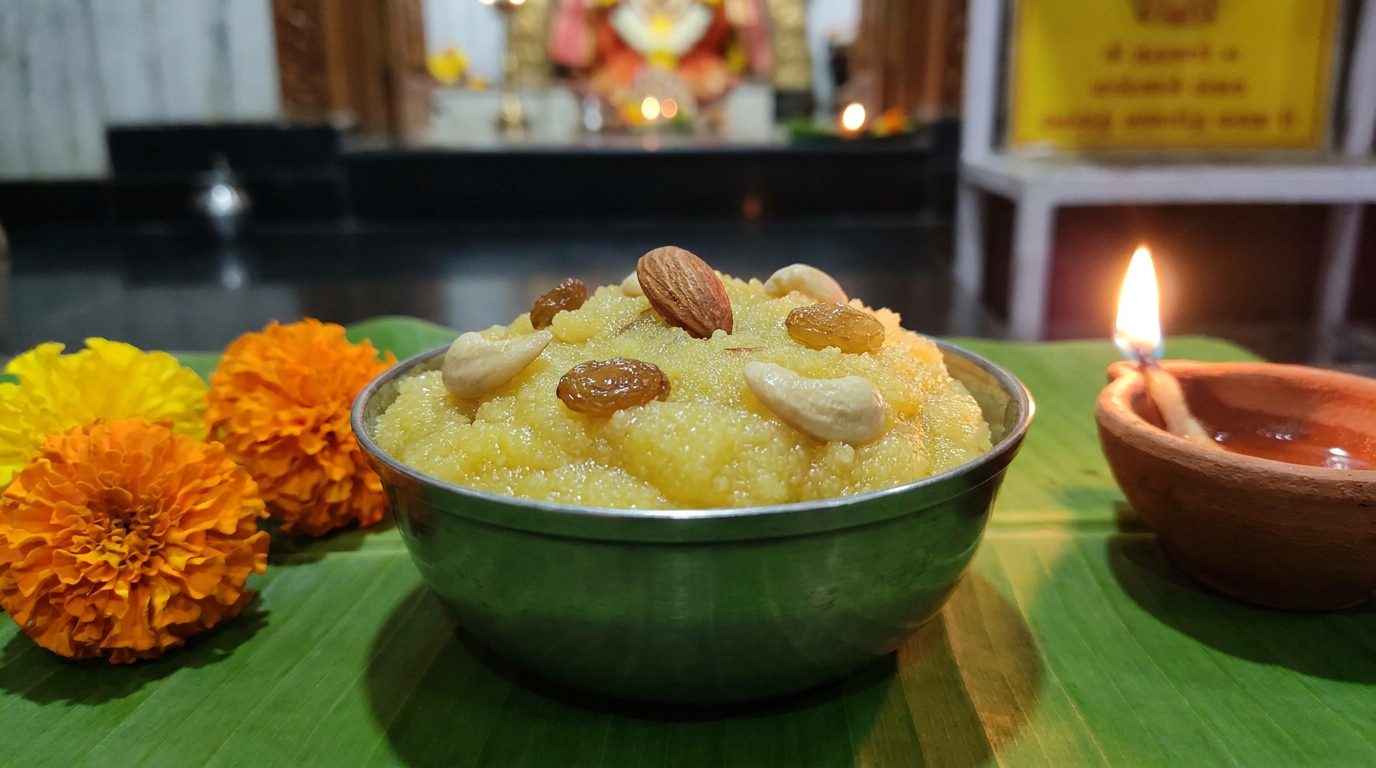
Prasadam is a beautiful Sanskrit word that means “mercy,” “grace,” or “a sacred gift.” In Bhakti Yoga, prasadam usually refers to food that has been lovingly prepared and offered to God before being received and shared.
At The Bhakti House, we often describe prasadam as spiritual nourishment. It is not simply “vegetarian food,” though it is traditionally vegetarian. It is food touched by devotion. It is food that has been prepared with care, offered with prayer, and received with gratitude.
In the Bhagavad-gita, Sri Krishna says:
“Offer Me with love and devotion a leaf, a flower, fruit, or water, and I will accept it.”
— Bhagavad-gita 9.26
This verse is one of the heart jewels of Bhakti Yoga. Krishna, the Supreme Person, does not ask for wealth, status, or perfection. He asks for love. Even something very simple—a leaf, a flower, a fruit, or water—becomes spiritually powerful when offered with sincere devotion.
Prasadam begins with this simple truth: God accepts love.
And when we receive what has been offered back to us, we are receiving grace.
The Spiritual Meaning of Food in Bhakti Yoga
Food is deeply personal. It enters our body, affects our mind, and often carries emotion, memory, and culture. In Bhakti Yoga, food is also understood as a sacred connection between the soul and God.
Food Can Carry Consciousness
Most of us have felt that food prepared with love feels different. A meal cooked by a caring parent, friend, or community can comfort the heart in a way that goes beyond calories and nutrients.
Bhakti Yoga teaches that consciousness matters. The mood of the cook, the intention behind the meal, and the way the food is received all influence our inner life.
When food is prepared as an offering to God, the kitchen becomes a place of meditation. Cooking becomes service. Eating becomes gratitude. Sharing becomes compassion.
Eating as a Sacred Practice
In many spiritual traditions, people pause before eating to pray, give thanks, or remember the Divine. Prasadam deepens this practice by inviting us to offer the food first to God.
This transforms eating from a routine act into a devotional act.
Instead of thinking, “This is for my enjoyment,” we learn to think, “May this be pleasing to God.” Then, when we receive the food, we think, “This is God’s kindness returning to me.”
This gentle shift can soften the heart. It reminds us that we are not isolated consumers in the world. We are souls, lovingly connected with the Source of all life.
Nourishment for Body, Mind, and Soul
Prasadam nourishes the body because it is wholesome food. It nourishes the mind because it is prepared and received in a peaceful mood. Most importantly, it nourishes the soul because it reconnects us with God.
In Bhakti Yoga, the soul is not satisfied by material things alone. We need love, meaning, truth, and relationship with the Divine. Prasadam supports that journey in a practical, daily way.
It says: “Even your meal can become part of your spiritual life.”
Why Offer Food to God?
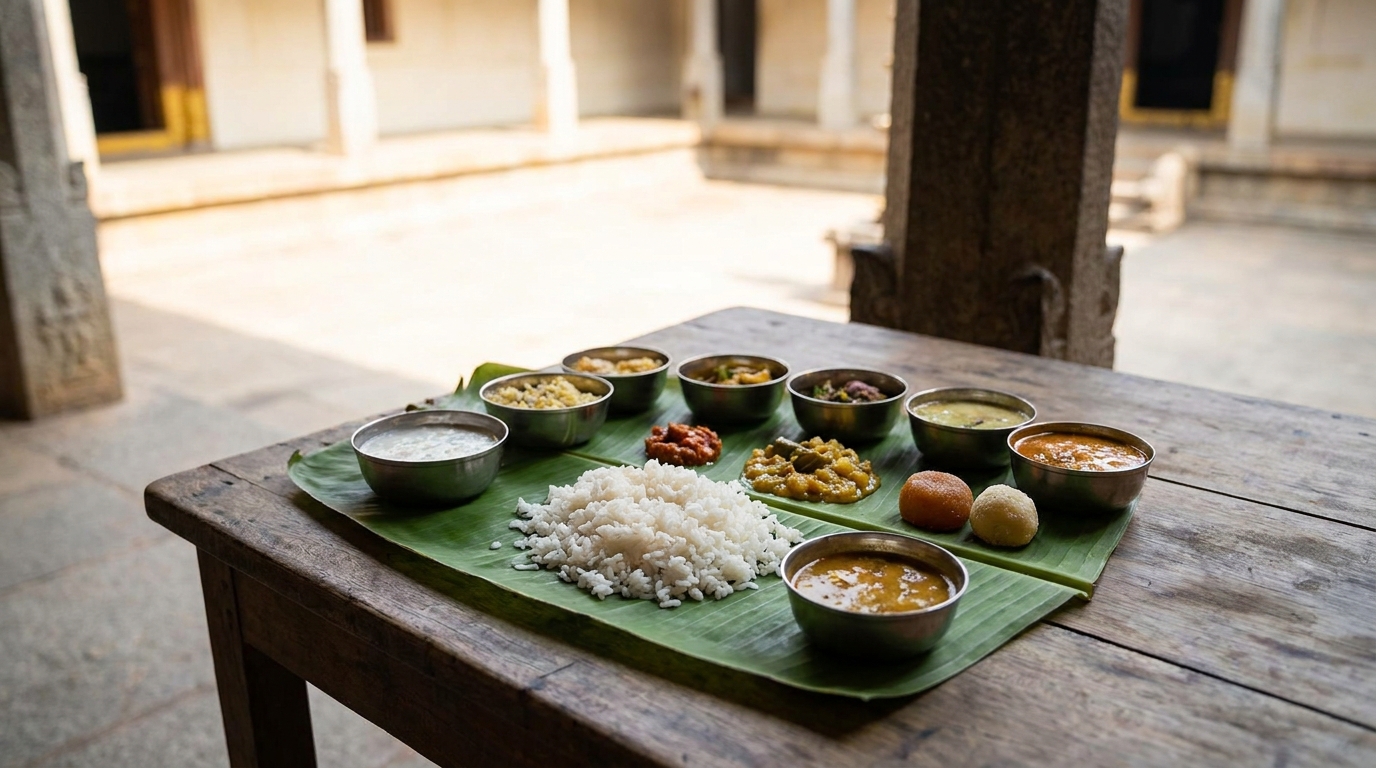
A thoughtful person may ask, “If God already owns everything, why offer food to Him?”
This is a wonderful question.
Bhakti Yoga explains that God does not need our offering, but we need the relationship. A loving parent may not need a small child’s handmade card, but the parent treasures it because of the child’s love. In the same way, Krishna does not need our food. Yet He accepts our devotion.
Offering Awakens Gratitude
When we offer food to God, we acknowledge that nothing is truly ours. The earth, rain, sunlight, seeds, hands, intelligence, and life itself are gifts.
This does not make us feel small in a negative way. It makes us humble in a freeing way. Gratitude brings peace. It helps us stop taking life for granted.
Before eating prasadam, we remember: “This food is a gift. My life is a gift. Let me use my energy in service, love, and wisdom.”
Offering Purifies the Heart
The Bhagavad-gita teaches that eating food offered in sacrifice frees one from karmic reaction:
“The devotees of the Lord are released from all kinds of sin because they eat food that is offered first for sacrifice.”
— Bhagavad-gita 3.13
In simple terms, karma means that our actions have consequences. When we live only for selfish enjoyment, we become more entangled in the world. But when we act in devotion, our actions become spiritually purifying.
Offering food to God helps purify the tendency to think, “Everything is for me.” It gradually awakens the deeper truth: “Everything belongs to God, and I am happiest when I live in loving harmony with Him.”
Offering Builds a Relationship
Bhakti means devotion, or loving service to God. Yoga means connection. So Bhakti Yoga is the path of reconnecting with God through love.
Offering food is one of the most accessible forms of Bhakti Yoga. You do not need to be a scholar. You do not need to know complicated rituals. You do not need to be born in a particular culture.
You can begin with sincerity.
Prepare something simple. Place it before God. Pray from your heart. Then receive it as prasadam.
That small act can become the beginning of a lifelong spiritual friendship.
Please visit our website for more information on our articles: articles.
How to Prepare Prasadam at Home
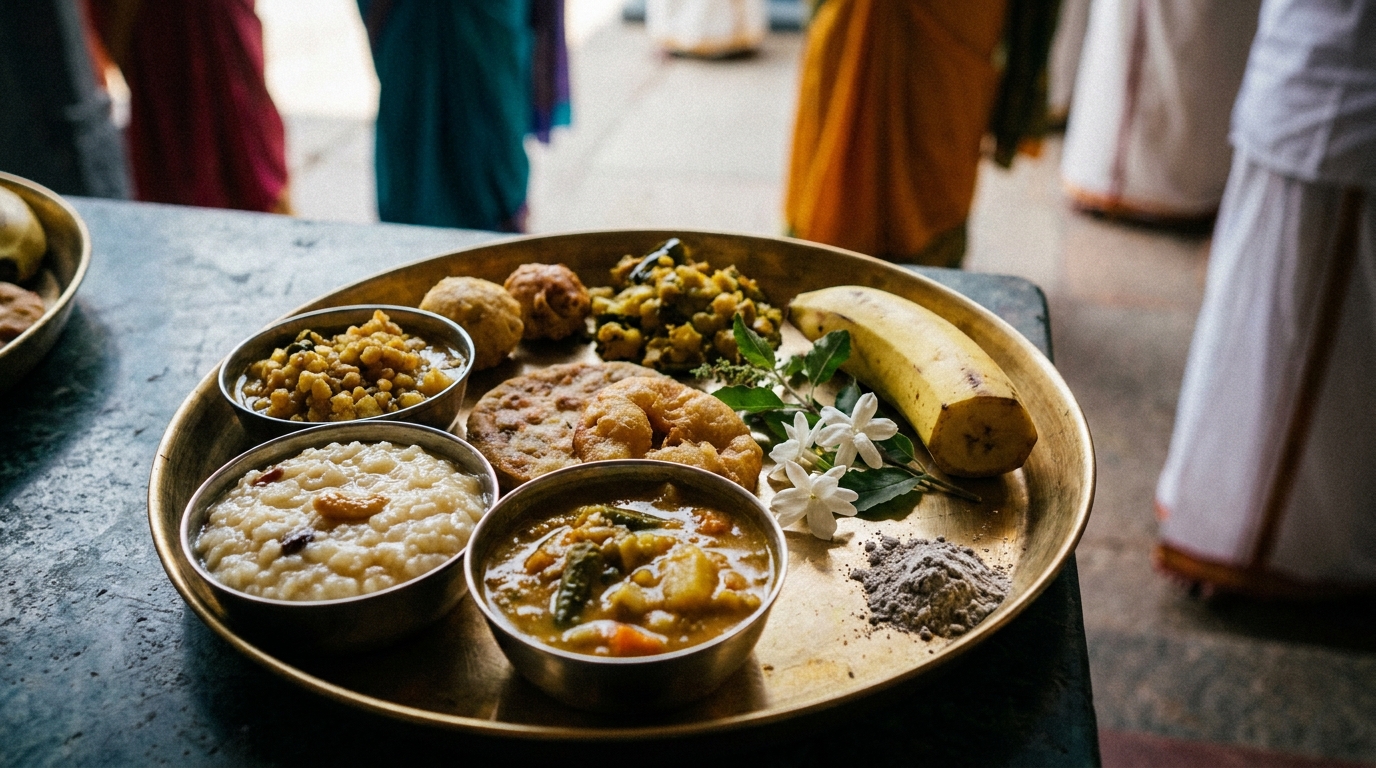
Preparing prasadam at home is a practical and beautiful way to bring Bhakti Yoga into daily life. Your kitchen can become a sacred space, and your cooking can become an offering of love.
Choose Foods That Can Be Offered
In the Bhakti tradition, Krishna is offered vegetarian foods prepared without meat, fish, eggs, onions, garlic, or intoxicants. Many devotees also avoid mushrooms and highly processed ingredients, depending on their tradition and level of practice.
The basic offering can include:
- Fruits
- Vegetables
- Grains
- Beans and lentils
- Nuts and seeds
- Milk products, if suitable for your diet and ethically sourced as much as possible
- Water
- Simple sweets
- Fresh herbs and spices
If you are new, do not feel overwhelmed. Begin where you are. A piece of fruit, a glass of water, or a simple bowl of rice and vegetables can be offered with devotion.
Remember, Krishna says He accepts “a leaf, a flower, fruit, or water” when offered with love.
Cook With a Peaceful Mood
The consciousness of the cook is important. Before cooking, you may wash your hands, take a breath, and say a short prayer.
You might pray:
“Dear Lord, please let this food be prepared for Your pleasure. Please purify my heart and allow me to serve with love.”
Try to avoid tasting the food while cooking before it is offered. This is a traditional practice because the meal is first meant for God. After the offering, it becomes prasadam, and then it can be honored by everyone.
You can chant while cooking, play devotional music, or simply hold a mood of gratitude.
A common mantra in Bhakti Yoga is the maha-mantra:
Hare Krishna, Hare Krishna, Krishna Krishna, Hare Hare
Hare Rama, Hare Rama, Rama Rama, Hare Hare
“Hare” calls upon the divine energy of the Lord. “Krishna” means the all-attractive Supreme Person. “Rama” means the source of joy. Chanting this mantra invites the heart into remembrance of God.
Create a Simple Offering Space
You do not need an elaborate altar to offer prasadam. If you have a picture of Krishna, Rama, Vishnu, or another worshipable form of God in the Bhakti tradition, you can place the food before the picture.
If you are just beginning and do not yet have an altar, you can set aside a clean space and offer with prayer. God is present everywhere, and He sees the sincerity of the heart.
Many families like to have a small plate or bowl reserved for offerings. After cooking, place a portion of each preparation on that plate. Add a cup of water if you like.
Then sit or stand quietly and offer your prayer.
Offer With Simple Words
There are traditional Sanskrit prayers that devotees often recite, and these can be learned over time. But if you are new, you can begin in your own language.
You might say:
“My dear Lord, this food is Yours. Thank You for providing everything. Please accept this offering made with whatever love I have. Please bless it and help me remember You.”
Leave the offering for a few minutes. During that time, you can chant the maha-mantra, sit in silence, or offer gratitude.
Then the food can be served and honored as prasadam.
In Bhakti Yoga, we often say “honor prasadam” rather than simply “eat prasadam,” because it is sacred. This does not mean being stiff or formal. It means receiving with respect and joy.
The Inner Attitude of Honoring Prasadam
Prasadam is not only about the food itself. It is also about the consciousness with which we receive it.
Receive, Don’t Grab
In everyday life, we may eat quickly, distractedly, or anxiously. Prasadam invites us to slow down.
Before eating, pause. Look at the food. Remember that it has been offered. Give thanks.
This simple pause can transform the meal.
Instead of grabbing, we receive. Instead of consuming, we honor. Instead of rushing, we remember.
Eat With Gratitude
Gratitude opens the heart. When we honor prasadam, we can remember the farmers, the cooks, the elements of nature, the spiritual teachers who preserved this tradition, and ultimately God, who sustains everyone.
You might silently pray:
“Thank You for this mercy. May this food nourish me so I can serve with love.”
Eating prasadam becomes part of spiritual growth when it leads us to kindness, humility, and service.
Share With Others
Prasadam is meant to be shared. In Bhakti communities, sharing sanctified food is one of the most joyful expressions of love.
At temples, homes, kirtans, festivals, and gatherings, prasadam brings people together. It crosses barriers of language, background, age, and belief.
Someone may come for the music, someone else for philosophy, someone else simply because they are hungry. But prasadam meets everyone with kindness.
In this way, prasadam is not only personal nourishment. It is a form of compassion.
Prasadam and the Practice of Bhakti Yoga
Bhakti Yoga is not limited to one part of life. It is a complete path of love that can include chanting, prayer, study, service, community, and daily choices. Prasadam is woven naturally into all of these.
Chanting and Prasadam
Chanting the holy names of God is a central practice in Bhakti Yoga. The holy name is considered spiritually powerful because God is present in His name.
When we chant while preparing or offering food, our mind becomes more peaceful. The kitchen becomes a place of remembrance. The food becomes connected with sound vibration that uplifts the heart.
Even if you chant softly or imperfectly, the practice is powerful. Bhakti is not about performance. It is about sincerity.
Prayer and Prasadam
Prayer is simply turning the heart toward God. Offering food gives us a natural reason to pray every day.
We can pray before cooking, while offering, and before honoring prasadam. Over time, this creates a rhythm of remembrance.
The more we remember God in ordinary moments, the more our life becomes spiritually centered.
Service and Prasadam
In Sanskrit, seva means service. In Bhakti Yoga, service is love in action.
Cooking for God and others is seva. Washing dishes after a meal is seva. Serving plates at a community gathering is seva. Packing prasadam for someone in need is seva.
No service is small when it is offered with love.
A person may think, “I am only cutting vegetables,” but in Bhakti, that act can be an offering to God. Another may think, “I am only sweeping the floor after everyone eats,” but that too can be sacred service.
Prasadam teaches us that devotion can enter the most practical parts of life.
What Makes Prasadam Different From Ordinary Food?
Externally, prasadam may look like ordinary food. It may be rice, soup, bread, fruit, salad, or sweets. But spiritually, it has been transformed by offering.
The Difference Is Devotion
The key ingredient in prasadam is bhakti—devotion. The food is prepared not only to satisfy hunger but to please God.
This intention changes the experience. It helps purify the cook, the person offering, and those who receive.
Just as iron placed in fire becomes fiery, food offered to God becomes spiritually potent. It carries divine mercy.
Prasadam Is Grace
Because prasadam means mercy, it reminds us that spiritual life is not something we achieve by our own strength alone. We grow by grace.
We make an effort, yes. We cook, pray, chant, serve, and try to live sincerely. But ultimately, spiritual awakening is a gift from God.
Prasadam makes that truth tangible. We can hold grace in our hands. We can taste mercy.
Prasadam Softens the Heart
Many devotees have experienced that honoring prasadam gradually changes their desires. The heart becomes more peaceful. The mind becomes clearer. Compassion becomes more natural.
Of course, prasadam is not magic in a superficial sense. It works with our sincerity. As we receive it respectfully and continue spiritual practice, it supports inner transformation.
It helps us remember who we are: not merely bodies seeking pleasure, but souls seeking love.
Common Questions About Prasadam
Many people come to Bhakti Yoga from different backgrounds, faiths, cultures, and life experiences. Questions are welcome. Spiritual life grows through honest inquiry.
Do I Have to Be Hindu to Offer Prasadam?
No. Bhakti Yoga welcomes sincere souls from all backgrounds.
The word “Hindu” often refers to a broad family of traditions connected with India. Bhakti Yoga, while preserved through Vedic scriptures and saints, speaks to the universal longing of the soul for God.
Anyone can offer food with love. Anyone can chant. Anyone can pray. Anyone can serve.
God is not limited by labels. He sees the heart.
What If I Don’t Know the Sanskrit Prayers?
That is completely okay.
Sanskrit prayers are beautiful and powerful, and you may choose to learn them over time. But God understands every language. More importantly, He understands sincerity.
Begin with a simple prayer in your own words. As your practice grows, you can learn traditional offering prayers from trusted teachers or a local Bhakti community.
Can I Offer Food If I Am Not Perfect?
Yes. In fact, offering food is a wonderful practice for imperfect people—which includes all of us.
Bhakti is not about pretending to be pure. It is about turning toward God with honesty.
If you feel distracted, pray with distraction. If you feel unqualified, pray with humility. If your cooking is simple, offer it simply.
Krishna asks for love, not perfection.
What If My Family Does Not Practice Bhakti Yoga?
Be gentle and respectful. Spiritual life should make us kinder, not forceful.
You can quietly offer your own plate before eating. You can cook with love and offer mentally. You can share prasadam without pressure.
Sometimes the best way to introduce others to Bhakti is through warmth, patience, and delicious food.
Is Prasadam Only for Special Occasions?
Prasadam is wonderful on holy days, festivals, and temple gatherings, but it is also meant for everyday life.
Breakfast can be prasadam. Lunch can be prasadam. A snack can be prasadam. A glass of water can be prasadam.
This is one of the gifts of Bhakti Yoga: the ordinary becomes sacred.
Prasadam in Scripture and Tradition
The practice of offering food to God is deeply rooted in Bhakti scripture and tradition.
Bhagavad-gita: Offering With Love
As mentioned earlier, Bhagavad-gita 9.26 teaches that Krishna accepts even simple offerings when they are given with devotion.
This verse is comforting because it removes spiritual pride. God is not impressed by extravagance alone. A golden plate without love does not satisfy Him. But a small fruit offered with sincerity can please Him.
This gives hope to everyone. Whether we live in a large home or a small room, whether we are wealthy or struggling, we can offer love.
Bhagavad-gita: Food and Consciousness
In the Bhagavad-gita, Krishna also explains that different foods influence consciousness. Foods in the mode of goodness are described as nourishing, wholesome, and pleasing to the heart.
For practitioners of Bhakti Yoga, the highest nourishment is food offered to God. It supports clarity, peace, and devotion.
This does not mean we judge others by what they eat. Rather, we take responsibility for our own choices and gently move toward foods and practices that help us remember God.
Srimad-Bhagavatam: The Culture of Devotion
The Srimad-Bhagavatam, a beloved Bhakti scripture, is filled with stories of devotion, hospitality, and offerings to the Lord. Again and again, we see that God responds to the love of His devotees.
In the Bhakti tradition, homes and temples become places where God is welcomed as the beloved guest and master. Food is prepared for Him, songs are sung for Him, lamps are offered to Him, and prasadam is shared with all.
This culture is not meant to be distant or formal. It is meant to awaken loving relationship.
Making Prasadam Part of Daily Life
If you are new to prasadam, it may feel like a big change. But you can begin gently.
Start With One Offering a Day
Choose one meal, or even one item, to offer daily. Perhaps your morning fruit, tea, or breakfast. Perhaps dinner with your family.
Do not worry if everything is not perfect. Create a small, steady practice.
Spiritual life grows through consistency. A little done every day can become deeply transformative.
Keep It Simple
Simple offerings are often the most sustainable.
You might offer:
- Fresh fruit
- Oatmeal
- Rice and vegetables
- Lentil soup
- Chapatis or bread
- Salad
- Herbal tea
- A homemade sweet
The goal is not to impress. The goal is to love.
Cook as Meditation
Try cooking without unnecessary distraction. Put away your phone when possible. Play kirtan, which is devotional chanting, or chant quietly yourself.
As you wash vegetables, think, “May this be pleasing to God.”
As you stir the pot, think, “May this nourish those who receive it.”
As you serve, think, “May I be an instrument of kindness.”
This is practical Bhakti Yoga.
Bring Prasadam Into Community
If there is a Bhakti center, temple, kirtan gathering, or spiritual community near you, visit and honor prasadam with others.
Community helps us grow. We learn by being with people who are practicing sincerely. We also experience the joy of shared meals, shared chanting, and shared service.
At The Bhakti House, prasadam is part of our heart. It is one of the ways we welcome people as they are and invite everyone into a deeper experience of spiritual love.
The Healing Power of Sacred Food
Many people carry complicated relationships with food. Some feel guilt, anxiety, attachment, or confusion around eating. Prasadam offers a healing perspective.
From Control to Gratitude
Instead of seeing food only through the lens of control, restriction, or indulgence, prasadam helps us see food as a gift.
Of course, we still care for our health and make wise choices. But we do so with gratitude rather than fear.
Prasadam teaches balance. We honor the body as a sacred instrument for service, not as the self. We nourish it so we can live with purpose.
From Isolation to Connection
Modern life can make eating lonely. Many people eat in front of screens, in cars, or in a rush.
Prasadam invites connection—with God, with nature, with community, and with our own soul.
Even if you eat alone, prasadam reminds you that you are not truly alone. God is present. Grace is present. Love is available.
From Consumption to Devotion
The world often teaches us to consume more. Bhakti Yoga teaches us to love more.
Prasadam helps shift the center of life from taking to offering. We begin to ask, “How can I serve?” rather than only, “What can I get?”
This is a profound spiritual change, and it can begin with a meal.
A Simple Prasadam Practice You Can Try Today
If you would like to begin, here is a simple practice.
Step 1: Prepare Something Offerable
Choose a simple vegetarian item, such as fruit, rice, vegetables, or a glass of water. If possible, avoid tasting before offering.
Step 2: Place It Before God
Set the food in a clean place. If you have an image of Krishna or a sacred altar, place it there. If not, simply hold the intention that you are offering it to the Supreme Lord.
Step 3: Pray Sincerely
Say something like:
“Dear Lord, thank You for this food and for all Your gifts. Please accept this offering. Please help me grow in love, humility, and service.”
You may also chant:
Hare Krishna, Hare Krishna, Krishna Krishna, Hare Hare
Hare Rama, Hare Rama, Rama Rama, Hare Hare
Step 4: Wait a Few Moments
Allow the offering to rest for a few minutes. Use that time for gratitude, chanting, or quiet remembrance.
Step 5: Honor the Prasadam
Receive the food with respect. Eat peacefully if you can. Remember that this is mercy.
If possible, share some with someone else.
Everyone Is Welcome to Receive Grace
Prasadam is one of the most tender gifts of Bhakti Yoga. It is simple enough for a child and deep enough for a saint. It welcomes the scholar and the seeker, the joyful and the weary, the certain and the questioning.
Through prasadam, we learn that God can be part of everyday life. Not only in temples, scriptures, or formal prayers, but in kitchens, meals, family tables, and acts of kindness.
You do not need to have everything figured out to begin. You do not need to be perfect. You do not need to know all the philosophy.
You can start with one sincere offering.
Prepare something simple. Offer it with love. Chant one mantra. Say one prayer. Share one plate. Take one step.
Bhakti Yoga is the path of love, and love grows by practice. May prasadam nourish your body, calm your mind, and awaken your heart to the presence of God.
Wherever you are on your spiritual journey, you are welcome. Take one sincere step toward God today, and trust that His grace can meet you there.
FAQs
What is Prasadam?
Prasadam is a term used in Hinduism to refer to food that is first offered to a deity and then distributed to devotees as a blessing. It is considered to be spiritually significant and is believed to carry the deity’s blessings.
What are the common types of Prasadam?
Common types of Prasadam include fruits, sweets, rice, and other vegetarian dishes. The specific type of Prasadam offered can vary depending on the deity and the religious tradition.
How is Prasadam prepared and offered?
Prasadam is prepared with great care and cleanliness, and it is offered to the deity with devotion and prayers. After the offering, it is distributed to devotees as a symbol of the deity’s grace and blessings.
What is the significance of consuming Prasadam?
Consuming Prasadam is believed to be spiritually purifying and is thought to bring blessings and good fortune to the person who partakes in it. It is also seen as a way to connect with the divine.
Is Prasadam only for Hindus?
While Prasadam is a significant part of Hindu religious practice, it is often offered and shared with people of all faiths as a gesture of goodwill and inclusivity. Many people, regardless of their religious beliefs, partake in Prasadam as a way to experience the spiritual and communal aspects of the practice.

