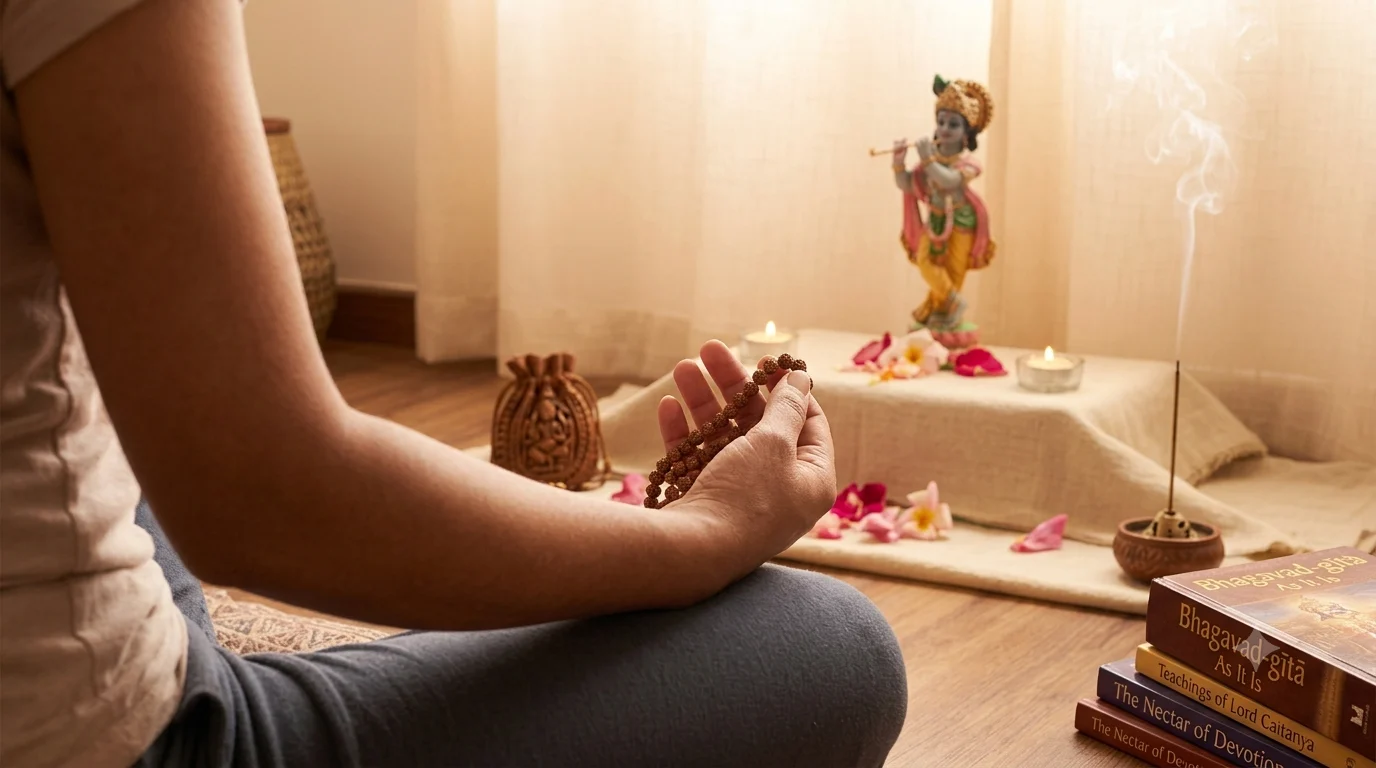
Peace of mind meditation can be more than a way to quiet busy thoughts. In the Bhakti Yoga tradition, it becomes a devotional practice of turning our attention toward Kṛṣṇa, cultivating trust, and opening the heart through sacred sound and loving connection.
Many of us arrive carrying stress, distraction, or emotional restlessness. Inner tranquility rarely appears through instant perfection. Instead, it grows through gentle repetition, compassionate awareness, and the willingness to begin again. With each practice, we create space to breathe, remember, and soften.
This meditation brings together steady breathing, remembrance, mantra, surrender, and heartfelt attention. We do not need to force the mind into silence. We learn to guide it patiently toward a deeper relationship with the Divine. For a broader perspective, you may explore Bhakti Yoga as a spiritual practice.
Whether we are new to meditation or returning after years of practice, this approach meets us where we are. We may adapt devotional language according to our spiritual understanding while remaining open to connection, community, and love. In the steps ahead, we will discover a simple practice for nurturing calm, trust, and inner peace.
Step 1: Prepare a Sacred Space and a Settled Body
We begin by creating conditions that gently support our attention. Choose a quiet corner where you can return each day, even if it is small. Keep the seat clean and simple, and silence notifications or let family members know you need a few undisturbed minutes.
For beginners, five to fifteen minutes is enough. A consistent practice matters more than a long session once in a while. Choosing the same time can help, whether it is after waking, before bed, or during a quiet pause in the day. A simple daily bhakti routine can make meditation easier to sustain amid work, family, and modern distractions.
Sit in a way that feels relaxed yet alert. You may sit on a cushion, a chair, or the edge of your bed, keeping the spine naturally upright. Soften the jaw and shoulders, let the hands rest comfortably, and allow the breath to move without force.
Before beginning our peace of mind meditation, we can offer a brief prayer or respectful intention. We might quietly ask for clarity, humility, and loving remembrance. This practice is not a demand to eliminate every thought. Instead, we return with patience whenever the mind wanders, remembering that each return is an act of devotion.
Step 2: Use the Breath to Arrive in the Present Moment
We begin with several natural breaths. There is nothing to fix or improve. We simply notice the inhale, the exhale, and the gentle sensations of our body touching the floor or chair.
As we settle, we may follow a simple rhythm. Breathe in comfortably, then allow the exhale to become slightly longer. We do not strain, hold the breath, or force ourselves to relax. Each breath is an invitation to soften our attention and turn inward.
With each exhale, we can release a little of the day’s momentum. We might feel the weight of our body, the movement of the ribs, or the air passing through the nostrils. If it feels supportive, we connect the breath with our devotional intention: breathing in presence, breathing out into trust.
Thoughts will naturally arise. When we notice one, we can name it softly: planning, remembering, worrying, or feeling. This gentle label helps us recognize the thought without becoming entangled in it.
Then we return to the next breath and our chosen intention. We may silently repeat a word such as love, peace, or remembrance. Every return is meaningful. In this way, peace of mind meditation becomes a practice of coming home, again and again.
Peace of mind does not require an empty mind. It grows as we repeatedly choose a steadier center instead of being carried away by every thought. With patience, the breath becomes a quiet bridge between our outer activity and the loving awareness within.
Step 3: Meditate Through Mantra and Sacred Sound
Now we bring the mind toward sacred sound. In Bhakti Yoga, mantra meditation becomes the heart of our practice. We do not try to force thoughts away. Instead, we offer the mind a loving and steady place to rest.
We might begin with the Hare Kṛṣṇa mahā-mantra:
Hare Kṛṣṇa, Hare Kṛṣṇa, Kṛṣṇa Kṛṣṇa, Hare Hare
Hare Rāma, Hare Rāma, Rāma Rāma, Hare Hare
Repeat the mantra aloud softly, in a whisper, or silently. Let the setting guide your choice. Whether we sit at home, walk outdoors, or travel quietly, the sacred name can accompany us.
Most importantly, listen to each syllable. Notice the sound as it rises, continues, and fades. We do not need to count mechanically or perform perfectly. When attention wanders, we gently return to the mantra without criticism. Each return strengthens our peace of mind meditation and becomes an act of devotion.
This is why sound is central to Bhakti Yoga. Sacred sound gives the mind a positive object. It also invites a personal relationship with the Divine, rather than relying only on mental suppression. As we listen with affection, remembrance gradually becomes more natural.
To begin, we can complete one round on a japa mala or set a timer for five to ten minutes. We may start with simple attention, then allow the practice to become more heartfelt. Over time, the mantra can feel less like a technique and more like a loving conversation, carrying us gently back to connection.
Step 4: Turn Restlessness Into Devotional Surrender
Even with a steady practice, difficult emotions may arise. Anger, anxiety, boredom, sleepiness, and doubt are not signs of failure. In this peace of mind meditation, we meet them with honesty, patience, and compassion.
First, notice what is present. Then name it gently: “This is worry,” “This is anger,” or “This is resistance.” Breathe with the feeling without judging or suppressing it. As you exhale, offer it through a simple inward prayer: “Kṛṣṇa, please help me use this moment for remembrance and growth.”
Surrender does not mean becoming passive or abandoning responsibility. It means releasing the illusion of total control while still taking wise, loving action. We may apologize, make a plan, seek support, or complete a necessary task. Then we offer the results to Kṛṣṇa and return to the mantra.
When the mind feels restless, we can shorten our expectations. Perhaps we take three conscious breaths, repeat the mantra softly, or place a hand over the heart. If sleepiness comes, we may sit more upright. If doubt appears, we can acknowledge it and continue gently, trusting that devotion grows through practice.
Every ordinary worry can become an opportunity for trust and service. By offering everything to Kṛṣṇa, we gradually transform our inner struggles into meaningful spiritual offerings. Complete dedication does not demand perfection. It invites us to bring each breath, emotion, and choice into loving relationship.
Step 5: Close With Gratitude and Carry Peace Into Community
As our meditation comes to a close, we sit quietly for one more minute. We offer gratitude for this time, for the breath, and for the opportunity to remember our deeper nature. We notice whether the mind, breath, or heart feels even slightly different, without judging the session as successful or unsuccessful.
Before we rise, we choose one concrete way to carry this practice forward. We might speak more patiently, perform a small act of service, prepare prasadam, or return to the mantra during a stressful moment. In this way, peace of mind meditation becomes more than a private pause. It becomes a living offering expressed through our choices.
Our solitary practice and communal practice strengthen each other. When meditation feels dry or inconsistent, kirtan can renew our enthusiasm through music, rhythm, and shared remembrance. In satsang, the presence of other practitioners reminds us that we are not walking this path alone.
We are warmly invited to join a welcoming Bhakti gathering, such as Sunday Satsang and Feast. Meditation, chanting, shared food, and spiritual friendship help us experience inner peace as relational rather than isolated. Together, we carry the stillness of our practice into loving connection, service, and community.
A Gentle Daily Path to Inner Tranquility
We can begin our peace of mind meditation by preparing a quiet space, settling the body, and offering a sincere intention. We breathe gently, repeat the sacred mantra, and return whenever distractions arise. Rather than demanding a permanently silent mind, we build a relationship with the Divine through patient, loving attention.
When thoughts wander, we surrender them without judgment and come back to sacred sound. Afterward, we can carry the resulting peace into service, friendship, and community, allowing meditation to bless others as well as ourselves.
Five minutes each day is a beautiful beginning. As our attention and devotion deepen, our practice may naturally grow. Every sincere return to the mantra is already a step toward inner tranquility, spiritual connection, and coming home to love.