
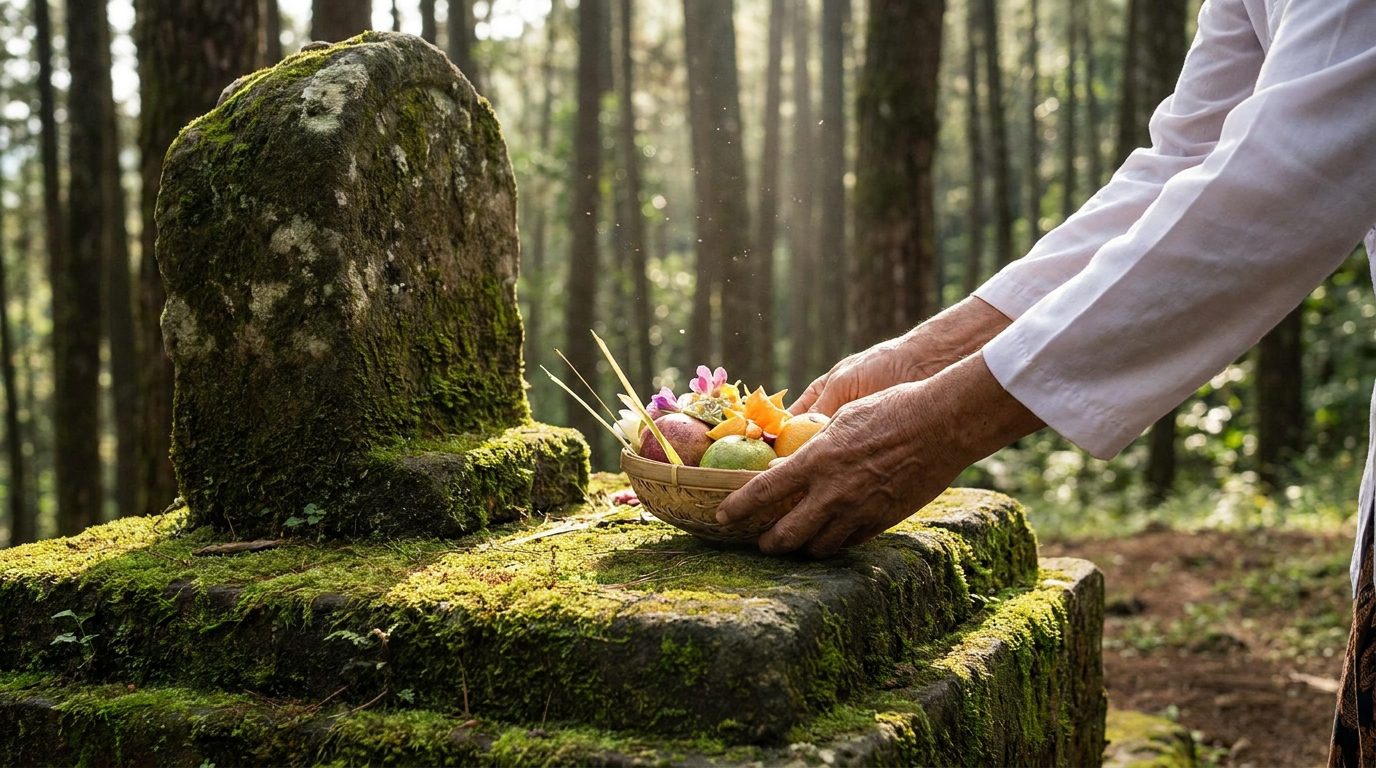
Offering one’s life is not only a grand decision made in a temple, monastery, church, mosque, or sacred place. It is a living, breathing practice of turning the heart toward God, moment by moment.
In the path of Bhakti Yoga, offering one’s life means lovingly dedicating our thoughts, words, actions, relationships, work, talents, struggles, and dreams to the Divine. Bhakti means “devotion” or “loving service,” and yoga means “connection.” So Bhakti Yoga is the path of reconnecting with God through love.
This offering is not forced. It is not about losing ourselves in a harsh or fearful way. Rather, it is about discovering our deepest self—the soul, known in Sanskrit as the atma. The atma is our eternal spiritual identity beyond the body, mind, career, nationality, and temporary roles we play in this world.
To offer one’s life is to say, gently and sincerely:
“Dear Lord, I may not be perfect, but I want my life to be guided by love. Please help me serve You, remember You, and grow closer to You.”
This simple prayer can become the foundation of a beautiful spiritual life.
The Heart of Surrender in Bhakti Yoga
In Bhakti Yoga, surrender does not mean weakness. It means trust. It means allowing divine wisdom to guide us beyond the limitations of ego, fear, and confusion.
The Sanskrit word often used for surrender is sharanagati. It means taking shelter. Just as a child feels safe in the arms of a loving parent, the soul finds peace when it takes shelter of God.
Surrender Is a Relationship, Not a Rule
Sometimes people hear the word “surrender” and imagine giving up freedom. But in Bhakti, surrender is not cold obedience. It is loving relationship.
When we love someone deeply, we naturally want to act in ways that please them. A mother sacrifices sleep for her child. A friend offers support in difficult times. A devoted partner adjusts their life out of love.
Similarly, surrender to God grows from affection, gratitude, and trust.
The Bhagavad-gita, one of the most beloved scriptures of Bhakti Yoga, shares this essential teaching:
“Abandon all varieties of separate duties and simply surrender unto Me. I shall deliver you from all sinful reactions. Do not fear.”
—Bhagavad-gita 18.66
This verse is not an invitation to become irresponsible. It is an invitation to bring every responsibility into loving connection with God. We still care for our family, work honestly, serve society, and make wise choices—but we do so with a heart offered to the Divine.
The Difference Between Giving Up and Giving Over
Offering one’s life does not mean giving up on life. It means giving life over to a higher purpose.
Giving up says, “Nothing matters.”
Giving over says, “Everything can become sacred.”
In Bhakti, even ordinary things can become spiritual when offered with love. Cooking, working, cleaning, studying, raising children, caring for elders, creating art, or helping a neighbor can all become acts of devotion when done with sincere intention.
This is the beauty of Bhakti Yoga. It does not reject the world. It teaches us how to spiritualize our life within the world.
Why Offer Your Life to God?

Every person is searching for meaning. We may search through success, relationships, travel, knowledge, creativity, pleasure, or service. These can all have value, but the heart still longs for something deeper—something eternal.
Bhakti scriptures explain that the soul is naturally a lover of God. When that love is awakened, life becomes whole.
We Are Already Offering Our Life to Something
Whether we realize it or not, we are always offering our life.
We offer time to work. We offer attention to our phones. We offer energy to worries. We offer emotion to relationships. We offer thought to plans, regrets, and desires.
The question is not, “Will I offer my life?”
The question is, “To whom or what am I offering it?”
Bhakti Yoga gently invites us to place God in the center. When God becomes the center, everything else finds its proper place. Our work becomes more honest. Our relationships become more compassionate. Our mind becomes more peaceful. Our choices become more meaningful.
The Soul Finds Joy in Loving Service
A central teaching of Bhakti is that the soul’s deepest nature is to serve with love. In Sanskrit, this loving service is called seva.
Seva is not servitude in a negative sense. It is the joyful expression of love. When we serve someone we love, the service itself becomes happiness.
The Srimad Bhagavatam, a foundational Bhakti scripture, teaches:
“The supreme occupation for all humanity is that by which people can attain loving devotional service unto the Lord. Such service must be unmotivated and uninterrupted to completely satisfy the self.”
—Srimad Bhagavatam 1.2.6
This verse explains that the heart becomes fully satisfied when love for God is steady and sincere, not dependent on selfish gain. This is not a demand for perfection. It is a direction for the heart.
Offering Brings Freedom from Ego
The ego says, “I am the controller. I am the enjoyer. Everything is mine.”
But life teaches us again and again that we are not fully in control. Bodies change. Plans shift. People leave. Success rises and falls. The world is uncertain.
Offering one’s life helps us live with humility and courage. We begin to understand:
“My life is a gift. My talents are gifts. My breath is a gift. Let me use them well.”
This humility is not self-hatred. It is clarity. It allows us to stop carrying the heavy burden of trying to be the center of everything.
Please visit our website for more information on our articles: articles.
The Practical Steps of Offering One’s Life

Offering one’s life may sound vast, but it begins with small, sincere steps. Bhakti Yoga is very practical. It gives us daily ways to remember God and live with devotion.
Begin with a Simple Prayer
Prayer is one of the most natural ways to offer the heart.
You do not need perfect words. You do not need to be from a particular background. You can pray in your own language, in your own room, while walking, driving, cooking, or sitting quietly.
A simple prayer may be:
“Dear God, please guide me. Please help me use this day in a way that pleases You. Please help me become more loving, humble, and sincere.”
Prayer opens the heart. It reminds us that we are not alone.
Offer Your Food
In Bhakti Yoga, offering food to God is a sacred and joyful practice. In Sanskrit, food offered to God is called prasadam, meaning “mercy” or “grace.”
The practice is simple. Prepare vegetarian food with care and cleanliness. Before eating, place it before a picture or form of the Lord and offer a prayer of gratitude. You may say:
“Dear Lord, this food is Yours. Please accept it with love.”
Then receive the food as a blessing.
This changes eating from consumption into communion. It helps us become grateful and mindful. It also reminds us that the body is meant to be cared for as an instrument of service.
In the Bhagavad-gita, Krishna says:
“If one offers Me with love and devotion a leaf, a flower, fruit, or water, I will accept it.”
—Bhagavad-gita 9.26
God is not hungry for our food. God is hungry for our love. Even the simplest offering becomes beautiful when offered with devotion.
Chant the Holy Names
Chanting is at the heart of Bhakti Yoga. The Sanskrit word mantra means a sacred sound that helps free the mind. Man means “mind,” and tra means “to deliver” or “to protect.”
The most widely practiced mantra in the Bhakti tradition is the maha-mantra, meaning “great mantra”:
Hare Krishna Hare Krishna
Krishna Krishna Hare Hare
Hare Rama Hare Rama
Rama Rama Hare Hare
Krishna means “the all-attractive Lord.” Rama means “the source of spiritual joy.” Hare refers to the divine energy of the Lord, especially the energy of devotion.
Chanting can be done softly in meditation, sung with others in kirtan, or repeated throughout the day. Kirtan means devotional singing, often call-and-response, where people gather to chant the names of God together.
Chanting cleanses the heart. It brings peace to the mind. It awakens love. Even if the mind wanders, the sound itself is spiritually powerful. We simply return again and again, with humility.
Serve with What You Have
Offering one’s life does not mean waiting until you are pure, wealthy, educated, or advanced. You can serve now.
You can offer your voice in chanting. You can offer your hands in cooking or cleaning. You can offer your intelligence in organizing. You can offer your resources in charity. You can offer your compassion by listening to someone in pain. You can offer your skills to help a spiritual community.
Bhakti is not measured by outer size. It is measured by sincerity.
A small act done with love can be spiritually great.
Offering the Mind, Body, and Words
Bhakti Yoga invites us to offer our whole being—not only during formal worship, but throughout daily life.
Offering the Mind
The mind is often restless. It runs toward worries, memories, plans, desires, and fears. Offering the mind means gently bringing it back to God.
This can be done by reading scripture, chanting, remembering divine qualities, or reflecting on how to serve in a situation.
If the mind becomes disturbed, we can pray:
“Dear Lord, my mind is unsettled. Please help me remember You.”
We do not have to hate the mind. We can train it with patience.
The Bhagavad-gita teaches that the mind can be both friend and enemy. When guided by spiritual practice, the mind becomes our friend.
Offering the Body
The body is a sacred gift. It is temporary, but it is valuable because it can be used in service.
Offering the body may include bowing in prayer, dancing in kirtan, preparing food for God, helping others, visiting sacred places, or living with purity and discipline.
In Bhakti, spiritual life is not only internal. The body participates. The hands serve. The tongue chants. The ears hear sacred wisdom. The eyes see the beauty of God’s creation. The feet walk toward places of devotion.
Offering the Words
Words have power. They can heal or harm, uplift or discourage.
Offering our words means speaking truthfully, kindly, and purposefully. It means using speech to glorify God, encourage others, ask forgiveness, express gratitude, and share wisdom without pride.
This is a beautiful daily practice:
Before speaking, ask, “Will these words serve love?”
We may not always succeed, but the intention itself begins to transform us.
Living Your Offering in Daily Life
Many people wonder, “How can I offer my life if I have a job, family, bills, responsibilities, and challenges?”
The answer is: exactly there.
Bhakti Yoga is not limited to temples or retreats. It can be practiced in kitchens, offices, classrooms, hospitals, farms, apartments, and busy city streets.
Offering Your Work
Work becomes spiritual when done honestly, responsibly, and with a devotional intention.
You can begin the workday with prayer:
“Dear Lord, please let my work today be an offering. Help me act with integrity, patience, and kindness.”
This does not mean every job is easy or ideal. But even difficult work can become a place of growth. We learn humility, endurance, cooperation, and compassion.
Krishna teaches in the Bhagavad-gita:
“Whatever you do, whatever you eat, whatever you offer or give away, and whatever austerities you perform—do that as an offering to Me.”
—Bhagavad-gita 9.27
This verse makes spiritual life wonderfully inclusive. Whatever you do can become part of your offering.
Offering Relationships
Relationships are one of the most powerful places to practice devotion.
To offer relationships means to see others as souls, not objects for our enjoyment or control. It means asking, “How can I help this person grow closer to love, truth, and God?”
In family life, this may mean patience. In friendship, honesty. In marriage, faithfulness and service. In community, forgiveness. With strangers, kindness.
Offering relationships also means letting go of the desire to possess people. We love them as gifts from God, not as property.
Offering Your Struggles
Many people think they can only approach God when they are strong, clean, peaceful, and successful. But Bhakti teaches that we can offer our struggles too.
Offer your grief. Offer your anxiety. Offer your confusion. Offer your mistakes. Offer your longing. Offer your broken prayers.
God is not surprised by our humanity.
In the Bhagavad-gita, Krishna says that even if a person has faults, if they sincerely turn toward Him in devotion, they should be considered saintly because their intention is rightly directed. This is a deeply compassionate teaching.
Spiritual life is not pretending to be perfect. It is honestly turning toward God again and again.
Common Misunderstandings About Offering One’s Life
Because the idea of surrender can be misunderstood, it is helpful to clarify what offering one’s life does and does not mean.
It Does Not Mean Abandoning Responsibility
Offering your life to God does not mean neglecting your family, health, work, or duties. In fact, Bhakti encourages us to become more responsible, because we see our responsibilities as sacred.
A devoted person should strive to be trustworthy, compassionate, clean, truthful, and steady.
It Does Not Mean Losing Your Personality
Some fear that spiritual surrender will erase who they are. But Bhakti does not destroy personality. It purifies it.
Your nature, gifts, creativity, humor, intelligence, and tenderness can all be offered. God does not need us to become copies of someone else. The Lord wants our sincere heart.
In Bhakti, every soul has a unique relationship with God.
It Does Not Mean Blind Faith
Faith in Bhakti is not meant to be blind or fanatical. It grows through practice, experience, study, and association with sincere people.
The Sanskrit word sadhu-sanga means association with spiritually minded people. Sadhu means a saintly or sincere practitioner, and sanga means company. When we spend time with those who are trying to live with devotion, our own faith becomes nourished.
Healthy spiritual life includes humility, inquiry, and thoughtful practice.
It Does Not Mean You Must Be Perfect Immediately
Offering one’s life is a journey. It unfolds gradually.
A child learning to walk falls many times. Loving parents do not reject the child for falling. They encourage the child to rise again.
Similarly, God sees our sincerity. We may stumble, but we can return. We can chant again. Pray again. Serve again. Begin again.
Building a Daily Bhakti Practice
A life offered to God is strengthened by daily spiritual habits. These practices do not need to be complicated. Begin small and steady.
Morning Remembrance
The morning sets the tone for the day. Before checking messages or entering the rush of responsibilities, take a few minutes to remember God.
You might chant one round of the maha-mantra on beads, read a verse from the Bhagavad-gita, or offer a short prayer.
Even five sincere minutes can change the heart.
Sacred Reading
Reading Bhakti scriptures helps us see life through spiritual wisdom. The Bhagavad-gita, Srimad Bhagavatam, and writings of great saints such as Rupa Goswami, Bhaktivinoda Thakura, and others offer deep guidance.
Do not worry if you do not understand everything at first. Read slowly. Reflect. Ask sincere questions.
A practical method is to read one verse and ask:
“What is God teaching me here?”
“How can I apply this today?”
“What quality can I practice?”
Regular Chanting
Chanting daily is one of the most powerful ways to offer one’s life.
You may begin with five minutes a day. Sit comfortably, breathe gently, and chant:
Hare Krishna Hare Krishna
Krishna Krishna Hare Hare
Hare Rama Hare Rama
Rama Rama Hare Hare
If possible, chant on japa beads. Japa means quiet personal repetition of a mantra. Beads help focus the mind and give structure to the practice.
Over time, chanting becomes a spiritual shelter.
Simple Acts of Service
Find one way each day to serve without expecting recognition.
Wash dishes at home with gratitude. Help a coworker. Cook and offer food. Donate to a worthy cause. Encourage someone. Volunteer in a spiritual community. Share prasadam.
Service softens the heart. It teaches us that love is active.
Deepening Your Offering Over Time
Offering one’s life is not a one-day event. It is a relationship that matures.
At first, we may offer certain parts of life—some time, some prayer, some food, some service. Gradually, the heart desires to offer more.
From Obligation to Love
In the beginning, spiritual practice may feel like discipline. We chant because we know it is good. We pray because we want guidance. We serve because we are trying to grow.
Over time, discipline becomes taste. Taste becomes attachment. Attachment becomes love.
In Sanskrit, spiritual taste is called ruchi. It means a genuine attraction to devotional life. We begin to feel, “This chanting nourishes me. This service gives meaning. This prayer is my shelter.”
Learning from Devotees
We grow by learning from those who live what we aspire to become. A devotee is someone who is devoted to God. Devotees may come from many cultures, ages, and life situations, but their shared quality is sincerity.
Seek the company of people who inspire humility, kindness, truthfulness, and devotion. Ask questions. Listen. Serve alongside them.
Spiritual community is a great blessing.
Accepting Guidance
In Bhakti traditions, guidance from teachers is valued deeply. A guru is a spiritual teacher who helps guide the soul toward God. The word guru means “one who dispels darkness.”
A genuine teacher does not exploit or control. A genuine teacher points us toward God, scripture, and sincere practice.
Not everyone needs to rush into formal commitments. Begin by learning, praying, observing, and building trust. Spiritual life should be approached with sincerity and wisdom.
Offering Your Life in Times of Difficulty
It is often easy to feel devotional when life is peaceful. But what about when life is painful?
Bhakti Yoga gives us shelter in difficulty—not by denying pain, but by helping us bring pain into relationship with God.
When You Feel Unworthy
Many people carry shame. They think, “I am too fallen. I have made too many mistakes. God will not accept me.”
But Bhakti scriptures again and again reveal the compassion of the Lord. God is not looking for a flawless offering. He is looking for a sincere heart.
Even if your prayer is simply, “Please help me want to love You,” that prayer is precious.
When You Are Grieving
Grief can become a sacred offering. Tears can become prayer.
You do not need to rush your healing. Sit before God honestly. Chant softly. Let the holy names hold what words cannot.
Bhakti does not promise that the material world will never bring sorrow. It teaches that beyond all sorrow, the soul has an eternal relationship with the Divine.
When You Feel Spiritually Dry
There may be times when chanting feels mechanical, prayer feels distant, and service feels difficult. This is normal.
Continue gently. Reduce unnecessary pressure. Seek good association. Read inspiring passages. Sing kirtan. Take prasadam. Speak honestly with a trusted devotee.
Sometimes devotion grows quietly underground, like roots before a flower blooms.
The Fruits of a Life Offered to God
What happens when we sincerely offer our life?
The changes may be gradual, but they are real.
Inner Peace
When we stop trying to control everything, the heart becomes lighter. We still act responsibly, but we trust that God is ultimately guiding our journey.
This trust brings peace.
Greater Compassion
As devotion grows, we begin to see others as children of God. This vision softens judgment and increases compassion.
We become less interested in proving ourselves and more interested in serving.
Purification of Desire
Bhakti does not merely suppress desire. It transforms desire.
Instead of asking only, “What can I get?” we begin asking, “How can I love? How can I serve? How can I please God?”
This shift is deeply liberating.
A Sense of Sacred Purpose
A life offered to God is not ordinary. Even simple days become meaningful.
Every meal can be prasadam. Every conversation can be service. Every challenge can be growth. Every breath can become remembrance.
This is the practical beauty of Bhakti Yoga.
A Simple Personal Offering Prayer
If you would like to begin today, you can speak this prayer in your own heart:
“Dear Lord, I offer You my life as it is. I offer my strengths and my weaknesses, my hopes and my fears, my past and my future. Please guide me. Please help me remember You, chant Your names, serve with love, and become an instrument of compassion. I do not know how to surrender fully, but I want to begin. Please accept my small offering.”
This prayer does not need ceremony to be real. It only needs sincerity.
You can repeat it daily. You can change the words. You can whisper it with tears or speak it with quiet determination. God hears the heart.
Taking One Sincere Step Today
Offering one’s life is the journey of bringing love into the center of everything. It is not only for monks, saints, scholars, or people born into a particular tradition. Bhakti Yoga welcomes everyone.
You may be new to spirituality. You may come from another faith. You may have doubts. You may feel broken. You may be full of devotion already. Wherever you are, you are welcome.
Begin with one sincere step.
Chant one mantra. Offer one prayer. Read one verse. Serve one person. Offer one meal. Attend one kirtan. Ask one heartfelt question. Turn toward God one more time.
The path of Bhakti is walked through love, and love grows by practice. The Lord is kind, patient, and close to the sincere heart.
Everyone is welcome to take one sincere step toward God today.
FAQs
What does it mean to offer one’s life?
Offering one’s life refers to the act of sacrificing oneself for a cause, belief, or another person. This can include risking one’s life for the greater good, standing up for one’s principles, or making significant personal sacrifices for the benefit of others.
What are some examples of offering one’s life?
Examples of offering one’s life can include acts of heroism, such as saving someone from danger at the risk of one’s own safety, or making significant personal sacrifices for the well-being of others, such as donating an organ or dedicating one’s life to a noble cause.
What are the potential risks of offering one’s life?
The potential risks of offering one’s life can include physical harm, emotional distress, and personal sacrifice. Depending on the circumstances, offering one’s life can also lead to long-term consequences for oneself and one’s loved ones.
How can one prepare for the possibility of offering one’s life?
One can prepare for the possibility of offering one’s life by considering the potential risks and consequences, discussing one’s intentions with trusted individuals, and making any necessary arrangements to ensure the well-being of loved ones in the event of such a sacrifice.
What are the ethical considerations of offering one’s life?
The ethical considerations of offering one’s life can include weighing the potential benefits of the sacrifice against the potential harm, ensuring that the decision is made with full awareness and consent, and considering the impact on others who may be affected by the sacrifice.

