
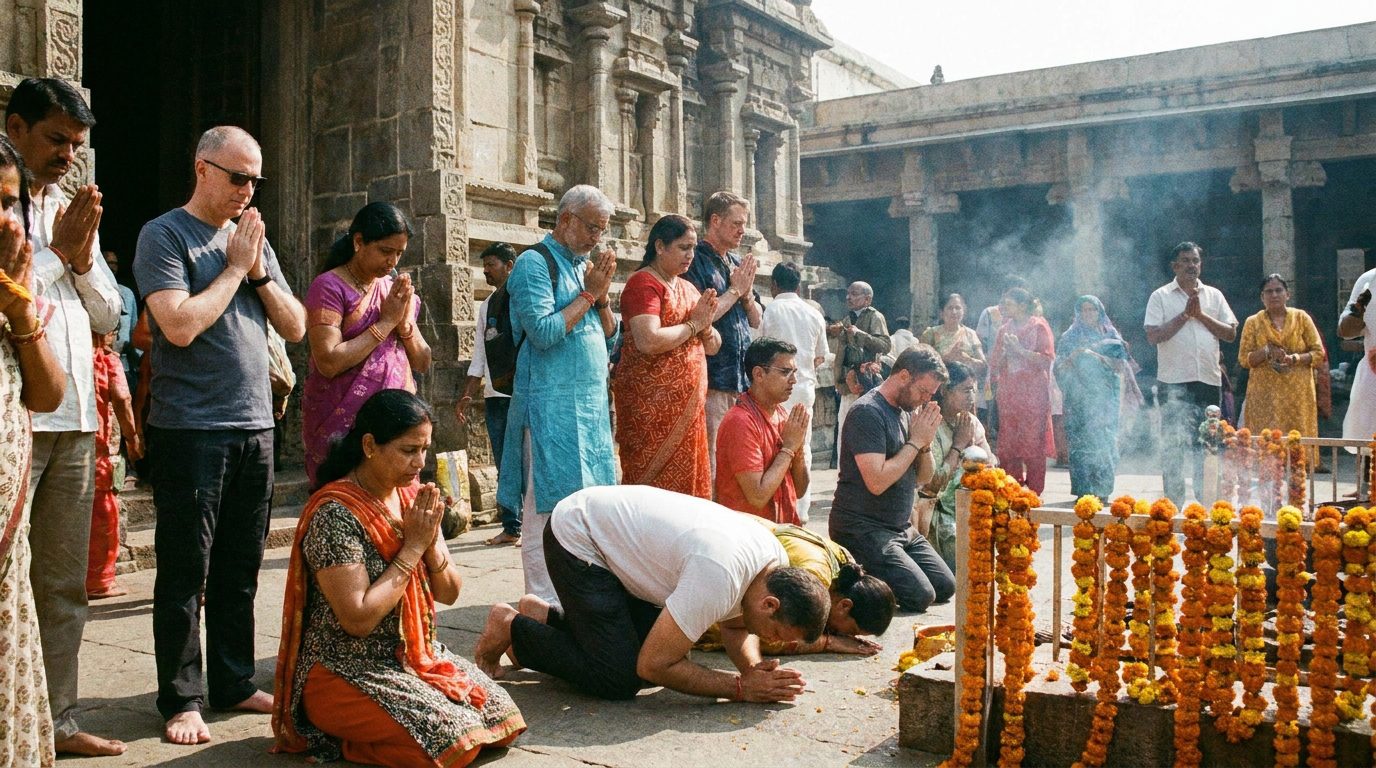
Bhakti Yoga is the path of loving devotion to God. The word bhakti means devotion, love, or heartfelt service. It is not only a philosophy or a set of practices. It is a living relationship with the Divine, expressed through chanting, prayer, service, remembrance, and the humble offering of our lives.
Yet anyone who walks this path sincerely will meet challenges.
Sometimes the mind feels restless during chanting. Sometimes doubts arise. Sometimes old habits return. Sometimes we feel far from God, even while trying to come closer. Sometimes community life is difficult. Sometimes the heart is tender, tired, or confused.
If this is your experience, please know: you are not alone, and you are not failing.
In Bhakti Yoga, difficulties are not signs that we should give up. They can become sacred invitations to deepen our sincerity, compassion, patience, and dependence on grace. The path of devotion is not about pretending to be perfect. It is about learning how to turn toward God again and again, with honesty and love.
The Bhagavad-gita, one of the foundational scriptures of Bhakti Yoga, teaches that even a small step on the spiritual path can protect us from great fear. This is deeply encouraging. Every sincere prayer matters. Every holy name chanted matters. Every moment of service matters. Every attempt to remember God matters.
Bhakti is a path for real people living real lives. It welcomes the joyful and the brokenhearted, the confident and the doubtful, the lifelong seeker and the brand-new beginner. Wherever you are, you can begin from there.
Understanding Difficulties in Bhakti Yoga
Challenges Do Not Mean You Are Unqualified
Many people think spiritual life should immediately feel peaceful, blissful, and easy. Sometimes it does. There may be moments of sweetness in chanting, deep comfort in prayer, or inspiration in sacred community. These moments are gifts.
But Bhakti Yoga also brings us into contact with what is hidden in the heart. Old fears, attachments, pride, grief, impatience, and distractions may rise to the surface. This can feel uncomfortable, but it is often part of healing.
In the Bhagavad-gita, Krishna explains that the mind can be both a friend and an enemy. This means that spiritual growth includes learning how to gently guide the mind toward what nourishes the soul. The restless mind is not unusual. It is part of the human condition.
Bhakti does not ask us to hate the mind or punish ourselves. Instead, it invites us to lovingly redirect the mind toward God through sacred sound, prayer, study, service, and association with spiritually minded people.
Bhakti Is a Relationship, Not a Performance
One of the most common challenges in spiritual life is turning devotion into performance. We may compare ourselves to others. We may worry that we are not chanting enough, serving enough, reading enough, or feeling enough.
But Bhakti Yoga is not a competition. It is a relationship.
If a child takes a small step toward a loving parent, the parent does not reject the child because the step is unsteady. In the same way, the Divine receives our sincere attempts with compassion.
The Sanskrit word sadhana means spiritual practice. It refers to the regular practices that help awaken love for God, such as chanting mantra, hearing sacred wisdom, worship, prayer, and service. Sadhana is important, but it is not meant to make us proud or harsh. It is meant to soften the heart.
A simple practice done with sincerity can be more transformative than a large practice done with ego. God sees the heart.
Difficulties Can Become Doorways
In Bhakti traditions, saints often describe obstacles as opportunities to remember God more deeply. When life feels easy, we may forget our dependence on divine grace. When life becomes difficult, we may be humbled into prayer.
This does not mean we should seek suffering or minimize pain. Bhakti is not about spiritual bypassing. We should care for our bodies, minds, relationships, and responsibilities. We should seek help when needed.
At the same time, we can ask: “How can this difficulty bring me closer to God? What is this moment teaching me? How can I respond with more love?”
This question can transform the way we meet challenges.
Overcoming Restlessness in Chanting and Prayer
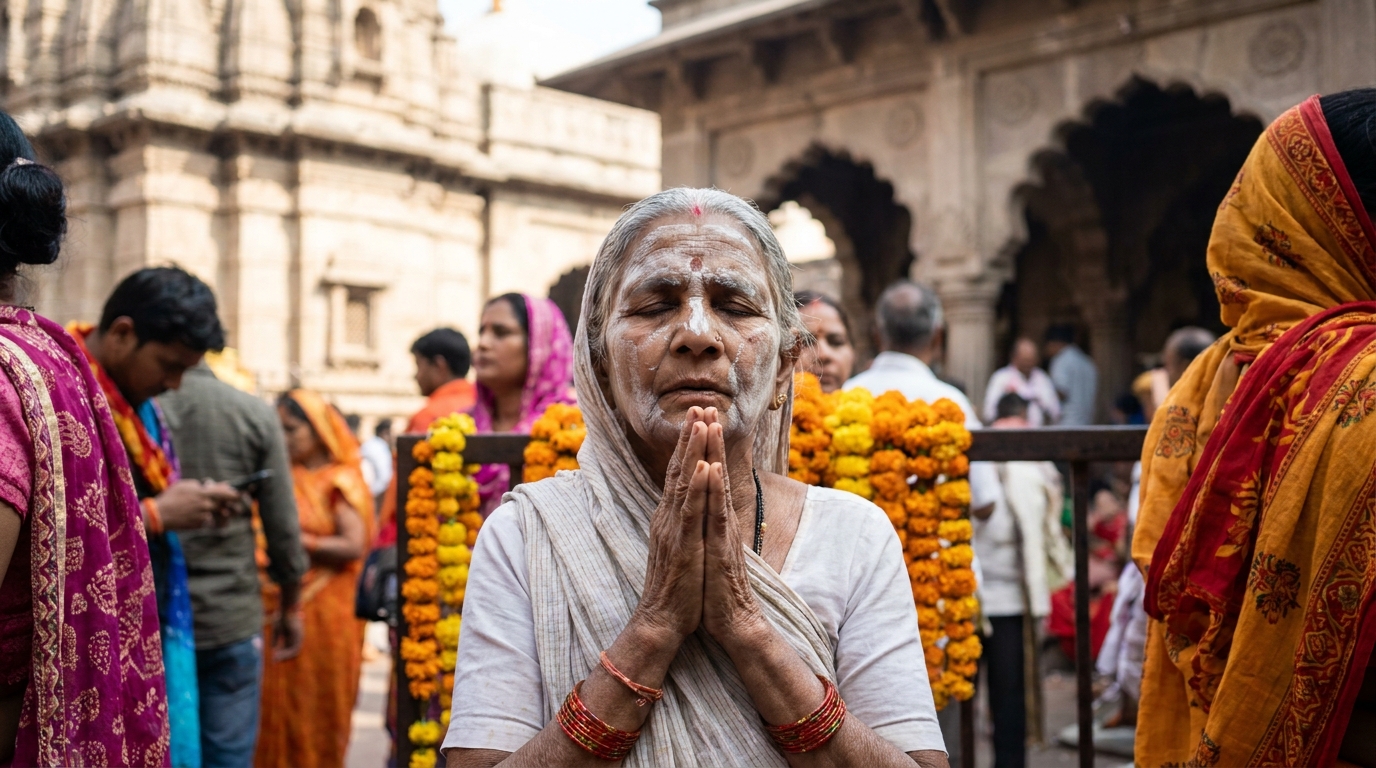
When the Mind Wanders During Mantra Meditation
One of the central practices of Bhakti Yoga is chanting the names of God. A mantra is a sacred sound vibration that helps focus the mind and awaken the heart. Many Bhakti practitioners chant the maha-mantra:
Hare Krishna Hare Krishna
Krishna Krishna Hare Hare
Hare Rama Hare Rama
Rama Rama Hare Hare
Maha means great, and mantra can be understood as a sound that helps free the mind. “Hare,” “Krishna,” and “Rama” are holy names of the Divine, calling upon God’s energy, beauty, joy, and loving presence.
Chanting may be done softly in meditation, sung with others in kirtan devotional music, or repeated throughout the day. But often, when we sit to chant, the mind runs everywhere.
We may think about emails, relationships, chores, regrets, plans, or worries. This is normal.
The practice is not to force the mind into silence through frustration. The practice is to notice the wandering and gently return to the holy name. Each return is an act of devotion.
Every time we come back, we are saying, “Dear Lord, I want to be with You.”
Practical Ways to Deepen Chanting
If chanting feels difficult, try making the practice more personal and approachable.
Choose a consistent time, even if it is short. Early morning is traditionally recommended because the mind is quieter, but any sincere time is valuable.
Create a simple sacred space. It may include a candle, a picture of Krishna or another form of God dear to your heart, sacred texts, flowers, or anything that reminds you of divine love.
Begin with a prayer. Before chanting, you might say: “Please help me hear Your name. Please help me be present. Please accept this small offering.”
Listen carefully. Instead of trying to create a special feeling, simply hear each syllable of the mantra.
Chant with others when possible. Group chanting, or kirtan, can carry the heart when personal practice feels dry.
Be patient. Taste in chanting grows over time, like watering a seed.
In the Srimad-Bhagavatam, a beloved Bhakti scripture, hearing and chanting about God are described as purifying practices that cleanse the heart. This cleansing is gradual. Some days feel bright, some days feel cloudy, but the holy name continues to work within us.
When Prayer Feels Empty
At times, prayer may feel mechanical or unanswered. This can be painful. We may wonder if God is listening.
Bhakti wisdom encourages us to keep praying honestly. Prayer does not need to be polished. It can be as simple as:
“I am struggling.”
“I do not know what to do.”
“Please guide me.”
“Please help me love You.”
“Please help me serve.”
The great teachers of Bhakti remind us that sincere prayer opens the heart. Even if we do not immediately feel a response, prayer changes our inner posture. It moves us from isolation to relationship.
God is not distant from the honest heart.
Please visit our website for more information on our articles: articles.
Facing Doubt with Humility and Wisdom
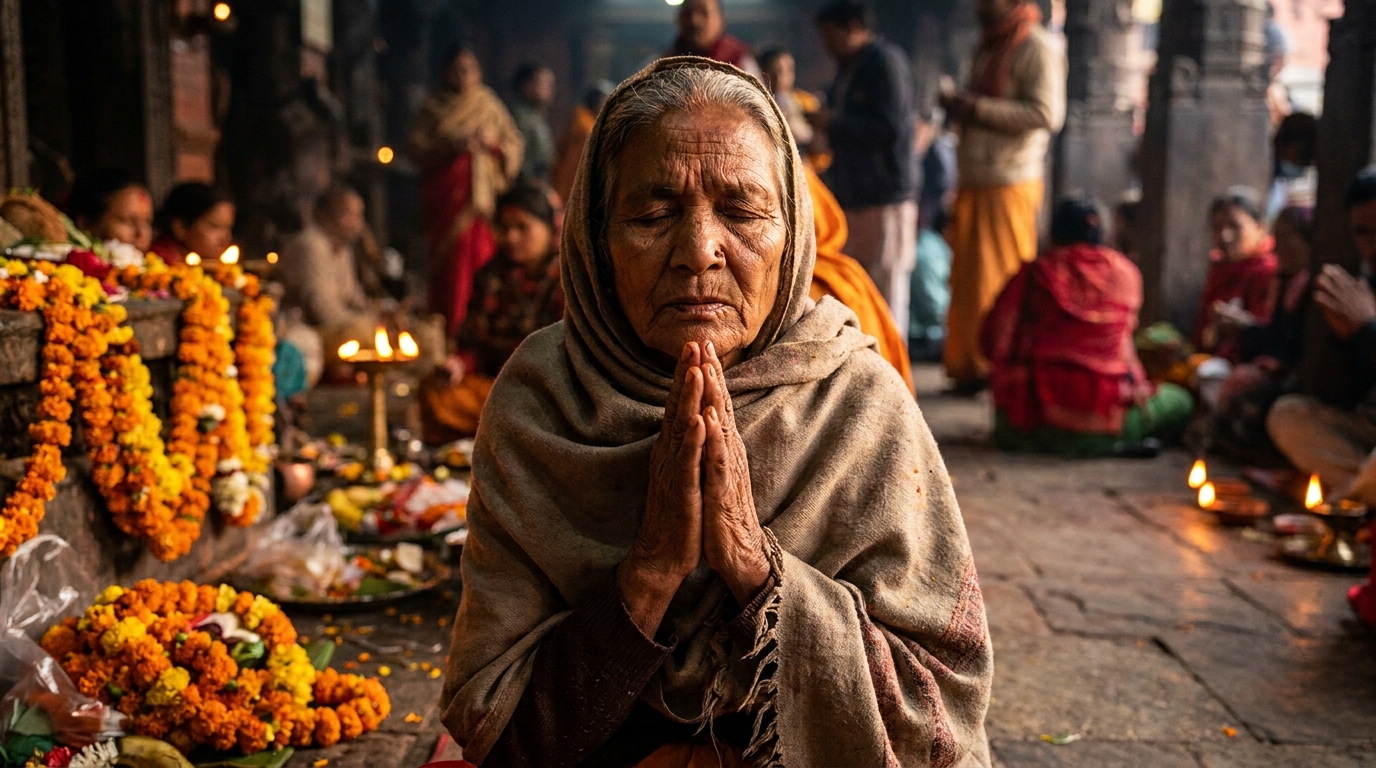
Doubt Can Be Part of Spiritual Growth
Many sincere seekers experience doubt. Doubt about scriptures. Doubt about teachers. Doubt about practices. Doubt about God. Doubt about oneself.
This does not make someone unspiritual. In fact, honest questions can become part of deepening faith.
Faith in Bhakti Yoga is not meant to be blind or forced. The Sanskrit word shraddha is often translated as faith, but it also carries the sense of trust, reverence, and willingness to walk the path. Shraddha may begin as a small seed: “Maybe there is something sacred here. Maybe I can try.”
As we practice, hear wisdom, associate with sincere devotees, and experience inner transformation, that seed grows.
The Bhagavad-gita encourages approaching spiritual truth with humility, inquiry, and service. This means questions are welcome when they are asked sincerely. Spiritual life becomes strong when the heart and intelligence work together.
Bringing Questions Into Sacred Conversation
If doubts arise, try not to hide them in shame. Bring them into healthy spaces.
Speak with a trusted mentor, teacher, or mature practitioner. Read authentic scriptures with guidance. Journal your questions. Pray about them. Ask God to reveal what is helpful for your growth.
Some doubts come from genuine spiritual inquiry. Others come from fatigue, disappointment, fear, or past wounds. It helps to gently ask, “What is underneath this doubt?”
Am I confused and needing study?
Am I hurt and needing healing?
Am I afraid of surrender?
Am I comparing myself to others?
Am I expecting spiritual life to remove all discomfort?
The path becomes clearer when we listen deeply.
Avoiding Extremes
When doubt appears, people sometimes move toward extremes. One extreme is suppressing questions and pretending everything is fine. Another is abandoning practice too quickly because everything is not clear.
Bhakti offers a middle way: remain humble, keep practicing sincerely, and seek understanding.
We do not need to know everything before chanting God’s names. We do not need to have perfect faith before offering a prayer. We can bring our uncertainty into the practice itself.
A simple prayer may be: “Dear Lord, I have doubts, but I want to know You. Please guide me.”
This kind of honesty is precious.
Working Through Old Habits and Attachments
Spiritual Growth Is Gradual
Many people come to Bhakti Yoga with a sincere desire to live more purely, lovingly, and consciously. Yet old habits do not always disappear overnight.
We may struggle with anger, envy, gossip, unhealthy relationships, addictive patterns, laziness, pride, or attachment to pleasures that do not truly nourish the soul. This can be discouraging.
But transformation in Bhakti is often gradual. The heart is softened through repeated contact with divine grace.
In the Bhagavad-gita, Krishna assures that even if a person struggles, if they remain sincerely devoted, they are on the right path. This teaching is not permission to be careless, but it is a message of hope. We are not defined only by our present weakness. We are also defined by our sincere direction.
The question is not, “Am I perfect today?” The question is, “Am I willing to turn toward God again?”
Replacing, Not Just Renouncing
Bhakti Yoga does not focus only on giving things up. It focuses on developing a higher taste.
If we try to remove unhealthy habits without nourishing the heart, we may feel empty or deprived. Bhakti gives positive spiritual engagement: chanting, kirtan, sacred food, uplifting friendships, service, study, prayer, and meaningful daily offerings.
For example, instead of only trying to stop negative speech, we can practice speaking words that encourage others. Instead of only resisting distraction, we can fill our ears with kirtan or wisdom talks. Instead of only trying to avoid selfishness, we can offer practical service.
The Sanskrit word seva means service. In Bhakti, service is not just a duty; it is an expression of love. Cooking for others, cleaning a sacred space, listening with compassion, helping a neighbor, supporting a spiritual community, caring for family, or offering one’s work to God can all become seva when done with devotion.
Love grows by being practiced.
When You Fall Short
Everyone falls short sometimes. The important thing is what we do next.
Shame says, “I am hopeless.”
Pride says, “It was not my fault.”
Bhakti says, “Let me humbly return.”
If you make a mistake, pause. Acknowledge it honestly. Ask forgiveness where needed. Learn from it. Pray for strength. Take shelter of the holy name. Continue your practice.
Do not let one stumble become a reason to leave the path. The path is made of returning.
Krishna’s mercy is greater than our weakness.
Navigating Community Challenges
Spiritual Community Is a Gift and a Practice
In Bhakti Yoga, spiritual community is called sanga or sadhu-sanga. Sadhu means a saintly or sincere spiritual person, and sanga means association. Sadhu-sanga means keeping company with those who inspire us toward God.
Community can be one of the greatest blessings on the path. We chant together, learn together, serve together, share meals, and remind one another of what matters most.
But community can also bring challenges. People are people. Even in spiritual spaces, misunderstandings happen. Egos clash. Communication breaks down. Expectations differ. Someone may say something hurtful. We may feel unseen, judged, or disappointed.
This can be especially painful because we may expect spiritual community to be free from human difficulty.
Bhakti teaches us to honor the ideal while also being realistic and compassionate. A spiritual community is not a collection of perfect people. It is a place where imperfect people practice loving God and loving one another.
Practicing Humility Without Losing Healthy Boundaries
Humility is central to Bhakti. One famous verse by Sri Chaitanya Mahaprabhu, a great teacher of divine love and congregational chanting, encourages us to be humbler than a blade of grass, more tolerant than a tree, and ready to offer respect to others. In such a state, one can chant the holy name constantly.
This teaching is profound, but it should be understood with care.
Humility does not mean accepting abuse. Tolerance does not mean ignoring harmful behavior. Offering respect does not mean denying truth.
Healthy Bhakti includes compassion and boundaries. If a situation is unsafe, manipulative, or damaging, it is appropriate to seek support, speak honestly, and take wise action. Spiritual life should help us become more truthful and loving, not more passive or afraid.
We can practice humility by being willing to learn, apologize, and see others as souls. We can practice boundaries by honoring the dignity and wellbeing of everyone involved, including ourselves.
Dealing With Conflict Devotionally
When conflict arises, try these steps:
Pray before responding. Ask for guidance and a soft heart.
Listen carefully. Sometimes people need to feel heard before healing begins.
Speak truthfully but kindly. Bhakti does not require artificial sweetness. It asks for words that are honest and beneficial.
Avoid gossip. Speaking about others without a sincere purpose can damage the heart and the community.
Seek mediation when needed. A mature devotee, counselor, or community leader may help.
Remember the shared goal. We are all trying, in different ways, to move closer to God.
Community challenges can teach us patience, forgiveness, humility, and discernment. They can also teach us to deepen our connection with God beyond social comfort.
Balancing Bhakti With Daily Responsibilities
Spiritual Life in the Middle of Real Life
Some people imagine Bhakti Yoga means leaving everything behind. For some, a monastic path may be natural. But for many, Bhakti is practiced in homes, workplaces, schools, families, and busy cities.
The Bhagavad-gita was spoken not in a quiet forest retreat, but on a battlefield, to Arjuna, a person facing duty, confusion, fear, and responsibility. This is significant. Krishna did not tell Arjuna that spiritual life means escaping all action. He taught him to act with devotion, wisdom, and surrender.
This is very practical for us.
Your workplace can become a place of integrity and service. Your home can become a small temple. Your cooking can become an offering. Your parenting can become seva. Your studies can become a way to develop gifts in God’s service. Your daily commute can become time for mantra meditation or sacred listening.
Bhakti does not require a perfect environment. It invites us to spiritualize the environment we are in.
Creating a Sustainable Practice
One common challenge is trying to do too much too quickly. Inspiration is wonderful, but if our practice is not sustainable, we may become overwhelmed.
Start with something steady.
Chant one round of mantra on beads. Or chant for five minutes daily. Read one verse of the Bhagavad-gita. Offer your food with a simple prayer. Attend one kirtan a week. Do one act of service. Keep a small gratitude journal addressed to God.
Consistency is powerful.
If you miss a day, begin again the next day. Avoid the all-or-nothing mindset. Spiritual life is not ruined by a missed practice. It is strengthened by returning.
A small daily offering, made sincerely, can gradually transform the heart.
Offering Work to God
In Bhakti Yoga, we learn the art of offering. Krishna says in the Bhagavad-gita that whatever we do, whatever we eat, whatever we offer or give away, and whatever discipline we perform can be done as an offering to Him.
This teaching makes devotion accessible.
Before beginning work, you might pray: “May my efforts today be pleasing to You. May I serve with honesty and kindness.”
Before eating, you might offer your food: “Dear Lord, thank You for this nourishment. Please accept it with love.”
Before a difficult conversation, you might pray: “Please help me speak with truth and compassion.”
In this way, ordinary life becomes connected to God.
Moving Through Dryness and Spiritual Discouragement
When Devotion Feels Distant
Most practitioners experience dry periods. Chanting may feel tasteless. Scripture may feel hard to absorb. Kirtan may not move the heart as before. Service may feel tiring. We may wonder where the sweetness has gone.
This can be confusing, but it is not uncommon.
Spiritual life, like any relationship, includes seasons. There are times of closeness and times when love is tested through steadiness. Dryness can purify our motivation. Are we practicing only for pleasant feelings, or are we practicing because we want to love and serve God?
Of course, we should not become harsh with ourselves. Sometimes dryness comes from exhaustion, grief, burnout, loneliness, poor health, or emotional strain. In those cases, we need care, rest, and support.
Bhakti is tender. It honors the whole person.
Nourishing the Heart Again
If you feel spiritually dry, return to simple nourishment.
Spend time in kirtan, even if you only listen quietly.
Read stories of devotees from the Srimad-Bhagavatam or other Bhakti texts. Stories can reach the heart when philosophy feels difficult.
Take prasadam, sacred food offered to God. Prasadam means mercy. Eating food prepared and offered with love can be a deeply healing practice.
Serve in a simple way. Sometimes the heart reawakens through helping others.
Visit a temple or sacred gathering if possible.
Spend time in nature and remember God as the source of beauty.
Pray honestly: “I feel distant, but I want to come closer. Please help me.”
Dryness is not the end. Often, beneath the surface, roots are growing.
Remembering Grace
In Bhakti, we make effort, but we also depend on grace. Grace means divine mercy, the loving help of God that we cannot manufacture or control.
This is comforting because spiritual growth is not only our project. We are not climbing alone. God is also reaching toward us.
Our role is to remain open, sincere, and willing.
Even when our practice feels small, grace can enter.
Transforming Pain Into Compassionate Devotion
Bringing Suffering to God
Life brings pain: loss, illness, heartbreak, injustice, uncertainty, loneliness, and disappointment. Sometimes people feel they must hide their pain to be spiritual. But Bhakti invites us to bring our whole heart to God.
The great devotees in scripture often prayed with intense honesty. They cried, questioned, surrendered, praised, and pleaded. Their prayers were not always calm and composed. They were real.
God is not offended by our tears.
When we bring suffering into prayer, pain can become part of our relationship with the Divine. We may not receive immediate answers, but we may receive strength, clarity, companionship, or the ability to endure with faith.
A simple prayer in pain may be: “Please be with me. Please guide me through this. Please let this soften my heart, not close it.”
Allowing Pain to Soften the Heart
Pain can make us bitter, or it can make us compassionate. Bhakti helps us choose compassion.
When we remember that every person is a soul, a beloved part of God, we begin to see others with more tenderness. We realize that many people are carrying invisible struggles. This awareness can deepen our service.
Our own suffering may help us listen better, judge less, and love more sincerely.
This does not mean pain is good in itself. It means that with God’s grace, even pain can be transformed.
Serving From the Wound, Not the Ego
Sometimes our hardships become the very place from which we serve others. Someone who has struggled with loneliness may become deeply welcoming. Someone who has faced doubt may become gentle with seekers. Someone who has known grief may sit compassionately with the grieving.
In Bhakti, service is not about proving our worth. It is about offering what we have received and what we are learning.
We can pray: “May my life, including my difficulties, become useful in Your service.”
This prayer gives meaning without denying pain.
Practical Tools for Overcoming Bhakti Challenges
Keep a Daily Anchor
A daily anchor is one simple practice that keeps you connected no matter what else happens. It might be chanting a set number of mantras, reading one verse, offering one prayer, or bowing before your altar.
The anchor should be realistic. On difficult days, it may be very small. But it reminds the heart: “I belong to God.”
Over time, this steady connection becomes a source of strength.
Seek Supportive Association
We become influenced by the company we keep. Seek people who encourage sincerity, humility, joy, and service. This does not mean only spending time with people who agree with us. It means choosing association that helps us remember our spiritual purpose.
If you do not have local community, online classes, kirtans, study groups, and spiritual friendships can help. Even listening to the words and songs of sincere devotees can be a form of uplifting association.
No one has to walk alone.
Study Sacred Wisdom Regularly
Scripture gives direction when emotions fluctuate. The Bhagavad-gita, Srimad-Bhagavatam, and writings of Bhakti saints offer deep guidance for modern life.
Study does not have to be complicated. Read a small amount and ask: “How can I live this today?”
For example, when Krishna teaches equanimity, we can practice staying steady in praise and criticism. When He teaches devotion, we can offer our work. When He teaches surrender, we can release the illusion that we control everything.
Sacred wisdom becomes powerful when applied gently and consistently.
Make Service Practical
Service does not have to be dramatic. It can be simple and close at hand.
Call someone who is lonely. Cook and offer a meal. Help clean after a gathering. Share kirtan with a friend. Donate time or resources. Encourage someone’s spiritual practice. Care for your family with devotion. Do your job honestly as an offering.
When service is connected to God, it purifies the heart.
Practice Forgiveness and Self-Compassion
Forgiveness is not always immediate, and it does not mean pretending harm did not happen. But resentment can keep the heart bound. Through prayer and time, we can ask for freedom from bitterness.
Self-compassion is also important. Many seekers are harder on themselves than they would ever be on a friend. Bhakti teaches humility, but humility is not self-hatred. You are a soul, loved by God. Treat yourself as someone entrusted to your care.
When you struggle, speak to yourself with kindness and responsibility: “I made a mistake, and I can take the next right step.”
Deepening Faith Through Perseverance
The Power of Returning
If there is one skill that helps us navigate Bhakti challenges, it is returning.
Return to the holy name.
Return to prayer.
Return to service.
Return to sacred wisdom.
Return to humble association.
Return to God.
Again and again.
The path of Bhakti is not walked by those who never stumble. It is walked by those who keep turning back toward love.
Every return deepens the relationship.
Surrender as a Gentle Practice
The Sanskrit word saranagati means surrender or taking shelter. Sometimes surrender sounds frightening, as if we must lose ourselves. But in Bhakti, surrender means placing our heart in the care of the One who loves us completely.
It is not a one-time dramatic event only. It is a daily practice.
We surrender when we pray before acting.
We surrender when we accept guidance.
We surrender when we release resentment.
We surrender when we offer our talents.
We surrender when we admit we need grace.
We surrender when we trust that God is present, even in uncertainty.
Surrender grows naturally as love grows.
Trusting the Long Journey
Bhakti Yoga is both immediate and lifelong. We can connect with God right now through one sincere chant, one prayer, one offering. And we can continue growing in that relationship for the rest of our lives.
Do not rush the unfolding of your heart.
A seed does not become a tree in a day. It needs watering, sunlight, protection, and time. In the same way, the seed of devotion grows through chanting, hearing, remembering, serving, worshiping, praying, and keeping loving company.
Your sincere effort is never wasted.
A Loving Way Forward
Navigating Bhakti challenges is not about becoming spiritually invincible. It is about becoming more honest, humble, compassionate, and dependent on divine love.
Restlessness can teach us to return to the holy name.
Doubt can lead us into deeper inquiry.
Old habits can remind us to seek a higher taste.
Community challenges can teach humility and boundaries.
Daily responsibilities can become offerings.
Dryness can purify our motivation.
Pain can soften the heart into service.
Through it all, God remains near.
Bhakti Yoga is a practical path of love. We chant, pray, serve, study, gather, offer food, care for others, and remember that we are eternal souls meant for relationship with the Divine. We do not need to be perfect to begin. We only need a little sincerity.
Wherever you come from, whatever your background, and whatever your present struggle, you are welcome on this path. Take one sincere step toward God today. Chant one mantra. Offer one prayer. Do one act of service. Read one sacred verse. Sit quietly and say, “I want to come closer.”
That one step matters. And by grace, one step becomes another.
Everyone is welcome to begin again.
FAQs
What is Bhakti?
Bhakti is a term used in Hinduism to refer to the devotional practice of worship and adoration towards a personal god or goddess.
Why does Bhakti sometimes feel difficult?
Bhakti can feel difficult for various reasons, including personal struggles, lack of motivation, distractions, or feeling disconnected from the divine.
What are some strategies for overcoming difficulties in Bhakti?
Some strategies for overcoming difficulties in Bhakti include regular practice, seeking guidance from a spiritual teacher, engaging in community worship, and cultivating a deeper understanding of the divine.
How can one stay motivated in their Bhakti practice?
Staying motivated in Bhakti practice can be achieved through setting realistic goals, finding inspiration in scriptures and stories of devotion, and surrounding oneself with a supportive spiritual community.
Are there different forms of Bhakti that one can explore?
Yes, there are different forms of Bhakti, including Saguna Bhakti (devotion to a personal deity with attributes) and Nirguna Bhakti (devotion to the formless, attributeless divine). Additionally, there are various devotional practices such as kirtan, puja, and meditation that one can explore.

