
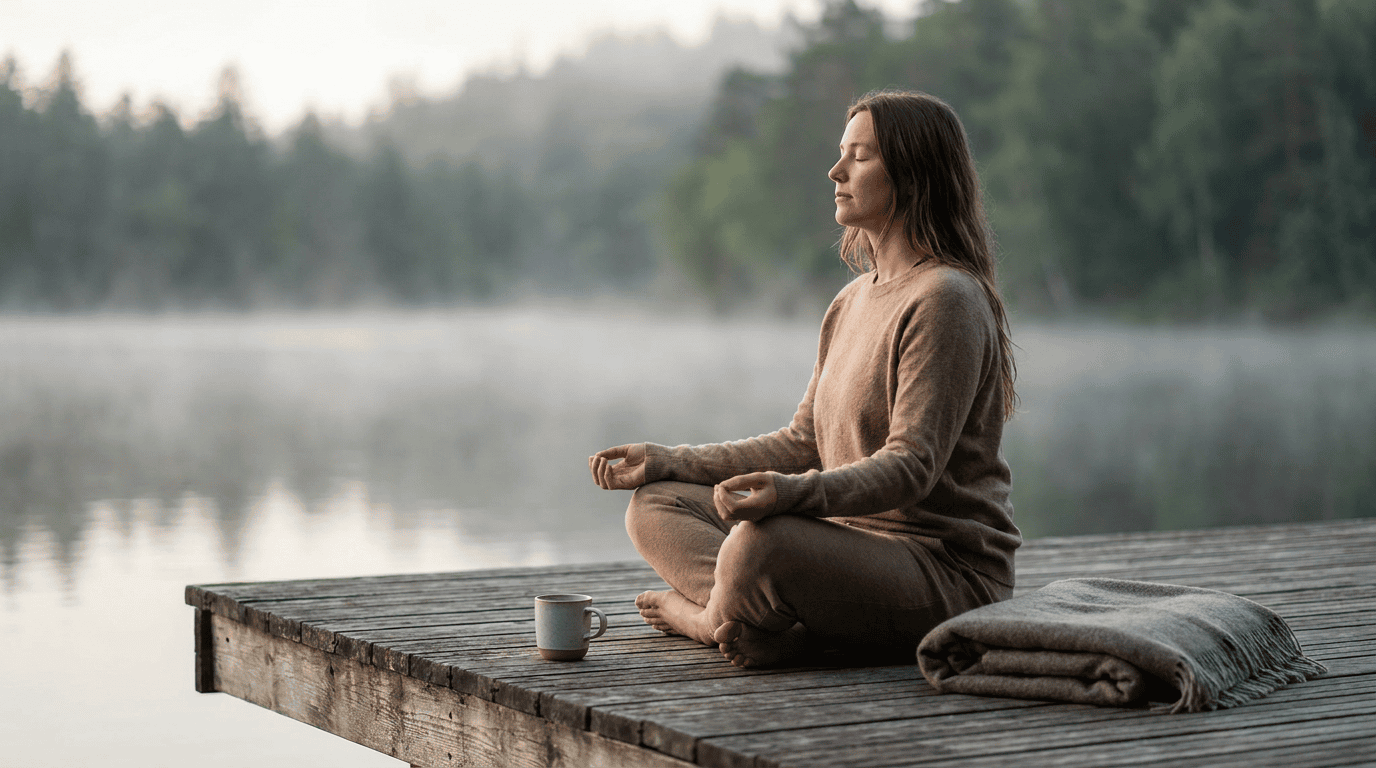
Many of us are carrying more than we know how to name.
There is the stress of responsibilities, the anxiety of uncertainty, the heaviness of news, the pressure to perform, the ache of relationships, and the quiet loneliness that can appear even in a crowded room. The mind becomes full, the heart becomes tired, and even when the body rests, we may not feel deeply rested.
Meditation offers a sacred pause.
In the path of Bhakti Yoga, meditation is not simply a technique to empty the mind. It is a loving practice of turning the heart toward God. Bhakti means “devotion” or “loving service,” and Yoga means “connection.” So Bhakti Yoga is the path of reconnecting with the Divine through love.
This path welcomes everyone—whether you are new to spirituality, returning after a long time, deeply religious, unsure what you believe, or simply seeking peace. You do not need to be perfect to begin. You only need sincerity.
Meditation for stress, anxiety, and mental clarity becomes especially powerful when it is rooted in love, prayer, chanting, and remembrance. It gives the restless mind a higher shelter and reminds the heart: you are not alone.
Understanding Stress, Anxiety, and the Restless Mind
Stress and anxiety are not signs that something is wrong with you. They are signs that the mind and nervous system are trying to protect you, often while carrying too much.
Modern life constantly asks us to respond, decide, achieve, compare, and consume. The mind rarely gets a chance to be still. Over time, this can create a state of inner noise.
What Stress Does to the Mind and Body
Stress is the body’s natural response to pressure. In small amounts, it can help us act, focus, or respond to danger. But when stress becomes constant, it can affect sleep, digestion, mood, energy, and concentration.
You may notice:
- Racing thoughts
- Tightness in the chest or shoulders
- Irritability or overwhelm
- Difficulty sleeping
- Trouble making decisions
- Feeling disconnected from yourself or others
Meditation helps by creating space between you and your thoughts. It teaches the mind that it does not have to chase every worry.
How Anxiety Feels Spiritually and Emotionally
Anxiety can feel like living in the future before it has arrived. The mind imagines what could go wrong, and the body reacts as if it is already happening.
From a spiritual perspective, anxiety often reveals our longing for safety, guidance, and trust. Beneath many anxious thoughts is a simple human prayer: “Please let everything be okay.”
Bhakti Yoga honors this longing. Instead of judging the anxious mind, we gently bring it into relationship with God through chanting, prayer, and remembrance.
Mental Clarity Is More Than Productivity
Mental clarity is not just about doing more or thinking faster. True clarity means seeing life with a steadier heart. It means knowing what matters. It means responding instead of reacting.
In Sanskrit, the word sattva refers to clarity, harmony, and goodness. A sattvic mind is peaceful, balanced, and receptive to wisdom. Meditation helps cultivate this inner quality—not by force, but by gently purifying the heart and attention.
Meditation in Bhakti Yoga: A Path of Loving Connection

In many traditions, meditation may be described as mindfulness, concentration, contemplation, or silence. In Bhakti Yoga, meditation is centered on loving remembrance of the Divine.
The mind needs an anchor. In Bhakti, that anchor may be a sacred name of God, a prayer, a verse from scripture, the form of the Lord, or a sincere offering of the heart.
What Makes Bhakti Meditation Unique
Bhakti meditation is personal. It is not merely observing the mind from a distance; it is bringing the mind into loving connection.
A simple Bhakti meditation may include:
- Chanting the names of God
- Repeating a mantra softly
- Offering a prayer
- Listening to sacred music
- Reading wisdom from scripture
- Sitting quietly with gratitude
- Serving others with devotion
The heart of the practice is not performance. It is relationship.
Even if the mind wanders many times, each gentle return is an act of love.
The Meaning of Mantra
A mantra is a sacred sound or phrase used for meditation. The Sanskrit word mantra can be understood as “that which frees the mind.” Man means “mind,” and tra means “to protect” or “to deliver.”
In Bhakti Yoga, mantras are not just calming words. They are spiritual sound vibrations that help reconnect the soul with God.
One of the most well-known Bhakti mantras is the Hare Krishna maha-mantra:
Hare Krishna, Hare Krishna,
Krishna Krishna, Hare Hare,
Hare Rama, Hare Rama,
Rama Rama, Hare Hare.
Maha means “great,” so maha-mantra means “great mantra.” Hare is a call to the Divine energy of the Lord. Krishna means “the all-attractive one,” and Rama means “the source of joy.” In simple terms, this mantra is a prayer: “O Lord, O Divine Energy, please engage me in loving service.”
For stress and anxiety, chanting gives the mind something sacred to rest upon. Instead of feeding fear, the mind receives nourishment.
Japa: Personal Mantra Meditation
Japa means the soft repetition of a mantra, often counted on beads. In Bhakti Yoga, japa meditation is a daily practice of chanting with attention and devotion.
You do not need to know everything before beginning. You can sit comfortably, breathe naturally, and repeat a sacred name or prayer with sincerity.
If you have beads, you may use them. If not, you can simply chant for five minutes. The power is not in the external arrangement alone, but in the intention of the heart.
Check out our latest posts at https://thebhaktihouse.org/blog.
How Meditation Helps with Stress Relief
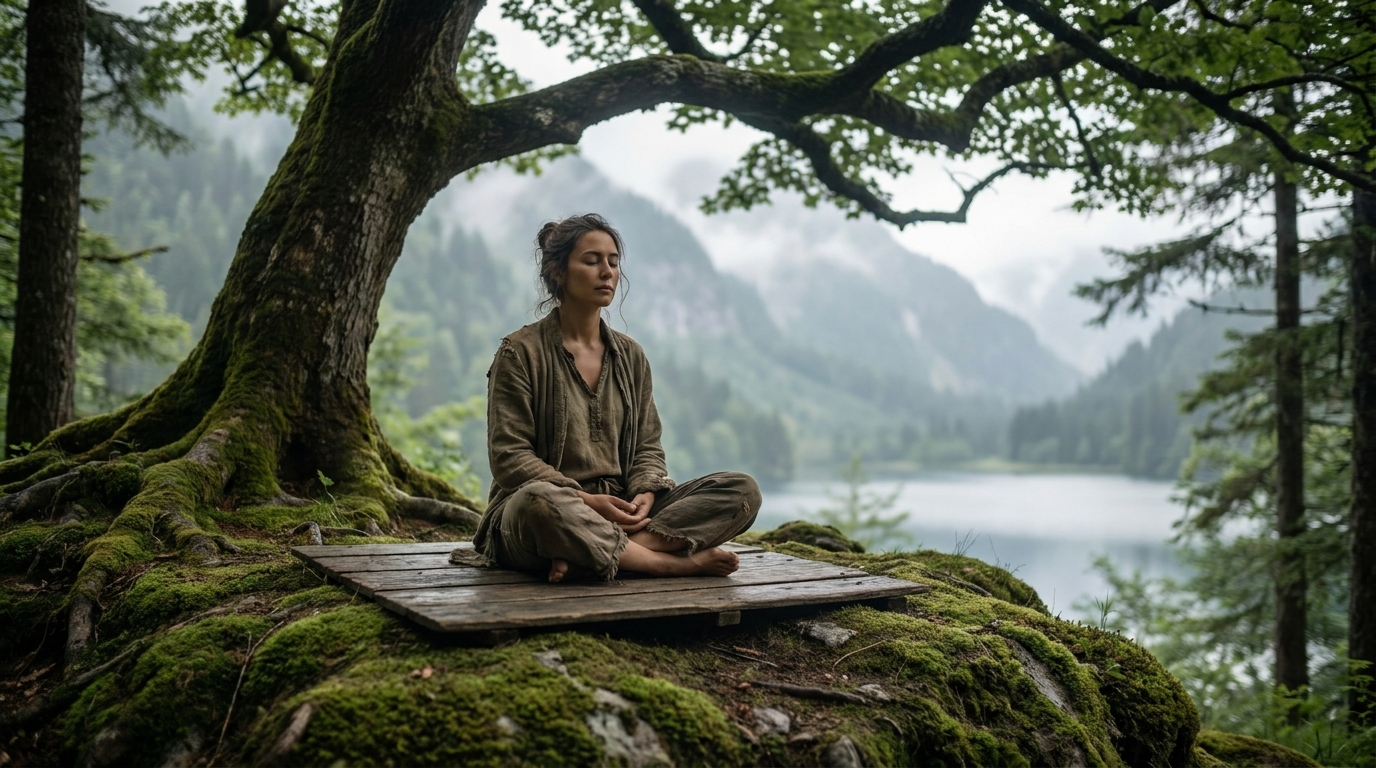
Meditation helps reduce stress because it gently interrupts the cycle of constant reaction. It brings the mind back to the present moment and helps the body remember how to soften.
In Bhakti meditation, stress relief comes not only from relaxation, but from surrender—placing our burdens before God.
Creating a Sacred Pause
A sacred pause is a moment where we stop trying to control everything and simply become present.
You might pause before answering a difficult message. You might pause before starting work. You might pause when anxiety rises in the chest.
In that pause, you can breathe and silently pray:
“Dear Lord, please guide me. Help me respond with wisdom and love.”
This small practice can transform daily life. Meditation does not only happen on a cushion. It can happen in the kitchen, in the car, before a meeting, or while walking.
Releasing the Burden of Control
Much of our stress comes from trying to control outcomes that are not fully in our hands. Bhakti Yoga teaches that we are responsible for our sincere effort, but the final results rest with God.
In the Bhagavad-gita, one of the foundational texts of Bhakti Yoga, Krishna teaches:
“You have a right to perform your duty, but you are not entitled to the fruits of action.”
(Bhagavad-gita 2.47)
Practically, this means: do your best, act with integrity, and offer the results. This teaching can be deeply calming. It does not make us passive. It makes us peaceful in action.
When we meditate on this truth, stress loosens. We begin to understand: I am not the controller of everything. I am a servant, a participant, a soul being guided.
Returning to the Breath with Devotion
Breath awareness is a helpful meditation tool. In Bhakti Yoga, we can make even breathing devotional.
Try this simple practice:
As you inhale, think: “I receive Your mercy.”
As you exhale, think: “I offer You my worries.”
You can also gently repeat a sacred name with the breath. This brings the nervous system into calm while bringing the heart into prayer.
The goal is not to force the mind into silence. The goal is to lovingly return, again and again.
Meditation for Anxiety: Finding Shelter in the Sacred
Anxiety can make us feel unsafe inside our own minds. Thoughts become loud, and the heart may feel uncertain. Bhakti meditation offers shelter—not by denying life’s difficulties, but by remembering a presence greater than them.
Naming the Anxiety Without Becoming It
A helpful first step is to gently name what is happening.
Instead of saying, “I am anxious,” you might say, “Anxiety is present right now.”
This creates a little space. You are not the anxiety. You are the conscious self, the soul, observing the movement of the mind.
In Sanskrit, the eternal self is called atma. The atma is the spiritual self beyond the changing body and mind. Bhakti Yoga teaches that you are not merely your thoughts, fears, or emotions. You are a beloved soul, part of God, meant for loving connection.
Remembering this can bring relief. Anxiety may still arise, but it does not define you.
Chanting Through Anxious Moments
When anxiety is strong, silent meditation may feel difficult. The mind may be too restless to sit quietly. This is where chanting becomes especially merciful.
Chanting gives the mind a sound to follow. The ears hear the mantra, the tongue speaks it, and the heart slowly becomes involved.
You can chant softly, sing, or listen to kirtan. Kirtan is devotional singing, often call-and-response, where sacred mantras are sung together. It is meditation through music and community.
Many people find that kirtan helps them release emotions they could not process through thinking alone. Tears may come. Peace may come. Even if nothing dramatic happens, the heart is being nourished.
A Simple Prayer for Anxiety
Prayer is a natural expression of Bhakti. It does not need to be formal or poetic. It only needs to be honest.
You might pray:
“Dear God, I feel afraid right now. My mind is moving quickly, and I do not know how to calm it. Please help me remember that I am held by You. Please guide my thoughts, protect my heart, and help me take the next right step.”
This kind of prayer is meditation. It turns fear into relationship.
The Srimad-Bhagavatam, a treasured Bhakti scripture, describes hearing and chanting about the Lord as a process that cleanses the heart. The heart may be covered by worry, old pain, or confusion, but spiritual sound gradually clears the inner space.
Meditation for Mental Clarity and Better Focus
A cluttered mind struggles to see clearly. Meditation helps simplify inner life. When we practice regularly, we begin to notice which thoughts are helpful, which are repetitive, and which are rooted in fear.
Bhakti meditation adds another layer: it helps us remember our deeper purpose.
Clarity Comes from Remembering Who We Are
Many people seek mental clarity so they can make better decisions. This is valuable. But the deepest clarity begins with identity.
Bhakti Yoga teaches that we are not the temporary roles we play. We may be parents, students, professionals, artists, caregivers, leaders, or seekers. These roles matter, but they are not the whole self.
At our core, we are spiritual beings, beloved by God, meant to love and serve.
When we meditate on this truth, decisions become clearer. We can ask:
- Does this choice support my spiritual growth?
- Does it help me love and serve more deeply?
- Does it increase honesty, compassion, and humility?
- Does it bring me closer to God or farther away?
This kind of clarity is not cold or mechanical. It is warm, wise, and heart-centered.
Reducing Mental Noise
The mind often becomes noisy because it is overfed with stimulation. News, social media, comparison, entertainment, and constant multitasking all leave impressions.
In Sanskrit, samskaras are impressions left on the mind by experiences and habits. What we repeatedly hear, see, and think shapes our inner world.
Meditation helps create new impressions. When we chant sacred names, read scripture, or sit in prayer, we give the mind a higher atmosphere.
Over time, this can reduce the mental noise that blocks clarity.
The Role of Sacred Study
In Bhakti Yoga, meditation is supported by hearing wisdom. This is called sravanam, or hearing. Reading sacred texts, listening to teachings, and reflecting on truth all help the mind become steady.
The Bhagavad-gita is especially practical for mental clarity. It takes place on a battlefield, where Arjuna, a great warrior, is overwhelmed by confusion, grief, and anxiety. Krishna does not shame him. Instead, He guides him with compassion and wisdom.
This is meaningful for us. Spiritual life is not only for peaceful mountaintops. It is for the battlefield of real life—family, work, uncertainty, responsibility, and the inner conflict of the heart.
Practical Bhakti Meditation Techniques for Daily Life
Meditation becomes powerful when it becomes consistent. You do not need to begin with one hour a day. Start small, but start sincerely.
Even five minutes of daily meditation can become a doorway to peace.
Morning Mantra Meditation
Morning is a beautiful time for meditation because the mind has not yet entered the full momentum of the day.
Try this simple practice:
- Sit comfortably in a clean, quiet place.
- Take a few gentle breaths.
- Offer a short prayer for guidance.
- Chant a mantra softly for five to ten minutes.
- When the mind wanders, kindly bring it back to the sound.
- End with gratitude.
You may chant the Hare Krishna maha-mantra, another sacred name of God, or a prayer from your tradition. Bhakti welcomes sincere calling.
The morning practice sets the tone for the day. It reminds the heart: before I serve the world, I take shelter in God.
Walking Meditation with Prayer
If sitting still feels difficult, walking meditation can be very helpful.
Walk slowly and repeat a prayer or mantra with each step. Notice the ground beneath your feet. Notice the breath. Offer your worries as you walk.
You might repeat:
“Please guide me.”
“Thank You for this moment.”
“Let me serve with love.”
“Hare Krishna.”
Walking meditation is especially helpful for anxiety because it allows the body to move while the mind becomes centered.
Kirtan as Meditation
Kirtan is one of the most joyful forms of meditation in Bhakti Yoga. It is the singing of sacred names, often with instruments like harmonium, mridanga drum, or kartals, which are small hand cymbals.
But kirtan does not require musical skill. It only asks for participation.
When we sing together, something beautiful happens. The individual burden becomes lighter. The heart remembers community. The sound carries us beyond ordinary thought.
Kirtan can help relieve stress, soften anxiety, and bring mental clarity because it engages the whole person—voice, ears, body, mind, and heart.
Journaling After Meditation
After meditating, take a few minutes to write.
You may ask:
- What am I feeling right now?
- What worry can I offer to God today?
- What is one loving action I can take?
- What did I notice during meditation?
- What am I grateful for?
Journaling helps bring clarity to inner experiences. It also shows growth over time. You may begin to notice that the same mind that once felt completely overwhelmed is slowly becoming more steady.
Building a Meditation Routine That Lasts
Many people begin meditation with enthusiasm but struggle to continue. This is normal. The key is to make the practice simple, meaningful, and compassionate.
Bhakti Yoga is not about harsh self-discipline. It is about loving consistency.
Start Small and Stay Sincere
If you begin with too much, the mind may rebel. Instead, begin with something you can actually do.
Try:
- 5 minutes of mantra meditation each morning
- One kirtan song before bed
- A short prayer before meals
- Three deep breaths before opening your phone
- Reading one verse of scripture daily
A small practice done regularly is more transformative than a big practice done rarely.
Create a Sacred Space
A sacred space helps the mind associate a place with peace. It does not need to be elaborate.
You might include:
- A clean cloth
- A candle or lamp
- Sacred pictures or symbols
- A scripture or prayer book
- Meditation beads
- Flowers or incense
The purpose is to create an atmosphere that invites remembrance. When you sit there, the heart begins to understand: this is where I come to reconnect.
Practice Without Perfectionism
Some days meditation will feel peaceful. Other days the mind will wander constantly. Please do not be discouraged.
In Bhakti, the effort to return is itself beautiful.
Every time you notice the mind has wandered and bring it back to the mantra, that is a sincere offering. Every imperfect prayer matters. Every distracted chant still has spiritual value when offered with humility.
God is not waiting for a flawless performance. God is welcoming your heart.
The Support of Community and Service
Meditation becomes deeper when supported by spiritual community and loving service. Bhakti Yoga is personal, but it is not isolated.
We grow through relationship—with God, with teachers, with fellow seekers, and with all living beings.
Sangha: Spiritual Community
Sangha means spiritual association or community. Being around others who are sincerely practicing can strengthen our own practice.
In community, we remember what we forget alone. We hear wisdom, chant together, ask questions, share struggles, and receive encouragement.
For stress and anxiety, community can be especially healing. Many people suffer quietly, believing they are the only ones struggling. But when we gather in sincerity, we realize that everyone is carrying something, and everyone is worthy of compassion.
Seva: Service as Meditation
Seva means service. In Bhakti Yoga, service is not merely volunteering or being helpful, though it may include those things. Seva is action offered with love to God and for the benefit of others.
Cooking a meal, listening to a friend, cleaning a sacred space, helping at a gathering, caring for family, or offering your talents can all become meditation when done with devotion.
Service helps reduce anxiety because it gently moves the mind from self-absorption to loving contribution. It reminds us that we are connected, needed, and capable of giving.
Bringing Bhakti into Ordinary Tasks
You can practice meditation while living your normal life.
Before cooking, pray: “May this food nourish others.”
Before working, pray: “May my efforts be useful and honest.”
Before speaking, pray: “May my words be kind.”
Before resting, pray: “Thank You for carrying me today.”
This is practical spirituality. Bhakti does not ask us to escape life. It teaches us to spiritualize life.
A Simple 10-Minute Meditation for Stress, Anxiety, and Clarity
If you are wondering how to begin, here is a gentle practice you can try today.
Step 1: Sit and Soften
Find a quiet place. Sit comfortably. Let your shoulders relax. Unclench the jaw. Rest your hands in your lap.
Take three slow breaths.
You do not need to force peace. Simply arrive.
Step 2: Offer a Prayer
Silently or softly say:
“Dear Lord, I come as I am. Please help me calm my mind, open my heart, and remember Your presence.”
If the word “Lord” does not feel natural to you, you may say “Dear God,” “Divine Source,” or another name that is meaningful in your heart.
Step 3: Chant or Repeat a Sacred Phrase
For five to seven minutes, repeat a mantra or prayer.
You may chant:
Hare Krishna, Hare Krishna, Krishna Krishna, Hare Hare,
Hare Rama, Hare Rama, Rama Rama, Hare Hare.
Or repeat:
“Please guide me.”
“I am held by God.”
“Let me serve with love.”
Let the sound be gentle. When thoughts come, do not fight them. Return to the mantra.
Step 4: Listen in Silence
After chanting, sit quietly for one minute.
Notice how you feel. Even if the mind is still active, notice that there may be a little more space around the thoughts.
Step 5: Choose One Loving Step
Before ending, ask:
“What is one sincere step I can take today?”
It may be apologizing, resting, drinking water, completing a task, chanting again later, calling someone, or simply being kinder to yourself.
End with gratitude.
When Meditation Feels Difficult
It is important to speak honestly: meditation is not always easy.
Sometimes sitting quietly reveals the very stress or anxiety we were trying to avoid. Sometimes the mind feels louder in meditation. Sometimes we feel impatient, emotional, or numb.
This does not mean you are failing. It means you are becoming aware.
Be Gentle With the Mind
The mind has been practicing distraction for a long time. It will not become peaceful overnight. Treat it like a child who needs guidance, not an enemy who needs punishment.
When the mind wanders, gently bring it back.
You can say inwardly:
“Not now, dear mind. Let us listen to the mantra.”
This humble, kind approach is often more effective than force.
Seek Support When Needed
Meditation can be a beautiful support for stress and anxiety, but it is not a replacement for professional care when that care is needed. If you are experiencing severe anxiety, panic attacks, depression, trauma symptoms, or thoughts of self-harm, please reach out to a qualified mental health professional or trusted support person.
Spiritual practice and mental health care can work together. Receiving help is not a lack of faith. It can be an expression of wisdom and self-respect.
Trust Gradual Growth
In Bhakti, growth is often gradual. A little more patience. A little more faith. A little more steadiness. A little more compassion.
The Bhagavad-gita teaches that even a small amount of spiritual practice can protect one from great fear. This is a deeply encouraging principle. No sincere effort is wasted.
A distracted mantra is still a beginning. A short prayer is still heard. One moment of remembrance can change the direction of the heart.
Living with a Clearer Mind and a Softer Heart
The purpose of meditation is not only to feel calm for a few minutes. It is to live differently.
As meditation deepens, we may become less reactive and more reflective. Less driven by fear and more guided by love. Less scattered and more rooted in purpose.
From Stress to Surrender
Surrender in Bhakti Yoga does not mean giving up in a hopeless way. It means offering ourselves to divine guidance.
It means saying:
“I will do my best, and I will trust You with what I cannot control.”
This kind of surrender brings dignity and peace. It allows us to act responsibly without carrying the illusion that we must hold the entire universe together.
From Anxiety to Trust
Trust grows through relationship. The more we turn toward God in daily life, the more natural it becomes to remember divine care during difficulty.
Chanting, prayer, and meditation slowly create a pathway in the heart. In stressful moments, we learn to return to that pathway.
Trust may begin as a tiny spark. With practice, association, and grace, it becomes a steady flame.
From Mental Clutter to Devotional Clarity
Mental clarity is not only the absence of confusion. It is the presence of higher direction.
When the heart is connected to God, life becomes more meaningful. We begin to see that every situation can become part of our spiritual growth. Every challenge can teach humility. Every relationship can teach love. Every day can become an offering.
This is the beauty of Bhakti Yoga: meditation does not end when we open our eyes. It continues in how we speak, work, eat, serve, forgive, and love.
Everyone Is Welcome to Begin
Meditation for stress, anxiety, and mental clarity is not reserved for monks, saints, or people who already feel peaceful. It is for real people living real lives.
It is for the overwhelmed parent, the anxious student, the busy professional, the grieving friend, the spiritual seeker, the curious beginner, and the person who does not know exactly what they believe but longs for peace.
Bhakti Yoga welcomes you as you are.
You can begin with one breath. One mantra. One prayer. One song. One act of service. One moment of honest turning toward God.
You do not need to fix yourself before approaching the Divine. The process itself is healing. The sacred sound, the sincere prayer, the loving service, and the company of kind-hearted seekers gradually cleanse and strengthen the heart.
May your meditation practice become a shelter. May your stress soften into surrender. May your anxiety be met with compassion. May your mind become clearer, and may your heart remember that it is deeply loved.
Everyone is welcome to take one sincere step toward God today.
FAQs
What is meditation?
Meditation is a practice that involves focusing the mind and eliminating the stream of jumbled thoughts that may be crowding your mind and causing stress. It is often used to promote relaxation, build internal energy, and develop compassion, love, patience, generosity, and forgiveness.
How does meditation help with stress and anxiety?
Meditation can help reduce stress and anxiety by promoting relaxation and increasing self-awareness. It can also help you develop a new perspective on stressful situations, build skills to manage your stress, and increase self-awareness.
What are the different types of meditation?
There are several types of meditation, including mindfulness meditation, focused meditation, movement meditation, loving-kindness meditation, and transcendental meditation. Each type has its own unique focus and techniques.
How can meditation improve mental clarity?
Meditation can improve mental clarity by helping you focus and redirect your thoughts. It can also help you become more aware of your thoughts and feelings, which can lead to better decision-making and problem-solving.
Are there any potential risks or side effects of meditation?
While meditation is generally considered safe for most people, some individuals may experience negative side effects such as increased anxiety, feelings of detachment, or even hallucinations. It’s important to consult with a healthcare professional before starting a meditation practice, especially if you have a history of mental health issues.

