

A Sacred Welcome to Mayapur
Mayapur is often called the spiritual heart of Bengal, and for many seekers it feels exactly like that—a place where the heart softens, the mind becomes quieter, and the soul remembers its relationship with God.
Located in West Bengal, India, on the banks of the sacred Ganga near her meeting with the Jalangi River, Mayapur is a holy land deeply connected with Sri Chaitanya Mahaprabhu, the golden saint and divine teacher who shared the path of Bhakti Yoga through the chanting of God’s holy names.
For some visitors, Mayapur is a pilgrimage destination. For others, it is a place of cultural discovery, spiritual curiosity, or quiet reflection. You do not need to be Hindu, Indian, or already devoted to enter the mood of Mayapur. The beauty of Bhakti is that it welcomes everyone.
Bhakti Yoga means “the yoga of devotion” or “the path of loving connection with God.” In Mayapur, this devotion is not only studied—it is lived. You hear it in the kirtan, the joyful chanting of sacred names. You see it in the temples, the offerings, the service, the smiles of pilgrims, and the simple prayers whispered beside the river.
This guide is meant to help you understand Mayapur in a practical and heartfelt way: what makes it sacred, what to see, how to prepare, and how to receive the blessings of this extraordinary holy place.
Why Mayapur Is Known as the Spiritual Heart of Bengal
Mayapur’s spiritual importance comes from its connection to Sri Chaitanya Mahaprabhu, who appeared here in 1486. He is honored by followers of Gaudiya Vaishnavism as Krishna Himself appearing in the mood of a devotee, teaching humanity how to love God through humility, chanting, and compassion.
Bengal has long been a land of saints, poets, songs, and devotion. But Mayapur holds a special place because it is the birthplace of a movement that carried the chanting of the Hare Krishna mantra across India and, eventually, around the world.
The mantra most commonly heard in Mayapur is:
Hare Krishna Hare Krishna
Krishna Krishna Hare Hare
Hare Rama Hare Rama
Rama Rama Hare Hare
In simple terms, this is a prayer calling upon the Divine. “Hare” refers to the spiritual energy of the Lord, “Krishna” means the all-attractive Supreme Person, and “Rama” means the source of joy and spiritual pleasure. The mantra is not a performance; it is a loving call from the soul.
The Gift of Sri Chaitanya Mahaprabhu
Sri Chaitanya Mahaprabhu taught that the easiest and most powerful spiritual practice for this age is nama-sankirtana, the congregational chanting of God’s holy names.
In the scriptures, the word “nama” means “name,” and “sankirtana” means “collective glorification” or “chanting together.” This is why Mayapur is filled with kirtan—devotional singing accompanied by instruments such as mridanga drums and kartals, small hand cymbals.
Sri Chaitanya’s life was a living expression of divine love. He showed that spiritual growth is not about pride, harsh judgment, or external display. It is about becoming humble, kind, prayerful, and eager to serve.
One of His most cherished teachings is found in the Sikshashtakam, a set of eight devotional verses attributed to Him:
“One should chant the holy name of the Lord in a humble state of mind, thinking oneself lower than a blade of grass, more tolerant than a tree, free from pride, and ready to offer respect to all.”
This verse gives the mood of Mayapur. It invites us to approach God not with arrogance, but with sincerity.
A Place Where Devotion Becomes Visible
In many places, spirituality can feel like an idea. In Mayapur, it becomes visible.
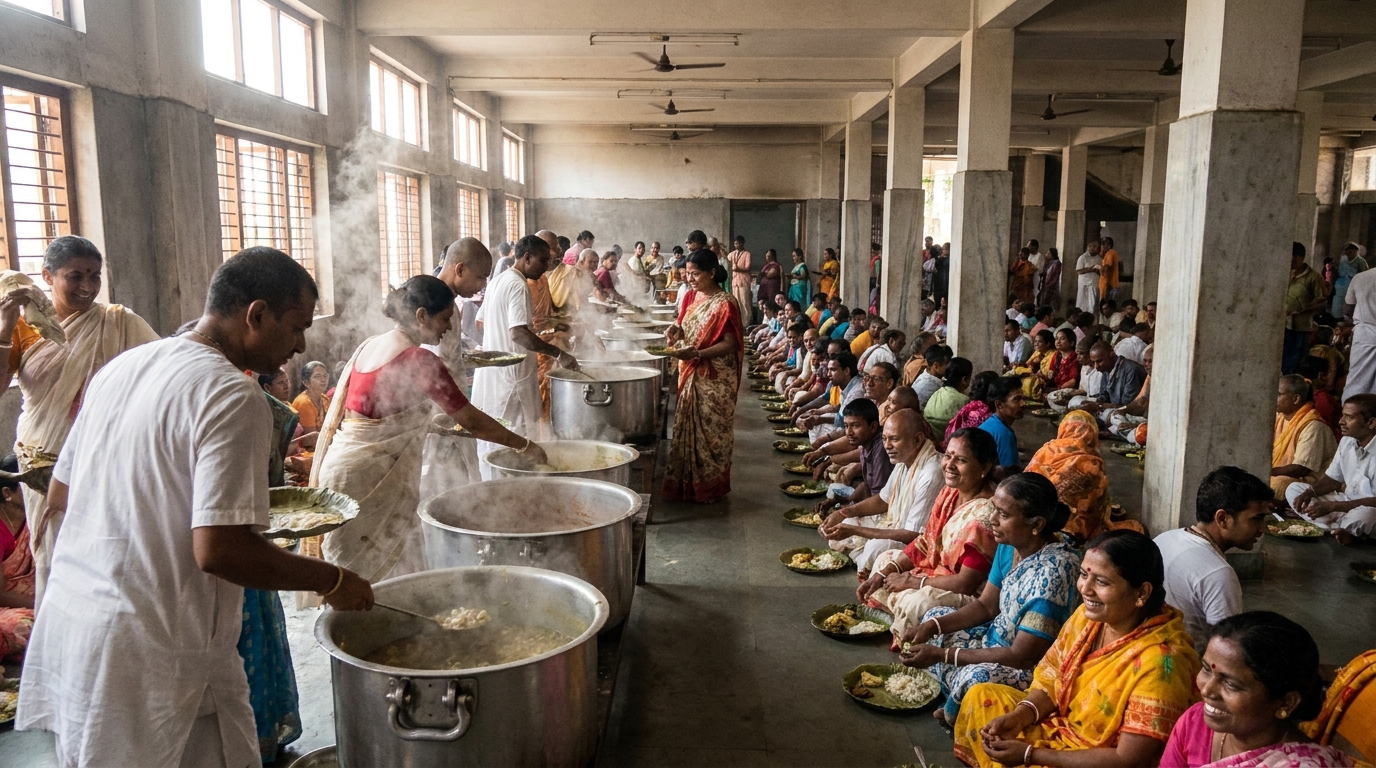
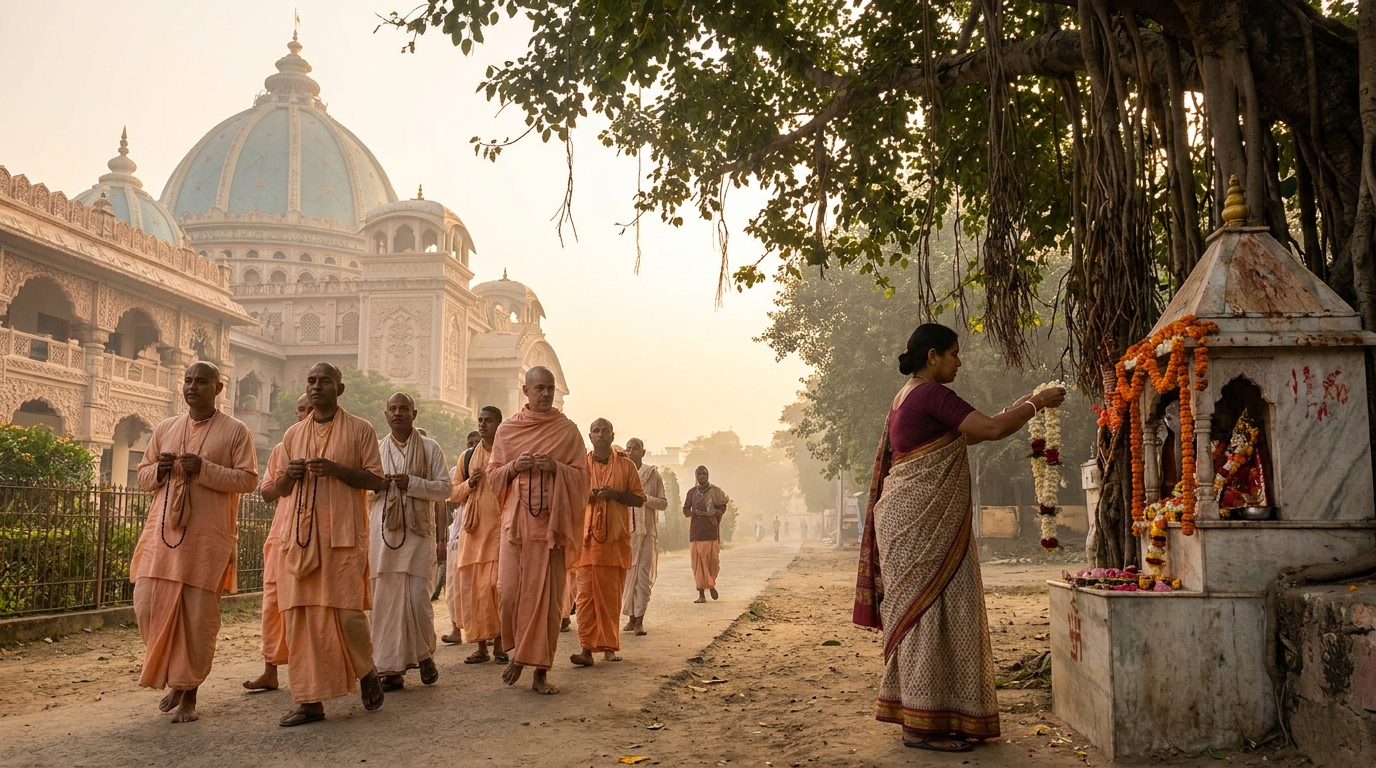
You may see families walking barefoot to the temple, monks chanting on beads, visitors quietly sitting in prayer, children dancing in kirtan, and volunteers serving food to hundreds or thousands of people.
This atmosphere helps us understand Bhakti Yoga as something practical. Love for God is expressed through the body, voice, mind, and heart. We chant, we bow, we listen, we cook, we serve, we forgive, we try again.
Mayapur gently reminds us that devotion is not separate from daily life. It can be practiced in every step, every word, and every act of care.
The Sacred Geography of Mayapur and Navadvipa
Mayapur is part of the greater holy area known as Navadvipa, meaning “nine islands.” These nine islands are not only geographical places; they also represent nine processes of devotional service.
In Bhakti scriptures, especially the Srimad Bhagavatam, nine forms of devotion are described: hearing about God, chanting His names, remembering Him, serving His feet, worshiping Him, offering prayers, becoming His servant, developing friendship with Him, and surrendering everything to Him.
In Navadvipa, each island is associated with one of these devotional moods. This gives pilgrims a beautiful way to reflect: spiritual life is not limited to one activity. Every sincere act can become devotion when offered with love.
The Ganga and the Mood of Purification
The Ganga River, known in English as the Ganges, is honored throughout India as sacred. In Bhakti tradition, the Ganga is not simply water; she is seen as a divine river carrying spiritual mercy.
Many pilgrims visit the riverbank in Mayapur to pray, chant, or quietly reflect. Some take a respectful bath in the river, while others simply sit nearby and offer gratitude.
If you come from a different background, you do not need to force anything unfamiliar. You can simply approach the river with reverence. A sincere prayer such as “Please help me become pure in heart” is a beautiful offering.
The Nine Islands of Navadvipa
The nine islands of Navadvipa are traditionally known as:
Antardvipa, Simantadvipa, Godrumadvipa, Madhyadvipa, Koladvipa, Ritudvipa, Jahnudvipa, Modadrumadvipa, and Rudradvipa.
Each island is connected with a form of Bhakti practice. For example, hearing, chanting, remembering, praying, serving, and surrendering are all represented within this sacred geography.
Many pilgrims perform Navadvipa Mandala Parikrama, a devotional walking journey around the holy places of Navadvipa. “Parikrama” means walking around a sacred place with prayerful intention. It is not simply exercise or sightseeing; it is a way of moving the body while turning the heart toward God.
Mayapur as a Meeting Place of Cultures
One of the most striking things about Mayapur is how international it has become. You may hear Bengali, Hindi, English, Russian, Spanish, Chinese, and many other languages. People from many cultures gather here to chant the same holy names.
This reflects one of Sri Chaitanya Mahaprabhu’s most generous teachings: love of God is not limited by birth, nationality, caste, gender, or social position. The soul is spiritual, and every soul is dear to Krishna.
This makes Mayapur especially meaningful for modern seekers. It offers a vision of unity—not by erasing differences, but by centering life around divine love.
Discover a wealth of knowledge by exploring our insightful articles. Our articles cover a wide range of topics to enhance your understanding. Stay informed and inspired by reading our latest articles.
Essential Places to Visit in Mayapur
Mayapur is full of sacred sites, temples, gardens, ghats, and devotional communities. A visitor could spend many days exploring, but even a short visit can be deeply meaningful if approached with openness and respect.
Sri Mayapur Chandrodaya Mandir
The Sri Mayapur Chandrodaya Mandir is one of the main temples in Mayapur and a central place of worship for visitors from around the world. It is part of the International Society for Krishna Consciousness, often known as ISKCON.
Here you can attend mangala-arati, the early morning worship ceremony; hear kirtan; receive darshan, or a sacred viewing of the Deities; and listen to classes on the Bhagavad-gita and Srimad Bhagavatam.
“Darshan” means to see and be seen by the Divine. In temple worship, devotees come before the Deities of the Lord not as statues, but as sacred forms through which God lovingly accepts service and offers blessings.
The atmosphere can be especially powerful during festival days, when the temple fills with flowers, lamps, music, and thousands of voices chanting together.
The Temple of the Vedic Planetarium
The Temple of the Vedic Planetarium, often called TOVP, is one of the most ambitious spiritual projects in modern India. Its grand architecture, vast dome, and devotional purpose make it a major landmark in Mayapur.
The temple is dedicated to presenting Vedic wisdom, cosmology, and Bhakti philosophy in a way that inspires both faith and thoughtful inquiry. “Vedic” refers to the ancient sacred knowledge of India, found in texts such as the Vedas, Upanishads, Bhagavad-gita, and Puranas.
For pilgrims, the TOVP is not only a building. It represents a prayer that the message of Sri Chaitanya Mahaprabhu may reach every town and village, as He desired.
Yogapith, the Birthplace of Sri Chaitanya Mahaprabhu
Yogapith is revered as the birthplace of Sri Chaitanya Mahaprabhu. The word “Yogapith” can be understood as a sacred meeting place where the Divine appears and performs His spiritual pastimes.
This site carries a quiet and deeply devotional mood. Many visitors come here to offer prayers of gratitude to Mahaprabhu, asking for humility, devotion, and the ability to chant sincerely.
When visiting Yogapith, it is helpful to slow down. Rather than rushing through, take a few moments to sit, chant softly, or pray from your heart.
Srila Prabhupada’s Pushpa Samadhi Mandir
Srila A.C. Bhaktivedanta Swami Prabhupada, the founder-acharya of ISKCON, carried the teachings of Sri Chaitanya Mahaprabhu around the world. “Acharya” means a spiritual teacher who teaches by both words and personal example.
His Pushpa Samadhi Mandir in Mayapur honors his life and service. “Pushpa” means flowers, and “samadhi” refers to a sacred memorial for a saint.
For many pilgrims, this place is deeply moving. Srila Prabhupada left India at the age of 69 with little money, but with great faith in the holy name. Through his books, teachings, temples, and disciples, he helped make Bhakti Yoga accessible worldwide.
A visit here can inspire us to ask: How can I use my own life in service? What gifts have I been given, and how can I offer them to God?
The Ghats and Village Paths
Beyond the main temples, Mayapur’s charm is also found in its quiet lanes, simple homes, cows, fields, and river ghats. A “ghat” is a series of steps leading down to a river.
Walking in Mayapur can become a prayerful practice. You may pass pilgrims chanting on beads, hear temple bells in the distance, or see the sun setting over the Ganga.
These simple moments often become the memories people carry home most tenderly.
How to Experience Bhakti Yoga in Mayapur
Mayapur is not just a destination to observe. It is a place to participate, gently and sincerely. Whether you are new to Bhakti or have practiced for many years, there are simple ways to enter the devotional atmosphere.
Join Kirtan With an Open Heart
Kirtan is one of the most accessible ways to experience Bhakti Yoga. It is call-and-response chanting, usually led by one singer while others respond.
You do not need a trained voice. You do not need to know all the melodies. You can simply listen, clap, hum, or repeat the mantra as you feel comfortable.
The purpose of kirtan is not musical perfection. It is connection. Through chanting, the heart gradually becomes cleansed of anxiety, hardness, and forgetfulness.
The Bhagavad-gita teaches that Krishna is present in the hearts of all living beings. Chanting helps us become aware of that divine presence.
Chant Japa for Personal Prayer
Japa means quiet, personal repetition of a sacred mantra, often on beads. Many devotees chant the Hare Krishna mantra on a strand of 108 beads, known as a japa mala.
If you are new, you might begin with one round, or even a few minutes each morning. Sit comfortably, breathe gently, and repeat the mantra with attention.
When the mind wanders, do not be discouraged. Simply bring it back with kindness. Bhakti is not about impressing God; it is about turning toward Him sincerely.
Offer Simple Service
Seva means service offered with devotion. In Mayapur, service may include helping in a temple, assisting pilgrims, cleaning, cooking, distributing prasadam, gardening, or supporting spiritual programs.
“Prasadam” means food that has been lovingly offered to God and then shared. In Bhakti, eating can become sacred when food is prepared with care and gratitude.
Even if you are visiting briefly, you can practice seva by being respectful, keeping sacred spaces clean, speaking kindly, and supporting local devotional communities.
Listen to Scripture With Practical Intention
Mayapur offers many opportunities to hear classes on Bhakti scriptures such as the Bhagavad-gita, Srimad Bhagavatam, and Chaitanya Charitamrita.
The Bhagavad-gita is a sacred conversation between Krishna and Arjuna, offering guidance on duty, devotion, and spiritual wisdom. The Srimad Bhagavatam is a devotional scripture filled with stories, teachings, and descriptions of God’s qualities and devotees. The Chaitanya Charitamrita tells the life and teachings of Sri Chaitanya Mahaprabhu.
When listening, it helps to ask: What can I practice today? How can this teaching make me more humble, loving, truthful, or compassionate?
Scripture becomes alive when it changes how we live.
Practical Travel Guide for Visiting Mayapur
A good pilgrimage includes both devotion and practical care. Planning well can help you stay peaceful and present during your visit.
How to Reach Mayapur
Mayapur is located in Nadia district, West Bengal. The nearest major city is Kolkata, which has an international airport and major railway connections.
From Kolkata, travelers commonly reach Mayapur by road, train, or a combination of train and local transport. The journey may take several hours depending on traffic, route, and season.
Many visitors travel to Krishnanagar or Nabadwip by train and then continue by taxi, auto-rickshaw, bus, or boat. Because local routes can change, it is wise to confirm current travel details before your trip.
If you are coming for a major festival, arrange transportation and accommodation early, as Mayapur becomes very crowded during peak pilgrimage times.
Best Time to Visit Mayapur
Mayapur can be visited throughout the year, but the most comfortable months are generally from October to March, when the weather is cooler.
The summer months can be very hot and humid. The monsoon season brings rain and lush beauty, but travel may be slower.
The most spiritually vibrant time is around Gaura Purnima, the appearance day of Sri Chaitanya Mahaprabhu, usually celebrated in February or March. This festival draws pilgrims from around the world. It is joyful, colorful, and deeply devotional—but also very busy.
If you prefer a quieter visit, choose a non-festival period. If you want to experience Mayapur at its most celebratory, Gaura Purnima is unforgettable.
Where to Stay
Mayapur offers different types of accommodation, including guesthouses connected with temples, ashram-style stays, and local lodging options.
Temple guesthouses are often simple, clean, and close to the main devotional activities. They may have guidelines regarding quiet hours, vegetarian food, modest dress, and respectful behavior.
Book early when possible, especially during festivals and winter months. If you are traveling with family, elderly visitors, or children, check facilities carefully in advance.
What to Wear and How to Behave
Mayapur is a sacred place, so modest and respectful clothing is recommended. Lightweight cotton is helpful in the warm climate.
In temples, visitors usually remove shoes before entering. It is also respectful to speak softly, avoid public displays of anger, and ask before taking photos, especially of worship ceremonies or local residents.
If you are unsure about a custom, simply observe or ask politely. Most devotees are happy to help sincere visitors understand.
Spiritual etiquette is not about fear. It is about honoring the sacredness of the place and the devotion of others.
Festivals and Holy Days in Mayapur
Mayapur’s festivals are powerful expressions of Bhakti. They combine music, worship, scripture, drama, processions, sacred food, and community.
Gaura Purnima
Gaura Purnima is the most important festival in Mayapur. It celebrates the appearance of Sri Chaitanya Mahaprabhu on the full moon night.
“Gaura” means golden, referring to Mahaprabhu’s golden complexion, and “Purnima” means full moon.
During this festival season, Mayapur becomes filled with pilgrims, kirtan, decorations, and devotional programs. Many devotees fast during the day and celebrate in the evening with worship, chanting, and prasadam.
The mood is one of gratitude: Sri Chaitanya came to freely distribute love of God through the holy name.
Navadvipa Mandala Parikrama
Around the time of Gaura Purnima, many pilgrims participate in Navadvipa Mandala Parikrama, walking through the nine islands of Navadvipa.
This journey can be physically demanding, but spiritually uplifting. Pilgrims walk together, chant, hear stories of the holy places, and honor prasadam.
For those unable to walk long distances, shorter visits to key sites are also meaningful. The essence of parikrama is not how far we walk, but the devotion with which we remember God.
Janmashtami, Kartik, and Other Celebrations
Mayapur also celebrates Janmashtami, the appearance day of Lord Krishna; Kartik, a sacred month especially dear to Krishna; Nityananda Trayodashi, honoring Lord Nityananda; and many other Vaishnava festivals.
“Vaishnava” means a devotee of Vishnu or Krishna. Vaishnava festivals are opportunities to remember God’s kindness and deepen our devotion.
During Kartik, many devotees offer lamps and sing the Damodarastakam, prayers glorifying Krishna as a child lovingly bound by Mother Yashoda. These prayers remind us that the Supreme Lord can be conquered by pure love.
Food, Prasadam, and the Culture of Sacred Hospitality
Food in Mayapur is more than nourishment. It is part of the spiritual culture of offering, gratitude, and sharing.
In Bhakti Yoga, devotees prepare vegetarian food with devotion and offer it to Krishna before eating. After the offering, the food becomes prasadam, meaning “mercy.”
The Meaning of Prasadam
Prasadam teaches us to receive, not just consume. It reminds us that everything comes from God: grains, fruits, water, sunlight, the hands that cook, and the life that allows us to eat.
When we honor prasadam, we practice gratitude. We also purify daily life by connecting even our meals with devotion.
The Bhagavad-gita explains that Krishna accepts offerings made with love: “If one offers Me with devotion a leaf, a flower, a fruit, or water, I accept it.”
This verse is simple and beautiful. God does not demand luxury. He receives love.
Eating in Mayapur
Mayapur has many places to honor prasadam, from temple dining halls to local vegetarian eateries. Meals may include rice, dal, vegetables, chapatis, sweets, and traditional Bengali preparations.
Because Mayapur is a sacred area, vegetarian food is the standard. Many visitors appreciate the peacefulness that comes from eating simply and prayerfully.
If you have dietary needs, plan ahead. Carry essentials, drink safe water, and be mindful of hygiene, especially if you are new to traveling in India.
Sacred Hospitality
One of the tender qualities of Mayapur is hospitality. Pilgrims are often welcomed warmly, and prasadam distribution is an important service.
This reflects the Bhakti understanding that every person is a soul, a beloved child of God. Feeding others becomes a form of worship when done with compassion.
Even if we cannot feed thousands, we can carry this spirit home. We can cook with love, offer our food, share with others, and remember God before eating.
Learning From Mayapur After You Return Home
A pilgrimage does not end when we leave the holy place. In many ways, it begins when we return home and try to live what we received.
Mayapur may inspire us deeply, but daily life will still bring responsibilities, challenges, and distractions. The gift of Bhakti is that it can be practiced anywhere.
Create a Simple Daily Practice
You might begin with a small morning practice:
Chant the Hare Krishna mantra for five or ten minutes.
Read a verse from the Bhagavad-gita.
Offer a simple prayer of gratitude.
Prepare or eat one meal with spiritual awareness.
Do one act of service for someone without expecting praise.
Small steps, taken sincerely, become powerful over time.
Bring Kirtan Into Your Home
You can listen to kirtan while cooking, cleaning, driving, or resting. You can sing softly by yourself or gather with friends and family.
The sound of the holy name carries the mood of Mayapur wherever it is received with faith.
Even one sincere chant can be a turning point. Bhakti scriptures often remind us that God is fully present in His holy names. This means we are never truly far from Him.
Serve Where You Are
Not everyone can live in a holy place, and not everyone needs to. Bhakti is not dependent on geography. Mayapur awakens the heart, but service continues wherever God has placed us.
Serve your family with patience. Serve your community with kindness. Serve the earth with respect. Serve your own spiritual growth by being honest, humble, and steady.
The real pilgrimage is the journey from self-centeredness to love.
A Gentle Invitation to the Heart of Mayapur
Mayapur is sacred because of its temples, rivers, saints, and history. But more than anything, it is sacred because it invites the heart to love God.
You may arrive as a pilgrim, a traveler, a student, a seeker, or simply someone curious about spiritual India. However you come, Mayapur has a way of offering something personal: a song, a prayer, a quiet moment by the Ganga, a taste of prasadam, a teaching that stays with you.
The path of Bhakti Yoga is wonderfully practical. We chant, we pray, we hear, we serve, we share food, we remember God, and we try to become kinder. We may not be perfect, but sincerity is more important than perfection.
Sri Chaitanya Mahaprabhu’s gift is not limited to one community or one country. The holy name is for everyone. Divine love is for everyone. Spiritual growth is possible for everyone.
If you feel called to visit Mayapur, come with humility and openness. If you cannot visit now, you can still receive its spirit by chanting sincerely, reading sacred wisdom, honoring prasadam, and offering your daily life to God.
Wherever you are, you are welcome. Take one sincere step toward God today—one prayer, one mantra, one act of service, one moment of gratitude—and trust that divine mercy will meet you there.
FAQs
1. What is the significance of Mayapur?
Mayapur is considered a holy place for followers of Gaudiya Vaishnavism as it is the birthplace of Chaitanya Mahaprabhu, a major proponent of the Bhakti movement.
2. When is the best time to visit Mayapur?
The best time to visit Mayapur is during the Gaura Purnima festival, which usually falls in March. This is when devotees from around the world gather to celebrate the appearance day of Chaitanya Mahaprabhu.
3. What are the main attractions in Mayapur?
Main attractions in Mayapur include the Chandrodaya Mandir, the Samadhi of Srila Prabhupada, the Goshala (cow sanctuary), and the beautiful gardens and eco-friendly surroundings.
4. How can one reach Mayapur?
Mayapur is located in West Bengal, India, and can be reached by road from Kolkata, which is the nearest major city. There are also train and bus services available for transportation to Mayapur.
5. Are there accommodations available in Mayapur for visitors?
Yes, there are various guesthouses, hotels, and ashrams in Mayapur that offer accommodations for visitors. It is advisable to book in advance, especially during festival times, to ensure a comfortable stay.

