
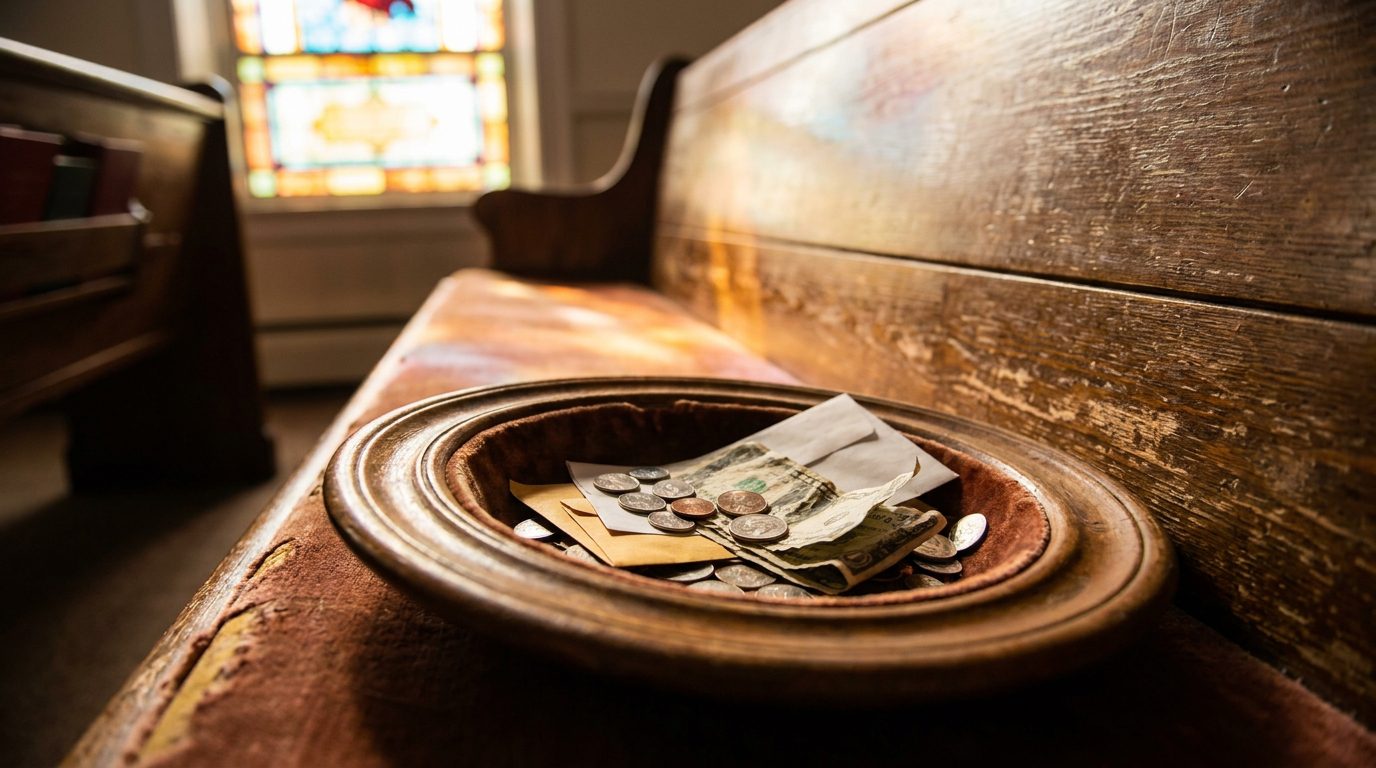
The offering plate is more than a container for money. In a devotional community, it becomes a sacred opportunity to pause, remember God, and practice generosity with love.
Whether you are visiting a temple, church, meditation gathering, kirtan night, yoga center, or spiritual home for the first time, you may wonder: “What should I offer? How much is appropriate? What is the deeper meaning behind giving?”
At The Bhakti House, we welcome people of all backgrounds, traditions, and life experiences. You do not need to be wealthy, religiously trained, or familiar with Sanskrit to participate in sacred giving. The heart of the practice is simple: we offer what we can, with sincerity, gratitude, and love.
In Bhakti Yoga—the path of loving devotion—giving is not merely a financial act. It is a spiritual practice. It softens the heart, frees us from selfishness, supports sacred community, and helps us remember that everything ultimately belongs to God.
The Sanskrit word seva means “service.” When we place something in the offering plate, we are practicing seva. We are saying, “May this be used in service to the Divine and the upliftment of others.”
The Spiritual Meaning of the Offering Plate
An offering plate may look simple, but spiritually it can hold deep meaning. It invites us to transform ordinary resources into sacred service.
Giving as an Act of Love
In Bhakti Yoga, love is the foundation. The Sanskrit word bhakti means devotion, loving service, or the heart’s natural relationship with God. Bhakti is not about showing off, proving ourselves, or giving beyond our means to impress others. It is about offering with love.
The Bhagavad Gita, one of the central scriptures of Bhakti Yoga, says:
“Whoever offers Me with devotion a leaf, a flower, fruit, or water, I accept that loving offering from the pure-hearted soul.”
—Bhagavad Gita 9.26
This verse is deeply comforting. God does not demand luxury. God receives love. A leaf, a flower, a little fruit, a sip of water—when offered with devotion—becomes precious.
In the same way, what we place in the offering plate does not need to be large to be meaningful. A small gift offered with humility may carry great spiritual power.
Everything Belongs to God
Bhakti wisdom teaches that we are caretakers, not owners. Our bodies, talents, time, finances, relationships, and opportunities are gifts entrusted to us. When we give, we are not losing something. We are returning a portion of what has already been given to us.
This understanding brings freedom. Instead of clinging tightly, we learn to live with open hands.
Generosity reminds us: “I am supported. I am not alone. I can share.”
The Offering Plate as a Sacred Pause
In a busy world, giving can become automatic. But a devotional offering invites mindfulness.
Before placing something in the offering plate, we can pause and pray:
“Dear God, please accept this offering. May it be used for Your service. May it help bring peace, healing, wisdom, and love to others.”
That simple prayer transforms giving into worship.
Why Generosity Matters in Bhakti Yoga
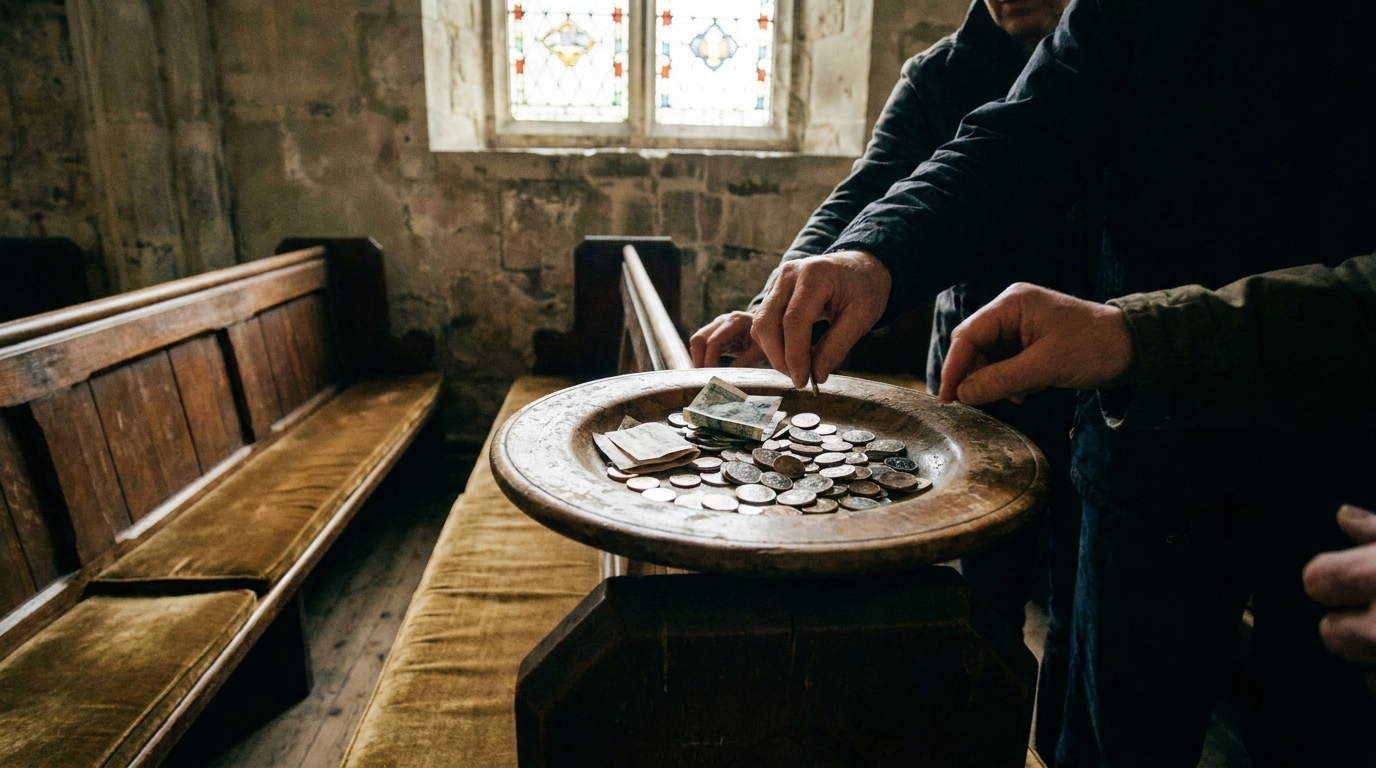
Generosity is not only about helping an institution or maintaining a building. It is about shaping the heart.
Generosity Purifies the Heart
In Sanskrit, the word anartha refers to unwanted things in the heart—such as greed, envy, pride, fear, or selfishness. Bhakti Yoga gently helps us release these burdens.
Giving is one of the ways we loosen the grip of greed. Each offering says, “I do not need to be controlled by fear. I can trust God. I can live generously.”
This does not mean being careless with money. Bhakti encourages responsibility. But responsibility and generosity can live together beautifully.
Generosity Builds Sacred Community
Spiritual communities are nourished by shared service. Donations may help provide:
- Sacred gatherings and kirtan events
- Meals and prasadam distribution
- Spiritual education and classes
- Youth programs and family support
- Temple or community space maintenance
- Outreach, counseling, and care
- Books, music, and devotional resources
- Support for teachers, monks, priests, or caregivers
The Sanskrit word prasadam means “mercy” or “grace.” In Bhakti communities, it often refers to food that has been lovingly offered to God and then shared with others. When people give, they help make prasadam, chanting, study, worship, and service available to more hearts.
An offering plate supports the visible and invisible work of devotion.
Generosity Connects Us to Something Greater
Many people feel isolated in modern life. Giving reminds us that we are part of a larger spiritual family.
Your offering may help someone hear sacred chanting for the first time. It may help a child learn prayer. It may help a struggling person receive a warm meal. It may help maintain a peaceful place where people can come to remember God.
Even a small gift can ripple outward.
Please visit our website for more information on our articles: articles.
How Much Should I Put in the Offering Plate?
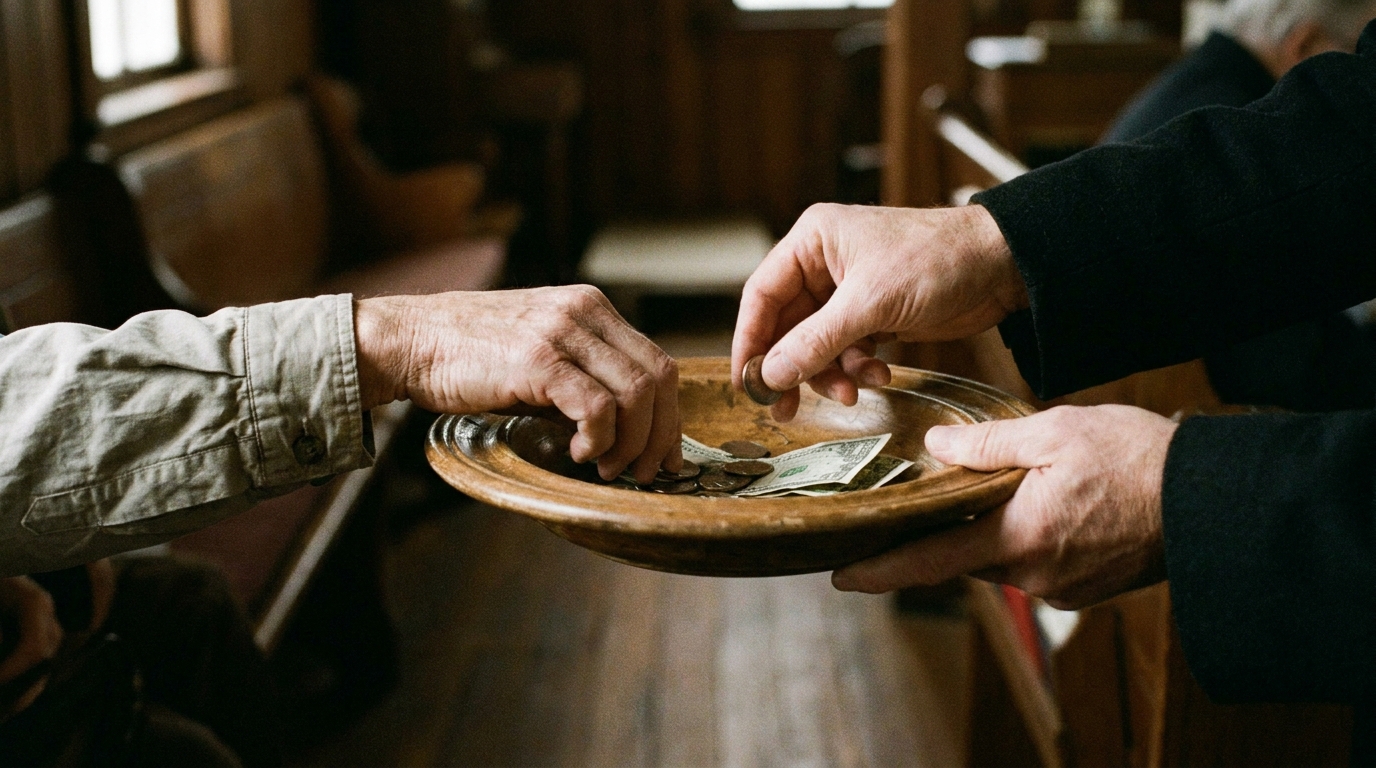
This is one of the most common and sincere questions people ask. The answer is personal.
There is no one amount that applies to everyone. A meaningful gift for one person may be very different from a meaningful gift for another. Bhakti Yoga honors sincerity over comparison.
Give According to Your Capacity
Capacity means what is realistic and healthy for your life. If you are going through financial difficulty, your offering may be small—or it may be time, prayer, or service instead of money.
God sees the heart.
If you have more financial stability, you may feel called to give more. The key is to give consciously, not carelessly.
A helpful question is:
“What can I offer that is sincere, responsible, and loving?”
Avoid Giving from Pressure or Guilt
Spiritual giving should never be rooted in manipulation. A sacred community should encourage generosity, but not shame people.
In Bhakti, love cannot be forced. If giving creates resentment, fear, or hardship, pause and reflect. Speak with a trusted spiritual guide if needed.
An offering should feel like a prayer, not a burden.
Consider a Regular Giving Practice
Some people give spontaneously when the offering plate comes around. Others prefer a regular donation rhythm—weekly, monthly, or seasonally.
Regular giving can be spiritually grounding. It helps us remember that devotion is not only for special occasions. It becomes part of our lifestyle.
You might choose a simple amount and offer it consistently. Over time, this practice can become a beautiful expression of commitment.
The Principle of Proportion
Rather than focusing only on the amount, consider proportion. For example, a small donation from someone with very little may represent great sacrifice and love. A larger donation from someone with abundance may be easy but still valuable.
The Srimad Bhagavatam, another treasured Bhakti scripture, often glorifies devotion that comes from the heart, not from social status or material power. The Lord is attracted by sincerity.
So the question becomes not only, “How much did I give?” but “How much love did I offer?”
What Can Be Offered Besides Money?
While the phrase “offering plate” often refers to financial giving, Bhakti Yoga teaches that our whole life can become an offering.
Offer Time
Time is sacred. You might volunteer to help set up chairs, clean the space, welcome guests, cook, serve food, arrange flowers, care for children, manage sound equipment, or help with community outreach.
In Sanskrit, karma means action. When our actions are offered to God, they become karma-yoga—the yoga of selfless action. In Bhakti, that action is infused with love and devotion.
Even simple tasks become sacred when done with the mood of service.
Offer Talents
Everyone has gifts. Some can sing, cook, teach, organize, design, write, garden, listen, repair, host, translate, or encourage others.
Your talents can become offerings.
If you are a musician, you may help with kirtan, devotional chanting. If you are good with children, you may support family programs. If you are skilled with technology, you may help livestream spiritual gatherings so people far away can participate.
No gift is insignificant when offered with devotion.
Offer Prayer
Prayer is powerful. Not everyone can give financially, but everyone can pray.
You can pray for the community, for the teachers, for those who are suffering, for peace in the world, and for your own heart to grow in love.
A simple Bhakti prayer might be:
“Dear Lord, please let me serve. Please guide my heart. Please help me give with sincerity and receive Your grace with gratitude.”
Offer Chanting
One of the central practices of Bhakti Yoga is chanting God’s names. This is called kirtan when done together in call-and-response singing, and japa when done softly or personally, often with prayer beads.
In the Bhakti tradition, God’s names are considered spiritually powerful and full of divine presence. Chanting cleanses the heart and awakens love.
When we chant, we offer our voice, breath, attention, and longing. This is also generosity—giving our heart to God.
Offer Kindness
Never underestimate kindness. A smile, a warm welcome, a listening ear, or a thoughtful message can be a sacred offering.
Many people arrive at spiritual gatherings carrying unseen burdens. Your kindness may help them feel safe enough to take one step closer to God.
Practical Ways to Maximize Generosity
Maximizing generosity does not mean giving the most money possible. It means making our giving more conscious, joyful, sustainable, and spiritually meaningful.
Set an Intention Before You Give
Before placing anything in the offering plate, pause. Take one breath. Remember why you are giving.
You might silently say:
“May this offering serve God and benefit all beings.”
This small moment can transform the act.
Create a Giving Budget
A giving budget may not sound devotional at first, but it can be very helpful. Planning allows generosity to become steady rather than impulsive.
You might decide in advance what portion of your income or resources you want to offer to spiritual service, charity, or community care.
This is not about rigid rules. It is about aligning your finances with your values.
Give First, Not Only What Is Left Over
Many spiritual traditions encourage giving from the “first fruits”—offering before everything else is spent. In Bhakti, this can be understood as placing God at the center.
Even if the amount is small, giving first can be a beautiful reminder: “My life belongs to God. Let my resources serve love.”
Combine Money with Service
Financial offerings are helpful, but when combined with personal service, they become even more relational.
For example, you might donate toward a community meal and also help serve it. You might support a kirtan event and also invite someone who needs uplifting association. You might give toward books and also help distribute them.
Generosity becomes richer when it includes the heart, hands, and presence.
Practice Anonymous Giving
Sometimes it is spiritually nourishing to give without being recognized. Anonymous giving protects the heart from pride.
In Bhakti, humility is treasured. The Sanskrit word amanina means not seeking honor for oneself. Giving quietly can help us remember that the offering is for God, not for applause.
Give with Gratitude
Gratitude and generosity strengthen each other. When we remember what we have received, giving feels natural.
You can keep a gratitude journal and write down simple blessings:
- Food to eat
- A place to rest
- A friend who cares
- A spiritual teaching
- A moment of peace
- The chance to chant or pray
Gratitude opens the heart. An open heart gives more easily.
Healthy Boundaries in Sacred Giving
A complete guide to the offering plate must include healthy boundaries. True generosity is loving, but it is also wise.
Do Not Neglect Your Responsibilities
If you have rent, food, medical needs, family obligations, or debts, these should be handled responsibly. Bhakti Yoga does not ask us to abandon practical duties.
The Bhagavad Gita teaches balance and responsibility. Krishna encourages Arjuna to act with devotion in the real circumstances of life, not to escape them.
Giving should support spiritual growth, not create chaos.
Watch for Ego and Comparison
Sometimes we may compare our giving with others. We may feel proud because we gave more, or ashamed because we gave less.
Both pride and shame distract us from devotion.
The offering plate is not a competition. It is a meeting place between your heart and God.
Give sincerely, and let others do the same.
Ask Questions About Stewardship
It is appropriate to ask how donations are used. Trust and transparency help a community grow.
Healthy spiritual communities welcome responsible questions. They understand that offerings are sacred and should be used with care.
If you are considering larger giving, you may ask about programs, budgets, service goals, or community needs.
Give Without Trying to Control
While accountability is important, giving should not become a way to control a spiritual community. Once an offering is made, we can pray that it be used wisely and release possessiveness.
The mood of Bhakti is surrender. The Sanskrit word saranagati means taking shelter, trusting God, and offering ourselves with humility.
This surrender does not remove discernment. It purifies motivation.
The Offering Plate and the Practice of Devotion
The offering plate is one small doorway into a much larger life of devotion.
Offering Food with Love
In Bhakti homes and temples, food is often prepared and offered to God before being eaten. This practice is simple and profound.
You can place a meal before a picture or sacred space and pray:
“Dear Lord, thank You for this food. Please accept it with love.”
After offering, the food becomes prasadam—grace-filled nourishment.
This teaches us that even eating can become devotional.
Offering Work and Daily Life
The Bhagavad Gita 9.27 says:
“Whatever you do, whatever you eat, whatever you offer or give away, and whatever austerities you perform—do that as an offering to Me.”
This verse expands the meaning of the offering plate. It tells us that everything can be offered.
Your work can be offered. Your parenting can be offered. Your studies can be offered. Your creativity can be offered. Your healing journey can be offered.
Bhakti Yoga is practical because it meets us in daily life.
Offering the Mind and Heart
Sometimes the hardest thing to offer is not money, but our worries, plans, and attachments.
We can pray:
“God, I offer You my fear. I offer You my confusion. I offer You my hopes. Please guide me.”
This is also generosity—the generosity of vulnerability before the Divine.
Offering Through Community
In Bhakti, spiritual association is called sadhu-sanga. A sadhu is a sincere spiritual person, and sanga means association or company.
When we gather with others to chant, pray, study, and serve, our devotion grows. The offering plate supports this sacred association.
Your gift helps create a space where hearts can awaken together.
Common Questions About the Offering Plate
Many people feel shy about asking practical questions. Let us address a few with warmth and honesty.
Is It Okay If I Cannot Give Money?
Yes. You are welcome.
Your worth is not measured by your donation. If you cannot give financially, you can offer prayer, presence, service, encouragement, or chanting.
Come as you are.
Should I Give Every Time the Plate Comes Around?
Not necessarily. Some people give each time. Some give monthly. Some give when they are able. Some give in other ways.
The important thing is to remain conscious and sincere.
Can Children Participate?
Yes, and it can be beautiful when children learn generosity early. Even placing a flower, a coin, or a small note of gratitude in the offering plate can teach them that life is meant for love and service.
Children should never be pressured, but they can be gently invited.
Is Online Giving Still Sacred?
Yes. If your community accepts online donations, those offerings can be just as sacred. The external method is less important than the internal mood.
Before clicking “donate,” pause and pray. Offer it with devotion.
What If I Feel My Offering Is Too Small?
A humble offering is never too small when given with love.
Remember Bhagavad Gita 9.26: a leaf, a flower, fruit, or water. God receives the devotion.
Your small act may be spiritually immense.
Creating a Culture of Generosity
A healthy offering plate culture is not built by pressure. It is built by gratitude, transparency, shared service, and spiritual vision.
Leaders Should Model Humility
Those who invite giving should do so with humility. They should remember that every offering represents someone’s labor, sacrifice, and faith.
Sacred funds should be treated with reverence.
Communities Should Celebrate All Forms of Service
Money is important, but it is not the only form of generosity. A person who cleans quietly after everyone leaves may be offering deep devotion. A person who welcomes newcomers may be changing lives. A person who prays daily for the community may be holding a subtle but powerful service.
Bhakti sees the heart.
Teach the Why, Not Only the What
People give more joyfully when they understand the purpose. Instead of simply asking for donations, communities can share the devotional vision:
- We give to support chanting and prayer.
- We give to feed people spiritually and physically.
- We give to keep sacred teachings accessible.
- We give to create a refuge for seekers.
- We give to serve God together.
When the “why” is clear, generosity becomes meaningful.
Make Giving Personal and Prayerful
The offering plate should not feel like a transaction. It can be part of worship.
A short prayer, a moment of silence, or a devotional song can help everyone remember the sacredness of giving.
A Simple Offering Plate Practice for Daily Life
You do not need to wait for a formal gathering to practice sacred offering. You can bring the spirit of the offering plate into your everyday life.
Morning Intention
When you wake up, place your hand on your heart and pray:
“Dear God, may my thoughts, words, and actions today be an offering.”
This sets the tone for a generous day.
Daily Act of Service
Choose one small act of seva each day:
- Send an encouraging message
- Share food
- Help someone without being asked
- Chant one round of japa
- Offer gratitude before a meal
- Donate a small amount to a sacred cause
- Clean a space as an offering
- Listen deeply to someone who needs care
Small offerings, repeated with love, shape a devotional life.
Evening Reflection
Before sleeping, ask:
“How did I give today? Where did I hold back? How can I offer more love tomorrow?”
Do this gently, without harsh judgment. Bhakti grows through sincerity and grace.
The Blessing of a Generous Heart
The offering plate teaches us that love becomes real through action. It invites us to move from “What can I get?” to “How can I serve?”
In Bhakti Yoga, generosity is not limited to money. It is the offering of the whole self—our resources, time, talents, prayers, voices, meals, work, relationships, and hearts.
When we give with devotion, we are changed. We become softer. We become freer. We become more aware of God’s presence in all things.
The great saints of the Bhakti tradition remind us that God is not far away. The Divine is present in the holy name, in scripture, in prayer, in service, in the hearts of all beings, and in every sincere offering.
So when the offering plate comes before you, do not be anxious. Simply pause. Breathe. Remember God. Offer what you can with love.
Whether your gift is large or small, financial or practical, visible or hidden, God sees the heart.
Everyone is welcome at the table of devotion. Everyone can chant, pray, serve, give, and grow. Today, take one sincere step toward God—one offering, one prayer, one act of kindness, one holy name—and trust that love will carry you forward.
FAQs
What is an offering plate?
An offering plate is a container used in religious services to collect monetary donations from congregants. It is often passed around during a worship service or placed at the entrance of a place of worship.
What is the purpose of an offering plate?
The purpose of an offering plate is to collect financial contributions from members of a religious community to support the operations and activities of the place of worship. These contributions may also be used for charitable purposes and to support the needs of the community.
How is an offering plate used in religious services?
During a religious service, an offering plate is typically passed around among the congregants, who have the opportunity to place their monetary donations into the plate. In some cases, the offering plate may be placed at a designated location within the place of worship for congregants to contribute as they enter or exit.
What are the different types of offering plates?
Offering plates come in various shapes, sizes, and materials. Common types include traditional metal plates with handles, wooden collection boxes, and modern electronic donation systems. Some offering plates may also feature decorative designs or religious symbols.
Are there any guidelines or etiquette for using an offering plate?
While specific guidelines and etiquette may vary among different religious traditions, it is generally considered respectful to contribute to the offering plate if you are able to do so. Additionally, handling the offering plate with care and reverence is often expected, and congregants may be encouraged to give thoughtfully and generously.

