
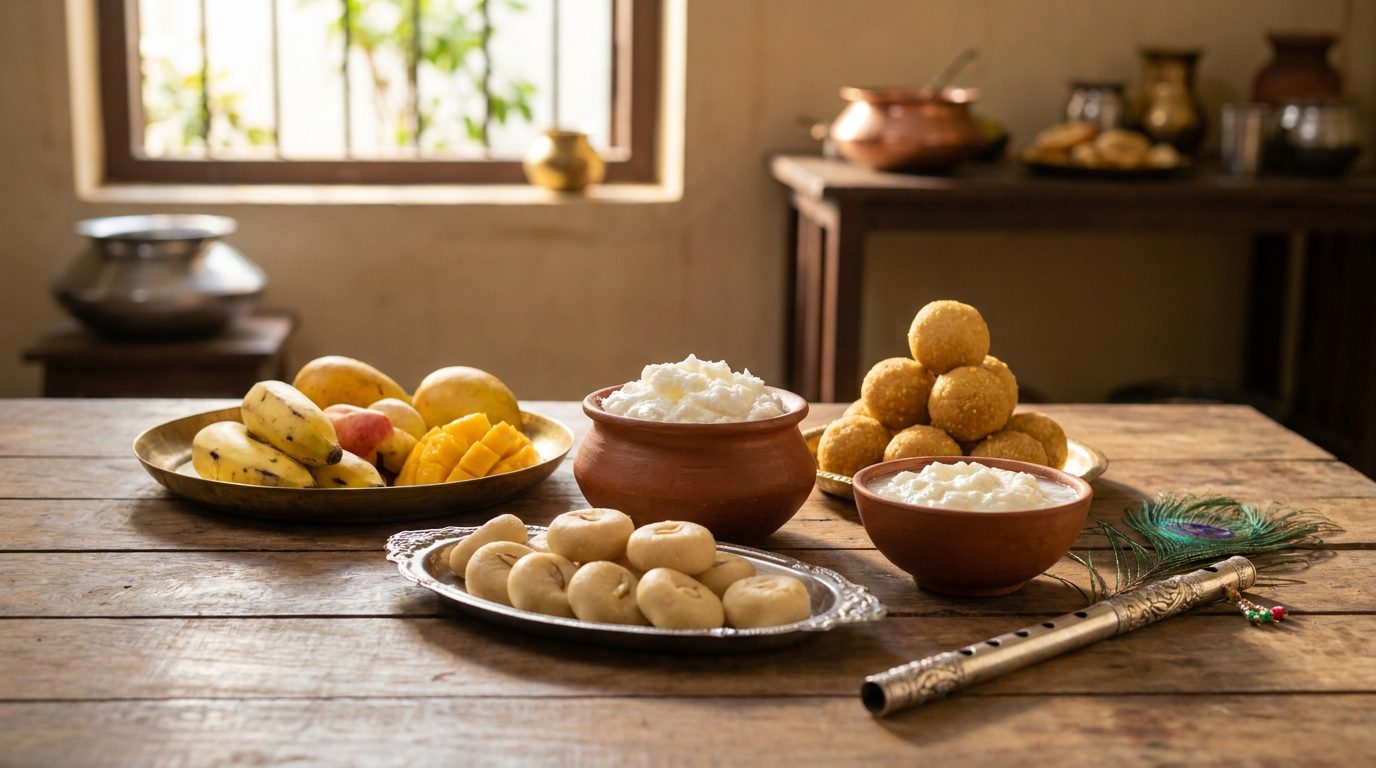
Have you ever wondered what kind of food brings joy to the Supreme Lord? In the Bhakti tradition, preparing and offering food to Krishna isn’t just a ritual — it’s one of the most intimate, loving exchanges between the soul and God. When we cook for Krishna with devotion, even the simplest ingredients become sacred. The food we offer transforms into prasādam (which literally means “mercy”), and receiving it nourishes not just our bodies but our hearts and spirits.
At The Bhakti House, we believe that everyone — regardless of background, experience, or tradition — can experience the sweetness of this devotional practice. You don’t need to be a master chef or a lifelong practitioner. You simply need a willing heart and a sincere desire to offer something with love.
As Krishna Himself says in the Bhagavad-gītā (9.26):
> “If one offers Me with love and devotion a leaf, a flower, a fruit or water, I will accept it.”
> — Bhagavad-gītā As It Is, 9.26 (vedabase.io)
This beautiful verse tells us something profound: God is not interested in elaborate banquets or expensive ingredients. He is hungry for our love. That’s what makes Bhakti Yoga — the yoga of devotion — so accessible and so powerful.
Let’s explore some of Krishna’s most beloved foods, what they mean in devotional life, and how you can bring this sacred practice into your own kitchen and heart.
If there’s one food that is inseparable from Krishna’s identity, it’s butter. The stories of young Krishna stealing butter from the homes of the cowherd women (gopīs) in Vṛndāvana are among the most cherished in all of Bhakti literature. These aren’t just charming tales — they reveal the nature of divine love.
Krishna is often called Makhan Chor, which means “the butter thief.” The gopīs would churn fresh butter every morning, and little Krishna, along with His friends, would sneak into their homes, climb on each other’s shoulders, break the hanging pots, and feast on the fresh, creamy butter inside.
Why Butter Holds Such Deep Meaning
In the Bhakti tradition, butter symbolizes the essence of devotion. Just as butter is hidden within milk and must be churned to be revealed, the love for God is hidden within every heart and must be brought out through spiritual practice — through chanting, prayer, service, and surrender.
The Śrīmad-Bhāgavatam, the great devotional scripture, is filled with these pastimes. In the Tenth Canto, Mother Yaśodā describes how Krishna steals butter not because He is hungry, but because He delights in the loving exchanges with His devotees.
How to Offer Butter to Krishna at Home
You can place a small portion of fresh, unsalted butter on a clean plate before your home altar or a picture of Krishna. Offer it with a simple prayer from your heart, or chant the mahā-mantra:
Hare Krishna, Hare Krishna, Krishna Krishna, Hare Hare / Hare Rāma, Hare Rāma, Rāma Rāma, Hare Hare
Even this small act of love connects you to thousands of years of devotional tradition.
Milk and Dairy: The Sacred Gifts of the Cow
In Vedic culture, the cow is considered one of the mothers of humanity because she gives milk so generously. Milk and milk products — yogurt, paneer (fresh cheese), cream, and ghee (clarified butter) — hold a central place in Krishna’s cuisine.
Krishna grew up in a cowherd community called Vṛndāvana, where life revolved around cows, their care, and the abundance of dairy they provided. He is known as Gopāla, meaning “protector of the cows,” and Govinda, meaning “one who gives pleasure to the cows and the senses.”
The Spiritual Significance of Milk
Milk represents purity, nourishment, and sattvic (goodness-promoting) living. In the Bhagavad-gītā (17.8), foods that are described as dear to those in the mode of goodness include foods that are:
> “…juicy, fatty, wholesome, and pleasing to the heart…”
> — Bhagavad-gītā As It Is, 17.8 (vedabase.io)
Fresh dairy products fall beautifully into this category. They promote clarity of mind, physical health, and a peaceful disposition — all of which support a life of devotion.
Simple Dairy Offerings You Can Prepare
A cup of warm milk sweetened with a little sugar or honey, a bowl of fresh yogurt, or even a simple glass of cool buttermilk can be lovingly offered to Krishna. The key is not complexity but sincerity. Krishna sees the love behind the offering, not the price tag.
Sweets: Krishna’s Irresistible Favorite
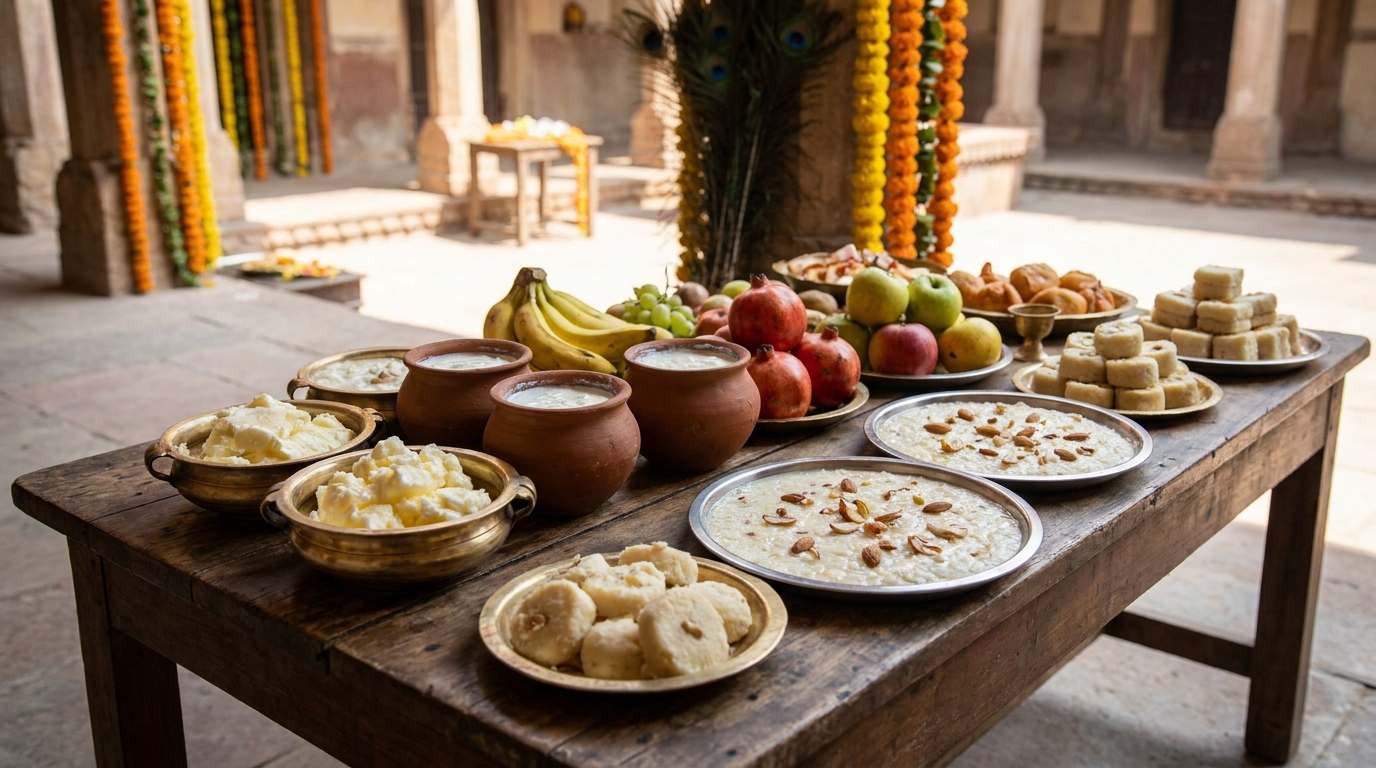
If you ever visit a Krishna temple, you’ll notice that sweets take center stage on the altar. Krishna has an undeniable sweet tooth, and the tradition of preparing elaborate and loving confections for the Lord is one of the most joyful aspects of Bhakti practice.
Some of the most famous sweets offered to Krishna include:
- Laddoo — round, dense sweets made from chickpea flour, sugar, and ghee
- Burfi — a milk-based fudge that melts on the tongue
- Sandesh — delicate Bengali sweets made from fresh paneer and sugar
- Kheer — a slow-cooked rice pudding made with milk, sugar, and cardamom
- Peda — soft, crumbly milk sweets flavored with saffron
The Famous Laddoo of Vṛndāvana
At many of the ancient temples in Vṛndāvana and across India, laddoos are prepared daily in massive quantities and distributed to thousands of people as prasādam. The experience of receiving even one small laddoo that has been offered to Krishna with devotion is considered a tremendous spiritual blessing.
Why Sweets Matter in Devotion
Sweetness in food mirrors the sweetness of divine love. In Sanskrit, one of the most beautiful concepts in Bhakti theology is mādhurya, which means “sweetness.” It describes the most intimate and tender mood of love for God. When we offer sweets to Krishna, we are participating — even in a small, tangible way — in that sweetness.
You don’t need to be an expert sweet-maker. A bowl of fruit with honey, a few dates, or even a simple sugar candy offered with a full heart is received by Krishna with great happiness.
Check out our website for more articles: more articles.
Fruits and Tulasī: Nature’s Pure Offerings
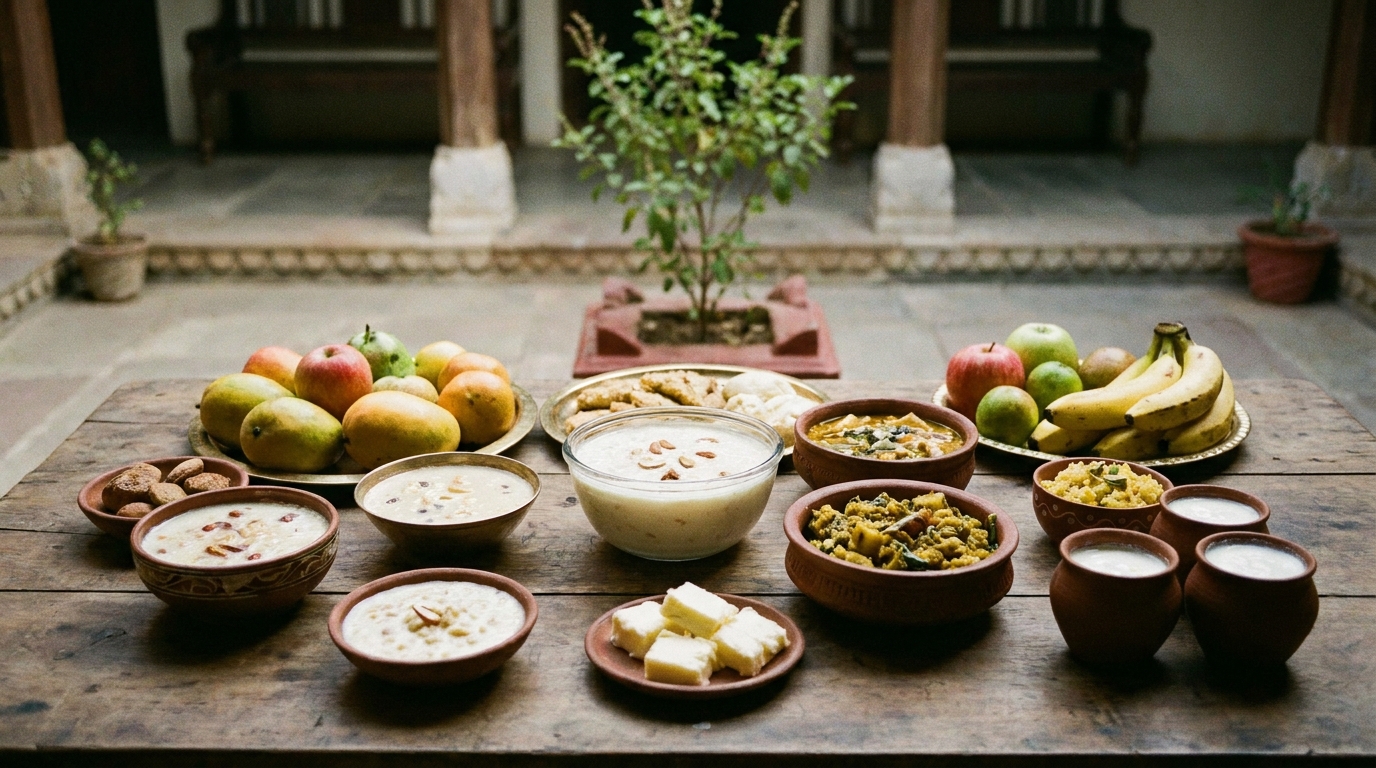
Returning to that foundational verse from the Gītā — “a leaf, a flower, a fruit or water” — we see that Krishna specifically mentions fruit as an acceptable offering. Fresh, seasonal fruits are among the purest and most sattvic foods one can offer.
The Sacred Tulasī Leaf
Among all leaves, Tulasī (holy basil) holds an extraordinary place in Bhakti. Tulasī is not just an herb — she is considered a great devotee of Krishna in plant form. Placing even a single Tulasī leaf on an offering elevates it spiritually in a way that is deeply honored in the tradition.
The Śrīmad-Bhāgavatam and other Vaiṣṇava scriptures describe how a Tulasī leaf placed on food offered to the Lord makes the offering supremely pleasing to Him. Many devotees grow a Tulasī plant in their homes as a living center of their devotional life.
Fruits You Can Offer
Bananas, mangoes, pomegranates, grapes, apples, berries — whatever is fresh and available in your area. There is something deeply grounding about selecting a beautiful piece of fruit, washing it carefully, placing it on a clean plate, and offering it to God with gratitude and love.
This is Bhakti Yoga in its most accessible form. No special equipment. No membership required. Just you, a piece of fruit, and an open heart.
Rice, Grains, and Wholesome Meals: The Heart of Prasādam Culture
While individual items like butter and sweets are beloved by Krishna, the Bhakti tradition also embraces the offering of full, nourishing meals. In temples around the world, elaborate feasts are prepared and offered to the Lord daily. These meals typically include rice, dal (lentil soup), vegetables, flatbreads (chapātīs or purīs), chutneys, and of course, sweets.
The Bhoga Offering
In temple practice, an offering of food to Krishna is called bhoga (meaning “enjoyment”). Once offered, it becomes prasādam — food that has been spiritually transformed by the Lord’s acceptance. Eating prasādam is considered one of the most powerful and joyful spiritual practices in Bhakti Yoga.
As Śrīla Prabhupāda, the founder of the International Society for Krishna Consciousness, often taught, even a person with no formal spiritual training can make tremendous advancement simply by honoring prasādam — by eating food that has been offered to Krishna with love.
The Bhagavad-gītā (3.13) explains:
> “The devotees of the Lord are released from all kinds of sins because they eat food which is offered first for sacrifice. Others, who prepare food for personal sense enjoyment, verily eat only sin.”
> — Bhagavad-gītā As It Is, 3.13 (vedabase.io)
This verse isn’t meant to frighten anyone. It’s an invitation. It reminds us that the simple act of offering our food before eating transforms an ordinary daily activity into a sacred one.
Cooking as Meditation
When you cook for Krishna, the kitchen becomes a temple. Stirring a pot of rice becomes a form of meditation. Chopping vegetables becomes an act of service (sevā). The entire process — from selecting ingredients to plating the food to offering it with prayer — becomes a continuous flow of devotion.
Many people find that this practice brings unexpected peace and joy into their lives. It slows us down. It reconnects us with the earth, with gratitude, and with the divine presence that is always with us.
How to Start Offering Food to Krishna Today
You don’t need an elaborate altar, rare ingredients, or years of training. Here is a simple way to begin:
- Prepare something simple and vegetarian. Krishna accepts foods from the plant and dairy kingdoms. Avoid meat, fish, eggs, onion, and garlic in offerings, as these are considered to be in the lower modes of nature.
- Set a clean plate aside. Before you serve yourself, place a portion on a separate, clean plate.
- Place it before an image or picture of Krishna. Even a small printed image is perfectly fine.
- Chant the Hare Krishna mahā-mantra or offer a simple prayer: “Dear Krishna, please accept this offering. I have prepared it with love for You.”
- Wait a few minutes. Let the Lord “enjoy” the offering.
- Honor the prasādam. Now eat it with gratitude, knowing that it has been touched by divine love.
That’s it. That’s the beginning of a beautiful relationship.
A Gentle Invitation to You
The path of Bhakti Yoga teaches us that God is not distant, abstract, or indifferent. Krishna is a person who loves, who plays, who delights in the simple offerings of His children. He steals butter. He savors sweets. He accepts a single leaf offered with a full heart.
Wherever you are on your spiritual journey — whether you’ve been practicing for decades or you’re just beginning to feel a quiet curiosity about the divine — you are welcome here. You are welcome at this table.
You don’t need to have everything figured out. You don’t need to chant perfectly or cook flawlessly. You just need to take one sincere step. Offer one fruit. Chant one round of the holy name. Whisper one prayer.
Krishna sees you. Krishna knows you. And Krishna is already delighted by your desire to connect.
As the Lord promises in the Bhagavad-gītā (9.22):
> “But those who always worship Me with exclusive devotion, meditating on My transcendental form — to them I carry what they lack, and I preserve what they have.”
> — Bhagavad-gītā As It Is, 9.22 (vedabase.io)
Take that one step today. The Lord will meet you more than halfway.
With love and warm wishes from all of us at The Bhakti House — may your kitchen become a place of prayer, your meals become offerings of love, and your heart become a home for the Divine.
Hare Krishna. 🙏
FAQs
What are some of Krishna’s favorite foods?
Krishna is said to have a particular fondness for dairy products such as butter, milk, and yogurt. He also enjoys sweets like laddoos, pedas, and kheer.
Why are these foods considered Krishna’s favorites?
In Hindu mythology, Krishna is often depicted as a cowherd, and dairy products are closely associated with cows. Additionally, sweets are believed to be a symbol of celebration and joy, which aligns with Krishna’s playful and joyful nature.
Are there any specific rituals or traditions associated with offering these foods to Krishna?
Devotees often prepare these foods with love and devotion, and then offer them to Krishna in a ritual known as bhoga. After the food is offered, it is believed to become prasadam, or sanctified food, which is then distributed to the devotees as a blessing.
What are some other foods that are commonly offered to Krishna?
In addition to dairy products and sweets, fruits, vegetables, and grains are also commonly offered to Krishna. These offerings are often prepared in a pure and sattvic (pure and harmonious) manner.
Is there a specific significance to offering these foods to Krishna?
Offering these foods to Krishna is a way for devotees to express their love and devotion to him. It is also believed to bring blessings and spiritual merit to those who partake in the prasadam.

