
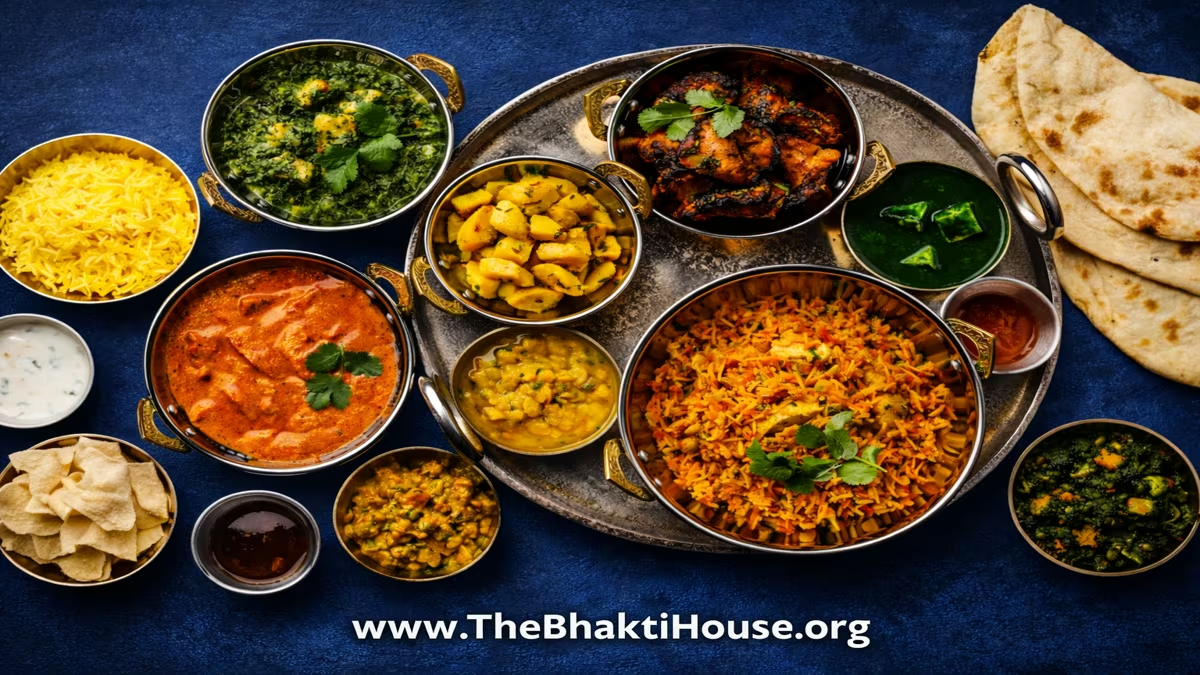
In the Hare Krishna (ISKCON) tradition, food is first offered to Lord Krishna before anyone eats it. After the offering, the food becomes prasadam, a Sanskrit word meaning the mercy or grace of the Lord.
Offering food to Krishna transforms an ordinary meal into a spiritual activity. Devotees prepare food with devotion, offer it with prayer, and then honor the remnants as sacred mercy from the Lord.
This guide explains the complete ISKCON prasadam prayer sequence, including the Hare Krishna food offering prayers and the traditional prayers chanted before honoring prasadam, along with their meanings and explanations.
What Is Prasadam?
The Sanskrit word prasāda (प्रसाद) means:
- mercy
- grace
- divine blessing
When food is offered to Krishna with devotion, it becomes prasadam, the Lord’s sanctified mercy. Food directly offered on the Deity altar is often called mahā-prasāda, or ‘great mercy.
In Bhagavad-gītā 9.26, Krishna explains how offerings are made:
“If one offers Me with love and devotion a leaf, a flower, fruit, or water, I will accept it.”
For this reason, devotees traditionally offer vegetarian foods such as:
- rice
- vegetables
- dal
- fruit
- milk preparations
- breads and grains
Foods such as meat, fish, eggs, onion, garlic, and mushrooms are not offered in the Gaudiya Vaishnava tradition.
The Difference Between Prasāda, Mahā-Prasāda, and Mahā-Mahā-Prasāda
In the Gaudiya Vaishnava tradition, devotees sometimes distinguish between different levels of sanctified food depending on how it has been honored and distributed. All prasadam is sacred, but these terms help describe how the Lord’s mercy flows through devotional service.
Prasāda (प्रसाद)
Prasāda refers to any food that has been offered to the Supreme Lord, such as Sri Krishna.
After the offering prayers are chanted and the food has been presented to the Deities, the food is no longer considered ordinary. It becomes prasadam, meaning the Lord’s mercy.
When devotees honor prasadam, they remember that the food has been spiritually purified by being offered to the Lord.
Mahā-Prasāda (महाप्रसाद)
Mahā-prasāda literally means “great mercy.”
This term is often used to describe food that has been directly offered to the Deity on the altar and accepted by the Lord.
For example:
- the plate placed before the Deities during the offering
- food that has touched the Deity’s remnants
- food distributed from the Deity offering
In many temples, a small portion of the Deity offering (mahā-prasāda) is mixed with the rest of the preparations so that the entire meal becomes sanctified.
Mahā-Mahā-Prasāda
Devotees sometimes use the term mahā-mahā-prasāda to refer to prasadam that has been honored by advanced devotees or spiritual masters.
For example:
- remnants from a spiritual master’s plate
- prasadam left by saintly devotees
Because devotees are very dear to Krishna, their remnants are also considered spiritually powerful and purifying.
Preparing Food for Krishna
Before cooking and offering food, devotees follow simple purity practices.
• Wash hands or bathe
• Wear clean clothing
• Cook in a clean kitchen
• Never taste food while cooking
The food is prepared for Krishna first.
A portion of each preparation is placed on a separate plate reserved for the Lord.
If available, devotees place Tulasi leaves on each preparation because Tulasi is sacred to Lord Krishna and offerings made with Tulasi are especially pleasing to Him.
The offering plate is placed before:
- Deities of Radha-Krishna
- pictures of Lord Krishna
- Lord Caitanya
- the spiritual master
Complete ISKCON Prasadam Prayer Sequence
When offering food to Krishna, devotees typically chant the following prayers.
Prayer to the Spiritual Master (Guru Pranama)
Initiated devotees first offer respect to their spiritual master through whom they approach Krishna.
Example: His Holiness Jayapataka Swami Maharaj
Devanagari
नमो ओं विष्णु-पादाय
कृष्ण-प्रेष्ठाय भू-तले
श्रीमते जयपताका
स्वामिन् इति नामिने
नम आचार्य-पादाय
निताइ-कृपा-प्रदायिने
गौर-कथा-धाम-दय
नगर-ग्राम-तारिणे
Roman Transliteration
namo om visnu padaya
krishna presthaya bhutale
srimate jayapataka swamin iti namine
nama acarya padaya
nitai kripa pradayine
gaura katha dhama daya
nagara grama tarine
Translation
“I offer my respectful obeisances unto my spiritual master, Jayapataka Swami Maharaj, who is very dear to Lord Krishna and who distributes the mercy of Lord Nityananda and spreads the teachings of Lord Caitanya throughout towns and villages.”
Meaning
In the Gaudiya Vaishnava tradition, devotees approach Krishna through the mercy of the guru, who guides them in devotional service.
Srila Prabhupada Pranati
Devanagari
नमो ओं विष्णु-पादाय
कृष्ण-प्रेष्ठाय भू-तले
श्रीमते भक्तिवेदान्त
स्वामिन् इति नामिने
नमस्ते सारस्वते देव
गौर-वाणी प्रचारिणे
निर्विशेष-शून्यवादि
पाश्चात्य-देश-तारिणे
Roman Transliteration
namo om visnu padaya
krishna presthaya bhutale
srimate bhaktivedanta svamin iti namine
namas te sarasvate deve
gaura vani pracharine
nirvisesa sunyavadi
pascatya desa tarine
Translation
“I offer my respectful obeisances unto His Divine Grace A. C. Bhaktivedanta Swami Prabhupada, who is very dear to Lord Krishna.
Our respectful obeisances are unto you, O spiritual master, servant of Bhaktisiddhanta Sarasvati Goswami. You are preaching the message of Lord Caitanya and delivering the Western countries from impersonalism and voidism.”
Meaning
This prayer expresses gratitude to Srila Prabhupada, who spread Krishna consciousness throughout the world.
Prayer to Lord Caitanya
Devanagari
नमो महा-वदान्याय
कृष्ण-प्रेम-प्रदाय ते
कृष्णाय कृष्ण-चैतन्य
नाम्ने गौर-त्विषे नमः
Roman Transliteration
namo maha vadanyaya
krishna prema pradayate
krishnaya krishna caitanya
namne gaura tvishe namah
Translation
“O most merciful incarnation! You are Krishna Himself appearing as Sri Krishna Caitanya Mahaprabhu. You have assumed the golden complexion of Srimati Radharani and are freely distributing pure love of Krishna.”
Meaning
Lord Caitanya is glorified as the incarnation of Krishna who spreads love of God through the chanting of the holy name.
Prayer to Lord Krishna
Devanagari
नमो ब्रह्मण्य देवाय
गो-ब्राह्मण हिताय च
जगद्धिताय कृष्णाय
गोविन्दाय नमो नमः
Roman Transliteration
namo brahmanya devaya
go brahmana hitaya ca
jagad dhitaya krishnaya
govindaya namo namah
Translation
“I offer my respectful obeisances unto Lord Krishna, the worshipable Lord of the brahmanas, the well-wisher of cows and brahmanas, and the benefactor of the entire universe.”
Meaning
This prayer glorifies Krishna as Govinda, the protector and maintainer of all living beings.
Offering the Food
After chanting these prayers, devotees silently pray:
“Dear Lord Krishna, please accept this offering.”
The plate remains before the Deities for 5–15 minutes while devotees may chant the Hare Krishna mantra.
After the offering, the food becomes prasadam.
When the Offering Becomes Prasadam
After the offering prayers are chanted and the plate has remained on the altar for several minutes, the food that was offered to the Lord is no longer called bhoga (food meant to be offered). It becomes prasadam, meaning the mercy of Krishna.
In temples and homes alike, devotees then follow an important step to distribute that mercy to all the food that will be served.
Mixing the Offered Plate with the Rest of the Food
The plate that was placed before the Deities is considered mahā-prasāda, the Lord’s direct remnants. To extend the Lord’s mercy to all the preparations, devotees traditionally mix a small portion of the offered food with the rest of the dishes that were cooked.
This is done in the following way:
- Remove the offering plate from the altar after the offering time.
- Take a small portion of each preparation from the offered plate.
- Mix that portion into the larger serving pots or dishes.
- Gently stir so that the Lord’s remnants become part of the entire preparation.
Through this process, the entire meal becomes prasadam.
Why Devotees Mix the Offered Food
This practice reflects an important devotional principle.
In the Gaudiya Vaishnava tradition, the Lord’s remnants are considered extremely sacred. When even a small portion of mahā-prasāda is mixed with other food, the entire preparation becomes spiritually sanctified.
This allows the food to be served to devotees and guests as prasadam, spreading the mercy of Krishna to everyone present.
For this reason, prasadam is often distributed widely at temples, festivals, and gatherings. Sharing prasadam is considered a powerful act of compassion and devotion.
Serving Prasadam
Once the food has been mixed and sanctified, it may be served.
Devotees usually serve prasadam with a respectful mood, remembering that the food is no longer ordinary. It is the mercy of the Lord.
Before honoring the meal, devotees chant the traditional prasadam prayers, remembering Krishna and expressing gratitude for His mercy.
Prayers Before Honoring Prasadam
Before eating, devotees chant the following prayers to remember the spiritual nature of the food.
Mahā-Prasāde Govinde
Devanagari
महाप्रसादे गोविन्दे
नाम-ब्रह्मणि वैष्णवे
स्वल्प-पुण्यवतां राजन्
विश्वासो नैव जायते
Roman Transliteration
maha prasade govinde
nama brahmani vaisnave
svalpa punya vatam rajan
visvaso naiva jayate
Translation
“For those who have performed very little pious activity, faith in mahā-prasāda, the holy name of the Lord, and the devotees never awakens.”
Meaning
This verse teaches that understanding the spiritual value of prasadam requires spiritual merit and faith.
Śarīra Avidyā-Jāl
Roman Transliteration
sarira avidya jal
jodendriya tahe kal
jive phele visaya sagore
tara madhye jihva ati
lobhamoy sudurmati
take jeta kathina samsare
krishna baro doyamoy
koribare jihva jay
sva prasada anna dilo bhai
sei annamrita pao
radha krishna guna gao
preme dako chaitanya nitai
Translation
“This material body is a network of ignorance, and the senses are paths leading toward death. We have fallen into the ocean of material sense enjoyment, and the tongue is the most difficult sense to control.
But Krishna is very merciful. To help us conquer the tongue, He gives us His own prasadam. By honoring this spiritual food we glorify Radha and Krishna and call upon Lord Caitanya and Lord Nityananda with love.”
Meaning
The prayer reminds devotees that prasadam is meant to purify the senses and awaken devotion.
The Pañca-Tattva Mantra
Before chanting the Hare Krishna mahā-mantra, devotees in the Gaudiya Vaishnava tradition often chant the Pañca-Tattva mantra. This mantra glorifies the five divine personalities who appeared with Lord Caitanya to spread the chanting of the holy name.
Chanting this mantra invokes the mercy of the Pañca-Tattva and removes offenses in the chanting of the holy name.
Devanagari
श्रीकृष्ण चैतन्य
प्रभु नित्यानन्द
श्रीअद्वैत गदाधर
श्रीवासादि गौर भक्त वृन्द
Roman Transliteration
śrī-kṛṣṇa-caitanya
prabhu-nityānanda
śrī-advaita gadādhara
śrīvāsādi-gaura-bhakta-vṛnda
Translation
“I offer my respectful obeisances unto Lord Sri Krishna Caitanya, Lord Nityananda, Sri Advaita Acharya, Gadadhara Pandita, Srivasa Thakura, and all the devotees of Lord Caitanya.”
Meaning
This mantra honors the Pañca-Tattva, the five divine aspects of the Supreme Lord who appeared together to spread the congregational chanting of the holy names of Krishna.
They are:
• Sri Krishna Caitanya – Krishna Himself appearing as a devotee
• Lord Nityananda – the expansion of Lord Balarama
• Sri Advaita Acharya – an incarnation of Mahā-Viṣṇu
• Gadadhara Pandita – the internal energy of the Lord
• Srivasa Thakura – representing the pure devotees
By chanting this mantra, devotees humbly ask for the mercy of the Pañca-Tattva before chanting the Hare Krishna mahā-mantra or before honoring prasadam.
The Hare Krishna Mahā-Mantra
Devotees often conclude by chanting the Hare Krishna mantra.
Devanagari
हरे कृष्ण हरे कृष्ण
कृष्ण कृष्ण हरे हरे
हरे राम हरे राम
राम राम हरे हरे
Roman Transliteration
Hare Krishna Hare Krishna
Krishna Krishna Hare Hare
Hare Rama Hare Rama
Rama Rama Hare Hare
Meaning
This mantra is a direct call to the Lord and His spiritual energy:
“O Lord Krishna, O energy of the Lord, please engage me in Your loving service.”
Honoring Prasadam
In the Hare Krishna tradition, devotees say they honor prasadam rather than simply eat.
Prasadam is understood to be Krishna’s mercy, and honoring it with gratitude purifies the heart and awakens spiritual consciousness.
Through this simple daily practice, even ordinary activities like eating become acts of devotion and connection with the Supreme Lord.
Common Mistakes When Offering Food to Krishna (and How to Avoid Them)
Offering food to Krishna is meant to be a simple act of devotion, but beginners often have questions about how to do it properly. Understanding a few common mistakes can help devotees perform the offering with greater care and confidence.
1. Tasting the Food Before Offering
One of the most common mistakes is tasting the food while cooking.
In the Gaudiya Vaishnava tradition, food must be offered to Krishna before anyone tastes it, because the meal is first meant for the Lord.
How to avoid this
Cook carefully and rely on experience rather than tasting. After the offering, the food becomes prasadam, and everyone may honor it.
2. Forgetting to Set Aside a Plate for Krishna
Sometimes people forget to place a portion of the meal on a separate plate before serving themselves.
How to avoid this
Always place a portion of each preparation on a separate offering plate reserved for Krishna before anyone begins eating.
This plate should ideally be used only for offerings.
3. Not Adding Tulasi Leaves
In the Gaudiya Vaishnava tradition, offerings to Krishna are ideally made with Tulasi leaves, which are very dear to the Lord.
How to avoid this
If Tulasi leaves are available, place one leaf on each preparation before offering the food.
If Tulasi is not available, the offering can still be made sincerely.
4. Rushing Through the Offering
Sometimes people quickly say the prayers without focusing on the devotional meaning.
Offering food is meant to be a moment of gratitude and meditation, not just a routine.
How to avoid this
Slow down, chant the prayers clearly, and consciously pray:
“Dear Lord Krishna, please accept this offering.”
Even a brief offering can be deeply meaningful when done with sincerity.
5. Forgetting to Mix the Offered Plate with the Rest of the Food
After the offering, the plate placed before Krishna becomes mahā-prasāda, the Lord’s direct remnants.
How to avoid this
Take a small portion from the offered plate and mix it into the rest of the dishes so the entire meal becomes prasadam.
This allows the sanctified food to be distributed to devotees and guests.
6. Treating Prasadam Like Ordinary Food
Prasadam is not considered ordinary food in the Hare Krishna tradition.
It is understood to be the mercy of the Lord.
How to avoid this
Before eating, chant the traditional prasadam prayers and honor the meal with gratitude and respect.
7. Thinking the Ritual Must Be Perfect
Many beginners worry about making mistakes during the offering.
But the most important element is devotion.
Krishna explains in the Bhagavad-gītā (9.26):
“If one offers Me with love and devotion a leaf, a flower, fruit, or water, I will accept it.”
How to avoid this
Focus on sincerity, gratitude, and devotion, rather than worrying about performing every step perfectly.
The Heart of the Offering
The purpose of offering food to Krishna is to remember that everything ultimately belongs to Him.
By offering meals with devotion and then honoring the prasadam, devotees transform a daily activity into a spiritual practice that nourishes both the body and the soul.
Why Honoring Prasadam Is One of the Most Powerful Practices in Bhakti Yoga
In Bhakti Yoga, even the simplest activities can become deeply spiritual when they are connected to Krishna. Offering food to the Lord and honoring prasadam is one of the most accessible and transformative practices in devotional life.
Every living being must eat, but when food is prepared with devotion and offered to Krishna first, that ordinary act becomes a form of worship and meditation.
Instead of eating simply for pleasure or survival, devotees remember that everything ultimately belongs to the Supreme Lord. By offering food to Krishna and accepting His remnants as prasadam, one cultivates humility, gratitude, and spiritual awareness.
Prasadam Purifies the Heart
According to the teachings of the Gaudiya Vaishnava tradition, prasadam is not ordinary food. Because it has been offered to Krishna, it carries the Lord’s mercy.
Honoring prasadam gradually purifies the consciousness and awakens devotion. Even someone who is new to spiritual life can benefit simply by honoring prasadam with respect.
For this reason, distributing prasadam is considered one of the most powerful forms of spiritual outreach.
Prasadam Connects Devotees in Community
In temples and homes around the world, devotees gather to share prasadam together. This practice creates a sense of spiritual community centered on devotion to Krishna.
Whether at festivals, Sunday feasts, or daily temple meals, prasadam is a reminder that spiritual life is meant to be joyful, shared, and nourishing for both body and soul.
A Simple Practice Anyone Can Begin
One of the beautiful aspects of offering food to Krishna is that anyone can begin immediately.
Even a simple offering such as fruit, rice, or water can be offered with the prayerful mood:
“Dear Lord Krishna, please accept this offering.”
By chanting the traditional ISKCON prasadam prayers and honoring the food afterward, devotees transform a daily routine into a powerful spiritual practice.
From Bhoga to Prasadam to Mercy
In the Hare Krishna tradition, food passes through three stages:
- Bhoga – food prepared for the Lord
- Offered food – presented with prayer and devotion
- Prasadam – the Lord’s sanctified mercy
When devotees honor prasadam with gratitude and remembrance of Krishna, the act of eating becomes part of the path of Bhakti Yoga, drawing the soul closer to the Supreme.
The Blessing of Krishna’s Mercy
Ultimately, the practice of offering and honoring prasadam reminds us that spiritual life is not complicated.
With a sincere heart, simple food, and the chanting of sacred prayers, anyone can invite Krishna’s mercy into their daily life.
And in the words often remembered by devotees:
Prasadam is not just food — it is Krishna’s mercy.
The Mercy Expands Through Devotion
In devotional culture, prasadam is not simply food—it is understood to be a direct expression of Krishna’s mercy.
Through offering, distributing, and honoring prasadam, devotees experience the Lord’s kindness in a very tangible way.
For this reason, sharing prasadam is considered one of the most powerful forms of spiritual service in the path of Bhakti Yoga.
FAQ: ISKCON Prasadam Prayer & Hare Krishna Food Offering
What is the ISKCON prasadam prayer?
The ISKCON prasadam prayer refers to the traditional prayers devotees chant when offering food to Lord Krishna and before honoring the sanctified food afterward.
The offering sequence usually includes:
- A prayer to the spiritual master
- The Srila Prabhupada pranati prayer
- A prayer to Lord Caitanya
- A prayer to Lord Krishna
- Silent meditation while Krishna accepts the offering
Before eating the food, devotees chant the prasadam prayers, including:
- Mahā-prasāde Govinde
- Śarīra Avidyā-Jāl
These prayers remind devotees that the food has become Krishna’s mercy.
What is the Hare Krishna food offering prayer?
The Hare Krishna food offering prayer is the sequence of mantras chanted when offering food to Krishna.
The most commonly chanted prayers include:
- Guru pranama mantra
- Srila Prabhupada pranati
- Namo Mahā-Vadānyāya (prayer to Lord Caitanya)
- Namo Brahmanya Devaya (prayer to Lord Krishna)
After chanting these prayers, devotees silently pray:
“Dear Lord Krishna, please accept this offering.”
The food then becomes prasadam.
Why do Hare Krishna devotees offer food to Krishna?
Devotees offer food to Krishna because devotional service includes offering everything to the Lord.
Krishna explains this principle in Bhagavad-gītā 9.26:
“If one offers Me with love and devotion a leaf, a flower, fruit or water, I will accept it.”
By offering food first, devotees transform ordinary eating into a spiritual activity.
What foods can be offered to Krishna?
In the ISKCON tradition, devotees offer pure vegetarian foods such as:
- rice
- vegetables
- fruits
- milk products
- grains
- sweets
Foods that are not offered include:
- meat
- fish
- eggs
- onion
- garlic
- mushrooms
The food is cooked cleanly and never tasted before the offering.
Why is Tulasi placed on Krishna’s food offering?
Tulasi (holy basil) is extremely dear to Lord Krishna. Scriptures explain that offerings made with Tulasi leaves are especially pleasing to Him.
For this reason, devotees often place a Tulasi leaf on each preparation before offering the food.
What is the difference between bhoga and prasadam?
The food prepared for Krishna is called bhoga before the offering.
After it is offered to Krishna, the food becomes prasadam, meaning the Lord’s mercy.
Devotees believe that once Krishna accepts the offering, the food becomes spiritually purified.
Why do devotees mix the offered plate with the rest of the food?
After the offering, the small plate placed before the Deities becomes mahā-prasāda, the Lord’s direct remnants.
Devotees mix a small portion of that plate into the rest of the food so that all the preparations become prasadam.
This allows the sanctified food to be distributed to devotees and guests.
Why do devotees say “honor prasadam” instead of “eat”?
In the Hare Krishna tradition, devotees say they honor prasadam rather than simply eat.
This reflects the understanding that the food is no longer ordinary—it is the mercy of Krishna.
Honoring prasadam with gratitude is considered a spiritual practice that purifies the heart.
Can anyone offer food to Krishna?
Yes. Anyone can offer food to Krishna with sincerity and devotion.
Even a simple offering such as fruit, water, or a small meal can be offered if it is done with love and respect.
The essential ingredient is devotion (bhakti).
How long should food remain on the altar when offering it to Krishna?
At home, devotees usually leave the offering on the altar for 5–15 minutes.
In temples, the offering may remain longer while devotees chant prayers or kirtan.
During this time devotees meditate that Krishna is accepting the offering.