
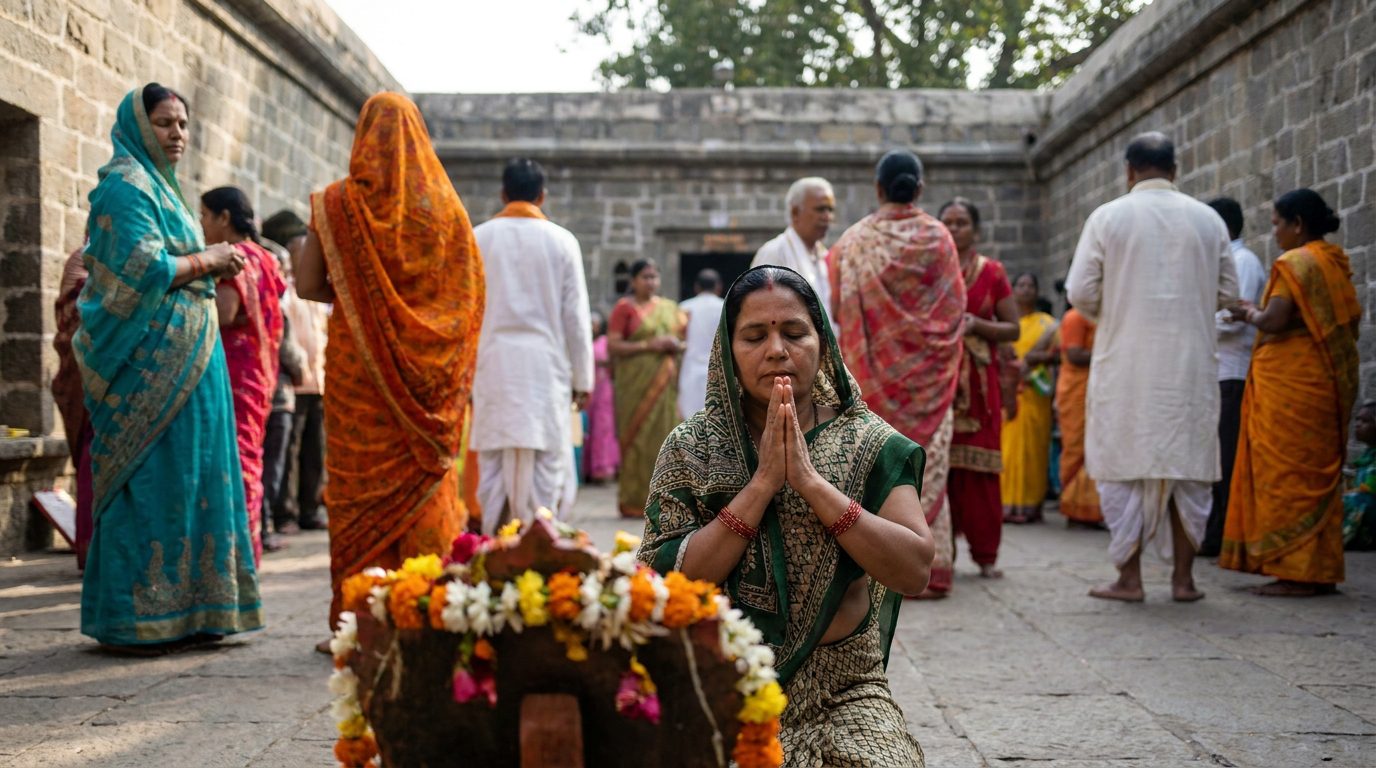
If you have heard the words “Bhakti Yoga” and “ISKCON” and wondered whether they mean the same thing, you are not alone. Many sincere seekers ask this question when they first encounter kirtan, mantra meditation, Bhagavad-gita study, Krishna temples, or devotional communities.
The short answer is: Bhakti Yoga and ISKCON are closely connected, but they are not the same thing.
Bhakti Yoga is an ancient spiritual path of love and devotion to God. ISKCON, the International Society for Krishna Consciousness, is a modern spiritual organization that teaches and practices Bhakti Yoga, especially in the tradition of devotion to Sri Krishna.
In a simple way, we could say: Bhakti Yoga is the path, and ISKCON is one community walking that path.
But there is much more beauty, history, and heart behind this answer. Let us explore it gently, with respect for all backgrounds and sincere spiritual journeys.
Bhakti Yoga is the spiritual path of loving devotion to God. The Sanskrit word bhakti means devotion, love, loving service, or heartfelt dedication. The word yoga means union, connection, or a path that reconnects us with our true spiritual nature.
So Bhakti Yoga means the path of reconnecting with God through love.
It is not only a philosophy. It is a lived practice. It can be expressed through chanting, prayer, meditation, worship, service, community, compassion, and remembering God in daily life.
Bhakti Yoga teaches that the soul is not empty or alone. We are eternal spiritual beings, and our deepest need is loving relationship with the Divine. In the Bhakti tradition, God is often lovingly addressed as Krishna, Rama, Vishnu, Narayana, Radha-Krishna, or by many other sacred names.
At The Bhakti House, we honor that people may come from many backgrounds—Christian, Hindu, Jewish, Muslim, Buddhist, spiritual-but-not-religious, unsure, questioning, or simply curious. Bhakti Yoga welcomes sincerity. It is not about forcing an identity. It is about awakening the heart.
Bhakti Is the Yoga of the Heart
Some forms of yoga focus mainly on physical postures, breath control, or silent meditation. These can be helpful and sacred in their own ways. Bhakti Yoga, however, places the heart at the center.
It asks:
How can I love more deeply?
How can I serve more selflessly?
How can I remember God in my real life?
How can my words, work, family, and struggles become offerings?
Bhakti Yoga does not require us to become perfect before approaching God. It invites us to come as we are—with our joy, our grief, our doubts, our longing, and even our mistakes.
The Main Practices of Bhakti Yoga
Bhakti Yoga includes many devotional practices, often called sadhana, which means spiritual practice or discipline. These practices help cleanse the heart and awaken love for God.
Some central practices include:
- Chanting sacred names, especially through kirtan and mantra meditation
- Prayer, spoken from the heart
- Reading sacred texts, such as the Bhagavad-gita and Srimad Bhagavatam
- Serving others, seeing service as an offering to God
- Worship, sometimes through home altars, temple ceremonies, or simple daily remembrance
- Association with devotees, spending time with people who encourage spiritual growth
- Offering food to God, called prasadam when received back as grace
These practices are not meant to be dry rituals. They are meant to soften the heart and help us live with more humility, gratitude, compassion, and spiritual awareness.
What Is ISKCON?
ISKCON stands for the International Society for Krishna Consciousness. It is a global spiritual organization founded in 1966 in New York City by His Divine Grace A.C. Bhaktivedanta Swami Prabhupada, often lovingly called Srila Prabhupada by his followers.
ISKCON is part of the Gaudiya Vaishnava tradition. Let us unpack that simply.
Vaishnava refers to devotees of Vishnu or Krishna, worshiping God as a personal, loving Supreme Being. Gaudiya refers to a devotional tradition that became especially prominent in Bengal, India, through the teachings of Sri Chaitanya Mahaprabhu in the 15th and 16th centuries.
Sri Chaitanya Mahaprabhu taught the chanting of God’s holy names as the most accessible spiritual practice for this age. ISKCON continues that mission by sharing Krishna bhakti around the world.
ISKCON’s Mission
ISKCON was founded to share Krishna consciousness, or awareness of Krishna, through Bhakti Yoga. Its mission includes:
- Teaching the wisdom of the Bhagavad-gita and other Bhakti scriptures
- Encouraging the chanting of the Hare Krishna maha-mantra
- Building spiritual communities
- Offering vegetarian food sanctified through devotion, known as prasadam
- Creating temples, farms, schools, and outreach programs
- Helping people live a God-centered life
The Hare Krishna maha-mantra is:
Hare Krishna Hare Krishna
Krishna Krishna Hare Hare
Hare Rama Hare Rama
Rama Rama Hare Hare
The word mantra means a sacred sound vibration that helps free the mind and awaken spiritual consciousness. Maha-mantra means “great mantra.” This prayer calls upon God’s divine energy, addressed as Hare, and the names Krishna and Rama, asking to be engaged in loving service.
ISKCON Is One Branch of a Larger Bhakti Tree
It is helpful to think of Bhakti Yoga as a great ancient tree with many branches. ISKCON is one significant branch of that tree.
Bhakti Yoga existed long before ISKCON was founded in 1966. It is found in ancient scriptures like the Bhagavad-gita, Srimad Bhagavatam, Narada Bhakti Sutra, and many other sacred texts. Saints, poets, teachers, and communities have practiced Bhakti Yoga for thousands of years.
ISKCON is a modern institution that carries and shares a particular lineage of Bhakti Yoga. It has introduced millions of people around the world to chanting, Krishna devotion, prasadam, and the teachings of the Bhagavad-gita.
So, ISKCON is not the whole of Bhakti Yoga. But ISKCON is one important and influential expression of Bhakti Yoga.
Is Bhakti Yoga the Same as ISKCON?
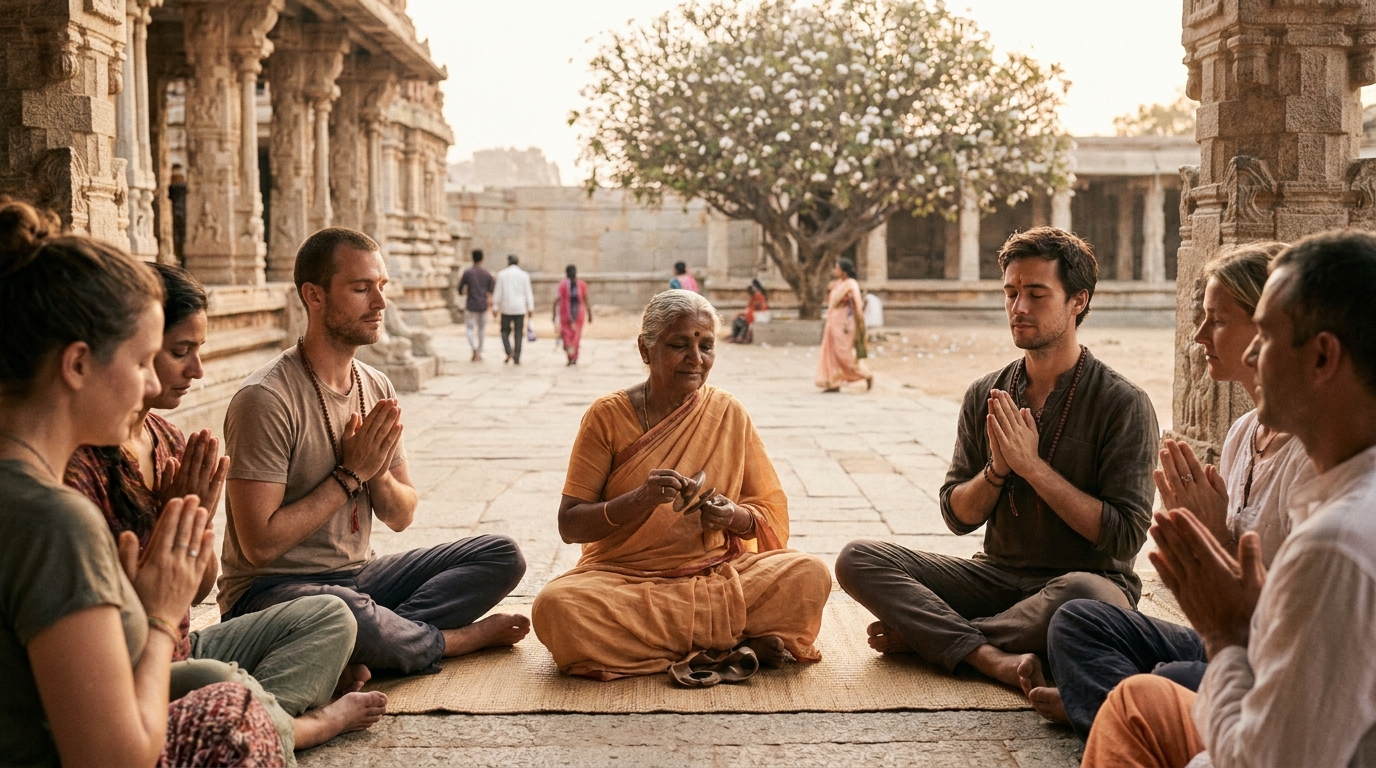
No, Bhakti Yoga is not the same as ISKCON. But ISKCON is deeply rooted in Bhakti Yoga.
Bhakti Yoga is the spiritual path itself. ISKCON is an organization and community that teaches that path according to the Gaudiya Vaishnava tradition.
This distinction matters because some people may encounter Bhakti Yoga through ISKCON and assume all Bhakti Yoga is ISKCON. Others may have had a positive or challenging experience with an organization and then wonder whether that experience defines the entire path of devotion.
Bhakti Yoga is bigger than any one institution. It is the eternal path of the soul’s loving relationship with God.
The Path and the Institution
A simple analogy may help.
Christianity is not the same as one church denomination. Buddhism is not the same as one meditation center. Yoga is not the same as one yoga studio.
In the same way, Bhakti Yoga is not the same as ISKCON.
ISKCON is a particular devotional movement, with temples, teachers, practices, leadership structures, culture, and history. Bhakti Yoga is the timeless spiritual practice of devotion to God.
A person may practice Bhakti Yoga within ISKCON, outside ISKCON, in another Vaishnava lineage, at home, in a small kirtan community, or through personal prayer and chanting.
Why the Confusion Happens
Many people associate Bhakti Yoga with ISKCON because ISKCON has been very active in sharing Krishna bhakti globally. In many cities, the first place people hear kirtan or taste prasadam is at an ISKCON temple or festival.
ISKCON devotees are also well known for chanting the Hare Krishna mantra publicly, distributing Bhagavad-gita, hosting Sunday feasts, and organizing beautiful festivals like Ratha-yatra, the chariot festival of Lord Jagannath.
Because of this visibility, the words “Hare Krishna,” “Bhakti Yoga,” and “ISKCON” often become linked in people’s minds.
That connection is understandable. But still, they are not identical.
Sure, here is the sentence with the clickable link:
Check out our latest posts on posts.
The Ancient Roots of Bhakti Yoga
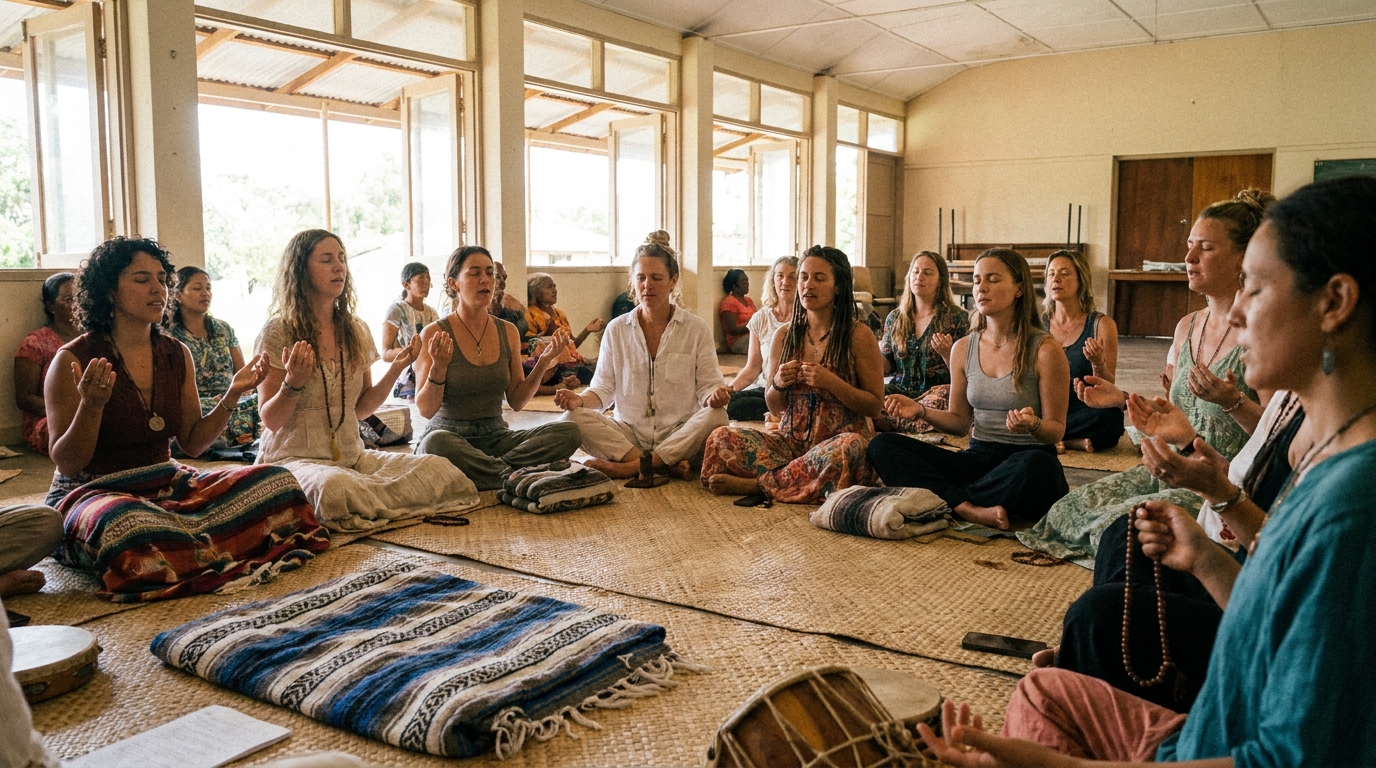
Bhakti Yoga is not a modern invention. Its roots are found in the sacred scriptures of India, especially the Vedas, Upanishads, Bhagavad-gita, and Puranas.
The Bhagavad-gita, one of the most beloved spiritual texts in the world, presents Bhakti Yoga as a direct and intimate path to God.
In the Bhagavad-gita 9.26, Krishna says:
“If one offers Me with love and devotion a leaf, a flower, fruit, or water, I will accept it.”
This verse is so tender. Krishna does not ask for wealth, status, intellectual brilliance, or social perfection. He asks for love. Even a simple offering—a leaf, a flower, fruit, or water—becomes spiritually meaningful when offered with devotion.
Bhakti in the Bhagavad-gita
The Bhagavad-gita presents several forms of yoga, including karma yoga, jnana yoga, dhyana yoga, and bhakti yoga.
- Karma yoga means offering one’s actions to God without selfish attachment.
- Jnana yoga means the path of spiritual knowledge and wisdom.
- Dhyana yoga means meditation and inner discipline.
- Bhakti yoga means loving devotion and surrender to God.
In the Gita, Krishna ultimately emphasizes devotion as the most complete expression of yoga. In Bhagavad-gita 18.66, He lovingly invites the soul to surrender to Him and promises protection.
This surrender is not meant to be fearful or forced. In Bhakti Yoga, surrender means trusting divine love. It means gradually letting go of the illusion that we are separate, isolated controllers, and learning to live in relationship with God.
Bhakti in the Srimad Bhagavatam
The Srimad Bhagavatam, also called the Bhagavata Purana, is another central scripture of the Bhakti tradition. It tells many sacred stories of devotees who loved God in different ways—as a servant, friend, parent, or beloved.
The Bhagavatam teaches that hearing and chanting about God purifies the heart. In one famous verse, Srimad Bhagavatam 1.2.6, pure devotion is described as devotion that is uninterrupted and without selfish motivation. Such devotion fully satisfies the self.
This is deeply practical. We often try to satisfy the heart with temporary things—approval, possessions, control, achievement, pleasure. Bhakti Yoga does not reject life, but it reminds us that the soul’s deepest satisfaction comes from loving connection with God.
ISKCON’s Contribution to Bhakti Yoga
While Bhakti Yoga is ancient, ISKCON has played a major role in bringing Krishna bhakti to the modern world, especially outside India.
When Srila Prabhupada arrived in the United States in 1965, he had very little materially. He was elderly, alone, and carrying a sacred mission from his teachers: to share Krishna consciousness in the English language. Through humility, courage, and deep devotion, he began teaching, chanting, cooking, and explaining the Bhagavad-gita.
From a small storefront in New York, ISKCON grew into a worldwide movement.
Sharing the Holy Name
One of ISKCON’s greatest contributions is sharing the chanting of the Hare Krishna mantra. Public chanting, known as sankirtan, means congregational glorification of God through sacred sound.
Chanting is at the heart of Bhakti Yoga because God’s names are understood to be spiritually powerful and non-different from God. This may sound mystical at first, but it can be experienced practically.
When we chant sincerely, the mind begins to settle. The heart begins to open. We may feel cleansed, comforted, humbled, or uplifted. Over time, chanting can become a shelter.
Making Sacred Food Available
ISKCON is also known for sharing prasadam, food that has been lovingly prepared and offered to Krishna. The word prasadam means mercy or grace.
In Bhakti Yoga, eating is not separate from spiritual life. Cooking can be an act of love. Offering food to God can transform ordinary nourishment into sacred exchange. Sharing prasadam can become a form of compassion.
Many people first encounter Bhakti Yoga not through philosophy, but through a plate of prasadam served with kindness.
Translating and Distributing Scriptures
Srila Prabhupada translated and commented on major Bhakti scriptures, including the Bhagavad-gita As It Is, Srimad Bhagavatam, Sri Chaitanya-charitamrita, and others.
Whether one is part of ISKCON or not, these books have helped countless people understand Krishna bhakti, Sanskrit terms, and the practical teachings of devotion.
Of course, readers may also study translations and commentaries from other Vaishnava teachers and traditions. Bhakti Yoga has a rich ocean of wisdom. No single teacher or institution exhausts it.
Can You Practice Bhakti Yoga Without Joining ISKCON?
Yes. You can practice Bhakti Yoga without formally joining ISKCON.
This is important for sincere seekers to know. Bhakti Yoga is not limited by membership, labels, buildings, or social belonging. The doorway to devotion is the heart.
You may attend an ISKCON temple and feel deeply nourished. You may also practice at home, visit different devotional communities, join kirtan circles, study with teachers from various lineages, or simply begin with personal prayer.
Bhakti Yoga begins wherever you sincerely turn toward God.
Simple Ways to Begin at Home
You do not need to change everything overnight. Devotion grows naturally, like a seed watered with care.
Here are simple ways to begin:
- Chant the Hare Krishna mantra for a few minutes each day
- Offer a short prayer in your own words
- Read one verse from the Bhagavad-gita and reflect on it
- Prepare a simple vegetarian meal and offer it to God with gratitude
- Listen to kirtan while cooking, walking, or resting
- Serve someone with kindness, silently offering that service to God
- Create a small sacred space with a candle, scripture, or picture that inspires devotion
The essence is sincerity. Even one honest prayer matters.
The Role of Community
Although personal practice is beautiful, community can be very helpful. In Sanskrit, the company of spiritually minded people is called sadhu-sanga. A sadhu is a saintly or sincere spiritual person, and sanga means association.
Community gives encouragement. It helps us remember what matters. It gives us a place to ask questions, sing together, serve together, and grow through real relationships.
ISKCON can be one such community. Other Bhakti groups, temples, satsangs, or home gatherings can also provide spiritual support.
At the same time, it is healthy to practice discernment. A good spiritual community should help you become more humble, compassionate, honest, and connected to God—not more fearful, arrogant, or closed-hearted.
Understanding Krishna Consciousness
ISKCON often uses the term Krishna consciousness. This means living with awareness of Krishna, the all-attractive Supreme Person.
The name Krishna means “the all-attractive one.” In Bhakti Yoga, Krishna is understood as the Supreme Personality of Godhead—the source of all beauty, love, wisdom, strength, and joy.
For some people, this personal understanding of God feels natural and deeply comforting. For others, especially those from different backgrounds, it may take time to understand. That is okay. Bhakti Yoga invites exploration with humility and sincerity.
Is Krishna a Hindu God?
This question comes up often.
Krishna appears in the spiritual texts and traditions commonly associated with Hinduism. But in Bhakti Yoga, Krishna is not seen as belonging only to one ethnicity, nationality, or religious label.
God cannot be limited by geography or culture. Just as the sun may be called by different names in different languages, the Divine may be approached through many sacred names.
Bhakti Yoga teaches that Krishna is the Supreme Lord, yet it also honors that sincere souls may call upon God through other names. The essence is loving devotion.
Personal Relationship with God
One of the sweetest gifts of Bhakti Yoga is the understanding that we can have a personal relationship with God.
God is not only a distant force or abstract energy. God is a loving person who knows us, receives our prayers, and invites our love.
This relationship can take different devotional moods. Some relate to God as master, friend, child, beloved, protector, or inner guide. These sacred relationships are described beautifully in Bhakti scriptures.
This is not imagination in the ordinary sense. It is the awakening of the soul’s original loving nature.
Healthy Questions About Organizations and Spiritual Life
Because ISKCON is an organization, people may naturally have questions about authority, culture, history, expectations, and human imperfections.
This is wise. Spiritual life should not require us to shut down our intelligence. The Bhagavad-gita encourages thoughtful inquiry. In Bhagavad-gita 4.34, Krishna advises seekers to approach spiritual teachers with humility, inquiry, and service.
Notice that inquiry is included. Questions are not enemies of faith. Honest questions can deepen faith.
Organizations Are Made of People
Every spiritual organization is made of human beings. Human beings can be sincere, devoted, and inspiring. They can also make mistakes. This is true in every tradition.
ISKCON has many beautiful contributions and many dedicated devotees. It also has a complex history, as any large global religious movement does. Some people have found deep spiritual shelter there. Others may have had difficult experiences.
Bhakti Yoga itself remains pure, even when human institutions are imperfect. The teachings of love, chanting, prayer, service, humility, and surrender remain available to all.
Keeping the Essence
When exploring any spiritual community, it is helpful to ask:
- Does this help me remember God with love?
- Am I becoming more compassionate and truthful?
- Is humility encouraged?
- Are questions welcomed respectfully?
- Is service offered freely, not through pressure?
- Are teachers living what they teach?
- Is the sacredness of each person honored?
Bhakti Yoga is not meant to make the heart hard. It is meant to make the heart soft, brave, and surrendered to divine love.
Similarities Between Bhakti Yoga and ISKCON
Even though Bhakti Yoga and ISKCON are not the same, they share many core elements because ISKCON is built upon Bhakti Yoga.
Chanting the Holy Names
Both Bhakti Yoga and ISKCON emphasize chanting sacred names of God. In the Gaudiya Vaishnava tradition, the Hare Krishna mantra is central.
Chanting can be done alone, softly on beads, or together in kirtan with music. The beads used for mantra meditation are called japa beads. Japa means personal repetition of a mantra.
This practice is simple but profound. Anyone can chant. You do not need to be a scholar. You do not need to be perfect. You only need to begin.
Service as Devotion
Bhakti Yoga teaches seva, which means service. In devotional life, service is not low or insignificant. Service is sacred because it expresses love.
ISKCON communities often provide many opportunities for seva—cooking, cleaning, singing, teaching, gardening, distributing books, caring for guests, or helping with festivals.
But seva can happen anywhere. Parenting can be seva. Honest work can be seva. Caring for the sick can be seva. Listening to a friend can be seva. When offered to God, ordinary duties become spiritualized.
Scripture and Spiritual Study
Both Bhakti Yoga and ISKCON value sacred study. Scriptures such as the Bhagavad-gita help guide the mind and heart.
However, the goal of study is not merely information. The goal is transformation. We read so that we may live differently—with more faith, kindness, clarity, and devotion.
Differences Between Bhakti Yoga and ISKCON
Understanding the differences can help us avoid confusion and appreciate both properly.
Bhakti Yoga Is Universal and Ancient
Bhakti Yoga is a timeless path described in ancient scriptures and practiced across many traditions. It is not owned by any one organization.
There are many Bhakti lineages, including different Vaishnava sampradayas, or spiritual lineages. The word sampradaya means a tradition of teachings passed down through teachers and disciples.
ISKCON belongs to the Gaudiya Vaishnava sampradaya, but Bhakti Yoga is found in other devotional traditions as well.
ISKCON Has a Specific Founder and Structure
ISKCON has a specific founder, history, leadership structure, temples, standards, and institutional culture.
This can be very helpful for organizing communities, preserving teachings, and offering consistent spiritual education. But it also means ISKCON functions as an institution, while Bhakti Yoga itself is a spiritual path.
Cultural Expressions May Differ
Sometimes people encounter Indian clothing, temple rituals, Sanskrit songs, or traditional etiquette and think these cultural forms are the essence of Bhakti Yoga.
They can be beautiful supports for devotion, but the essence is love for God.
A person may wear traditional devotional clothing or ordinary clothes. A person may know many Sanskrit verses or only one simple prayer. A person may worship in a temple or whisper God’s name while washing dishes.
The heart of Bhakti is sincerity.
How to Approach Bhakti Yoga with an Open Heart
If you are new to Bhakti Yoga, you do not have to decide everything immediately. Spiritual life is a relationship, and relationships grow through time, trust, honesty, and experience.
Come gently. Listen. Chant. Ask. Read. Serve. Pray.
Begin with the Holy Name
The most recommended practice in the Bhakti tradition is chanting the names of God. You can begin with the Hare Krishna mantra for five minutes a day.
Try chanting not as a performance, but as a prayer:
“Dear God, please let me remember You. Please guide me. Please awaken love in my heart.”
This simple mood can make chanting deeply personal.
Read with Reflection
You might begin with the Bhagavad-gita, reading a few verses at a time. Do not worry if you do not understand everything. Let the wisdom work on your heart gradually.
Ask practical questions:
- What is Krishna teaching here?
- How does this apply to my life today?
- What attachment or fear can I offer to God?
- How can I act with more devotion?
Scripture becomes alive when we let it speak into our daily choices.
Serve Someone Today
Bhakti grows through service. Choose one small act of kindness and offer it to God.
Wash a dish with gratitude. Call someone who is lonely. Feed someone. Forgive someone. Help without needing credit.
In Bhakti Yoga, love becomes practical.
A Loving Summary: Bhakti Yoga and ISKCON
So, is Bhakti Yoga the same as ISKCON?
No. Bhakti Yoga is the ancient and universal path of loving devotion to God. ISKCON is a modern organization that teaches and practices Bhakti Yoga within the Gaudiya Vaishnava tradition.
ISKCON has helped many people discover Krishna, chanting, prasadam, scripture, and devotional community. It is one important expression of Bhakti Yoga, but it is not the only expression.
You can appreciate ISKCON’s contributions while also understanding that Bhakti Yoga is larger than any institution. The path belongs to the soul’s eternal longing for God.
The Real Question
Perhaps the deeper question is not only, “Is Bhakti Yoga the same as ISKCON?”
Perhaps the deeper question is:
“How can I begin loving God more sincerely today?”
That question is open to everyone.
You do not need to have all the answers. You do not need to belong to a particular group before you pray. You do not need to become perfect before you chant.
God receives sincere effort. Krishna says in the Bhagavad-gita that even a small offering made with love is accepted. This is the kindness at the heart of Bhakti Yoga.
Everyone Is Welcome on the Path of Devotion
Bhakti Yoga is a path of love. It is practical, personal, and deeply hopeful. It invites us to chant, pray, serve, study, remember, and grow.
Whether you are connected with ISKCON, another spiritual community, or no community at all, you are welcome to take a step toward God. Whether you know Sanskrit or not, whether you have a long spiritual history or are just beginning, whether your faith feels strong or fragile—you are welcome.
Start simply. Chant one mantra. Offer one prayer. Read one verse. Serve one person. Give one moment of your day to God.
Every sincere step matters. And by grace, one small step can open the heart to a lifetime of love.
FAQs
What is Bhakti Yoga?
Bhakti Yoga is a spiritual practice that emphasizes devotion and love for a personal god. It is one of the paths of yoga mentioned in ancient Hindu scriptures and involves the practice of chanting, prayer, and worship.
What is ISKCON?
ISKCON, or the International Society for Krishna Consciousness, is a religious organization that follows the teachings of Bhakti Yoga, with a focus on the worship of Lord Krishna. It was founded in 1966 by A.C. Bhaktivedanta Swami Prabhupada.
Is Bhakti Yoga the same as ISKCON?
While ISKCON follows the principles of Bhakti Yoga, they are not the same. Bhakti Yoga is a spiritual practice, while ISKCON is a specific organization that promotes the practice of Bhakti Yoga, with a focus on the worship of Lord Krishna.
What are the main practices of Bhakti Yoga?
The main practices of Bhakti Yoga include chanting the names of God, singing devotional songs, reading scriptures, performing acts of service, and cultivating a loving relationship with the divine.
What are the main beliefs of ISKCON?
ISKCON’s main beliefs include the worship of Lord Krishna as the supreme personality of God, the practice of Bhakti Yoga as the means to attain spiritual liberation, and the dissemination of Krishna consciousness to the world.

