
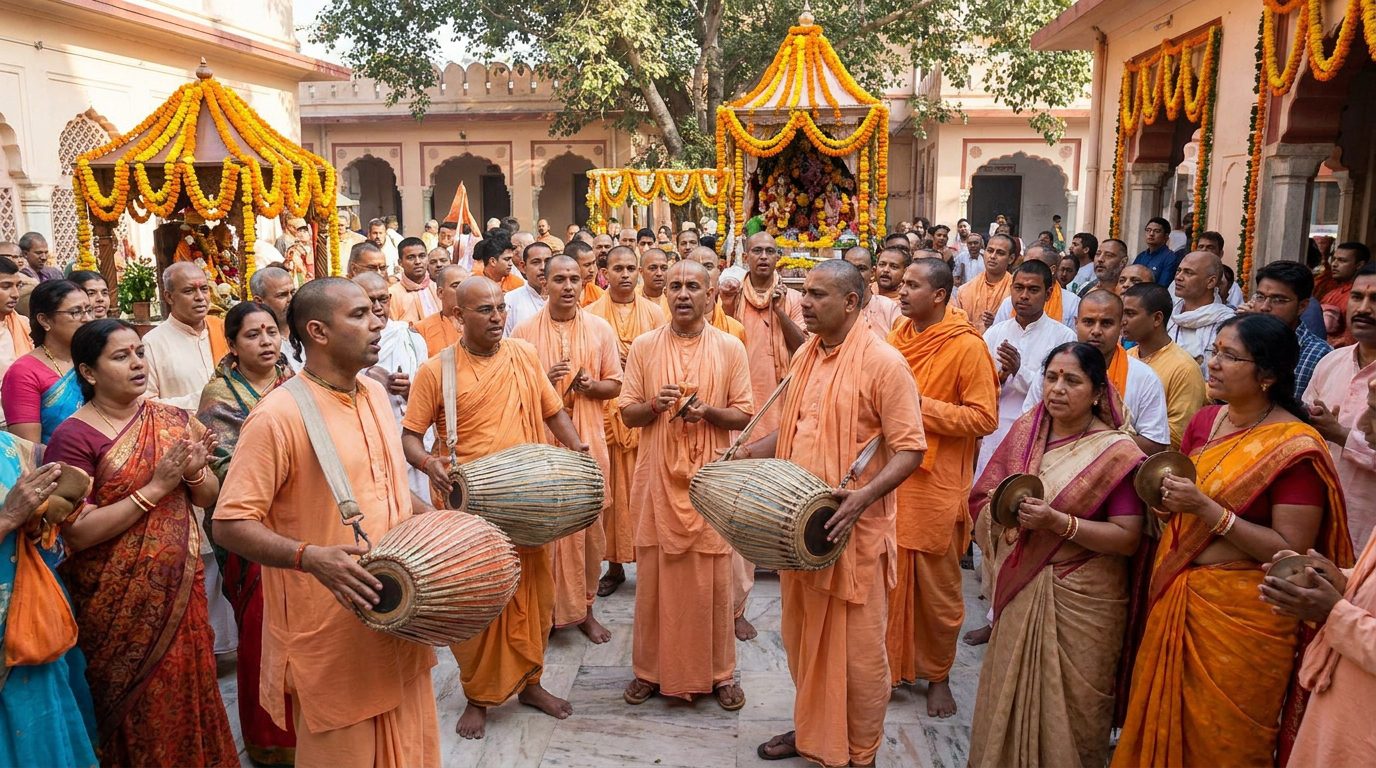
Vaiṣṇava holy days are beautiful opportunities to bring the heart closer to God, even from the quiet simplicity of home. In the Bhakti tradition, “Vaiṣṇava” means one who loves and serves Viṣṇu or Krishna, the Supreme Lord, and tries to live with compassion, devotion, and humility. These sacred days help us remember that spiritual life is not separate from daily life. Our home, our kitchen, our family, our prayers, and even our small offerings can become part of a living path of love.
You do not need to be an expert, a monk, or born into a particular culture to honor these days. Bhakti Yoga is the path of devotion—connecting with God through love, chanting, prayer, service, sacred food, and sincere remembrance. Whether you are new to Krishna consciousness, returning after many years, or simply curious about spiritual practice, you are welcome.
The heart of observing Vaiṣṇava holy days at home is sincerity. We may not do everything perfectly, but if we offer our time, attention, and love to Krishna, that offering becomes meaningful.
Vaiṣṇava holy days are sacred dates in the devotional calendar that celebrate the Lord, His divine appearances, His devotees, and important spiritual practices. They are based on the lunar calendar, so their dates change each year according to the moon.
Some holy days are joyful festivals, filled with singing, worship, and feasting. Others are more contemplative, inviting fasting, prayer, and repentance. All of them are meant to awaken devotion.
What Makes a Day Holy?
In Bhakti, a day becomes holy because it is connected with remembrance of God. The Sanskrit word smaraṇam means “remembering.” When we remember Krishna, Rama, Nṛsiṁha, Viṣṇu, Rādhārāṇī, or the great saints, our ordinary day becomes spiritualized.
The Bhagavad-gītā teaches that whatever we do can be offered to God:
“Whatever you do, whatever you eat, whatever you offer or give away, and whatever austerities you perform—do that, O son of Kuntī, as an offering to Me.”
— Bhagavad-gītā 9.27
This verse is deeply practical. It tells us that worship is not limited to a temple. Cooking, cleaning, singing, reading, serving others, and caring for family can all become devotion when offered with love.
Common Vaiṣṇava Holy Days
Some of the most widely observed Vaiṣṇava holy days include:
- Ekādaśī — a fasting and prayer day observed twice a month
- Janmāṣṭamī — the appearance day of Lord Krishna
- Rāma Navamī — the appearance day of Lord Rāma
- Gaura Pūrṇimā — the appearance day of Śrī Caitanya Mahāprabhu
- Nṛsiṁha Caturdaśī — the appearance day of Lord Nṛsiṁhadeva
- Rādhāṣṭamī — the appearance day of Śrīmatī Rādhārāṇī
- Govardhana Pūjā — worship connected with Krishna lifting Govardhana Hill
- Appearance and disappearance days of great Vaiṣṇava saints
Each of these days has its own mood, stories, songs, and practices. Yet the essence is always the same: to deepen love for God and compassion for all beings.
Preparing Your Home as a Sacred Space
You do not need an elaborate temple room to observe Vaiṣṇava holy days at home. A small clean space, a picture of Krishna, a candle or lamp, a flower, and a sincere heart are enough.
In Bhakti, the Lord accepts love more than luxury. In the Bhagavad-gītā, Krishna says:
“If one offers Me with love and devotion a leaf, a flower, fruit, or water, I will accept it.”
— Bhagavad-gītā 9.26
This is one of the most welcoming verses in all of spiritual literature. Krishna does not ask for wealth or status. He asks for love.
Create a Simple Altar
An altar is a dedicated place for prayer and remembrance. It may be a shelf, a small table, or a quiet corner. You can place:
- A picture or deity form of Krishna, Rādhā-Krishna, Lord Rāma, Lord Nṛsiṁha, or Śrī Caitanya Mahāprabhu
- A clean cloth
- Fresh flowers or leaves
- A candle, ghee lamp, or battery candle if needed
- Incense, if appropriate for your home
- A small cup of water
- Sacred books, such as the Bhagavad-gītā or Śrīmad-Bhāgavatam
If you share your home with others who are not practicing, keep the space respectful and peaceful. Bhakti should never become a cause of tension. The altar is not meant to impress anyone; it is a place to soften the heart.
Cleanliness as Devotion
Before a holy day, you may clean your altar, kitchen, and prayer area. In Sanskrit, seva means “service.” Cleaning can become seva when done for Krishna’s pleasure.
You might think, “I am not just dusting a shelf. I am preparing a place to welcome the Lord.” This simple shift in consciousness turns housework into worship.
If your life is busy, do what you can. Even wiping the altar, changing the water, or placing one fresh flower can be a sacred act.
Prepare the Mind, Not Only the Room
The most important preparation is internal. You may take a few minutes the night before a holy day to ask:
- What quality do I want to cultivate?
- What prayer do I want to offer?
- Is there someone I need to forgive?
- How can I serve others tomorrow?
- What can I do to remember Krishna more sincerely?
Vaiṣṇava holy days are not only calendar events. They are invitations to become more gentle, truthful, grateful, and loving.
Observing Ekādaśī at Home
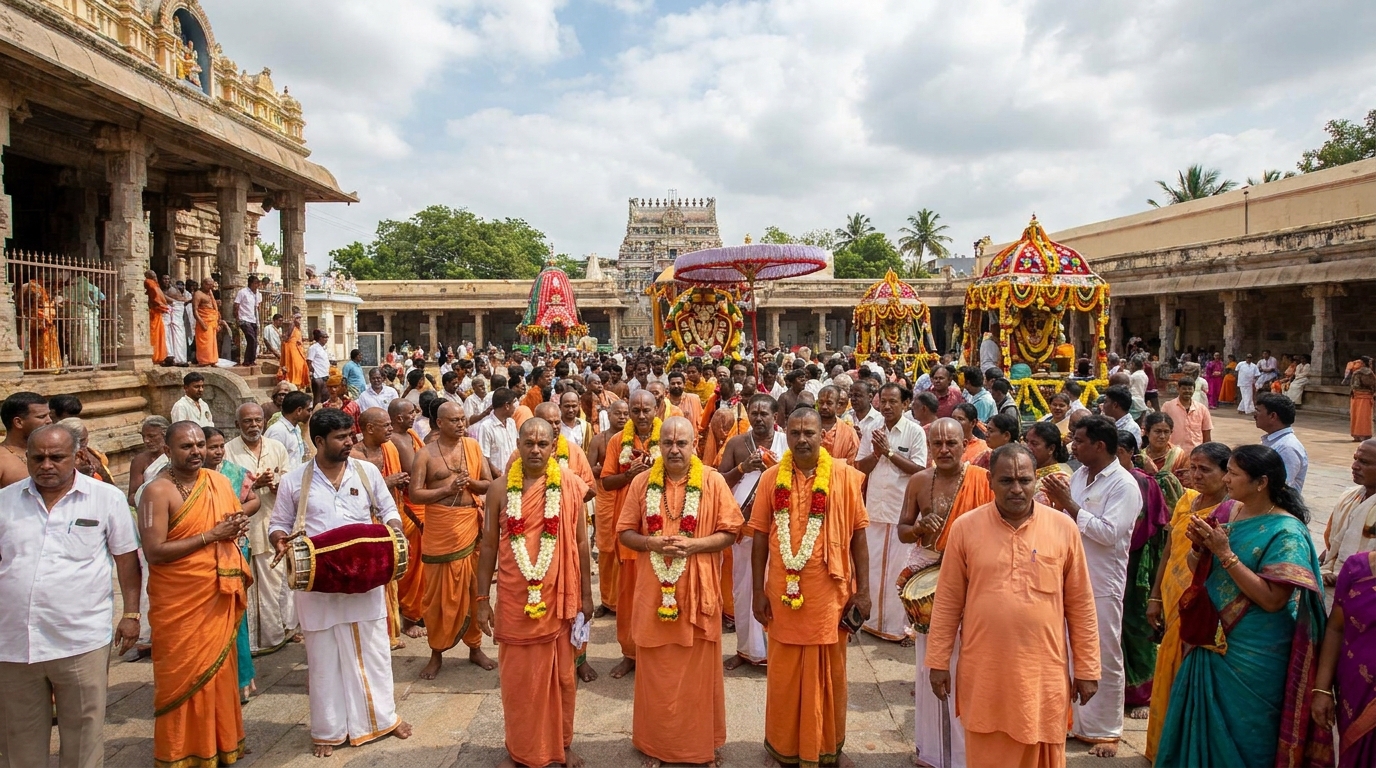
Ekādaśī is one of the most important regular observances in Vaiṣṇava practice. The word Ekādaśī means “the eleventh day,” referring to the eleventh lunar day after the new moon and full moon. It comes twice each month.
Traditionally, devotees fast from grains and beans on Ekādaśī and increase their chanting, prayer, and spiritual reading. The purpose is not punishment. It is purification and remembrance.
The Meaning of Fasting
Fasting in Bhakti is meant to simplify the body and nourish the soul. When we reduce certain foods, we create more space for prayer, chanting, and awareness.
Some devotees fast completely from food and water. Others take water, fruit, milk, vegetables, nuts, or simple non-grain meals. Many people observe by avoiding grains and beans while still eating enough to remain healthy and steady.
If you are pregnant, elderly, ill, recovering from an eating disorder, managing diabetes, taking medication, or caring for demanding responsibilities, please adjust wisely. Krishna is not pleased by harm to the body. The body is a sacred instrument for service.
Simple Ekādaśī Practices
At home, you can observe Ekādaśī by choosing a few sincere practices:
- Chant the Hare Krishna mahā-mantra with attention
- Read from the Bhagavad-gītā or Śrīmad-Bhāgavatam
- Avoid grains and beans if health allows
- Offer simple Ekādaśī-friendly food to Krishna
- Spend less time on entertainment and more time in prayer
- Give charity or serve someone in need
- Reflect on habits you want to release
The mahā-mantra means “great mantra”:
Hare Krishna Hare Krishna
Krishna Krishna Hare Hare
Hare Rama Hare Rama
Rama Rama Hare Hare
This mantra is a prayer asking the Lord and His divine energy to engage us in loving service. You can chant softly, sing with music, or repeat it on beads called japa mālā.
Breaking the Fast
The next day is called Dvādaśī, the twelfth lunar day. Traditionally, devotees break the Ekādaśī fast during a specific time window. If you follow a Vaiṣṇava calendar, you can check the local fasting and break-fast times for your region.
To break the fast, many devotees take a grain preparation offered to Krishna, or another suitable meal according to their level of observance. Begin with gratitude. Thank Krishna for the chance to practice, however imperfectly.
Sure, here is the sentence with the clickable link:
Check out our latest posts on posts.
Celebrating Major Festivals at Home
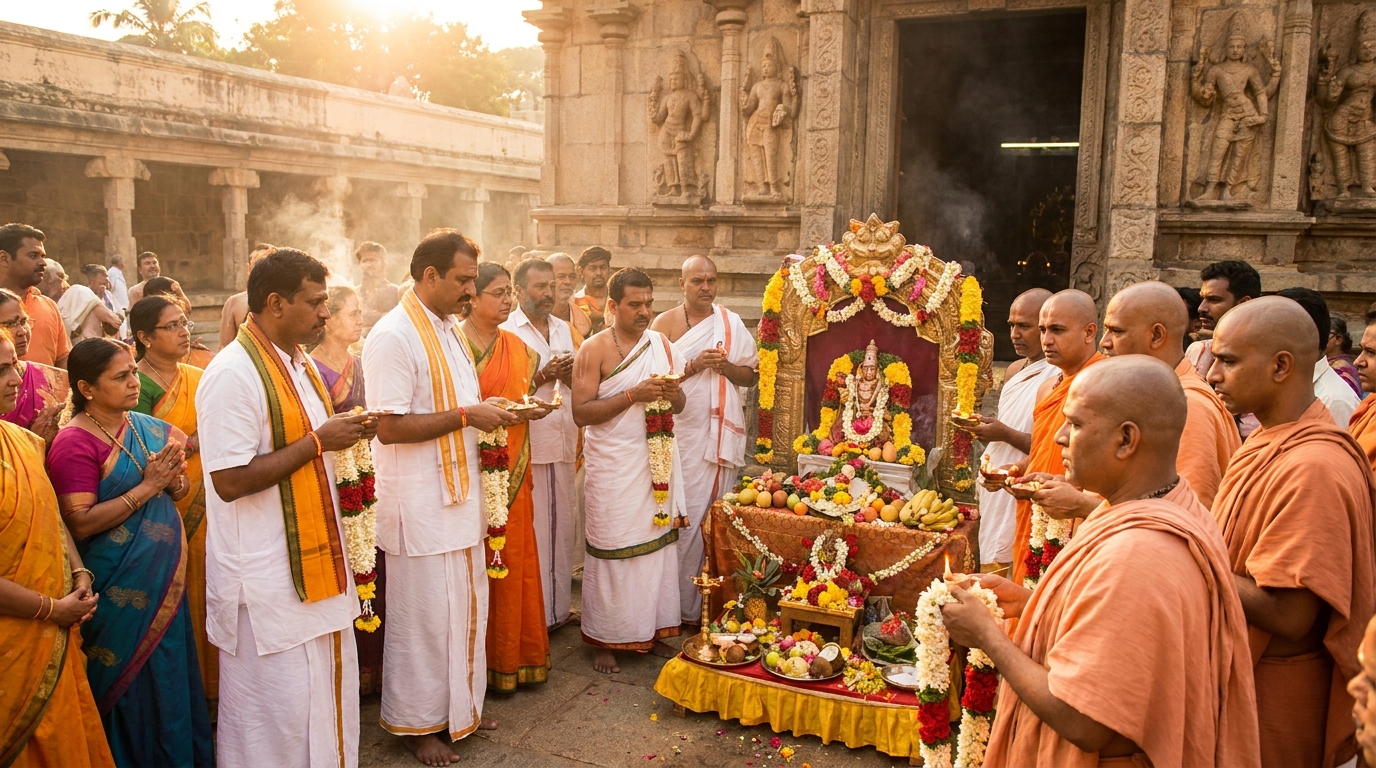
Major Vaiṣṇava festivals are full of divine stories, sacred music, offerings, and community. At home, we may not have the same atmosphere as a temple, but we can still celebrate with devotion.
Janmāṣṭamī: Welcoming Lord Krishna
Janmāṣṭamī celebrates the appearance of Lord Krishna in this world. “Janma” means birth or appearance, and “aṣṭamī” means the eighth lunar day. Krishna’s appearance is described in the Śrīmad-Bhāgavatam, especially in the Tenth Canto.
At home, you can observe Janmāṣṭamī by:
- Reading the story of Krishna’s appearance
- Decorating your altar with flowers, lights, or simple handmade decorations
- Singing kīrtan, devotional call-and-response chanting
- Fasting according to your capacity until evening or midnight
- Preparing special vegetarian offerings
- Chanting extra rounds of the Hare Krishna mantra
- Offering a heartfelt prayer at midnight, the traditional time of Krishna’s appearance
If you have children at home, you can invite them to draw Krishna, make a small cradle, sing, or help prepare fruit offerings. Festivals can help children experience devotion as joyful and loving, not forced.
Rāma Navamī: Honoring Lord Rāma
Rāma Navamī celebrates the appearance of Lord Rāma, the noble king and embodiment of righteousness. His story is told in the Rāmāyaṇa. Rāma teaches devotion, courage, honor, loyalty, and compassion.
At home, you might read a short section from the Rāmāyaṇa, chant the names of Rāma, and reflect on dharma. Dharma means sacred duty, truth, and the way of living that supports harmony.
A simple prayer for Rāma Navamī could be:
“Dear Lord Rāma, please help me live with integrity. Help me speak truthfully, protect the vulnerable, serve with humility, and keep You in my heart.”
Gaura Pūrṇimā: Receiving the Mercy of Śrī Caitanya
Gaura Pūrṇimā celebrates the appearance of Śrī Caitanya Mahāprabhu, the golden avatāra who spread the chanting of the holy names. “Gaura” means golden, and “Pūrṇimā” means full moon.
Śrī Caitanya taught that in this age, the simplest and most powerful spiritual practice is chanting God’s names. He shared ecstatic kīrtan with everyone, regardless of background, learning, or social position.
At home, this day can be observed with joyful chanting. Read about His life, especially His compassion. Sing the Hare Krishna mantra. Invite friends or family for a simple kīrtan evening if possible.
Nṛsiṁha Caturdaśī: Taking Shelter in Divine Protection
Nṛsiṁha Caturdaśī honors Lord Nṛsiṁhadeva, Krishna’s half-lion, half-man form who protected the child devotee Prahlāda. This story from the Śrīmad-Bhāgavatam teaches that God is present everywhere and protects sincere devotion.
At home, you can pray for courage, protection, and faith. Many devotees chant prayers to Lord Nṛsiṁha, asking Him to remove obstacles on the spiritual path.
A simple prayer is:
“Dear Lord Nṛsiṁha, please protect my devotion. Remove the fear, pride, and anger that keep me from loving You and serving others.”
Chanting, Prayer, and Sacred Reading
The foundation of observing Vaiṣṇava holy days at home is not complexity. It is remembrance. Chanting, prayer, and scripture create a direct connection with Krishna.
Chanting the Holy Names
In Bhakti Yoga, the names of God are considered non-different from God. This means that when we chant sincerely, we are not merely saying sounds; we are associating with the Lord.
You can chant:
- Quietly in the morning
- While sitting at your altar
- With beads
- Along with recorded kīrtan
- With family or friends
- While walking peacefully
If you are new, begin with five minutes. If you already chant daily, you may increase your chanting on holy days. The goal is not to show how much we can do, but to offer our heart.
Personal Prayer
Prayer does not have to be formal. You can speak to Krishna honestly. You can say:
“Dear Krishna, I do not know how to love You properly, but I want to learn.”
“Please guide me.”
“Please help me serve my family with patience.”
“Please help me forgive.”
“Please let this holy day change my heart.”
Bhakti is deeply personal. God is not distant. Krishna is described in the Bhagavad-gītā as the friend of all living beings. We can approach Him with reverence, but also with trust.
Reading Scripture with the Heart
Sacred reading is called śravaṇam, or hearing. Even when we read silently, we are hearing divine wisdom.
On Vaiṣṇava holy days, choose a manageable passage. You might read:
- Bhagavad-gītā Chapter 9 or 12
- Stories from the Śrīmad-Bhāgavatam
- The appearance story related to the festival
- Teachings of Śrī Caitanya Mahāprabhu
- Biographies of Vaiṣṇava saints
After reading, pause and ask: “How can I live one teaching from this today?” This turns scripture from information into transformation.
Offering Food with Love
Food is central in Bhakti Yoga because eating can become worship. When vegetarian food is prepared and offered to Krishna with devotion, it becomes prasāda, which means “mercy” or “grace.”
Prasāda is more than blessed food. It is a reminder that everything comes from God and can be returned to God in love.
Cooking as Devotion
When cooking on a holy day, try to keep the mood peaceful and prayerful. You may play kīrtan, chant softly, or remember the festival story.
Vaiṣṇava offerings are vegetarian and traditionally avoid meat, fish, eggs, onions, and garlic. On Ekādaśī, grains and beans are also avoided. If this is new to you, begin simply.
You might offer:
- Fresh fruit
- Water
- Rice, vegetables, and dal on non-Ekādaśī days
- Milk sweets
- Simple vegetable preparations
- Nuts and fruit on Ekādaśī
- Homemade bread or sweets for festivals, if appropriate
The most important ingredient is devotion.
How to Offer Food at Home
A simple way to offer food:
- Prepare a vegetarian meal with care.
- Place a portion on a clean plate reserved, if possible, for Krishna.
- Put the plate on your altar.
- Offer a prayer, such as:
“Dear Krishna, please accept this offering made with love.”
- Chant the Hare Krishna mantra.
- Wait a few minutes.
- Remove the plate and serve the food as prasāda.
If you know traditional offering prayers, you may chant them. If not, sincere words are accepted.
Sharing Prasāda
Sharing prasāda is a beautiful form of service. You may offer it to family, friends, neighbors, coworkers, or guests. You do not have to preach. Simply sharing sacred food with kindness carries spiritual power.
For many people, prasāda is their first experience of Bhakti. A warm meal offered with love can open the heart in ways words cannot.
Serving Others on Holy Days
Vaiṣṇava holy days are not only about personal devotion. They are also about compassion. A true festival softens our relationship with all living beings.
The Sanskrit word dayā means compassion. Vaiṣṇava saints teach that devotion to God naturally expands into kindness toward others.
Make Service Practical
At home, service can be simple:
- Call someone who is lonely
- Cook prasāda for a friend
- Donate to a temple, food relief program, or spiritual community
- Help clean a shared space
- Offer encouragement to someone struggling
- Care for animals with kindness
- Volunteer your skills
- Forgive someone in your heart
On a holy day, ask: “Who can I serve today as an offering to Krishna?”
Serving Family as Sacred Practice
Sometimes we imagine service must be dramatic or public. But much of our real spiritual growth happens in the home.
Caring for children, respecting parents, listening to a spouse, being patient with roommates, and doing ordinary duties with love can all become Bhakti.
If you live with people who do not share your practice, serve them with extra humility on holy days. Let them feel that your devotion makes you kinder, not more judgmental.
Avoiding Spiritual Pride
Holy days can sometimes become occasions for comparison. We may think, “I fasted better,” or “I know more,” or “I follow more strictly.” This mood can quietly harm devotion.
The Śikṣāṣṭakam, eight prayers of Śrī Caitanya Mahāprabhu, teaches humility:
“One should chant the holy name of the Lord in a humble state of mind, thinking oneself lower than a blade of grass, more tolerant than a tree, and ready to offer respect to all.”
This is the heart of Vaiṣṇava practice. Observing holy days should make us softer, not harder.
Including Family, Children, and Friends
A home observance can be deeply meaningful when it includes others in a gentle and welcoming way. Bhakti is best shared through warmth, not pressure.
Make It Joyful for Children
Children often connect through story, music, color, and food. For a holy day, you might invite them to:
- Decorate the altar
- Make flower garlands
- Draw pictures of Krishna or Rāma
- Act out a simple story
- Sing and play instruments
- Help roll sweets or arrange fruit
- Offer a small prayer in their own words
Let devotion feel like love. If children associate spiritual life with joy and kindness, those impressions may stay with them for life.
Welcoming Guests of All Backgrounds
If you invite friends, explain things simply. You might say:
“Today is a sacred day in the Bhakti tradition. We are honoring Krishna through chanting, prayer, and vegetarian food offered with love.”
Let people participate at their comfort level. Some may chant. Some may listen. Some may simply enjoy prasāda. All are welcome.
Creating a Simple Home Program
A home holy day program can be short and sweet:
- Begin with kīrtan or soft chanting.
- Read a short story or scripture passage.
- Share a reflection or prayer.
- Offer food to Krishna.
- Honor prasāda together.
- End with gratitude.
Even 30 minutes can be powerful when done sincerely.
Keeping a Vaiṣṇava Calendar and Planning Ahead
Because Vaiṣṇava holy days follow the lunar calendar, planning helps. A reliable Vaiṣṇava calendar will show local dates, fasting days, festival days, and times for breaking Ekādaśī fasts.
Use a Trusted Calendar
You can use a temple calendar, printed Vaiṣṇava calendar, or trusted online calendar. Be sure it is adjusted for your location, because lunar dates and fasting break times may vary by region.
Important things to note:
- Ekādaśī dates
- Dvādaśī break-fast times
- Major festivals
- Appearance days of saints
- Special fasting instructions
- Festival readings or suggested practices
Prepare the Day Before
The day before a holy day, you may:
- Shop for offering ingredients
- Clean the altar
- Plan what scripture to read
- Prepare simple decorations
- Reduce unnecessary commitments if possible
- Decide your fasting level
- Invite guests if appropriate
Planning helps the holy day feel peaceful rather than rushed.
Be Realistic and Kind to Yourself
Some holy days will be full and beautiful. Others may be interrupted by work, illness, children, travel, or stress. Please do not become discouraged.
Krishna sees the intention. If all you can do is chant one round, offer one fruit, or whisper one prayer before bed, that still matters.
Spiritual life grows through steady sincerity, not all-or-nothing thinking.
The Inner Mood of Observance
The outer practices of Vaiṣṇava holy days are important, but the inner mood gives them life. Fasting, decorating, cooking, chanting, and reading are meant to awaken love.
Remembering That God Is a Person
In Bhakti Yoga, God is not only an energy or concept. Krishna is understood as the Supreme Person, full of beauty, wisdom, compassion, playfulness, and love. Holy days help us relate to Him personally.
We may ask, “How can I please Krishna today?” This simple question can transform our decisions.
Gratitude and Dependence
Holy days are times to remember that we are not independent. Our breath, food, family, talents, and opportunities all come by grace.
Gratitude naturally leads to devotion. When we see life as a gift, offering ourselves to God becomes joyful.
Repentance and Renewal
Sometimes holy days reveal where we are struggling. We may notice envy, anger, distraction, laziness, or pride. This is not a reason for shame. It is a chance to pray for help.
Bhakti is a path of renewal. Every holy day says, “Begin again.”
A Simple At-Home Holy Day Plan
If you are wondering where to start, here is a gentle plan you can adapt for almost any Vaiṣṇava holy day.
Morning
Wake a little earlier if possible. Bathe or wash your face and hands. Offer a simple prayer at your altar.
Chant the Hare Krishna mantra for a set amount of time. Even five or ten minutes can center the heart. Read a short passage related to the day.
If you are fasting, decide your level in a balanced way. Offer your intention to Krishna.
Afternoon
Keep the day as mindful as possible. If you are working, you can still observe inwardly. Listen to kīrtan during a break, read one verse, or silently chant.
If you are at home, prepare an offering. Keep the cooking mood peaceful. Avoid gossip and unnecessary conflict as much as you can.
Do one act of service for someone else.
Evening
Gather with family or sit quietly at your altar. Sing or play kīrtan. Read or retell the festival story. Offer food to Krishna.
Share prasāda. End with gratitude:
“Dear Lord, thank You for allowing me to remember You today. Please help me carry this remembrance into tomorrow.”
Common Questions About Observing at Home
Many sincere people hesitate because they feel unsure. Here are a few gentle answers.
What If I Cannot Fast?
Then do not harm yourself. Choose another offering. You might give up a distraction, eat simply, avoid grains if appropriate, or increase chanting. Fasting is a support for devotion, not the goal itself.
What If I Do Not Know the Rituals?
Begin with the essentials: chant, pray, read, offer food, and serve. Rituals can be learned over time. Krishna accepts sincerity.
What If My Family Does Not Participate?
Practice respectfully. Do not force others. Let your devotion show through kindness, patience, and humility. Over time, people may become curious because they feel the peace your practice brings.
What If I Make Mistakes?
Everyone makes mistakes. Bhakti is not mechanical perfection. Offer your mistake, learn gently, and continue. The Lord is compassionate.
Bringing the Holy Day Into Everyday Life
The purpose of observing Vaiṣṇava holy days at home is not only to have one special day. It is to bring sacred remembrance into ordinary life.
After the festival ends, ask:
- What touched my heart?
- What practice can I continue?
- How can I chant more sincerely?
- How can I serve better?
- What quality did this holy day awaken in me?
Maybe you continue offering your meals. Maybe you chant daily. Maybe you read one verse each morning. Maybe you keep Ekādaśī twice a month. Small steady steps are powerful.
In the Bhagavad-gītā, Krishna promises that even a little advancement on this path protects one from great fear. No sincere effort is lost.
Everyone Is Welcome
Vaiṣṇava holy days at home are gifts of grace. They remind us that Krishna can be welcomed anywhere—with a song, a prayer, a lamp, a flower, a simple meal, or a tear of longing.
You do not need a perfect home, perfect Sanskrit pronunciation, perfect fasting, or perfect knowledge. Come as you are. Bring your real heart. Bring your questions, hopes, struggles, and gratitude.
Bhakti Yoga is a practical path of love. Chant a little. Pray honestly. Offer your food. Serve someone. Read sacred wisdom. Remember God with affection.
Wherever you are on your journey, you are welcome to take one sincere step toward Krishna today. One holy name, one humble prayer, one act of service offered with love can open the door to a lifetime of spiritual growth.
FAQs
What are Vaiṣṇava Holy Days?
Vaiṣṇava Holy Days are special days in the Vaiṣṇava tradition that commemorate important events in the lives of deities, saints, and spiritual leaders. These days are considered auspicious for spiritual practices and observances.
How can one observe Vaiṣṇava Holy Days at home?
One can observe Vaiṣṇava Holy Days at home by performing devotional activities such as chanting, reading scriptures, offering prayers, and preparing and sharing sanctified food (prasadam) with family and friends. It is also common to listen to discourses and participate in virtual satsangs or congregational gatherings.
What are some common Vaiṣṇava Holy Days?
Some common Vaiṣṇava Holy Days include Janmāṣṭamī (the appearance day of Lord Krishna), Ratha Yātrā (the chariot festival of Lord Jagannātha), Gaura Pūrṇimā (the appearance day of Lord Caitanya), and Nṛsiṁha Caturdaśī (the appearance day of Lord Nṛsiṁhadeva).
Why is it important to observe Vaiṣṇava Holy Days?
Observing Vaiṣṇava Holy Days is important as it allows individuals to connect with the divine, deepen their spiritual practices, and cultivate a sense of community and unity with other devotees. These days also provide an opportunity to reflect on the teachings and pastimes of the deities and spiritual leaders.
Are there any specific guidelines for observing Vaiṣṇava Holy Days at home?
While there are no strict guidelines, it is recommended to follow traditional practices such as waking up early, taking a ritual bath, dressing in clean clothes, and offering worship to the deities. Additionally, one should strive to maintain a mood of devotion and humility throughout the day.

