
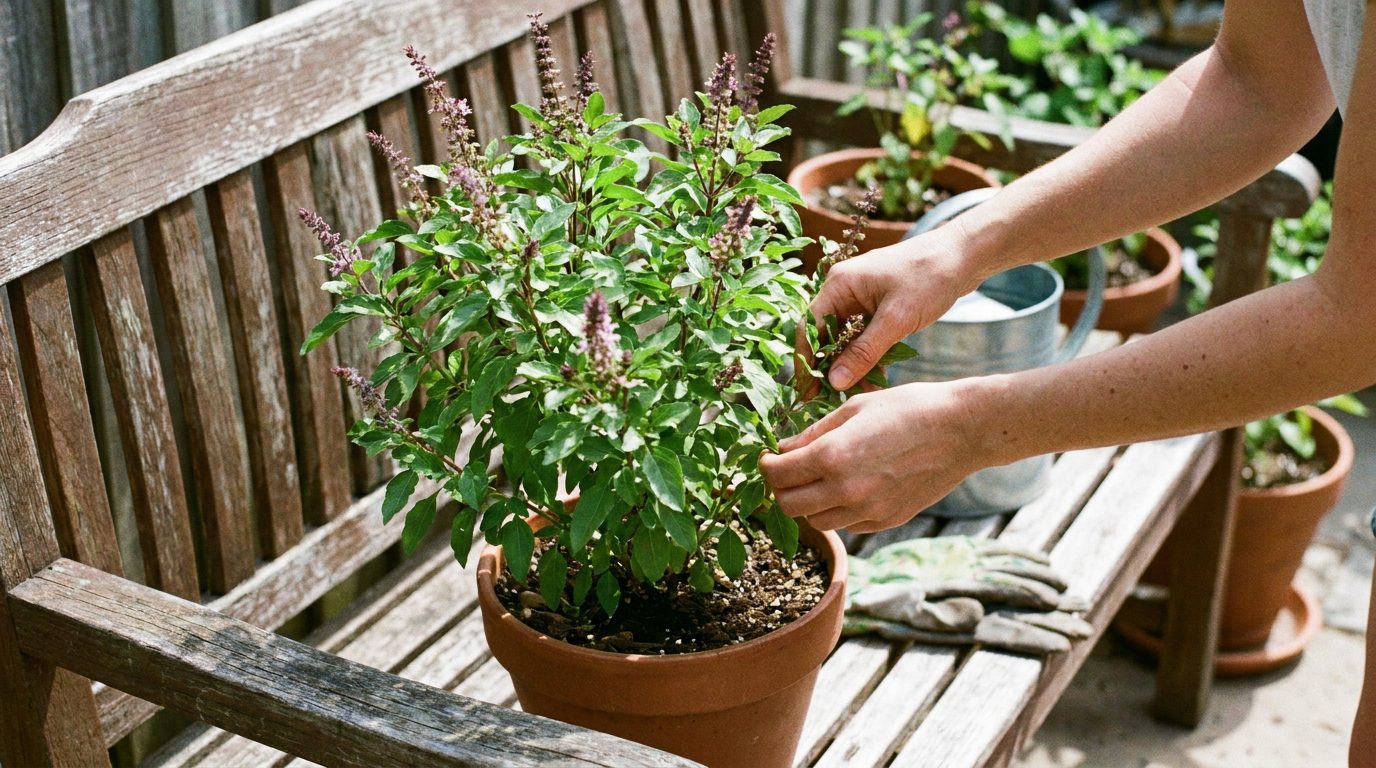
If you have welcomed a Tulasī plant into your home, you have invited something very sacred and tender into your life.
Tulasī, also called Holy Basil, is beloved in the Bhakti Yoga tradition as a sacred plant dear to Śrī Krishna. In Sanskrit, bhakti means loving devotion, and Tulasī helps us practice devotion in a very practical way—through care, prayer, attention, chanting, and service.
Whether you are a lifelong practitioner, newly curious about Bhakti Yoga, or simply someone who feels drawn to care for a sacred plant, you are welcome here. Tulasī care is not only gardening. It is a gentle relationship. It teaches us how to slow down, notice, serve, and offer love daily.
Tulasī as a Sacred Plant
In Bhakti traditions, Tulasī is not seen as an ordinary plant. She is honored as Tulasī Devī or Vṛndā Devī, a great devotee of Krishna who appears in this world in plant form to bless others.
The scriptures describe Tulasī as deeply dear to the Lord. The Padma Purāṇa and other Bhakti texts praise the offering of Tulasī leaves to Krishna with love and humility. The heart of the teaching is simple: God is pleased not by wealth or display, but by sincere devotion.
In the Bhagavad-gītā 9.26, Krishna says:
“If one offers Me with love and devotion a leaf, a flower, fruit, or water, I will accept it.”
For devotees, that “leaf” is often understood to include the sacred Tulasī leaf. The offering is small, but the love behind it can be very deep.
A Relationship of Service
Caring for Tulasī is a form of sevā, a Sanskrit word meaning loving service. Sevā is not forced duty. It is service offered with the heart.
When we water Tulasī, protect her from harsh weather, clean her leaves, and offer prayers, we are practicing the essence of Bhakti Yoga. We are learning to love through action.
This is one reason Tulasī care can be so transformative. Every day, she invites us to ask: “How can I serve?” That question can slowly reshape our whole life.
Choosing the Right Place for Your Tulasī Plant
Light: Tulasī Loves Sunshine
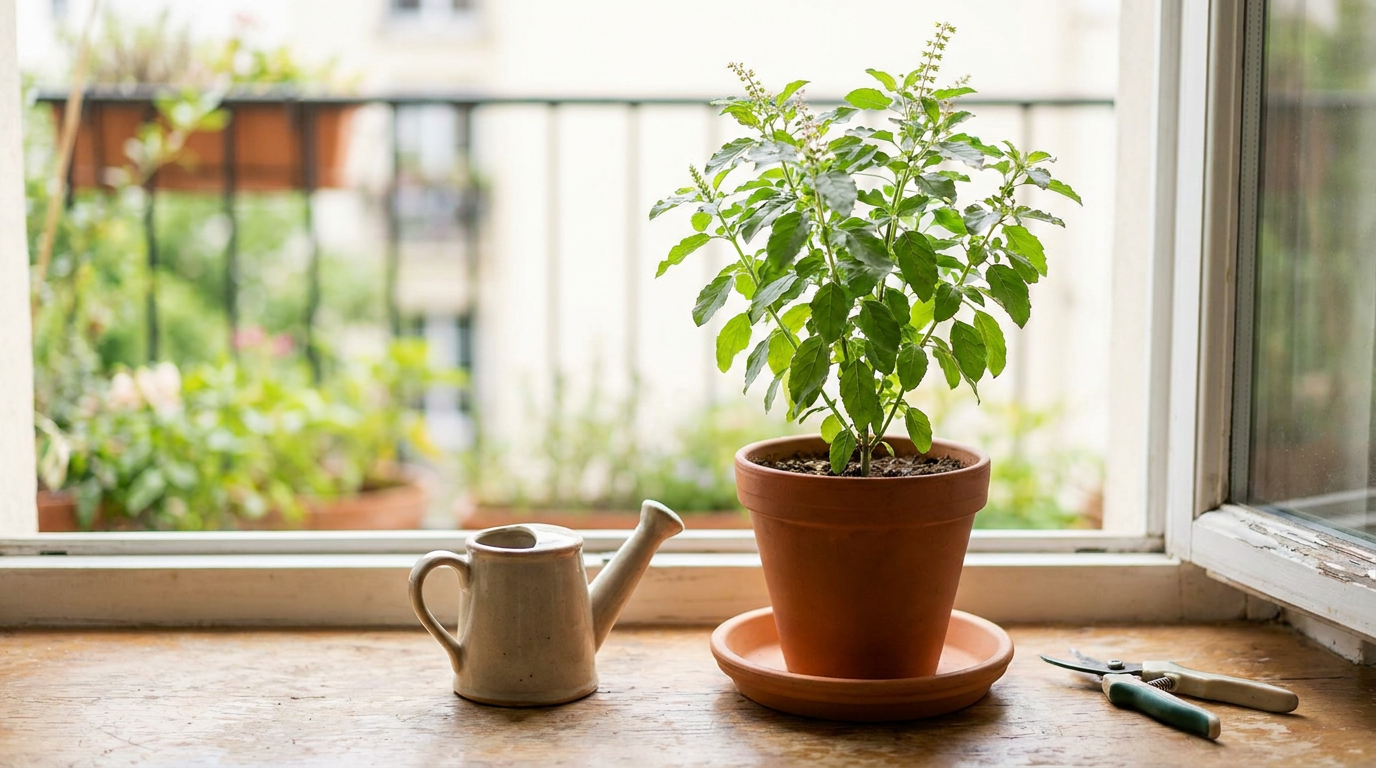
Tulasī generally loves bright light and warmth. If you are keeping her indoors, place her near the sunniest window you have. A south-facing window is often ideal in the Northern Hemisphere, though an east or west-facing window can also work.
She usually needs at least 4 to 6 hours of good light each day. More is often better, as long as the heat is not extreme and the soil does not dry out too quickly.
If your home does not receive enough natural sunlight, you may use a grow light. A simple full-spectrum LED grow light can help her thrive, especially in winter or in cloudy climates.
Warmth and Protection
Tulasī is sensitive to cold. She does best in warm conditions and should usually be protected from temperatures below 55°F or 13°C. Freezing weather can kill her quickly.
If you keep Tulasī outdoors during warm months, bring her inside before cold nights arrive. Do not wait until the first frost. A sudden chill can shock the plant.
Indoors, avoid placing her near cold drafts, air conditioners, heaters, or vents. Tulasī likes steady, gentle warmth.
Fresh Air Without Stress
Like all living beings, Tulasī appreciates fresh air. If she is indoors, try to provide some air circulation, but avoid strong wind. A light breeze from an open window on a warm day can be helpful. A harsh draft can be harmful.
If she is outdoors, place her where she receives sun and air but is not beaten down by heavy wind or rain.
Watering Tulasī with Care
How Often Should You Water?
One of the most common mistakes in Tulasī care is overwatering. Tulasī likes moisture, but she does not like to sit in soggy soil.
Before watering, gently touch the top of the soil. If the top inch feels dry, it is usually time to water. If it still feels moist, wait a little longer.
The exact schedule depends on your climate, season, pot size, and light. In hot summer weather, she may need water daily. Indoors in winter, she may need water only every few days or even less often.
Rather than following a rigid schedule, develop a relationship of observation. Look at her leaves. Touch the soil. Notice how quickly the pot dries. This attentive care is part of the devotion.
How to Water Properly
Water slowly and evenly until water drains from the bottom of the pot. This helps ensure the roots receive moisture throughout the soil.
Then allow the excess water to drain away. Do not let the pot sit in a saucer full of water for long periods. Standing water can cause root rot.
If possible, use room-temperature water. Very cold water can shock the roots, especially in winter.
Signs of Overwatering and Underwatering
If Tulasī is overwatered, her leaves may turn yellow, the soil may smell sour, or the plant may droop even though the soil is wet. The stem near the soil may become dark or weak.
If she is underwatered, the leaves may wilt, curl, or become dry and crispy. The soil may pull away from the edges of the pot.
Both situations can be corrected if noticed early. Tulasī is tender, but she is also forgiving when cared for with patience.
Check out our latest posts at https://thebhaktihouse.org/blog.
Soil, Pot, and Drainage
Choosing the Right Soil
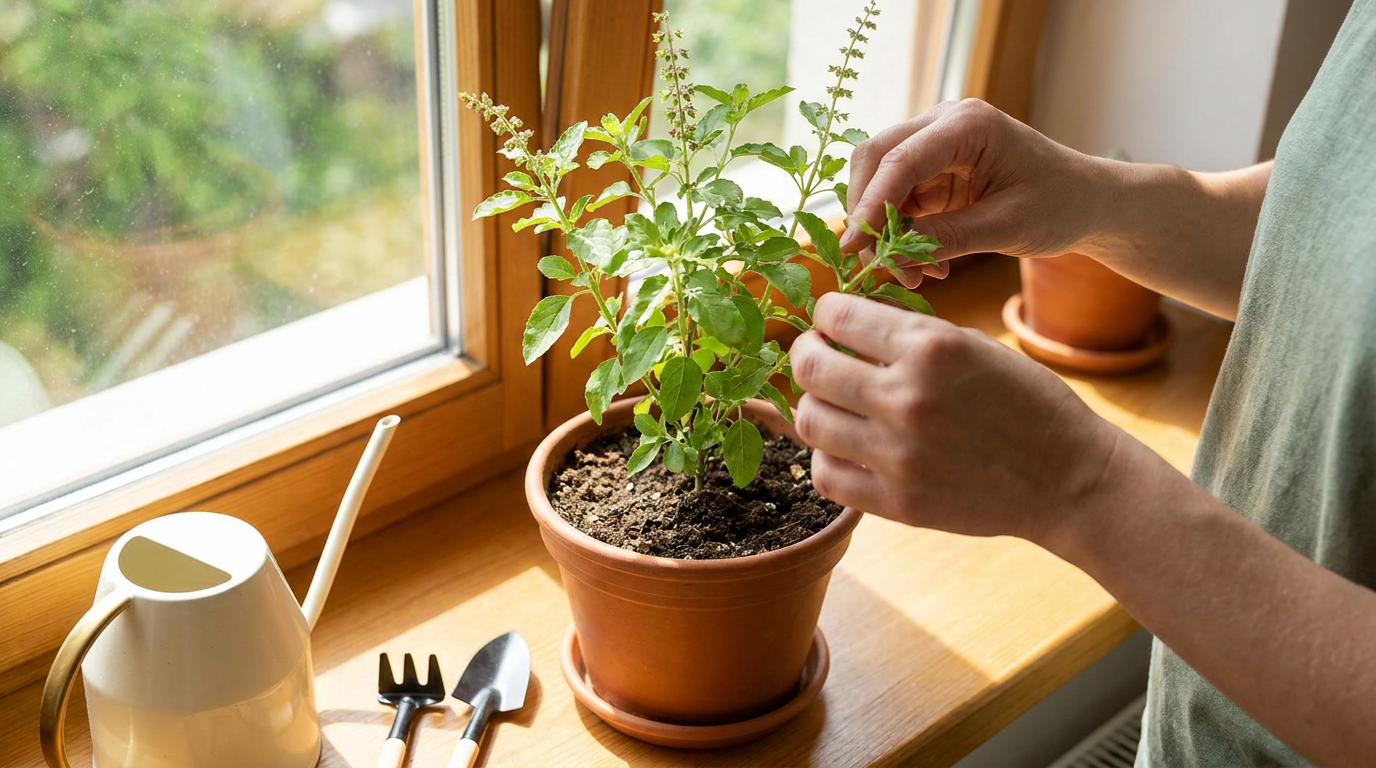
Tulasī needs well-draining soil. A good potting mix should hold some moisture but also allow extra water to pass through.
You can use a high-quality organic potting soil and mix in materials like perlite, pumice, or coarse sand to improve drainage. Compost can be helpful in small amounts, but the soil should not become heavy or compacted.
A simple blend might include:
- Organic potting soil
- Perlite or pumice for drainage
- A small amount of compost for nutrients
Avoid dense garden soil in containers, as it can become compacted and hold too much water.
Choosing the Right Pot
Your pot should always have drainage holes. This is very important.
Clay or terracotta pots allow the soil to breathe and dry more quickly. Plastic pots hold moisture longer. Either can work, but you will need to adjust your watering accordingly.
If the pot is too small, the roots may become crowded and the plant may dry out too quickly. If the pot is too large, the soil may stay wet for too long. Choose a pot that gives the roots room to grow without overwhelming the plant.
When to Repot Tulasī
You may need to repot Tulasī if:
- Roots are circling the bottom of the pot
- Water runs straight through without soaking in
- Growth has slowed despite good care
- The plant dries out very quickly
- The soil has become compacted
Repot gently. Try not to disturb the roots more than necessary. After repotting, water lightly and keep her in a peaceful, stable place as she adjusts.
Daily Devotional Care
Offering Respect
In Bhakti homes and temples, Tulasī is treated with great respect. Many devotees bow to her, offer prayers, sing to her, or walk around her in reverence.
You do not need to imitate anything artificially. Start with sincerity. You may simply say, “Thank you for being here. Please help me grow in love for God.”
That humility is precious.
Chanting Near Tulasī
Chanting is central to Bhakti Yoga. The Sanskrit word mantra means a sacred sound that helps free and uplift the mind. Many practitioners chant the Hare Krishna mahā-mantra:
Hare Krishna Hare Krishna
Krishna Krishna Hare Hare
Hare Rama Hare Rama
Rama Rama Hare Hare
Hare calls to the divine energy of God. Krishna means the all-attractive Lord. Rama means the reservoir of joy. This mantra is a prayer: “O Lord, O divine energy of the Lord, please engage me in loving service.”
Chanting near Tulasī can create a peaceful atmosphere in the home. You may chant aloud, softly, or silently. Even a few minutes each day can nourish the heart.
Keeping Her Area Clean
Cleanliness is an important part of devotional life. Keep Tulasī’s space tidy. Remove fallen leaves from the soil. Wipe the pot if needed. Keep the area peaceful and respectful.
This is not about perfection. It is about care. A clean space helps remind us that our home can become a sacred place.
Offering Tulasī Leaves
When and How to Pick Leaves
If you are practicing Bhakti worship, Tulasī leaves may be offered to Krishna. Traditionally, devotees pick leaves carefully, with prayer and gratitude.
Pick only healthy leaves, and do not strip the plant harshly. Take a few at a time. Use clean hands. It is best to pinch gently at the stem rather than tearing.
Many devotees avoid picking Tulasī leaves at night, on certain sacred days, or when the plant is very young, weak, or recovering. Customs may vary according to lineage and teacher, so if you are part of a Bhakti community, you can ask for guidance.
A simple prayer before picking might be:
“Dear Tulasī Devī, please forgive any mistakes I make. May these leaves be offered with love to the Lord.”
Offering with Love
A Tulasī leaf is often placed on food preparations offered to Krishna. In Bhakti Yoga, food offered to God with devotion is called prasādam, meaning mercy or grace.
The practice is simple: prepare vegetarian food with care, place it before Krishna or a sacred image, offer a prayer, and ask that it be accepted. Adding a Tulasī leaf is considered especially pleasing to Krishna.
The spiritual principle is not ritual alone. It is love. Even a small offering becomes meaningful when made sincerely.
Never Treat Tulasī as Ordinary
Because Tulasī is sacred, devotees avoid using her leaves casually. They are not usually picked for ordinary cooking or decoration. If leaves naturally fall, they may be respectfully placed in soil, in a clean sacred place, or used in worship if still fresh and clean.
If you are caring for Tulasī mainly as a plant and are still learning the devotional customs, simply treat her with respect. That is a beautiful beginning.
Pruning and Encouraging Healthy Growth
Pinching Back for Fullness
Tulasī can become tall and leggy if not pruned. Gentle pruning encourages bushier growth.
When the plant is healthy and established, you may pinch back the growing tips just above a set of leaves. This encourages new branches to grow from the sides.
Do not prune too much at once. A good rule is to remove only a small amount, especially if the plant is young or stressed.
Managing Flowers and Seeds
Tulasī will often produce flower clusters called mañjarīs. In devotional tradition, mañjarīs are very sacred and may be offered to Krishna.
From a gardening perspective, allowing too many flowers to remain can signal the plant to focus on seed production rather than leaf growth. Many caregivers gently remove some flower heads to encourage continued growth.
If you want to collect seeds, allow some flowers to mature and dry on the plant. Then carefully collect the seeds and store them in a dry place.
Supporting an Older Plant
Over time, Tulasī may become woody at the base. This is natural. Continue pruning gently, providing good light, and avoiding overwatering.
Some Tulasī plants live for several years with proper care. Others may complete their life cycle sooner, especially in challenging climates. Whatever her lifespan, the service offered is never wasted.
In Bhakti, the value is not measured only by outward success. The love and care offered are spiritually meaningful.
Seasonal Care for Tulasī
Summer Care
In summer, Tulasī often grows beautifully. She may enjoy being outdoors if temperatures are warm and stable.
Introduce her to outdoor sun gradually. A plant kept indoors can burn if suddenly placed in strong direct sunlight. Start with morning sun or partial shade, then slowly increase exposure.
Check water more frequently in hot weather. Outdoor pots dry quickly. Still, make sure the soil drains well.
Winter Care
Winter can be difficult for Tulasī, especially in cold climates. Bring her indoors before temperatures drop. Place her in the brightest warm spot available.
Growth may slow in winter. This is normal. Water less often because the plant uses less moisture in cooler, darker conditions.
A grow light can make a big difference. Keep it on for about 10 to 14 hours per day, depending on your setup. Make sure it is close enough to help but not so close that it burns the leaves.
Transitioning Indoors and Outdoors
When moving Tulasī between indoors and outdoors, do it gradually. Sudden changes in light, temperature, or humidity can cause stress.
Before bringing her inside, check carefully for pests. Look under leaves and along stems. You may gently rinse the plant and clean the pot before placing her in your indoor sacred space.
Common Problems and Gentle Solutions
Yellow Leaves
Yellow leaves can happen for many reasons. The most common causes are overwatering, poor drainage, lack of light, or nutrient imbalance.
First, check the soil. If it is wet for long periods, reduce watering and improve drainage. If the plant is in a dark area, move her to brighter light.
A few yellow leaves at the bottom of the plant can be normal, especially as she grows. Remove them gently when they are ready to fall.
Wilting
Wilting can mean either too little water or too much water. Always check the soil before assuming.
If the soil is dry, water deeply and allow drainage. If the soil is wet and the plant is wilting, the roots may be stressed. Let the soil dry somewhat and make sure the pot drains properly.
Pests
Common pests include aphids, whiteflies, spider mites, and fungus gnats. Because Tulasī is sacred and may be used in offerings, many devotees prefer gentle, natural methods.
You can:
- Rinse leaves with water
- Wipe pests away with a soft cloth
- Use neem-based products carefully, avoiding leaves you plan to offer soon
- Improve airflow
- Avoid overly wet soil, which encourages fungus gnats
Always test any spray on a small part of the plant first. Avoid harsh chemicals whenever possible.
Leggy Growth
If Tulasī grows tall with long spaces between leaves, she likely needs more light. Move her closer to a bright window or use a grow light.
Pruning can help, but light is the deeper solution. Without enough light, she will continue stretching.
Growing Tulasī from Seeds or Cuttings
Starting from Seed
Tulasī seeds are small and should be planted near the surface of the soil. Use a light, well-draining seed-starting mix.
Keep the soil gently moist, not soggy. Warmth helps germination. A humidity dome may help, but remove it once seedlings appear to prevent mold.
When seedlings develop several sets of leaves, they can be transplanted carefully into small pots.
Growing Tulasī from seed can be a beautiful devotional experience. Watching a tiny sprout emerge reminds us that spiritual life also begins with small, sincere steps.
Growing from Cuttings
Tulasī can sometimes be propagated from cuttings. Take a healthy stem cutting, remove the lower leaves, and place it in water or moist soil until roots develop.
Not every cutting will succeed, so be patient. If one does not root, try again with humility and care.
Sharing Tulasī with Others
When your Tulasī plant is healthy and producing seeds or cuttings, sharing her with others can be a wonderful service. You may help someone begin their own devotional practice at home.
Offer simple care instructions and encourage them not to feel intimidated. Tulasī responds to sincere attention.
Creating a Sacred Space Around Tulasī
A Simple Home Altar
You may place Tulasī near a home altar or devotional space. This might include a picture of Krishna, Rādhā-Krishna, Lord Caitanya, or another form of God you worship with love.
A home altar does not need to be elaborate. A clean shelf, a candle or lamp, flowers, and a place to pray can be enough.
The purpose is remembrance. In Sanskrit, smaraṇam means remembering God. Tulasī helps us remember throughout the day.
Morning and Evening Practice
You might begin the morning by greeting Tulasī, offering water if needed, and chanting a few rounds or prayers.
In the evening, you may check her soil, remove fallen leaves, and offer gratitude.
These small practices help bring sacred rhythm into daily life. Bhakti Yoga is not separate from home life. It enters the kitchen, the windowsill, the garden, and the heart.
Children and Family Care
Tulasī care can be a beautiful way to include children and family members in spiritual life. Children can learn gentleness by watering carefully, singing, or helping keep the area clean.
Explain simply: “Tulasī is very dear to Krishna, so we care for her with love.”
This teaches reverence for life, responsibility, and devotion in a natural way.
The Inner Lessons of Tulasī Care
Patience
Plants do not grow according to our impatience. Tulasī teaches us to be steady. Some days she looks vibrant. Some days she struggles. We continue serving.
Spiritual growth is similar. Our hearts may not transform overnight. But daily chanting, prayer, service, and remembrance gradually soften us.
Humility
Even experienced gardeners make mistakes. Leaves may yellow. A plant may suffer from cold, pests, or overwatering. Rather than becoming discouraged, we can learn.
Humility means we remain teachable. In Bhakti, humility is not self-hatred. It is openness to grace.
Love in Action
Love is not only a feeling. Love waters. Love protects. Love notices. Love adjusts.
Tulasī care turns devotion into daily action. This is the heart of Bhakti Yoga: offering our life, little by little, in loving service to God and all beings.
If Your Tulasī Plant Becomes Sick or Dies
Responding with Compassion
Sometimes, despite our best efforts, a Tulasī plant may become very weak or leave this world. This can feel painful, especially when we have cared for her devotionally.
Please do not be harsh with yourself. Reflect honestly, learn what you can, and offer gratitude for the time you had.
In devotional culture, a departed Tulasī plant is treated respectfully. The dried wood may be kept sacred, and the remaining plant matter may be returned to the earth in a clean place.
Beginning Again
Starting again is also part of spiritual life. If one Tulasī plant does not survive, you can try again with more understanding.
Bhakti is a path of mercy. We are not expected to be perfect gardeners or perfect devotees. We are invited to become sincere.
A Simple Daily Tulasī Care Checklist
Morning
- Offer a respectful greeting or prayer
- Check soil moisture
- Water only if needed
- Make sure she has enough light
- Chant or pray nearby, even briefly
Afternoon
- Observe her leaves and posture
- Protect from harsh sun, cold, or wind
- Check for pests if she is outdoors
Evening
- Remove fallen leaves respectfully
- Turn off grow lights if used
- Offer gratitude
- Keep her space clean and peaceful
This simple rhythm can become a sweet devotional anchor in your home.
Bringing Bhakti Into the Home Through Tulasī
Caring for Tulasī is a practical doorway into Bhakti Yoga. You do not need to know everything. You do not need to have a perfect altar, perfect Sanskrit pronunciation, or perfect habits.
You can begin with one plant, one prayer, one cup of water, one moment of attention.
Tulasī invites us into relationship—with nature, with devotion, with Krishna, and with the sacred presence already waiting in our hearts.
The Bhakti scriptures remind us again and again that God accepts love. Not pride. Not performance. Not external show. Love.
So if you stand before Tulasī with a sincere heart and say, “Please help me serve,” that is already a beautiful offering.
May your home become a place of peace. May your care for Tulasī deepen your compassion. May your chanting become sweeter. May your service become joyful. And may each small act of devotion bring you closer to the loving shelter of God.
Everyone is welcome on this path. Whatever your background, whatever your level of experience, you can take one sincere step today—water with gratitude, chant one mantra, offer one prayer, or serve one living being with love. That one step toward God is precious.
FAQs
1. What is a Tulasī plant?
A Tulasī plant, also known as holy basil, is a sacred plant in Hinduism and is commonly grown in Indian households for its spiritual significance and medicinal properties.
2. How should I care for a Tulasī plant at home?
Tulasī plants require well-drained soil, plenty of sunlight, and regular watering. They thrive in warm, humid conditions and should be protected from frost.
3. Can I grow a Tulasī plant indoors?
Yes, Tulasī plants can be grown indoors as long as they receive adequate sunlight, preferably near a south-facing window. It’s important to ensure good air circulation around the plant.
4. What are the medicinal properties of Tulasī plant?
Tulasī leaves are known for their antibacterial, antiviral, and anti-inflammatory properties. They are commonly used in traditional medicine to treat respiratory ailments, digestive issues, and stress.
5. Are there any spiritual practices associated with caring for a Tulasī plant?
In Hinduism, caring for a Tulasī plant is considered a sacred practice. It is often grown in a special pot or area of the home and is watered and worshipped daily as an offering to the deities.

