
The Nine Stages of Bhakti as a Living Journey of the Heart
Bhakti Yoga is the path of loving devotion to God. The Sanskrit word bhakti means devotion, love, or loving service. It is not merely a belief system or a set of rituals. Bhakti is a way of living in relationship with the Divine—with our thoughts, words, actions, talents, struggles, and hopes gradually offered in love.
In the Bhakti tradition, spiritual growth is often described through nine progressive stages. These stages are beautifully explained by Śrīla Rūpa Gosvāmī in the Bhakti-rasāmṛta-sindhu, a foundational text on devotional life. He describes the natural unfolding of devotion from initial faith to the highest love of God:
śraddhā — faith
sādhu-saṅga — association with spiritual people
bhajana-kriyā — beginning devotional practice
anartha-nivṛtti — clearing unwanted habits
niṣṭhā — steadiness
ruci — taste
āsakti — deep attachment
bhāva — spiritual emotion
prema — pure love of God
These stages are not meant to make us feel judged or pressured. They are like a map for the soul. A map does not condemn us for where we are; it helps us understand the road, trust the process, and keep walking with hope.
For seekers from all backgrounds—whether you are new to yoga, returning to prayer, curious about chanting, or already walking a devotional path—these nine stages show how Bhakti grows naturally when we keep turning toward God with sincerity.
Bhakti Begins with Faith and Holy Association
Every spiritual journey begins somewhere gentle. In Bhakti, the first two stages—śraddhā and sādhu-saṅga—create the foundation for everything that follows.
Śraddhā: The First Soft Opening of the Heart
Śraddhā is often translated as faith, but it does not necessarily mean blind belief. It may begin as curiosity, trust, longing, or a quiet sense that there is more to life than material success and temporary pleasure.
Faith can be as simple as thinking, “Maybe God is real. Maybe love is the deepest truth. Maybe chanting and prayer can help me remember who I truly am.”
In the Bhagavad-gītā, Krishna says, “In whatever way people approach Me, I reciprocate with them” (Bhagavad-gītā 4.11). This is a comforting verse because it reminds us that God meets us where we are. We do not have to be perfect to begin. We do not have to have all the answers. The beginning of Bhakti is simply a sincere turning.
Faith may come through hearing sacred music, meeting a kind devotee, reading scripture, visiting a temple, joining a kirtan, or going through a life challenge that awakens deeper questions. Sometimes faith comes like a sunrise; sometimes it comes like one small candle in a dark room. Both are sacred beginnings.
Sādhu-Saṅga: Growing Through Spiritual Company
The next stage is sādhu-saṅga. Sādhu means a saintly or spiritually sincere person, and saṅga means association or company. In simple terms, this means spending time with people who inspire our spiritual life.
Bhakti grows through relationship. We learn love from those who are trying to love God. We learn prayer from those who pray. We learn service from those who serve. We learn humility from those who live humbly.
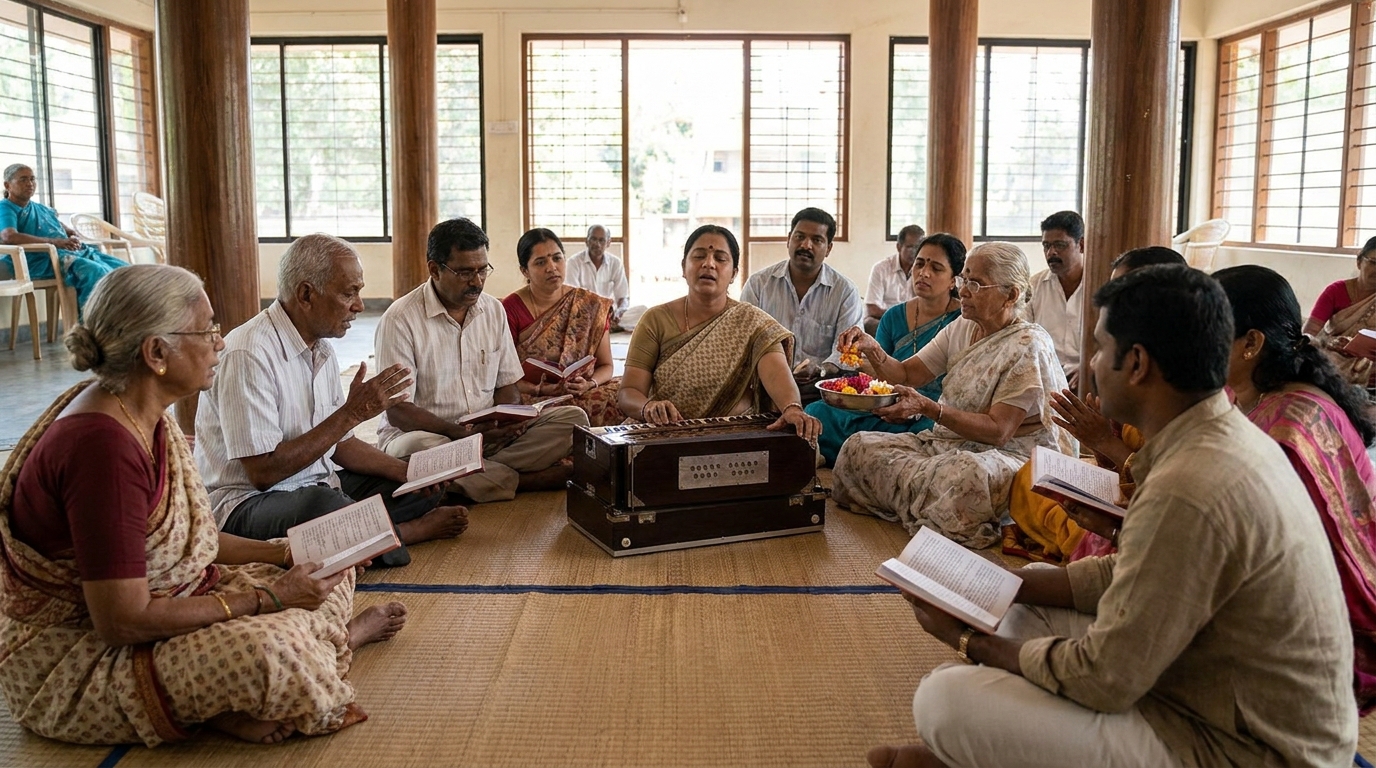
Holy association does not mean we must leave our families, jobs, or communities. It means we intentionally nourish our spiritual environment. We seek out uplifting conversations, devotional gatherings, scripture study, kirtan, prayer circles, and friendships that remind us of our higher purpose.
In the Śrīmad-Bhāgavatam, we hear that hearing about God in the company of devotees cleanses the heart and awakens devotion. This is practical. What we hear shapes what we value. What we value shapes how we live. If we regularly hear about love, service, surrender, and divine compassion, those qualities slowly begin to take root within us.
These first two stages work together beautifully: faith leads us to seek spiritual company, and spiritual company strengthens faith.
Practice Turns Inspiration into Transformation
After faith awakens and we receive the nourishment of spiritual association, Bhakti becomes more intentional. This is the stage of bhajana-kriyā, devotional practice.
Bhajana-Kriyā: Beginning a Personal Practice
Bhajana means worship, devotion, or spiritual practice. Kriyā means action. Together, bhajana-kriyā means taking up practical devotional activities.
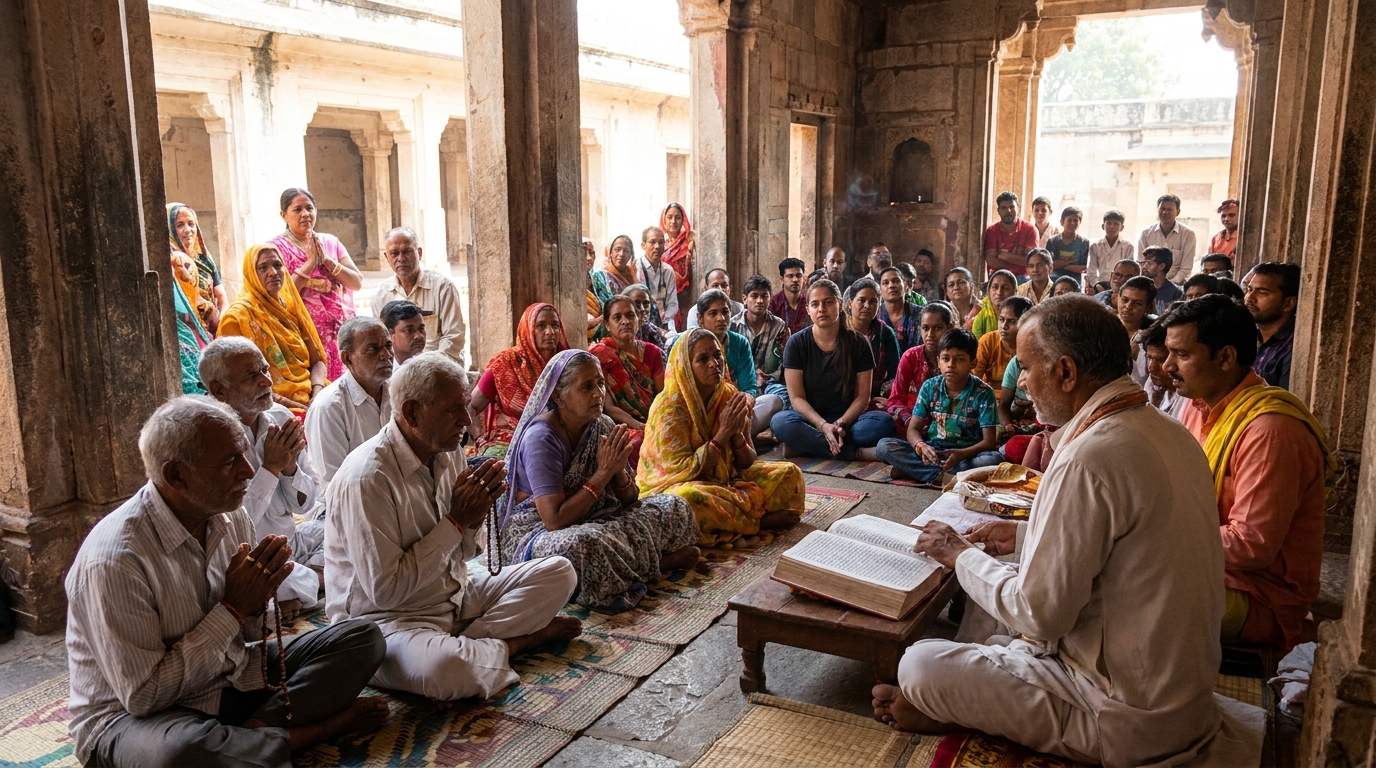
This may include chanting God’s names, offering prayers, studying scripture, attending kirtan, serving others, preparing and offering food, keeping a home altar, meditating on sacred teachings, or giving time and energy to a spiritual community.
One of the most accessible practices in Bhakti is chanting the holy names of God. Many practitioners chant the Hare Krishna mantra:
Hare Krishna Hare Krishna
Krishna Krishna Hare Hare
Hare Rama Hare Rama
Rama Rama Hare Hare
This mantra is a prayer asking to be engaged in divine love and service. Hare calls upon the Lord’s spiritual energy, Krishna means the all-attractive Lord, and Rama refers to the source of joy and spiritual pleasure. Chanting can be done alone on beads, sung with others in kirtan, whispered softly, or held in the heart throughout the day.
For people from different faith backgrounds, the essence is the same: calling upon God with love. The names may vary according to tradition, but sincere prayer opens the heart.
Building Rhythm Without Harshness
At this stage, consistency matters more than intensity. A small daily practice done with sincerity is often more transformative than a dramatic effort that quickly fades.
You might begin with ten minutes of chanting each morning, reading one verse of the Bhagavad-gītā, offering gratitude before meals, or praying before bed. You might volunteer in service once a week, attend a gathering, or listen to devotional music during your commute.
Bhakti is practical because it enters ordinary life. We do not need to wait for a perfect schedule or a peaceful mind. We can begin in the middle of real life—with children, work, responsibilities, doubts, and imperfections.
The important thing is to keep placing the heart in contact with God. Practice is not meant to be a performance. It is a relationship. Just as friendship deepens through regular care, devotion deepens through regular loving attention.
If you’re looking for insightful spiritual guidance, check out the latest articles on Bhakti House. The articles cover a wide range of topics to deepen your understanding. Discover new perspectives by reading the articles shared by experienced practitioners.
Clearing the Heart Through Anartha-Nivṛtti
As devotional practice becomes steady, something very honest begins to happen. We start to see what is inside us. This is the stage called anartha-nivṛtti.
Understanding Anarthas with Compassion
Anartha means something unwanted, unnecessary, or harmful to the soul’s well-being. Nivṛtti means removal or clearing. So anartha-nivṛtti means the gradual clearing of unwanted habits, attachments, misconceptions, and inner obstacles.
These obstacles may include pride, envy, selfishness, laziness, anger, greed, harsh speech, unhealthy desires, spiritual comparison, or the tendency to forget God. They may also include deeper wounds, fears, and patterns we have carried for years.
This stage can feel humbling. Sometimes we begin spiritual life hoping to feel peaceful, but instead we become more aware of our restless mind. This does not mean we are failing. It often means the light is being turned on.
When sunlight enters a room, dust becomes visible. The sunlight did not create the dust; it revealed it so it could be cleaned. Similarly, chanting, prayer, scripture, and service reveal the heart—not to shame us, but to heal us.
How Practice Purifies Without Force
Bhakti purifies through loving connection. We do not conquer the heart by hatred of ourselves. We are transformed by a higher taste, by divine grace, and by sincere effort.
In the Bhagavad-gītā 9.30–31, Krishna offers profound hope. He says that even if a person has acted imperfectly, if they are sincerely devoted, they should be regarded as saintly because they are rightly resolved. Soon they become peaceful. This teaching does not excuse harmful behavior, but it reminds us that sincere devotion has real power to transform a life.
At this stage, we may need practical support. We may apologize, make amends, seek guidance, simplify our habits, set boundaries, or ask trusted devotees and mentors for help. Spiritual growth is not separate from emotional maturity and ethical living. Bhakti invites the whole person into healing.
The key is not to give up when our imperfections surface. The key is to keep returning to God with honesty: “Please help me. Please guide me. Please cleanse my heart. Please teach me to love.”
Steadiness and Taste Make Devotion Joyful
After ongoing practice and purification, two beautiful stages begin to emerge: niṣṭhā and ruci. These stages show how Bhakti becomes less dependent on mood and more naturally joyful.
Niṣṭhā: Becoming Steady in Devotion
Niṣṭhā means steadiness, firmness, or commitment. At this stage, a devotee becomes more stable in spiritual practice. There may still be challenges, but the heart is no longer easily shaken away from the path.
Steadiness does not mean emotionless discipline. It means we have begun to trust the value of devotion deeply enough that we continue even when life is difficult. We chant when the mind is peaceful and when it is distracted. We pray when we feel inspired and when we feel dry. We serve when appreciated and when unnoticed.
This steadiness is a great gift. Much of human life is moved by changing moods. One day we feel enthusiastic; another day we feel discouraged. Niṣṭhā helps us move from emotion-driven spirituality to relationship-centered devotion.
Just as we continue caring for loved ones even when we are tired, we continue our devotional life because love is becoming real. Practice becomes less negotiable because our relationship with God matters.
Ruci: When Devotion Develops Taste
After steadiness comes ruci, which means taste or genuine attraction. At this stage, devotional practices are no longer only duties; they become sweet.
Chanting feels nourishing. Scripture feels alive. Kirtan touches the heart. Service becomes meaningful. The devotee begins to experience that spiritual life is not a burden but a source of joy.
This taste may come in moments at first—a tear during prayer, a deep peace during mantra meditation, a sense of gratitude while serving, or a sudden insight while reading the Bhagavad-gītā. Over time, these moments deepen.
In Bhakti, taste is important because the heart naturally follows what it finds sweet. If we only try to renounce lower habits without discovering higher joy, the heart may feel deprived. But when devotion becomes tasteful, spiritual growth becomes more natural.
Ruci does not mean every practice always feels ecstatic. It means the heart has begun to recognize the beauty of devotion. The soul begins to think, “This is what I was looking for.”
Attachment, Emotion, and Love Deepen the Soul’s Relationship with God
The later stages of Bhakti—āsakti, bhāva, and prema—describe the deep flowering of devotion. These are advanced stages, but hearing about them gives direction and hope. They show us the full potential of the heart.
Āsakti: Loving Attachment to God
Āsakti means attachment. In ordinary life, attachment often binds us to temporary things. But in Bhakti, attachment to God frees the soul.
At this stage, the devotee’s affection becomes deeply centered on the Lord. Practices are no longer loved merely because they bring peace or clarity; they are loved because they connect the heart with Krishna, with God, the beloved of the soul.
There is a subtle but important shift. Earlier, one may think, “Chanting helps me feel better.” Later, the heart thinks, “Chanting brings me closer to the One I love.” The focus moves from personal benefit to loving relationship.
This does not mean we stop caring about people or responsibilities. Actually, genuine attachment to God helps us love others more purely. When God is in the center, relationships are no longer based only on need, control, or expectation. They become opportunities for service, compassion, and sacred connection.
Bhāva: The Dawn of Spiritual Emotion
Bhāva means spiritual emotion, devotional feeling, or the first rays of pure love. It is sometimes described as the budding stage of love of God.
This is not ordinary sentimentality. Bhāva is a deep awakening of the soul’s natural love for the Divine. The heart becomes soft, humble, grateful, and eager to serve. The devotee may feel profound longing for God, compassion for others, and deep joy in remembrance.
In the Bhakti-rasāmṛta-sindhu, bhāva is described as a ray of the sun of prema, pure love. It is the beginning of divine love fully awakening in the heart.
For most of us, it is wise to approach this stage with reverence rather than imitation. We do not need to pretend to have advanced emotions. Bhakti values sincerity more than display. A simple, honest prayer may be more pleasing to God than dramatic outward expression.
Still, even beginners can experience small reflections of bhāva—moments when the heart softens, when chanting feels deeply personal, when gratitude overflows, or when we feel moved to serve without selfish motive. These glimpses encourage us to continue.
Prema: Pure Love of God
Prema is the highest stage of Bhakti. It means pure love of God—love without selfish desire, without interruption, without expectation of reward.
In prema, the soul loves God simply because God is lovable. Service is offered not for liberation, recognition, comfort, or spiritual status, but for the pleasure of the Beloved.
The Śrīmad-Bhāgavatam presents this pure devotion as the highest perfection of life. It teaches that the soul is fully satisfied when devotion to the Lord is uninterrupted and without selfish motivation. This is not a cold philosophical idea; it is the deepest fulfillment of the heart.
Prema is rare and precious, but it is also our true nature. Bhakti teaches that love of God is not something artificial we add to ourselves. It is the soul’s original condition, gradually uncovered by grace and sincere practice.
How the Nine Stages Support One Another
Although these nine stages are described in sequence, they also work together like parts of one living organism. Spiritual growth is not always a straight line. We may experience elements of several stages at once, revisit earlier lessons, or deepen our understanding of a stage we thought we had passed.
Faith Keeps Growing at Every Stage
Faith does not appear only at the beginning. It matures throughout the path. Early faith may be tender and uncertain. Later faith becomes trust born from experience.
When we see that chanting calms the mind, faith grows. When we feel purified through service, faith grows. When we survive difficulties by depending on God, faith grows. When we meet devotees who embody kindness and wisdom, faith grows.
Even advanced devotees continue deepening faith—not as theory, but as loving dependence on God.
Association Protects and Nourishes the Journey
Spiritual association remains essential at every stage. Beginners need encouragement. Practitioners need guidance. Those facing purification need support. Those becoming steady need inspiration to avoid pride or complacency. Those developing taste and attachment need humble company to remain grounded.
In Bhakti, we do not grow alone. Community is not merely a social structure; it is a sacred environment where devotion is shared, protected, and multiplied.
A loving spiritual community reminds us that everyone is on a journey. Some are taking first steps. Some have walked for many years. Some are struggling quietly. Some are shining brightly. All can help one another remember God.
Practice Carries Us Through Dryness and Joy
Bhajana-kriyā, devotional practice, continues through every stage. In the beginning, practice may feel like effort. During purification, it may feel like medicine. In steadiness, it becomes a sacred rhythm. In taste, it becomes joyful. In attachment, it becomes life itself.
This is why daily practice is so powerful. It gives the soul a place to return. Whether we feel strong or weak, peaceful or restless, inspired or confused, we can chant, pray, bow, read, serve, and remember.
Bhakti does not ask us to manufacture spiritual perfection. It asks us to keep showing up with sincerity.
Applying the Nine Stages in Daily Life
The nine stages of Bhakti are profound, but they are also practical. They can shape how we live each day.
Begin with One Honest Practice
If you are new to Bhakti, start simply. Choose one practice you can do regularly. Chant the Hare Krishna mantra for a few minutes each morning. Offer a prayer of gratitude before meals. Read one verse from the Bhagavad-gītā. Attend a kirtan once a week. Serve someone without expecting anything in return.
Small steps matter. A seed does not become a tree in one day, but if watered regularly, it grows.
Let Devotion Enter Ordinary Responsibilities
Bhakti is not separate from daily life. Cooking can become an offering. Work can become service. Parenting can become sacred care. Friendship can become compassion. Challenges can become opportunities to pray.
One simple practice is to pause before beginning an activity and inwardly say, “May this be offered to You.” This shifts consciousness. It reminds us that God can be present in the kitchen, the office, the classroom, the car, and the quiet moments no one else sees.
Krishna says in the Bhagavad-gītā 9.27, “Whatever you do, whatever you eat, whatever you offer or give away, do that as an offering to Me.” This verse makes Bhakti wonderfully accessible. Every life can become an offering.
Be Patient with Purification
When unwanted habits arise, try not to despair. Notice them honestly, bring them into prayer, and take practical steps. Growth takes time.
Sometimes we may think spiritual life should make us instantly calm and saintly. But Bhakti is a relationship, and relationships deepen through patience, honesty, forgiveness, and ongoing care.
If you fall short, return. If your mind wanders, return. If your heart feels dry, return. If you feel unworthy, return. The path is not for the flawless; it is for the sincere.
Serve with Humility and Joy
Service is central to Bhakti. The Sanskrit word sevā means service offered with love. Service cleanses the heart because it moves us away from self-centeredness and toward loving contribution.
Service may be public or hidden. It may be singing in kirtan, washing dishes, teaching, cleaning, caring for children, welcoming guests, donating resources, encouraging a friend, or silently praying for others.
No service is small when offered with love. Bhakti measures the heart, not the spotlight.
Common Misunderstandings About Spiritual Progress
Because the nine stages describe advancement, it is easy to misunderstand them. A humble approach protects the heart.
The Stages Are Not a Competition
Spiritual life is not a ladder for ego. We do not study these stages to rank ourselves or others. The moment we use Bhakti to feel superior, we have missed the mood of Bhakti.
The safest prayer is, “Please let me serve. Please let me grow. Please help me appreciate others.” Humility keeps devotion alive.
Progress May Not Look Dramatic
Some people expect spiritual growth to always feel mystical or emotional. But much progress is quiet. You may become more patient. You may forgive more easily. You may complain less. You may remember God in difficulty. You may become more honest, gentle, and grateful.
These changes are sacred. They show that Bhakti is entering the character, not just the imagination.
God’s Grace Is the Heart of the Path
Effort matters, but grace is central. We chant, pray, serve, study, and seek good association—but the awakening of love is ultimately a gift.
This does not make us passive. It makes us humble. Like farmers, we can prepare the soil, plant seeds, water them, and protect the garden. But the miracle of growth comes from a power beyond us.
Bhakti is both our sincere offering and God’s merciful response.
Walking the Path with Hope, Humility, and Love
The nine stages of Bhakti show a beautiful movement of the soul: from initial faith to loving association, from practice to purification, from steadiness to taste, from attachment to spiritual emotion, and finally to pure love of God.
They work together like a sacred unfolding. Faith opens the door. Association gives shelter. Practice creates rhythm. Purification clears the heart. Steadiness gives strength. Taste brings joy. Attachment deepens relationship. Bhāva softens the soul. Prema fulfills the heart’s deepest longing.
Wherever you are on the journey, please know this: you are welcome. Bhakti Yoga is not reserved for a certain culture, background, personality, or level of spiritual knowledge. It is the path of the heart, open to anyone willing to turn toward God with sincerity.
You can begin today with one small step. Chant one mantra. Offer one prayer. Read one sacred verse. Serve one person with kindness. Sit quietly and say, “Dear Lord, please guide me.”
The path of Bhakti grows through simple, sincere offerings repeated with love. And God, who sees the heart, receives every genuine step.
Everyone is welcome to take one sincere step toward God.
FAQs
What are the nine stages of Bhakti?
The nine stages of Bhakti are as follows: 1) Shraddha (faith), 2) Sadhu-sanga (association with devotees), 3) Bhajana-kriya (engagement in devotional service), 4) Anartha-nivritti (cleansing of unwanted habits), 5) Nishtha (steadiness), 6) Ruchi (taste for devotional service), 7) Asakti (attachment), 8) Bhava (ecstasy), and 9) Prema (pure love of God).
How do the nine stages of Bhakti work together?
The nine stages of Bhakti work together in a progressive manner, with each stage building upon the previous one. For example, one must have faith (Shraddha) in order to associate with devotees (Sadhu-sanga), and engaging in devotional service (Bhajana-kriya) helps to cleanse unwanted habits (Anartha-nivritti). Each stage prepares the practitioner for the next, ultimately leading to the development of pure love of God (Prema).
Why is association with devotees (Sadhu-sanga) important in Bhakti?
Association with devotees is important in Bhakti because it helps to inspire and guide practitioners on their spiritual journey. By associating with like-minded individuals who are also dedicated to devotional service, one can receive support, encouragement, and valuable insights that can deepen their faith and commitment to Bhakti.
What is the significance of developing attachment (Asakti) in Bhakti?
Developing attachment (Asakti) in Bhakti is significant because it signifies a deepening of one’s love and devotion to God. Asakti is a stage where the practitioner becomes intensely attached to the practice of devotional service and experiences a strong desire to constantly engage in activities that please the Divine. This attachment helps to sustain and strengthen one’s spiritual practice.
How does the final stage of Bhakti, Prema, differ from the earlier stages?
The final stage of Bhakti, Prema, differs from the earlier stages in that it represents the culmination of pure love of God. In this stage, the practitioner experiences an intense and selfless love for the Divine, devoid of any personal desires or expectations. Prema is characterized by a deep sense of intimacy and oneness with God, where the devotee’s only goal is to please and serve the Divine out of pure love.

