
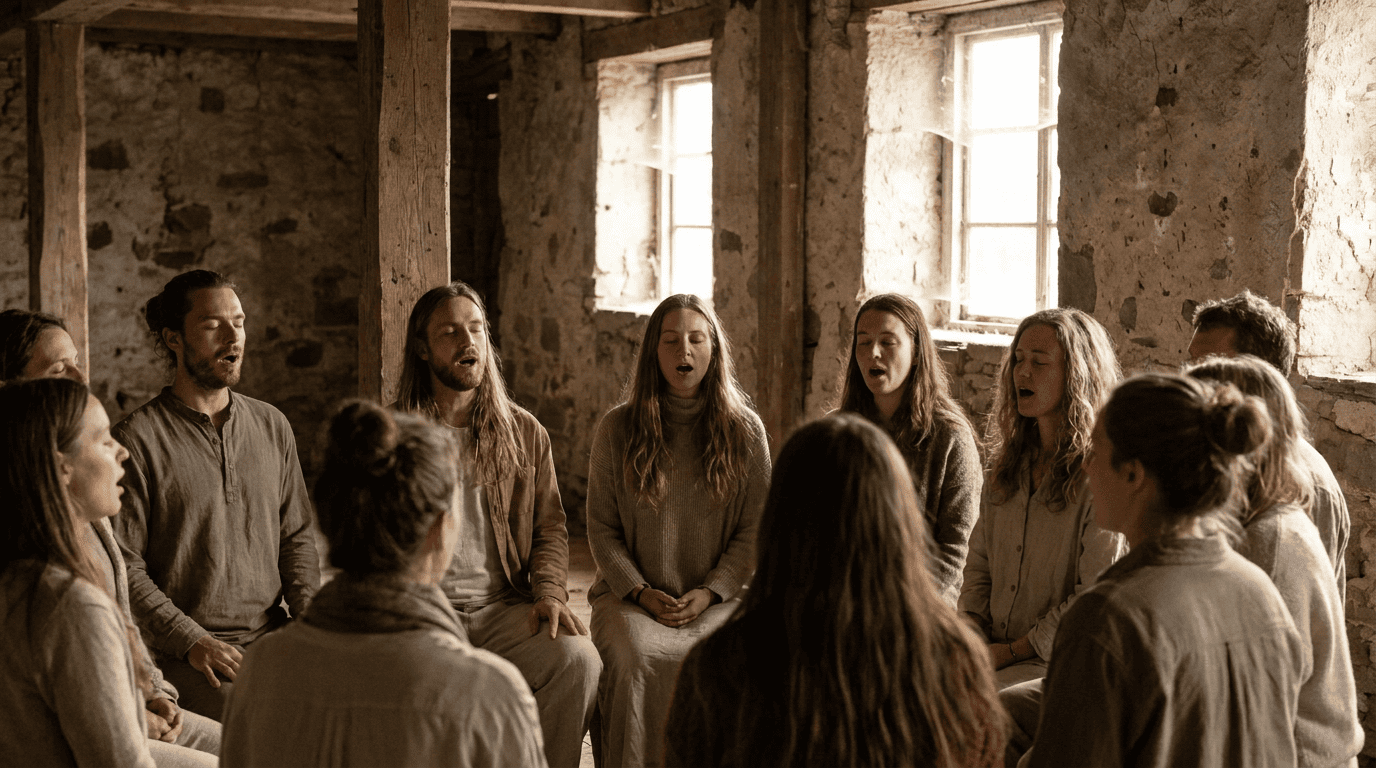
Chanting is one of the simplest and most profound practices in Bhakti Yoga, the path of devotion. In Bhakti, we approach spiritual life not as a dry philosophy or a distant idea, but as a living relationship with the Divine. We sing, pray, serve, remember, and offer our hearts.
People from all backgrounds are welcome in this practice. You do not need to be born into a particular tradition, know Sanskrit perfectly, or have a “spiritual personality.” You can begin exactly where you are — tired, curious, hopeful, skeptical, joyful, grieving, or simply searching.
In Sanskrit, chanting is often called kirtan or japa. Kirtan usually means chanting sacred names together, often with music. Japa means softly repeating a mantra personally, often on beads. A mantra is a sacred sound or prayer that helps the mind reconnect with God.
According to the Bhakti scriptures, chanting is not only a musical or emotional practice. It deeply affects the mind. It cleanses, steadies, softens, uplifts, and redirects the inner world toward love. In a time when so many people struggle with anxiety, distraction, loneliness, and mental overload, chanting offers a practical spiritual medicine.
The Mind in Scripture: Restless, Powerful, and Trainable
The Bhagavad Gita’s Honest View of the Mind
The Bhagavad Gita, one of the most beloved texts of Bhakti Yoga, speaks very honestly about the mind. Arjuna, the warrior and seeker, tells Krishna:
“The mind is restless, turbulent, strong and obstinate. To control it, I think, is more difficult than controlling the wind.”
— Bhagavad Gita 6.34
This verse is deeply comforting because it does not shame us for having a restless mind. Scripture recognizes what we all experience: thoughts move quickly. Emotions can be intense. Old habits can feel powerful. The mind may wander even when we sincerely want peace.
Krishna responds with compassion and practicality. He says the mind can be trained by abhyasa and vairagya — practice and detachment. Abhyasa means steady spiritual practice. Vairagya means gently letting go of what pulls us away from our true purpose.
Chanting is one of the most accessible forms of abhyasa. When we chant, we give the mind a sacred place to rest. Instead of forcing the mind into silence, we lovingly engage it in sound, meaning, and remembrance.
The Mind Can Be a Friend or an Enemy
Krishna also says:
“For one who has conquered the mind, the mind is the best of friends; but for one who has failed to do so, the mind will remain the greatest enemy.”
— Bhagavad Gita 6.6
This is not meant to make us afraid of the mind. Rather, it invites us to care for the mind spiritually. A mind absorbed in fear, envy, resentment, or endless craving can create suffering. But a mind trained in remembrance, gratitude, humility, and love becomes a friend on the path.
Chanting helps transform the mind from a battlefield into a temple. The same mind that worries can learn to pray. The same mind that compares can learn to appreciate. The same mind that runs outward can gradually turn inward and upward toward God.
Chanting Cleanses the Heart and Mind
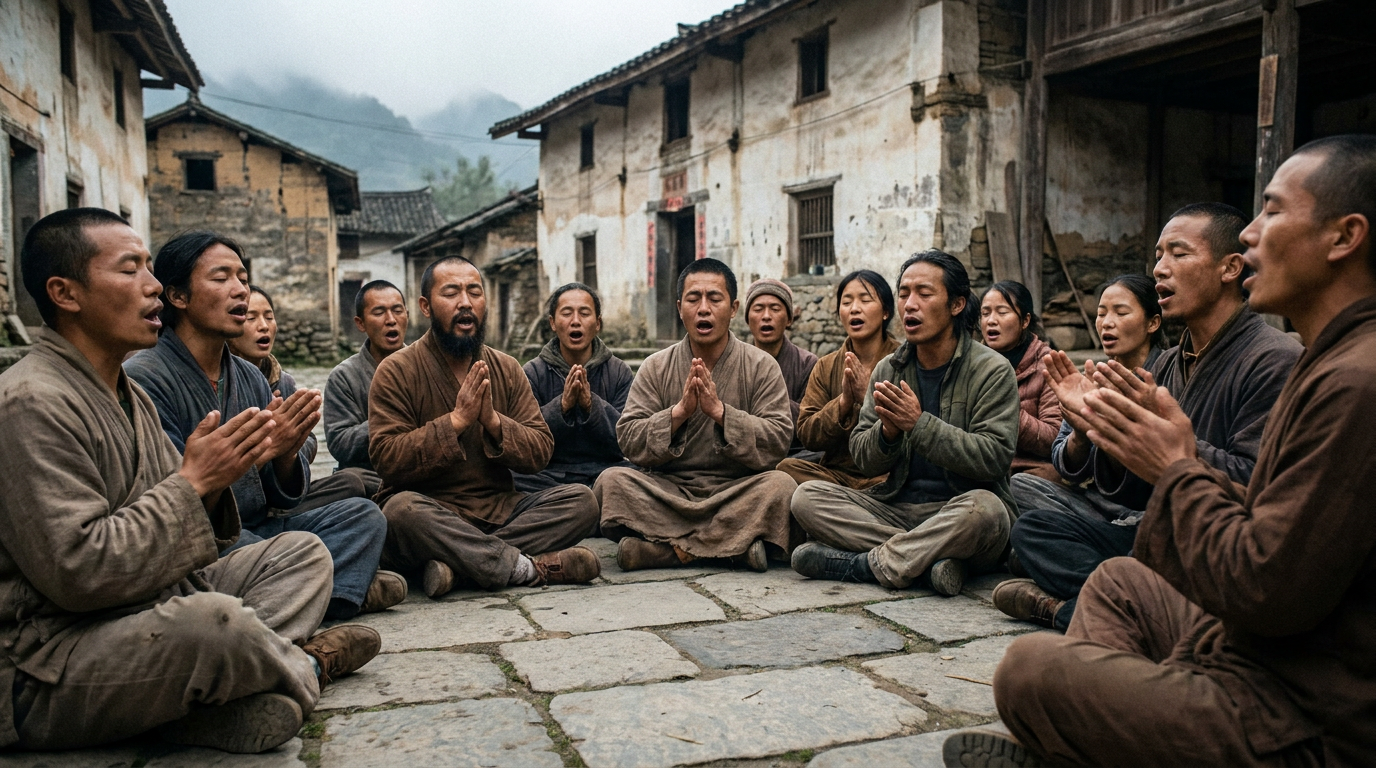
The Mirror of the Heart
One of the most famous teachings in the Bhakti tradition comes from Sri Chaitanya Mahaprabhu, the great saint who spread the practice of congregational chanting of God’s names. In His Shikshashtakam prayers, He says:
“Glory to the chanting of the holy names, which cleanses the mirror of the heart.”
The heart is compared to a mirror. A mirror is meant to reflect clearly, but when it is covered with dust, we cannot see properly. In the same way, the soul is naturally full of love, wisdom, and joy, but the mind and heart become covered by layers of fear, ego, anger, and forgetfulness.
Chanting acts like a gentle cleansing. Not harsh, not violent, not judgmental — but steady and merciful. Each sincere mantra wipes away a little dust. Over time, we begin to see ourselves more clearly. We begin to see others with more compassion. Most importantly, we begin to remember our relationship with God.
What Is Being Cleansed?
In Bhakti Yoga, the mind is affected by samskaras, or impressions. These are subtle patterns left by past experiences, choices, and repeated thoughts. Some impressions are helpful. Others keep us trapped in unhealthy cycles.
Chanting introduces a divine impression into the mind. Sacred sound carries spiritual meaning and presence. When we repeat the names of God, those names begin to reshape our inner landscape.
The Srimad Bhagavatam, a central scripture of Bhakti, explains:
“By hearing and chanting about the Supreme Lord, all inauspicious things within the heart are gradually destroyed.”
— Srimad Bhagavatam 1.2.17
“Inauspicious things” does not mean we are bad people. It refers to the inner obstacles that block love — selfishness, pride, greed, resentment, despair, and forgetfulness of our spiritual nature. Chanting does not erase our personality. It purifies it, so our real self can shine.
Check out our latest posts at https://thebhaktihouse.org/blog.
Chanting Focuses the Restless Mind
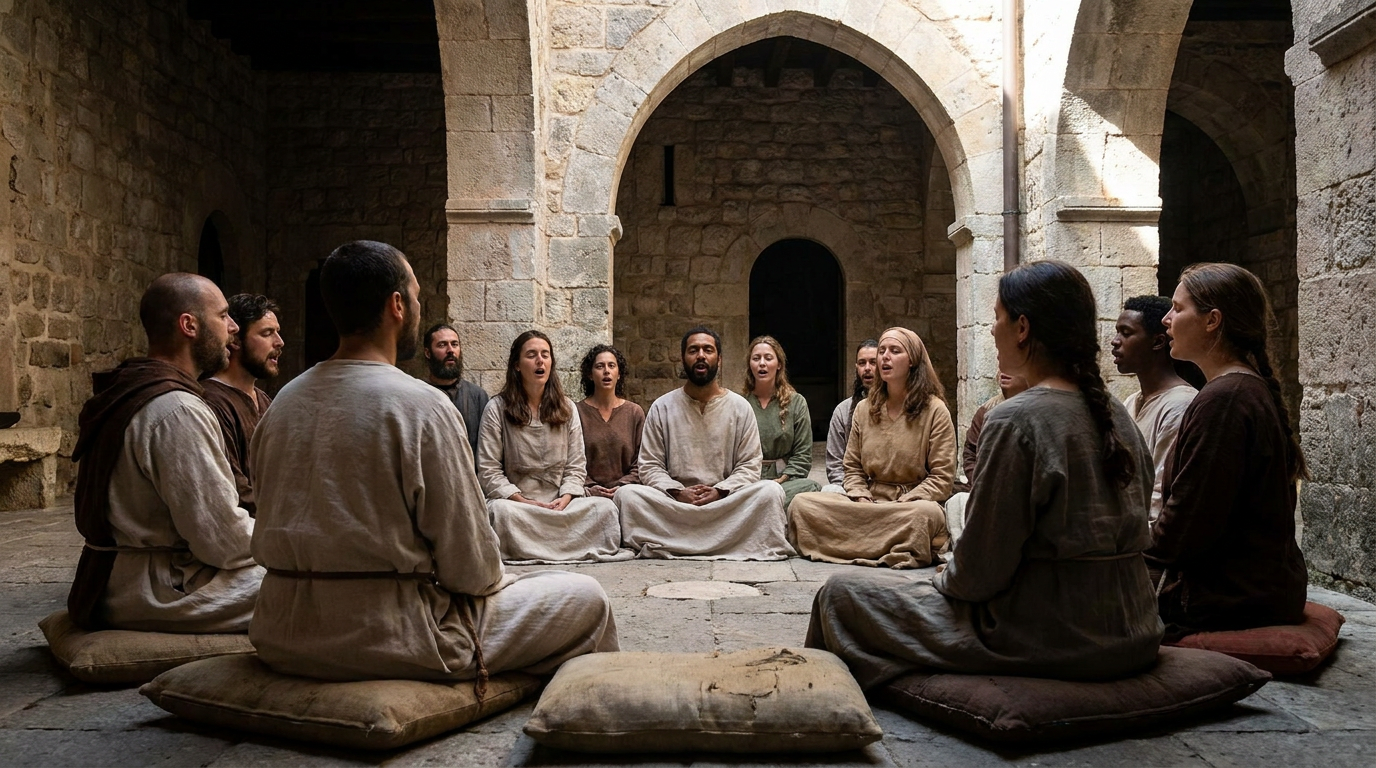
Sacred Sound Gives the Mind a Loving Anchor
Many people try meditation and feel discouraged because their mind wanders. Bhakti Yoga offers a compassionate approach: give the mind something sacred to do.
Instead of trying to empty the mind, we fill it with divine sound. The mantra becomes an anchor. When the mind wanders, we gently return to the sound. Again and again. This returning is not failure — it is the practice.
A common mantra in the Bhakti tradition is the maha-mantra, which means “great mantra”:
Hare Krishna Hare Krishna
Krishna Krishna Hare Hare
Hare Rama Hare Rama
Rama Rama Hare Hare
“Hare” refers to the divine energy of God, the compassionate spiritual energy that helps us reconnect. “Krishna” means the all-attractive Supreme Person. “Rama” means the source of spiritual joy. In simple language, this mantra is a prayer: “O Lord, O divine energy of the Lord, please engage me in Your loving service.”
When chanted sincerely, this mantra gathers the scattered mind and places it in the presence of God.
Repetition Creates Spiritual Direction
The mind is shaped by repetition. What we repeatedly hear, say, watch, and think becomes familiar. Chanting uses this natural principle in a sacred way.
If we repeat worries, the mind becomes worried. If we repeat resentment, the mind becomes bitter. If we repeat sacred names, the mind gradually becomes peaceful, prayerful, and loving.
This is why daily chanting is so powerful. Even a few minutes a day can begin to create a new direction. The mind may not become calm immediately, but it begins to receive a higher vibration, a deeper nourishment.
The practice is not mechanical when the heart is invited in. Even if our attention is imperfect, we can chant with humility: “My dear Lord, my mind is wandering, but I am here. Please help me remember You.”
Chanting Softens the Heart
From Control to Surrender
Modern life often trains us to control everything — our image, schedule, emotions, relationships, and outcomes. But the heart becomes exhausted under the pressure of constant control.
Chanting teaches surrender. Surrender in Bhakti does not mean weakness or passivity. It means trusting God with the heart. It means allowing divine love to guide us.
When we chant, especially in a prayerful mood, we practice letting go. We may come to the mantra carrying burdens we cannot solve. Through chanting, we place those burdens at the feet of the Lord.
The Bhagavad Gita’s beautiful invitation is:
“Abandon all varieties of separate duty and simply surrender unto Me. I shall deliver you from all sinful reactions. Do not fear.”
— Bhagavad Gita 18.66
This verse is not a threat. It is a loving call. Krishna says, “Do not fear.” Chanting helps the mind gradually believe this. We begin to feel that we are not alone.
Chanting Awakens Humility and Compassion
The Bhakti scriptures explain that chanting is most fruitful when done with humility. Sri Chaitanya Mahaprabhu taught:
“One should chant the holy name of the Lord in a humble state of mind, thinking oneself lower than a blade of grass, more tolerant than a tree, free from false pride, and ready to offer respect to others.”
This does not mean we should hate ourselves or accept abuse. True humility means we see ourselves honestly — as spiritual beings dependent on divine grace. It also means we honor the sacred worth of others.
Chanting in this mood softens the heart. We become less interested in proving ourselves and more interested in serving. We become less quick to judge and more willing to understand. The mind becomes less sharp with criticism and more gentle with remembrance.
Chanting Reduces Anxiety by Reconnecting Us with God
Anxiety and the Forgetful Mind
Much anxiety comes from feeling separate, unsupported, and responsible for everything. The mind imagines every possible danger and tries to manage the future alone.
Bhakti scriptures teach that the soul’s deepest anxiety comes from forgetfulness of God. When we forget our eternal relationship with the Divine, we try to find complete security in temporary things. But temporary things constantly change. Bodies change. Relationships change. Circumstances change. Even our thoughts change.
Chanting brings the mind back to spiritual reality: “I am not alone. I belong to God. I am loved. I can serve. I can take the next step.”
This remembrance does not remove all life’s challenges. But it changes how we carry them.
The Name as Shelter
The Kali-santarana Upanishad, a sacred text glorifying the chanting of God’s names in this age, especially recommends the maha-mantra as a means of deliverance from confusion and spiritual darkness.
In Bhakti, the holy name is not considered different from God. This is a profound teaching. It means that when we chant sincerely, we are not merely making sound; we are entering divine association.
Just as being with a loving friend can calm the mind, being with the holy name can bring spiritual shelter. The mind may still have waves, but beneath the waves there is a growing trust.
Many practitioners experience that chanting does not always remove anxiety instantly, but it gives them a place to bring anxiety. Instead of being alone with fear, they chant through fear. The mantra becomes a hand to hold.
Chanting Purifies Desire
The Mind Follows What It Loves
The mind is not only a thinking instrument; it is also drawn by desire. We think about what we love, fear, want, or feel attached to. Therefore, spiritual growth is not only about controlling thoughts. It is about transforming desire.
Bhakti Yoga teaches that the soul’s original desire is to love and serve God. But when that love is misdirected, it becomes craving, competition, possessiveness, or dissatisfaction.
Chanting gradually redirects desire toward its pure source. Instead of asking only, “How can I enjoy?” the heart begins to ask, “How can I serve? How can I please God? How can I become an instrument of compassion?”
This change is subtle but powerful. The mind becomes lighter when it is no longer centered only on the self.
From Material Sound to Spiritual Sound
We are constantly affected by sound — conversations, music, news, notifications, opinions, and inner dialogue. Sound enters the mind and shapes consciousness.
Bhakti scriptures place great emphasis on hearing sacred sound, called shravanam. Shravanam means hearing, especially hearing about God’s names, qualities, pastimes, and teachings. Kirtanam means chanting or speaking those glories.
The Srimad Bhagavatam describes nine practices of devotion, beginning with hearing and chanting:
“Hearing and chanting about the transcendental holy name, form, qualities, and pastimes of Lord Vishnu…”
— Srimad Bhagavatam 7.5.23
In simple terms, what we hear and repeat matters. When we hear sacred sound, the mind receives spiritual nourishment. When we chant, we participate in that nourishment actively.
Chanting Builds a Relationship, Not Just a Mood
More Than Relaxation
Chanting can calm the nervous system. It can help focus attention. It can bring emotional relief. These benefits are meaningful, and many people experience them.
But according to Bhakti scripture, the deepest purpose of chanting is not only relaxation. It is relationship.
The holy name is a call to God. Sometimes it is a cry. Sometimes it is a song. Sometimes it is a whisper. Sometimes it is a simple attempt to remember. Through chanting, the soul turns toward the Lord again and again.
This is why Bhakti Yoga is called the path of love. The goal is not to become blank, detached from all feeling, or spiritually impressive. The goal is to awaken prema — pure love for God.
The Person Behind the Practice
In the Bhagavad Gita, Krishna says:
“Always think of Me, become My devotee, worship Me, and offer your homage unto Me. Thus you will come to Me without fail.”
— Bhagavad Gita 18.65
This verse is deeply personal. Krishna does not only say, “Control your mind.” He says, “Think of Me.” The mind needs a loving center. Chanting gives the mind that center.
When we chant Krishna’s names, or other authentic names of God from the Bhakti tradition, we are remembering the Supreme Person — full of beauty, compassion, wisdom, and love. The mind becomes purified not by pressure, but by attraction.
Practical Ways to Begin Chanting
Start Small and Sincere
You do not need to begin with a long practice. Start with five minutes a day. Choose a quiet time if possible — early morning is traditionally recommended because the mind is usually clearer. But any sincere time is valuable.
You can chant softly, sing, or repeat the mantra in your heart. If you have japa beads, you can use them to count. If not, simply set a timer and begin.
The most important ingredient is sincerity. You can pray before chanting:
“My dear Lord, please help me hear this mantra. Please help my mind become peaceful and my heart become open to You.”
Expect the Mind to Wander
The mind will wander. This is normal. Do not become discouraged. Each time you notice the mind has left the mantra, gently bring it back.
Think of it like guiding a child by the hand. Not with anger. Not with shame. With patience.
Every return to the mantra is an offering. Every moment of remembrance matters.
Chant with Others
Kirtan, chanting together, is especially powerful. When voices come together in sacred sound, the heart often opens more easily. Some people who struggle with silent meditation find that kirtan helps them feel connected, joyful, and spiritually alive.
Group chanting also reminds us that Bhakti is not only an individual path. It is a community of souls helping one another remember God.
You do not have to be a trained singer. In kirtan, the mood matters more than musical skill. If you can listen, respond, clap, or simply sit with an open heart, you can participate.
Bring Chanting Into Daily Life
Chanting does not need to remain separate from ordinary life. You can softly chant while walking, cooking, driving, cleaning, or waiting. You can play kirtan in your home. You can pause during a stressful day and repeat the holy name a few times.
In this way, the mind begins to form a habit of remembrance. The day becomes more sacred, not because everything is easy, but because God is invited into everything.
What Changes Can We Notice Over Time?
More Inner Space
As chanting becomes steady, many people notice more space between a thought and a reaction. A situation may still be difficult, but the mind does not have to respond as quickly with anger or fear.
This inner space is a sign of purification. The holy name gives us a moment to choose love, patience, and wisdom.
More Taste for Spiritual Life
In Bhakti, spiritual taste is called ruci. At first, chanting may feel like discipline. Over time, by grace, it can become nourishment. The heart begins to look forward to sacred sound.
This taste is not forced. It awakens naturally through regular practice, good association, and sincere prayer.
More Compassionate Vision
Chanting helps us see others not merely as roles, problems, or competitors, but as souls. This vision is central to Bhakti Yoga. Every living being is part of God and worthy of respect.
When the mind is purified by chanting, we become more sensitive to the joys and sufferings of others. Service becomes natural.
Common Questions About Chanting and the Mind
Do I Need to Understand Sanskrit?
Understanding helps, but it is not required for chanting to be powerful. Sanskrit mantras are considered sacred sound vibrations, and their potency does not depend only on intellectual understanding.
Still, simple meaning can deepen our practice. For example, when chanting the maha-mantra, we can remember: “O Lord, please engage me in Your loving service.” This mood makes chanting personal and prayerful.
What If I Do Not Feel Anything?
Feelings may come and go. Some days chanting feels sweet. Other days it may feel dry or distracted. This is normal.
Bhakti is not based only on temporary emotion. It is based on sincere offering. Even when we do not feel much, the practice is working beneath the surface, just as seeds grow underground before we see the plant.
Can Chanting Help With Mental Health?
Chanting can support mental and emotional well-being by calming the mind, creating focus, and offering spiritual connection. Many people find it helpful for stress and anxiety.
At the same time, chanting is not a replacement for professional care when someone needs therapy, medical support, or crisis help. Bhakti Yoga honors the whole person. Spiritual practice and appropriate mental health care can work together with compassion.
Is Chanting Only for One Religion?
Bhakti Yoga comes from the Vedic devotional tradition, but the essence of chanting — calling upon God with love — is universal. People from many backgrounds can appreciate sacred sound, prayer, and devotion.
At The Bhakti House, all sincere seekers are welcome. You can come with your questions, your faith, your doubts, your background, and your longing. The holy name meets us with mercy.
The Scriptural Conclusion: Chanting Awakens Love
The scriptures describe many effects of chanting on the mind: cleansing, focus, peace, humility, surrender, purification of desire, and remembrance of God. But all these lead toward one beautiful goal — love.
The Narada Bhakti Sutra describes bhakti as supreme love for God. This love is not ordinary sentiment. It is the soul’s natural condition. Chanting helps uncover it.
The mind may begin restless, distracted, and burdened. But through the sound of God’s names, it can become a garden of devotion. Thoughts become prayers. Emotions become offerings. Daily life becomes service. The heart begins to remember what it was always made for.
This is the kindness of the chanting path. It does not demand perfection before we begin. It invites us to begin, and through beginning, we are purified.
An Invitation to Take One Sincere Step
Wherever you are on your spiritual journey, you are welcome. If you are new to chanting, try a few minutes today. If you have chanted before but drifted away, begin again gently. If your mind feels restless, bring that restlessness into the mantra. If your heart feels heavy, let the holy name hold it.
Bhakti Yoga is a practical path of love — chanting, prayer, service, community, and spiritual growth. God is not far away. The Divine can be approached through one sincere sound, one humble prayer, one small act of service.
May your mind find shelter in sacred sound. May your heart be softened by devotion. May you feel encouraged to take one sincere step toward God today.
Everyone is welcome.
FAQs
What is chanting according to scripture?
Chanting according to scripture refers to the practice of repeating sacred words, phrases, or mantras as a form of meditation or devotion. It is a common practice in many religious traditions, including Hinduism, Buddhism, and Christianity.
How does chanting affect the mind?
Chanting has been shown to have a calming effect on the mind, reducing stress and anxiety. It can also help to improve focus and concentration, and promote a sense of inner peace and well-being.
What does scripture say about the effects of chanting on the mind?
According to scripture, chanting can purify the mind and help to cultivate positive qualities such as compassion, patience, and humility. It is believed to have the power to transform consciousness and bring about spiritual awakening.
Are there any scientific studies on the effects of chanting on the mind?
Yes, there have been several scientific studies that have explored the effects of chanting on the mind. These studies have found that chanting can have a positive impact on mental health, reducing symptoms of depression and anxiety, and improving overall well-being.
How can one incorporate chanting into their daily routine?
One can incorporate chanting into their daily routine by setting aside time for regular practice, either in the morning or evening. This can be done individually or as part of a group or community practice. Chanting can also be integrated into other activities, such as yoga or meditation.

