
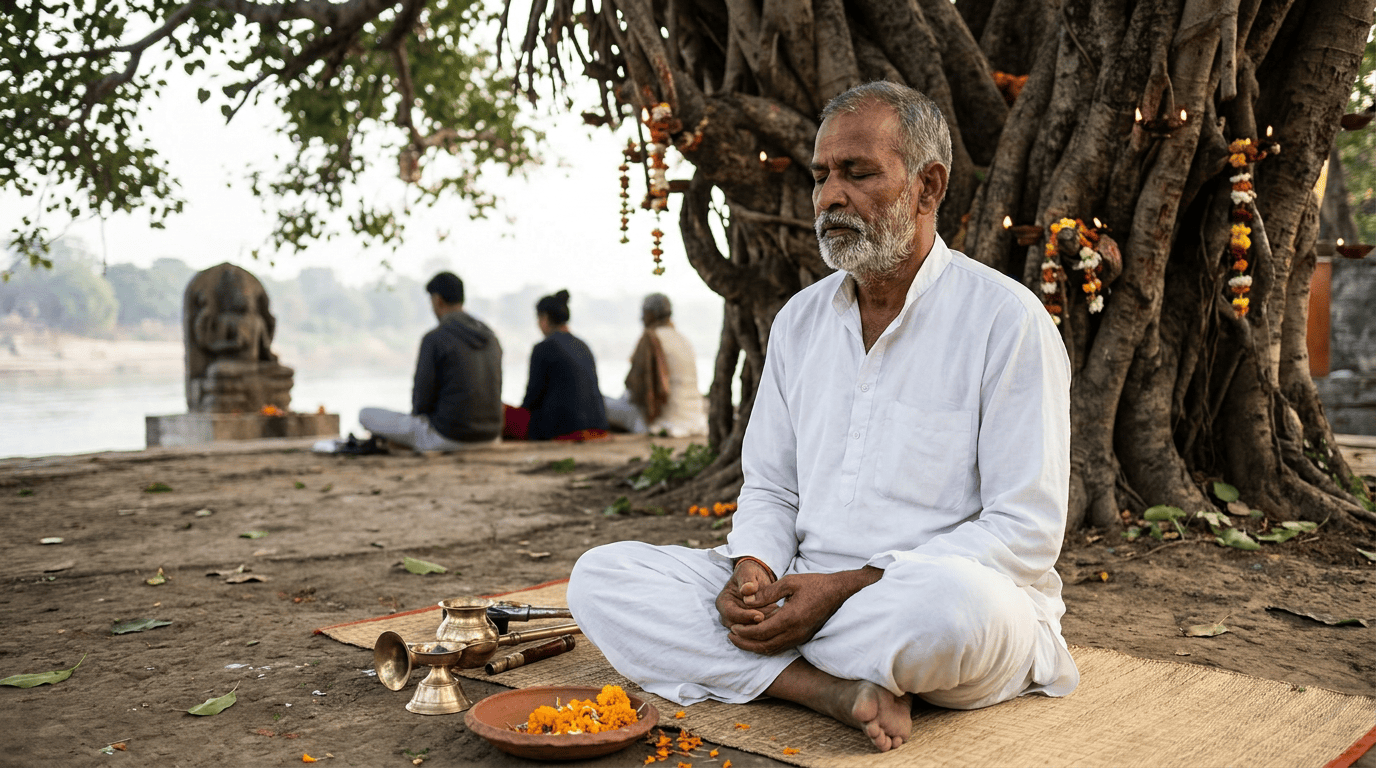
Emotional healing is not always quick or simple. Many of us carry grief, anxiety, loneliness, regret, fear, or old wounds that do not disappear just because time passes. Sometimes the heart needs more than distraction. It needs a safe place to rest, to be heard, and to be lovingly transformed.
Bhakti Meditation offers such a place.
“Bhakti” is a Sanskrit word that means loving devotion. It is the path of connecting with God through love—through chanting, prayer, service, remembrance, and heartfelt surrender. Bhakti Yoga is not only a philosophy or a religious practice. It is a living relationship with the Divine.
In Bhakti, we understand that every person is a spiritual being, deeply loved by God. Beneath our stress, pain, and confusion, there is a soul longing for connection. Bhakti Meditation helps us return to that connection, gently and practically.
This path welcomes people from all backgrounds. Whether you are new to meditation, returning to spiritual life, healing from emotional pain, or simply curious, Bhakti Meditation offers a compassionate way to care for the heart.
What Is Bhakti Meditation?
Bhakti Meditation is the practice of focusing the mind and heart on God with love. It may include chanting sacred names, offering prayers, reading wisdom texts, sitting quietly in remembrance, or serving others with devotion.
Unlike some meditation practices that ask us to empty the mind, Bhakti Meditation gives the mind a loving focus. Rather than fighting every thought, we gently bring our attention back to the Divine.
The Meaning of Bhakti
The word “Bhakti” comes from the Sanskrit root bhaj, which means “to share,” “to serve,” or “to lovingly participate.” Bhakti is not dry duty. It is the heart’s natural movement toward love.
In the Bhakti tradition, God is not seen as distant or impersonal. God is personal, loving, and responsive. We may approach the Divine as a friend, parent, beloved, protector, or inner guide. This personal relationship brings warmth to meditation and makes spiritual practice deeply nourishing.
The Role of Mantra
A central practice in Bhakti Meditation is mantra chanting.
A “mantra” is a sacred sound vibration. The word comes from two Sanskrit roots: man, meaning “mind,” and tra, meaning “to liberate” or “to protect.” A mantra helps protect the mind from harmful patterns and lifts it toward spiritual awareness.
One of the most well-known mantras in the Bhakti tradition is the Hare Krishna Maha Mantra:
Hare Krishna Hare Krishna
Krishna Krishna Hare Hare
Hare Rama Hare Rama
Rama Rama Hare Hare
“Maha” means “great,” so the Maha Mantra means “the great mantra.” This chant is a prayer asking to be engaged in loving service to God. “Krishna” means the all-attractive Lord, “Rama” means the source of spiritual joy, and “Hare” addresses the Divine energy of the Lord.
Chanting this mantra can be practiced softly, loudly, alone, or in community. It is simple, but very deep.
Meditation as Relationship
In Bhakti Yoga, meditation is not just a technique for stress relief. It is a relationship. We sit, chant, pray, and listen with the understanding that God is present.
This changes everything.
When we bring our emotions into meditation, we are not alone with them. We are bringing them into the presence of divine love. This helps the heart feel held, even before every problem is solved.
How Emotional Pain Affects the Heart and Mind
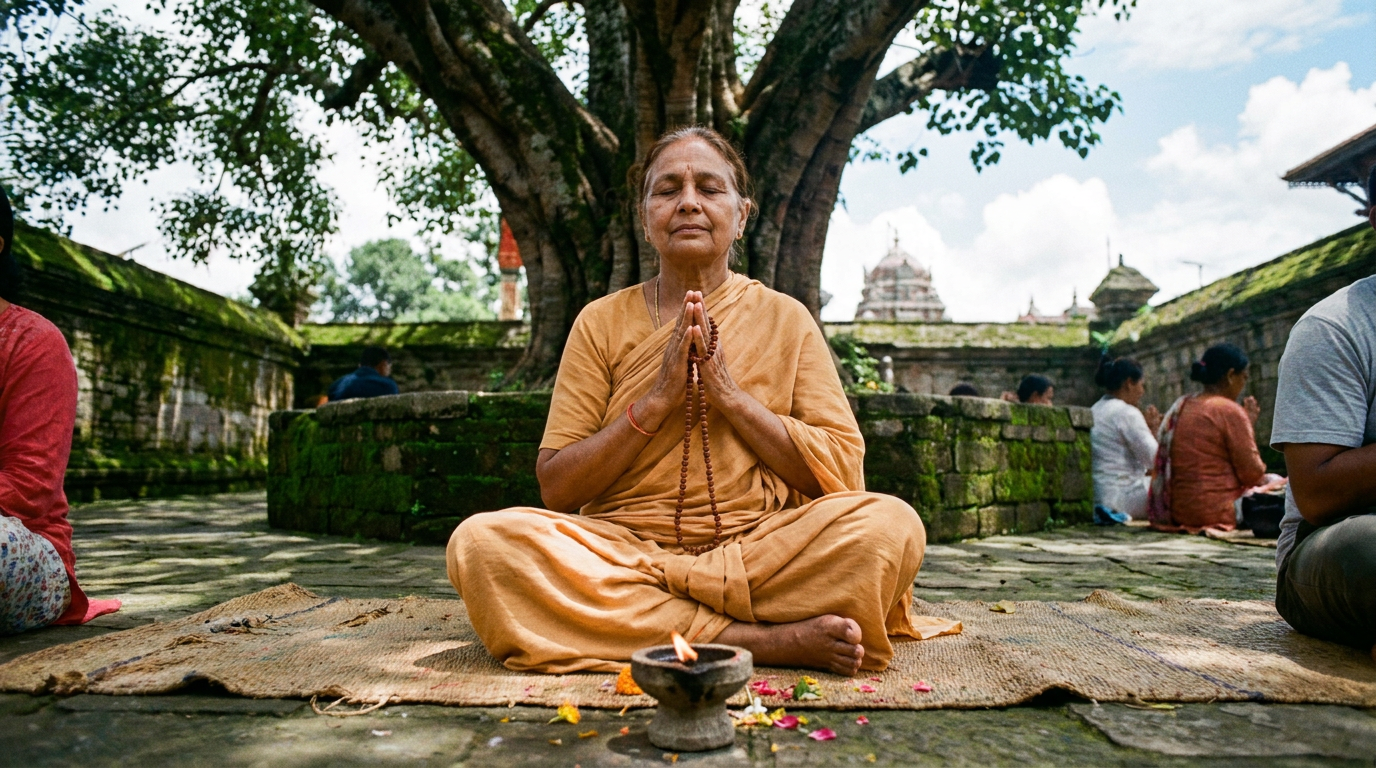
Emotional pain can affect the whole person. It may show up as worry, sadness, anger, shame, numbness, or exhaustion. It can affect sleep, relationships, self-worth, and our ability to feel hopeful.
Bhakti Meditation supports emotional healing because it addresses not only the mind, but the heart and soul.
The Weight of Unprocessed Emotions
Many people carry feelings they have never had space to express. Perhaps they were taught to be strong, to stay busy, or to hide their pain. But emotions that are ignored do not simply vanish. They may come out later as anxiety, irritability, depression, or disconnection.
Bhakti offers a sacred space where emotions can be brought honestly before God.
In prayer, we can say, “I am hurting.”
In chanting, we can let tears come.
In service, we can slowly rediscover purpose.
In community, we can remember that we are not alone.
The Mind’s Habit of Repetition
The mind often repeats painful stories: “I am not enough,” “I am alone,” “I failed,” “I will never heal.” These thoughts can become like grooves in the heart.
Mantra meditation gently creates new grooves. When we chant divine names, the mind is offered a higher sound, a loving sound, a healing sound.
This does not mean we deny our struggles. Rather, we give the mind something sacred to rest upon while healing unfolds.
The Soul’s Need for Love
From a Bhakti perspective, the deepest wound is forgetfulness of our relationship with God. We may seek love through success, approval, control, or temporary pleasures, but the soul longs for eternal love.
Bhakti Meditation helps restore this connection. As we remember God, we begin to remember who we truly are—not just the wounded self, not just the anxious mind, not just the past story, but an eternal soul loved by the Divine.
Check out our latest posts at https://thebhaktihouse.org/blog.
Chanting as a Gentle Medicine for the Heart
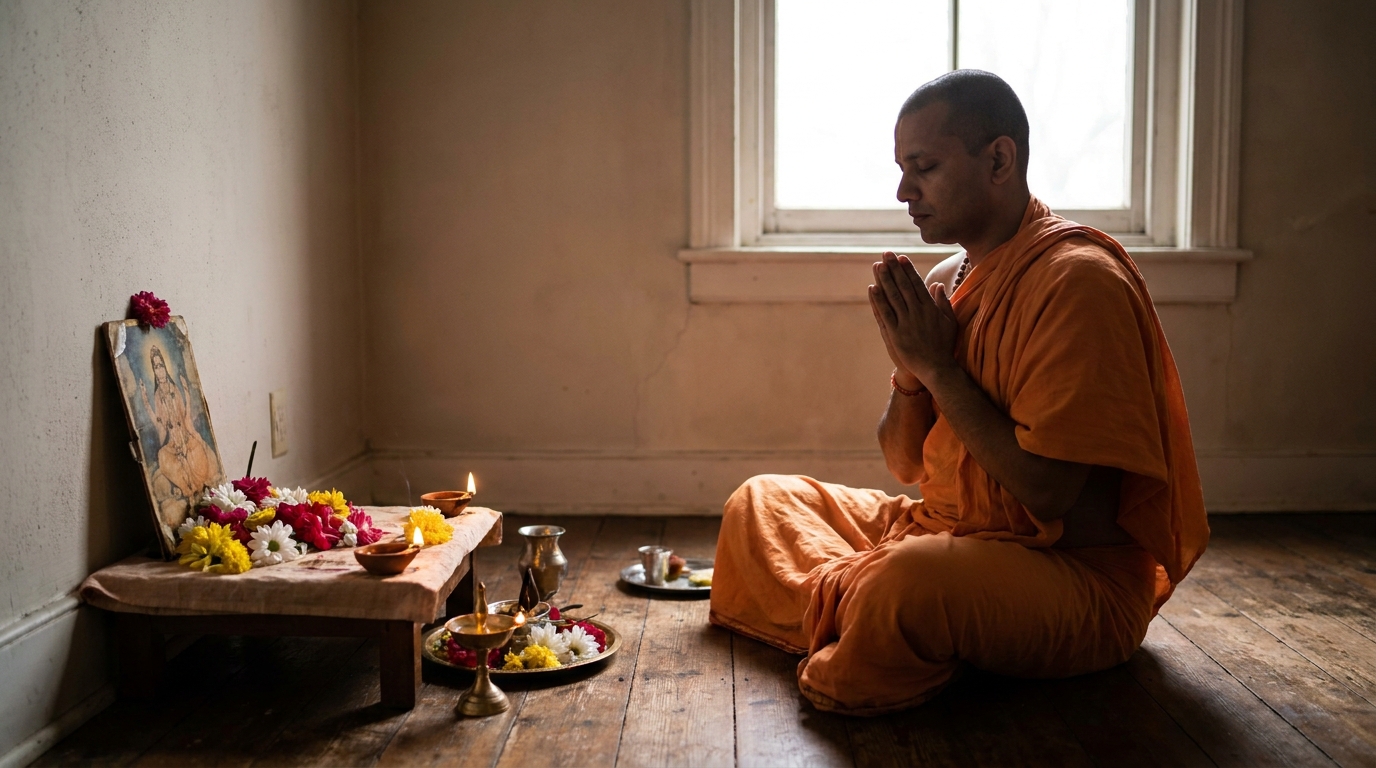
Chanting is one of the most accessible forms of Bhakti Meditation. You do not need to be perfect, advanced, or learned. You only need a little sincerity.
The sacred names of God are understood in Bhakti scriptures to be spiritually powerful. They cleanse the heart, calm the mind, and awaken love.
Why Sound Matters
Sound affects us deeply. Harsh words can wound us for years. Loving words can bring comfort. Music can move us to tears. Sacred sound can awaken the heart.
In the Kali-Santarana Upanishad, the chanting of the Hare Krishna Maha Mantra is recommended as a powerful spiritual practice for this age, a time described in Vedic literature as often filled with confusion, quarrel, and distraction.
This is practical. We live in a noisy world, and much of that noise increases anxiety. Bhakti chanting gives us a healing sound to return to.
Japa Meditation
“Japa” means soft, personal repetition of a mantra. Many practitioners chant on beads called japa mala. A mala usually has 108 beads, and each bead helps the practitioner chant one full mantra with attention.
Japa can be done in the morning, during a walk, before sleep, or whenever the heart needs grounding.
A simple practice may look like this:
Sit comfortably.
Take a few deep breaths.
Hold your beads or simply rest your hands.
Chant the mantra slowly and sincerely.
When the mind wanders, gently return to the sound.
The goal is not to force the mind into silence. The goal is to keep returning with humility and love.
Kirtan Meditation
“Kirtan” means singing or chanting the names of God, often with others. It may include instruments like harmonium, mridanga drum, or kartals cymbals. But at its heart, kirtan is simple: call and response, heart to heart.
Kirtan can be especially healing for people who feel emotionally heavy or isolated. Singing with others creates connection. The breath deepens. The heart opens. Tears may come, and that is okay.
In Bhakti, tears are not a failure. They may be part of softening.
Prayer and Surrender in Emotional Healing
Prayer is one of the most natural expressions of the human heart. Even people who are unsure about theology often pray in moments of pain: “Please help me.” “Please guide me.” “Please don’t let me be alone.”
Bhakti Yoga welcomes this honesty.
Honest Prayer
In Bhakti, we do not need to pretend before God. We can bring our whole self—our gratitude and our grief, our faith and our doubt, our strength and our weakness.
The Bhagavad Gita, one of the foundational texts of Bhakti Yoga, teaches that God is seated in the heart of all beings. In Bhagavad Gita 15.15, Krishna says, “I am seated in everyone’s heart.” This means the Divine is not far away from our emotional life. God is present within us, witnessing, guiding, and lovingly waiting for our attention.
Honest prayer may sound like:
“Dear Lord, I do not know how to heal, but I want to.”
“Please help me forgive.”
“Please help me feel Your presence.”
“Please guide me one step at a time.”
“Please let my pain become compassion.”
Such prayers are simple, but they are powerful.
Surrender Does Not Mean Giving Up
“Surrender” can be misunderstood. In Bhakti, surrender does not mean becoming passive or ignoring responsibility. It means placing our trust in God while doing our sincere part.
The Sanskrit word often used is sharanagati, meaning taking shelter. Just as a child runs to a loving parent, the heart can run to God for shelter.
Emotional healing often asks us to release what we cannot control. We may not be able to change the past. We may not be able to control how others act. But we can choose to turn toward God. We can choose truth, forgiveness, service, and prayer.
Letting God Hold the Burden
In Bhagavad Gita 18.66, Krishna invites the soul to take refuge in Him and promises protection. For a healing heart, this verse can be deeply comforting. It reminds us that we are not expected to carry everything alone.
Bhakti Meditation allows us to place our burdens, again and again, at the feet of the Divine.
This does not always remove pain immediately. But it changes how we carry it. Instead of carrying pain alone, we carry it with God.
Service as a Pathway to Healing
Bhakti Yoga is not only inward meditation. It is also outward love. One of the most healing parts of Bhakti is seva, a Sanskrit word meaning selfless service.
Seva means offering our time, energy, talents, and care in a spirit of devotion.
Moving from Isolation to Connection
Emotional pain can make us withdraw. Sometimes we need rest and quiet, and that is natural. But long-term isolation can deepen suffering.
Service gently reconnects us with life. When we cook for others, help at a temple, support a friend, clean a sacred space, share food, or offer kindness, we remember that we have something meaningful to give.
Even small acts of service can restore dignity and purpose.
Healing Through Offering
In Bhagavad Gita 9.26, Krishna says that if someone offers Him a leaf, flower, fruit, or water with love and devotion, He accepts it. This verse shows that God values the heart behind the offering more than the material size of the gift.
This is very encouraging. Emotional healing does not require us to be perfect before we serve. We can offer what we have today.
A tired person can offer one prayer.
A grieving person can offer one flower.
A busy person can offer one kind word.
A struggling person can offer one sincere chant.
Bhakti transforms ordinary actions into sacred offerings.
Service Without Losing Yourself
Some people with emotional wounds may over-serve in order to feel worthy. Bhakti service is not meant to create burnout. True seva is rooted in love, not self-neglect.
Healthy service includes humility, boundaries, rest, and prayer. We serve as souls connected to God, not as people trying to earn love. Divine love is already there. Service helps us express and receive it.
Sacred Wisdom for the Healing Heart
Bhakti scriptures offer timeless guidance for emotional healing. They do not deny suffering, but they place suffering within a larger spiritual understanding.
The Bhagavad Gita and Inner Steadiness
The Bhagavad Gita begins on a battlefield. Arjuna, a great warrior, is overwhelmed with grief, confusion, and moral distress. His hands tremble. His mind reels. He does not know what to do.
This is deeply human.
Krishna does not shame Arjuna for his emotions. Instead, He guides him with compassion, wisdom, and love. The Gita teaches that emotional struggle can become the doorway to spiritual awakening when we turn toward God.
One practical teaching from the Gita is that we are not the temporary body or changing mind; we are the eternal soul, called atma in Sanskrit. This does not minimize our emotions, but it helps us not be completely defined by them.
We may feel sadness, but we are not only sadness.
We may feel fear, but we are not only fear.
We may carry trauma, but we are not only trauma.
We are eternal souls, beloved by God.
Srimad Bhagavatam and the Power of Hearing
The Srimad Bhagavatam is a treasured Bhakti scripture filled with stories, prayers, and teachings about devotion to God. It emphasizes shravanam, or hearing about the Divine.
Hearing sacred stories can heal the imagination. Instead of constantly replaying painful memories or fearful possibilities, we begin to fill the heart with examples of courage, surrender, compassion, and divine love.
This is why listening to spiritual talks, reading devotional books, or hearing kirtan can be such a nourishing part of emotional healing.
The Practice of Remembering
Another important Bhakti practice is smaranam, which means remembering God. This can happen throughout daily life.
You can remember God while washing dishes.
You can remember God before a difficult conversation.
You can remember God while driving.
You can remember God when anxiety rises.
A simple inner prayer—“Please be with me”—can turn an ordinary moment into meditation.
Practical Bhakti Meditation Practices for Emotional Healing
Bhakti Meditation becomes most powerful when it is practiced regularly in simple, realistic ways. Healing often happens through small, repeated acts of devotion.
Begin the Morning With Mantra
The morning is a sacred time because the mind is often more quiet before the demands of the day begin.
You might start with five minutes of chanting. Sit in a peaceful place, light a candle if you like, and chant the Hare Krishna Maha Mantra or another name of God that feels sacred to you.
Do not worry if your mind wanders. Every return to the mantra is part of the practice.
Create a Prayer Journal
Writing prayers can help release emotions that feel stuck. You can begin each entry with, “Dear Lord…” and write honestly.
You might write about your fears, hopes, gratitude, or questions. You can also write what you are trying to surrender.
At the end, you may add: “Please guide me. Please help me take the next sincere step.”
This practice can bring clarity and comfort.
Practice Breath and Mantra Together
When emotions feel intense, combine breathing with mantra.
Inhale gently.
Exhale and softly chant.
Inhale again.
Exhale and listen to the sound.
This helps calm the nervous system while also bringing the heart into divine remembrance.
Offer Your Meals
In Bhakti Yoga, food prepared and offered to God with love is called prasadam, meaning mercy or grace. Offering food is a beautiful daily practice.
Before eating, pause and say a simple prayer: “Dear Lord, thank You for this food. Please accept this offering and bless my heart with devotion.”
Eating prasadam reminds us that nourishment is not only physical. Food can become part of a loving exchange with God.
Join Community Kirtan
Healing is often supported by spiritual community, known as sangha or sadhu-sanga, meaning association with sincere spiritual seekers.
Joining kirtan, attending a Bhakti gathering, or connecting with a devotional community can help the heart feel supported. We need spaces where we can be sincere, not performative; where we can grow, not be judged.
Community reminds us: we are walking together.
Bhakti Meditation and Common Emotional Struggles
Bhakti Meditation can support many areas of emotional healing. It is not a replacement for professional mental health care when needed, but it can be a deeply supportive spiritual practice alongside therapy, healthy relationships, medical care, and self-care.
Anxiety
Anxiety often pulls the mind into the future. “What if this happens? What if I cannot handle it?”
Mantra brings the mind back to the present moment and anchors it in sacred sound. Prayer helps us place the unknown future in God’s hands.
A simple anxiety prayer may be: “Dear Lord, I do not know what will happen, but I trust that You are with me. Please guide my next step.”
Grief
Grief can feel like love with nowhere to go. Bhakti gives grief a sacred direction.
We can pray for those we have lost. We can chant through tears. We can offer flowers, lamps, or acts of service in their memory. We can remember that the soul is eternal and held by God.
The Bhagavad Gita teaches that the soul is never destroyed. This wisdom does not erase the pain of separation, but it offers hope beyond the visible world.
Shame
Shame says, “I am unworthy of love.” Bhakti says, “You are an eternal soul, beloved by God.”
In Bhakti, purification is possible. Growth is possible. Forgiveness is possible. No one is beyond divine mercy.
Chanting the holy names helps cleanse the heart from old identities and invites us into a deeper truth: we belong to God.
Anger and Hurt
Anger often protects a deeper wound. Bhakti Meditation gives us space to bring anger into prayer instead of letting it control our words and actions.
We can pray, “Please help me understand this pain. Please help me respond with wisdom. Please protect my heart from bitterness.”
Forgiveness in Bhakti is not pretending harm did not happen. It is gradually releasing the poison of resentment while seeking truth, safety, and compassion.
Building a Loving Daily Practice
A daily Bhakti practice does not need to be complicated. The most important ingredient is sincerity.
Start Small and Stay Steady
If you are new to Bhakti Meditation, begin with something simple:
Five minutes of mantra chanting.
One prayer before sleep.
One verse from the Bhagavad Gita.
One act of service each day.
One moment of gratitude.
Small practices done consistently can reshape the heart over time.
Make a Sacred Space
You may create a small altar or devotional corner with a picture of Krishna, sacred art, flowers, a candle, scripture, or anything that helps you remember God with reverence.
This space does not need to be elaborate. It simply says, “Here is where I turn toward the Divine.”
When emotional waves come, you can sit there and breathe, chant, pray, or cry. Let it be a place of honesty and healing.
Be Patient With the Process
Emotional healing is not always linear. Some days you may feel peaceful. Other days old pain may arise again. This does not mean you are failing.
In Bhakti, every sincere effort matters. Every mantra is heard. Every prayer is received. Every act of service leaves a spiritual impression on the heart.
Healing may come like sunrise—slowly, gently, then beautifully.
A Devotional Vision of Wholeness
Bhakti Meditation supports emotional healing because it brings us back into loving relationship with God, with others, and with our own true self.
It teaches us that we are not alone in our pain. It gives the mind sacred sound. It gives the heart honest prayer. It gives the body meaningful service. It gives the soul its natural nourishment: divine love.
Love as the Deepest Medicine
At the heart of Bhakti Yoga is love. Not sentimental love, not temporary approval, but eternal spiritual love.
This love heals because it reaches the deepest part of us. It does not merely manage symptoms; it awakens identity. We begin to remember: “I am loved. I am held. I am a soul. I belong to God.”
Turning Pain Into Compassion
As we heal through Bhakti, our pain can become a source of compassion. We become more tender toward others. We listen more deeply. We serve more humbly. We judge less quickly.
This is one of the miracles of devotional life. What once broke the heart can become an opening through which divine love flows.
Everyone Is Welcome
You do not need to know Sanskrit. You do not need to have a perfect meditation practice. You do not need to have everything figured out.
Come as you are.
Bring your questions, your wounds, your longing, your gratitude, your doubt, and your hope. Bhakti Meditation is a path of love, and love begins with one sincere step.
Today, you might chant one mantra. Offer one prayer. Read one sacred verse. Serve one person. Sit quietly and ask God for guidance.
However small it may seem, one sincere step toward God is never small. It is seen, it is cherished, and it can begin to heal the heart.
Everyone is welcome to take that step.
FAQs
What is Bhakti Meditation?
Bhakti meditation is a spiritual practice that involves devotion and love towards a higher power or deity. It often includes chanting, singing, and prayer as a way to connect with the divine.
How does Bhakti Meditation Support Emotional Healing?
Bhakti meditation supports emotional healing by providing a sense of connection, love, and support from the divine. It can help individuals release negative emotions, cultivate gratitude, and experience a sense of inner peace and joy.
What are the Benefits of Bhakti Meditation for Emotional Healing?
The benefits of Bhakti meditation for emotional healing include reduced stress and anxiety, increased feelings of love and compassion, improved emotional resilience, and a greater sense of purpose and meaning in life.
How can Bhakti Meditation be Practiced for Emotional Healing?
Bhakti meditation can be practiced by setting aside dedicated time for devotional practices such as chanting, singing bhajans (devotional songs), offering prayers, and cultivating a loving and grateful attitude towards the divine.
Is Bhakti Meditation Suitable for Everyone?
Bhakti meditation can be suitable for individuals of all backgrounds and beliefs, as it focuses on the universal themes of love, devotion, and connection. However, it is important for individuals to find a spiritual practice that resonates with their own beliefs and values.

