
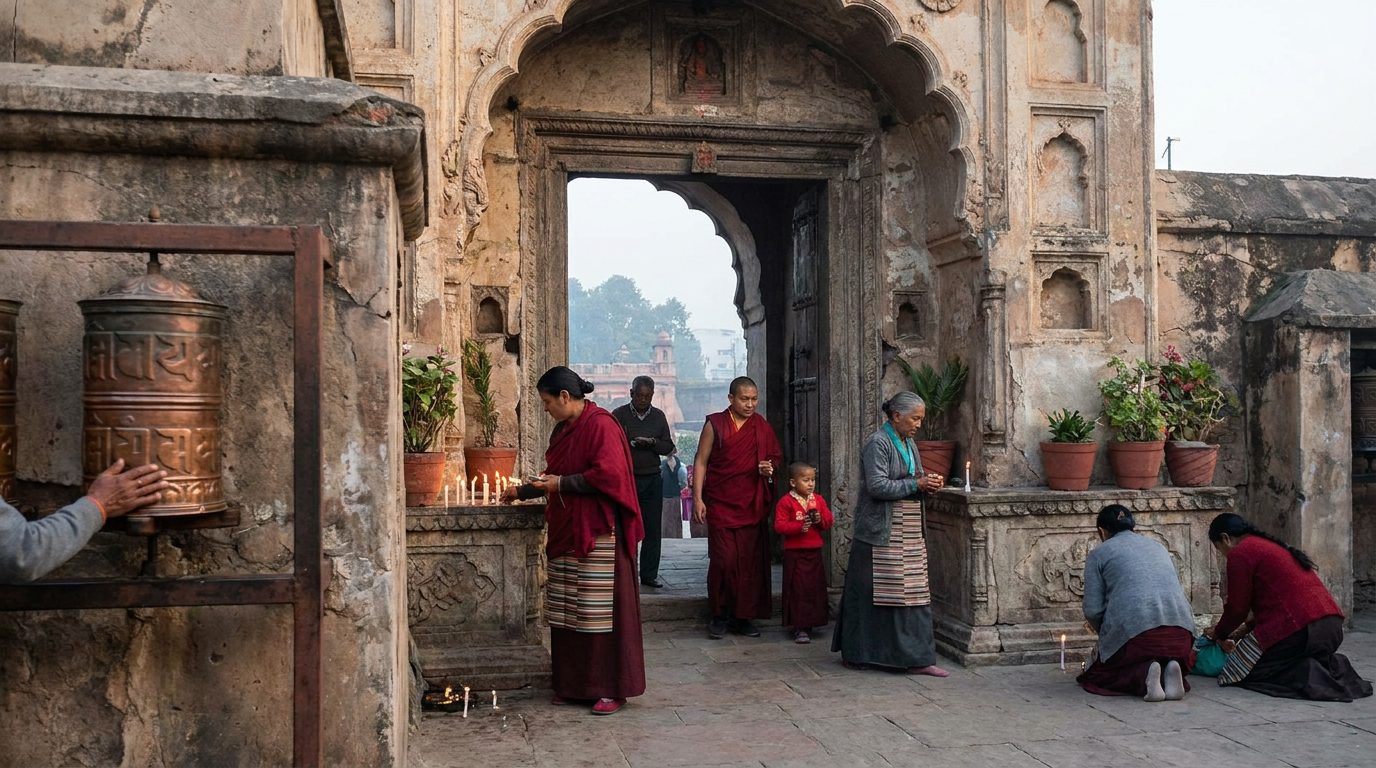
Why Holy Places Matter to the Human Heart
Across the world, people travel to holy places seeking something deeper than sightseeing. A sacred site may be a temple, church, mosque, synagogue, monastery, river, mountain, forest, cave, shrine, or ancient path walked by saints. Yet what makes a place “holy” is not only its architecture or history. A holy place is where the heart becomes soft, the mind becomes quiet, and the soul remembers its relationship with the Divine.
In Bhakti Yoga, the path of loving devotion, holy places are especially treasured because they help us turn toward God with sincerity. “Bhakti” means devotion or loving service. It is not limited to one background, nationality, or social identity. It is the natural movement of the soul toward the Supreme, expressed through chanting, prayer, hearing wisdom, serving others, and living with compassion.
The Sanskrit word tirtha is often used for a sacred place. It literally means a “crossing place,” like a bridge or ford across a river. Spiritually, a tirtha is a place where we can cross from forgetfulness to remembrance, from restlessness to prayer, from self-centered life to loving service.
For some, visiting holy places worldwide is a once-in-a-lifetime pilgrimage. For others, the local church, mosque, temple, meditation hall, or quiet garden becomes a regular place of renewal. And for many sincere seekers, the journey begins at home—with a candle, a prayer, a sacred name, and one humble step toward God.
What Makes a Place Sacred?
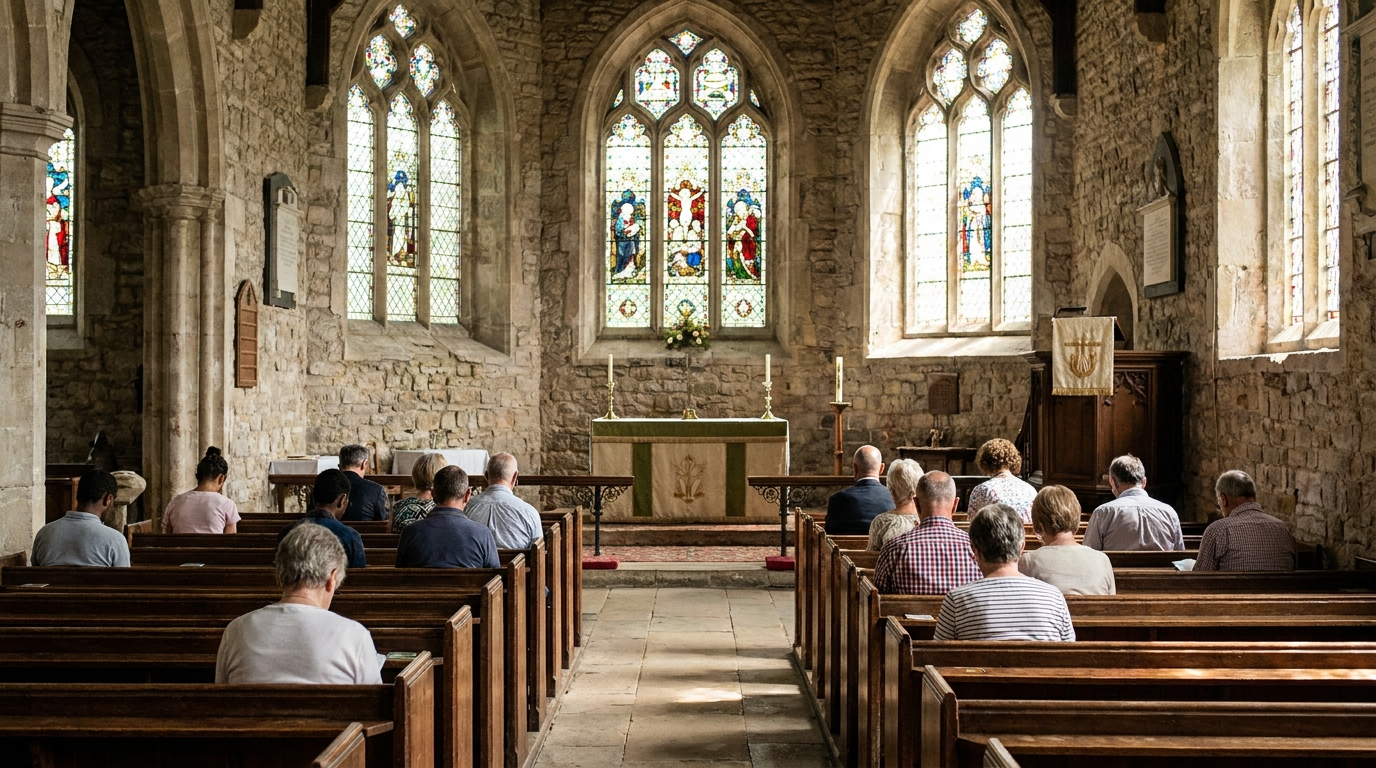
A sacred site may be holy for many reasons. Some places are connected to divine appearances, prophets, saints, sages, miracles, scriptures, or deep spiritual practice over many generations. Others are places where nature itself seems to reveal the majesty of the Creator—mountains rising into the sky, rivers flowing with life, forests filled with silence, or deserts glowing beneath the stars.
Divine Presence and Sacred Memory
Many holy places are cherished because people believe God revealed Himself there, spoke there, performed divine activities there, or blessed His devotees there. These sacred memories are preserved through scripture, song, ritual, and pilgrimage.
In the Bhagavad-gita, one of the central texts of Bhakti Yoga, Sri Krishna says, “I am seated in everyone’s heart” (Bhagavad-gita 15.15). This means God is not absent from any place. Still, sacred sites help us remember what is always true: the Divine is near, loving, and present.
Just as a photograph of a loved one can awaken affection, a holy place can awaken devotion. The place itself becomes a living reminder.
Saints, Prayer, and Spiritual Practice
A place also becomes holy through the prayers of saints and sincere seekers. When people gather for worship, chant God’s names, serve pilgrims, feed the hungry, study scripture, or meditate with humility, the atmosphere becomes purified.
In Bhakti tradition, it is said that the presence of devotees makes a place sacred. The Srimad-Bhagavatam, a beloved devotional scripture, teaches that saintly persons carry God in their hearts and purify the places they visit. This is a very practical teaching: holiness is not just about stones, buildings, or geography. Holiness grows wherever love of God is cultivated.
Beauty, Silence, and the Language of Nature
Some sacred places are not built by human hands. Mountains such as Kailash in Tibet, rivers such as the Ganges in India, forests such as Vrindavan’s groves, and natural springs or caves around the world have drawn pilgrims for centuries.
Nature can humble us. It reminds us that life is bigger than our plans and problems. When we stand before an ancient mountain or listen to a flowing river, the heart may naturally offer a prayer: “Dear God, please help me remember You.”
Sacred Sites in the Bhakti Yoga Tradition
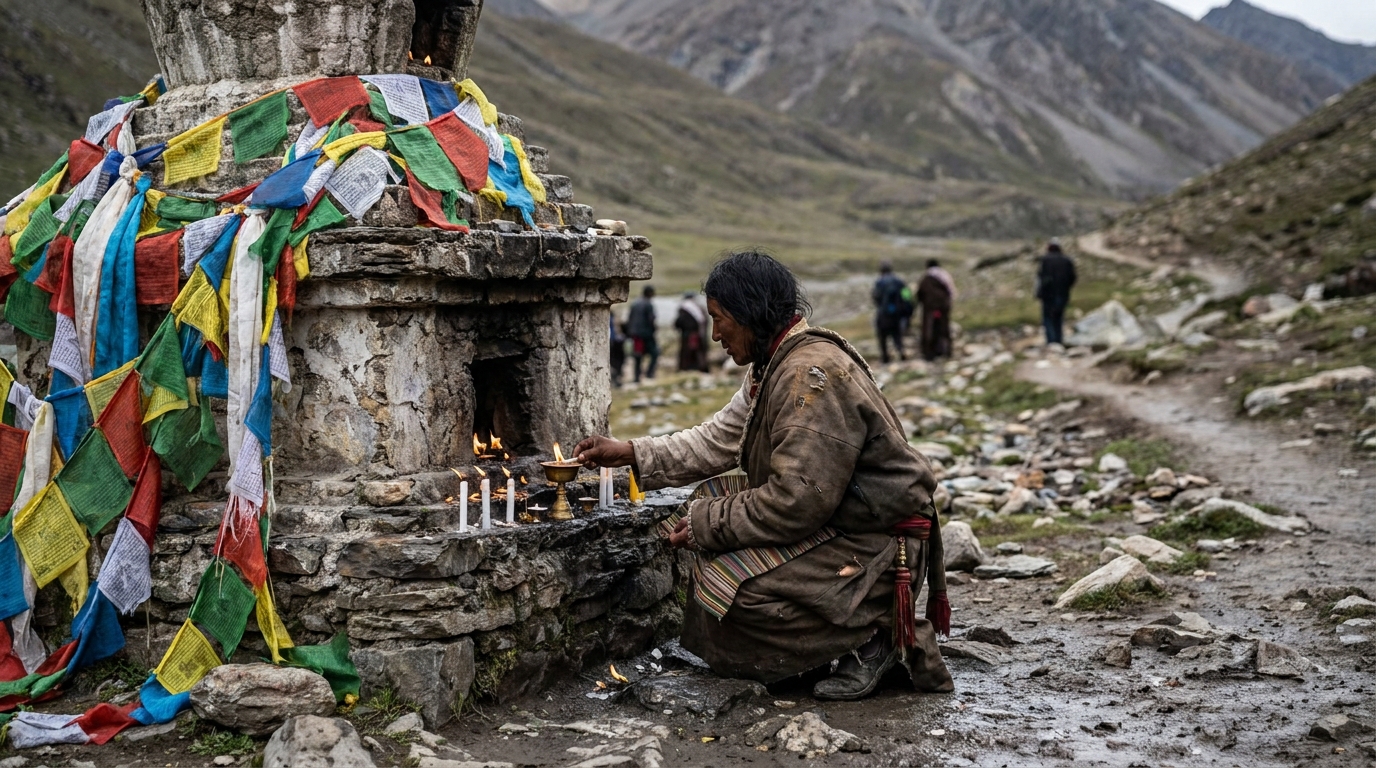
Bhakti Yoga offers a deeply personal vision of sacred geography. Holy places are not merely destinations; they are places of relationship. Devotees visit them to remember the Lord, honor the saints, chant, serve, and pray for a heart filled with love.
Vrindavan: The Land of Krishna’s Sweet Pastimes
Vrindavan, in northern India, is one of the most beloved holy places in the Bhakti tradition. It is revered as the sacred land where Sri Krishna, the Supreme Lord, displayed His childhood and youth pastimes—playing the flute, tending cows, dancing with the gopis, and sharing loving exchanges with His devotees.
The word gopi refers to the cowherd maidens of Vrindavan, who are honored as examples of pure love for Krishna. Their devotion is not ordinary romance; it represents the soul’s complete longing for God.
Pilgrims in Vrindavan often chant the maha-mantra:
Hare Krishna Hare Krishna
Krishna Krishna Hare Hare
Hare Rama Hare Rama
Rama Rama Hare Hare
“Hare” calls upon the Lord’s divine energy, “Krishna” means the all-attractive Supreme Person, and “Rama” means the source of spiritual joy. This chanting is a simple and powerful practice for the heart. One does not need to be born in a particular tradition to chant sincerely. The holy name welcomes everyone.
Mayapur: The Home of Sri Chaitanya’s Compassion
Mayapur, in West Bengal, India, is the birthplace of Sri Chaitanya Mahaprabhu, a great saint and incarnation of divine love in the Bhakti tradition. He taught that the chanting of God’s holy names is the most accessible spiritual practice for this age.
Sri Chaitanya shared sankirtan, which means congregational chanting. In sankirtan, people gather to sing the names of God with musical instruments, clapping, dancing, and heartfelt prayer. It is joyful, inclusive, and deeply healing.
Mayapur is a place where pilgrims from many countries come together. This reflects a beautiful truth of Bhakti Yoga: spiritual identity is deeper than nationality, race, language, or social status. We are all souls, beloved children of God.
Jagannath Puri: The Lord of the Universe
Jagannath Puri, on the eastern coast of India, is famous for Lord Jagannath, whose name means “Lord of the Universe.” Each year, the Ratha-yatra festival draws countless pilgrims as the Deity of Lord Jagannath is carried on a grand chariot through the streets.
In Bhakti, a Deity is not considered an idol or symbol in a superficial sense. Rather, the Deity is a merciful form through which God accepts our worship and allows us to serve Him with our senses—offering flowers, food, lamps, songs, and prayers.
Puri teaches us that God comes out to meet everyone. During Ratha-yatra, the Lord does not remain hidden in the temple; He travels through the streets, giving His mercy freely.
Dwarka, Ayodhya, and Other Devotional Lands
Dwarka is honored as Krishna’s royal city, while Ayodhya is sacred as the birthplace of Lord Rama, the divine king celebrated in the Ramayana. These places carry histories of courage, righteousness, love, and surrender.
The Sanskrit word dharma means the true purpose or sacred duty of life. In the stories of Rama and Krishna, dharma is not dry morality. It is living in harmony with God’s will, caring for others, and acting with integrity.
For pilgrims, these holy cities are not only ancient locations. They are classrooms of the heart.
Discover a wide range of insightful articles that delve into various spiritual topics. Our collection of articles offers guidance and inspiration for your personal journey. Stay informed and enlightened by exploring our latest articles today.
Holy Places Across the World’s Spiritual Traditions
While Bhakti Yoga has its own sacred geography, a humble devotee can also honor the holy places cherished by people of other faiths. The Divine is worshiped by many names, and sincere prayer is precious.
Jerusalem: A City of Prayer and Covenant
Jerusalem is sacred to Judaism, Christianity, and Islam. For many Jewish people, the Western Wall is a place of prayer connected to the ancient Temple. For Christians, Jerusalem holds the memory of Jesus Christ’s final days, crucifixion, and resurrection. For Muslims, the city is home to Al-Aqsa Mosque and the Dome of the Rock, deeply honored in Islamic tradition.
Jerusalem reminds us that holy places can carry both deep devotion and complex human history. A pilgrim should approach such places with reverence, sensitivity, and humility. Sacred sites are not meant to increase pride or division. They are meant to awaken love, repentance, and remembrance of God.
Mecca and Medina: Sacred Centers of Islam
Mecca is the holiest city in Islam, where Muslims perform the Hajj pilgrimage if they are able. The Kaaba, located in the Grand Mosque, is the direction of prayer for Muslims worldwide. Medina, where the Prophet Muhammad lived and is buried, is also deeply sacred.
The devotion of Muslim pilgrims can teach all seekers something powerful about surrender. The Arabic word Islam is often understood as submission to God. In Bhakti language, surrender is not defeat; it is the soul’s loving trust in the Supreme.
Though non-Muslims may not enter certain sacred spaces, people of all backgrounds can respectfully learn from the sincerity, discipline, and prayerful focus of these pilgrimages.
Vatican City, Assisi, and Christian Pilgrimage
For Catholics and many Christians, Vatican City is a major sacred site, home to St. Peter’s Basilica and the center of the Catholic Church. Assisi, associated with St. Francis, attracts pilgrims drawn to simplicity, humility, and love for all creatures.
Christian holy places often invite contemplation of mercy, sacrifice, forgiveness, and service. These values harmonize beautifully with Bhakti Yoga. In the Bhagavad-gita, Krishna encourages devotion expressed through love and offering: “If one offers Me with love and devotion a leaf, a flower, fruit, or water, I accept it” (Bhagavad-gita 9.26).
The heart of the teaching is simple: God accepts love.
Bodh Gaya and Buddhist Sacred Sites
Bodh Gaya in India is where Siddhartha Gautama attained enlightenment and became known as the Buddha. Other important Buddhist sites include Sarnath, where he first taught, and Kushinagar, where he passed from this world.
Pilgrims visit these places for meditation, mindfulness, and reflection on compassion. While Bhakti Yoga emphasizes personal loving relationship with God, it also honors qualities such as compassion, discipline, humility, and freedom from greed.
A sincere Bhakti practitioner can appreciate the peaceful atmosphere of Buddhist sacred sites and learn from the dedication of those who seek liberation from suffering.
Mount Kailash and Sacred Mountains
Mount Kailash in Tibet is revered in Hindu, Buddhist, Jain, and Bon traditions. Many pilgrims circumambulate the mountain, walking around it as an act of devotion and purification. Circumambulation is called parikrama in Sanskrit, meaning to walk around a sacred person, place, or object with reverence.
Sacred mountains often symbolize ascent—moving from lower consciousness to higher awareness. But the true mountain we climb is within the heart. Pride, anger, envy, and selfishness are steep slopes. Prayer, chanting, service, and grace help us rise.
Indigenous Sacred Lands and Living Reverence
Many Indigenous traditions around the world honor sacred lands, ancestral sites, mountains, rivers, and ceremonial grounds. These places are often inseparable from community identity, memory, and responsibility.
Visitors must be especially respectful. Some sacred places are not open for tourism. Some should not be photographed. Some require permission from local communities or elders. True pilgrimage includes listening, honoring boundaries, and protecting the dignity of others.
Bhakti teaches that everything belongs to God. Therefore, we should not exploit sacred places. We should approach them as guests, caretakers, and servants.
How to Visit Holy Places with a Pilgrim’s Heart
A tourist collects experiences. A pilgrim seeks transformation. Of course, there is nothing wrong with appreciating beauty, history, and culture. But when we visit holy places, we can go deeper by preparing the heart.
Begin with Humility
Before entering a sacred site, pause. Offer a simple prayer:
“Dear Lord, please help me enter with respect. May I not come only to take photos or gather impressions. Please let me receive what You want to teach me.”
Humility opens doors that money and planning cannot. We may not understand every ritual, language, or custom, but we can always bring sincerity.
Learn the Local Etiquette
Every holy place has its own customs. Some require modest dress. Some ask visitors to remove shoes, cover the head, remain silent, avoid certain areas, or refrain from photography. These guidelines are not burdens; they are opportunities to practice respect.
If we do not know what to do, we can ask gently. People usually appreciate sincere effort.
Chant, Pray, or Sit Quietly
A sacred site becomes most meaningful when we engage spiritually. In the Bhakti tradition, chanting the holy names of God is one of the most recommended practices. Chanting can be done softly, inwardly, or aloud where appropriate.
You may chant:
Hare Krishna Hare Krishna
Krishna Krishna Hare Hare
Hare Rama Hare Rama
Rama Rama Hare Hare
Or you may pray in your own words. Or simply sit quietly and listen. God sees the heart.
Offer Service
Service is central to Bhakti Yoga. The Sanskrit word seva means loving service. When visiting holy places, seva can be simple: helping keep the area clean, donating to honest maintenance efforts, supporting local communities, serving food, assisting elders, or speaking kindly to fellow pilgrims.
Service protects us from turning pilgrimage into spiritual consumption. Instead of asking, “What can I get from this place?” we ask, “How may I serve here?”
Receive Prasada with Gratitude
In Bhakti, prasada means mercy, especially food offered to God with love and then shared. Receiving prasada is a beautiful part of pilgrimage. It teaches us that nourishment is sacred and that food can become a blessing when offered with devotion.
The Bhagavad-gita explains that offerings made with devotion purify the heart. Even a simple fruit or cup of water, when offered with love, becomes spiritually meaningful.
Practical Guide to Planning a Sacred Journey
A pilgrimage does not need to be expensive or complicated, but thoughtful planning helps us remain peaceful and focused. Whether you are traveling across the world or visiting a local sacred site, preparation can make the journey more meaningful.
Choose Your Intention
Before choosing a destination, ask yourself why you want to go. Are you seeking healing? Gratitude? Clarity? A deeper prayer life? A stronger chanting practice? A chance to serve? A connection with a saint, scripture, or tradition?
A clear intention turns travel into pilgrimage. You might write a simple vow in a journal: “During this journey, I will chant daily,” or “I will practice gratitude,” or “I will pray for my family and for the well-being of all beings.”
Study Before You Go
Read about the sacred site from reliable sources. Learn its history, stories, prayers, and customs. If it is connected to Bhakti scriptures, read the relevant passages.
For example, before visiting Vrindavan, you may read stories of Krishna from the Srimad-Bhagavatam. Before visiting Ayodhya, you may read portions of the Ramayana. Before visiting Jagannath Puri, you may learn about Lord Jagannath and the mood of Sri Chaitanya Mahaprabhu.
Study prepares the mind so the heart can receive more deeply.
Travel Lightly and Responsibly
Pilgrimage is not a luxury performance. Bring what is needed, but try not to become overly absorbed in comfort. Sacred travel invites simplicity.
Responsible pilgrimage also means caring for the environment. Avoid littering, wasting water, disturbing wildlife, or contributing to harmful tourism. Holy places should be protected for future generations.
Respect Local Communities
Sacred sites are often living communities, not museums. People pray there, raise families there, work there, and preserve traditions there. Be kind in your interactions. Pay fair prices. Avoid bargaining harshly with those who depend on small earnings. Ask before taking photos of people, ceremonies, or private spaces.
A pilgrim should leave blessings behind, not burdens.
Create Space After Returning Home
The journey does not end when you return. In many ways, pilgrimage truly begins afterward. Take time to reflect. What did you learn? What touched your heart? What habit do you want to change? What practice do you want to continue?
Maybe you begin chanting every morning. Maybe you serve at a local temple, church, food distribution, or community project. Maybe you forgive someone. Maybe you simplify your life. The fruit of pilgrimage is transformation.
The Inner Holy Place: Making the Heart a Temple
Bhakti Yoga teaches that the highest sacred place is the heart purified by love. We may travel to Vrindavan, Jerusalem, Mecca, Bodh Gaya, Assisi, Kailash, or countless other holy places, but if we return unchanged, we have only touched the surface.
The real goal is to become a sacred place ourselves—someone whose presence brings peace, kindness, and remembrance of God.
The Heart as God’s Dwelling
In the Bhagavad-gita, Krishna says He is present in the hearts of all living beings. This is a profound and tender teaching. God is not far away. He is closer than our breath, patiently waiting for us to turn toward Him.
When we chant, pray, and serve, we clean the heart. The Bhakti tradition often compares the heart to a mirror covered with dust. Chanting the holy names wipes away that dust, allowing us to see our true self and our relationship with God more clearly.
Sri Chaitanya Mahaprabhu praised the chanting of God’s names as the cleansing of the mirror of the heart. This is not merely poetry. Anyone who chants sincerely over time can feel the effect: less hardness, more gratitude, less anxiety, more trust, less isolation, more connection.
Daily Practices That Create Sacred Space
You do not need to wait for a major pilgrimage to begin. A home can become holy through simple, steady devotion.
You might create a small prayer space with a picture of Krishna, Rama, Jesus, Mary, a saint, or any form of the Divine that inspires your devotion. Keep it clean. Offer a flower, a candle, incense, or a little water. Sit there daily, even for five minutes.
You can chant on beads, read scripture, sing a devotional song, or speak honestly to God. You can offer your meals with a simple prayer: “Dear Lord, please accept this food and bless me to use my energy in Your service.”
These small acts gradually change the atmosphere of life.
Seeing All Beings as Sacred
A true visit to holy places should help us see the holiness in all beings. If we bow in a temple but speak cruelly at home, our pilgrimage remains incomplete. If we honor a sacred river but waste and pollute carelessly, we have missed the lesson.
Bhakti Yoga invites us to see every person as a soul. The Sanskrit word atma means the self or soul—the eternal spiritual being within the body. Bodies differ, cultures differ, beliefs differ, but the soul is sacred.
When we serve others with this vision, the world itself becomes a field of devotion.
Famous Holy Places Worldwide to Know and Honor
There are countless sacred sites across the globe, and no guide can include them all. Still, the following examples can help us appreciate the spiritual diversity of humanity.
Sacred Sites in India
India is home to many pilgrimage places connected with Hinduism, Buddhism, Jainism, Sikhism, and other traditions. Vrindavan, Mayapur, Jagannath Puri, Dwarka, Ayodhya, Varanasi, Rishikesh, Haridwar, Bodh Gaya, Amritsar, and Mount Arunachala are among the most visited.
For Bhakti practitioners, places connected to Krishna, Rama, Vishnu, and the great devotees are especially dear. Yet the mood should not be possessive. Holy places are gifts meant to awaken humility.
Sacred Sites in the Middle East
Jerusalem, Bethlehem, Nazareth, Mecca, Medina, Karbala, Najaf, Mount Sinai, and many other places are central to Abrahamic faiths. These sites carry deep histories of revelation, covenant, prophecy, sacrifice, and prayer.
When learning about them, we can cultivate respect for the devotion of millions who turn to God through these traditions.
Sacred Sites in Europe
Europe has many pilgrimage destinations, including Vatican City, Assisi, Lourdes, Santiago de Compostela, Canterbury, Mount Athos, Chartres Cathedral, and many ancient monasteries. The Camino de Santiago, a network of pilgrimage routes leading to Santiago de Compostela in Spain, has become a powerful spiritual journey for people from many backgrounds.
Walking itself can become prayer. Step by step, the pilgrim learns patience.
Sacred Sites in Asia Beyond India
Asia includes many revered places: Lumbini in Nepal, the birthplace of the Buddha; Shwedagon Pagoda in Myanmar; Borobudur in Indonesia; Angkor Wat in Cambodia; Koyasan in Japan; and many Taoist, Confucian, Buddhist, Shinto, and folk sacred sites across the continent.
These places often blend devotion, philosophy, ritual, art, and community life in beautiful ways.
Sacred Sites in the Americas, Africa, and Oceania
The Americas include Indigenous sacred lands, ancient ceremonial centers, churches, missions, mountains, springs, and pilgrimage sites such as the Basilica of Our Lady of Guadalupe in Mexico. In Africa, sacred sites include Lalibela in Ethiopia, ancient monasteries, mosques, shrines, and Indigenous holy places. In Oceania, many lands and natural formations are sacred to Aboriginal, Māori, and Pacific peoples.
A humble visitor remembers that some places have suffered from colonization, exploitation, or disrespect. To honor holy places worldwide, we must also honor the people entrusted with their care.
Scripture, Pilgrimage, and the Practice of Love
Bhakti scriptures do not present pilgrimage as a religious trophy. The goal is not to say, “I have been there,” but to become more loving, surrendered, and God-centered.
The Bhagavad-gita teaches that devotion can be practiced by anyone. Krishna says, “Always think of Me, become My devotee, worship Me, and offer your homage unto Me” (Bhagavad-gita 18.65). This is the heart of Bhakti Yoga: remember God, love God, serve God, and offer your life with affection.
The Srimad-Bhagavatam describes hearing and chanting about the Lord as deeply purifying. This means that even if we cannot travel physically, we can enter sacred space through sound. Listening to scripture, chanting holy names, singing kirtan, and associating with sincere devotees can bring the heart into the atmosphere of pilgrimage.
The Sanskrit word sadhu-sanga means the company of saintly people or sincere spiritual practitioners. Sadhu-sanga is one of the greatest holy places. A small room filled with sincere chanting can become more spiritually powerful than a famous site visited with distraction.
This is comforting. Not everyone has money, health, time, or freedom to travel. But everyone can call out to God. Everyone can chant. Everyone can pray. Everyone can serve.
Bringing the Blessings of Holy Places into Everyday Life
The beauty of Bhakti Yoga is that it turns ordinary life into an offering. A kitchen becomes sacred when we cook with gratitude and offer the food to God. A workplace becomes sacred when we act honestly and serve others. A family home becomes sacred when we speak kindly, forgive quickly, and remember the Divine together. A busy street becomes sacred when we silently chant while walking.
Holy places teach us how to live everywhere.
If you visit a sacred site, bring back more than souvenirs. Bring back a practice. Bring back a prayer. Bring back a softer heart. Bring back a commitment to serve.
You might decide:
- I will chant the holy names for ten minutes each morning.
- I will read a verse of scripture daily.
- I will offer my food before eating.
- I will volunteer in service once a week.
- I will forgive someone I have been holding in resentment.
- I will treat the earth with more care.
- I will welcome people of different backgrounds with respect.
These simple steps are not small. In Bhakti, sincerity matters more than size. A tiny lamp can brighten a dark room.
A Gentle Invitation for Every Seeker
Holy places worldwide remind us that the human heart longs for connection with the Divine. Whether we stand before a grand cathedral, bow in a temple, walk around a sacred mountain, pray at a mosque, sit beneath a Bodhi tree, honor ancestral land, or chant quietly at home, the invitation is the same: remember God with love.
Bhakti Yoga offers a practical path for this remembrance. Chant the holy names. Pray honestly. Serve with humility. Hear sacred wisdom. Offer your life little by little. Let devotion become not only something you do in a holy place, but the way you walk through the world.
You are welcome here, exactly as you are. Whatever your background, questions, wounds, hopes, or level of faith, you can begin with one sincere step. Offer one prayer. Chant one mantra. Serve one person. Open your heart one inch toward God.
And by grace, that one step can become the beginning of a beautiful pilgrimage home.
FAQs
What are some examples of holy places around the world?
Some examples of holy places around the world include the Vatican City, Mecca in Saudi Arabia, the Western Wall in Jerusalem, the Golden Temple in India, and the Shwedagon Pagoda in Myanmar.
Why are holy places important in various religions?
Holy places are important in various religions because they are believed to be sacred sites where individuals can connect with the divine, seek spiritual guidance, offer prayers, and participate in religious rituals and ceremonies.
How are holy places typically maintained and protected?
Holy places are typically maintained and protected by religious authorities, local communities, and sometimes government agencies. Measures such as security personnel, preservation efforts, and regulations are often put in place to safeguard these sites.
Can people of different faiths visit holy places of other religions?
Yes, people of different faiths can often visit holy places of other religions as a form of cultural exchange, tourism, or interfaith dialogue. However, it is important to respect the customs, traditions, and rules of the specific holy place being visited.
What are some common practices or rituals observed at holy places?
Common practices or rituals observed at holy places may include prayer, meditation, lighting candles or incense, making offerings, pilgrimage, confession, and participating in religious ceremonies or services.

