

What Is a Guru?
A guru is a spiritual teacher who helps us move from confusion toward clarity, from ego-centered living toward God-centered love. In Sanskrit, the word guru is often explained as “one who dispels darkness.” The darkness is not a judgment on anyone’s worth. It simply refers to ignorance, forgetfulness, and the ways we lose touch with our deepest spiritual identity.
In the Bhakti Yoga tradition, a guru is not merely an instructor of religious ideas. A true guru is a guide who helps awaken bhakti—loving devotion to God—in the heart. Bhakti is the path of love, expressed through chanting, prayer, service, sacred study, humility, and living with compassion.
At The Bhakti House, we welcome sincere seekers from all backgrounds. Some people come from Hindu families. Some come from Christian, Jewish, Muslim, Buddhist, Sikh, indigenous, or secular backgrounds. Some are just beginning to ask spiritual questions. The role of a guru is meaningful for all sincere seekers because everyone, in some way, needs guidance, encouragement, and a living example of spiritual wisdom.
A guru does not replace our conscience, our relationship with God, or our personal responsibility. Rather, the guru helps refine them. Like a lamp lighting another lamp, the guru shares spiritual knowledge received from an authentic lineage and helps the student walk the path with faith and steadiness.
The Guru in Bhakti Yoga
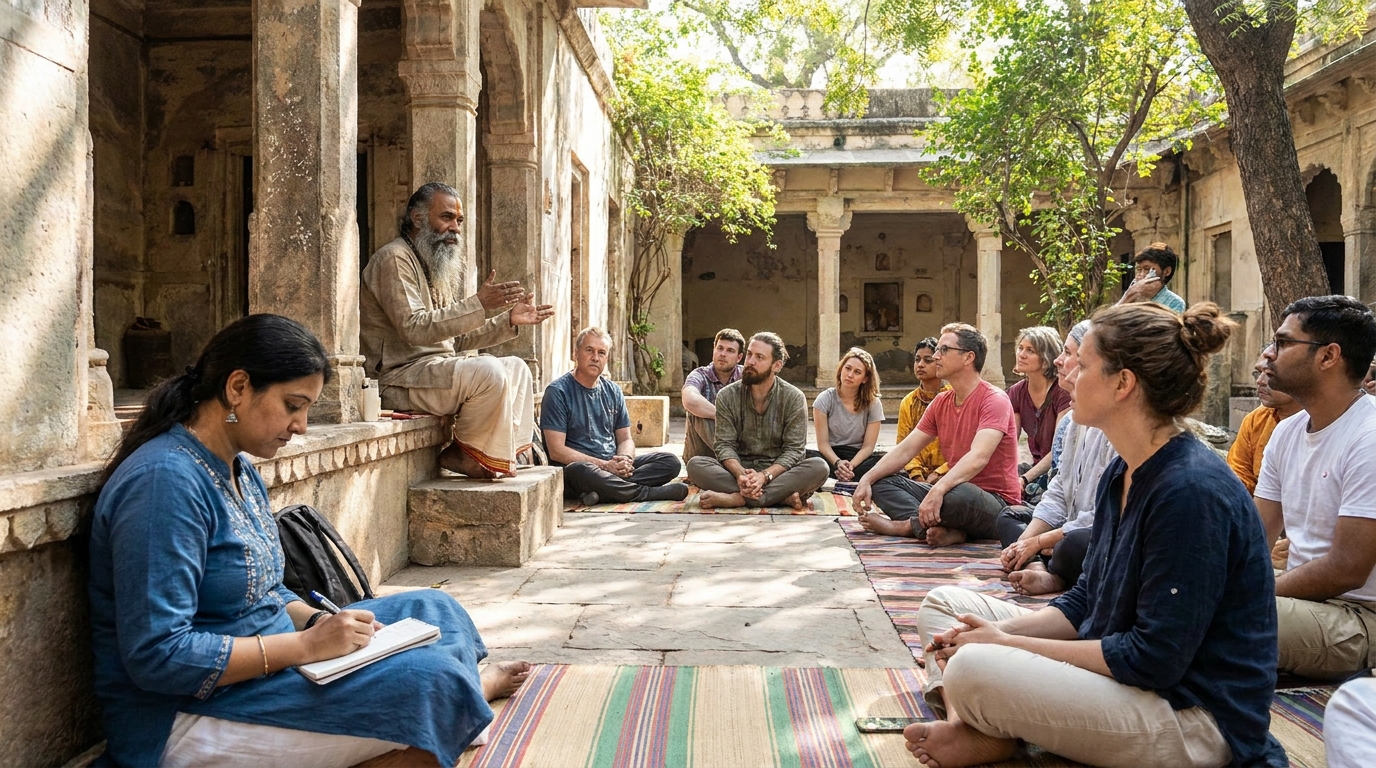
Bhakti Yoga is the yoga of loving relationship with the Divine. The word yoga means “connection,” and bhakti means “devotion” or “loving service.” In this path, the guru helps us reconnect with God not through fear, pressure, or blind belief, but through sincere practice and transformation of the heart.
A Guide Back to Loving Relationship
Bhakti teaches that the soul is eternal, spiritual, and naturally connected with God. Yet, due to forgetfulness, we often seek fulfillment only through temporary things—status, possessions, control, praise, or endless distractions. These may bring moments of comfort, but they cannot fully satisfy the heart.
The guru reminds us of our true spiritual nature. This reminder is not only philosophical. It is practical. The guru encourages us to chant God’s names, offer our work in devotion, study sacred wisdom, serve others, and live with integrity.
In the Bhagavad Gita, Lord Krishna says:
“Just try to learn the truth by approaching a spiritual teacher. Inquire from them submissively and render service. The self-realized souls can impart knowledge unto you because they have seen the truth.”
— Bhagavad Gita 4.34
This verse gives three essential qualities of spiritual learning: approaching, inquiring, and serving. We do not approach a guru as passive followers, nor as arrogant challengers. We come with humility, honest questions, and a willingness to live what we learn.
The Guru as Servant, Not Controller
In authentic Bhakti, the guru is honored deeply, but the guru is not God. The guru is loved as God’s representative, a servant of God who guides others toward divine love. This distinction is very important.
A genuine guru does not demand worship for personal ego. They do not exploit students emotionally, financially, physically, or spiritually. They point beyond themselves to God. Their joy is to see others grow in humility, devotion, wisdom, and freedom.
The best teachers do not make students dependent on their personality. They help students become more dependent on God, more grounded in sacred practice, and more compassionate toward all beings.
Scriptural Foundations for Understanding Guru
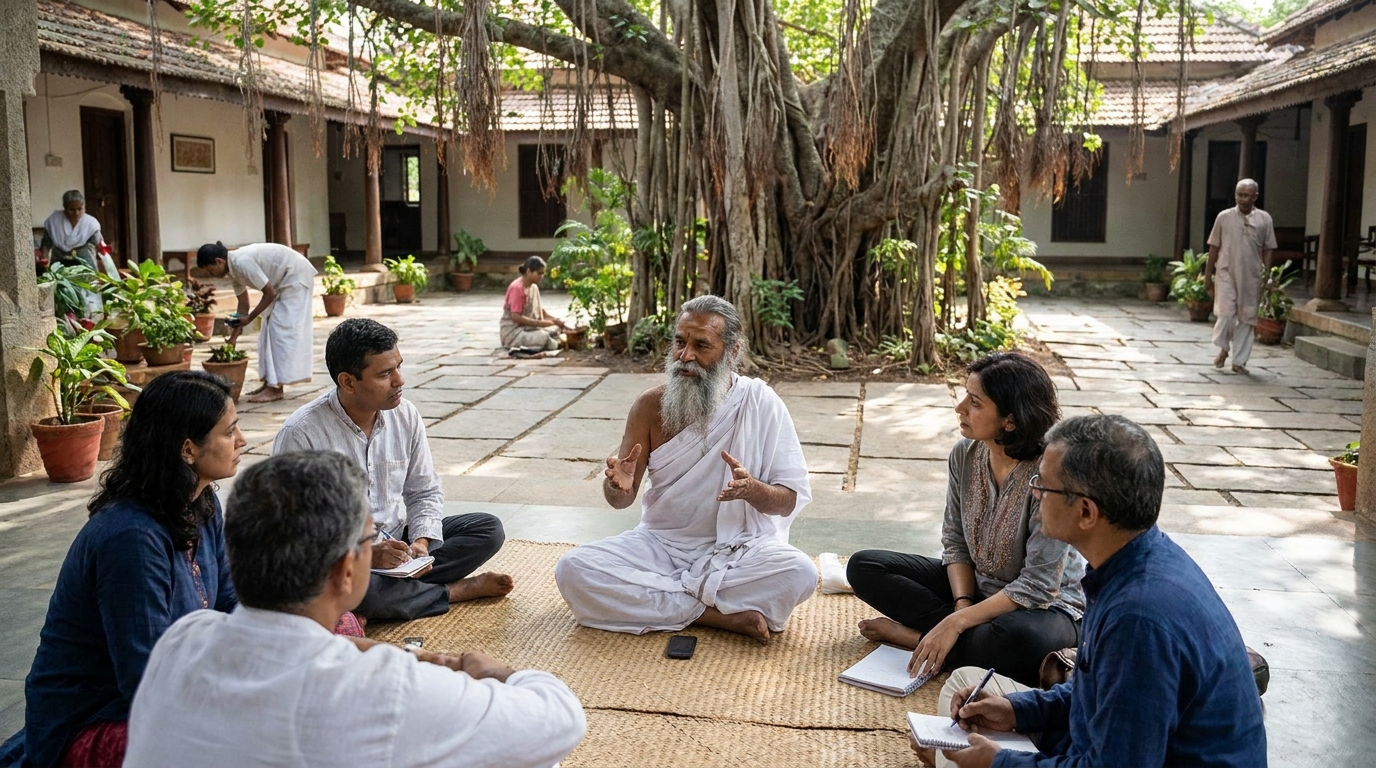
The role of guru is deeply rooted in the Bhakti scriptures and the broader Vedic tradition. These teachings help us understand why guidance matters and how to recognize genuine spiritual authority.
The Bhagavad Gita on Learning Through Guidance
The Bhagavad Gita is a sacred dialogue between Krishna and Arjuna. Arjuna is a warrior facing moral confusion, grief, and fear. Though strong and noble, he reaches a point where his own intelligence feels insufficient. He turns to Krishna and says:
“I am Your disciple, and a soul surrendered unto You. Please instruct me.”
— Bhagavad Gita 2.7
This moment is beautiful because it shows that spiritual learning begins with humility. Arjuna does not become weak by asking for guidance. He becomes honest. His surrender opens the door for divine wisdom.
In Bhakti Yoga, this is the beginning of the guru-disciple relationship: not domination, but sincere inquiry; not blind obedience, but trust rooted in spiritual purpose.
Later, Krishna explains that spiritual knowledge is passed down through parampara, or disciplic succession. Parampara means an authentic chain of teachers and students who preserve and transmit divine wisdom.
“This supreme science was thus received through the chain of disciplic succession.”
— Bhagavad Gita 4.2
A guru does not invent truth according to personal mood or popularity. A genuine guru receives, lives, and shares wisdom in harmony with scripture, previous saints, and realized teachers.
The Srimad Bhagavatam on Seeking Shelter
The Srimad Bhagavatam, a beloved Bhakti scripture, gives a clear instruction:
“Therefore, one who desires the highest good should seek the shelter of a spiritual master who is expert in scripture and fixed in realization of the Supreme.”
— Srimad Bhagavatam 11.3.21
This verse gives two important qualifications. A guru should be knowledgeable in sacred teachings and personally realized. Knowledge without realization can become dry or prideful. Realization without scriptural grounding can become sentimental or misleading. A true guru harmonizes both.
They can explain scripture in a way that touches daily life. They can help a student understand how chanting, prayer, service, and ethical living lead to purification of the heart.
The Upanishads on Humble Approach
The Mundaka Upanishad also advises seekers to approach a teacher:
“To understand spiritual truth, one should approach a spiritual master who is learned in scripture and fixed in the Absolute Truth.”
— Mundaka Upanishad 1.2.12
This ancient instruction remains relevant today. We live in an age of endless information. We can read articles, watch videos, listen to podcasts, and explore many traditions. These can be helpful, but information alone does not always bring transformation.
A guru helps us digest spiritual knowledge and apply it with sincerity. They help us see our blind spots, deepen our prayer, and keep going when enthusiasm fades.
Discover a wealth of knowledge by exploring our insightful articles. Our articles cover a wide range of topics to enhance your understanding. Stay informed and inspired by reading our latest articles.
The Qualities of an Authentic Guru
Because the word “guru” is sometimes misused, it is important to understand the qualities of an authentic spiritual teacher. Bhakti Yoga encourages reverence, but it also encourages discernment.
Rooted in Scripture and Living Tradition
A genuine guru teaches in harmony with sacred texts such as the Bhagavad Gita, Srimad Bhagavatam, and the teachings of realized saints. They do not twist scripture to satisfy personal ambition. They honor the wisdom of the lineage.
In Bhakti, this lineage often includes great saints such as Srila Vyasadeva, Sri Chaitanya Mahaprabhu, the Six Goswamis of Vrindavan, and many devoted teachers who lived lives of deep prayer, humility, and service.
To be rooted in tradition does not mean being harsh, rigid, or disconnected from modern life. It means carrying timeless wisdom with integrity. A true guru can speak to the heart of today’s seeker while remaining faithful to eternal principles.
Humility and Compassion
Humility is one of the clearest signs of spiritual maturity. A real guru does not present themselves as the center of everyone’s life. They see themselves as a servant of God and a servant of God’s children.
Compassion is also essential. The guru cares for the student’s spiritual welfare. They may offer correction, but not with cruelty. They may challenge the student, but not to shame them. Their guidance is meant to heal, strengthen, and awaken devotion.
In Bhakti, humility does not mean low self-worth. It means seeing everything as connected to God. A humble teacher knows that whatever wisdom they have is received by grace.
Personal Practice and Integrity
A guru’s life should reflect their teachings. If they teach chanting, they should chant. If they teach self-control, they should practice self-control. If they teach service, they should serve.
No embodied person is expected to perform like a machine or pretend to be beyond humanity. But an authentic guru lives with consistency, accountability, and spiritual discipline.
Their conduct should inspire trust. Their private life and public teachings should not be in deep contradiction. Their relationships should reflect respect and care.
Freedom From Exploitation
A genuine guru never uses spiritual authority to exploit others. This must be said clearly. Spiritual abuse is real, and sincere seekers should not be asked to ignore their intelligence, boundaries, or conscience.
Warning signs may include manipulation, secrecy around harmful behavior, pressure to give money beyond one’s capacity, isolation from family and community, demands for absolute loyalty to a personality, sexual misconduct, or discouraging honest questions.
Bhakti Yoga is a path of love, not control. A true guru helps the disciple become spiritually mature, not fearful or dependent.
Different Kinds of Guru in Bhakti Tradition
The Bhakti tradition recognizes that spiritual guidance can come in different forms. Understanding these categories helps us appreciate how grace reaches us through many channels.
Diksha Guru: The Initiating Spiritual Master
The diksha guru is the spiritual teacher who gives formal initiation. The word diksha refers to a sacred commitment in which the teacher gives mantra and the student accepts vows or practices according to the tradition.
A mantra is a sacred sound or prayer used for meditation and devotion. In Bhakti Yoga, mantras often include the holy names of God, such as the Hare Krishna maha-mantra:
Hare Krishna, Hare Krishna, Krishna Krishna, Hare Hare
Hare Rama, Hare Rama, Rama Rama, Hare Hare
“Maha-mantra” means “great mantra.” This chant is a prayer for divine service and loving connection. “Hare” addresses the divine energy of the Lord, and “Krishna” and “Rama” are names of God meaning the all-attractive one and the source of spiritual joy.
Initiation is not meant to be a social status. It is a sacred responsibility. A disciple receives guidance, commits to practice, and enters more deeply into a life of devotion.
Shiksha Guru: The Instructing Spiritual Teacher
The shiksha guru is an instructing teacher. Shiksha means instruction. A person may have one initiating guru and many instructing gurus.
A shiksha guru may be a senior practitioner, a teacher, a saintly friend, a community guide, or someone whose example deeply nourishes our devotion. They help us understand scripture, improve our practice, and apply Bhakti in daily life.
Sometimes a shiksha guru’s influence is very personal. Sometimes it comes through books, recorded lectures, or sacred songs. Bhakti tradition honors the many ways God sends guidance.
Chaitya Guru: The Lord Within the Heart
Bhakti also teaches about the chaitya guru, the Lord within the heart. This refers to God’s inner guidance, often understood as the Supersoul or Paramatma. Paramatma means the Supreme Self who accompanies every living being.
Krishna says in the Bhagavad Gita:
“To those who are constantly devoted and worship Me with love, I give the understanding by which they can come to Me.”
— Bhagavad Gita 10.10
This is deeply comforting. The external guru and the inner guide work together. The guru outside helps us hear clearly, while God within gives remembrance, conscience, and spiritual intelligence.
The Guru-Disciple Relationship
The relationship between guru and disciple is sacred, personal, and practical. It is not a performance. It is not about appearing advanced. It is about learning to love God sincerely.
Humble Inquiry
A disciple is encouraged to ask questions. Bhakti is not anti-intellectual. Faith and thoughtful inquiry can walk together.
Humble inquiry means asking with the desire to understand and grow, not merely to win an argument. A sincere question may be simple: “How can I chant with more attention?” “How do I forgive?” “How can I serve when I feel tired?” “How do I balance family, work, and spiritual practice?”
The guru helps connect these questions to spiritual wisdom. Over time, the disciple learns to see everyday life as a field for devotion.
Service as a Path of Learning
In the Bhagavad Gita verse 4.34, Krishna mentions service along with inquiry. In Bhakti, service is called seva. Seva means loving service offered for the pleasure of God and the upliftment of others.
Serving the guru does not mean serving someone’s ego. It means serving the mission of divine love. This may include helping with community meals, supporting kirtan gatherings, caring for guests, sharing spiritual books, cleaning the temple, cooking offerings, teaching children, or simply encouraging another person on the path.
Service softens the heart. It turns philosophy into lived devotion.
Trust That Grows Over Time
A healthy guru-disciple relationship develops through time, observation, prayer, and practice. Trust should not be rushed. A sincere seeker can listen, learn, ask questions, observe the teacher’s conduct, and seek counsel from mature practitioners.
In Bhakti, commitment is meaningful because love is meaningful. But real commitment is not blind. It is nourished by faith, wisdom, and experience.
Personal Responsibility in Spiritual Life
Even with a guru, the disciple must practice. No teacher can chant our rounds for us, forgive others for us, or surrender our ego on our behalf. The guru can guide, bless, correct, and inspire, but the student must take sincere steps.
This is actually empowering. Bhakti Yoga invites each person to participate in their spiritual awakening. Every prayer matters. Every mantra matters. Every act of kindness matters.
The Teachings a Guru Shares
While each teacher may have a unique personality and style, the core teachings of a Bhakti guru are consistent: remember God, chant the holy names, serve with love, live with integrity, and cultivate humility.
Chanting the Holy Names
Chanting is central to Bhakti Yoga. In Sanskrit, chanting God’s names is often called nama-sankirtana—the congregational glorification of the divine names. It can also be practiced personally through japa, quiet repetition of mantra on beads.
The guru teaches that the holy name is not ordinary sound. It is a spiritual connection. When we chant with sincerity, even imperfectly, the heart begins to soften.
A beginner may start with a few minutes daily:
Hare Krishna, Hare Krishna, Krishna Krishna, Hare Hare
Hare Rama, Hare Rama, Rama Rama, Hare Hare
The goal is not to sound perfect. The goal is to call out honestly. Chanting is both meditation and prayer. It says, “Please engage me in Your loving service.”
Prayer and Surrender
Prayer in Bhakti is intimate and real. It can be formal or spontaneous. We can pray in Sanskrit, English, or any language of the heart.
A guru teaches us that surrender does not mean giving up responsibility. It means offering our life to God’s care and guidance. Krishna’s famous instruction in the Bhagavad Gita is:
“Abandon all varieties of separate duty and surrender unto Me. I shall deliver you from all sinful reactions. Do not fear.”
— Bhagavad Gita 18.66
This verse is not a call to irresponsibility. It is an invitation to trust. Surrender means, “God, let my life become aligned with Your loving will.”
Service to God and All Beings
Bhakti is never only private spirituality. Love naturally expresses itself in service. The guru teaches that every living being is part of God and deserves respect.
Service may be devotional, practical, social, or relational. Feeding others, listening with compassion, caring for the earth, supporting spiritual community, raising children with kindness, and doing honest work can all become offerings.
The Bhagavad Gita teaches that we can offer the fruits of our work to God. This means our daily life does not have to be separate from spiritual life. Work, family, creativity, and community can become sacred when offered with devotion.
Character and Inner Transformation
A guru does not only teach rituals. A guru teaches character.
Bhakti practice helps us cultivate qualities such as truthfulness, patience, compassion, cleanliness, self-control, gratitude, and forgiveness. These qualities are not decorations. They are signs that devotion is entering the heart.
If our chanting increases pride, harshness, or judgment, something needs adjustment. A true guru helps us practice in a way that makes us more humble, more loving, and more honest.
How to Approach a Guru Today
In today’s world, people often encounter spiritual teachers through temples, retreats, books, online classes, podcasts, social media, or community gatherings. This can be a blessing, but it also requires discernment.
Begin With Sincere Practice
Before looking anxiously for “my guru,” begin with sincere practice. Chant. Pray. Read sacred texts. Associate with sincere devotees. Serve where you can. Ask God for guidance.
Often, the heart becomes clearer through practice. We begin to recognize what nourishes our soul and what merely excites the mind.
A simple daily practice may include:
- Chanting the Hare Krishna maha-mantra for a few minutes
- Reading a few verses from the Bhagavad Gita
- Offering food to God with gratitude before eating
- Saying a heartfelt prayer in the morning or evening
- Doing one act of service without expecting recognition
These steps prepare the heart for deeper guidance.
Observe Before Committing
It is wise to observe a potential guru over time. Listen to their teachings. Watch how they treat people who cannot benefit them. Notice whether they encourage humility or dependency. See whether their students are becoming more compassionate, grounded, and sincere.
Ask mature practitioners about their experiences. Study the teacher’s lineage. Notice whether they are accountable to a community and tradition.
A true teacher will not be threatened by thoughtful discernment. They will welcome sincerity and patience.
Ask Meaningful Questions
When approaching a teacher, ask questions that matter:
- How can I deepen my relationship with God?
- What daily practices do you recommend?
- How should I deal with pride, anger, or discouragement?
- How do I balance spiritual life with family and work?
- What does service look like for someone in my situation?
- How can I avoid fanaticism and remain compassionate?
Good questions invite good guidance. The guru’s answers should bring clarity, humility, and practical direction.
Stay Connected to Community
Bhakti grows beautifully in sanga, or spiritual association. Sanga means keeping company with those who encourage our devotion.
A healthy community helps protect both teachers and students. It creates support, accountability, friendship, and opportunities for service. Spiritual life is personal, but it is not meant to be lonely.
At The Bhakti House, this spirit of community is central. We gather to chant, learn, honor sacred food, serve, and grow together. Everyone is welcome to come as they are and take the next sincere step.
Common Misunderstandings About Guru
Because the concept of guru can feel unfamiliar or even uncomfortable to some, it is helpful to address common misunderstandings with honesty and care.
“Does Having a Guru Mean I Stop Thinking for Myself?”
No. A genuine guru helps you think more clearly, not less. The guru helps purify intelligence so it can serve truth rather than ego.
Bhakti does not ask us to become mindless. It asks us to become mindful, prayerful, and spiritually awake. Questions are welcome when asked sincerely. Doubts can become doorways to deeper understanding.
“Is the Guru Supposed to Be Perfect?”
In Bhakti theology, the guru is honored as a representative of God because they transmit divine knowledge. This does not mean we should imitate shallow celebrity culture or assume every teacher is beyond accountability.
Traditions may describe the guru in exalted terms to help students honor spiritual wisdom. At the same time, authentic communities recognize the need for integrity, humility, and responsible conduct.
The safest understanding is this: honor the guru deeply, but remember that the guru’s greatness lies in faithful service to God, not in personal domination.
“Can I Learn From More Than One Teacher?”
Yes. Many people receive inspiration from multiple teachers. Bhakti tradition honors both the initiating guru and instructing gurus. We may learn from saints of the past, current teachers, community mentors, and sincere devotees.
However, it is also helpful to avoid a restless habit of constantly collecting teachings without practicing any of them deeply. The goal is not spiritual consumption. The goal is transformation.
“What If I Have Been Hurt by a Spiritual Leader?”
If you have experienced harm from a spiritual leader, your pain matters. Bhakti never asks you to deny abuse or call harm “mercy.” It is appropriate to seek safety, support, accountability, and healing.
God is not absent from your healing. A true path of devotion makes room for honesty. You can take time. You can pray gently. You can reconnect with spiritual life at a pace that feels safe and sincere.
A real guru brings people closer to God’s love, not into fear, secrecy, or shame.
The Guru’s Teachings in Daily Life
The real test of spiritual teaching is how it shapes our daily living. Guru-tattva—the truth about the guru—is not only something to discuss. It is something to practice.
Tattva means truth or essential principle. Guru-tattva means understanding the spiritual principle of guidance that comes from God through teacher, scripture, community, and the heart.
In the Morning
Morning is a powerful time for spiritual practice. A guru may encourage rising early, chanting, reading scripture, and setting an intention to serve.
Even if your morning is busy, you can begin simply:
“Dear Lord, please guide my thoughts, words, and actions today. Let me remember You and serve with love.”
This small prayer can change the mood of the day.
At Work or School
Bhakti does not require us to abandon our responsibilities. A guru teaches us how to spiritualize them. We can work honestly, avoid harming others, offer our efforts to God, and treat people with respect.
Before beginning a task, we can pause inwardly: “May this be an offering.” This turns ordinary work into yoga.
In Relationships
Relationships reveal our hearts. A guru’s teachings help us practice patience, forgiveness, humility, and truthful communication.
Bhakti does not mean being passive in unhealthy situations. It means acting with wisdom and compassion. Sometimes love means serving closely. Sometimes love means setting boundaries. The guru helps us learn the difference.
In Times of Difficulty
When life becomes painful, the guru’s teachings become especially precious. Chanting may feel difficult, prayer may feel dry, and faith may feel fragile. Still, even one sincere mantra can carry us.
Bhakti teaches that God is present in both joy and sorrow. The guru reminds us that difficulties can become moments of surrender, dependence, and deepening love.
Honoring the Guru Through Practice
To honor a guru is not only to offer praise. It is to sincerely follow the teachings that lead us toward God.
Hearing With the Heart
In Bhakti, hearing is a sacred practice. The Sanskrit word shravanam means hearing about God, scripture, and spiritual truth. When we hear with humility, the heart becomes purified.
This may include listening to classes, reading sacred books, attending kirtan, or reflecting on the words of saints. Hearing nourishes faith.
Remembering the Purpose
The purpose of the guru-disciple relationship is love of God. Not status. Not superiority. Not belonging to an exclusive group. Not winning debates.
If we remember the purpose, everything becomes simpler. The guru is guiding us home—to our eternal relationship with the Divine.
Offering Gratitude
Gratitude is a powerful spiritual practice. We can thank the teachers who have helped us, the devotees who encourage us, the scriptures that guide us, and God who arranges our path.
Gratitude keeps the heart soft. It protects us from entitlement and helps us see grace everywhere.
Taking the Next Step With Sincerity
Understanding the role of guru is a lifelong journey. At its heart, it is not complicated: God wants to guide us, and out of kindness, that guidance comes through sacred teachings, saintly people, spiritual community, and the quiet voice within the heart.
A guru helps us remember who we are, why we are here, and how to live in loving connection with God. The guru teaches us to chant, pray, serve, study, forgive, and grow. The guru shows that spiritual life is not only an idea, but a way of being.
If you are new to Bhakti Yoga, you do not have to rush. Begin where you are. Chant one mantra. Offer one prayer. Read one verse. Serve one person. Ask one sincere question. God sees the heart.
And if you already have a spiritual practice, let this be a gentle invitation to deepen it with humility and gratitude. Seek guidance. Stay close to sincere devotees. Let your devotion become kinder, steadier, and more real.
Everyone is welcome on the path of Bhakti. Whatever your background, whatever your questions, whatever your past, you can take one sincere step toward God today—and that step is precious.
FAQs
What is a Guru?
A guru is traditionally recognized as a spiritual teacher or guide in various religious and philosophical traditions, particularly in Hinduism and Buddhism. The term can also refer to someone who is an expert or authority in a particular field, providing guidance and knowledge to others.
What are the characteristics of a good guru?
A good guru typically possesses deep knowledge and wisdom in their area of expertise, demonstrates compassion and patience, and has the ability to communicate effectively. They should also inspire trust and respect among their followers, guiding them on their personal or spiritual journeys.
How can one find a suitable guru?
Finding a suitable guru involves researching potential candidates, seeking recommendations from trusted sources, and assessing their teachings and philosophies. It is important to ensure that the guru’s values align with your own and that you feel a genuine connection with them.
What role does a guru play in personal development?
A guru plays a significant role in personal development by providing guidance, mentorship, and support. They help individuals navigate challenges, deepen their understanding of themselves, and cultivate skills or spiritual practices that contribute to personal growth.
Can anyone become a guru?
While anyone can aspire to become a guru, it typically requires extensive knowledge, experience, and a commitment to helping others. A true guru is recognized by their followers for their wisdom and ability to guide others effectively, often after years of dedicated practice and learning.

