
The Heart of Govardhan Parikrama
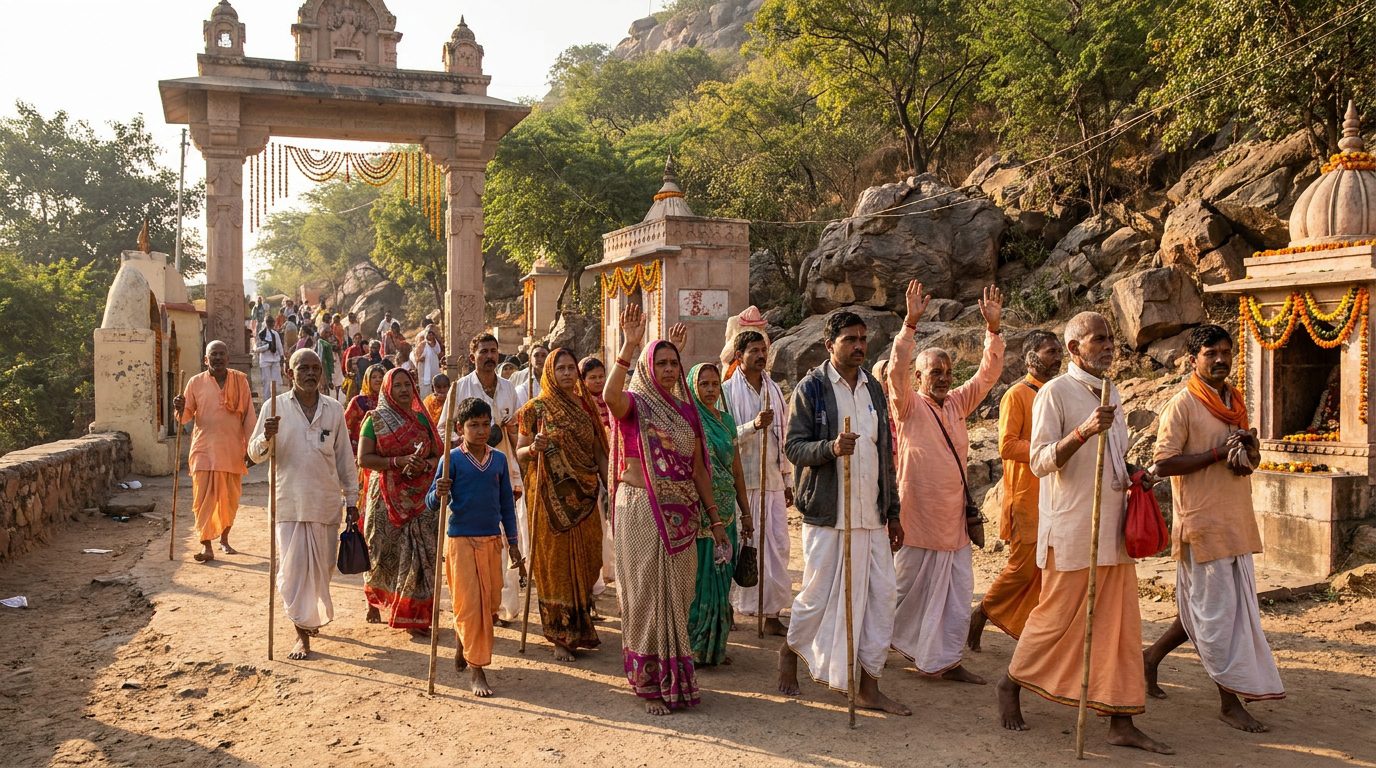
Govardhan Parikrama is one of the most beloved sacred pilgrimages in the Bhakti Yoga tradition. “Parikrama” means to walk around a holy place with reverence, prayer, and remembrance of God. “Govardhan” is the sacred hill in Vrindavan, India, worshiped by devotees as deeply connected with Sri Krishna, the Supreme Lord who appears in the Bhakti scriptures as the all-attractive source of love.
For thousands of years, saints, families, pilgrims, and seekers from many backgrounds have walked around Govardhan Hill with folded hands, soft hearts, and sincere prayers. Some come with deep faith. Some come with questions. Some come simply because they feel drawn to something sacred. In Bhakti Yoga, all are welcome.
Govardhan Parikrama is not only a physical journey. It is a journey of the heart.
As we walk around the hill, we are invited to slow down, remember Krishna, chant the holy names, offer gratitude, and pray for a life of loving service. The path is simple, but the inner experience can be profound. Step by step, the pilgrim is gently reminded: spiritual life is not far away. Love of God can be practiced with our feet, our voice, our mind, and our everyday choices.
In the Srimad Bhagavatam, one of the central scriptures of Bhakti Yoga, Govardhan Hill is honored through the beautiful story of Krishna lifting the hill to protect the residents of Vrindavan. This sacred pastime teaches us that God protects His devotees, accepts simple offerings made with love, and invites us to move from fear toward faith.
Whether you are planning your first Govardhan Parikrama or simply learning about this sacred pilgrimage from afar, this guide is offered with humility and warmth. May it help you approach Govardhan with respect, devotion, and an open heart.
The Sacred Story of Govardhan Hill
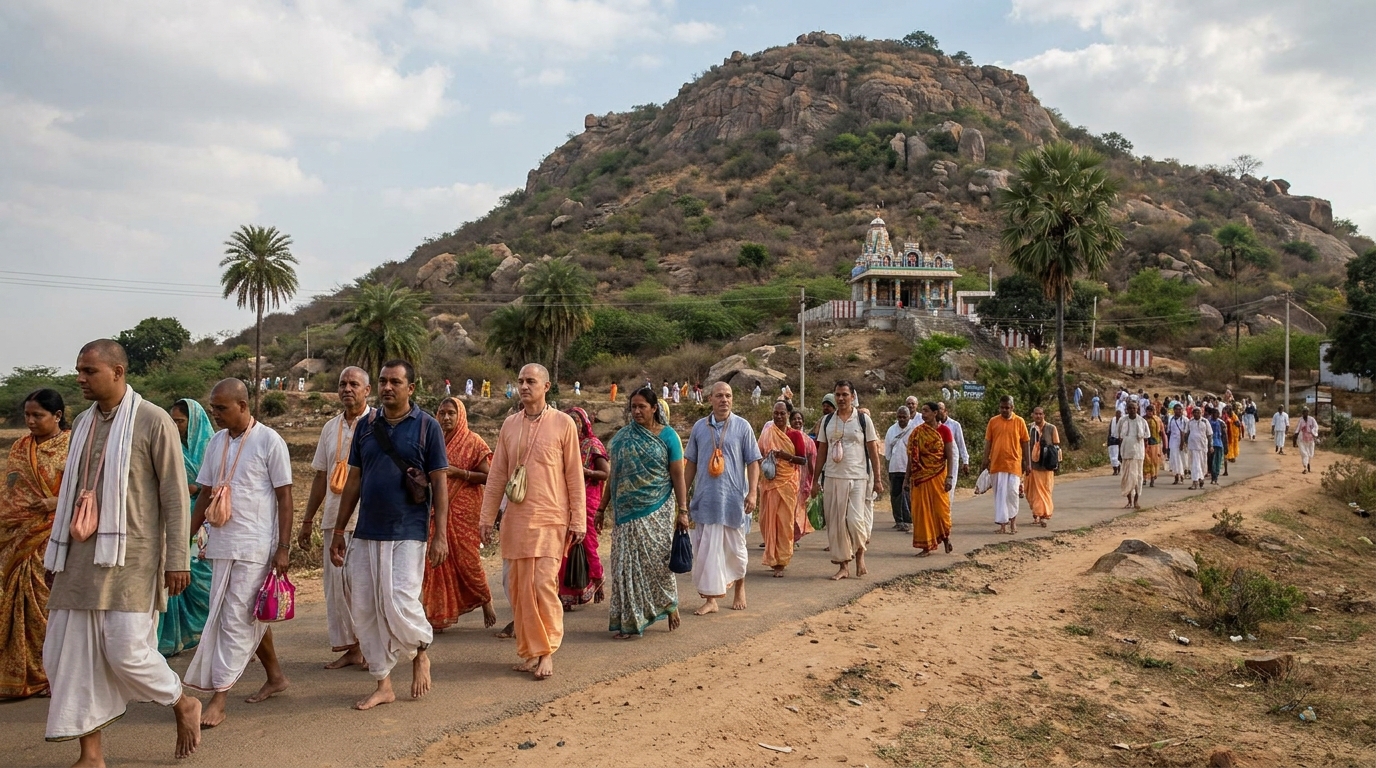
To understand Govardhan Parikrama, it is helpful to know why Govardhan Hill is so deeply loved in the Bhakti tradition.
Krishna and the Govardhan Pastime
In the Srimad Bhagavatam, Krishna encouraged the people of Vrindavan to worship Govardhan Hill instead of performing a grand ritual for Indra, the god of rain. Krishna explained that the hill provided grass for the cows, fresh water, caves, fruits, flowers, and natural beauty. In simple words, Govardhan was serving everyone.
The residents of Vrindavan followed Krishna’s guidance and offered a loving festival to Govardhan Hill. They prepared many foods, decorated the area, and worshiped Govardhan with joy.
Indra became angry and sent heavy storms to punish the people of Vrindavan. The rain was fierce and frightening. Seeing the distress of His devotees, young Krishna lifted Govardhan Hill with the little finger of His left hand, holding it like an umbrella for seven days and seven nights. The people, cows, and animals of Vrindavan took shelter beneath the hill, protected by Krishna’s love.
This story is not only ancient history for devotees. It is a living meditation.
When the storms of life come, where do we take shelter? Govardhan teaches us to take shelter in Krishna, in loving devotion, and in the sacred practices that reconnect us with God.
Govardhan as the Best of Devotees
In the Bhagavatam, the gopis, the cowherd women of Vrindavan, praise Govardhan Hill as “haridasa-varya,” which means “the best servant of Hari.” Hari is a name of Krishna meaning “the one who removes suffering and steals the heart with divine love.”
Why is Govardhan called the best servant? Because Govardhan serves Krishna, the cows, the cowherd boys, and all the residents of Vrindavan. He offers soft grass, clear water, minerals, flowers, caves, and beautiful places for Krishna’s pastimes.
This is a deeply practical teaching for Bhakti Yoga. Spiritual greatness is not measured by power, status, or outward display. It is measured by service. Govardhan is honored because he serves with everything he has.
When we walk Govardhan Parikrama, we can pray: “May I also learn to serve with what I have. May my home, my words, my work, and my heart become offerings of love.”
What Govardhan Parikrama Means in Bhakti Yoga
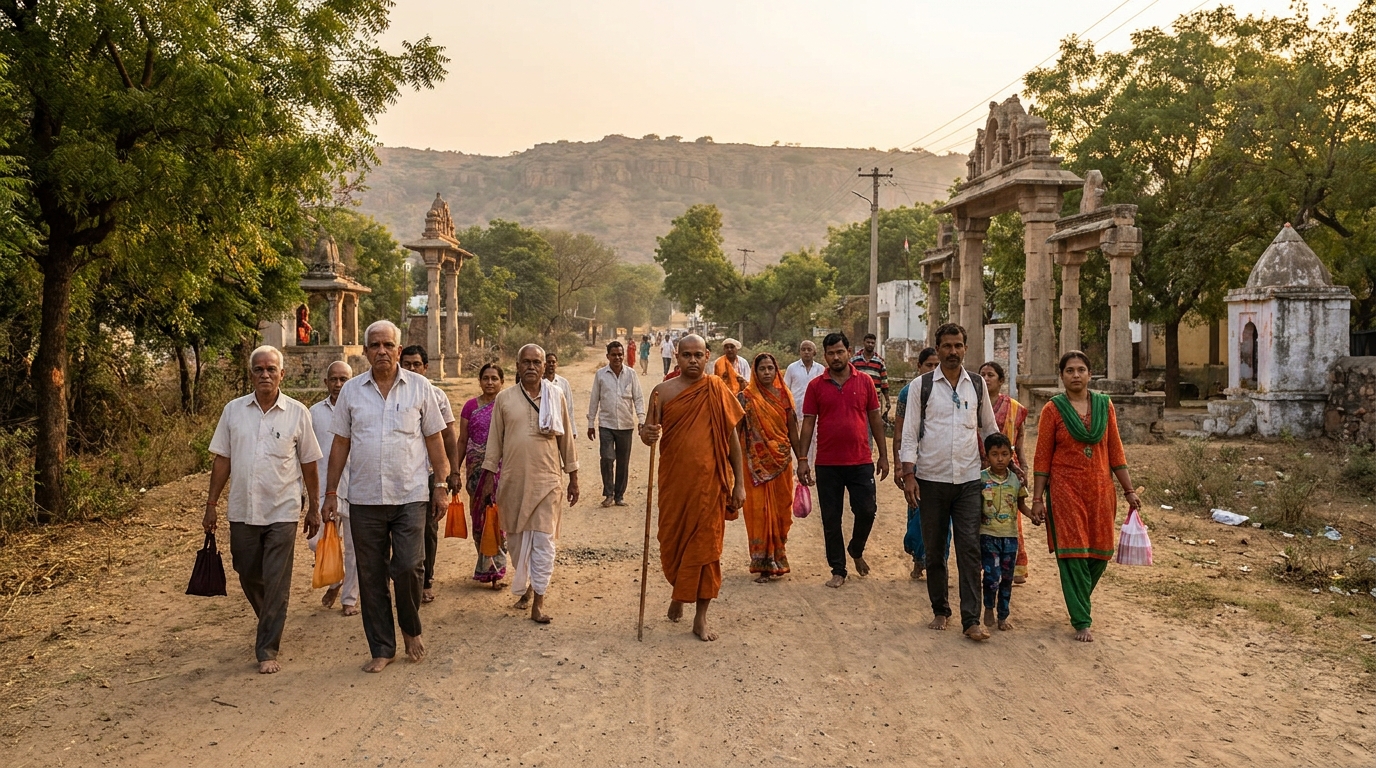
Govardhan Parikrama is more than sightseeing. It is a sacred practice of remembrance, humility, and devotion.
Walking as Prayer
In many spiritual traditions, walking can become prayer. In Bhakti Yoga, walking around a holy place is a way of offering the body in devotion. Each step can become a mantra. Each breath can become gratitude.
The Sanskrit word “bhakti” means loving devotion. Bhakti Yoga is the path of reconnecting with God through love. This love is practiced through hearing sacred wisdom, chanting God’s names, praying, serving others, worshiping, remembering, and offering our daily life to the Divine.
Govardhan Parikrama brings many of these practices together. As pilgrims walk, they may chant the maha-mantra:
Hare Krishna Hare Krishna
Krishna Krishna Hare Hare
Hare Rama Hare Rama
Rama Rama Hare Hare
This mantra is a prayer asking to be engaged in divine love and service. “Hare” calls upon the loving energy of God. “Krishna” means the all-attractive Lord. “Rama” means the source of spiritual joy. One does not need to be born into any particular culture to chant. The holy names are open to all sincere hearts.
Some pilgrims chant softly. Some sing together. Some walk in silence while remembering Krishna. The mood is more important than performance.
Parikrama as Humility
To walk around Govardhan is to place something sacred at the center.
In ordinary life, we often place ourselves at the center: my worries, my plans, my opinions, my success. Parikrama gently teaches another way. We walk around Govardhan, keeping the sacred hill to our side, remembering that God is the true center of life.
This is not a harsh lesson. It is a freeing one.
When Krishna becomes the center, the heart becomes lighter. We remember that we are not alone. We are beloved souls, part of a greater divine family. The path of Bhakti is not about becoming proud of being spiritual. It is about becoming soft, grateful, honest, and loving.
A Pilgrimage for All Sincere Seekers
Govardhan Parikrama welcomes people of many backgrounds. Some pilgrims are lifelong devotees. Some are visitors from other countries. Some are Indian families continuing traditions passed down through generations. Some are curious spiritual seekers.
If you are new, you do not need to know everything before you begin. Come respectfully. Walk gently. Ask questions humbly. Chant if you feel inspired. Offer a simple prayer.
A sincere step is precious.
In the Bhagavad Gita, Krishna says, “Whatever you do, whatever you eat, whatever you offer or give away, do that as an offering to Me.” This teaching makes pilgrimage accessible. Even walking, drinking water, resting, and helping another pilgrim can become sacred when offered with love.
Discover a wealth of knowledge by exploring our insightful articles. Our articles cover a wide range of topics to enhance your understanding. Stay informed and inspired by reading our latest articles.
The Govardhan Parikrama Route and Sacred Places
The traditional Govardhan Parikrama route is approximately 21 kilometers, or about 13 miles. It circles Govardhan Hill and passes through many holy places connected with Krishna’s pastimes and the saints of Bhakti Yoga.
Many pilgrims begin in the town of Govardhan near Manasi Ganga, though there are different starting points. The route can be completed in one day by walking, often taking five to eight hours depending on pace, stops, crowds, and weather. Some devotees take longer, pausing often for prayer and worship.
Manasi Ganga
Manasi Ganga is a sacred lake near the beginning of the traditional route. The name means “the Ganga manifested from the mind.” According to tradition, Krishna manifested this holy lake so the residents of Vrindavan could receive the blessings of the Ganges without traveling far away.
Pilgrims often begin by offering prayers here. You may see people lighting lamps, offering flowers, or sitting quietly. If you are visiting, please be respectful of local worship and environmental care. Avoid throwing plastic, food packaging, or anything harmful into the water.
Manasi Ganga reminds us that sacredness is not only in distant places. By Krishna’s grace, holiness can appear wherever there is loving remembrance.
Mukharavinda
Mukharavinda is a revered place where devotees worship the “lotus face” of Govardhan. “Mukha” means face, and “aravinda” means lotus. Pilgrims offer milk, flowers, water, and prayers here.
For many devotees, Mukharavinda is a deeply emotional place. It is a reminder that Govardhan is not seen merely as stone or earth. In Bhakti vision, the sacred hill is alive with Krishna’s presence and service mood.
If you offer something, try to do so simply and thoughtfully. The essence of offering is not the size of the donation or the complexity of the ritual. The essence is love.
Radha Kund and Shyama Kund
Radha Kund and Shyama Kund are among the most sacred places in the Bhakti tradition. “Kund” means a pond or sacred water reservoir. Radha Kund is especially connected with Srimati Radharani, Krishna’s greatest devotee and the embodiment of divine love. Shyama Kund is connected with Krishna, who is also called Shyama, meaning “dark-blue” or “beautifully dark.”
Many saints have praised Radha Kund as an intimate and holy place of devotion. Pilgrims often stop here for prayer, kirtan, and remembrance. “Kirtan” means devotional singing, especially singing the names of God.
Because Radha Kund and Shyama Kund are very sacred, visitors should be especially mindful. Dress modestly, speak softly, do not take photos of people bathing without permission, and follow local guidance. If you are unsure what to do, a humble prayer from the heart is always appropriate.
Kusum Sarovar
Kusum Sarovar is a beautiful sacred lake with striking architecture and a peaceful atmosphere. “Kusum” means flower, and “sarovar” means lake. This place is associated with flower gathering for the service of Radha and Krishna.
For modern pilgrims, Kusum Sarovar can be a place to pause and reflect. Flowers in Bhakti symbolize the heart. We may ask ourselves: What flowers am I offering to God? Perhaps patience. Perhaps forgiveness. Perhaps a few minutes of honest prayer each morning. Perhaps service to someone in need.
Bhakti does not demand that we become perfect before we offer ourselves. Bhakti invites us to offer what we have and let love purify the rest.
Govinda Kund
Govinda Kund is another important sacred water place connected with Krishna, who is known as Govinda, “the giver of pleasure to the cows, the land, and the senses.” After Indra realized his mistake in sending the storm, he came to worship Krishna. This place is associated with that mood of repentance and renewed devotion.
Govinda Kund reminds us that spiritual life includes learning from our mistakes. Even when we act from pride, fear, or anger, we can return. We can bow our heads, ask forgiveness, and begin again.
In Bhakti Yoga, God is not looking for flawless performance. Krishna is looking for sincerity.
How to Prepare for Govardhan Parikrama
A sacred pilgrimage is both spiritual and practical. Good preparation helps the heart stay peaceful and the body remain steady.
Best Time to Walk
Many pilgrims prefer to walk Govardhan Parikrama early in the morning, before the day becomes hot. In warmer months, beginning before sunrise can be very helpful. The winter season is often more comfortable, though mornings can be cool.
Special days such as Govardhan Puja, Kartik month, Purnima, and Ekadashi can be very crowded. “Kartik” is a sacred month in the Vaishnava tradition, often observed with extra chanting, lamps, and devotion. “Ekadashi” is a fasting and spiritual focus day that occurs twice a month according to the lunar calendar.
Crowds can bring a beautiful atmosphere of devotion, but they also require patience. If you are new, elderly, traveling with children, or managing health concerns, consider walking on a quieter day.
What to Bring
Bring only what you need. A light bag is best.
Helpful items include:
- Comfortable walking shoes or sandals, unless you are accustomed to walking barefoot
- Water bottle
- Simple snacks, especially if you have dietary needs
- Sun protection, such as a hat or scarf
- Modest clothing suitable for a sacred place
- Small cloth or shawl for sitting
- Basic first aid items
- Any necessary medication
- A small bag for your own trash
- Prayer beads, if you use them for chanting
Some pilgrims walk barefoot as an offering of devotion. This can be meaningful, but it may not be suitable for everyone. The path can be hot, dusty, uneven, or crowded. Please be honest about your body’s needs. Devotion is not proven by hurting yourself. Krishna receives the heart.
Health and Safety
The full parikrama is around 21 kilometers, so it requires reasonable physical ability. Walk at a steady pace, drink water, and rest when needed. If you feel dizzy, weak, overheated, or unwell, stop and ask for help.
If traveling from outside India, be mindful of food and water safety. Drink clean water. Eat from trusted places. Keep personal belongings secure, especially in crowded areas.
If you are walking at night or very early morning, it is wise to go with others. Pilgrimage is often sweeter and safer in good association.
Inner Preparation
Before beginning, take a moment to set an intention. You may pray:
“Dear Krishna, dear Govardhan, please allow me to walk with humility. May each step be an offering. Please help me remember You, serve others, and grow in love.”
This simple inner preparation can change the entire experience. Without intention, parikrama may become only a long walk. With intention, the same walk becomes worship.
Devotional Practices During the Parikrama
Govardhan Parikrama can include many forms of Bhakti practice. There is no need to do everything. Choose what helps you remember God with sincerity.
Chanting the Holy Names
Chanting is one of the most accessible and powerful practices in Bhakti Yoga. You can chant the maha-mantra aloud, softly, or internally. If you have japa beads, which are prayer beads used for mantra meditation, you may chant as you walk.
The mood of chanting is not mechanical. It is a call of the heart.
If the mind wanders, gently bring it back. If emotions arise, offer them. If you feel dry or distracted, keep walking and keep calling. Bhakti grows through steady practice, like watering a seed.
Offering Prayers
You do not need formal language to pray. Speak honestly to God.
You might pray for guidance, healing, forgiveness, gratitude, or service. You might pray for your family, your community, the world, or someone who is suffering. You might simply say, “Please help me remember You.”
The Bhakti scriptures honor the prayers of great saints, but they also show that Krishna hears simple, sincere prayers from anyone. A child calling out with trust can reach the Divine more deeply than polished words spoken without heart.
Serving Other Pilgrims
Service, or “seva,” is central to Bhakti Yoga. Seva means loving service offered for the pleasure of God and the welfare of others.
During Govardhan Parikrama, seva may be very simple:
- Helping an elderly pilgrim
- Sharing water
- Picking up litter
- Speaking kindly
- Walking patiently with someone slower
- Supporting local sacred spaces respectfully
- Offering food in a clean and thoughtful way
Sometimes we search for mystical experiences while missing the person beside us. Govardhan teaches us that serving Krishna includes serving Krishna’s children.
Hearing and Remembering Krishna’s Pastimes
If you are walking with devotees, you may hear stories of Krishna, Radha, the cowherd boys, the gopis, and the saints of Vrindavan. Hearing sacred stories is called “shravanam” in Sanskrit, meaning devotional listening.
Bhakti grows through what we hear. The heart is shaped by sound. When we hear about divine love, we begin to desire divine love. When we hear about Krishna’s compassion, courage, sweetness, and playfulness, our relationship with God becomes more personal.
If you are walking alone, you might listen to kirtan or a respectful class about Govardhan. Or you may simply walk in silence and let the atmosphere speak.
Etiquette and Respect on the Sacred Path
Pilgrimage is not only about receiving blessings. It is also about learning how to move through sacred space with care.
Respect the Local Community
Govardhan is not only a pilgrimage destination. It is also home to many people. Families live, work, worship, and raise children there. Please be mindful of local customs, personal space, and daily life.
Ask before photographing people, especially sadhus, women, children, and worshipers. “Sadhu” means a holy person or spiritual practitioner. Some may welcome photos, while others may not. Respect is part of devotion.
Support local communities fairly. If you hire a guide, take transportation, or purchase offerings, do so with honesty and kindness.
Care for the Environment
Govardhan Hill is sacred, and the land around it deserves protection. Unfortunately, like many pilgrimage sites, the area can suffer from plastic waste and pollution.
A sincere pilgrim should try to leave the path cleaner than they found it. Carry your trash. Avoid single-use plastic when possible. Do not throw offerings wrapped in plastic. Be careful with food waste.
In Bhakti understanding, nature is not merely a resource. It is God’s energy. Caring for the environment is a form of service.
Honor the Cows and Animals
Vrindavan and Govardhan are closely connected with cows, who are dear to Krishna. You may see cows, monkeys, dogs, peacocks, and other animals along the route.
Treat animals gently. Do not tease or disturb them. Be cautious with monkeys, as they may grab glasses, phones, bags, or food. Feeding animals should be done responsibly and according to local guidance.
Seeing cows on the parikrama path can be a beautiful meditation. Krishna is known as Gopala, “the protector of cows.” This reminds us to cultivate gentleness and care for vulnerable beings.
Dress and Behavior
Dress modestly and comfortably. Since Govardhan is a sacred place, simple and respectful clothing is best. Avoid loud, disruptive behavior. Keep music, photography, and phone use mindful.
Pilgrimage is a chance to practice inner quietness. Even if the path is crowded and lively, we can carry a respectful mood within.
Govardhan Puja and Special Times for Parikrama
Govardhan Parikrama is meaningful at any time, but certain days carry special devotional significance.
Govardhan Puja
Govardhan Puja is celebrated the day after Diwali in many Vaishnava communities. It honors Krishna’s lifting of Govardhan Hill and the loving worship offered by the residents of Vrindavan.
Devotees often prepare a hill of food offerings called “Annakut,” meaning “mountain of food.” This offering symbolizes gratitude for Krishna’s protection and the abundance provided by nature. After being offered to Krishna, the food becomes “prasadam,” which means divine mercy or sanctified food.
Govardhan Puja teaches gratitude. It asks us to remember that food, water, land, community, and protection are gifts. In a world that often encourages entitlement, Govardhan Puja gently restores thankfulness.
Kartik Month
The month of Kartik, also called Damodar month, is especially cherished in Bhakti Yoga. Devotees offer lamps, sing prayers, increase chanting, and remember Krishna’s loving childhood pastimes.
Many pilgrims come to Govardhan during Kartik to perform parikrama. The atmosphere can be very powerful, filled with kirtan, lamps, and devotion. It can also be very crowded, so patience is essential.
Kartik is a time to deepen devotion through small daily offerings. Even if you cannot travel to Govardhan, you can light a lamp at home, chant sincerely, read sacred wisdom, and offer your heart to Krishna.
Full Moon and Ekadashi
Purnima, the full moon day, is a popular time for parikrama. Ekadashi is also considered spiritually powerful for chanting, fasting, and prayer.
Fasting on Ekadashi is practiced in different ways. Some avoid grains and beans. Some take fruit or simple foods. Some cannot fast due to health and should not feel discouraged. The purpose is to increase remembrance of God, not to create pride or harm the body.
If you walk on a special day, expect more pilgrims and a more festive mood. Let the crowd become part of your practice. Patience, kindness, and tolerance are also offerings.
Practical Options for Different Pilgrims
Not everyone will experience Govardhan Parikrama in the same way. Bhakti is personal, and practical adjustments can help more people participate meaningfully.
Full Walking Parikrama
The traditional full walking parikrama is around 21 kilometers. This is the most common form and allows time to absorb the sacred atmosphere. It is suitable for those with enough physical strength and time.
Walk slowly enough to remember why you are there. It is not a race. Some people complete the route quickly, but a devotional pace often includes pauses for prayer, darshan, and reflection. “Darshan” means seeing and being seen by the sacred, such as seeing a deity form of the Lord or a holy place with reverence.
Shorter Parikrama
Some pilgrims may choose a shorter section of the route, especially if they are elderly, ill, traveling with small children, or limited in time. This is completely understandable.
A shorter parikrama done with sincerity can be spiritually meaningful. In Bhakti, the inner offering matters deeply. It is better to walk a little with remembrance than to walk far with irritation and exhaustion.
Assisted Parikrama
Some people use cycle rickshaws, e-rickshaws, or cars for part or all of the route. While walking is traditional, assisted parikrama can make the pilgrimage accessible to those who otherwise could not participate.
If using transport, keep a prayerful mood. Stop at important places. Chant as you go. Offer respect to walking pilgrims. Accessibility can be part of compassion.
Dandavat Parikrama
Some advanced or deeply determined pilgrims perform dandavat parikrama. “Dandavat” means offering full prostrated obeisance like a stick lying on the ground. The pilgrim lies down, marks the spot, stands, steps forward to that mark, and repeats.
This form of parikrama can take days, weeks, or longer. It is an intense expression of humility and surrender. It should not be imitated casually. If one feels inspired, it is wise to seek guidance from experienced devotees and consider health, safety, and proper support.
The main lesson of dandavat parikrama is not external difficulty. It is surrender. All of us can practice surrender in daily life by bowing the ego, forgiving others, and offering our actions to God.
Bringing the Mood of Govardhan Home
Not everyone can travel to India or walk the sacred route physically. But the mood of Govardhan Parikrama can enter our homes and daily lives.
Make Your Life a Circle Around God
Parikrama means placing the sacred center in our movement. At home, we can ask: What is at the center of my life?
If anxiety is the center, everything circles around fear. If ambition is the center, everything circles around achievement. If resentment is the center, everything circles around old pain.
Bhakti invites us to place God at the center. This does not mean abandoning responsibilities. It means offering them. Work becomes service. Family becomes a place to practice compassion. Food becomes prasadam when prepared and offered with gratitude. Speech becomes sacred when used truthfully and kindly.
Practice Daily Chanting
A simple daily chanting practice can carry the spirit of Govardhan into ordinary life. You might begin with five minutes a day. Chant the maha-mantra, or another name of God that opens your heart.
Do not worry if the mind wanders. Gently return. The practice is not about forcing mystical feelings. It is about showing up in relationship with the Divine.
Over time, chanting softens the heart. It gives shelter during difficulty and deepens joy during peaceful times.
Offer Simple Seva
Govardhan is loved because he serves. We can honor Govardhan by becoming more serviceful.
Ask each morning: “How can I serve today?”
Maybe it is listening to someone with patience. Maybe it is cooking with love. Maybe it is caring for the earth. Maybe it is volunteering, giving, teaching, cleaning, encouraging, or forgiving.
In Bhakti Yoga, no sincere service is too small. A leaf, a flower, fruit, or water offered with devotion is accepted by Krishna, as He says in the Bhagavad Gita. If God accepts even a simple offering made with love, then our small acts of kindness can also become sacred.
Remember Shelter During Life’s Storms
The image of Krishna lifting Govardhan Hill is a lifelong meditation. We all face storms: grief, illness, confusion, conflict, loneliness, uncertainty. Govardhan reminds us that shelter is available.
Sometimes shelter comes as prayer. Sometimes as scripture. Sometimes as the holy name. Sometimes as a caring devotee or friend. Sometimes as the strength to take one more step.
We may not always feel protected in the way we expect. But Bhakti teaches that Krishna is present, guiding the soul toward deeper love and eternal shelter.
A Suggested Meditation for Your Parikrama
Before or during Govardhan Parikrama, you may like to use this simple meditation. It can also be practiced at home.
Sit or stand quietly. Take a few gentle breaths.
Bring to mind Govardhan Hill, sacred and kind, serving Krishna and all the residents of Vrindavan.
Pray in your own words:
“Dear Krishna, please help me take shelter in You. Dear Govardhan, best of servants, please teach me to serve. May my steps become prayers. May my words become kind. May my heart become humble. May I remember that I am loved by God and meant to share that love with others.”
Then chant softly:
Hare Krishna Hare Krishna
Krishna Krishna Hare Hare
Hare Rama Hare Rama
Rama Rama Hare Hare
Walk, or sit, with gratitude.
This meditation is simple enough for beginners and deep enough for a lifetime. Bhakti Yoga grows through sincere repetition. Again and again, we return to love.
Final Reflections on Govardhan Parikrama
Govardhan Parikrama is a sacred pilgrimage, a devotional walk, and a living lesson in love. It invites us to remember Krishna’s protection, Govardhan’s service, and the beauty of a life centered on God.
You do not need to be perfect to approach Govardhan. You do not need to know every prayer, every place, or every custom. Come with respect. Come with humility. Come with a willingness to learn.
If you walk the full 21 kilometers, let each step be an offering. If you walk only a small part, let it be sincere. If you cannot travel, make your heart a place of pilgrimage through chanting, prayer, service, and remembrance.
The path of Bhakti Yoga is practical and compassionate. We chant. We pray. We serve. We hear sacred wisdom. We honor prasadam. We care for others. We take shelter when storms come. And slowly, by grace, the heart awakens.
Govardhan teaches us that love is expressed through service. Krishna teaches us that divine shelter is real. The saints teach us that every soul can grow in devotion.
Wherever you are on your spiritual journey, you are welcome. Take one sincere step toward God today. Chant one mantra. Offer one prayer. Do one act of service. Remember that the path of love begins exactly where you are, and Krishna kindly walks with you.
FAQs
What is Govardhan parikrama?
Govardhan parikrama is a traditional pilgrimage route in India that involves circumambulating the sacred Govardhan Hill, which is believed to be a form of Lord Krishna. It is considered a sacred act of devotion and is believed to bring blessings and spiritual merit to the pilgrim.
How long does it take to complete the Govardhan parikrama?
The Govardhan parikrama can vary in length depending on the route taken and the pace of the pilgrim. It can take anywhere from 3 to 7 hours to complete the entire parikrama, which is approximately 21 kilometers in total distance.
What are the different paths for Govardhan parikrama?
There are several paths that pilgrims can take to complete the Govardhan parikrama. Some of the popular paths include the outer parikrama path, the inner parikrama path, and the shorter half-parikrama path. Each path offers a unique experience and different views of the Govardhan Hill.
What are some important landmarks along the Govardhan parikrama route?
Some of the important landmarks along the Govardhan parikrama route include the Manasi Ganga Lake, Radha Kund, Kusum Sarovar, and various temples dedicated to different deities. These landmarks hold significant religious and historical importance for pilgrims.
What are some tips for pilgrims undertaking the Govardhan parikrama?
Some tips for pilgrims undertaking the Govardhan parikrama include wearing comfortable footwear, carrying water and snacks, being respectful of the sacred sites, and following the local customs and traditions. It is also advisable to start the parikrama early in the morning to avoid the heat of the day.

