
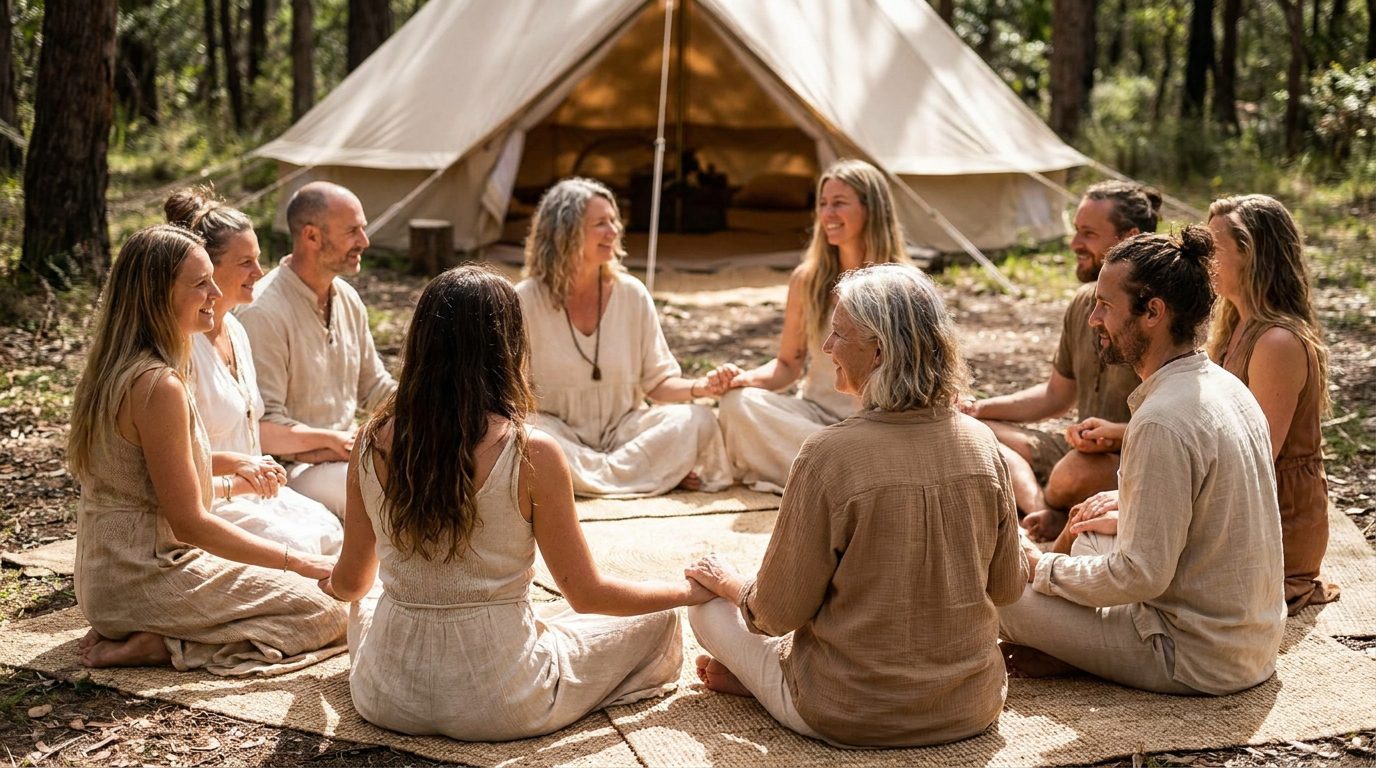
Many of us reach adulthood carrying a quiet longing we do not always know how to name.
We may have work, family, responsibilities, goals, and even success—but still feel a deeper hunger in the heart. We may wonder, “Where are my people? Where can I be honest about my spiritual questions? Where can I grow without pretending?”
This longing is sacred.
In the Bhakti Yoga tradition, spiritual community is called sangha or sadhu-sanga. Sadhu means a sincere spiritual person, and sanga means association or company. Put simply, sadhu-sanga means spending time with people who help us remember God, live with kindness, and grow in love.
Finding spiritual community as an adult can feel vulnerable. Many people are no longer in school, no longer surrounded by built-in friendships, and often balancing busy schedules. Some have been hurt by religious institutions. Some are returning to spirituality after many years. Some are exploring for the first time.
Wherever you are coming from, you are welcome.
Bhakti Yoga—the yoga of love and devotion—teaches that spiritual life is not meant to be walked alone. We grow through chanting, prayer, service, study, honest friendship, and shared remembrance of the Divine. Community helps us keep going when life feels heavy and helps us celebrate when grace becomes visible.
The Adult Search for Belonging
The loneliness many adults carry
Adult life can be surprisingly lonely.
People may smile at work, attend events, care for children, or stay active online, yet still feel unseen. Modern culture often encourages independence, productivity, and self-sufficiency. But the heart was made for connection—with God, with others, and with our own true self.
In Bhakti Yoga, the soul is understood as eternal, conscious, and loving. The Sanskrit word atma means the self or soul. The Bhagavad-gita, one of the central scriptures of Bhakti, teaches that the soul is not temporary like the body. Krishna says:
“For the soul there is neither birth nor death at any time.”
— Bhagavad-gita 2.20
This teaching is not meant to make us reject the world. Rather, it helps us understand that our deepest need is spiritual. We are not only looking for social contact. We are looking for meaningful connection that nourishes the soul.
Why making friends can feel harder now
As adults, friendships often require more intention. People are busy. Schedules are full. Trust takes time. Many of us have also learned to protect ourselves.
Spiritual community asks us to open gently. Not all at once. Not without discernment. But little by little, we allow ourselves to be known.
A healthy spiritual community does not demand perfection. It offers a space where we can practice becoming more truthful, more compassionate, and more connected to God.
Belonging begins with sincerity
In Bhakti, sincerity is more important than appearance.
You do not need to know Sanskrit. You do not need to dress a certain way. You do not need to have all your beliefs figured out. You can arrive with questions, doubts, grief, joy, curiosity, or longing.
Krishna says in the Bhagavad-gita:
“If one offers Me with love and devotion a leaf, a flower, fruit, or water, I accept it.”
— Bhagavad-gita 9.26
This verse is deeply comforting. God does not ask first for wealth, status, or spiritual expertise. He asks for love. Even a simple offering, given sincerely, becomes sacred.
That is also how we begin finding spiritual community—as an offering of sincerity.
What Bhakti Yoga Teaches About Community

Bhakti means love in action
The word bhakti means devotion, loving service, or heartfelt connection with God. Bhakti Yoga is the path of awakening love through practical spiritual activities.
These include:
- Chanting sacred names of God
- Offering prayers
- Serving others
- Studying wisdom texts
- Sharing food prepared with devotion
- Remembering God throughout daily life
- Spending time with spiritually minded people
Bhakti is not only a philosophy. It is a lived practice. It enters the kitchen, the workplace, the family, the street, and the heart.
Spiritual community gives us a place to practice love in real time. It is easy to imagine ourselves peaceful when alone. But community gently reveals where we still need patience, humility, forgiveness, and compassion.
This is a gift.
The power of chanting together
One of the most beautiful practices in Bhakti Yoga is kirtan, or devotional chanting. In kirtan, people gather to sing sacred names of God, often with instruments such as harmonium, mridanga drum, kartals, guitar, or simply clapping hands.
A common mantra chanted in Bhakti communities is the Hare Krishna maha-mantra:
Hare Krishna Hare Krishna
Krishna Krishna Hare Hare
Hare Rama Hare Rama
Rama Rama Hare Hare
A mantra is a sacred sound that helps free the mind from anxiety and reconnect the heart with God. The word maha means great, so the maha-mantra means the great mantra.
You do not have to understand everything intellectually to receive benefit from chanting. Just as sunlight warms everyone, sacred sound can touch the heart beyond language.
The Srimad-Bhagavatam, a beloved Bhakti scripture, describes hearing and chanting about God as a cleansing process for the heart:
“By regularly hearing the Bhagavatam and rendering service to the pure devotee, all that is troublesome to the heart is almost completely destroyed.”
— Srimad-Bhagavatam 1.2.18
In practical terms, chanting together softens us. It helps us feel less alone. It gives the mind a higher place to rest.
Service creates real connection
In Bhakti, service is called seva. Seva means offering our energy with love. It may look like cooking, cleaning, welcoming guests, setting up chairs, helping with music, caring for children, distributing food, listening to someone, or supporting a community project.
Service transforms community from something we consume into something we help create.
Many people come to spiritual spaces hoping to receive peace—and that is natural. But often, the deepest belonging comes when we begin to serve. When we contribute, even in small ways, we become part of the living fabric of the community.
We begin to think, “This is not just a place I attend. This is a place where my love can be offered.”
Check out our latest posts at https://thebhaktihouse.org/blog.
How to Begin Finding Spiritual Community as an Adult
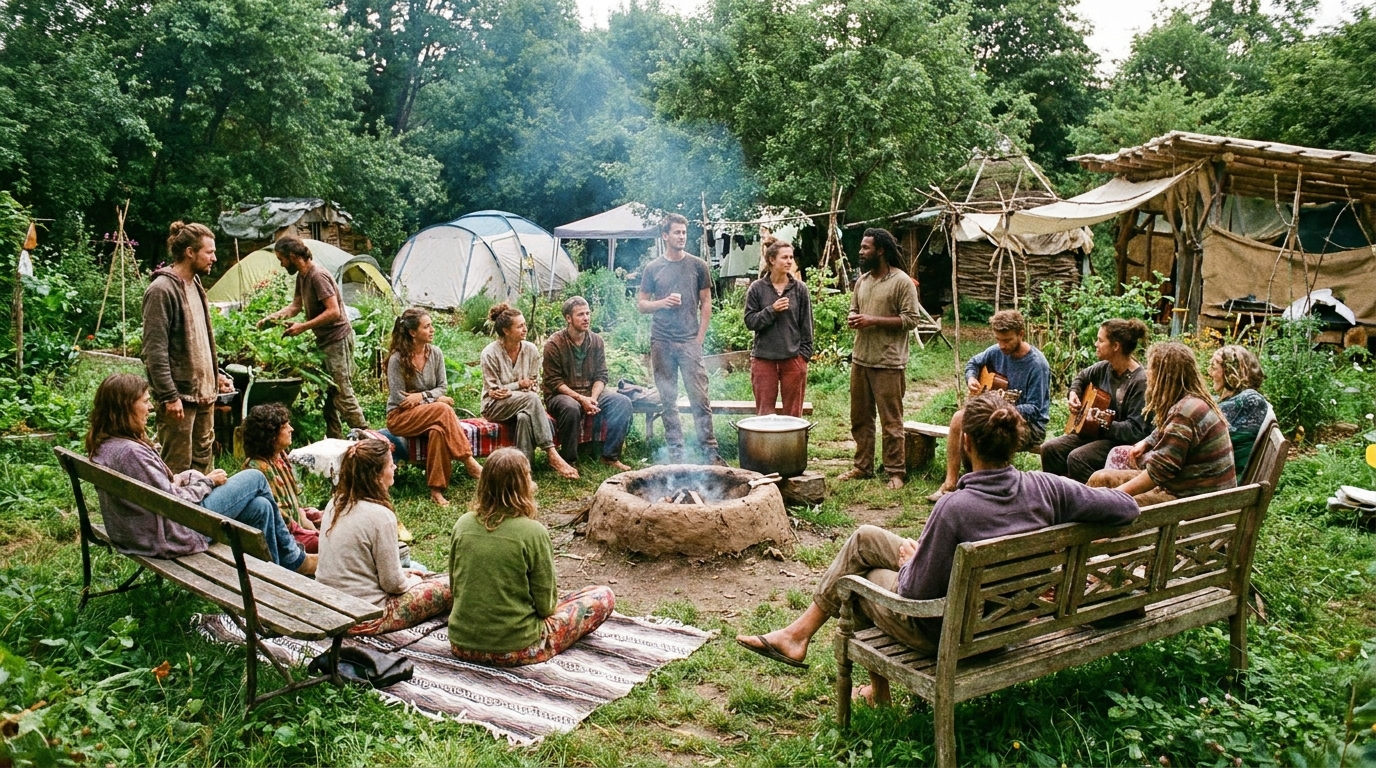
Start with your honest intention
Before searching outwardly, pause and ask your heart:
“What am I truly looking for?”
Maybe you are looking for friendship. Maybe you want to deepen your prayer life. Maybe you need healing from grief. Maybe you want your children to grow up around spiritual values. Maybe you are hungry for chanting, wisdom, or service.
There is no wrong starting point if it is honest.
You might offer a simple prayer:
“Dear Lord, please guide me to people who help me remember You. Help me become a person who brings kindness, humility, and sincerity into spiritual community.”
Prayer opens the heart. It also reminds us that finding community is not only a personal project—it is a relationship with divine guidance.
Visit with openness, not pressure
When you visit a spiritual gathering, give yourself permission to simply observe.
You do not need to decide immediately whether this is “your community.” Attend a kirtan, a Sunday gathering, a scripture discussion, a meditation circle, or a service project. Notice how you feel.
Ask yourself:
- Do people seem sincere and welcoming?
- Is there space for questions?
- Is humility valued?
- Are teachings connected to practical life?
- Do people serve one another?
- Is there joy?
- Is there respect for different backgrounds and stages of faith?
No community is perfect because people are not perfect. But a healthy community should help you move toward God, compassion, integrity, and inner growth.
Look for shared practice, not just shared ideas
It is beautiful to have spiritual conversations, but community deepens through shared practice.
In Bhakti Yoga, we do not only discuss love—we practice love. We chant together. We serve together. We honor sacred food together. We pray together. We study together. We show up for each other.
The Sanskrit word prasadam means mercy. In Bhakti communities, it often refers to vegetarian food that has been lovingly offered to God before being shared. Eating prasadam together is not just a meal; it is a sacred exchange.
Many people first feel at home in Bhakti community not through a lecture, but through the warmth of chanting and a plate of prasadam lovingly served.
Healing Religious Wounds and Spiritual Disappointment
It is okay to move slowly
Some adults come to spiritual community carrying past pain. Maybe religion was used to shame you. Maybe you experienced judgment, exclusion, or control. Maybe you trusted spiritual leaders who disappointed you.
If this is part of your story, please know: your caution is understandable.
Bhakti does not ask you to ignore your wounds. True spiritual life should deepen honesty, not suppress it. Healing takes time. Trust can grow gradually.
You are allowed to come slowly. You are allowed to ask questions. You are allowed to have boundaries.
A genuine spiritual community will honor your humanity.
Distinguishing faith from fear
Sometimes people confuse spirituality with pressure. But Bhakti Yoga is rooted in love.
The Bhagavad-gita invites us into relationship with God, not mechanical obedience. Krishna says:
“Always think of Me, become My devotee, worship Me, and offer your homage unto Me. Thus you will come to Me without fail.”
— Bhagavad-gita 18.65
This is an invitation of love. Krishna is not asking for empty ritual. He is asking for the heart.
Healthy community helps us respond to that invitation freely, with growing affection. It does not manipulate us through fear. It encourages us to become more loving, truthful, and surrendered at our own sincere pace.
God is bigger than our disappointments
If you have been hurt in spiritual spaces, it can be hard to separate God from the behavior of people. But Bhakti scriptures remind us that God is supremely compassionate and always present in the heart.
In the Bhagavad-gita, Krishna says:
“I am seated in everyone’s heart.”
— Bhagavad-gita 15.15
This means God has been with you through every chapter—even when people failed, even when you felt alone, even when your faith became quiet.
Spiritual community, at its best, helps us rediscover that loving presence.
Qualities of a Healthy Spiritual Community
Welcoming without forcing
A healthy Bhakti community welcomes people warmly but does not pressure them to become someone they are not.
People should be able to participate according to their capacity. One person may chant daily. Another may be just learning how to pray. One person may be vegetarian. Another may be exploring. One person may know scripture. Another may only know that they feel peace when they hear kirtan.
Everyone can be honored.
Spiritual growth is a journey. Love cannot be forced.
Grounded in authentic wisdom
While community should be warm and accessible, it also needs roots. In Bhakti Yoga, those roots come from scriptures like the Bhagavad-gita, Srimad-Bhagavatam, and teachings of great saints and teachers in the devotional tradition.
Authentic scripture protects us from making spirituality only about personal opinion. It gives us a map.
At the same time, scripture should be explained with compassion and applied practically. Wisdom is not meant to make us proud. It is meant to help us love God and all beings more deeply.
As the Srimad-Bhagavatam teaches:
“The supreme occupation for all humanity is that by which one can attain loving devotional service unto the transcendent Lord.”
— Srimad-Bhagavatam 1.2.6
This verse reminds us that the goal of spiritual life is love—steady, selfless, God-centered love.
Service-minded leadership
Leadership matters. In a healthy spiritual community, leaders see themselves as servants. They listen. They are accountable. They encourage others. They do not center themselves as objects of worship.
In Bhakti, humility is not weakness. It is spiritual strength.
Sri Chaitanya Mahaprabhu, a great teacher of Bhakti Yoga who spread the chanting of God’s names, gave this beautiful instruction:
“One should chant the holy name of the Lord in a humble state of mind, thinking oneself lower than a blade of grass, more tolerant than a tree, and ready to offer respect to all others.”
— Siksastakam, Verse 3
This verse is often sung and remembered by Bhakti practitioners. It gives us a vision for spiritual community: humility, tolerance, respect, and constant remembrance of God.
Room for real life
A healthy spiritual community does not pretend that life is always easy.
People face illness, depression, parenting struggles, financial stress, relationship pain, aging, grief, and uncertainty. Spiritual community should be a place where real life can be brought into the light of prayer and wisdom.
Bhakti is not an escape from life. It is a way to spiritualize life.
In community, someone may offer you prasadam when you are exhausted. Someone may chant with you when you are grieving. Someone may remind you to pray when your mind is restless. Someone may simply sit beside you.
These simple acts are sacred.
Practical Ways to Build Spiritual Friendships
Attend regularly
Trust grows through repeated presence.
If you find a community that feels sincere, try attending regularly for a season. Come to weekly kirtan, Sunday programs, study groups, or service opportunities. Familiarity slowly becomes friendship.
You do not need to force deep conversations right away. Sometimes the first step is simply showing up.
Over time, faces become names. Names become stories. Stories become relationships.
Serve in small ways
Ask, “Is there any way I can help?”
Maybe you can wash dishes after a gathering. Maybe you can bring flowers. Maybe you can help greet guests. Maybe you can share a skill—music, cooking, organizing, writing, childcare, cleaning, or technology.
In Bhakti, no service is small when offered with love.
Even sweeping the floor of a sacred space can purify the heart. Even filling water cups can become prayer.
Service helps us move from loneliness into contribution.
Invite spiritual friendship gently
As adults, we may need courage to initiate friendship.
You might say:
“I’ve enjoyed seeing you at kirtan. Would you like to have tea sometime?”
Or:
“I’m trying to build more spiritual practice into my life. Would you be interested in chanting together once a week?”
Or:
“That point from class really stayed with me. I’d love to hear your thoughts.”
Simple invitations can open meaningful doors.
Not every invitation will become a deep friendship, and that is okay. Keep your heart open without becoming discouraged.
Create a home practice with others
Spiritual community does not only happen in temples or yoga studios. It can also happen in living rooms, kitchens, parks, and online gatherings.
You might host a small evening of mantra meditation. You might read one verse from the Bhagavad-gita with a friend. You might cook a vegetarian meal and offer it to God together. You might start a prayer circle.
Bhakti is beautifully portable. Wherever people gather to remember God with sincerity, that place becomes sacred.
Practice listening as service
One of the greatest gifts in community is listening.
Many people are starving to be heard without being fixed, judged, or rushed. Listening can be a form of seva. When we listen with compassion, we honor the soul in front of us.
Spiritual friendship is not only about giving advice. Sometimes it is about making space for another person’s heart while silently praying, “May God guide and comfort you.”
Bringing Bhakti Into Daily Adult Life
Chanting in the middle of responsibility
Adults often say, “I want a spiritual life, but I am so busy.”
Bhakti Yoga offers practices that can meet us within real life. Chanting can happen in the morning, in the car, while walking, while cooking, or before sleep.
Many practitioners chant on beads called japa mala. Japa means personal mantra meditation, and mala means a strand of beads. With each bead, one softly chants the mantra. This gives the mind a simple and sacred focus.
Even five minutes of sincere chanting can change the atmosphere of the day.
The point is not perfection. The point is connection.
Prayer as honest conversation
Prayer does not need to be fancy.
You can speak to God as you are:
“Please help me.”
“Thank You for carrying me.”
“I do not know what to do.”
“Please guide my heart.”
“Let me serve today.”
“Let me remember You.”
In Bhakti, God is not distant. Krishna means “the all-attractive one,” and devotees understand Him as the Supreme Person, full of beauty, wisdom, strength, and love. Prayer is the soul turning toward that loving Person.
Community helps us learn to pray, not by performance, but by sincerity.
Offering your work
Many adults spend much of life working. Bhakti teaches that even work can become spiritual when offered to God.
Krishna says:
“Whatever you do, whatever you eat, whatever you offer or give away, and whatever austerities you perform—do that as an offering to Me.”
— Bhagavad-gita 9.27
This verse is practical and powerful. It means we can bring devotion into ordinary tasks. Sending an email, caring for a child, cleaning the house, preparing a meal, serving a client—these can all become offerings when done with a prayerful heart.
Spiritual community reminds us to live this way.
Honoring sacred food
Cooking and eating can also become devotional.
In Bhakti Yoga, practitioners prepare vegetarian food with care and offer it to God before eating. This practice turns nourishment into gratitude.
You can begin simply:
- Prepare something wholesome.
- Place it before a picture of Krishna or on a clean space.
- Offer a prayer: “Dear Lord, please accept this with love.”
- Wait a few moments.
- Receive the food as prasadam, or mercy.
Sharing prasadam is one of the sweetest ways to build spiritual community. Food offered with love can soften hearts and bring people together.
When Community Feels Imperfect
Expect humanity
Every community is made of human beings, and human beings are learning.
There may be misunderstandings. Someone may forget your name. A conversation may feel awkward. A program may not be organized perfectly. You may encounter personalities different from your own.
This does not always mean something is wrong. Sometimes it means community is real.
Bhakti teaches us to practice patience, forgiveness, and humility. At the same time, we should use discernment. There is a difference between ordinary imperfection and harmful behavior. Healthy communities welcome accountability and care.
Stay connected to the purpose
The purpose of spiritual community is not social perfection. It is remembrance of God and growth in love.
When difficulties arise, we can ask:
“Is this helping me become more humble?”
“Can I communicate honestly and kindly?”
“Can I serve rather than withdraw immediately?”
“Is God teaching me something through this?”
Sometimes the answer will be to stay and grow. Sometimes the answer will be to step back and seek a healthier environment. Both can be guided by prayer.
Keep your personal practice alive
Community supports personal practice, but it cannot replace it.
A strong spiritual life includes both shared practice and private devotion. Chant alone. Pray alone. Read sacred wisdom. Offer your meals. Speak to God in your heart.
Then, when you come into community, you bring nourishment rather than only need. You become part of the spiritual strength others can lean on.
Building Inclusive Spiritual Community
Welcoming people of all backgrounds
The heart of Bhakti is universal. Love of God is not limited by nationality, race, gender, age, income, education, or previous religious identity.
The soul is beyond all temporary labels.
This does not mean our stories do not matter. They do. Each person brings a unique journey. But Bhakti invites us to see deeper—to honor every living being as beloved by God.
A truly devotional community should make sincere people feel welcome, whether they grew up in a Hindu family, Christian family, Muslim family, Jewish family, Buddhist family, secular family, or no religious tradition at all.
God is not threatened by honest seekers.
Making space for questions
Questions are part of growth.
Arjuna, the student in the Bhagavad-gita, asks Krishna many questions. He is confused, emotional, and unsure. Krishna does not reject him. Instead, Krishna lovingly teaches him.
This shows us something important: sincere questions are welcome in spiritual life.
A healthy Bhakti community allows people to ask:
“Who is Krishna?”
“Why do we chant?”
“What does surrender mean?”
“How do I reconcile this teaching with my life?”
“How do I practice when I have doubts?”
Questions, when asked with sincerity, can deepen faith.
Honoring different stages
Not everyone will practice in the same way or at the same speed.
One person may be ready to commit to daily chanting. Another may simply come once a month. One person may be studying scripture deeply. Another may only be beginning to feel comfortable singing.
Spiritual maturity includes honoring stages.
In community, we can encourage one another without comparison. We can celebrate every sincere step.
The Grace of Taking One Step
God meets us where we are
Finding spiritual community as an adult may take time. You may visit several places before finding one that feels right. You may need to overcome shyness, past hurt, or the discomfort of being new.
But please remember: God sees every sincere effort.
In the Bhagavad-gita, Krishna says:
“In this endeavor there is no loss or diminution, and a little advancement on this path can protect one from the greatest fear.”
— Bhagavad-gita 2.40
This is such a merciful teaching. On the path of Bhakti, no sincere step is wasted. A little chanting, a little prayer, a little service, a little time with devotees—these things matter.
Spiritual growth is not a race. It is a relationship.
You can begin today
You do not have to wait until your life is calm. You do not have to wait until you feel pure. You do not have to wait until you know everything.
You can begin today.
You might chant one round of the maha-mantra. You might attend one kirtan. You might read one verse from the Bhagavad-gita. You might offer one meal. You might send one message to someone in a spiritual community. You might pray for guidance before sleep.
One sincere step can open a door.
Community is a gift we receive and become
At first, we may look for spiritual community because we need support. Over time, by grace, we become part of that support for others.
We become the person who welcomes someone new. We become the person who notices who is missing. We become the person who serves prasadam with kindness. We become the person who chants even when life is hard. We become the person whose presence reminds others of God.
This is the beauty of Bhakti.
We are not only finding community. We are helping create a home for the heart.
An Invitation to Come as You Are
If you are longing for spiritual community as an adult, please know that your longing is holy. It may be Krishna gently calling your heart toward deeper love, healing, and belonging.
You do not need to have everything figured out. You do not need to be perfect. You do not need to arrive with certainty. Come with sincerity. Come with your questions. Come with your hopes. Come with your tired heart. Come with your gratitude.
Bhakti Yoga is a practical path of love—chanting, prayer, service, sacred food, wisdom, friendship, and remembrance of God. It is simple enough to begin today and deep enough to nourish the soul for a lifetime.
Everyone is welcome to take one sincere step toward God.
FAQs
What is spiritual community?
Spiritual community refers to a group of individuals who come together to support each other in their spiritual journeys, share beliefs, and engage in spiritual practices.
Why is finding a spiritual community important as an adult?
Finding a spiritual community as an adult is important for personal growth, support, and a sense of belonging. It can provide a space for individuals to explore and deepen their spiritual beliefs and practices.
How can adults find a spiritual community?
Adults can find a spiritual community by exploring local religious or spiritual organizations, attending events or services, joining groups or classes, and connecting with like-minded individuals through social media or online platforms.
What are the benefits of being part of a spiritual community as an adult?
The benefits of being part of a spiritual community as an adult include finding support, guidance, and a sense of belonging, as well as opportunities for personal and spiritual growth, and the chance to connect with others who share similar beliefs and values.
What should adults consider when looking for a spiritual community?
When looking for a spiritual community, adults should consider the community’s values, beliefs, and practices, as well as the level of inclusivity, support, and opportunities for personal and spiritual growth it offers.

