
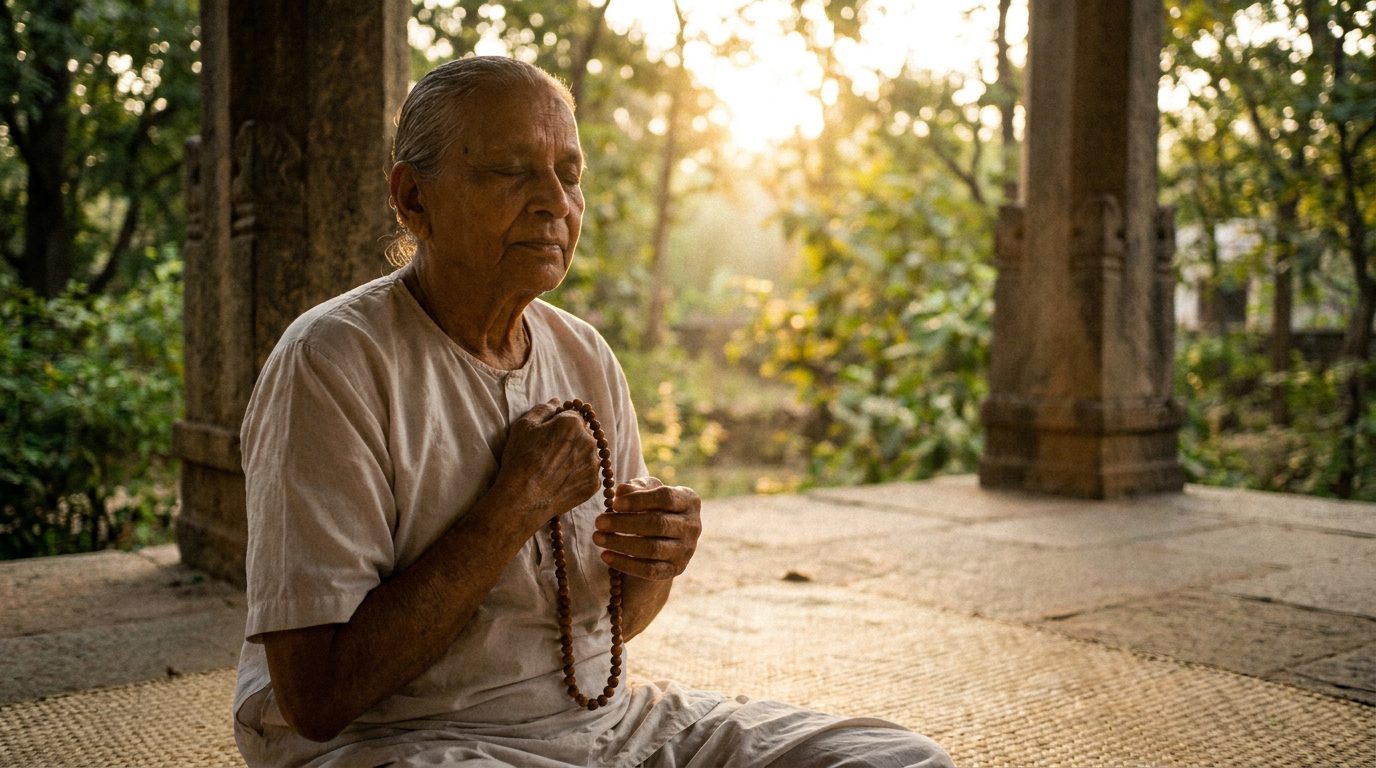
In a world filled with noise, many sincere people are searching for peace. We may have responsibilities, relationships, work, studies, family needs, and inner questions that do not always have simple answers. Sometimes the mind feels like a crowded room. Even when life is going well on the outside, the heart may still long for something deeper—connection, meaning, comfort, and love.
Bhakti Yoga offers a gentle and practical path for this longing. The word “bhakti” means loving devotion, and “yoga” means connection. So Bhakti Yoga is the path of reconnecting the heart with God through love. It is not limited to one culture, background, or type of person. It is a living path of prayer, chanting, service, sacred friendship, and spiritual growth.
One of the most accessible practices in Bhakti Yoga is meditating on Krishna’s names.
Krishna is a Sanskrit name of God meaning “the all-attractive one.” In the Bhakti tradition, Krishna is understood as the Supreme Person—the source of all beauty, compassion, wisdom, and love. His names are not seen as ordinary sounds. They are considered sacred, spiritual, and full of divine presence.
When we chant or meditate on Krishna’s names, we are not simply repeating words. We are calling out to God with the heart. We are making space for grace.
Why Krishna’s Names Bring Peace
The Name and the Named Are Spiritually Connected
In our everyday experience, a name and a person are separate. If we say the word “water,” our thirst is not quenched. But in the Bhakti scriptures, the names of God are understood differently. Krishna’s names are spiritually identical with Krishna. This means that when we sincerely chant His names, we are coming into contact with Him.
The Padma Purana expresses this beautiful truth:
“The holy name of Krishna is spiritually powerful, full of divine consciousness, and not different from Krishna Himself.”
This may be a new idea for some readers, and that is okay. Bhakti does not demand blind belief. It invites us to practice sincerely and observe the effect in our own heart.
When we chant Krishna’s names, we may begin to notice a softening. The mind becomes clearer. The heart feels held. Worries may not disappear instantly, but we begin to relate to them differently. We remember that we are not alone.
Peace Comes Through Relationship
Bhakti Yoga teaches that real peace is not simply the absence of stress. It is the presence of loving connection with God.
Many meditation paths focus on quieting the mind, and this is valuable. Bhakti meditation also quiets the mind, but it does so through relationship. Instead of trying to empty the heart, we fill it with sacred sound, remembrance, and affection.
When we chant Krishna’s names, we are saying, “Please let me remember You. Please guide me. Please let my heart become clean and loving.”
This prayerful mood transforms meditation from a technique into a relationship.
The Heart Needs a Place to Rest
The mind is always searching for something to hold onto. It runs toward plans, memories, desires, fears, and comparisons. Krishna’s names give the mind a sacred place to rest.
In the Bhagavad-gita, Krishna says:
“Always think of Me, become My devotee, worship Me, and offer your homage unto Me.”
—Bhagavad-gita 18.65
This is not a harsh command. It is a loving invitation. Krishna is saying, “Bring your mind and heart to Me. Let your life become connected with love.”
Meditating on Krishna’s names is one of the simplest ways to do this.
Understanding the Maha-Mantra
What Is a Mantra?
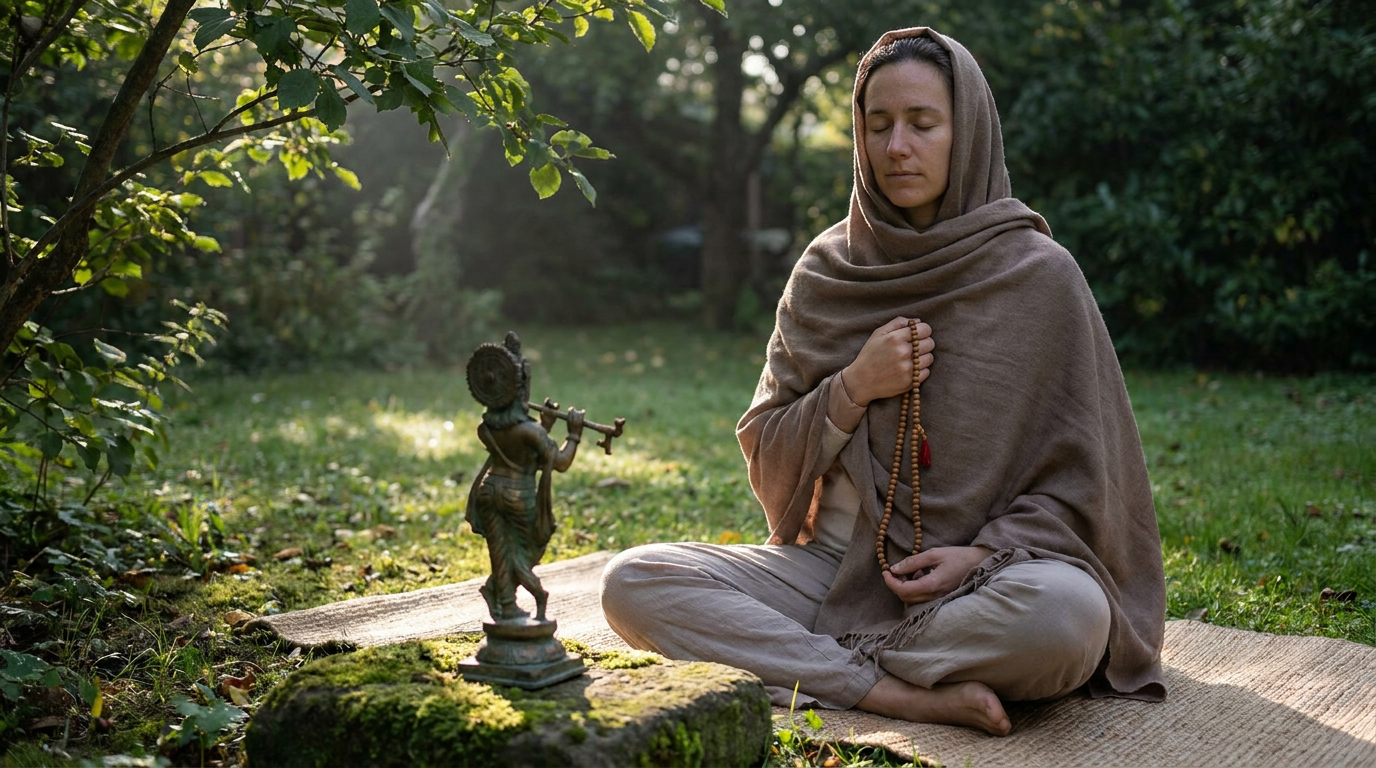
A mantra is a sacred sound vibration that helps protect and guide the mind. The Sanskrit word “mantra” can be understood as that which delivers or frees the mind. In Bhakti Yoga, mantras are not magic formulas. They are prayers.
The most widely known mantra for meditating on Krishna’s names is called the Maha-Mantra. “Maha” means great, so the Maha-Mantra means “the great mantra.”
It is:
Hare Krishna Hare Krishna
Krishna Krishna Hare Hare
Hare Rama Hare Rama
Rama Rama Hare Hare
This mantra is simple, but its depth is endless. Anyone can chant it—young or old, beginner or experienced practitioner, religious or spiritually curious. There is no fee, no qualification, and no need to be perfect.
The Meaning of “Hare,” “Krishna,” and “Rama”
“Hare” is a call to God’s divine energy, especially His loving, compassionate energy. In the Bhakti tradition, this is often understood as a call to Srimati Radharani, the feminine aspect of divine love and Krishna’s greatest devotee.
“Krishna” means the all-attractive Supreme Person.
“Rama” means the source of spiritual joy and pleasure. It can refer to Krishna as the giver of divine happiness, and also to Lord Rama, another beloved form of God in the Bhakti tradition.
So the Maha-Mantra can be understood as a heartfelt prayer:
“O Lord, O divine energy of the Lord, please engage me in Your loving service. Please let me remember You. Please let my heart awaken in love.”
A Prayer More Than a Performance
One of the most comforting things about chanting is that we do not have to do it perfectly. We may be distracted. We may feel uncertain. We may not pronounce every syllable beautifully. Still, if we chant sincerely, Krishna hears the heart.
Bhakti Yoga is not about impressing God. It is about turning toward Him.
A child may call for a parent imperfectly, but the parent understands the need. In the same way, Krishna understands our longing even when our practice feels small.
Sure, here is the sentence with the clickable link:
Check out our latest posts on posts.
How to Meditate on Krishna’s Names
Begin With a Simple Intention
Before chanting, pause for a moment. Sit comfortably, take a gentle breath, and offer a simple prayer:
“Krishna, please help me remember You. Please bring peace to my heart. Please guide me in love.”
This intention brings humility and warmth into the practice. It reminds us that meditation is not just something we do with the mind. It is something we offer from the heart.
Chant Softly or Aloud
You can chant the Maha-Mantra aloud, softly, or in the mind. Many practitioners find that chanting aloud helps the mind focus because the ears can hear the sacred sound.
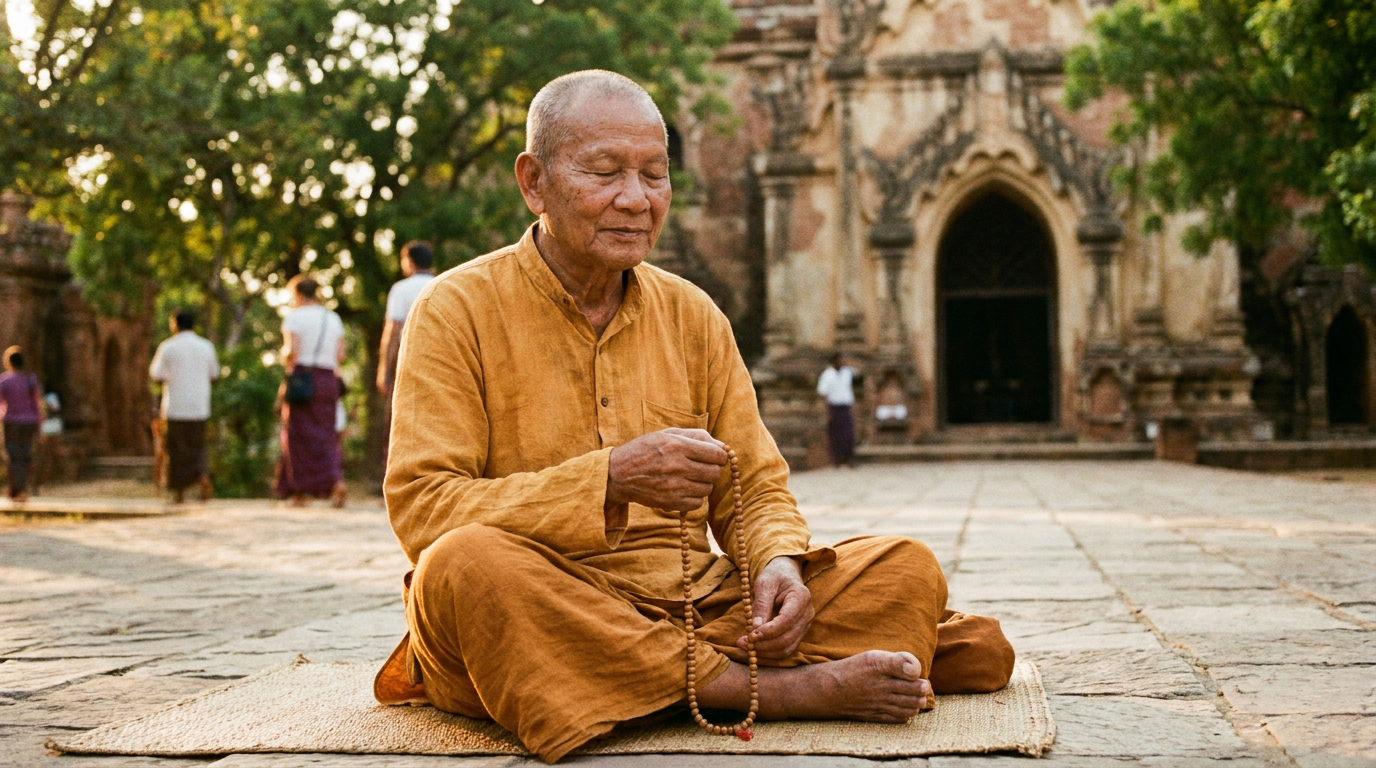
You may chant for five minutes, ten minutes, or longer. If you have meditation beads, called japa beads, you can chant one mantra on each bead. “Japa” means soft repetition of a sacred mantra. A traditional strand has 108 beads, but beginners can start with any number.
The important thing is sincerity, not quantity.
Listen With Care
In Bhakti meditation, hearing is essential. We chant and then we listen. The mind may wander, and when it does, we gently bring it back to the sound.
Hare Krishna Hare Krishna
Krishna Krishna Hare Hare
Hare Rama Hare Rama
Rama Rama Hare Hare
There is no need to fight the mind aggressively. The practice is gentle. Each time we return to the mantra, we are returning to Krishna.
Create a Sacred Space
If possible, choose a quiet place for chanting. You may light a candle, place a picture of Krishna, keep a sacred text nearby, or sit in a clean, peaceful corner of your home. These things are not required, but they can help the heart feel invited.
Even a small space can become sacred when used for prayer and remembrance.
You can also chant while walking, cooking, driving, cleaning, or resting. Krishna’s names are portable peace. They can accompany us anywhere.
The Inner Changes That Come From Chanting
The Mind Becomes More Peaceful
The mind is often compared to a restless monkey, jumping from one thought to another. Chanting gives the mind a loving focus. Over time, this can reduce anxiety, agitation, and unnecessary mental noise.
The peace that comes from chanting is not artificial. It grows naturally as we reconnect with our spiritual identity.
The Bhagavad-gita teaches that we are not merely the body or mind. We are the atma, the soul—the eternal self, full of consciousness and meant for loving relationship with God. When we forget this, we feel incomplete. When we remember, peace begins to awaken.
The Heart Becomes Softer
Krishna’s names cleanse the heart. This cleansing is described beautifully in the Sri Siksastakam, eight prayers given by Sri Chaitanya Mahaprabhu, the great teacher of congregational chanting:
“Glory to the chanting of the holy names of Krishna, which cleanses the mirror of the heart.”
The “mirror of the heart” means our inner consciousness. When a mirror is covered with dust, it cannot reflect clearly. Similarly, when the heart is covered by fear, pride, envy, anger, or selfish desire, we cannot see ourselves, others, or God clearly.
Chanting gently removes this dust. We become more compassionate, patient, and honest. We begin to see others not as objects or obstacles, but as beloved children of God.
We Learn to Surrender
Surrender is sometimes misunderstood. In Bhakti Yoga, surrender does not mean weakness or losing ourselves. It means offering our life to divine love. It means trusting Krishna’s care while doing our best with humility.
When we chant, we practice surrender in a very simple way. We admit, “I cannot control everything. I need help. I want to love. Please guide me.”
This mood brings relief. We no longer have to carry the whole world alone.
Chanting in Daily Life
Morning Meditation
The morning is a beautiful time to chant because the mind is often clearer before the day becomes busy. Even five or ten minutes of chanting in the morning can change the mood of the whole day.
You might begin with:
- A few deep breaths
- A simple prayer
- One round on japa beads, or a set time of chanting
- A moment of gratitude before starting your responsibilities
This creates a spiritual foundation. Rather than rushing into the day empty, we begin by receiving grace.
Chanting During Stress
When stress rises, Krishna’s names can become a shelter. You may not always be able to sit for formal meditation, but you can whisper the mantra quietly or repeat it in your mind.
Before a difficult conversation, chant once.
While waiting for news, chant.
When sadness comes, chant.
When anger rises, chant before speaking.
This does not mean we avoid practical action. Bhakti Yoga is not an escape from life. It helps us act with a clearer mind and a kinder heart.
Evening Reflection
At the end of the day, chanting can help us release what we have been carrying. We can offer our successes, mistakes, worries, and gratitude to Krishna.
A simple evening prayer might be:
“Krishna, thank You for guiding me today. Please forgive my mistakes. Please help me grow in love and wisdom. Please let me remember You.”
Then chant the Maha-Mantra softly. Let the heart rest.
Prayer, Service, and Spiritual Growth
Chanting Opens the Door to Prayer
Chanting and prayer naturally go together. As we meditate on Krishna’s names, the heart begins to speak. We may pray for strength, forgiveness, clarity, or compassion. We may pray for loved ones. We may pray for those who are suffering.
Over time, our prayers may become less centered on getting what we want and more centered on becoming who God wants us to be.
This is a sign of spiritual growth.
Service Makes Meditation Real
In Bhakti Yoga, meditation is not only something we do with closed eyes. It becomes complete through seva, or loving service. “Seva” means serving God and others with devotion.
We can serve by cooking and offering food to Krishna, helping in a spiritual community, caring for family with love, speaking kindly, supporting someone in need, or using our talents for a sacred purpose.
When chanting softens the heart, service becomes natural. We begin to ask, “How can I be useful? How can I bring love into this moment?”
Sacred Food and a Peaceful Heart
Another beautiful practice in Bhakti Yoga is offering food to Krishna with love. Food offered to God is called prasadam, meaning mercy or grace. The idea is simple: we prepare vegetarian food with care, offer it to Krishna with prayer, and then receive it as sacred.
This practice helps us remember that everything comes from God. Eating becomes not just consumption, but gratitude.
Chanting Krishna’s names before cooking, offering, or eating can bring a peaceful and devotional mood into the home.
What If the Mind Wanders?
Wandering Is Normal
Many people feel discouraged because their mind wanders during meditation. Please do not worry. A wandering mind does not mean you are failing. It means you are human.
The practice is not to have no thoughts. The practice is to return.
Each return to Krishna’s names is meaningful. Each return is an act of devotion.
Be Patient With Yourself
Spiritual growth is organic. A seed does not become a tree overnight. It needs watering, sunlight, protection, and time. In the same way, the seed of devotion grows through regular practice, good association, scripture, service, and grace.
Chanting is like watering the heart.
Some days the practice may feel sweet. Other days it may feel dry. Continue gently. Krishna sees your sincerity.
Avoid Turning Chanting Into a Burden
It is possible to turn even a beautiful practice into pressure. We may think, “I must chant perfectly,” or “I am not advanced enough,” or “Others are better than me.”
These thoughts can make the heart heavy.
Instead, remember: chanting is a gift. It is an invitation. It is a relationship.
Start where you are. Offer what you can. Let Krishna meet you there.
The Power of Chanting Together
Kirtan: Meditation in Community
Kirtan is the joyful practice of singing Krishna’s names together, often with musical instruments like harmonium, mridanga drum, and kartals, or small hand cymbals. “Kirtan” means glorification, especially glorifying God through sacred sound.
In kirtan, one person leads and others respond. This call-and-response style makes it easy for everyone to participate, even if they are new.
Kirtan can be deeply healing. The voices of many people come together, and the heart feels supported. We remember that spiritual life is not meant to be walked alone.
Everyone Can Join
You do not need a perfect singing voice. You do not need to know Sanskrit. You do not need to look or dress a certain way. You can simply come, listen, chant if you feel comfortable, and receive.
The holy names are welcoming. Krishna’s love is not limited by background, language, nationality, age, or past mistakes.
At The Bhakti House, this spirit of welcome is central. Bhakti is a home for the heart. It is a place where sincere people can gather, chant, ask questions, share prasadam, serve, and grow together.
Sacred Sound Creates Sacred Community
When people chant together, something beautiful happens. Differences become less important. The heart recognizes a shared longing for love and truth.
The Srimad-Bhagavatam, one of the central scriptures of Bhakti Yoga, describes hearing and chanting about Krishna as deeply purifying. It teaches that by regularly hearing sacred sound, the heart becomes cleansed and devotion awakens.
This is not only a private transformation. It can change families, friendships, communities, and the way we serve the world.
Krishna’s Names in the Scriptures
The Bhagavad-gita: Remembering Krishna
The Bhagavad-gita is a sacred dialogue between Krishna and Arjuna, a warrior facing confusion and crisis. Arjuna’s struggle is deeply human. He is overwhelmed, uncertain, and searching for guidance.
Krishna teaches him about the soul, duty, devotion, and surrender. One of the central teachings is remembrance of God.
Krishna says:
“Whatever you do, whatever you eat, whatever you offer or give away, and whatever austerities you perform—do that as an offering to Me.”
—Bhagavad-gita 9.27
This verse shows that spiritual life can include everything. Our work, meals, relationships, and challenges can become offerings when done with devotion. Chanting Krishna’s names helps us remember this throughout the day.
The Srimad-Bhagavatam: Hearing and Chanting
The Srimad-Bhagavatam celebrates the power of hearing and chanting Krishna’s glories. It teaches that sacred sound enters the heart and awakens devotion.
A well-known verse says:
“Hearing and chanting about Krishna is itself purifying, and Krishna, who is in the heart, helps remove what is unfavorable.”
—Srimad-Bhagavatam 1.2.17, paraphrased
This is a very comforting teaching. Krishna is not far away. He is present in the heart, guiding the sincere soul. When we chant, we are opening the door from our side.
Sri Chaitanya Mahaprabhu: The Gift of the Holy Name
Sri Chaitanya Mahaprabhu appeared in India over 500 years ago and shared the chanting of Krishna’s names widely. He taught that in this age, the easiest and most powerful spiritual practice is chanting the holy names of God.
He did not restrict chanting to scholars, monks, or priests. He invited everyone to participate.
His life shows the heart of Bhakti Yoga: humility, compassion, ecstatic love for Krishna, and the desire to share that love with all.
A Simple Practice You Can Try Today
Five-Minute Krishna Name Meditation
If you are new to chanting, you can begin with a simple five-minute practice:
- Find a quiet place to sit.
- Take three slow breaths.
- Offer a short prayer: “Krishna, please help me remember You.”
- Chant the Maha-Mantra slowly and listen to each word.
- When the mind wanders, gently return to the sound.
- End with gratitude.
Hare Krishna Hare Krishna
Krishna Krishna Hare Hare
Hare Rama Hare Rama
Rama Rama Hare Hare
This small practice, done sincerely, can become a doorway to peace.
Journaling After Chanting
After chanting, you may write a few lines in a journal:
- What did I notice in my mind?
- What am I grateful for?
- What do I want to offer to Krishna today?
- Where do I need guidance?
- How can I serve someone with love?
This helps bring meditation into daily life.
Taking One Step at a Time
There is no need to rush. Bhakti Yoga grows through steady, sincere steps. One mantra chanted with attention is meaningful. One prayer from the heart is meaningful. One act of service is meaningful.
Krishna is not looking for perfection. He is looking for sincerity.
Finding Peace Through Love
Meditating on Krishna’s names is a practical and beautiful way to find peace. It gives the restless mind a sacred focus, the heart a place to rest, and the soul a path back to loving relationship with God.
This peace is not separate from life. It can enter your home, your work, your relationships, your meals, your grief, your questions, and your hopes. Krishna’s names can be with you in the morning, in moments of stress, in community kirtan, and in quiet evening prayer.
Bhakti Yoga reminds us that we are loved by God and meant to love in return. Through chanting, prayer, service, sacred study, and kind association, that love gradually awakens.
Wherever you are coming from, you are welcome. Whether you are deeply familiar with Krishna or hearing His names for the first time, you can begin. Take one sincere step toward God today. Chant one mantra. Offer one prayer. Serve one person with love. Krishna will meet you with mercy.
FAQs
What is the significance of meditating on Krishna’s names?
Meditating on Krishna’s names is a spiritual practice in the Bhakti tradition of Hinduism. It is believed to bring about a deep sense of connection with the divine and to purify the mind and heart.
How is meditation on Krishna’s names practiced?
Practitioners of meditation on Krishna’s names typically repeat the sacred names of Krishna, such as “Hare Krishna” or “Govinda,” either silently or aloud. This repetition is known as “mantra meditation” and is often done with the aid of prayer beads called “japa mala.”
What are the benefits of meditating on Krishna’s names?
Meditating on Krishna’s names is believed to bring about inner peace, spiritual growth, and a deep sense of connection with the divine. It is also thought to help purify the mind and heart, leading to a more harmonious and fulfilling life.
Are there specific guidelines for meditating on Krishna’s names?
While there are no strict rules for meditating on Krishna’s names, practitioners are encouraged to approach the practice with sincerity, devotion, and a humble heart. It is also recommended to find a quiet and peaceful environment for meditation.
Is meditation on Krishna’s names limited to followers of Hinduism?
Meditation on Krishna’s names is primarily associated with the Bhakti tradition of Hinduism, but it is not limited to followers of Hinduism. People from various spiritual backgrounds may practice this form of meditation as a means of connecting with the divine and cultivating inner peace.

