

In today’s world, many sincere seekers carry a quiet question in their hearts: “How can I live a spiritual life while also working, caring for my family, paying bills, and meeting daily responsibilities?”
This is such a human and beautiful question.
Bhakti Yoga does not ask us to reject life. It invites us to bring love for God into life. The word “Bhakti” means devotion, loving service, or the path of the heart. It is the practice of remembering the Divine through chanting, prayer, service, sacred study, and offering our daily actions with love.
Work and Bhakti do not need to compete. With gentle intention, they can support one another. Our work can become a field of spiritual growth. Our home can become a place of prayer. Our commute can become a time for chanting. Our relationships can become opportunities for compassion and service.
Finding harmony between work and Bhakti is not about becoming perfect. It is about becoming sincere. It is about taking one step at a time toward God, even in the middle of ordinary life.
Bhakti Yoga is often described as the yoga of love. It is a spiritual path centered on developing a personal relationship with God through devotion. In the Bhakti tradition, God is not seen as distant or unreachable. The Divine is loving, present, and deeply responsive to the heart of the devotee.
For some, God may be known as Krishna, Rama, Vishnu, Narayana, Radha-Krishna, or another sacred name. For others, the Divine may be approached as the Supreme Lord, the Beloved, or the Source of all love. Bhakti welcomes sincere seekers from all backgrounds.
The heart of Bhakti is simple: remember God, serve with love, and live with devotion.
What Does Bhakti Mean?
The Sanskrit word “Bhakti” comes from a root that suggests loving participation, sharing, and devotion. It is not merely a belief system. It is a way of living in relationship with the Divine.
Bhakti includes practices such as:
- Chanting sacred names
- Offering prayers
- Reading spiritual wisdom
- Serving others
- Worshiping with love
- Remembering God throughout the day
- Offering the fruits of our work
In the Bhagavad Gita, one of the most beloved scriptures of the Bhakti tradition, Lord Krishna teaches that whatever we do can be offered to Him. He says:
“Whatever you do, whatever you eat, whatever you offer or give away, and whatever austerities you perform—do that as an offering to Me.”
Bhagavad Gita 9.27
This verse gives hope to every working person, parent, student, artist, caregiver, and professional. It tells us that spiritual life is not limited to temples or meditation cushions. Our whole life can become an offering.
Work as an Offering
Many of us separate life into “spiritual” and “ordinary.” We may think chanting is spiritual, but answering emails is not. We may think prayer is spiritual, but cooking dinner or going to work is just duty.
Bhakti gently dissolves this separation.
If we work with honesty, humility, and a heart of service, work can become sacred. If we offer our efforts to God, even a simple task can become meaningful. Cleaning, teaching, building, caring, organizing, managing, healing, driving, designing, serving customers—each can become part of our devotional life.
The key is consciousness. Why are we doing what we are doing? For ego alone? For recognition? Or can we gradually learn to work as an offering of love?
This shift may seem small, but it is spiritually powerful.
Bhakti Is Practical, Not Escapist
Sometimes people imagine spirituality means leaving behind responsibilities. But Bhakti Yoga is not an escape from life. It is a way to spiritualize life.
In the Bhagavad Gita, Arjuna is not instructed to run away from his duty. He is guided by Krishna to act with wisdom, devotion, and surrender. This is very relevant for modern seekers. We too have responsibilities, challenges, and difficult decisions. Bhakti does not remove all of life’s complexity, but it gives us spiritual grounding.
Through Bhakti, we learn to ask:
- How can I serve here?
- How can I remember God in this moment?
- How can I act with integrity?
- How can I offer the result without becoming consumed by anxiety?
These questions bring peace, purpose, and harmony into work life.
The Challenge of Balancing Work and Spiritual Practice
Many people feel stretched thin. Work demands time, energy, creativity, and emotional strength. After a long day, it can be hard to chant, pray, read, or attend spiritual gatherings. We may feel guilty for not doing enough.
Please know this: guilt is not the foundation of Bhakti. Love is.
A sincere heart is more important than an impressive schedule. The Lord sees our intention. Even a small daily practice, done with humility and love, can nourish the soul deeply.
The Pressure of Modern Life
Modern work culture often encourages constant productivity. We may feel we must always be available, always improving, always achieving. This can create stress and restlessness.
Bhakti reminds us that we are not machines. We are souls. In Sanskrit, the word “atma” means the self, the soul—the eternal spiritual being beyond the body and mind. The soul needs connection, meaning, love, and remembrance of God.
When we forget our spiritual identity, work can feel heavy. We may become overly attached to success or deeply disturbed by failure. But when we remember that we are beloved parts of God, work becomes less about proving ourselves and more about serving with devotion.
The Illusion of “No Time”
One of the most common struggles is feeling, “I have no time for spiritual practice.”
Often, the issue is not only time. It is attention. Even with busy lives, most of us have small openings in the day. A few minutes in the morning. A pause before meals. A commute. A walk. A moment before sleep.
Bhakti can enter these spaces.
You do not need to begin with hours of practice. Begin with a sincere moment. One mantra. One prayer. One offering. One act of kindness performed consciously for God.
Small, steady steps can transform the heart.
Avoiding Spiritual All-or-Nothing Thinking
Sometimes we think, “If I cannot do a full morning practice, I may as well do nothing.” This all-or-nothing mindset can discourage us.
Bhakti is merciful. If you cannot chant many rounds of mantra, chant one round. If you cannot read a full chapter of scripture, read one verse. If you cannot attend a long program, listen to one kirtan, a devotional song or call-and-response chanting.
In Bhakti, sincerity carries great value.
Krishna says in the Bhagavad Gita 9.26:
“If one offers Me with love and devotion a leaf, a flower, fruit, or water, I accept it.”
This verse is so tender. God is not demanding luxury. He is asking for love. A simple offering, made with devotion, is accepted.
Creating a Daily Bhakti Rhythm
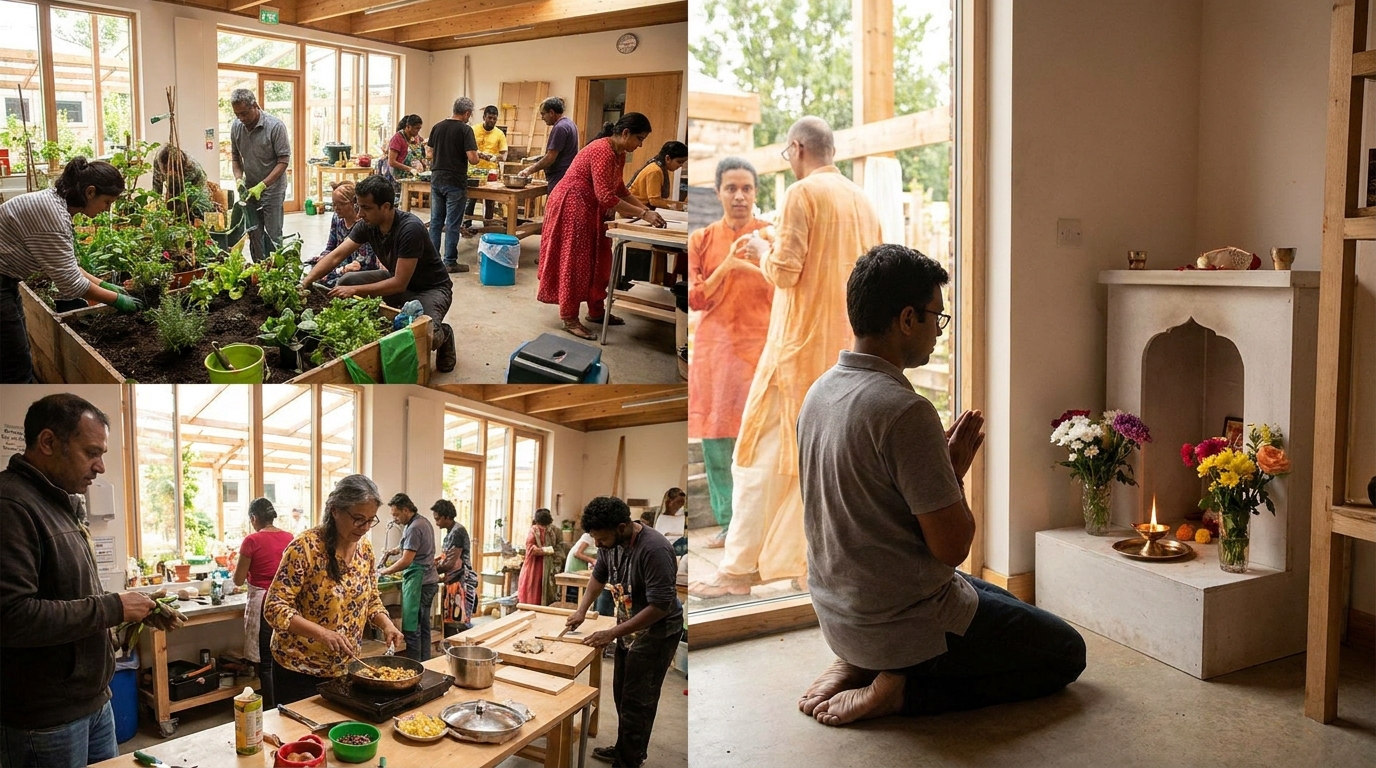
A balanced spiritual life becomes easier when we create a gentle rhythm. Rhythm is different from pressure. Pressure says, “You must do everything perfectly.” Rhythm says, “Come back lovingly, again and again.”
Your Bhakti rhythm can be simple, flexible, and personal. It should support your responsibilities, not make you feel ashamed or overwhelmed.
Begin the Morning With Remembrance
The morning sets the tone for the day. Even five minutes of spiritual practice before checking your phone can make a deep difference.
You might begin with:
- Sitting quietly and offering a prayer
- Chanting the Hare Krishna mantra or another sacred name of God
- Reading one verse from the Bhagavad Gita or Srimad Bhagavatam
- Lighting a candle or offering incense
- Bowing your head and asking, “May my work today be an offering”
The Hare Krishna maha-mantra is a central chant in many Bhakti traditions:
Hare Krishna, Hare Krishna, Krishna Krishna, Hare Hare
Hare Rama, Hare Rama, Rama Rama, Hare Hare
“Maha-mantra” means “great mantra.” A mantra is a sacred sound that helps focus and purify the mind. “Hare” calls upon the divine energy of the Lord, “Krishna” means the all-attractive one, and “Rama” means the source of joy. Chanting these names is a way of calling out to God with the heart.
You do not need to understand everything intellectually to begin chanting. Like sunlight, sacred sound works gently on the heart when received with sincerity.
Offer Your Work Before You Begin
Before opening your laptop, entering your workplace, starting your shift, or beginning household tasks, pause for a few seconds.
You can pray:
“Dear Lord, please let this work be an offering to You. May I serve with honesty, patience, and kindness. Please guide my words, thoughts, and actions.”
This small prayer can change the atmosphere of the entire day. It reminds us that we are not alone. God is present. Our work has a higher purpose.
Keep Sacred Sound Nearby
One of the simplest ways to balance work and Bhakti is to keep sacred sound close.
You might listen to:
- Kirtan while commuting
- A lecture on the Bhagavad Gita during a walk
- Soft mantra music while cooking
- Devotional songs while cleaning
- Japa, or personal mantra meditation, during quiet moments
“Japa” means the personal repetition of a mantra, often using beads to count. It is a deeply grounding practice. Even if you chant quietly for a few minutes during a break, it can bring the mind back to peace.
Not every workplace allows music or chanting aloud, but remembrance can happen silently. The heart can chant even when the mouth cannot.
End the Day With Gratitude
Evening is a beautiful time to return everything to God.
Before sleep, reflect gently:
- Where did I remember God today?
- Where did I forget?
- What am I grateful for?
- Whom did I serve?
- What can I offer from this day?
This is not meant for self-criticism. It is a loving review. We learn, offer, and rest in grace.
A simple evening prayer may be:
“Thank You for carrying me through this day. Please forgive my mistakes. Please help me grow in love, humility, and devotion.”
This kind of prayer softens the heart and helps us sleep with spiritual peace.
Please visit our website for more information on our articles: articles.
Bringing Devotion Into the Workplace
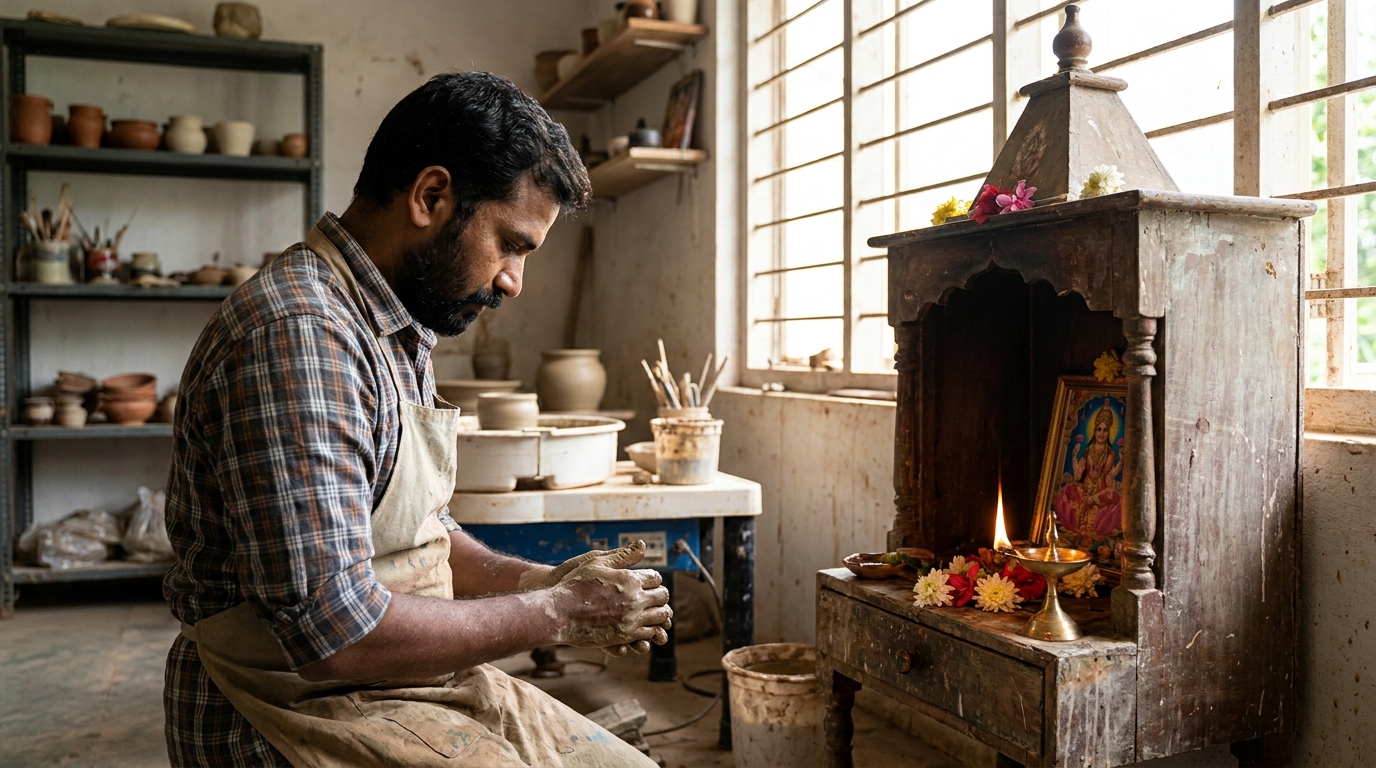
The workplace can be one of our greatest spiritual classrooms. It reveals our attachments, fears, ambitions, frustrations, and strengths. It also gives us daily opportunities to practice patience, compassion, truthfulness, and service.
Bhakti at work does not mean preaching to everyone or displaying spirituality in a forceful way. Often, the deepest devotion is expressed through character.
Practice Integrity as Devotion
Honesty is spiritual. Reliability is spiritual. Doing our work with care is spiritual.
When we act with integrity, we honor God within our own heart and within others. In the Bhagavad Gita, Krishna teaches the importance of performing one’s duty without selfish attachment. This is called “karma yoga,” the yoga of action. When karma yoga is infused with devotion, it becomes Bhakti.
We may not always love every task, but we can bring love into how we do it.
Ask yourself:
- Am I being truthful?
- Am I using my skills responsibly?
- Am I treating people fairly?
- Am I remembering that God sees my heart?
These questions help transform work into practice.
See Colleagues as Souls
Bhakti teaches that every living being is a soul, a beloved part of God. This vision can soften how we relate to others.
Your co-worker is not just a role. Your supervisor is not just a source of pressure. Your customer is not just a transaction. Each person has joys, fears, hopes, and spiritual worth.
This does not mean we abandon boundaries or ignore unhealthy behavior. Bhakti includes wisdom. But even when we must be firm, we can try to avoid hatred. We can practice respect.
A practical prayer for difficult interactions is:
“Lord, please help me see this person as Your child. Please help me respond with clarity and compassion.”
This prayer can prevent many unnecessary conflicts.
Use Stress as a Call to Remember
Stress is often a signal that we are carrying everything alone. Bhakti invites us to place our burdens before God.
When stress rises, try pausing for one breath and silently chanting a name of God. Even one sacred name can interrupt the spiral of anxiety.
You might repeat:
- Krishna
- Rama
- Govinda
- Radhe
- My Lord, please guide me
“Govinda” is a name of Krishna meaning one who gives pleasure to the senses, the cows, the earth, and the heart. Calling on divine names brings us back to relationship.
Work stress may not disappear immediately, but our inner posture changes. We remember, “I am supported. I can act, but I am not the ultimate controller.”
Offer the Results
One of the greatest causes of work anxiety is attachment to results. We want success, appreciation, stability, and recognition. These are natural desires. But when our peace depends entirely on outcomes, we suffer.
Bhakti teaches us to do our best and offer the results to God.
This does not mean becoming careless. It means becoming surrendered. We work sincerely, but we remember that many factors are beyond our control.
In Bhagavad Gita 2.47, Krishna says:
“You have a right to perform your duty, but you are not entitled to the fruits of action.”
Practically, this means we focus on sincere effort, ethical action, and devotion. The outcome is offered. Success is offered. Failure is offered. Praise is offered. Criticism is offered.
This is a lifelong practice, and it brings deep freedom.
Nourishing the Heart Through Chanting and Prayer
Chanting and prayer are central to Bhakti Yoga because they reconnect us with God in a personal and heartfelt way. Work may engage the mind and body, but chanting nourishes the soul.
The world can be noisy. Sacred sound helps us remember what is eternal.
Why Chanting Helps Busy People
Chanting is practical because it can be done almost anywhere. It does not require wealth, status, or advanced scholarship. It simply asks for sincerity.
The Srimad Bhagavatam, a treasured Bhakti scripture, describes hearing and chanting about God as powerful practices for purifying the heart. In simple terms, when we regularly hear sacred sound, our inner life becomes clearer. We become less dominated by fear, envy, and restlessness.
Chanting helps busy people because it:
- Calms the mind
- Refocuses attention
- Softens the heart
- Awakens devotion
- Creates sacred space in daily life
- Reminds us of our eternal relationship with God
Even if the mind wanders, continue gently. The practice itself is purifying.
Personal Prayer Throughout the Day
Prayer does not need to be formal or complicated. It can be honest, simple, and intimate.
You can pray while walking to a meeting:
“Please help me speak kindly.”
You can pray before a difficult conversation:
“Please give me patience and wisdom.”
You can pray when you feel tired:
“Please help me serve with love.”
You can pray after making a mistake:
“Please help me learn and become humble.”
This kind of prayer makes the whole day relational. We are no longer moving through life alone. We are walking with God.
Creating a Sacred Corner at Home
If possible, create a small sacred space in your home. It does not have to be elaborate. It may include a picture of Krishna, Radha-Krishna, Lord Rama, your chosen form of God, saints, sacred texts, flowers, a candle, or a simple cloth.
This sacred corner becomes a place to pause, chant, read, and offer gratitude. After a long workday, sitting there for even a few minutes can bring the heart back home.
In Bhakti, external spaces support internal remembrance. A small altar can become a daily invitation: “Come back to love.”
Service: Turning Daily Duties Into Devotion
Service is at the heart of Bhakti. In Sanskrit, “seva” means service offered with devotion. Seva is not merely volunteer work, though it can include that. Seva is the mood of offering ourselves for the pleasure of God and the benefit of others.
Work becomes spiritually nourishing when infused with seva.
Serving Through Your Profession
Every profession can become a form of service when approached with devotion.
A teacher serves by nurturing wisdom.
A nurse serves by caring for the vulnerable.
A parent serves by protecting and guiding children.
A business owner serves through ethical leadership.
An artist serves by uplifting consciousness.
A cook serves by preparing food with love.
A student serves by developing gifts that can later benefit others.
Ask: “How can my work be used in service?”
This question opens the heart. It helps us see our skills as gifts from God, not possessions of the ego.
Serving Family Without Losing the Self
Many people spend much of their energy serving family members. This can be deeply devotional, but it can also become draining if not rooted in spiritual nourishment.
Bhakti encourages loving service, not self-erasure. We serve best when we also receive spiritual strength.
If you are caring for children, elders, partners, or relatives, remember that your service is seen by God. The small acts—cooking, listening, cleaning, comforting, providing—can be sacred offerings.
At the same time, please give yourself permission to nourish your own spiritual life. Even a few minutes of chanting can replenish the heart.
Serving the Bhakti Community
Spiritual community, or “sanga,” is a precious support. Sanga means association—keeping company with those who encourage our spiritual growth.
Serving in a Bhakti community may include:
- Helping prepare or serve prasadam
- Welcoming guests
- Singing in kirtan
- Cleaning the temple or gathering space
- Supporting events
- Sharing skills like design, writing, cooking, organizing, or teaching
- Offering donations according to your capacity
- Simply showing up with a humble heart
“Prasadam” means mercy. It often refers to food that has been lovingly offered to God and then shared. Eating prasadam reminds us that nourishment is sacred and that everything comes by divine grace.
Community service helps us remember that Bhakti is not only private. It is shared love.
Protecting Your Spiritual Energy
Balancing work and Bhakti also means learning to protect the heart. The mind absorbs what we repeatedly give attention to. If we are always surrounded by stress, comparison, gossip, and distraction, our devotion may feel covered.
We do not need to become harsh or withdrawn. But we can become intentional.
Be Careful With Digital Overload
Many of us lose precious time and peace through constant scrolling, news, entertainment, and comparison. Digital tools can be useful, but they can also scatter the mind.
A practical Bhakti approach is not necessarily to reject technology, but to use it in God-centered ways.
You might:
- Listen to kirtan instead of random content
- Follow teachers and communities that uplift your heart
- Set aside phone-free time for prayer
- Avoid checking messages before morning practice
- Use reminders to pause and chant
The question is not only, “Is this allowed?” but “Is this helping my consciousness?”
Choose Association That Supports Devotion
The people around us influence our values, habits, and desires. Spiritual association gives strength.
Try to spend time, in person or online, with people who inspire remembrance of God. Join a Bhakti gathering, attend kirtan, study scripture with others, or connect with a mentor.
In the Bhakti tradition, saints often emphasize that devotion grows in the company of devotees. This does not mean we reject others. It means we intentionally seek nourishment from those walking the path of love.
Honor Rest as Part of Service
Rest is not laziness when it supports healthy service. If the body and mind are exhausted, spiritual practice may become mechanical and work may become resentful.
Bhakti teaches that the body is a gift to be used in service. Caring for it with proper rest, food, movement, and simplicity can be part of devotion.
A tired heart may need sleep before it can pray deeply. A calm nervous system may help us chant with more attention. Balance is not weakness; it is wisdom.
Handling Ambition, Success, and Failure
Work often brings ambition. We want to grow, succeed, create, provide, and contribute. Bhakti does not require us to become passive. The question is how ambition is purified.
Ambition centered only on ego can bind us. Ambition offered to God can become service.
Spiritualizing Ambition
It is natural to want to use our talents. In Bhakti, we can pray:
“Dear Lord, whatever abilities You have given me, please let them be used in Your service.”
This prayer transforms ambition into offering. We may still work hard, study, build, lead, or create—but the inner motive begins to shift. We want to please God and serve others, not merely inflate the ego.
This shift may take time. We may notice mixed motives within ourselves. That is okay. Bhakti is a path of purification. We bring our honest heart to God and ask for help.
Receiving Success Humbly
Success can be spiritually dangerous if it makes us proud. It can also be spiritually beautiful if it increases gratitude.
When something goes well, pause and offer thanks. Remember the many factors that supported the result: teachers, family, health, opportunities, colleagues, and divine grace.
A simple practice is to say:
“Thank You, Lord. Please let this success be used well.”
Humility keeps success from hardening the heart.
Meeting Failure With Faith
Failure is painful. A rejected proposal, lost job, difficult review, financial setback, or unmet goal can shake us deeply.
Bhakti does not ask us to pretend pain is not real. We can bring our disappointment to God. We can cry, pray, reflect, and seek support.
At the same time, Bhakti reminds us that our worth is not destroyed by failure. We are eternal souls, loved by God. Sometimes failure protects us, redirects us, humbles us, or teaches us compassion.
We can pray:
“Please help me understand what I need to learn. Please guide my next step.”
Faith does not mean we know exactly why everything happens. It means we trust that God can guide us through everything.
Building a Sustainable Bhakti Practice
A sustainable practice is one we can actually live. It grows with us over time. It is steady, nourishing, and realistic.
Rather than copying someone else’s schedule exactly, we can build a devotional life that honors our responsibilities while gently stretching our heart toward God.
Start Small and Stay Steady
If you are new to Bhakti or returning after a long time, begin simply.
For example:
- Chant for five minutes each morning
- Read one Bhagavad Gita verse daily
- Offer your food before eating
- Attend one kirtan or gathering each week
- Say a prayer before work
- Practice gratitude before sleep
Consistency matters more than intensity. A small flame protected daily can become a bright lamp.
Offer Food With Love
One beautiful Bhakti practice is offering food to God before eating. This can be done at home in a simple way.
Prepare vegetarian food with cleanliness and gratitude. Place a portion before a picture of Krishna or your chosen form of God. Offer a prayer, such as:
“Dear Lord, please accept this food prepared with love. May it nourish me for Your service.”
After offering, the food becomes prasadam—mercy. Eating becomes sacred. Cooking becomes devotion. Family meals become spiritual moments.
This practice is especially helpful for busy people because eating already happens every day. Bhakti enters life naturally through food.
Keep Scripture Close
Sacred texts give guidance when the mind feels confused. The Bhagavad Gita is especially practical for balancing work and spirituality because it was spoken in the middle of a life crisis. Krishna’s teachings address action, duty, devotion, surrender, and the nature of the soul.
You might keep a copy on your desk, bedside table, or phone. Read slowly. Even one verse can stay with you all day.
Do not worry if you do not understand everything at first. Approach scripture prayerfully:
“Please reveal what I need to learn today.”
Over time, the wisdom becomes a companion.
When Life Feels Too Busy for Bhakti
There may be seasons when life feels overwhelming. New jobs, exams, parenting, illness, grief, financial pressure, or caregiving can reduce our capacity. During such times, we may feel far from God.
But God is not far.
Bhakti is not only for peaceful seasons. It is also for messy, tired, uncertain seasons.
Return to the Essentials
When you cannot do much, return to the simplest practices:
- Chant one name of God
- Offer one sincere prayer
- Take prasadam
- Hear one kirtan
- Remember that God loves you
- Ask for help from devotees or spiritual friends
Even if your practice becomes very small, keep the thread connected. A single thread of devotion can guide us through difficult times.
Let Go of Comparison
Comparison can quietly damage spiritual life. We may look at others and think, “They chant more. They serve more. They know more. They are more advanced.”
But Bhakti is personal. God sees your full situation. He knows your struggles, your efforts, your limitations, and your sincerity.
Instead of comparing, be inspired. Celebrate others’ devotion while honoring your own journey.
A humble prayer is:
“Please help me take my next sincere step.”
That is enough.
Ask for Grace
Grace is central to Bhakti. We do not advance only by our own strength. We grow by divine mercy, the blessings of saints, and the support of sincere community.
Ask for grace daily.
“Please help me remember You.”
“Please let me serve.”
“Please purify my heart.”
“Please guide me toward love.”
Such prayers are never wasted.
A Simple Weekly Plan for Work and Bhakti
Sometimes it helps to have a practical structure. Here is a gentle weekly rhythm you can adapt to your life.
Daily Practices
Morning:
- Offer a short prayer
- Chant or hear mantra for 5–20 minutes
- Read one verse or reflection
During work:
- Pause before beginning tasks
- Remember God during transitions
- Practice kindness and integrity
- Offer results inwardly
Evening:
- Give thanks
- Reflect without judgment
- Chant or pray before sleep
Weekly Practices
Once a week, you might:
- Attend kirtan or a Bhakti gathering
- Join a scripture study
- Cook and offer a special meal
- Serve in a community project
- Spend time with spiritually minded friends
- Take a longer walk while chanting or hearing wisdom
Weekly practices help renew inspiration.
Monthly Reflection
At the end of each month, ask:
- Is my work supporting my spiritual growth?
- Where am I becoming too distracted?
- What practice is nourishing me most?
- How can I serve more sincerely?
- What is one small adjustment I can make?
This reflection keeps your life aligned with devotion.
The Inner Meaning of Balance
Balance does not mean giving equal hours to work and spiritual practice. Most people must spend many hours working. True balance means keeping God in the center.
When God is in the center, work finds its proper place. Family finds its proper place. Rest, service, ambition, and responsibility all become connected to a higher purpose.
Without a spiritual center, life can feel fragmented. With Bhakti, life becomes integrated.
Balance Is Relationship
In Bhakti, balance is not just time management. It is relationship management—our relationship with God, with ourselves, with others, and with the world.
If our relationship with God is nourished, we can bring more patience to work, more love to family, more humility to success, and more resilience to difficulty.
The goal is not to become a person who never struggles. The goal is to become a person who keeps returning to God in the midst of struggle.
Balance Is Remembering Who We Are
We are not merely workers, managers, parents, students, or professionals. These roles matter, but they are temporary. At the deepest level, we are souls, eternal servants and beloved parts of God.
Remembering this identity brings freedom. We can perform our roles sincerely without being consumed by them.
When we forget, we become anxious and attached. When we remember, we become peaceful and purposeful.
Balance Is Love in Action
Bhakti is love in action. It is not only a feeling in the heart. It is expressed through how we speak, work, eat, rest, serve, and respond.
Balancing work and Bhakti means letting love guide our daily choices.
Can I do this task with care?
Can I speak with kindness?
Can I pause and remember God?
Can I offer this result?
Can I serve without seeking praise?
Can I forgive and begin again?
These small acts become the path.
Walking Forward With Hope
If you are trying to balance work and Bhakti, please be encouraged. Your sincere effort matters. Every mantra matters. Every prayer matters. Every offering matters. Every moment of remembering God matters.
You do not need to wait for a perfect schedule, a quiet life, or complete confidence. Begin where you are.
Begin in the morning before work. Begin in the car. Begin in the kitchen. Begin at your desk. Begin when you are tired. Begin when you are joyful. Begin when you feel unworthy. Begin with one sacred name.
Bhakti Yoga is a practical path of love. It can enter every corner of life. Through chanting, prayer, service, scripture, community, and sincere offering, work becomes more than labor. It becomes a doorway to spiritual growth.
May your work be blessed with purpose.
May your heart be nourished by sacred sound.
May your responsibilities become offerings.
May your home become a place of devotion.
May your life gradually become a song of love to God.
Everyone is welcome on this path. Whatever your background, whatever your schedule, whatever your struggles, you can take one sincere step toward God today. And by grace, that one step can open the heart to a lifetime of devotion.
FAQs
What is the concept of “Balancing Work and Bhakti”?
The concept of “Balancing Work and Bhakti” refers to the idea of integrating one’s professional life with their spiritual practice. It involves finding a harmonious balance between work responsibilities and devotion to a higher power.
How can one balance work and bhakti in their daily life?
Balancing work and bhakti can be achieved by incorporating spiritual practices into daily routines, such as meditation, prayer, or mindfulness exercises. It also involves maintaining a positive and ethical approach to work, treating colleagues with respect, and finding ways to infuse work with a sense of purpose and service.
What are the benefits of balancing work and bhakti?
Balancing work and bhakti can lead to a greater sense of fulfillment, reduced stress, improved relationships with colleagues, and a deeper connection to one’s spiritual beliefs. It can also help individuals maintain a sense of perspective and purpose in their professional lives.
Are there any challenges in balancing work and bhakti?
Challenges in balancing work and bhakti may include time management, conflicting priorities, and navigating workplace environments that may not align with one’s spiritual values. It may also require overcoming personal obstacles such as ego, ambition, or material desires.
How can one cultivate a balanced approach to work and bhakti?
Cultivating a balanced approach to work and bhakti involves self-reflection, setting priorities, and making conscious choices to integrate spiritual principles into daily work life. It may also involve seeking guidance from mentors, participating in spiritual communities, and continuously striving for personal growth and self-awareness.

