
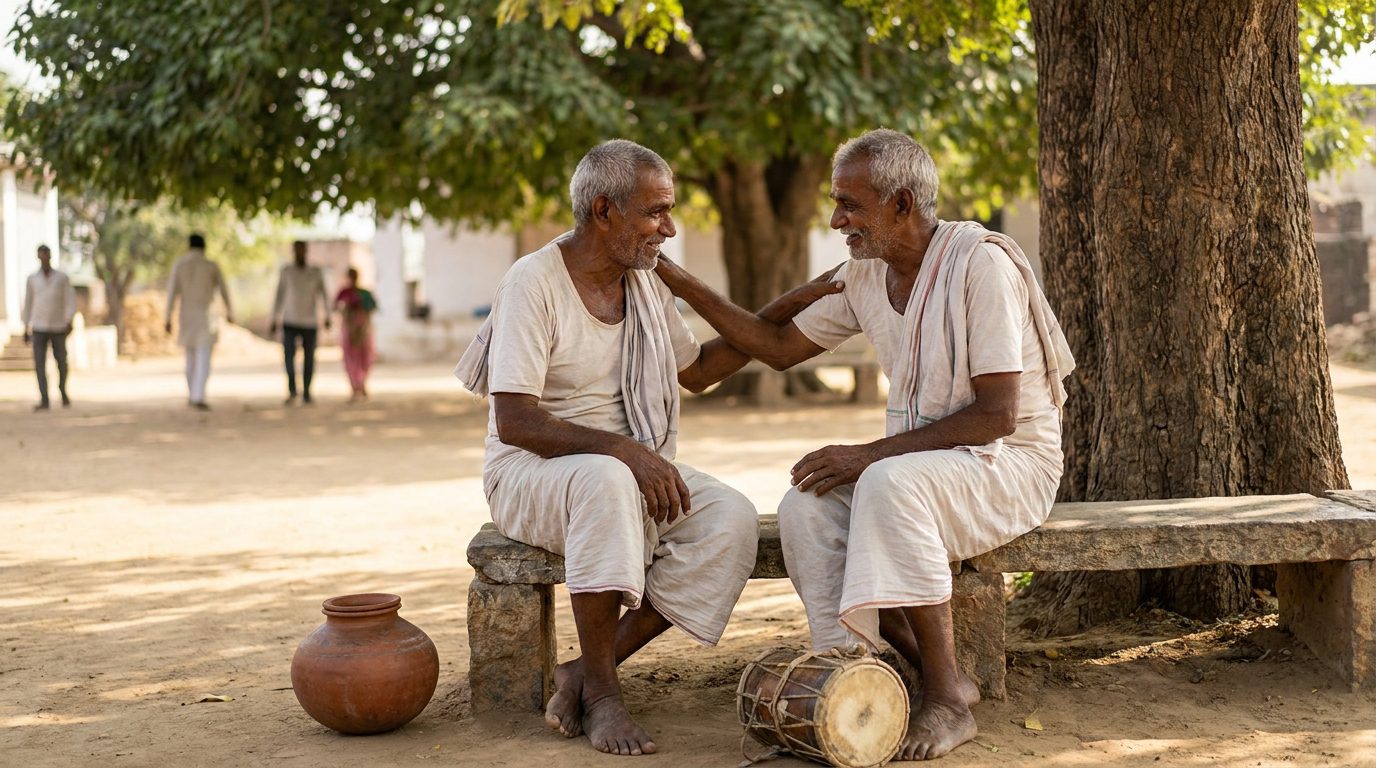
Bhakti Yoga is the path of loving devotion to the Divine. It is not only a philosophy or a set of practices; it is a way of offering the whole heart. In Bhakti, we learn to remember God, chant sacred names, pray honestly, serve with kindness, and grow in love.
Within the Bhakti tradition, there are many beautiful ways the soul can relate to the Supreme Person. These loving relationships are called rasas. The Sanskrit word rasa means “taste,” “mood,” or “spiritual flavor.” Just as human relationships have different flavors—respect, care, friendship, affection—our relationship with God can awaken in different sacred moods.
One especially sweet and intimate rasa is sakhya-rasa, the mood of friendship with God. The word sakhya means “friendship.” In this spiritual relationship, the devotee loves the Lord not only as the Almighty, but as a dear, trusted friend.
This may sound surprising at first. Many of us were taught to approach God only with awe, fear, or formality. Bhakti Yoga honors reverence, but it also reveals something tender: God is not distant. God is deeply personal, loving, and eager for relationship. In sakhya-rasa, the heart begins to feel, “The Lord is my friend, my companion, my well-wisher, and my shelter.”
This friendship is not ordinary or casual. It is pure, selfless, and eternal. It is rooted in love, trust, service, and joyful remembrance.
Understanding Rasa in Bhakti Yoga
What Does “Rasa” Mean?
In Bhakti Yoga, rasa refers to the unique loving relationship between the individual soul and the Supreme Lord. The great teachers of Bhakti explain that spiritual life is not dry or empty. At its deepest level, spiritual life is full of feeling, exchange, personality, and love.
The soul is not meant to be isolated. We are made for relationship. Our longing for love, belonging, and deep connection points toward our eternal relationship with God.
Bhakti scriptures describe five primary rasas:
- Shanta-rasa: peaceful appreciation of God
- Dasya-rasa: loving service to God as a servant
- Sakhya-rasa: friendship with God
- Vatsalya-rasa: parental affection toward God
- Madhurya-rasa: intimate divine love, often described as the mood of the beloved
Each rasa is complete in its own way. None should be imitated artificially. Bhakti grows naturally through sincere practice, humility, and grace.
Why Relationship Matters in Spiritual Life
Many spiritual paths teach us to quiet the mind, reduce ego, and seek truth. Bhakti Yoga includes these things, but it goes further. It teaches that the highest truth is personal and loving.
In the Bhagavad-gita, Lord Krishna says, “I am the source of all spiritual and material worlds. Everything comes from Me” (Bhagavad-gita 10.8). The devotee does not see this as merely a cosmic statement. The devotee hears the voice of a loving Lord inviting the soul back into relationship.
If God is the source of everything, then friendship also comes from God. Love comes from God. Trust comes from God. Laughter, loyalty, companionship, and shared joy all have their pure origin in the Divine.
Sakhya-rasa reminds us that friendship is sacred when centered on God.
What Is Sakhya-rasa?

The Sacred Mood of Friendship
Sakhya-rasa is the devotional mood in which the soul relates to the Lord as a dear friend. In this mood, love is marked by trust, ease, closeness, and joyful companionship.
A devotee in sakhya-rasa does not only think, “God is great.” They also feel, “God is mine, and I am His.” There is still deep love and respect, but it is softened by intimacy. The heart becomes natural and open before God.
In human life, a true friend is someone we can speak to honestly. A friend listens, walks with us, encourages us, corrects us when needed, and stays close through joy and difficulty. In sakhya-bhava—the inner feeling of friendship—a devotee begins to relate to the Lord in this way.
This is not imagination in the ordinary sense. It is a spiritual awakening of the heart.
Sakhya-rasa and Krishna
In many Bhakti traditions, especially those centered on Lord Krishna, sakhya-rasa is beautifully revealed in Krishna’s relationships with the cowherd boys of Vrindavan.
Vrindavan is the sacred land where Krishna performs His intimate childhood and youth pastimes. The cowherd boys—known as gopas—play with Krishna, eat with Him, wrestle with Him, joke with Him, and wander through the forests with Him while tending cows.
In the Srimad Bhagavatam, one of the most beloved Bhakti scriptures, the cowherd boys are described as incredibly fortunate. They play with the Supreme Lord, who is sought by sages and worshiped by the gods, yet they know Him as their dearest friend.
This teaches us something profound: the highest spiritual reality is not cold or unreachable. The Supreme can be known through love so deep and pure that formality gives way to friendship.
Friendship Without Selfishness
Spiritual friendship with God is different from ordinary friendship because it is free from selfish demand. In worldly relationships, we may unconsciously think, “What can I get?” But in pure Bhakti, the heart asks, “How can I love? How can I serve? How can I bring joy to the Lord?”
Sakhya-rasa is full of affection, but it is not possessive in an ego-centered way. It is personal, but not selfish. It is intimate, but not careless. The devotee’s happiness comes from Krishna’s happiness.
This is one of the great secrets of Bhakti: when we try to please God with love, our own heart becomes deeply nourished.
Please visit our website for more information on our articles: articles.
Scriptural Windows into Divine Friendship

Arjuna: Krishna’s Friend and Student
One of the most accessible examples of divine friendship is Arjuna in the Bhagavad-gita. Arjuna is a warrior, a seeker, and a dear friend of Krishna. At the beginning of the Gita, Arjuna is overwhelmed. He is confused, grieving, and unsure of his duty.
What does he do? He turns to Krishna.
This is friendship in practice. Arjuna does not hide his struggle. He speaks honestly. He admits his weakness. He says, “I am confused about my duty… I am Your disciple. Please instruct me” (Bhagavad-gita 2.7).
Arjuna’s relationship with Krishna includes both friendship and surrender. He is close to Krishna, yet he is humble enough to receive guidance. This is a beautiful lesson for us. Spiritual friendship with God does not mean we stop listening. Rather, because we trust God as our dearest friend, we become more willing to hear divine wisdom.
Krishna also says to Arjuna, “Because you are My devotee and My friend, you can understand this most confidential knowledge” (Bhagavad-gita 4.3). Here we see that friendship opens the heart to deeper spiritual understanding.
The Cowherd Boys of Vrindavan
The cowherd boys of Vrindavan reveal sakhya-rasa in its purest sweetness. They do not approach Krishna with fear. They climb on His shoulders, share their lunch with Him, challenge Him in play, and laugh freely with Him.
To an outside observer, they may seem like ordinary children playing in the forest. But the scriptures reveal that these boys are perfected souls, absorbed in pure love.
In the Srimad Bhagavatam (10.12.11), it is described that great yogis may strive for lifetimes to realize the Supreme Truth, yet the cowherd boys play with that same Supreme Truth as their intimate companion. This verse is often cherished by Bhakti teachers because it reveals the extraordinary power of love.
The Lord, who is infinite and majestic, becomes conquered by the affection of His friends.
Sudama: The Humble Friend of Krishna
Another tender story is that of Sudama, also known as Kuchela. Sudama was a childhood friend of Krishna. Later in life, he became very poor, but he remained gentle and devoted. At the urging of his wife, he went to visit Krishna, who had become a great king in Dwaraka.
Sudama brought only a small offering of chipped rice, feeling embarrassed by its simplicity. But Krishna received him with overwhelming love. The Lord personally welcomed Sudama, washed his feet, embraced him, and accepted the humble offering with joy.
This story from the Srimad Bhagavatam teaches that God values love, not material greatness. A small offering given with sincerity can touch the heart of the Lord.
For us, this is deeply encouraging. We may feel spiritually poor. We may think, “I don’t have much to offer.” But Bhakti tells us: offer what you have with love. A prayer, a chant, a flower, a kind act, a tear, a moment of remembrance—these are precious when offered sincerely.
The Qualities of Sakhya-rasa
Trust
Friendship with God begins with trust. Trust does not mean life will always unfold according to our preferences. It means we believe that the Lord is our well-wisher, even when we cannot understand the whole picture.
In the Bhagavad-gita (5.29), Krishna says He is the well-wishing friend of all living beings—suhridam sarva-bhutanam. The word suhrid means a true-hearted friend, one who desires our deepest good.
Meditating on this can soften fear. We are not alone in the universe. We are accompanied by a loving Divine Friend who knows our heart.
Honesty
A real friendship cannot grow through pretending. In Bhakti, honesty is sacred. We can come before God as we are.
We can pray, “My Lord, I want to love You, but my mind is distracted.”
We can say, “I am grateful today.”
We can say, “I am hurt and confused.”
We can say, “Please guide me.”
God is not shocked by our humanity. The Lord already knows our heart. Honest prayer opens the door to healing.
Joy
Sakhya-rasa is full of joy. Krishna and His friends run through the forests, share meals, play games, and laugh together. This reminds us that spiritual life is not meant to be gloomy. Discipline is important, but devotion is also joyful.
Chanting can be joyful. Serving can be joyful. Gathering with other seekers can be joyful. Cooking, singing, reading scripture, caring for others, and walking in nature while remembering God can all become part of a living friendship with the Divine.
Loyalty
Friendship includes loyalty. In Bhakti, loyalty means returning to God again and again. Even when we stumble, we do not give up. Even when the mind wanders, we come back to the holy name. Even when life becomes difficult, we keep a small flame of devotion alive.
A sincere devotee may not be perfect, but they are willing to keep turning toward God.
Practicing Sakhya-bhava in Daily Life
Chanting the Holy Names
One of the most powerful practices in Bhakti Yoga is chanting the holy names of God. In the Krishna Bhakti tradition, many devotees chant the maha-mantra:
Hare Krishna Hare Krishna
Krishna Krishna Hare Hare
Hare Rama Hare Rama
Rama Rama Hare Hare
The word mantra means a sacred sound that helps free the mind. Maha means great. So the maha-mantra is the great chant for awakening love of God.
Chanting is not only a ritual. It is a way of calling out to the Divine Friend. When we chant, we are saying, “Please let me remember You. Please engage me in Your service. Please awaken my heart.”
You can chant softly, sing with others, or repeat the mantra on beads. Even a few sincere minutes each day can begin to change the atmosphere of the heart.
Speaking to God as a Friend
Prayer does not have to be complicated. You can speak to God naturally.
Try beginning the day with a simple prayer:
“Dear Lord, please walk with me today. Help me remember You. Help me be kind. Help me serve.”
At night, you might say:
“Thank You for carrying me through this day. Please forgive my mistakes. Please guide my heart.”
This kind of prayer gradually makes our relationship with God more personal. We begin to feel that the Lord is not just an idea, but a living presence.
Offering Your Work
Bhakti Yoga can be practiced in daily responsibilities. Krishna teaches in the Bhagavad-gita (9.27), “Whatever you do, whatever you eat, whatever you offer or give away, do that as an offering to Me.”
This means our ordinary life can become sacred. Cooking can be an offering. Parenting can be an offering. Studying, working, cleaning, creating, and caring for others can be offerings.
In the mood of friendship, we might think, “Krishna, I am doing this for You. Please accept my effort.” This simple shift brings devotion into everyday life.
Serving Others
If God is the friend of all beings, then serving others becomes a way to honor Him. Bhakti is not limited to personal meditation. It expresses itself through compassion.
A kind word, a shared meal, listening to someone in pain, helping a neighbor, supporting a spiritual community, or caring for the earth can all become devotional service when done with love.
Service helps protect sakhya-bhava from becoming sentimental. True friendship with God naturally expands into kindness toward God’s children.
Sakhya-rasa and Spiritual Growth
From Fear to Trust
Many people begin spiritual life with fear: fear of judgment, fear of failure, fear of not being good enough. Bhakti gently transforms fear into trust.
Krishna says in the Bhagavad-gita (18.66), “Abandon all varieties of separate duty and surrender unto Me. Do not fear; I will deliver you.” This is not a harsh command. It is the promise of a loving friend.
Surrender in Bhakti does not mean losing ourselves in a negative way. It means releasing the false burden of thinking we must control everything. It means allowing divine love to guide us.
From Loneliness to Companionship
Even surrounded by people, the heart can feel lonely. Sakhya-rasa offers a deep spiritual remedy: the awareness that God is always near.
The Lord is present in the heart as the indwelling guide, known in Sanskrit as Paramatma. Paramatma means the Supreme Soul, the form of God who accompanies every living being from within.
When we remember this, loneliness begins to soften. We may still need human friendship and community, but we also discover an inner companionship that never leaves.
From Ego to Loving Exchange
The ego wants to be the center. Bhakti lovingly re-centers the heart around God. In sakhya-rasa, this does not feel like cold duty. It becomes a joyful exchange.
We begin to ask:
“How can I make my life pleasing to the Lord?”
“How can I become a better friend to God?”
“How can I treat others as beloved parts of God?”
These questions gradually purify the heart. Spiritual growth becomes relational, practical, and tender.
Avoiding Imitation and Growing Naturally
Respecting the Sacredness of Rasa
While sakhya-rasa is beautiful, Bhakti teachers also advise humility. The intimate moods of Vrindavan are very sacred. They are not meant to be imitated cheaply or claimed prematurely.
We may be inspired by Krishna’s friends, but our practice begins where we are. We chant, hear scripture, serve, pray, and seek the company of sincere devotees. Over time, the heart becomes purified, and our eternal relationship with God is revealed by grace.
In Bhakti, we do not force spiritual emotion. We make ourselves available to grace.
Beginning with Foundational Devotion
For most practitioners, the foundation of Bhakti includes:
- Hearing about God from authentic scriptures
- Chanting the holy names
- Remembering the Lord throughout the day
- Offering food, work, and actions with devotion
- Serving others and the devotional community
- Seeking guidance from sincere teachers and saints
- Living with humility, compassion, and integrity
These practices nourish all forms of devotion. Whether one’s heart is drawn to God in reverence, service, friendship, or another mood, the foundation remains sincere practice.
Letting Love Mature
Love grows by attention. If we water a plant daily, it gradually becomes strong. In the same way, the seed of Bhakti grows when watered by hearing and chanting.
The Chaitanya-charitamrita, a treasured text in the Gaudiya Bhakti tradition, describes devotion as a seed planted in the heart by grace. Through the watering process of hearing and chanting, that seed grows into a spiritual vine reaching toward the lotus feet of Krishna.
This image is gentle and hopeful. We do not need to become advanced overnight. We simply keep watering the seed.
The Role of Community in Divine Friendship
Friendship with Devotees
Sakhya-rasa also teaches us to value holy friendship with others. Spiritual community, or sanga, is essential in Bhakti. Sanga means association or company. The people we spend time with influence our desires, habits, and faith.
When we gather with others to chant, study, share prasadam, and serve, our devotion becomes stronger. Prasadam means food that has been offered to God with love and then received as mercy. Sharing prasadam is one of the sweetest ways Bhakti becomes practical and communal.
Spiritual friendship helps us remember our purpose. We encourage one another, forgive one another, and walk together toward God.
Learning to Be a Better Friend
As we meditate on Krishna as the perfect friend, we can also ask how to become better friends to others. Are we reliable? Do we listen? Do we celebrate others’ growth? Do we speak truth with kindness? Do we help others remember their spiritual worth?
Bhakti is not only about how we feel in prayer. It is also about how we show up in relationships.
To love God as friend is to become more friendly toward all beings.
Welcoming People of All Backgrounds
The path of Bhakti is open to everyone. One does not need to be born in a particular culture, know Sanskrit, or have a perfect past. The holy name is for everyone. Prayer is for everyone. Service is for everyone. Love of God is the birthright of every soul.
At The Bhakti House, this welcoming spirit is central. We come together not as perfect people, but as sincere seekers. Some may be new to chanting. Some may have practiced for years. Some may come with faith, others with questions. All are welcome.
A genuine spiritual home makes room for the honest journey.
Bringing Sakhya-rasa into the Modern World
A Devotional Practice for Busy Lives
Modern life can be fast, noisy, and demanding. Many people feel stretched thin. Sakhya-rasa offers a simple and personal way to stay connected with God throughout the day.
You might remember Krishna before opening your phone.
You might chant while driving or walking.
You might offer your lunch with a short prayer.
You might pause before a difficult conversation and ask, “Dear Lord, please help me speak with wisdom.”
You might end the day by sharing your heart with God.
These small practices matter. Friendship grows through regular contact.
Healing the Image of God
Some of us carry painful ideas about God. We may have been taught that God is angry, distant, or only watching for mistakes. Bhakti scriptures reveal a fuller picture: God is just and holy, but also tender, playful, forgiving, and loving.
Krishna as the friend of Arjuna, the companion of the cowherd boys, and the affectionate Lord of Sudama shows us a God who comes close.
This can be healing. We can begin to relate to God not only through obligation, but through love.
Making the Heart a Vrindavan
Vrindavan is a holy place, but Bhakti teachers also say the heart can become like Vrindavan when filled with remembrance of Krishna. Wherever we live, whatever our circumstances, we can invite divine friendship into the inner world.
A heart softened by chanting becomes a sacred place.
A home where food is offered becomes a sacred place.
A conversation filled with compassion becomes a sacred place.
A life dedicated to service becomes a sacred place.
Sakhya-rasa teaches us that God is not far away. The Divine Friend is near, waiting for our loving attention.
Simple Meditations on Krishna as Friend
A Morning Meditation
Sit quietly for a few moments. Take a gentle breath. You may place your hand on your heart.
Pray:
“Dear Krishna, dear Lord, You are the friend of all beings. Please help me remember that I am not alone today. Let my thoughts, words, and actions become an offering of love.”
Then chant the holy names for a few minutes. Let the sound carry your heart.
A Meditation During Difficulty
When life feels heavy, pause and remember Arjuna. He did not have all the answers. He brought his confusion to Krishna.
You can pray:
“My Lord, I do not know what to do. Please guide me. Please help me act with courage, humility, and love.”
This is a practical expression of sakhya-bhava. We bring our real life into our relationship with God.
An Evening Reflection
Before sleep, reflect gently:
Where did I remember God today?
Where did I forget?
Where did I receive help?
Where can I grow tomorrow?
Then offer gratitude. Even if the day was imperfect, the Lord’s friendship remains.
The Gift of Sakhya-rasa
Sakhya-rasa reveals that the soul’s relationship with God can be intimate, joyful, and deeply personal. It invites us beyond distant religion into living connection. It teaches us to trust the Lord, speak honestly, serve lovingly, chant sincerely, and walk through life with divine companionship.
We may not yet have the pure love of Arjuna, Sudama, or the cowherd boys of Vrindavan. That is all right. Bhakti begins with sincerity. A single heartfelt chant, a simple prayer, a humble offering, or one act of service can open the door.
The essence of sakhya-rasa is not that we artificially imagine ourselves advanced. It is that we allow the truth of God’s loving friendship to touch our daily life. Krishna is the well-wisher of every living being. He is closer than we know. He is patient, kind, and ready to receive even our smallest offering of love.
Wherever you come from, whatever your background, and wherever you are on the spiritual path, you are welcome in Bhakti. Take one sincere step toward God today. Chant one name, offer one prayer, serve one person, or simply say, “Dear Lord, please be my friend and guide.” That one step matters, and the Divine Friend will meet you with grace.
FAQs
What is Sakhya-rasa?
Sakhya-rasa is one of the five primary relationships or rasas described in Hindu philosophy and devotional literature. It refers to the relationship of friendship and camaraderie between the devotee and the divine.
What are the characteristics of Sakhya-rasa?
In Sakhya-rasa, the devotee sees the divine as a close friend and companion, engaging in playful and friendly interactions. This relationship is characterized by mutual trust, loyalty, and a sense of equality.
How is Sakhya-rasa expressed in Hindu mythology and literature?
Sakhya-rasa is often depicted in Hindu mythology through the stories of Lord Krishna and his friends, particularly the cowherd boys of Vrindavan. In devotional literature, poets and saints often express their devotion to the divine through the lens of friendship and camaraderie.
What is the significance of Sakhya-rasa in Hindu devotional practice?
Sakhya-rasa allows devotees to approach the divine in a more familiar and relatable manner, fostering a sense of intimacy and closeness. It emphasizes the idea that the divine can be a friend and confidant, accessible to all.
How does Sakhya-rasa differ from other rasas in Hindu philosophy?
Sakhya-rasa differs from other rasas such as Vatsalya-rasa (parental love) and Madhurya-rasa (romantic love) in its emphasis on friendship and companionship, rather than the roles of parent or lover. Each rasa offers a unique perspective and approach to the divine relationship.

