
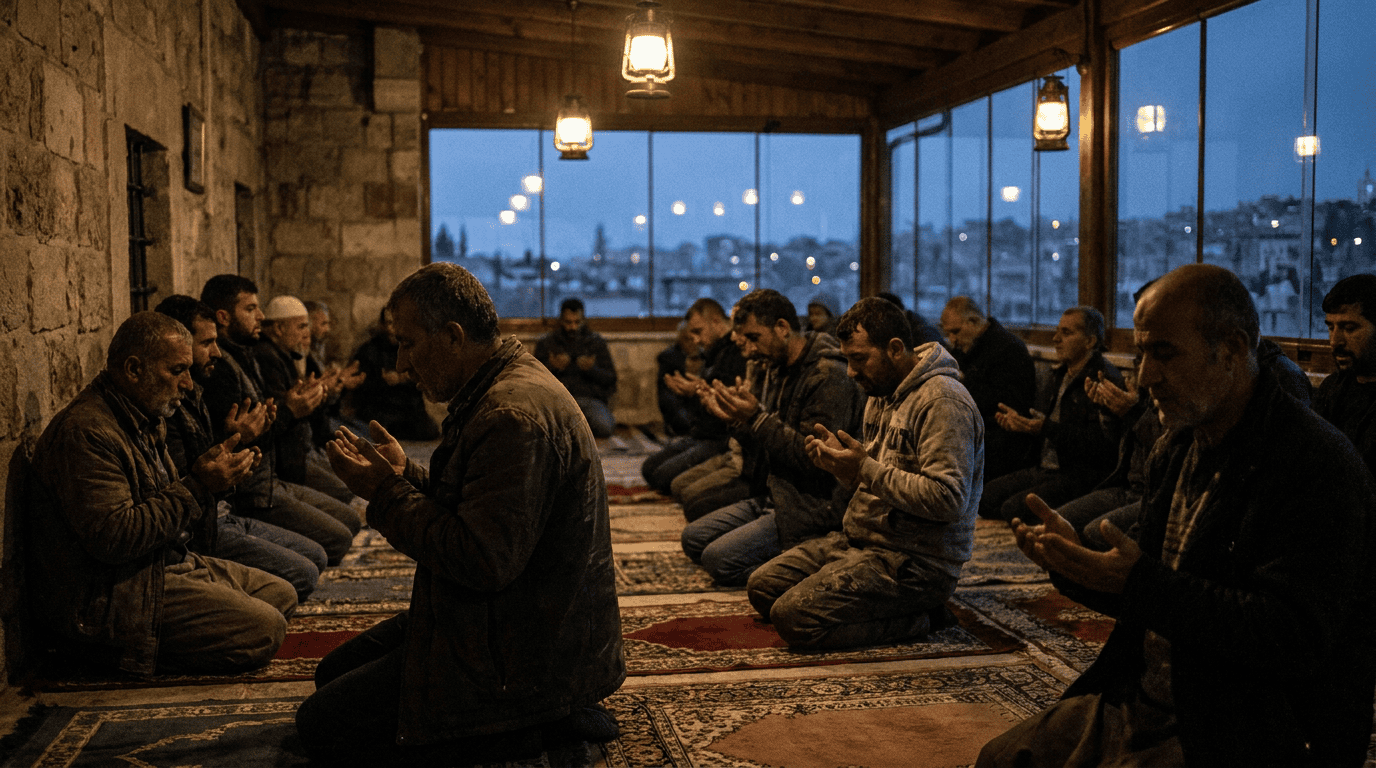
Evening is a sacred doorway.
After a day of working, caring, thinking, speaking, traveling, serving, and sometimes struggling, the heart naturally longs to return home. Not only to a physical home, but to the inner home of peace, truth, and loving connection with God.
In Bhakti Yoga, the path of devotion, evening prayers are a beautiful way to pause and remember: “I am not alone. My life is held by Divine love.”
Bhakti means loving devotion. Yoga means connection. So Bhakti Yoga is the practice of reconnecting with God through love—through chanting, prayer, service, sacred study, and sincere remembrance.
You do not need to be born into a particular tradition to begin. You do not need to know Sanskrit perfectly. You do not need to feel “spiritual enough.” Evening prayer is for every sincere heart. It can be simple, humble, and real.
Whether you are praying with a family, sitting alone at your bedside, lighting a small candle, chanting on beads, reading scripture, or whispering gratitude after a long day, your sincere offering is seen.
As the Bhagavad-gītā teaches, God lovingly accepts even the simplest offering when it is given with devotion:
“Whoever offers Me with love and devotion a leaf, a flower, fruit, or water, I accept it.”
—Bhagavad-gītā 9.26
This verse reminds us that God is not looking for wealth, performance, or perfection. God is looking for love.
Evening prayer is one way to offer that love.
The Spiritual Meaning of Evening in Bhakti Yoga
In many sacred traditions, the evening is considered a powerful time for prayer. The outer world becomes quieter. The light changes. The body begins to slow down. The mind starts to review the day.
In Bhakti practice, this time can become a gentle offering.
A Time to Return to Remembrance
The Sanskrit word smaraṇam means remembrance. In Bhakti Yoga, remembering God is not only an intellectual exercise. It is a loving turning of the heart.
We may forget throughout the day. We may become absorbed in responsibilities, worries, ambitions, or conflicts. Evening prayer helps us return.
We return from scattered thoughts to presence.
We return from anxiety to trust.
We return from self-centeredness to service.
We return from loneliness to relationship with the Divine.
Even a few minutes of sincere remembrance can change the atmosphere of the heart.
A Time to Offer the Day
The day may have included beautiful moments and difficult ones. Maybe we spoke kindly. Maybe we lost patience. Maybe we served someone well. Maybe we missed an opportunity.
Evening prayer gives us a loving place to bring all of it.
In Bhakti Yoga, we do not hide from God. We come honestly. We offer our successes, our mistakes, our gratitude, our confusion, and our longing.
This offering can be as simple as saying:
“Dear Lord, everything I did today, knowingly or unknowingly, I place before You. Please purify my heart. Please guide me. Please help me love more deeply tomorrow.”
This kind of prayer softens the heart. It teaches us to live in relationship with God, not merely in self-reliance.
A Time to Prepare the Heart for Rest
Sleep is a kind of surrender. We lay down our plans and control. We close our eyes and trust that life will continue without our constant effort.
Evening prayer helps us enter sleep with a peaceful mind.
Instead of carrying unresolved stress into the night, we can place our burdens at God’s feet. In Bhakti traditions, the “feet of the Lord” symbolize shelter, humility, and loving refuge.
To pray before sleep is to say, “I take shelter. I do not have to hold everything alone.”
A Simple Evening Prayer Routine
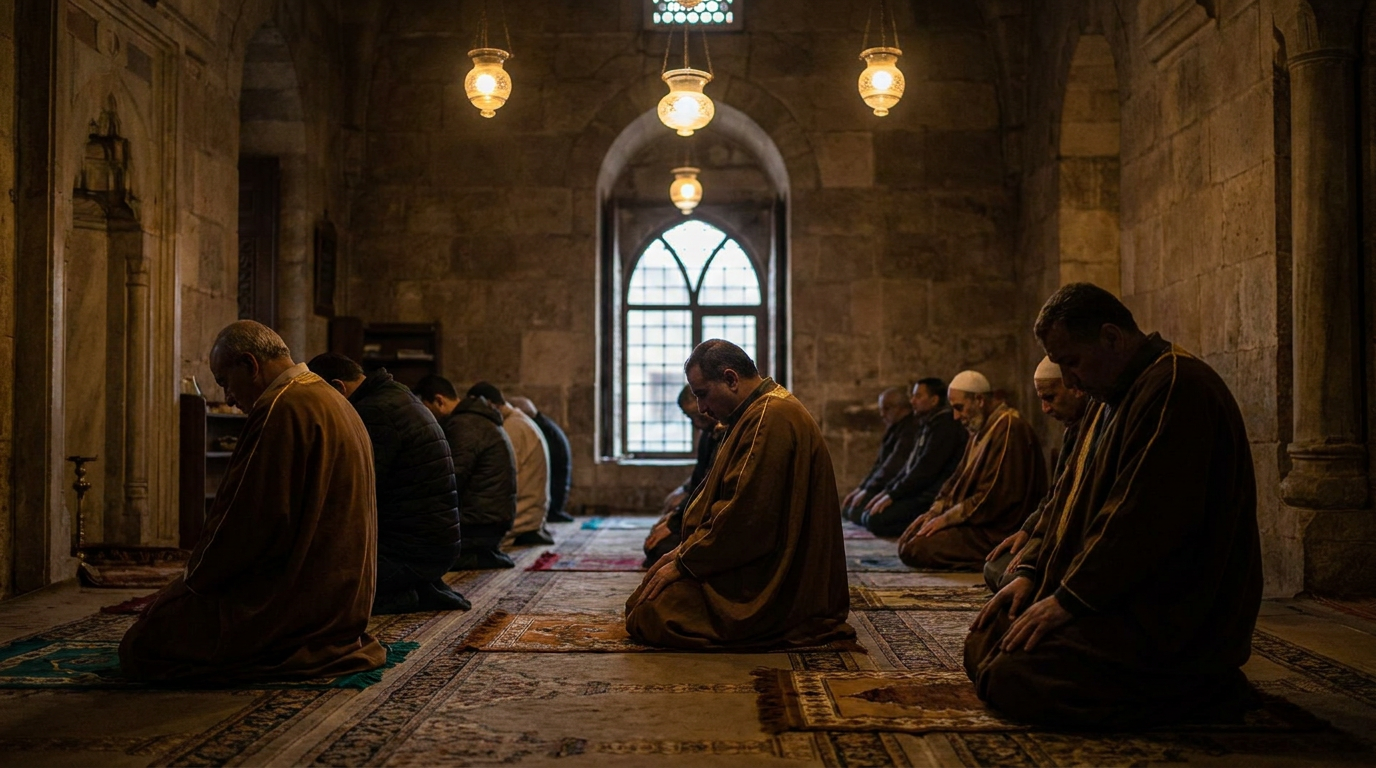
An evening prayer practice does not need to be complicated. It can be five minutes or fifty minutes. What matters most is sincerity and consistency.
Here is a gentle structure you can follow and adapt.
1. Create a Peaceful Space
Choose a place where you can sit comfortably. It may be a small altar, a prayer corner, a chair by the window, or the side of your bed.
You might include:
- A candle or lamp
- A picture of Krishna, Rama, Vishnu, Radha, Jesus, Mary, a saint, guru, or sacred symbol meaningful to you
- Fresh flowers or a small plant
- A clean cloth
- Scripture or prayer book
- Japa beads, also called mālā beads, used for mantra meditation
The purpose is not decoration. The purpose is invitation. A sacred space reminds the mind: “Now I am turning toward God.”
If you do not have any items, do not worry. Your heart is the true altar.
2. Sit, Breathe, and Become Present
Before speaking prayers, pause.
Take a few slow breaths. Let the body settle. Let the mind arrive.
You may place your hand on your heart and gently say:
“I am here, Lord. Please help me be present.”
This small moment of stillness helps transform prayer from routine words into a living conversation.
3. Offer Gratitude
Gratitude opens the heart.
You can name three things from the day for which you are thankful. They may be simple:
- A meal
- A kind message
- A moment of protection
- The ability to work
- A lesson learned
- A breath of fresh air
- A chance to serve someone
In Bhakti Yoga, gratitude is not forced positivity. It is a recognition that life is a gift.
You might pray:
“Thank You for carrying me through this day. Thank You for the visible and invisible blessings. Please help me recognize Your kindness more clearly.”
4. Reflect and Ask for Forgiveness
Evening prayer is also a time for gentle honesty.
Ask yourself:
- Where did I act with love today?
- Where did I act from fear, anger, pride, or selfishness?
- Did I hurt anyone with my words or actions?
- Did I ignore my inner wisdom?
- What is God teaching me through this day?
This reflection should not become self-hatred. Bhakti is a path of humility, not shame. Humility means seeing ourselves truthfully while trusting in Divine mercy.
You may pray:
“If I caused harm today by thought, word, or action, please forgive me. Please help me make things right where I can. Please purify my heart and guide me toward love.”
5. Chant or Speak the Holy Name
Chanting is central to Bhakti Yoga. The practice of chanting sacred names is called nāma-saṅkīrtana when done together, or japa when repeated personally, often on beads.
In Bhakti understanding, the Holy Name is not separate from God. When we chant with sincerity, we are calling out to the Divine and inviting God’s presence into the heart.
A widely practiced mantra is the Hare Krishna mahā-mantra. Mahā means “great,” and mantra means a sacred sound that helps free the mind and awaken spiritual consciousness.
Hare Krishna, Hare Krishna,
Krishna Krishna, Hare Hare,
Hare Rama, Hare Rama,
Rama Rama, Hare Hare
Krishna means “the all-attractive one.” Rama means “the source of joy.” Hare is a call to the Divine energy of love and devotion.
You can chant softly for a few minutes before sleep. You can sing. You can whisper. You can listen to a kirtan recording and let your heart join in.
The power is not in musical skill. The power is in sincerity.
6. Read a Short Scripture Passage
Even one verse can nourish the heart.
You might read from the Bhagavad-gītā, Śrīmad-Bhāgavatam, the Psalms, the teachings of saints, or another sacred text that brings you closer to God.
In Bhakti Yoga, scripture is not meant only for information. It is meant for transformation. We read and ask:
“How can I live this truth tomorrow?”
A beautiful evening verse from the Bhagavad-gītā is:
“Always think of Me, become My devotee, worship Me, and offer your homage unto Me. Thus you will come to Me without fail.”
—Bhagavad-gītā 18.65
This is not a demand of fear. It is an invitation of love. God is saying, “Remember Me. Offer your heart. Come close.”
7. Close with Surrender
End your evening prayer by placing yourself and your loved ones in God’s care.
You may pray:
“Dear Lord, I offer this night to You. Please protect my mind while I sleep. Please bless my family, friends, teachers, and all beings. May I wake tomorrow with a heart ready to serve.”
Then rest.
Check out our latest articles at https://thebhaktihouse.org/blog.
Traditional Bhakti Evening Practices
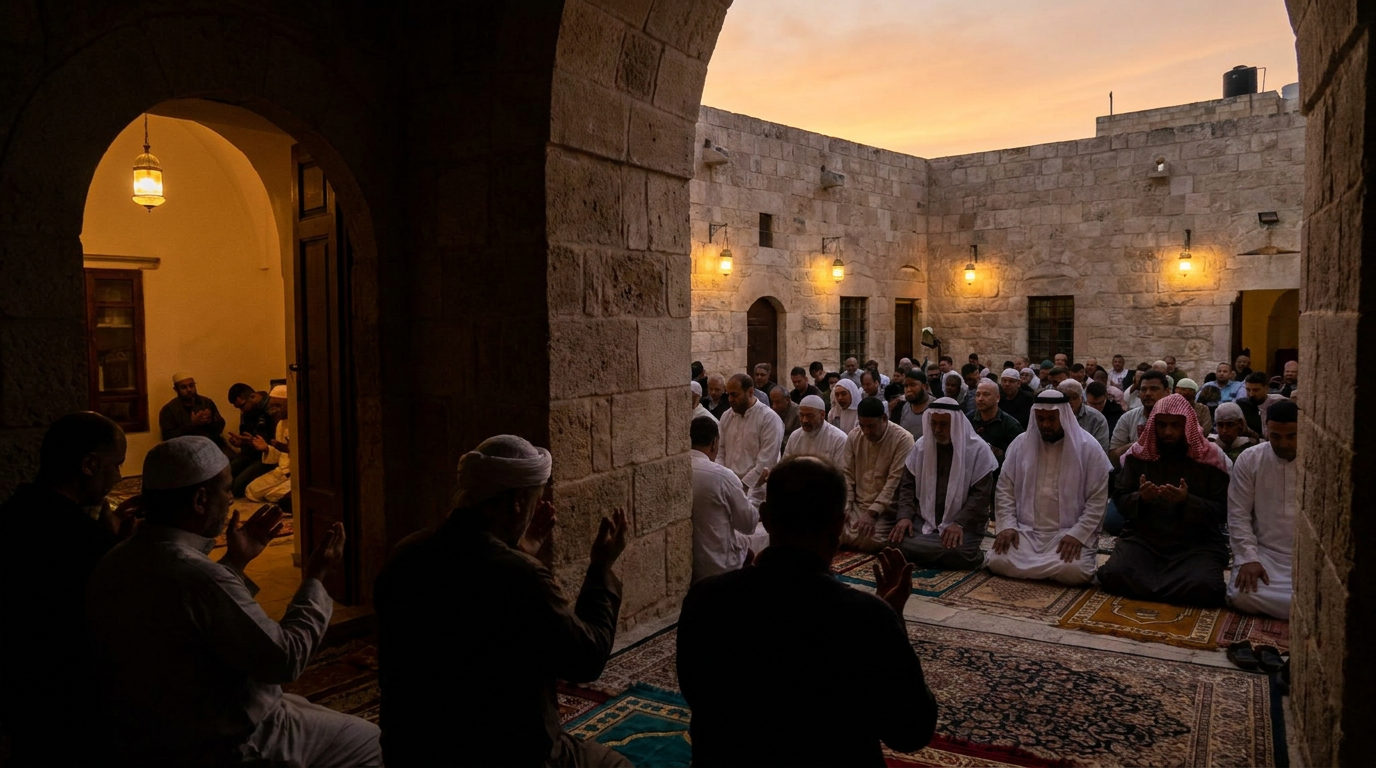
There are many evening practices in Bhakti Yoga. You can learn them gradually. Please do not feel pressure to do everything at once. Choose what nourishes your heart.
Sandhyā: Prayer at Sacred Transitions
The Sanskrit word sandhyā refers to the junctions or transition times of the day, especially dawn, noon, and dusk. These times are considered spiritually powerful because they mark a shift in energy.
Evening sandhyā is a time to pause as daylight fades. In some traditions, practitioners recite prayers, offer water, meditate on sacred mantras, or worship the Lord.
For a modern practitioner, evening sandhyā can be very simple:
- Pause at sunset
- Light a candle or lamp
- Chant a mantra
- Offer gratitude
- Pray for guidance and protection
The deeper principle is awareness. Instead of rushing unconsciously from day into night, we honor the transition.
Ārati: Offering Light with Love
Ārati is a devotional ceremony where light is offered to the Lord. It may include a lamp, incense, flowers, water, cloth, music, and singing.
In temples, evening ārati can be joyful and powerful, with bells, drums, and kirtan. At home, ārati can be simple and quiet.
You may light a candle and gently offer it before a sacred image while singing or praying. The flame represents love, clarity, and the offering of our consciousness to God.
When we offer light, we are also asking that the light of devotion shine within us.
Kirtan: Singing the Holy Names Together
Kirtan is devotional singing, often call-and-response. It is one of the most accessible and joyful forms of Bhakti practice.
In the evening, kirtan can help release the emotional weight of the day. Singing sacred names with others reminds us that spiritual life is not only private; it is shared.
The Śrīmad-Bhāgavatam praises hearing and chanting about God as a purifying practice:
“Hearing and chanting about the transcendental activities of the Lord cleanses the heart.”
—Śrīmad-Bhāgavatam 1.2.17, practical summary
This means that sacred sound helps remove layers of fear, envy, and forgetfulness. Over time, the heart becomes softer and more naturally loving.
Japa: Personal Mantra Meditation
Japa is the quiet repetition of a mantra, often using a string of beads called a mālā. A traditional mālā has 108 beads, though you can begin with any number of repetitions.
Evening japa can be especially helpful if your mind is restless. Repeating the Holy Name gives the mind a loving place to rest.
Try chanting one round, or simply chant for five minutes. If the mind wanders, gently bring it back. There is no need to be harsh with yourself.
The practice is a relationship, not a performance.
Evening Prayers for Different Needs
Prayer is deeply personal. Some evenings we feel grateful. Other evenings we feel exhausted, confused, or broken-hearted. God welcomes us in every condition.
Below are simple prayers you can use or adapt.
An Evening Prayer of Gratitude
“Dear Lord, thank You for this day. Thank You for the breath in my body, the food I received, the shelter I have, and the love that touched my life. Thank You for protecting me in ways I noticed and in ways I did not notice. Please help me live with a grateful heart and use my blessings in service to others.”
An Evening Prayer for Peace
“Beloved God, my mind feels restless tonight. I bring You my worries, fears, and unfinished thoughts. Please help me release what I cannot control. Please fill my heart with peace. Let me remember that I am held by Your love, now and always.”
An Evening Prayer for Forgiveness
“Lord, I look back on this day with honesty. Where I was unkind, please forgive me. Where I was proud, please humble me. Where I was careless, please awaken me. Help me repair what can be repaired and learn what must be learned. Please guide me to become more loving tomorrow.”
An Evening Prayer for Family and Loved Ones
“Dear God, please bless my family and loved ones. Protect them in body, mind, and spirit. Bring healing where there is pain, understanding where there is conflict, and love where there is distance. May our home become a place of kindness, patience, and devotion.”
An Evening Prayer for Service
“Lord, please show me how to serve. Let my hands be useful, my words be gentle, and my heart be open. May I see every person as Your beloved child. Please help me offer my work, relationships, and responsibilities as acts of love.”
An Evening Prayer Before Sleep
“Dear Lord, I place myself in Your care. Please protect my dreams and rest my mind. May my heart remember You through the night. If I wake tomorrow, may I wake with gratitude and serve with love.”
How to Build a Consistent Evening Prayer Habit
Many people begin with inspiration but struggle with consistency. This is normal. The path of Bhakti Yoga is compassionate and practical. We grow step by step.
Start Small and Sincere
It is better to pray sincerely for five minutes every night than to create a long routine that becomes overwhelming.
Start with three simple steps:
- Offer gratitude
- Chant or pray for a few minutes
- Surrender the night to God
Once this becomes natural, you can add scripture reading, journaling, ārati, or more chanting.
Connect Prayer to an Existing Habit
A simple way to build consistency is to connect evening prayer with something you already do.
For example:
- After brushing your teeth, sit for prayer
- After dinner, light a candle
- Before turning off your phone, chant one mantra
- Before bed, read one sacred verse
This makes prayer part of the rhythm of life.
Keep Your Practice Beautiful but Simple
A clean space, a small candle, fresh water, or flowers can make the heart feel invited. But do not let external details become obstacles.
If you are traveling, pray in your car.
If you are tired, pray lying down.
If you are emotional, pray through tears.
If you have only one minute, offer that one minute.
God is not limited by our circumstances.
Use a Prayer Journal
A prayer journal can help you become more aware of your spiritual growth.
You might write:
- What am I grateful for today?
- Where did I notice God’s presence?
- What do I need help with?
- Who needs my prayers?
- What lesson is my heart learning?
Over time, you may see patterns of grace. You may realize that prayers were answered in ways you did not expect. You may also see how your heart is slowly becoming more patient, humble, and loving.
Pray with Others When Possible
Evening prayer can be deeply nourishing when shared.
Families can gather for five minutes of chanting. Friends can read one verse together over the phone. A community can host evening kirtan or online prayer.
In Bhakti Yoga, spiritual community is called sanga. Sanga means association or company. Loving spiritual association helps us stay inspired and supported.
We do not walk the path alone.
What to Chant in the Evening
Chanting is one of the most practical and powerful forms of evening prayer. It engages the voice, ears, mind, and heart.
The Hare Krishna Mahā-Mantra
The Hare Krishna mantra is a simple and profound prayer:
Hare Krishna, Hare Krishna,
Krishna Krishna, Hare Hare,
Hare Rama, Hare Rama,
Rama Rama, Hare Hare
This mantra can be understood as a heartfelt call: “O Lord, O Divine energy of love, please engage me in Your service.”
You can chant it:
- Softly before sleep
- With beads as japa meditation
- In song as kirtan
- While walking
- With family or friends
- During stressful moments
The Holy Name meets us wherever we are.
Om Namo Bhagavate Vāsudevāya
This is another beloved Bhakti mantra:
Om Namo Bhagavate Vāsudevāya
A simple meaning is: “I offer my respect to the Supreme Lord, Vāsudeva.”
Vāsudeva is a name of Krishna, meaning the all-pervading Lord who dwells in every heart.
This mantra is peaceful and grounding. It can be chanted slowly in the evening to help the mind settle.
Śrī Krishna Śaraṇaṁ Mama
This prayer means:
“Shri Krishna is my shelter.”
Śaraṇam means shelter or refuge. Mama means mine.
This is a beautiful mantra when you feel vulnerable or uncertain. It reminds the heart that our deepest safety is in God’s love.
The Names of God in Any Tradition
Bhakti Yoga honors the sincere calling of God’s names. If you come from another background, you may pray with the names that are sacred to you.
You may chant:
- Krishna
- Rama
- Govinda
- Radha
- Narayana
- Jesus
- Allah
- Adonai
- Divine Mother
- Beloved Lord
The essential principle is loving remembrance. The name becomes a bridge between the soul and the Divine.
Common Questions About Evening Prayer
Many sincere seekers wonder if they are “doing it right.” Let us approach these questions gently.
Do I Need to Know Sanskrit?
No. Sanskrit mantras are powerful and beautiful, but God understands every language.
You can pray in English. You can pray in your mother tongue. You can pray without words. You can chant Sanskrit slowly and learn the meanings over time.
The heart’s sincerity is more important than pronunciation perfection.
What If I Feel Distracted?
Distraction is part of the human condition. Do not be discouraged.
When the mind wanders, gently return to the prayer, the mantra, or the breath. Each return is itself an offering.
Bhakti is not about forcing the mind into silence. It is about lovingly bringing the mind back to God again and again.
What If I Feel Unworthy?
Many people feel unworthy of prayer, especially when carrying guilt, grief, or spiritual confusion.
But Bhakti teaches that God’s mercy is greater than our weakness. We do not become pure before approaching God; we approach God so the heart can be purified.
Come as you are. The Lord is compassionate.
Can Evening Prayer Help Anxiety?
Evening prayer can be a meaningful support for anxiety because it creates a rhythm of grounding, reflection, surrender, and sacred sound. Chanting can calm the nervous system. Gratitude can shift attention. Prayer can help us feel less alone.
At the same time, if anxiety is severe or ongoing, it is wise to seek support from trusted professionals, counselors, doctors, or mental health practitioners. Spiritual practice and practical care can work together.
How Long Should Evening Prayer Be?
Begin with what is realistic.
Five minutes of sincere prayer is valuable. Ten minutes can be beautiful. Thirty minutes may become a nourishing daily practice. Some devotees spend longer in chanting, study, and worship.
The goal is not to impress anyone. The goal is to grow in love.
Bringing Evening Prayer into Daily Life
Evening prayer is not separate from the rest of life. It gently transforms how we live the next day.
Let Prayer Shape Your Speech
If we pray for kindness at night, we can practice kindness in our words tomorrow.
Before speaking, we might ask:
“Will this bring healing?”
“Is this truthful and compassionate?”
“Am I speaking to serve or to control?”
This is Bhakti in action.
Let Prayer Shape Your Work
The Bhagavad-gītā teaches the practice of offering our work to God. This is called karma-yoga when we act without selfish attachment, and it becomes deeply devotional when offered with love.
You can pray in the evening:
“Whatever work I did today, I offer to You. Whatever work comes tomorrow, may I do it as service.”
This turns ordinary duties into spiritual practice.
Let Prayer Shape Your Relationships
Evening prayer can soften resentment and increase compassion.
If someone hurt you, you can ask God for wisdom and healing. If you hurt someone, you can ask for courage to apologize. If a relationship is strained, you can pray for humility and clarity.
Bhakti is not escapism. It helps us become more loving, responsible, and truthful.
Let Prayer Shape Your Rest
Many of us fall asleep with screens, worries, or endless thoughts. Evening prayer offers another way.
Try ending your night with a sacred name instead of a scrolling feed. Let the final sound in your mind be prayer. Let your last conscious act be surrender.
Over time, this can change the quality of your sleep and the tenderness of your morning.
A Complete Evening Prayer Practice You Can Follow Tonight
Here is a simple, complete evening prayer guide you can use just as it is.
Step One: Light and Presence
Sit comfortably. Light a candle or simply place your hands together.
Say:
“Dear Lord, I pause now to remember You. Please help me be present.”
Take three slow breaths.
Step Two: Gratitude
Name three blessings from the day.
Then say:
“Thank You for these gifts. Thank You for guiding me, protecting me, and giving me another day to learn love.”
Step Three: Reflection
Think gently about the day.
Ask:
“Where did I love well?”
“Where do I need forgiveness?”
“What is one lesson I can carry into tomorrow?”
Pray:
“Please forgive my mistakes. Please help me grow. Please make my heart humble and kind.”
Step Four: Chanting
Chant the Hare Krishna mahā-mantra slowly for three to ten minutes:
Hare Krishna, Hare Krishna,
Krishna Krishna, Hare Hare,
Hare Rama, Hare Rama,
Rama Rama, Hare Hare
If you prefer, chant another sacred name or prayer that opens your heart.
Step Five: Scripture
Read one short verse. You may use Bhagavad-gītā 9.26 or 18.65.
Reflect:
“How can I offer love to God tomorrow in one practical way?”
Step Six: Prayer for Others
Pray for your family, friends, teachers, community, and all beings.
“May all beings be protected. May all hearts find peace. May those who are suffering receive comfort. May I become an instrument of Your love.”
Step Seven: Surrender
Close with:
“Dear Lord, I offer this night to You. Please let me rest in Your shelter. May I wake with gratitude and serve with love.”
Then bow your head, sit quietly for a moment, and go to sleep peacefully.
The Heart of Evening Prayer
At its deepest level, evening prayer is not only a ritual. It is a relationship.
It is the soul turning toward the Source. It is the child speaking to the Divine Parent. It is the friend confiding in the Beloved. It is the servant offering the day’s work to the Master of love.
Bhakti Yoga teaches that God is personal, loving, and reachable through sincere devotion. The Lord is not far away. God is present in the heart, waiting for us to turn inward with honesty and affection.
The evening gives us that chance every day.
We do not need to bring a perfect mind.
We do not need to bring a perfect life.
We do not need to bring perfect words.
We can bring a tired heart, a grateful heart, a confused heart, a hopeful heart. We can bring one candle, one tear, one mantra, one whispered prayer.
And that can be enough to begin.
The path of Bhakti grows through small sincere steps. Tonight, perhaps your step is to say thank you. Perhaps it is to chant one round of japa. Perhaps it is to ask forgiveness. Perhaps it is to pray for someone who is suffering. Perhaps it is simply to sit quietly and let God love you.
Wherever you come from, whatever your background, and however long it has been since you prayed, you are welcome.
Take one sincere step toward God this evening. Offer one prayer, one sacred name, one moment of love. The Divine is already reaching toward you.
FAQs
What are evening prayers?
Evening prayers are a time of spiritual reflection and communication with a higher power, typically performed at the end of the day. They are a way for individuals to express gratitude, seek guidance, and find peace before bedtime.
What are some common evening prayers?
Common evening prayers include the Lord’s Prayer, the Serenity Prayer, and the Prayer of St. Francis. Additionally, individuals may choose to recite personal prayers or meditations that align with their beliefs and values.
Why are evening prayers important?
Evening prayers are important as they provide a dedicated time for individuals to connect with their spirituality, reflect on their day, and find solace before resting. They can also help promote a sense of peace and mindfulness, leading to better sleep and overall well-being.
How can one incorporate evening prayers into their routine?
Evening prayers can be incorporated into one’s routine by setting aside a specific time each evening for prayer and reflection. This can be done individually or with family members, and can include reading from religious texts, reciting traditional prayers, or engaging in silent meditation.
Are there specific rituals or practices associated with evening prayers?
Specific rituals or practices associated with evening prayers may vary depending on an individual’s religious or spiritual beliefs. Some common practices include lighting candles, using prayer beads, or engaging in specific postures or gestures during prayer. It is important to respect and adhere to the traditions of one’s faith when engaging in evening prayers.

