
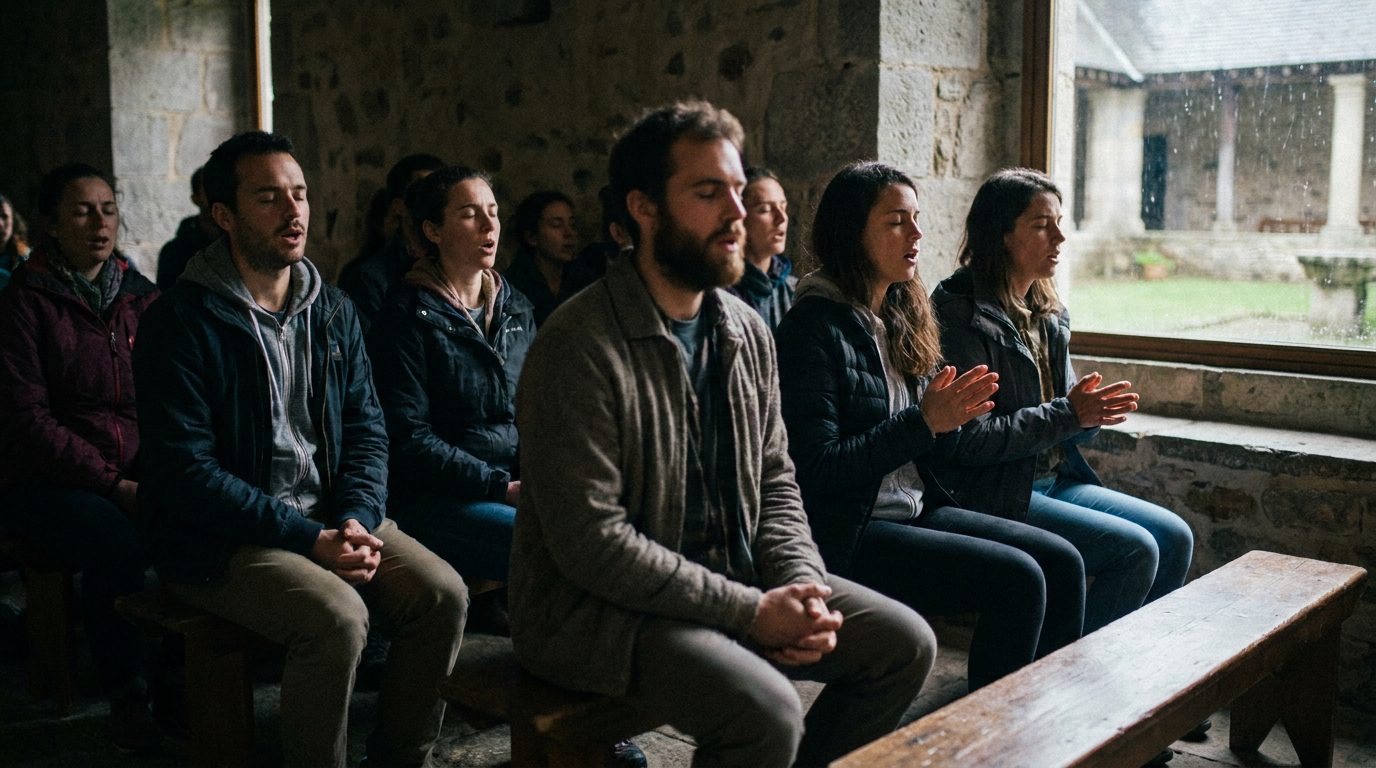
There is something deeply natural about chanting.
Before it becomes a “practice,” before we understand the philosophy, before we know the Sanskrit words or the melodies, chanting begins as something very human: the heart reaching out.
A child calls for their mother. A friend whispers the name of someone they love. A person in pain says, “God, please help me.” Another person, filled with gratitude, sings without even knowing why.
In Bhakti Yoga, the path of devotion, chanting is the sacred art of calling out to the Divine with love. It is simple, accessible, and profound. You do not need to be born into a certain culture, know a particular language, or have a perfect voice. You do not need to be “spiritual enough.” You only need a sincere willingness to begin.
Chanting is not meant to be forced. It is meant to flow.
When we embrace the naturalness of chanting, mantra meditation becomes less like a task and more like coming home.
Bhakti Yoga teaches that we are not merely bodies or minds, but eternal spiritual beings. Beneath all our roles, stories, responsibilities, and struggles, there is a deeper self that longs for connection with God.
In Sanskrit, the word bhakti means loving devotion. It is love expressed through remembrance, prayer, service, hearing sacred wisdom, and chanting the names of God. The word yoga means union or connection. So Bhakti Yoga is the path of reconnecting with God through love.
Chanting is one of the most cherished practices in Bhakti Yoga because it gives the heart a direct way to express that love.
The Heart Already Knows How to Call
When we love someone, their name carries meaning. It is not just a sound. It holds relationship, memory, affection, and presence.
In the same way, the names of God are understood in Bhakti scriptures to be spiritually alive. When we chant divine names—such as Krishna, Rama, Govinda, Gopala, Radha, or other sacred names of the Lord—we are not simply repeating syllables. We are calling to the Supreme Person with devotion.
The Padma Purana, a respected Bhakti scripture, explains that the holy name of God is not different from God Himself. This may be a new idea for many readers, but practically it means that chanting is a way to be in God’s presence wherever we are.
You can chant in a temple, at home, in the car, on a walk, or quietly in your heart. The Divine is not limited by location.
Chanting Does Not Require Perfection
Many people hesitate to chant because they worry they will do it wrong. They may wonder:
“Is my pronunciation good enough?”
“Do I need to understand Sanskrit?”
“What if my mind wanders?”
“What if I am not pure?”
“What if I don’t feel anything?”
These are honest questions. And the gentle answer from the Bhakti tradition is: begin anyway.
Chanting is not a performance. It is a relationship.
Just as a loving parent is happy when a child attempts to speak, God is pleased by sincere effort. The heart’s intention matters deeply. Pronunciation can improve over time. Focus can deepen gradually. But sincerity is welcome from the very beginning.
Sanskrit Mantras, Simply Explained
A mantra is a sacred sound vibration that helps free the mind and awaken the heart. The Sanskrit root can be understood as man, meaning mind, and tra, meaning to protect or deliver. In simple words, a mantra is a spiritual sound that helps carry the mind toward God.
One of the most beloved mantras in Bhakti Yoga is the Hare Krishna maha-mantra:
Hare Krishna Hare Krishna
Krishna Krishna Hare Hare
Hare Rama Hare Rama
Rama Rama Hare Hare
Maha means great, so maha-mantra means “the great mantra.” In this prayer, we are calling upon God and God’s loving energy. “Krishna” means the all-attractive Lord. “Rama” means the source of spiritual joy. “Hare” is a call to the divine energy of the Lord, especially understood by many Bhakti practitioners as Srimati Radharani, the highest expression of devotion.
A simple meaning of the mantra is: “O Lord, O divine energy of the Lord, please engage me in Your loving service.”
The Flow of Chanting Begins With Listening
Chanting is not only speaking or singing. It is also listening.
In fact, listening is at the heart of mantra meditation. We chant, and then we allow the sound to enter the ears and touch the heart. We bring the wandering mind back, again and again, not with frustration but with gentleness.
This is where chanting becomes a practical spiritual discipline.
Hearing With the Heart
In the Bhagavad-gita, Krishna says, “Always think of Me, become My devotee, worship Me, and offer your homage unto Me” (Bhagavad-gita 18.65). This instruction is both lofty and practical. How can we think of God in daily life? Chanting gives us a way.
When we chant, the mind receives a sacred focus. Instead of being carried only by worries, plans, memories, and distractions, the mind is invited to rest in divine sound.
This does not mean thoughts disappear immediately. The mind may still wander. That is normal. Chanting teaches us how to return.
Each return is an offering.
The Mind Wanders, Love Returns
Sometimes people feel discouraged when they notice how restless their mind is during chanting. But noticing the mind’s restlessness is not failure. It is awareness.
In Bhakti Yoga, we are not trying to conquer the mind by harshness. We are learning to guide the mind through loving remembrance.
If the mind wanders one hundred times and we return to the mantra one hundred times, then we have practiced returning to God one hundred times.
That is beautiful.
Let the Sound Lead
Chanting becomes natural when we stop trying to control every experience. Some days the chanting feels sweet. Some days it feels dry. Some days the heart opens. Some days the mind resists. All of this can be part of the journey.
The invitation is simple: let the sound lead.
Rather than forcing a feeling, we receive the mantra as a gift. We chant with humility: “My dear Lord, I am here. Please help me remember You.”
Over time, this prayerful mood softens the heart.
Chanting as Prayer, Not Just Repetition
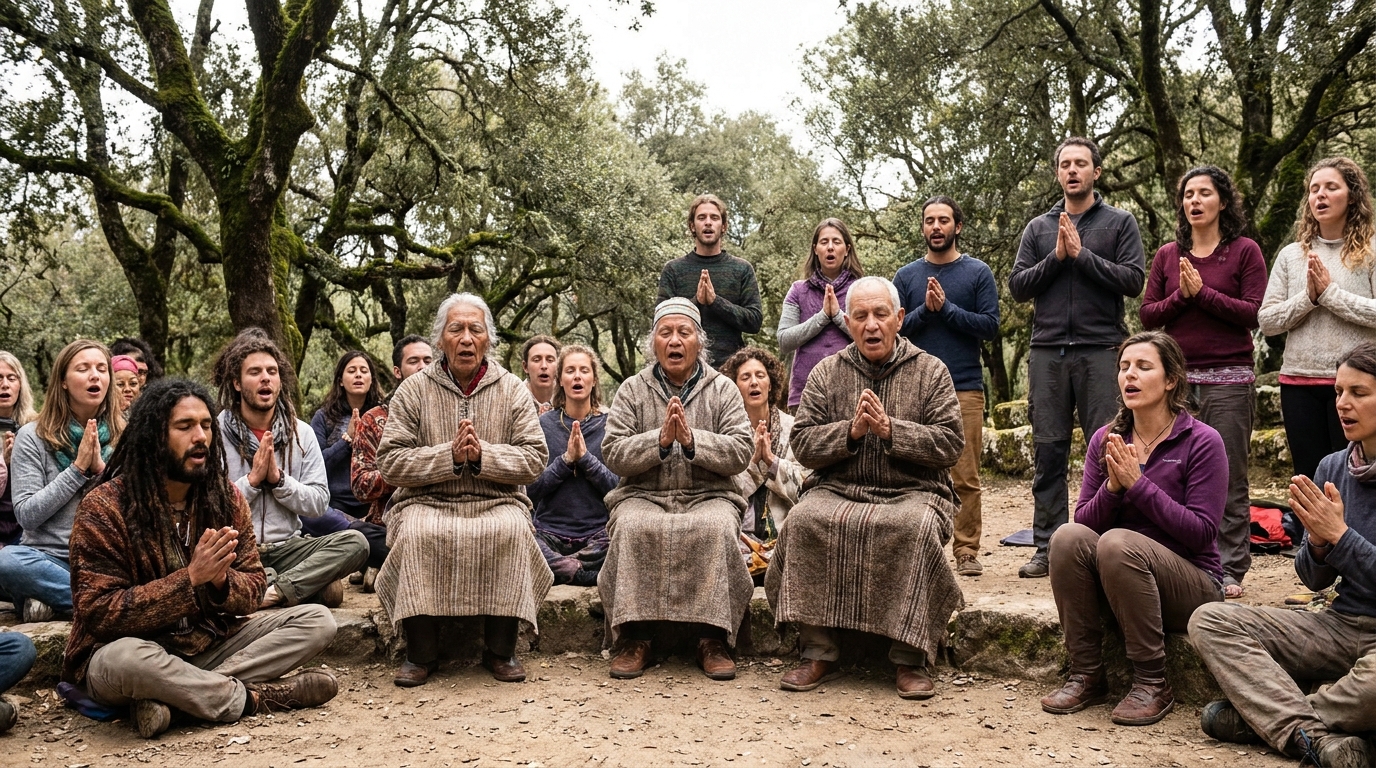
From the outside, chanting may look like repetition. But from within, it is prayer.
Repetition can be mechanical, but it can also be deeply meaningful. We breathe repeatedly. The heart beats repeatedly. We say “I love you” more than once because love wants to be renewed.
In the same way, chanting repeats the names of God so the heart can repeatedly turn toward the Divine.
Repetition Creates Relationship
Relationships grow through repeated contact. We do not become close to someone by thinking of them once. We build connection through regular attention, conversation, service, and affection.
Chanting is spiritual contact.
Every mantra is like knocking on the door of divine relationship. And Bhakti scriptures assure us that God is not distant or indifferent. Krishna is described in the Bhagavad-gita as the friend of all living beings (Bhagavad-gita 5.29). He is present in the heart, lovingly accompanying each soul.
When we chant, we are not trying to get God’s attention as if He has forgotten us. Rather, we are awakening our own attention to the One who has always been near.
The Holy Name Meets Us Where We Are
One of the merciful qualities of chanting is that it meets us honestly.
If we are joyful, we can chant with gratitude.
If we are grieving, we can chant through tears.
If we are confused, we can chant for guidance.
If we are tired, we can chant softly.
If we are restless, we can chant and breathe.
If we are skeptical, we can chant as an experiment in sincerity.
Bhakti Yoga does not ask us to pretend. It invites us to bring our real self before God.
In the Srimad-Bhagavatam, a central scripture of the Bhakti tradition, hearing and chanting about the Lord are described as powerful ways to cleanse the heart (Srimad-Bhagavatam 1.2.17). This cleansing is not about shame. It is about uncovering our original loving nature, like wiping dust from a mirror.
Chanting in Joy and Difficulty
It is natural to chant when we feel inspired. But chanting in difficulty can be especially transformative.
When life feels uncertain, the holy name becomes shelter. When the heart feels heavy, the mantra becomes a lamp. When we do not know what to say, chanting gives us words that are already sacred.
Many devotees describe the mantra as a spiritual companion. It walks with us through change, loss, success, failure, growth, and renewal.
The flow of chanting does not require life to be perfect. It helps us remember God within the imperfection.
Please visit our website for more information on our articles: articles.
The Natural Rhythm of Daily Practice
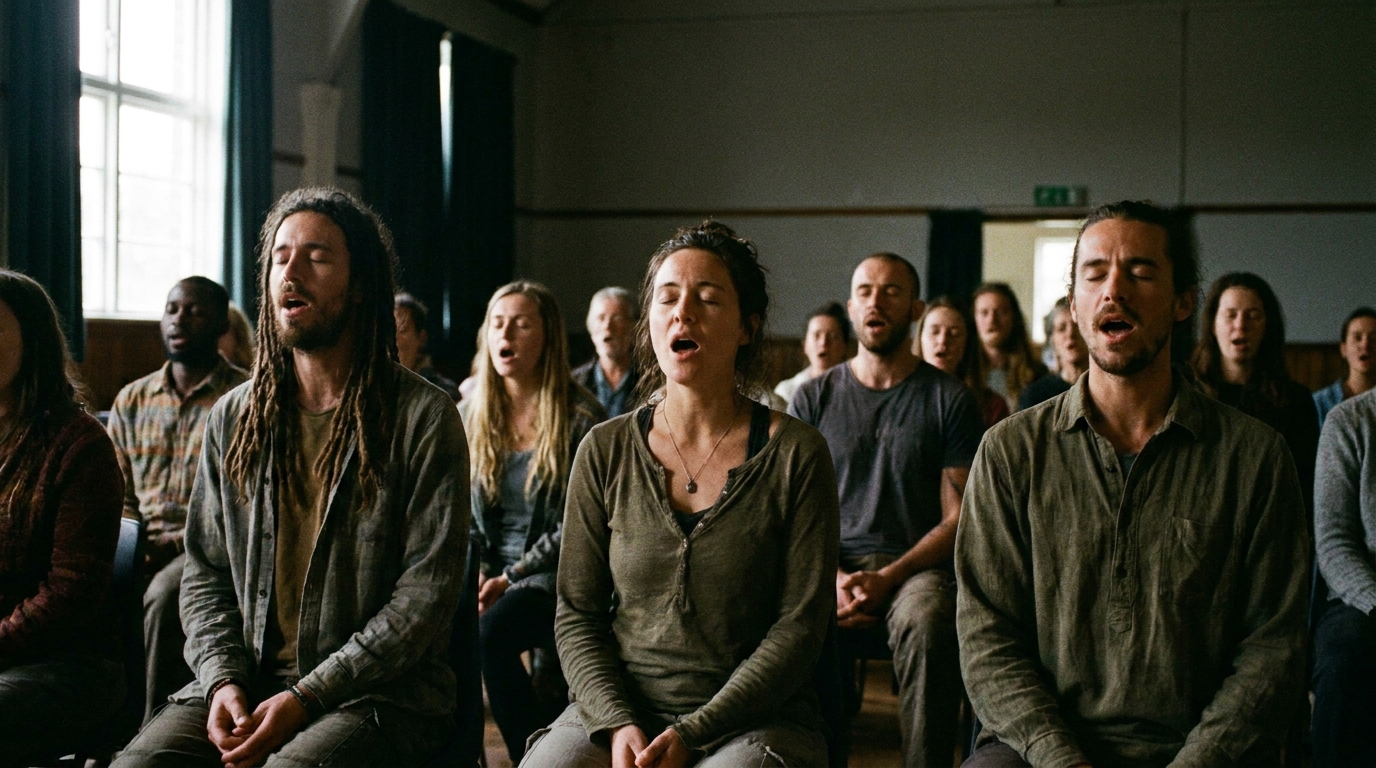
A devotional life is not built in one dramatic moment. It grows through small, sincere steps.
Chanting becomes natural when it finds a place in the rhythm of our day. Like watering a plant, daily mantra meditation nourishes the soul little by little.
Begin With What Is Realistic
If you are new to chanting, you do not need to begin with hours of practice. Start with something simple and steady.
You might chant for five minutes in the morning. You might chant one round on beads. You might sing one kirtan before bed. You might repeat the maha-mantra during a walk.
The important thing is sincerity and consistency.
In Bhakti Yoga, chanting on beads is called japa. Japa is a personal, meditative form of chanting, often done quietly. Many practitioners use a strand of 108 beads to help keep focus. One full journey around the beads is called a “round.”
But even if you do not have beads, you can begin with your voice and your heart.
Create a Gentle Sacred Space
A sacred space does not need to be elaborate. It may be a small corner with a picture of Krishna, a candle, a flower, scripture, or simply a clean and quiet place to sit.
Before chanting, you can take a moment to breathe and offer a simple prayer:
“Dear God, please help me chant with sincerity. Please let this practice bring me closer to You and help me serve others with love.”
This small pause can transform chanting from a routine into an offering.
Let Chanting Enter Ordinary Life
Chanting is not meant to stay separate from daily life. It can flow into everything.
You can chant while cooking a meal.
You can play soft kirtan while cleaning.
You can remember the mantra before a difficult conversation.
You can chant quietly when anxiety rises.
You can sing with others in a community gathering.
You can offer your work as service and carry the holy name in your heart.
This is the beauty of Bhakti Yoga as a practical path. It does not require us to abandon responsibility. It teaches us to spiritualize our responsibilities through remembrance, prayer, and service.
Kirtan: Chanting Together in Devotional Community
While japa is personal chanting, kirtan is chanting together, often with music. Kirtan is a joyful and powerful practice in Bhakti Yoga. One person leads, others respond, and the sacred names are sung in call-and-response.
Kirtan welcomes everyone. You can sing loudly, softly, or simply listen. You can clap, dance, sit quietly, or close your eyes. The point is not musical skill. The point is shared devotion.
The Power of Shared Sacred Sound
When people gather to chant, something beautiful happens. Individual voices blend into one offering. Strangers become companions. The atmosphere becomes lighter. The heart remembers that spiritual life is not meant to be walked alone.
The Brihan-naradiya Purana emphasizes chanting the holy names of God as the recommended spiritual practice for this age. The verse repeats, “harer nama harer nama harer namaiva kevalam”—the holy name, the holy name, the holy name of the Lord is the essential way.
This repetition is itself instructive. It gently says: do not overlook the simplicity of chanting. Do not underestimate it because it is accessible.
What is simple can be sacred.
No One Is an Outsider
At The Bhakti House, and in the true spirit of Bhakti, people of all backgrounds are welcome. You may come from a Hindu, Christian, Jewish, Muslim, Buddhist, Sikh, spiritual-but-not-religious, or non-religious background. You may be curious, committed, uncertain, or just seeking peace.
Chanting does not demand that you have everything figured out.
It invites you to experience. To listen. To soften. To participate at your own pace.
God’s names are not the property of one group. They are gifts of grace, meant to uplift all hearts.
Kirtan as Service
In Bhakti Yoga, music is not only entertainment. It can be seva, or loving service. Seva means serving God and others with devotion.
When someone leads kirtan, plays an instrument, cooks a meal, welcomes a guest, cleans the floor, or listens kindly to another person, all of it can become seva when offered with love.
Chanting together naturally awakens this mood of service. As the heart becomes nourished, it wants to give.
What Makes Chanting Feel Natural Over Time
At first, chanting may feel unfamiliar. The Sanskrit words may be new. The melody may feel different. Sitting with the mind may feel challenging.
But with gentle practice, chanting begins to feel natural—sometimes more natural than the noise we were living in before.
The Heart Becomes Softer
The holy name works quietly and deeply. Over time, chanting can soften harshness, reduce selfishness, and awaken compassion. We may become more patient with others. We may notice our habits more clearly. We may feel drawn to healthier choices. We may become more grateful.
This is spiritual growth.
Bhakti Yoga is not only about having peaceful experiences during meditation. It is about becoming a more loving person.
If chanting helps us become kinder, humbler, more forgiving, and more willing to serve, then the practice is entering the heart.
The Taste Develops Gradually
In Sanskrit, the word ruci means taste or genuine attraction. In the beginning, chanting may be done by discipline or curiosity. Later, by grace, a spiritual taste begins to awaken.
This taste cannot be forced. It grows through regular practice, good association, sincere prayer, and avoiding habits that harden the heart.
Just as our taste for healthy food can develop over time, our taste for spiritual sound deepens as we continue. The mantra that once felt foreign may begin to feel like shelter.
Grace Is Always Present
Bhakti Yoga is a path of grace. Our effort matters, but we are not relying only on our effort. We chant, and we ask for mercy. We practice, and we trust that God is guiding us from within.
Krishna says in the Bhagavad-gita that for those who lovingly serve Him, He gives the understanding by which they can come to Him (Bhagavad-gita 10.10). This is a deeply comforting promise.
We are not walking alone. The Lord in the heart sees every sincere step.
Common Obstacles in Chanting and How to Meet Them
Every spiritual practitioner faces obstacles. This does not mean we are failing. It means we are human.
The path of chanting is natural, but it is also purifying. As we chant, we may notice distractions, doubts, emotions, and old patterns. These can become opportunities for deeper surrender.
“My Mind Is Too Busy”
A busy mind is one of the most common experiences in chanting.
Rather than fighting the mind, gently bring it back to the sound. Hear one mantra. Then the next. Then the next.
You can also try chanting a little louder, slowing down, sitting upright, or praying before you begin. If your mind wanders, do not give up. Return with kindness.
The practice is the return.
“I Don’t Feel Devotion”
Devotion is both the path and the fruit. We practice Bhakti Yoga to awaken love, even if we do not feel much love at first.
A simple prayer can help:
“My dear Lord, I do not have much devotion, but I want to want it. Please help me.”
This kind of honesty is very dear in Bhakti. Humility opens doors that pride cannot.
“I Feel Unworthy”
Many people carry guilt, shame, or a sense of spiritual unworthiness. But chanting is especially for those who need healing.
The holy name is not reserved for the pure; it purifies. It is not only for the peaceful; it brings peace. It is not only for the advanced; it guides beginners.
No sincere call to God is wasted.
“I’m Not Sure What I Believe”
You can still chant.
Bhakti Yoga respects sincere inquiry. You do not need to force belief. You can approach chanting as a prayerful experiment: “If You are there, please reveal Yourself in the way I can understand.”
Spiritual life often begins with a small opening, not a complete certainty.
Chanting and the Transformation of Daily Living
The naturalness of chanting is not only felt during meditation. It begins to influence how we live.
When the holy name enters the heart, our relationships, choices, and priorities begin to shift. We start asking different questions: How can I serve? How can I remember God here? How can I respond with love?
From Self-Centeredness to Service
Bhakti Yoga teaches that our deepest happiness comes not from being the center, but from loving service. This may sound opposite to much of modern culture, which often tells us to seek fulfillment through control, achievement, and consumption.
But the heart is nourished by giving.
Chanting helps loosen the tight grip of ego. It reminds us that we belong to God and that all living beings are connected to Him. This naturally inspires compassion and service.
From Anxiety to Shelter
Chanting does not mean we will never feel anxiety. But it gives us a place to bring our anxiety.
The mantra becomes a sheltering sound. Instead of being alone with our thoughts, we sit with God’s names. Instead of spiraling endlessly, we breathe and chant. Instead of trying to control everything, we practice trust.
This is not escapism. It is spiritual grounding.
A grounded heart can act more wisely in the world.
From Routine to Offering
Bhakti Yoga can transform ordinary actions into sacred offerings.
Cooking can become an offering. Work can become an offering. Parenting can become an offering. Study, art, friendship, and community care can become offerings.
Chanting helps us remember the One to whom everything can be offered.
Krishna says in the Bhagavad-gita, “Whatever you do, whatever you eat, whatever you offer or give away… do that as an offering to Me” (Bhagavad-gita 9.27). This verse makes spiritual life wonderfully practical. It means every sincere part of our day can be connected to God.
Embracing the Flow With Humility
To embrace the flow of chanting is to stop treating spiritual life as a competition. We do not need to compare our chanting with someone else’s. We do not need to manufacture advanced emotions. We do not need to appear more devoted than we are.
We can simply come as we are.
Humility Makes the Heart Receptive
Humility in Bhakti Yoga does not mean thinking we are worthless. It means recognizing our dependence on God’s grace. It means being honest, teachable, and open-hearted.
The great saint Sri Chaitanya Mahaprabhu, who widely shared the practice of congregational chanting, taught that one should chant the holy name in a humble mood, more tolerant than a tree, and ready to offer respect to others. This teaching is found in His famous Sikshashtakam prayers.
Practically, this means chanting is not separate from character. If we chant God’s names but remain proud, harsh, or dismissive of others, we can pray for the name to soften us more deeply.
Natural Does Not Mean Careless
When we say chanting is natural, we do not mean casual in a forgetful way. Naturalness includes care, attention, and respect.
A river flows naturally, but it still has direction.
In the same way, our chanting can be relaxed and sincere, yet also intentional. We can set aside time, create a clean space, pronounce the mantra as best we can, and listen carefully.
Love is natural, and love also pays attention.
Let Your Practice Grow Organically
Some seasons of life allow more chanting. Other seasons are demanding. The key is to keep a living connection.
If you miss a day, begin again. If your practice becomes dry, pray for renewal. If you feel inspired, go deeper. If you feel overwhelmed, simplify.
The path is long, merciful, and personal. God sees the sincerity behind every effort.
A Simple Way to Begin Chanting Today
If you would like to begin, here is a gentle practice you can try.
Step One: Sit and Breathe
Find a quiet place if possible. Sit comfortably. Take a few slow breaths. Let your shoulders relax. Bring your attention into the present moment.
Offer a simple prayer: “Dear Lord, please help me chant with sincerity.”
Step Two: Chant the Maha-Mantra
Softly chant:
Hare Krishna Hare Krishna
Krishna Krishna Hare Hare
Hare Rama Hare Rama
Rama Rama Hare Hare
You may chant aloud, whisper, or sing. Try to hear each word. When the mind wanders, gently return to the sound.
Step Three: Offer the Fruit
After chanting, pause for a moment. Offer the practice to God. You might pray:
“May this chanting help me remember You. May it help me become more loving. May any peace I receive be shared with others.”
This completes the practice beautifully.
Everyone Can Enter the Stream of Sacred Sound
Chanting is natural because love is natural. Prayer is natural. Calling out for shelter is natural. Singing in gratitude is natural. Longing for God is natural, even when that longing has been covered for a long time.
Bhakti Yoga offers chanting as a practical path of love, mantra meditation, prayer, service, and spiritual growth. It does not ask us to become someone else. It invites us to uncover who we truly are: beloved souls, meant for loving relationship with the Divine.
Whether you are beginning today or returning after many years, you are welcome. Whether your voice is strong or trembling, you are welcome. Whether your faith is clear or still forming, you are welcome.
Take one sincere step. Chant one mantra. Offer one prayer. Serve one person with love. Turn your heart toward God in the way you can today.
The flow of chanting is already waiting, gentle and merciful, ready to carry you closer to the One who has always loved you.
FAQs
What is chanting?
Chanting is the rhythmic speaking or singing of words or sounds, often used in religious or spiritual practices. It can involve repeating a mantra, prayer, or specific words or sounds.
Why does chanting begin to feel natural?
Chanting can begin to feel natural as a result of regular practice and repetition. Over time, the brain becomes accustomed to the rhythm and cadence of the chanting, making it feel more natural and comfortable.
What are the benefits of chanting?
Chanting has been associated with various benefits, including stress reduction, improved focus and concentration, and a sense of calm and relaxation. It is also believed to have spiritual and emotional benefits for some individuals.
How can one start incorporating chanting into their routine?
One can start incorporating chanting into their routine by finding a quiet and comfortable space, selecting a mantra or chant that resonates with them, and practicing regularly. It can be helpful to start with short sessions and gradually increase the duration as one becomes more comfortable with the practice.
Are there different types of chanting?
Yes, there are different types of chanting practiced in various cultures and spiritual traditions. Some examples include Vedic chanting, Buddhist chanting, Gregorian chanting, and Kirtan chanting in Hinduism. Each type of chanting may have its own specific techniques and purposes.

