
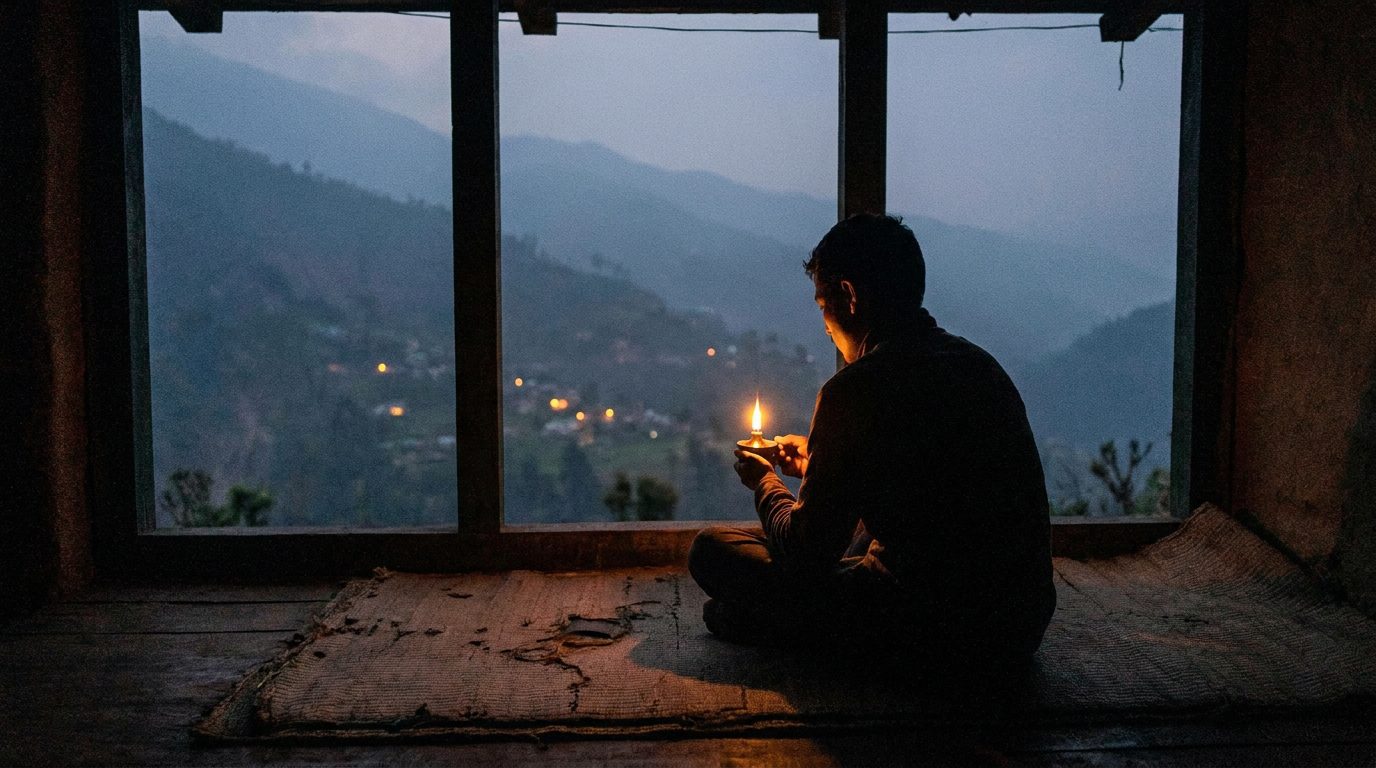
As the day comes to a close, something very tender becomes possible.
The world begins to soften. The sun lowers. The noise of work, responsibilities, messages, and movement slowly fades. In that quiet space between daytime activity and nighttime rest, the heart is invited inward.
In Bhakti Yoga, this evening turning is not simply a routine. It is a loving return.
“Sadhana” means spiritual practice. It is the daily, sincere effort we make to reconnect with God, remember who we truly are, and live with a heart guided by love. Evening sadhana is the practice of ending the day in remembrance, gratitude, prayer, chanting, reflection, and inner peace.
For some, God may be known as Krishna, Rama, Radha, Narayana, the Divine Mother, or another sacred name. For others, God may be understood as the Source, the Beloved, the Supreme, or the loving presence within all beings. At The Bhakti House, we honor sincere seekers from all backgrounds. Bhakti Yoga is not about external labels. It is about awakening love.
Evening sadhana gives the heart a place to rest. It helps us release the weight of the day and offer everything—our successes, our mistakes, our joys, our worries—back to the Divine.
In a world that often glorifies busyness, embracing stillness is a quiet act of devotion.
Understanding Sadhana as a Path of Love
What Does Sadhana Mean?
The Sanskrit word “sadhana” comes from a root that means to accomplish, cultivate, or move toward a goal. In spiritual life, sadhana refers to the practices that help us grow closer to God and awaken our natural loving nature.
Sadhana is not meant to be mechanical or harsh. It is not a performance. It is not something we do to prove we are spiritual.
At its heart, sadhana is a relationship.
Just as we nourish a friendship through time, attention, listening, and affection, we nourish our relationship with God through prayer, chanting, meditation, service, and remembrance.
A simple evening sadhana might include:
- Lighting a candle or lamp
- Chanting sacred names
- Reading a few verses from scripture
- Offering gratitude
- Sitting quietly in prayer
- Reflecting on the day
- Asking for guidance
- Resting the mind in God’s presence
Even five sincere minutes can become powerful when offered with love.
Bhakti Yoga: The Yoga of Devotion
“Bhakti” means devotion, loving service, or heartfelt connection with the Divine. “Yoga” means union or connection. So Bhakti Yoga is the path of reconnecting with God through love.
In the Bhagavad Gita, one of the foundational texts of Bhakti Yoga, Krishna says:
“Always think of Me, become My devotee, worship Me, and offer your homage unto Me. Thus you will come to Me without fail.”
— Bhagavad Gita 18.65
This verse is not merely a command. It is an invitation. Krishna is inviting the heart into loving remembrance. He is saying, “Bring Me into your thoughts. Bring Me into your life. Offer your love, and I will meet you there.”
Evening sadhana is a beautiful time to practice this remembrance. After a full day of doing, planning, and responding, we pause and ask: “Where was God present today? How can I offer this day back in love?”
Why Evening Practice Matters
Morning sadhana is often praised, and rightly so. The early morning hours can be peaceful and spiritually potent. But evening sadhana has its own special mercy.
By evening, we have lived through the day. We have interacted with others. We may have faced stress, temptation, conflict, fatigue, or distraction. The mind may be carrying impressions from conversations, news, work, family needs, or inner struggles.
Evening spiritual practice helps cleanse the heart before sleep.
Instead of carrying unresolved emotions into the night, we bring them into prayer. Instead of falling asleep with a restless mind, we rest in sacred sound. Instead of ending the day in anxiety, we end it in surrender.
In this way, evening sadhana becomes a doorway to inner peace.
Creating a Peaceful Space for Evening Sadhana
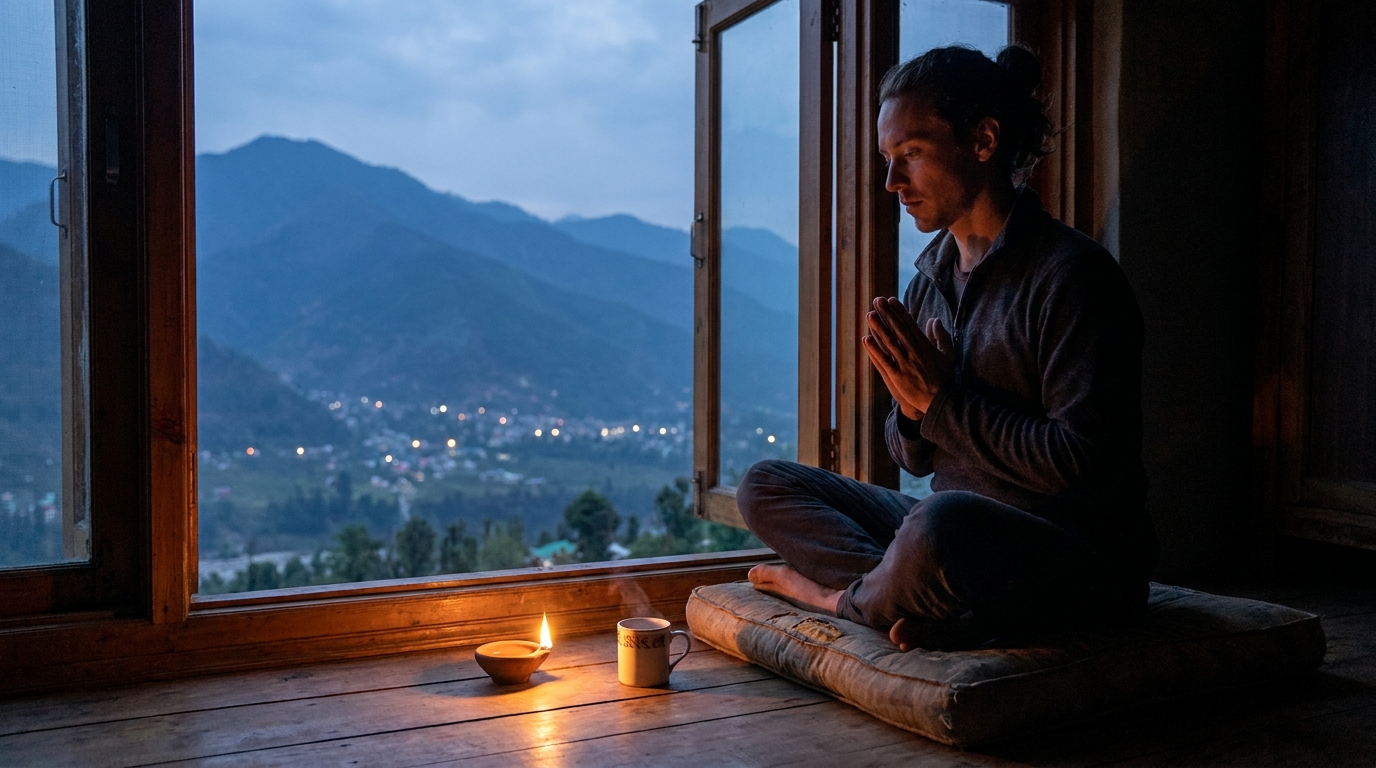
Your Sacred Space Can Be Simple
You do not need a large room, expensive items, or perfect conditions to begin evening sadhana. A sacred space can be as simple as a clean corner, a small table, a cushion, or a bedside area.
You may wish to include:
- A candle or ghee lamp
- Fresh flowers or a plant
- A picture of Krishna, Radha, Rama, Jesus, saints, gurus, or any form of God that inspires devotion
- Sacred texts such as the Bhagavad Gita, Srimad Bhagavatam, or other scriptures
- Prayer beads, known as japa mala
- Incense, if appropriate for your home
- A journal for reflection and gratitude
The purpose of a sacred space is not decoration. It is remembrance.
When you sit there each evening, your heart gradually learns: “This is where I return to God.”
Softening the Atmosphere
Evening sadhana begins before the first prayer or chant. It begins with the atmosphere we create.
You may dim the lights, turn off unnecessary devices, and take a few slow breaths. You may wash your hands and face as a simple act of purification. You may play soft kirtan, which is devotional chanting or singing of sacred names.
In Bhakti tradition, sound is very important. The mind is easily shaped by what it hears. If the final sounds of the day are arguments, advertisements, or endless scrolling, the mind may remain unsettled. But if the evening is filled with mantra, scripture, and prayer, the heart begins to feel held.
A mantra is a sacred sound or phrase that helps protect and guide the mind. One of the most beloved mantras in the Bhakti tradition is the Hare Krishna maha-mantra:
Hare Krishna Hare Krishna
Krishna Krishna Hare Hare
Hare Rama Hare Rama
Rama Rama Hare Hare
“Maha-mantra” means “great mantra.” “Hare” calls upon the divine energy of the Lord, often understood as the compassionate feminine energy of God. “Krishna” means the all-attractive Lord. “Rama” means the source of spiritual joy.
This mantra is a loving call: “O Lord, O Divine Energy of the Lord, please engage me in Your loving service.”
Letting the Home Become a Temple
In Bhakti Yoga, a temple is not only a building. A temple is a place where God is remembered and served.
Your home can become a temple through small acts of devotion:
- Offering food with gratitude before eating
- Speaking kindly
- Keeping sacred sound in the atmosphere
- Welcoming others with compassion
- Creating time for prayer
- Treating daily duties as service
Evening sadhana helps spiritualize the home. It reminds us that God is not separate from ordinary life. The Divine can be remembered while washing dishes, caring for children, answering emails, or preparing for sleep.
When we bring devotion into daily life, the heart begins to discover peace not only in silence, but also in service.
Check out our latest posts at https://thebhaktihouse.org/blog.
A Gentle Evening Sadhana Practice for Inner Peace

Step One: Pause and Breathe
Begin by sitting comfortably. You may sit on the floor, on a cushion, or in a chair. Keep the spine relaxed but upright. Let the hands rest gently.
Close the eyes if that feels comfortable.
Take a few slow breaths.
Inhale gently. Exhale fully.
Let the body know: “The day is ending. I am safe to become still.”
You may silently pray:
“Dear Lord, please help me return to You. Please guide my mind, soften my heart, and accept this small offering.”
This simple pause is powerful. It marks the transition from outward activity to inward devotion.
Step Two: Offer the Day
Before chanting or reading, take a moment to offer the day.
You might say:
“Everything I did today, knowingly or unknowingly, I offer to You. Please forgive my mistakes. Please bless the people I met. Please help me learn from this day and grow in love.”
This practice helps release attachment. We do our best, but we are not the ultimate controllers. Bhakti teaches us to act with sincerity and offer the results to God.
In the Bhagavad Gita, Krishna teaches:
“Whatever you do, whatever you eat, whatever you offer or give away, and whatever austerities you perform—do that as an offering to Me.”
— Bhagavad Gita 9.27
This is one of the most practical verses for everyday spiritual life. Krishna does not say that only rituals count. He says “whatever you do.” Our work, meals, relationships, struggles, and small efforts can all become offerings when done with devotion.
In the evening, we place the whole day at God’s feet.
Step Three: Chant Sacred Names
Chanting is one of the central practices of Bhakti Yoga. In Sanskrit, chanting the names of God is often called “nama-sankirtana” or “kirtan.” “Nama” means name, and “sankirtana” means congregational or heartfelt glorification.
You can chant softly, sing along with a recording, or repeat the maha-mantra on beads.
If using japa mala, a strand of prayer beads, you repeat the mantra once on each bead. This is called “japa,” meaning personal, meditative chanting.
There is no need to chant perfectly. The heart is more important than musical ability or pronunciation. The sacred names are compassionate. They meet us where we are.
You may chant for five minutes, ten minutes, or longer. If your mind wanders, gently bring it back to the sound.
The mantra is like a lamp in the mind. Again and again, it brings light.
Step Four: Read a Small Portion of Scripture
After chanting, read a short passage from an authentic Bhakti scripture. This may include the Bhagavad Gita, Srimad Bhagavatam, Sri Isopanishad, or the songs and teachings of great saints.
You do not need to read much. Even one verse, read with attention, can nourish the heart deeply.
The Srimad Bhagavatam describes hearing about God as a purifying practice:
“Hearing and chanting about the Lord cleanses the heart of the desire to enjoy matter.”
— Srimad Bhagavatam 1.2.17, paraphrased
In simple terms, when we hear sacred wisdom regularly, the heart becomes clearer. Our priorities shift. We begin to desire what is lasting, loving, and true.
When reading in the evening, ask:
- What is God teaching me here?
- How does this apply to my day?
- What quality can I carry into tomorrow?
- How can I love and serve more sincerely?
Scripture is not meant to remain only on the page. It is meant to enter our choices, our speech, our relationships, and our inner life.
Step Five: Pray Honestly
Prayer is the language of the heart.
You do not need elaborate words. You do not need to sound poetic or advanced. In Bhakti Yoga, honest prayer is treasured.
You can pray with gratitude:
“Thank You for carrying me through this day.”
You can pray for help:
“Please give me strength to forgive. Please help me let go of fear.”
You can pray for others:
“Please bless my family, friends, teachers, community, and all beings who are suffering.”
You can pray for devotion:
“Please awaken love for You in my heart.”
The great Bhakti saints often prayed with humility. They did not approach God as if demanding a reward. They approached as servants, friends, children, and lovers of the Divine.
Humility does not mean feeling worthless. It means understanding that we are dependent on grace. It means allowing the heart to become soft enough to receive.
Step Six: Sit in Quiet Gratitude
After chanting, reading, and prayer, sit quietly for a few moments.
Do not rush.
Let the sacred sound settle. Let the prayer echo inside. Let the nervous system rest.
You may place one hand on the heart and silently repeat:
“I am held by God.”
Or:
“May I rest in divine love.”
This quiet stillness is not empty. It is full of presence.
In Bhakti, silence is not the final goal by itself. Silence becomes sacred when it helps us hear the deeper call of love. The still heart becomes more available to God.
Healing the Mind Through Evening Devotion
Releasing the Burden of the Day
Many people go to bed physically tired but mentally restless. The body lies down, but the mind continues reviewing conversations, worrying about tomorrow, or replaying regrets.
Evening sadhana gives the mind a gentle place to put everything down.
You may imagine placing the day like a flower at the feet of the Divine. The pleasant moments, the painful moments, the unfinished tasks, the misunderstandings, the achievements—everything can be offered.
This does not mean we avoid responsibility. If we made a mistake, we can acknowledge it and make amends. If something needs attention tomorrow, we can note it clearly. But we do not need to carry the whole universe on our shoulders through the night.
Bhakti Yoga teaches that we are not alone. God is present, guiding, witnessing, and loving.
The Bhagavad Gita 18.66 offers a deeply comforting teaching:
“Abandon all varieties of separate plans and surrender unto Me. I shall deliver you from all reactions. Do not fear.”
This verse can be misunderstood if taken casually. It does not mean we abandon our duties. Rather, it invites us to stop thinking we are separate from God, independent controllers of everything. Surrender means we turn toward divine shelter while doing our sincere best.
Evening sadhana helps us practice that surrender, one day at a time.
Transforming Anxiety Into Prayer
Anxiety often comes from trying to control what we cannot control. Prayer does not always remove the external situation immediately, but it changes our relationship with it.
Instead of holding fear alone, we bring it into the presence of God.
A simple evening prayer for anxiety might be:
“Dear Lord, my mind is restless. I do not know what will happen. Please guide me. Please protect me from acting out of fear. Please help me trust Your presence and take the next right step.”
This kind of prayer is not weakness. It is spiritual courage.
In Bhakti Yoga, we do not have to hide our vulnerability. We can bring our whole self to God—the faithful part, the doubtful part, the tired part, the longing part.
The Divine is not frightened by our humanity.
Cultivating Forgiveness Before Sleep
Evening is a powerful time to practice forgiveness.
We may ask:
- Did I hurt anyone today through words, actions, or neglect?
- Am I holding resentment toward someone?
- Is there someone I need to forgive, even gradually?
- Do I need to ask forgiveness from God or another person?
- Can I release at least a small portion of bitterness tonight?
Forgiveness does not mean approving harm. It does not mean ignoring boundaries. It means asking God to help free the heart from hatred.
Sometimes forgiveness takes time. We may need support, counseling, honest conversation, or distance from harmful situations. But even then, we can pray:
“Please help me move toward freedom. Please help me not be ruled by anger. Please protect my heart.”
In the devotional life, forgiveness grows naturally as we remember that every living being is a soul, a spiritual being, on a journey. Some are confused. Some are wounded. Some act wrongly. We can seek justice and maintain boundaries while still praying for the healing of all.
Sleeping in Sacred Remembrance
The final thoughts before sleep matter.
If we fall asleep after sacred sound, prayer, or remembrance, the heart carries that impression into rest. Over time, this can soften dreams, calm the mind, and help us wake with more clarity.
You might end your evening sadhana with a simple mantra, repeated quietly:
“Hare Krishna Hare Krishna Krishna Krishna Hare Hare
Hare Rama Hare Rama Rama Rama Hare Hare”
Or:
“Thank You, Lord. Please let me remember You.”
This is a beautiful way to close the day.
Sleep itself can become an offering. We rest the body so we may serve again tomorrow.
Bringing Bhakti Into Ordinary Evening Routines
Turning Dinner Into an Offering
In Bhakti Yoga, food can become sacred when offered to God with love. This sanctified food is called “prasadam,” which means mercy or grace.
Before eating dinner, you may place the food before a picture of God or simply hold it in gratitude and pray:
“Dear Lord, thank You for this food. Please accept this offering and bless it. May it nourish my body, mind, and soul so I can serve with love.”
The Bhagavad Gita 9.26 says:
“If one offers Me with love and devotion a leaf, a flower, fruit, or water, I will accept it.”
This verse is very sweet. Krishna does not ask for wealth or grandeur. He asks for love. Even a simple offering, made sincerely, is accepted.
When we eat prasadam, we are not just feeding the body. We are receiving grace.
Practicing Devotional Service at Home
“Seva” means service. In Bhakti Yoga, seva is loving service offered to God and to all living beings in connection with God.
Evening seva may look very ordinary:
- Cleaning the kitchen with gratitude
- Helping a family member rest
- Calling someone who is lonely
- Preparing tomorrow’s lunch as an offering
- Caring for a pet with kindness
- Donating or volunteering
- Setting up the altar for morning practice
- Speaking gently even when tired
Service becomes spiritual when the intention changes from “I have to do this” to “May this be an offering.”
This is not always easy. Some evenings we may feel exhausted or unappreciated. Bhakti does not deny that. But it gives us a way to bring meaning into the small acts that make up our lives.
Love is often practiced in simple, unseen ways.
Reducing Digital Noise With Compassion
Many people end the day with phones, streaming, news, and social media. There is nothing wrong with technology itself, but constant stimulation can make stillness difficult.
A practical evening sadhana may include a gentle digital boundary:
- Put the phone away 15 minutes before bed
- Replace one scroll session with one mantra session
- Listen to kirtan instead of random media
- Read one verse before checking messages
- Charge the phone outside the bedroom
- Use airplane mode during prayer
This is not about becoming rigid. It is about protecting the heart.
The mind becomes peaceful when we stop feeding it endless impressions. In that simplicity, devotion has room to breathe.
Creating a Family or Community Evening Practice
Evening sadhana can be practiced alone, with family, or in community.
A family practice may be very short:
- Light a candle
- Chant one mantra together
- Share one gratitude from the day
- Offer one prayer
- Read one verse
- End with kindness
Children often respond beautifully to rhythm and sacred sound. They may not understand every word, but they feel the atmosphere.
For couples, evening sadhana can become a healing practice. Instead of ending the day disconnected, partners can pray together, forgive, and remember a shared spiritual purpose.
For housemates or friends, a weekly evening kirtan or Bhagavad Gita reading can create a sacred bond.
Bhakti grows in the association of sincere hearts. The Sanskrit word “satsanga” means association with truth or spiritually uplifting company. Even one evening a week in satsanga can strengthen our practice.
Working With Common Obstacles in Evening Sadhana
“I Am Too Tired”
This is very common. Evening often brings fatigue.
The solution is not to force a long practice. Begin small.
Try a five-minute evening sadhana:
- Sit down.
- Take three breaths.
- Chant the maha-mantra once or twice.
- Offer gratitude.
- Pray for guidance.
- Sleep with remembrance.
A short practice done regularly is better than an ambitious practice done rarely.
God sees sincerity, not duration.
“My Mind Is Too Restless”
Restlessness is not failure. It is simply the current condition of the mind.
Bhakti Yoga is especially merciful because it gives the restless mind something sacred to do. Instead of trying to silence the mind by force, we engage it in hearing and chanting.
If your thoughts wander during mantra meditation, gently return to the sound. If they wander again, return again. Each return is a small act of devotion.
Do not scold yourself. The heart opens more easily through kindness than through inner criticism.
“I Do Not Know Enough”
You do not need to be a scholar to begin evening sadhana.
You can start with one prayer, one mantra, one verse, or one sincere moment of gratitude. Over time, your understanding will deepen.
Bhakti wisdom is vast and beautiful, but the doorway is simple: sincere love.
In the Bhagavad Gita, Krishna repeatedly honors devotion. He is not looking for pride, status, or intellectual display. He is looking for the heart.
“My Home Is Busy or Noisy”
Not everyone has a quiet house. Some people live with children, roommates, neighbors, or family members who do not share their practice.
Do what you can.
You may practice after others sleep, or before bedtime in your room. You may use headphones for soft kirtan. You may chant quietly while walking. You may keep a small altar on a shelf or in a drawer.
Stillness is not only external. Sometimes the deepest stillness is cultivated in the middle of imperfect circumstances.
God is present there too.
“I Feel Spiritually Unworthy”
Many seekers quietly carry this feeling: “I am not pure enough. I am not disciplined enough. I have made too many mistakes.”
But Bhakti Yoga begins exactly where we are.
The sacred names are not reserved for the perfect. Prayer is not reserved for the advanced. God’s mercy is not reserved for those who have never struggled.
The great saints often teach that humility and longing attract grace. When we turn sincerely toward God, even with trembling steps, that turning is precious.
Do not wait until you feel worthy. Come as you are.
Deepening Evening Sadhana Over Time
Establishing a Rhythm
A steady rhythm helps the heart feel secure.
You may choose a simple time each evening, such as:
- After dinner
- Before showering
- Before bed
- At sunset
- After children are asleep
- Before turning off the lights
Try to connect evening sadhana with an existing habit. For example: “After brushing my teeth, I will chant for five minutes.” Or: “After dinner, I will read one verse.”
Spiritual growth often comes through small practices repeated with care.
Journaling as Devotional Reflection
A devotional journal can be a beautiful part of evening sadhana.
You might write:
- Three things I am grateful for
- One moment I felt God’s presence
- One quality I want to cultivate
- One person I want to pray for
- One attachment I want to offer
- One lesson from scripture
- One way I can serve tomorrow
Journaling helps us notice grace. Many blessings pass through the day quietly. When we write them down, we train the heart to see.
Gratitude is a form of worship.
Learning From the Saints
The Bhakti tradition is filled with saints who lived in remembrance of God. Their songs, prayers, and lives can guide us.
Saints such as Mirabai, Tulsidas, Chaitanya Mahaprabhu, Rupa Goswami, Tukaram, Andal, Narottama Dasa Thakura, and many others showed that devotion can be expressed through song, poetry, service, surrender, and longing.
Chaitanya Mahaprabhu especially emphasized the chanting of the holy names as the most accessible spiritual practice for this age. His teachings remind us that sacred sound can enter any home, any heart, any life.
We may not imitate the depth of the saints, but we can follow their footsteps in small, sincere ways.
Balancing Discipline and Gentleness
Sadhana needs both commitment and compassion.
If we are too loose, practice may disappear. If we are too harsh, the heart may become discouraged. Bhakti invites a middle path: steady devotion with humility.
Make a realistic commitment. Keep it simple. If you miss a night, begin again the next evening. Do not turn spiritual practice into a weapon against yourself.
God is not waiting to punish your inconsistency. God is inviting you back into relationship.
Every evening is a new invitation.
Evening Sadhana as a Path to Inner Peace
Peace Through Remembering Our True Identity
Bhakti scriptures teach that we are not merely the body or the restless mind. We are atma, the soul—eternal, spiritual, and beloved by God.
This understanding is not meant to make us reject the body or the world. Rather, it helps us live with deeper perspective.
When we forget our spiritual identity, we may become consumed by temporary roles: worker, parent, student, partner, achiever, caretaker, struggler. These roles matter, but they are not the whole of who we are.
Evening sadhana gently reminds us:
“I am a soul. I belong to God. My life has sacred purpose.”
This remembrance brings peace.
Peace Through Loving Surrender
Surrender is a central teaching in Bhakti Yoga, but it can sound intimidating. In simple terms, surrender means trusting God and offering our life in love.
It does not mean passivity. It does not mean giving up effort. It means acting sincerely while remembering that God is the ultimate shelter.
At night, surrender may sound like:
“I have done what I could today. Please guide what remains. I trust You.”
This kind of surrender relaxes the heart. It loosens the grip of fear and control.
Peace Through Sacred Sound
The holy names of God are considered non-different from God in the Bhakti tradition. This means that when we chant with sincerity, we are not merely making sound. We are associating with the Divine through sound.
This is why chanting can be so healing. It reaches places in the heart that ordinary language cannot.
Even if we do not fully understand the theology, we can experience the effect: the mind softens, the breath slows, the heart opens, and a gentle joy may arise.
Sacred sound is medicine for the soul.
Peace Through Service
Inner peace is not only found by turning inward. It also grows when we live for something beyond ourselves.
Seva, or devotional service, purifies the heart because it redirects our energy from self-centeredness toward love.
When we serve God, others, the earth, and our community with devotion, life becomes meaningful. Even challenges become opportunities for growth.
Evening sadhana helps us ask: “How did I serve today? How can I serve tomorrow with more humility and love?”
This question can transform an ordinary life into a sacred journey.
A Sample 20-Minute Evening Sadhana
2 Minutes: Arrive and Breathe
Sit in your sacred space. Take slow breaths. Let the body settle. Offer a simple prayer asking for guidance and presence.
5 Minutes: Chant
Chant the Hare Krishna maha-mantra or another sacred name of God that resonates with your tradition. Listen carefully to the sound.
5 Minutes: Read Scripture
Read one verse from the Bhagavad Gita or another sacred text. Reflect on its meaning. Ask how it applies to your life.
3 Minutes: Offer the Day
Speak honestly to God. Offer your actions, emotions, relationships, and concerns. Ask forgiveness where needed. Give thanks for grace.
3 Minutes: Pray for Others
Pray for family, friends, those who are suffering, and all living beings. Let the heart expand beyond personal concerns.
2 Minutes: Rest in Silence
Sit quietly. Feel held. End with gratitude and remembrance.
This simple structure can be adjusted. Some nights may be shorter. Some nights may become longer naturally. Let love guide the practice.
The Gentle Power of One Sincere Step
Evening sadhana is not about becoming someone else. It is about remembering who you are and Whose you are.
You are a soul. You are loved. You are invited into relationship with the Divine.
Whether you are new to Bhakti Yoga or have practiced for many years, the evening offers a fresh beginning. You can light a candle. You can chant one mantra. You can whisper one prayer. You can offer one worry. You can read one verse. You can forgive one person. You can take one small step toward God.
And that step matters.
In Bhakti Yoga, love grows through sincere practice. Not perfect practice. Sincere practice.
The path of devotion is practical, humble, and alive. It can enter your kitchen, your bedroom, your car, your workplace, your family life, your grief, your joy, and your quiet evening breath.
As the night comes, may you feel invited into stillness—not as an escape from life, but as a return to the loving Source of life. May your evening sadhana bring inner peace, spiritual strength, and a deeper taste for chanting, prayer, service, and sacred remembrance.
Wherever you come from, whatever your background, whatever your story, you are welcome. Take one sincere step toward God tonight, and trust that divine love will meet you there.
FAQs
What is evening sadhana?
Evening sadhana refers to the spiritual practice or discipline performed during the evening hours. It can include various activities such as meditation, chanting, prayer, and self-reflection.
Why is evening sadhana important?
Evening sadhana is important as it provides an opportunity to wind down from the day’s activities, reflect on one’s thoughts and actions, and connect with the inner self. It can also help in reducing stress and promoting a sense of peace and well-being.
What are some common practices in evening sadhana?
Common practices in evening sadhana include meditation, yoga, chanting of mantras, reading spiritual texts, and performing selfless service (seva). These practices are aimed at fostering a sense of inner peace and spiritual growth.
How long should evening sadhana be practiced for?
The duration of evening sadhana can vary depending on individual preferences and schedules. Some people may practice for 30 minutes to an hour, while others may dedicate longer periods of time. It is important to find a balance that works for each individual.
What are the benefits of evening sadhana?
The benefits of evening sadhana include stress reduction, improved mental clarity, enhanced spiritual growth, increased self-awareness, and a deeper sense of inner peace. It can also help in cultivating a positive mindset and promoting overall well-being.

