
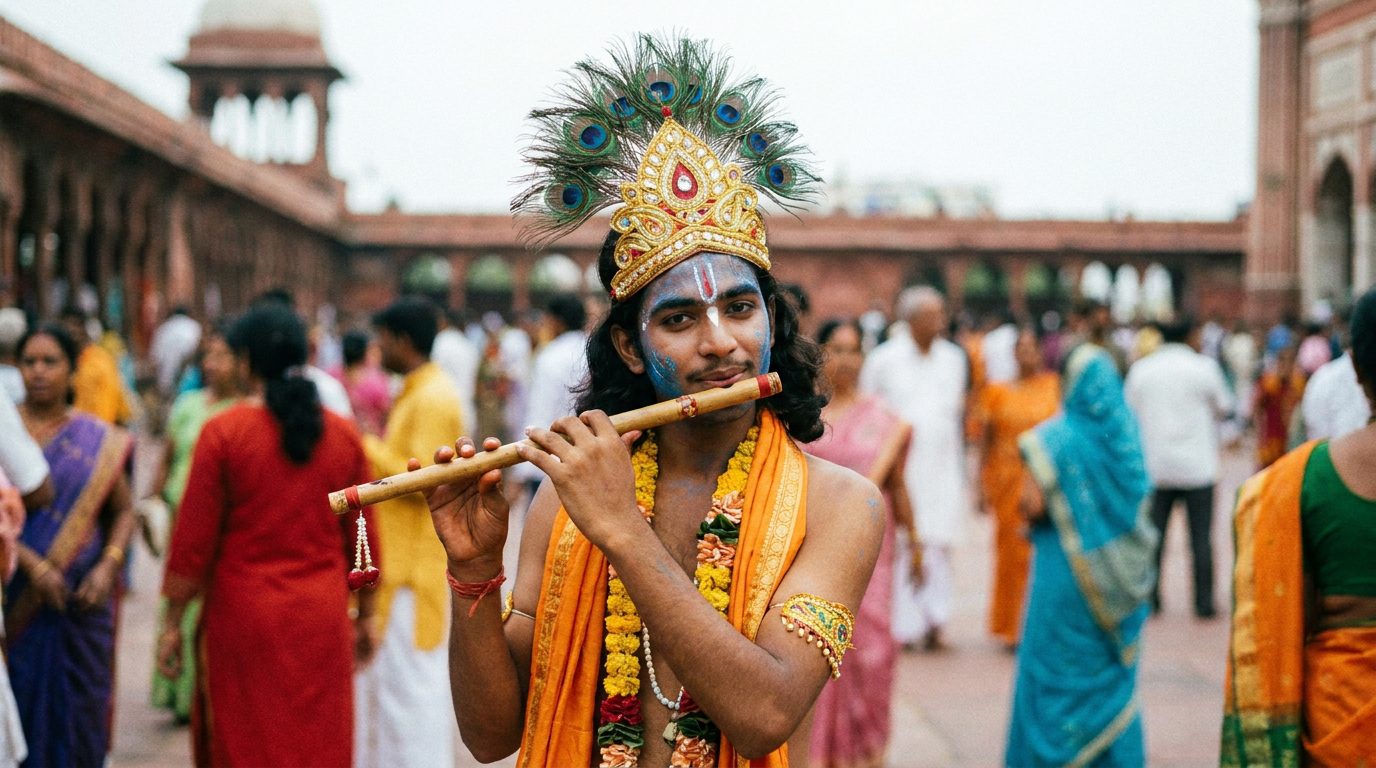
Opening the Heart to Krishna
To embrace Krishna is not only to picture Him in a temple, a painting, or a sacred story. It is to welcome Him into the center of our daily life—our thoughts, choices, relationships, work, joys, and struggles. Keeping Krishna in your heart means learning to live with remembrance, gratitude, humility, and love.
In the Bhakti tradition, Krishna is understood as the Supreme Person, the all-attractive Lord whose nature is eternal love, beauty, wisdom, and compassion. The word “Krishna” means “the all-attractive one.” He attracts the heart not by force, but by sweetness. He invites us, gently and personally, to turn toward Him.
This path is called Bhakti Yoga. “Bhakti” means loving devotion, and “yoga” means connection. So Bhakti Yoga is the practice of reconnecting with God through love. It is not limited by background, culture, education, age, or previous spiritual experience. Anyone can begin. Anyone can chant. Anyone can pray. Anyone can serve. Anyone can take one sincere step toward Krishna.
In the Bhagavad-gita, Krishna says:
“Always think of Me, become My devotee, worship Me, and offer your homage unto Me.”
—Bhagavad-gita 18.65
This is a deeply personal invitation. Krishna does not merely ask for belief; He asks for relationship. He invites us to remember Him, speak with Him, offer our lives to Him, and gradually discover that He has been with us all along.
Keeping Krishna in the heart is not about becoming perfect overnight. It is about turning toward Him again and again—with sincerity, patience, and affection.
Understanding Krishna as the Beloved of the Heart

Many people first hear about Krishna through sacred music, yoga philosophy, the Bhagavad-gita, or the beautiful stories of Vrindavan, the holy land where Krishna’s childhood and youthful pastimes are celebrated. Some are drawn by the sound of the maha-mantra. Others feel touched by Krishna’s flute, His playful nature, or His compassionate teachings.
However we arrive, Krishna meets us personally.
Krishna Is Near, Not Far Away
In Bhakti Yoga, God is not distant or impersonal. Krishna is the friend of every living being. He lives in the heart as Paramatma, the indwelling Lord, guiding us with quiet wisdom. The Sanskrit word “Paramatma” means “the Supreme Soul,” the divine presence who accompanies each soul through all experiences.
The Bhagavad-gita explains:
“The Lord is situated in everyone’s heart.”
—Bhagavad-gita 18.61
This truth brings comfort. We are never spiritually alone. Even in moments of confusion, grief, doubt, or failure, Krishna remains present. He does not abandon the soul. He waits patiently for us to turn toward Him.
To embrace Krishna is to become aware of this divine companionship. It means whispering, “Krishna, please guide me,” before a difficult conversation. It means thanking Him before a meal. It means remembering Him while walking, working, parenting, studying, creating, or resting.
Krishna Attracts Through Love
Krishna’s beauty is not merely physical; it is the beauty of perfect love. He is tender with His devotees, playful with His friends, protective toward those who surrender, and compassionate toward all souls.
In the Srimad-Bhagavatam, one of the great Bhakti scriptures, Krishna’s loving exchanges with His devotees reveal the heart of spiritual life. The residents of Vrindavan do not love Krishna because He is powerful. They love Him because He is Krishna—their beloved child, friend, and Lord.
This teaches us something profound: the highest spiritual life is not fear, formality, or dry philosophy. It is loving relationship.
We may begin with curiosity. Then respect. Then trust. Then affection. Over time, through chanting, prayer, study, and service, the heart softens. Krishna becomes not just a concept, but a living presence.
Chanting the Holy Names as a Way to Hold Krishna Close

One of the most practical and powerful ways to keep Krishna in your heart is through chanting His holy names. In Bhakti Yoga, the name of Krishna is considered non-different from Krishna Himself. This means that when we sincerely chant Krishna’s names, we are coming into direct contact with Him.
The most widely known mantra in the Bhakti tradition is the maha-mantra, which means “the great mantra”:
Hare Krishna Hare Krishna
Krishna Krishna Hare Hare
Hare Rama Hare Rama
Rama Rama Hare Hare
“Hare” calls upon the divine energy of the Lord, especially Srimati Radharani, the feminine embodiment of pure devotion. “Krishna” means the all-attractive Lord. “Rama” means the source of spiritual joy. A simple way to understand the mantra is: “O Lord, O divine energy of the Lord, please engage me in Your loving service.”
Chanting Is Prayer From the Heart
Chanting is not about performance. It is not about having a perfect voice, perfect pronunciation, or perfect concentration. It is an offering of the heart.
When we chant, we are saying, “Krishna, please let me remember You. Please cleanse my heart. Please help me love You.”
The great teacher Sri Chaitanya Mahaprabhu, who spread the chanting of Krishna’s names widely, taught that the holy name cleanses the mirror of the heart. This image is simple and beautiful. Our heart is naturally meant to reflect love for God, but over time it becomes covered by distractions, wounds, ego, envy, fear, and endless desires. Chanting gently polishes the heart so our original spiritual nature can shine again.
Making Japa a Daily Practice
“Japa” means personal, meditative chanting, often done on prayer beads. Many practitioners chant a set number of rounds each day. But if you are new, you can begin simply.
You might chant for five minutes in the morning. You might chant one round on beads. You might play kirtan, devotional music, while cooking or driving. You might softly chant the maha-mantra when anxiety rises.
The key is sincerity. A small daily practice, done with devotion, can transform the heart over time.
Try beginning with this prayer:
“Krishna, I do not know how to love You fully, but I want to remember You. Please accept this chanting and guide my heart.”
This humble mood opens the door to grace.
Discover a wealth of knowledge by exploring our insightful articles. Our articles cover a wide range of topics to inspire and educate. Stay informed and engaged by reading our latest articles.
Remembering Krishna in Everyday Life
Keeping Krishna in your heart does not require leaving the world behind. Bhakti Yoga is wonderfully practical. It teaches us how to spiritualize ordinary life by offering our activities to Krishna.
The Bhagavad-gita says:
“Whatever you do, whatever you eat, whatever you offer or give away, and whatever austerities you perform—do that as an offering to Me.”
—Bhagavad-gita 9.27
This verse is a map for devotional living. Krishna is not asking us to abandon responsibility. He is inviting us to bring Him into everything.
Begin the Day With Remembrance
The first moments of the morning shape the heart. Before checking messages, news, or responsibilities, try turning toward Krishna.
You might say:
“Good morning, Krishna. Thank You for this day. Please help me remember You and serve with kindness.”
You might light a candle, offer incense, chant one mantra, read one verse from the Bhagavad-gita, or bow your head in gratitude. Even a brief morning remembrance can create a sacred foundation.
Over time, the heart begins to feel that Krishna is not separate from daily life. He is present in the quiet morning, in the challenges, in the small victories, and in the lessons.
Offer Your Food With Love
In Bhakti Yoga, offering food to Krishna is a cherished practice. Food offered with devotion becomes “prasadam,” which means mercy or grace. The act is simple: before eating, place your meal before Krishna, either mentally or on a small altar, and offer it with love.
You can pray:
“Dear Krishna, thank You for this food. Please accept this offering and bless me to use my body and mind in Your service.”
Traditionally, devotees offer vegetarian food prepared without meat, fish, eggs, onion, or garlic, depending on their practice and lineage. But if you are just beginning, start where you are. The deeper principle is gratitude, purity, and loving intention.
Eating prasadam reminds us that life is sustained by divine mercy. It turns a daily necessity into a devotional exchange.
See Service as Worship
Work, family care, community service, and creative efforts can all become offerings. The heart of Bhakti is not simply what we do externally, but the consciousness with which we do it.
A parent changing diapers can remember Krishna. A teacher preparing lessons can serve Krishna through care for students. A nurse comforting a patient can offer compassion to Krishna in the heart of that person. A business owner can practice honesty and generosity as devotional principles.
When we offer our duties to Krishna, even ordinary tasks become sacred.
Prayer as an Intimate Conversation With Krishna
Prayer is one of the most natural ways to keep Krishna in your heart. Sometimes people feel unsure how to pray. They wonder, “Do I need special words? Must I pray in Sanskrit? Am I worthy to approach God?”
The Bhakti answer is gentle: come as you are.
Krishna hears the heart. You can pray in English, Sanskrit, Spanish, Hindi, or in silent tears. You can pray while kneeling, walking, sitting, or lying awake at night. You can pray with scripture, with song, or with your own simple words.
Honest Prayer Deepens Relationship
A loving relationship grows through honesty. We do not need to hide from Krishna. He already knows our heart completely, and He loves us with perfect compassion.
We can pray:
“Krishna, I feel lost today.”
“Krishna, I am grateful.”
“Krishna, please help me forgive.”
“Krishna, I want to love You, but my mind is restless.”
“Krishna, please protect my family.”
“Krishna, please use me as an instrument of Your kindness.”
Such prayers are not small. They are sacred openings. They invite Krishna into our real life, not an imagined spiritual version of ourselves.
Learning From the Prayers of the Devotees
Bhakti scriptures are filled with prayers that teach us how to approach Krishna. Queen Kunti, in the Srimad-Bhagavatam, offers prayers of humility, dependence, and deep wisdom. Prahlada Maharaja, a young saintly devotee, prays not for personal comfort but for the welfare of all living beings. The gopis of Vrindavan express the highest longing for Krishna’s presence.
These prayers show that devotion includes many moods: gratitude, longing, surrender, repentance, joy, and love. We may not yet feel the depth of these great devotees, but by hearing their prayers, our own heart becomes educated in devotion.
Prayer is not only asking Krishna to fulfill our desires. It is gradually allowing Krishna to transform our desires.
Letting Krishna Heal the Heart
To keep Krishna in your heart is also to allow Him into the places that feel tender, ashamed, broken, or afraid. Many people carry spiritual wounds, emotional pain, or a sense of unworthiness. Bhakti Yoga does not deny this suffering. It offers a path of healing through divine love.
Krishna is known as Bhava-grahi Janardana—one who accepts the essence of our feeling. He is not impressed by external show. He receives sincerity.
We Are More Than Our Past
The Bhagavad-gita teaches that each of us is an eternal soul, called “atma” in Sanskrit. The soul is not the body, the mind, the mistakes, the trauma, the labels, or the temporary roles we play. The soul is spiritual, beloved, and meant for loving connection with Krishna.
This understanding can be deeply healing. It does not erase our human experiences, but it places them in a larger spiritual context. We are not defined by our lowest moment. We are not beyond grace.
Krishna says:
“Even if one commits the most abominable action, if he is engaged in devotional service, he is to be considered saintly because he is properly situated.”
—Bhagavad-gita 9.30
This verse is sometimes misunderstood, but its meaning is compassionate and powerful. Krishna is not excusing harmful behavior. Rather, He is saying that sincere devotion has the power to redirect a person’s life. If someone truly turns toward Him, that soul should be encouraged, not condemned.
Bhakti is a path of transformation.
Softening the Heart Through Forgiveness
When Krishna enters the heart, He gradually helps us release bitterness. Forgiveness does not mean approving of harm or ignoring necessary boundaries. It means we stop allowing resentment to be the ruler of our inner life.
Remembering Krishna helps us see others as souls, also struggling, also accompanied by the Lord in the heart. This vision can soften judgment and awaken compassion.
We may pray:
“Krishna, I cannot forgive fully yet. Please help me. Please protect my heart from hatred. Please guide me toward wisdom and healing.”
Even the desire to forgive is a sacred beginning.
Serving Krishna Through Serving Others
Bhakti is love in action. If we say we love Krishna but neglect compassion, humility, and service, our devotion remains incomplete. Krishna is pleased when we care for His children.
Service is called “seva” in Sanskrit. Seva means loving service offered without selfish expectation. It can be done in a temple, at home, in a community, or quietly behind the scenes.
Small Acts Can Be Sacred
Sometimes we imagine spiritual service must be grand. But Krishna accepts even a small offering when it is given with devotion.
In the Bhagavad-gita, Krishna says:
“If one offers Me with love and devotion a leaf, a flower, fruit, or water, I will accept it.”
—Bhagavad-gita 9.26
This verse reveals Krishna’s heart. He does not demand wealth, status, or impressive offerings. He asks for love.
A cup of water offered with devotion can be meaningful. A flower placed on an altar can be meaningful. A kind word spoken to a lonely person can be meaningful. Washing dishes after a devotional gathering can be meaningful. Sharing prasadam can be meaningful. Helping someone chant for the first time can be meaningful.
The external act may be simple, but love makes it precious.
Serving Without Pride
Service purifies the heart when we offer it humbly. The ego wants recognition: “See what I have done.” Bhakti teaches us to think, “Krishna, thank You for allowing me to serve.”
This mood protects devotion. It helps us avoid spiritual pride and competition. In true Bhakti community, everyone’s service matters. The person leading kirtan, the person sweeping the floor, the person cooking, the person greeting newcomers, the person praying quietly—all can be serving Krishna.
When service is offered with love, Krishna sees.
Creating a Home Where Krishna Is Remembered
Keeping Krishna in your heart becomes easier when your environment supports remembrance. A home does not need to be large, perfect, or traditionally decorated to become spiritually nourishing. Even a small corner can become sacred.
Make a Simple Sacred Space
You might create a small altar with a picture of Krishna, Radha-Krishna, Lord Chaitanya, or your spiritual teachers. You can place flowers, a candle, incense, scripture, or prayer beads there. This space becomes a visual reminder: “Krishna is welcome here.”
When you pass by, you can pause for a moment. Offer gratitude. Chant one mantra. Bow your head. Ask for guidance.
Children, guests, roommates, and family members may also feel the peaceful influence of a sacred space. It becomes a gentle invitation, not a demand.
Fill the Home With Sacred Sound
Sound shapes consciousness. Kirtan, the singing of Krishna’s names, brings spiritual vibration into the home. You can play soft devotional music while cooking, cleaning, resting, or working. You can chant together with family or friends. You can listen to classes on the Bhagavad-gita or Srimad-Bhagavatam.
Sacred sound is especially powerful because it reaches the heart even when the mind is tired.
If you feel spiritually dry, try sitting quietly and listening to the maha-mantra. Let the sound do the work. Krishna’s name carries mercy.
Practice Hospitality as Devotion
A Krishna-centered home is not only peaceful; it is welcoming. Hospitality is a beautiful form of Bhakti. Offering guests prasadam, kindness, and a listening ear can make your home a place of spiritual warmth.
People may not remember every philosophical point, but they will remember how they felt. If they felt respected, nourished, and loved, they have touched something of Krishna’s heart.
Studying Scripture With a Devotional Mood
Bhakti is nourished by hearing. The Sanskrit word “sravanam” means hearing about Krishna. It is one of the main practices of devotional life. When we hear Krishna’s teachings and pastimes from authentic sources, our remembrance deepens.
Scripture is not meant to be approached as dry information. It is sacred conversation. It reveals who Krishna is, who we are, and how love can be restored.
The Bhagavad-gita as a Daily Companion
The Bhagavad-gita is one of the most important texts of Bhakti Yoga. It records Krishna’s conversation with Arjuna, a warrior facing a moral and emotional crisis. Arjuna is overwhelmed, confused, and unsure of his duty. Krishna responds with wisdom about the soul, karma, yoga, devotion, and surrender.
This setting is very human. Arjuna’s struggle reminds us that spiritual life does not begin when everything is peaceful. It often begins in the middle of confusion.
Reading even one verse of the Bhagavad-gita daily can help us remember Krishna’s guidance. We can ask:
“What is Krishna teaching me here?”
“How can I apply this today?”
“How does this verse help me love and serve more sincerely?”
The Srimad-Bhagavatam and the Sweetness of Krishna
The Srimad-Bhagavatam is a treasured scripture filled with stories, prayers, teachings, and descriptions of Krishna’s loving pastimes. It moves the heart from reverence to affection. Through hearing about Krishna’s devotees, we learn how love matures.
For newcomers, some stories may feel mystical or unfamiliar. That is okay. Bhakti scripture can be approached gradually, with guidance from sincere teachers and practitioners. The goal is not to master everything intellectually, but to let sacred hearing awaken devotion.
Facing Distraction and Doubt With Patience
Keeping Krishna in your heart is beautiful, but it is not always easy. The mind wanders. Habits return. Doubts arise. Life becomes busy. Sometimes chanting feels dry. Sometimes prayer feels distant. Sometimes we wonder if Krishna is really hearing us.
These experiences do not mean we have failed. They mean we are human, and spiritual growth is a journey.
The Restless Mind Can Be Trained
In the Bhagavad-gita, Arjuna admits that the mind is restless and difficult to control. Krishna does not shame him. He explains that the mind can be steadied through practice and detachment.
Practice means returning again and again. Detachment means loosening our grip on what pulls us away from remembrance.
If your mind wanders during chanting, gently bring it back. If you miss a day of practice, begin again the next day. If doubts arise, seek sincere association, ask questions, and continue praying.
Devotion grows through steadiness, not perfectionism.
Doubt Can Become a Doorway
Doubt is not always the enemy. Honest questions can deepen faith when we bring them into prayer, study, and discussion with mature devotees. Bhakti is not blind sentiment. It is a living path that engages the heart, mind, and soul.
You can pray:
“Krishna, I have doubts, but I want truth. Please guide me toward sincere understanding.”
This kind of prayer is powerful. Krishna is not threatened by our questions. He guides the sincere seeker from within and without.
Living With Krishna in the Heart
As Bhakti deepens, remembrance becomes more natural. Krishna begins to feel present not only during formal practice, but throughout the day. The heart slowly changes.
We become more grateful. More forgiving. More honest. More eager to serve. Less controlled by ego. Less hungry for temporary validation. More attracted to sacred sound. More moved by compassion.
This transformation may be gradual, but it is real.
Love Expressed in Daily Choices
Keeping Krishna in your heart means asking, again and again:
“Will this bring me closer to Krishna?”
“Will this help me serve?”
“Is this choice aligned with love, truth, and humility?”
“How can I remember Krishna in this moment?”
These questions make spirituality practical. Bhakti is not confined to a meditation cushion or temple room. It enters how we speak, eat, spend money, use technology, treat the earth, respond to conflict, and care for others.
Every moment can become an opportunity to turn toward Krishna.
Surrender as Trusting Love
A central teaching of the Bhagavad-gita is surrender. The Sanskrit word often used is “saranagati,” meaning taking shelter. Surrender does not mean passivity, weakness, or losing oneself. It means trusting Krishna as our eternal well-wisher and aligning our life with His loving guidance.
Krishna’s final instruction in the Bhagavad-gita is:
“Abandon all varieties of religion and just surrender unto Me. I shall deliver you from all sinful reactions. Do not fear.”
—Bhagavad-gita 18.66
“Do not fear” is essential. Krishna’s call to surrender is not harsh. It is protective. He is saying, “Come to Me. I will carry what you cannot carry alone.”
To keep Krishna in the heart is to live under this shelter.
Taking One Sincere Step Today
Embracing Krishna is a lifelong journey of love. It may begin with one mantra, one prayer, one verse, one act of service, one tear of longing, or one quiet moment of gratitude. Krishna sees the sincerity behind every offering.
You do not need to have everything figured out. You do not need to be born into a particular tradition. You do not need to be spiritually advanced before you begin. Bhakti Yoga welcomes the sincere heart.
If you want to keep Krishna in your heart, start simply:
Chant the maha-mantra.
Offer your food with gratitude.
Read a verse from the Bhagavad-gita.
Speak to Krishna honestly.
Serve someone with kindness.
Spend time with devotees.
Create a small sacred space.
Begin again when you stumble.
Krishna is already near. He is in the heart, waiting with infinite patience and love. The path of Bhakti is the path of turning toward Him, again and again, until remembrance becomes affection, affection becomes devotion, and devotion becomes the soul’s deepest joy.
Wherever you are coming from, whatever your story has been, you are welcome. Take one sincere step toward God today. Krishna will meet you there.
FAQs
What is the significance of keeping Krishna in your heart?
Keeping Krishna in your heart means maintaining a deep connection with the divine energy of Krishna, which can bring peace, love, and spiritual fulfillment into your life.
How can one keep Krishna in their heart?
One can keep Krishna in their heart by regularly practicing devotion, such as chanting mantras, reading sacred texts, attending satsangs, and performing acts of service and kindness.
What are the benefits of keeping Krishna in your heart?
Keeping Krishna in your heart can bring inner peace, joy, and a sense of purpose. It can also help in overcoming obstacles, developing compassion, and experiencing a deeper connection with the divine.
Can anyone keep Krishna in their heart, regardless of their background or beliefs?
Yes, anyone can keep Krishna in their heart, regardless of their background or beliefs. The practice of devotion to Krishna is open to all who seek spiritual growth and connection.
How does keeping Krishna in your heart impact daily life?
Keeping Krishna in your heart can bring a sense of mindfulness, gratitude, and positivity into daily life. It can help in facing challenges with grace and finding meaning in everyday experiences.

