
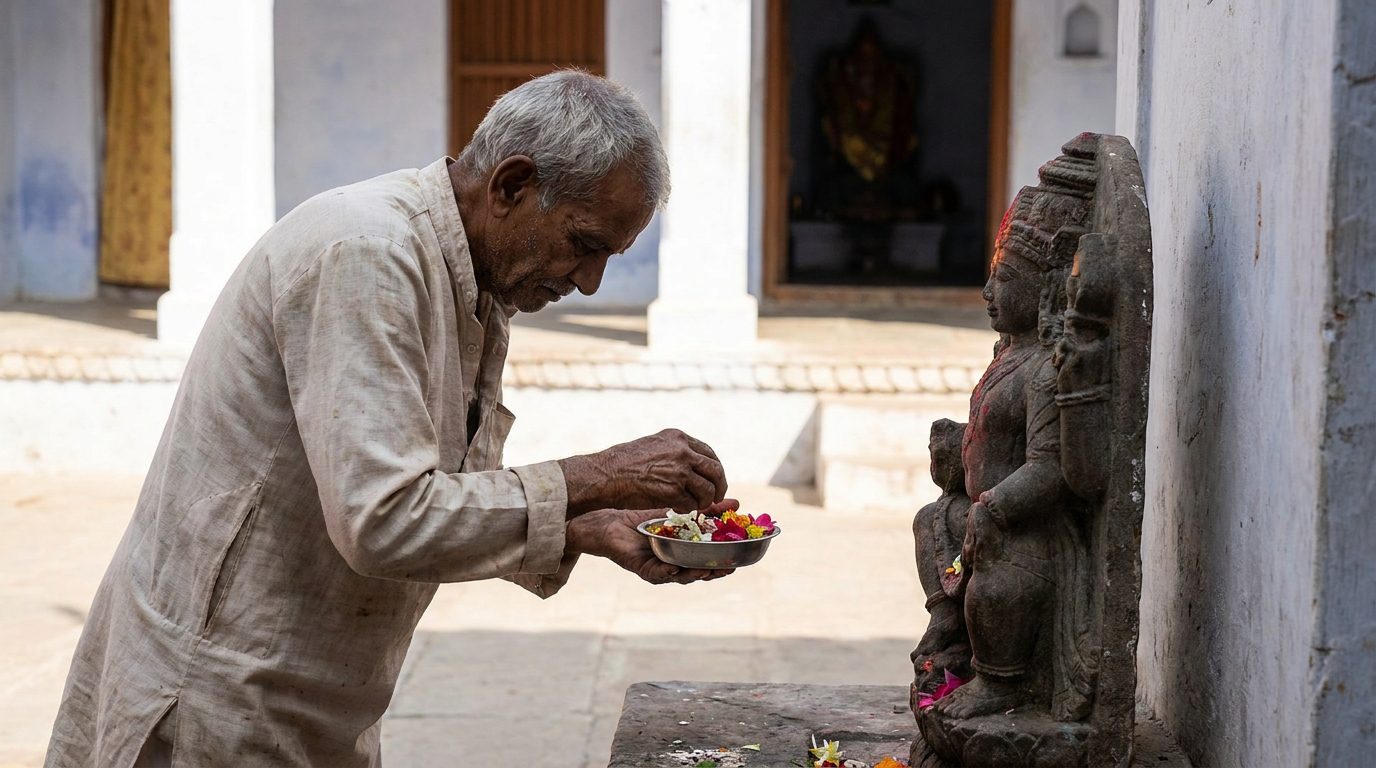
In Bhakti Yoga, the path of loving devotion to God, the word rasa means “spiritual relationship” or “sacred flavor.” It describes the unique way the heart loves and relates with the Divine.
Dāsya means “servitorship” or “loving service.” So dāsya-rasa is the devotional mood of serving God with love, humility, loyalty, and joy.
This does not mean becoming small in a negative way. It does not mean losing our dignity or ignoring our needs. In Bhakti, service is not forced, fearful, or mechanical. It is the soul’s natural expression of love.
Just as a parent joyfully serves a child, or a friend lovingly helps a friend, the devotee in dāsya-rasa serves the Lord with a heart full of affection. The service may be simple—offering a prayer, chanting the holy names, cooking with devotion, cleaning a sacred space, caring for others, or doing one’s daily work as an offering to God.
Dāsya-rasa teaches us that every moment can become sacred when we remember, “I am not the center. I am a beloved servant of the Divine.”
The Heart of Bhakti Yoga: Love Expressed Through Service
Bhakti Yoga is the yoga of love and devotion. It is not only a philosophy to study, but a way of living. It invites us to bring God into the heart of daily life.
In Bhakti, love becomes practical. We chant. We pray. We serve. We listen to sacred wisdom. We gather in spiritual community. We offer our food, our words, our work, and our relationships to the Divine.
Dāsya-rasa is one of the foundational moods of Bhakti Yoga because it helps us move from self-centered living to God-centered living.
Service as a Form of Love
In ordinary life, service can sometimes feel like duty or burden. But in Bhakti, service is transformed by devotion.
When we serve with love, even a small act becomes spiritually powerful. Washing dishes can become worship. Sweeping the floor can become meditation. Preparing a meal can become an offering. Listening to someone with compassion can become service to God in the heart of another.
The Bhagavad-gītā, one of the most beloved scriptures of Bhakti Yoga, teaches that whatever we do can be offered to the Lord:
“Whatever you do, whatever you eat, whatever you offer or give away, and whatever austerity you perform—do that as an offering to Me.”
— Bhagavad-gītā 9.27
This verse is deeply practical. It means we do not have to wait for a perfect life, a quiet mind, or a sacred place to begin our spiritual journey. We can begin right here, with what we already have.
The Servant Is Dear to God
In the Bhakti tradition, the devotee does not see service as low or insignificant. To serve God is considered the highest honor.
The Lord is not distant or cold. He is personal, loving, and responsive. When we offer even a little devotion, He accepts it with kindness.
In the Bhagavad-gītā 9.26, Krishna says:
“If one offers Me with love and devotion a leaf, a flower, fruit, or water, I will accept it.”
The offering itself may be simple, but the love behind it makes it beautiful. This is the heart of dāsya-rasa: not the greatness of the external act, but the sincerity of the heart.
Sacred Examples of Dāsya-rasa in Bhakti Scripture
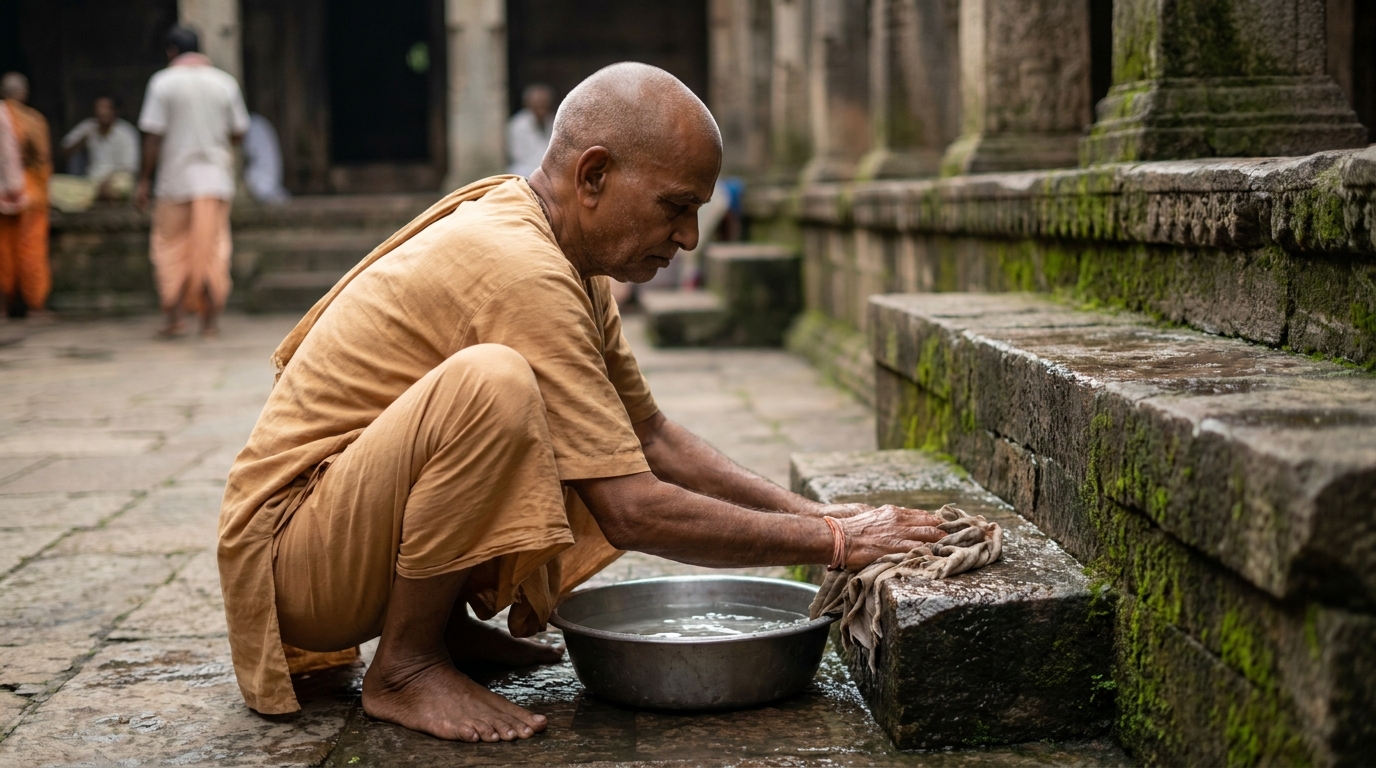
The Bhakti scriptures offer many beautiful examples of devotees who lived in the mood of loving service. Their lives help us understand dāsya-rasa not as an abstract idea, but as a real and living relationship with God.
Hanuman: The Perfect Servant of Lord Rama
One of the most beloved examples of dāsya-rasa is Hanuman, the devoted servant of Lord Rama.
Hanuman appears in the Rāmāyaṇa, the sacred story of Lord Rama. He is strong, wise, courageous, and deeply humble. Although he possesses extraordinary power, he uses everything for the service of the Lord.
Hanuman does not serve for recognition. He does not ask, “What will I get?” His joy is in pleasing Rama.
When he leaps across the ocean to find Sita, when he carries Rama’s message, when he helps in battle, when he chants Rama’s name, every action flows from devotion.
Hanuman teaches us that true service is not weakness. It is strength guided by love.
He also teaches us that all our abilities—our intelligence, energy, voice, talents, resources, and even our struggles—can be offered in service to God.
The Servants of Krishna in Vrindavan
In the sacred land of Vrindavan, Krishna’s servants care for Him with deep affection. They prepare His seat, bring His flute, arrange His clothes, and assist Him in His daily activities.
Their service is not formal or distant. It is intimate and full of love.
This shows us an important truth: in Bhakti, God is not only the all-powerful Creator. He is also the beloved Person who accepts the love of His devotees.
The Lord may be complete in Himself, yet He allows His devotees to serve Him because love requires exchange. Dāsya-rasa is one of those sacred exchanges.
Arjuna: Serving Through One’s Duty
Arjuna, the warrior-disciple in the Bhagavad-gītā, also shows an important dimension of service. His service was not in a temple or forest hermitage. It was in the middle of a life crisis.
Arjuna was confused, grieving, and unsure of what to do. He turned to Krishna and said:
“I am Your disciple. Please instruct me.”
— Bhagavad-gītā 2.7
This is a beautiful expression of dāsya-rasa. Arjuna did not pretend to know everything. He became humble enough to receive guidance.
Then, after hearing Krishna’s teachings, Arjuna chose to act in service to God’s will.
This teaches us that daily responsibilities can become spiritual when performed with surrender, integrity, and devotion.
Check out our latest articles at https://thebhaktihouse.org/blog.
Cultivating Dāsya-rasa in Daily Life
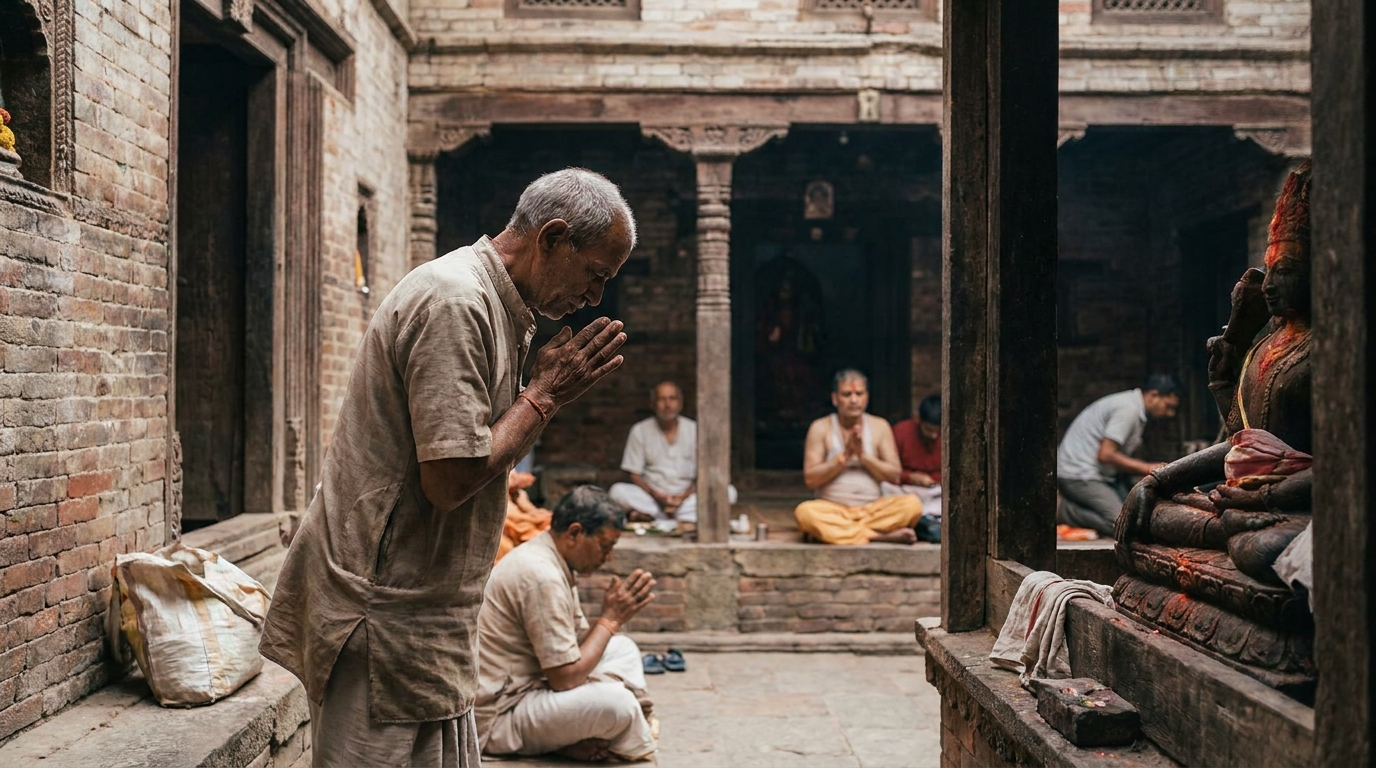
Dāsya-rasa is not only for saints, monks, or people living in temples. It is for anyone who wants to deepen their relationship with God.
Whether you are a student, parent, worker, artist, caregiver, seeker, or someone just beginning to explore spirituality, you can practice devotional service in simple ways.
Begin the Day with an Offering
The first moments of the morning are powerful. Before reaching for the phone or entering the busyness of the day, pause.
You may say a simple prayer:
“Dear Lord, please guide me today. May my thoughts, words, and actions be offered in loving service to You.”
This prayer does not need to be fancy. It only needs to be sincere.
Starting the day with offering helps shift the heart from anxiety to trust. It reminds us that we are not alone.
Chant the Holy Names
Chanting is central to Bhakti Yoga. A mantra is a sacred sound vibration that helps the mind and heart connect with God. The word mantra can be understood as “that which frees the mind.”
One of the most widely practiced mantras in the Bhakti tradition is the Hare Krishna maha-mantra:
Hare Krishna Hare Krishna
Krishna Krishna Hare Hare
Hare Rama Hare Rama
Rama Rama Hare Hare
Maha-mantra means “great mantra.” The names Krishna and Rama refer to God as the all-attractive and all-joyful Lord. Hare is a call to the Lord’s divine energy, asking to be engaged in loving service.
Chanting can be done softly, loudly, alone, or in community. It can be sung with instruments in kirtan, a joyful group chanting practice, or repeated quietly on beads in japa, personal mantra meditation.
Through chanting, the heart becomes cleansed. The mind becomes steadier. Love awakens naturally.
Offer Your Food with Gratitude
Another practical way to cultivate dāsya-rasa is to offer food before eating.
In Bhakti, food offered to God with love is called prasāda, which means “mercy” or “grace.” The food becomes spiritually nourishing because it has been offered in devotion.
You can place your meal before the Lord, or simply pause and pray:
“Dear God, thank You for this food. Please accept it with love. May it nourish me so I can serve You and others.”
This practice brings sacredness into an everyday activity. It also helps us eat with gratitude, mindfulness, and humility.
Serve the People Around You
Dāsya-rasa also means seeing others as beloved children of God.
Service to God includes kindness to others. This may look like caring for family, helping a neighbor, encouraging a friend, feeding someone, volunteering, listening deeply, or forgiving when it is difficult.
In Bhakti, we do not serve others to feel superior. We serve because we recognize the divine presence within every living being.
The Bhagavad-gītā teaches that the wise see all beings with equal vision. This vision grows when we practice humility and compassion.
The Inner Qualities of a Devotional Servant
Dāsya-rasa is not only about what we do. It is about the heart we bring to what we do.
External service is beautiful, but Bhakti asks us to cultivate inner qualities that make our service pleasing to God.
Humility
Humility is not self-hatred. It is truthfulness.
A humble person does not think, “I am worthless.” Rather, they understand, “Everything I have is a gift, and I can use it in service.”
Humility makes the heart soft. It allows us to learn, grow, apologize, forgive, and receive grace.
Sri Chaitanya Mahaprabhu, a great teacher and saint of the Bhakti tradition, gave a famous instruction:
“One should chant the holy name of the Lord in a humble state of mind, thinking oneself lower than a blade of grass, more tolerant than a tree, free from pride, and ready to offer respect to others.”
This teaching is deeply connected to dāsya-rasa. A servant of God does not demand honor, but offers honor. Such a heart becomes a welcoming place for the holy name.
Sincerity
Sincerity means bringing our real self before God.
Sometimes we may feel inspired. Sometimes we may feel distracted. Sometimes our faith may feel strong, and sometimes it may feel fragile.
Bhakti does not require pretending. We can pray honestly:
“Dear Lord, I want to love You, but my heart is restless. Please help me.”
This kind of prayer is powerful. God is not looking for performance. He is looking for love.
Dependence on Grace
In dāsya-rasa, we learn to depend on divine grace.
Grace means the loving help of God. It is not something we can force or purchase. It is received through sincerity, prayer, and humble practice.
We do our part, but we also remember that spiritual growth is not only our achievement. The Lord is guiding us from within.
This brings relief. We do not have to become perfect overnight. We simply keep turning toward God.
Joyful Discipline
Devotional service includes discipline, but it is meant to be joyful.
We may set aside time each day for chanting, reading, prayer, or service. At first, the mind may resist. But gradually, these practices become nourishing.
Just as watering a plant daily helps it grow, regular Bhakti practice nourishes the soul.
Discipline in Bhakti is not punishment. It is love made steady.
Transforming Work, Family, and Responsibilities into Worship
Many people wonder, “How can I practice Bhakti Yoga when I am so busy?”
Dāsya-rasa offers a beautiful answer: bring devotion into what you are already doing.
You do not have to abandon your responsibilities to live spiritually. You can spiritualize them.
Work as an Offering
Whatever your work may be, it can become an offering when done with integrity, compassion, and remembrance of God.
Before beginning work, pause and pray:
“May this work be useful. May I do it honestly. May the fruits be offered to You.”
This changes the mood of work. Instead of only chasing results, we begin to serve through our actions.
Of course, not all work environments are easy. Some may be stressful or unfair. Bhakti does not ask us to ignore injustice or accept harm. But even in difficulty, we can ask God for wisdom, patience, courage, and guidance.
Family Life as Sacred Service
Family life offers many opportunities for dāsya-rasa.
Cooking, cleaning, caregiving, earning, comforting, teaching, and being patient can all become devotional service when offered with love.
This does not mean we never get tired. It does not mean we have no boundaries. Healthy service includes balance, honesty, and care for one’s own body and mind.
But when family duties are connected to God, they become more than obligations. They become a field for spiritual growth.
Difficult People as Teachers
Sometimes the people around us challenge our patience. In these moments, dāsya-rasa becomes very practical.
We may ask:
“How can I respond as a servant of God?”
This does not mean allowing abuse or losing self-respect. It means choosing a response rooted in wisdom rather than ego.
Sometimes service means speaking gently. Sometimes it means remaining silent. Sometimes it means setting a boundary. Sometimes it means praying for someone from a distance.
Devotional service is not passive. It is guided by love and truth.
Common Misunderstandings About Dāsya-rasa
Because the word “servant” can carry difficult associations, it is important to understand dāsya-rasa carefully.
Bhakti service is voluntary, loving, and spiritually dignified. It is never meant to justify exploitation, control, or harm.
Dāsya-rasa Is Not Inferiority
To be a servant of God does not mean being less valuable. In Bhakti, every soul is eternally precious.
Service is the natural activity of the soul because love naturally wants to give.
When we serve God, we are not diminished. We are fulfilled.
Dāsya-rasa Is Not Blind Obedience
Bhakti encourages humility, but also wisdom.
Authentic devotion is not about turning off intelligence. The Bhagavad-gītā is a conversation filled with questions, reflection, and deep spiritual reasoning.
Arjuna asks questions. Krishna answers with compassion and philosophy. At the end, Krishna does not force Arjuna. He says:
“Deliberate on this fully, and then do what you wish to do.”
— Bhagavad-gītā 18.63
This shows that Bhakti is not coercion. It is a loving invitation.
Dāsya-rasa Is Not Only External Service
One may do many visible acts of service and still struggle with pride or resentment. Another person may quietly chant, pray, and care for others without being noticed.
God sees the heart.
External service matters, but the inner mood matters deeply. Dāsya-rasa grows when we serve with love, humility, and remembrance.
Practices to Deepen Dāsya-rasa
Dāsya-rasa develops gradually. Like any relationship, our relationship with God deepens through time, attention, and affection.
Here are some simple practices anyone can begin.
Daily Prayer
Prayer is speaking to God from the heart.
You can pray in your own words. You can also use traditional prayers from Bhakti scriptures and saints.
A simple daily prayer might be:
“Dear Lord, please let me remember You. Please engage me in Your service. Please help me become kind, humble, and sincere.”
Even one heartfelt prayer each day can open the heart.
Reading Sacred Wisdom
Reading Bhakti scriptures helps nourish faith and understanding.
The Bhagavad-gītā, Śrīmad-Bhāgavatam, and the lives of saints offer guidance for spiritual growth. These texts teach us who we are, who God is, and how love can be awakened.
If Sanskrit names feel unfamiliar, that is okay. Take one verse, one story, or one teaching at a time. Let it become practical.
Ask: “How can I live this today?”
Association with Devotees
In Sanskrit, sādhu-saṅga means “the company of spiritually minded people.” This is one of the most important supports in Bhakti Yoga.
When we spend time with people who are trying to love and serve God, our own devotion grows.
This may happen through kirtan, classes, shared meals, service projects, study groups, or heartfelt conversations.
Spiritual community reminds us: we do not walk alone.
Seva: Devotional Service
Seva means service offered with devotion.
Seva can happen in many ways. You might help set up for a spiritual gathering, cook prasāda, clean a temple or community space, support a charity, share sacred music, care for guests, or offer your professional skills.
The important question is not, “Is this service impressive?”
The question is, “Is this offered with love?”
Remembering God Throughout the Day
Bhakti becomes strong when we remember God often.
You might place a sacred image on your desk, listen to kirtan while cooking, chant while walking, pause before meals, or repeat a mantra during stressful moments.
These small remembrances slowly reshape the heart.
A life of devotion is built one sincere moment at a time.
The Gifts of Living in Dāsya-rasa
When we cultivate dāsya-rasa, life begins to change from the inside.
The ego softens. Gratitude grows. We become less obsessed with control and more open to grace. We begin to find meaning even in ordinary duties.
Freedom from Self-Centeredness
Much of our suffering comes from the burden of trying to be the center of everything.
Dāsya-rasa gives us relief. We remember, “I am not the controller. I am not the enjoyer of everything. I am a servant of God.”
This shift does not make life dull. It makes life lighter.
Instead of asking, “How can everything serve me?” we begin asking, “How can I serve love?”
A Deeper Sense of Purpose
Modern life often leaves people feeling disconnected. Bhakti gives every action a spiritual purpose.
Whether we are chanting, working, parenting, studying, resting, or helping others, we can connect it to God.
This brings dignity to simple things.
Nothing offered with love is wasted.
A Softer and Stronger Heart
Dāsya-rasa makes the heart soft through humility and strong through devotion.
The devotee learns to bow, but also to stand firm in truth. The devotee learns to serve, but not from fear. The devotee learns to give, but with wisdom.
This balance is beautiful.
A heart rooted in service becomes steady even in changing circumstances.
Bringing Dāsya-rasa Into The Bhakti House Spirit
The Bhakti House welcomes people from all backgrounds. You may be new to Sanskrit, new to chanting, new to temple culture, or simply curious about spiritual life. You may come with faith, questions, wounds, hopes, or uncertainty.
All are welcome.
The mood of dāsya-rasa is not about pretending to be advanced. It is about taking a humble step toward love.
At The Bhakti House, this may look like joining kirtan, sharing prasāda, listening to wisdom from the Bhagavad-gītā, helping with service, asking sincere questions, or simply sitting quietly and letting the holy names touch the heart.
Bhakti Yoga is practical. It meets us where we are.
You do not need to know everything to begin. You do not need to be perfect. You do not need to change your whole life overnight.
Just begin with sincerity.
A Simple Meditation for Today
Take a quiet breath.
Place your hand on your heart if that feels natural.
You may pray:
“Dear Lord, I am Yours. Please guide me. Please help me serve with love. Please let my life become an offering.”
Sit with that prayer for a moment.
This is dāsya-rasa beginning to awaken—not as a concept, but as a living relationship.
One Small Act of Devotion
Today, choose one simple act and offer it to God.
Chant one round of mantra, or chant for five minutes.
Offer your meal.
Speak kindly to someone.
Read one verse of sacred wisdom.
Help without needing recognition.
Clean one space as an offering.
Pray before beginning your work.
Small acts, offered sincerely, open the doorway to great grace.
Everyone Is Welcome to Take One Step
Dāsya-rasa is the path of loving service. It invites us to live with humility, gratitude, purpose, and devotion. It teaches us that the soul is happiest not when trying to control everything, but when lovingly connected to God.
Through chanting, prayer, service, sacred study, and spiritual community, we can gradually awaken our natural love.
Wherever you are on your journey, you are welcome. Whether you feel close to God or far away, certain or unsure, joyful or tired, your sincere step matters.
May we each take one humble step today—one prayer, one chant, one offering, one act of kindness—toward the loving shelter of God.
FAQs
What is Dāsya-rasa?
Dāsya-rasa is one of the nine primary emotional flavors or relationships described in Indian aesthetics and philosophy. It is the sentiment of servitude or the feeling of being a servant towards a higher power or deity.
How is Dāsya-rasa expressed in daily life?
In daily life, Dāsya-rasa can be expressed through acts of service, devotion, and humility towards a higher power, such as serving in a temple, performing rituals, or engaging in acts of selfless service for the benefit of others.
What are some examples of Dāsya-rasa in daily life?
Examples of Dāsya-rasa in daily life include offering prayers and performing rituals as acts of service to a deity, serving in a temple or religious institution, and engaging in selfless acts of charity and kindness towards others.
How does Dāsya-rasa contribute to spiritual growth?
Dāsya-rasa contributes to spiritual growth by fostering a sense of humility, devotion, and selflessness. By cultivating the sentiment of being a servant to a higher power, individuals can develop a deeper connection to their spiritual practice and experience personal transformation.
Can Dāsya-rasa be practiced by people of any faith or belief system?
Yes, the sentiment of Dāsya-rasa can be practiced by people of any faith or belief system, as it is a universal concept of devotion, service, and humility towards a higher power or deity. It transcends specific religious boundaries and can be integrated into various spiritual practices.

