
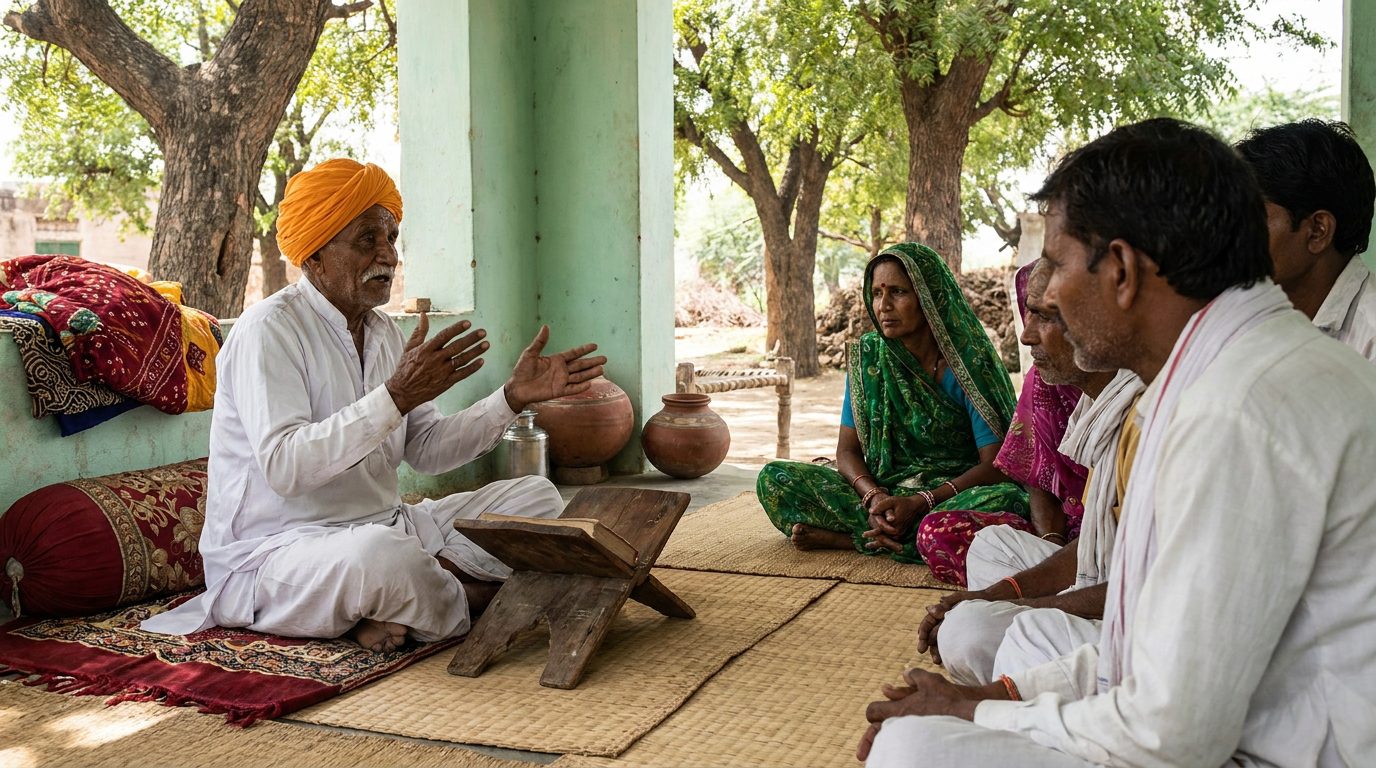
Krishna-katha means “talks” or “stories” about Krishna. In Sanskrit, Krishna means “the all-attractive one,” and katha means “narration,” “discussion,” or “sacred storytelling.” So Krishna-katha is the loving practice of hearing, speaking, remembering, and sharing the divine tales of Lord Krishna.
These stories are not ordinary entertainment. They are spiritual nourishment for the heart. They help us remember who we are, why we are here, and how we can reconnect with God through love.
In the Bhakti tradition, Krishna is understood as the Supreme Person—the source of all beauty, wisdom, compassion, and joy. His stories are found in sacred texts such as the Srimad Bhagavatam, the Bhagavad Gita, and the writings of great saints and teachers. These scriptures invite us not merely to study God from a distance, but to enter into a living relationship with Him.
Krishna-katha is for everyone. Whether you are new to spirituality, grew up with these stories, come from another faith background, or are simply curious, you are welcome. The divine tales of Krishna speak to universal human longings: the desire to be loved, to serve, to find meaning, and to come home to the heart of God.
Hearing as a Sacred Practice
In Bhakti Yoga, hearing is not passive. It is a sacred act. When we listen to Krishna-katha with an open heart, we allow divine sound to enter our consciousness and gently cleanse what is heavy, fearful, or distracted.
The Srimad Bhagavatam explains that by regularly hearing about Krishna, the heart becomes purified and devotion awakens. This does not mean we become perfect overnight. It means that little by little, our inner world becomes softer, clearer, and more God-centered.
Stories That Awaken Love
Krishna-katha is filled with wonder: Krishna lifting Govardhan Hill, playing His flute in Vrindavan, guiding Arjuna on the battlefield, stealing butter as a child, protecting His devotees, and revealing the deepest truths of spiritual life.
Each tale carries a message. Sometimes Krishna teaches through His words. Sometimes He teaches through His playfulness. Sometimes He teaches by protecting those who trust Him. And sometimes He teaches by simply being irresistibly loving.
Krishna-Katha and the Heart of Bhakti Yoga
Bhakti Yoga is the path of loving devotion to God. The word bhakti means devotion, loving service, or heartfelt dedication. Unlike a path based only on intellectual knowledge or strict discipline, Bhakti Yoga begins with relationship.
We are not asked to become someone else. We are invited to offer who we are—our voice, our work, our food, our thoughts, our struggles, and our hopes—to God with sincerity.
Krishna-katha is central to Bhakti Yoga because love grows through remembrance. When we hear about Krishna, we remember His qualities. When we remember His qualities, we naturally feel drawn to Him. When we feel drawn to Him, we begin to serve, chant, pray, and live with more devotion.
Bhakti Is Practical Love
Sometimes people think spirituality must be complicated. But Bhakti Yoga is beautifully practical. It can be lived in daily life through simple acts:
Chanting God’s names.
Offering food with gratitude.
Reading sacred wisdom.
Serving others.
Praying honestly.
Remembering Krishna during work, family life, and ordinary moments.
Krishna-katha helps us carry devotion into the day. A story heard in the morning may guide how we respond to difficulty in the afternoon. A verse remembered at night may bring comfort when the heart feels restless.
The Power of Divine Names
One of the most accessible practices in Bhakti Yoga is chanting. In Sanskrit, chanting is often called kirtan when done musically with others, or japa when done softly or privately, often on prayer beads.
The Maha Mantra is especially cherished:
Hare Krishna Hare Krishna
Krishna Krishna Hare Hare
Hare Rama Hare Rama
Rama Rama Hare Hare
This mantra is a prayer. “Hare” calls upon the divine energy of God, “Krishna” addresses the all-attractive Lord, and “Rama” refers to the source of spiritual joy. In simple words, the mantra asks: “O Lord, O divine energy of the Lord, please engage me in loving service.”
When Krishna-katha and chanting come together, the heart becomes fertile ground for devotion. The stories help us remember Krishna’s personality, and the names help us call out to Him directly.
The Child Krishna: Divine Sweetness in Vrindavan
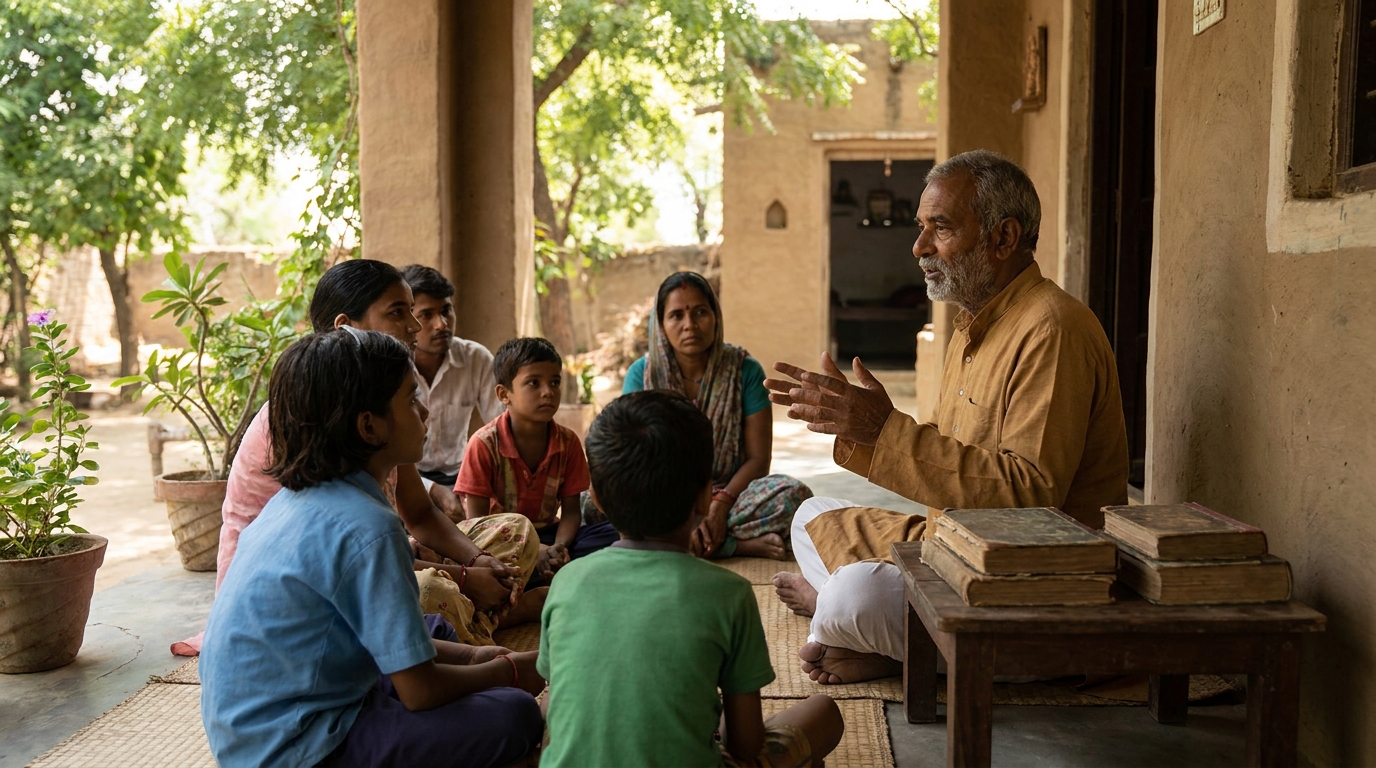
Some of the most beloved Krishna-katha comes from Krishna’s childhood in Vrindavan, a sacred village in India. These stories are especially treasured because they reveal God not only as powerful and majestic, but as sweet, intimate, and approachable.
In Vrindavan, Krishna lives among cowherd families. He plays with friends, cares for calves, steals butter, charms everyone with His flute, and fills the village with joy. These tales show that the Supreme Lord is not distant or cold. He is playful, affectionate, and eager to exchange love with His devotees.
Krishna the Butter Thief
One famous story tells of young Krishna stealing butter from the homes of the village mothers. At first glance, this may seem mischievous. But in Bhakti, the story has a deeper meaning.
Butter is made by patiently churning milk until its essence appears. In the same way, the heart becomes soft and pure through spiritual practice. Krishna stealing butter symbolizes Krishna stealing the hearts of those who lovingly prepare their lives for Him.
The village mothers, known as gopis, would sometimes complain about Krishna’s behavior, but secretly they loved it. Their “complaints” were filled with affection. They did not want Krishna to stop visiting their homes. They wanted more of Him.
This teaches us something tender: God is not attracted by our external perfection. He is attracted by love. When our heart becomes soft through chanting, prayer, and service, Krishna naturally comes there.
Mother Yashoda and the Rope of Love
Another beautiful tale describes Mother Yashoda trying to bind Krishna with a rope after He breaks a butter pot. Though Krishna is the Supreme Lord, He allows Himself to be tied by His mother’s love.
The Srimad Bhagavatam explains that no yogi, philosopher, or celestial being can easily bind God by power or knowledge. Yet Mother Yashoda binds Him with affection.
This is one of the great secrets of Bhakti Yoga: love reaches where pride cannot. God may be unlimited, but He willingly becomes conquered by the sincere devotion of His devotee.
For us, this story is deeply hopeful. We may not have great scholarship or spiritual strength. We may feel small and imperfect. But if we offer sincere love, Krishna accepts it.
Check out our latest posts at https://thebhaktihouse.org/blog.
Krishna as Protector: Govardhan Hill and the Shelter of God
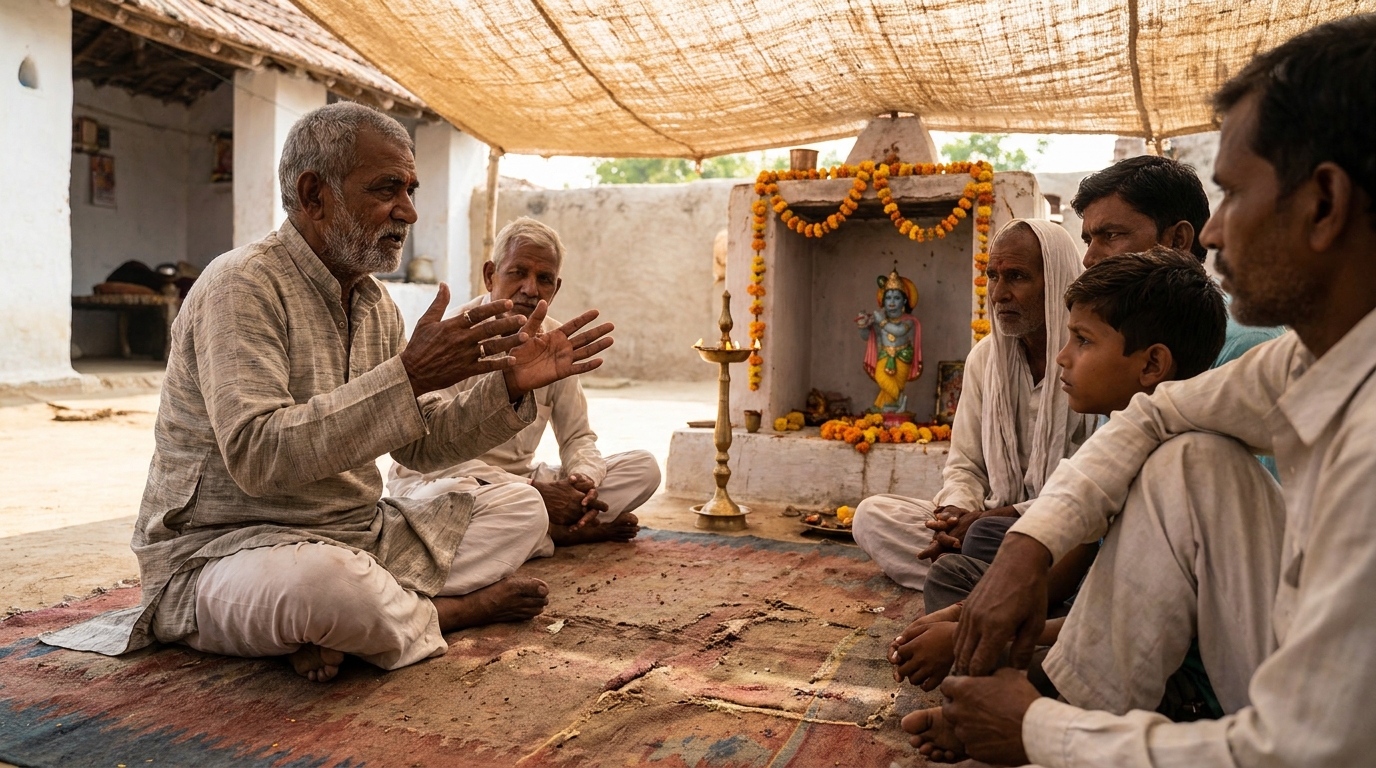
Among the most inspiring Krishna-katha is the story of Govardhan Hill. When Krishna was a young boy, the people of Vrindavan prepared a grand worship ceremony for Indra, the king of heaven and controller of rain. Krishna gently encouraged them instead to honor Govardhan Hill, the cows, and the simple devotional life that sustained them.
Indra became angry and sent devastating storms to flood Vrindavan. The residents were terrified. In response, Krishna lifted Govardhan Hill with the little finger of His left hand and held it like an umbrella for seven days and nights, giving shelter to everyone.
The Meaning of Govardhan
The Govardhan story teaches many lessons. It reminds us that Krishna protects those who take shelter of Him. It also shows the beauty of simple living, gratitude, and devotion.
Govardhan Hill represents the gifts of God’s creation: land, water, trees, animals, and community. Krishna’s instruction to honor Govardhan is a call to live with reverence. Spiritual life is not separate from how we treat the earth, the cows, our neighbors, and the resources entrusted to us.
In a world that often encourages constant consumption, Govardhan-katha invites us into sacred gratitude. We can ask: How can I live more simply? How can I honor the gifts God has given? How can my home become a place of devotion?
Taking Shelter During Life’s Storms
Everyone faces storms. Some are external—loss, illness, conflict, uncertainty. Others are internal—anxiety, loneliness, doubt, grief. The image of Krishna holding Govardhan Hill reminds us that divine shelter is real.
Taking shelter does not mean life will never be difficult. It means we do not have to face difficulty alone. Through prayer, chanting, community, and service, we can stand beneath the shelter of Krishna’s grace.
A simple prayer in hard times might be: “Krishna, I do not know how to carry this. Please guide me. Please shelter me. Please help me remember You.”
That prayer itself is Bhakti.
Krishna in the Bhagavad Gita: Divine Wisdom for Daily Life
While many Krishna stories reveal His sweetness in Vrindavan, the Bhagavad Gita reveals Krishna as the divine teacher. The Gita takes place on a battlefield, where the warrior Arjuna is overwhelmed by confusion and sorrow. Seeing his loved ones on both sides of the conflict, Arjuna loses his strength and turns to Krishna for guidance.
Krishna does not shame Arjuna for his weakness. He listens. Then He speaks timeless spiritual wisdom.
The Bhagavad Gita is not only a philosophical text. It is Krishna-katha in the form of a sacred conversation between God and the soul.
Arjuna’s Question Is Our Question
Arjuna’s crisis is deeply human. He asks, in essence: What should I do? How do I act when every choice feels painful? What is my duty? Who am I beyond this body and mind? How do I live in a way that pleases God?
These questions still matter. We may not stand on an ancient battlefield, but we face our own inner battles every day. We battle distraction, fear, ego, temptation, fatigue, and uncertainty.
Krishna’s teachings to Arjuna guide us toward courage, clarity, and devotion.
Offer Your Work to God
One of the most practical teachings of the Bhagavad Gita is to offer our work to God. Krishna teaches that we do not need to renounce all activity to be spiritual. Rather, we can transform our activity by changing our intention.
Cooking, parenting, studying, earning, creating, cleaning, caring, and serving can all become offerings.
A simple way to practice this is to pause before beginning a task and say, “Krishna, may this be for You. Please help me do this with honesty and love.”
This shifts the heart. Work becomes worship. Daily life becomes a temple.
Remember Krishna and Do Your Duty
Krishna tells Arjuna to remember Him and still perform his duty. This is a powerful balance. Bhakti is not escapism. It does not ask us to avoid responsibility. It teaches us to bring God into responsibility.
We can chant while walking. We can pray before a meeting. We can remember Krishna while caring for children. We can listen to Krishna-katha while cooking or driving. We can practice patience as service.
The Gita shows us that devotion belongs everywhere—not only in sacred spaces, but in the middle of real life.
The Sacred Sound of Krishna-Katha
In the Bhakti tradition, sound is considered spiritually powerful. Divine sound carries divine presence. When we hear Krishna’s names, qualities, and pastimes from sincere sources, we are not merely receiving information. We are receiving grace.
This is why devotees gather for satsang, a Sanskrit word meaning “association with truth” or “holy company.” In satsang, people chant, hear scripture, discuss spiritual life, ask questions, share realizations, and encourage one another.
Krishna-katha thrives in community. It becomes even sweeter when shared.
Listening With the Heart
To receive Krishna-katha deeply, we can listen with humility. We do not need to understand everything at once. We can simply sit with the sound and let it work on us.
Before reading or hearing, we might pray: “May this sacred story help me love God more. May it soften my heart. May I receive what I need today.”
This small prayer opens the door.
Speaking Krishna-Katha With Care
Sharing Krishna-katha is also a service. But it should be done with humility, not pride. The purpose is not to show how much we know. The purpose is to help ourselves and others remember Krishna.
Even a simple reflection can be powerful: “Today I heard how Krishna protected His devotees, and it reminded me to trust Him more.”
When spoken sincerely, Krishna-katha becomes a lamp. It brings light without needing to be loud.
Krishna-Katha as Healing for the Modern Heart
Modern life can be fast, noisy, and emotionally heavy. Many people carry silent burdens. Even when surrounded by technology and information, the heart may feel lonely.
Krishna-katha offers a different kind of nourishment. It slows us down. It brings beauty into the mind. It reminds us that love is the deepest reality.
From Distraction to Remembrance
Our attention is precious. Whatever we repeatedly hear and think about shapes our consciousness. If we constantly absorb fear, comparison, and agitation, our hearts become restless.
Krishna-katha gently redirects attention toward the divine. It gives the mind something pure to rest upon. Over time, remembrance becomes natural.
This does not mean we ignore the world’s suffering. Rather, we become spiritually strengthened so we can respond with compassion, steadiness, and service.
From Loneliness to Relationship
Bhakti Yoga teaches that the soul is not alone. We are eternally connected to God. Krishna-katha reawakens that relationship.
When we hear of Krishna’s love for His devotees, we begin to trust that divine love is also available to us. We may feel unworthy, but Bhakti gently teaches that God’s mercy is greater than our shortcomings.
Krishna does not wait for us to be flawless. He waits for us to turn toward Him sincerely.
From Self-Centeredness to Service
The stories of Krishna inspire service. We see the residents of Vrindavan offering everything to Krishna—food, songs, friendship, protection, affection, and their very lives. Their joy comes not from taking, but from loving.
In practical terms, service can begin simply. We can help at a temple or spiritual gathering. We can cook and offer vegetarian food to Krishna. We can support someone who is struggling. We can speak kindly. We can use our talents for a sacred purpose.
Service purifies love. It moves devotion from feeling into action.
How to Begin Exploring Krishna-Katha
You do not need to be an expert to begin. Krishna-katha is like a sacred river. You can step in gently, at your own pace.
The most important qualification is sincerity.
Read a Little Each Day
Choose an authentic Bhakti text and read a small amount daily. The Bhagavad Gita As It Is is a wonderful starting point for many seekers because it presents Krishna’s teachings clearly. The Srimad Bhagavatam offers deep and beautiful narrations of Krishna and His devotees.
You might begin with one verse, one paragraph, or one story. After reading, pause and ask: What quality of Krishna is being revealed? What is this teaching me about love, humility, courage, or surrender?
Hear From Devotees
In Bhakti, hearing from sincere practitioners is especially important. A devotee does not merely explain the story intellectually; they carry the mood of service.
You can attend a local satsang, temple program, kirtan gathering, or online class. Listen for teachings that increase humility, compassion, devotion, and remembrance of God.
Chant and Reflect
After hearing Krishna-katha, chant the holy names. Let the story and the mantra meet in your heart.
For example, after hearing about Krishna lifting Govardhan Hill, you might chant while meditating on Krishna as your shelter. After hearing about Mother Yashoda, you might chant while praying for a heart full of simple love.
Chanting makes the stories personal. It turns hearing into relationship.
Bring Krishna Into Your Home
A home becomes spiritually alive when Krishna is remembered there. You might create a small sacred space with a picture of Krishna, a candle, flowers, or scripture. You can offer water, fruit, or vegetarian meals with a simple prayer.
You can play kirtan while cooking. You can read Krishna-katha with family or friends. You can begin or end the day with one sincere prayer.
No offering is too small when given with love.
Lessons From Krishna’s Devotees
Krishna-katha is not only about Krishna’s actions. It is also about the hearts of those who love Him. His devotees show us how to live.
The Gopis: Love Without Calculation
The gopis of Vrindavan are celebrated as the highest examples of devotion. Their love for Krishna is pure, selfless, and uninterrupted. They do not approach Krishna for wealth, status, liberation, or recognition. They love Him because He is their very life.
For us, their example may feel far beyond reach. But we can still learn from their direction. We can ask: Am I trying to use God for my plans, or am I learning to offer myself to God’s plan? Can I love with fewer conditions? Can I remember Krishna not only when I need something, but because He is worthy of love?
Arjuna: Honest Surrender
Arjuna teaches us the beauty of honest surrender. At first, he is confused and overwhelmed. But instead of pretending to be strong, he turns to Krishna and says, “I am Your disciple. Please instruct me.”
This is a powerful prayer for all of us. Spiritual growth often begins when we stop pretending and start asking sincerely.
We can say, “Krishna, I am confused. Please guide me.” That honesty is not weakness. It is the doorway to wisdom.
Sudama: Friendship and Simplicity
Sudama was a poor Brahmana, a gentle spiritual person and childhood friend of Krishna. When he visited Krishna in Dvaraka, he brought only a small offering of chipped rice. Though materially insignificant, it was given with love.
Krishna received Sudama with immense affection, honoring him like the most treasured guest. This story teaches that Krishna sees the heart behind the offering.
We may feel we have little to give. But Krishna accepts a leaf, a flower, fruit, or water when offered with devotion, as He says in the Bhagavad Gita. More than the object, He wants our love.
Living Krishna-Katha Every Day
The purpose of Krishna-katha is not only to admire divine stories. It is to let them shape us.
If Krishna protects the residents of Vrindavan, we can practice trust.
If Mother Yashoda binds Krishna with love, we can value affection over control.
If Arjuna receives guidance by surrendering, we can pray before making decisions.
If Sudama offers a humble gift, we can offer what we have.
If the gopis love without calculation, we can take small steps toward selfless devotion.
A Daily Practice of Remembrance
Here is a simple daily rhythm for those who want to begin:
Hear a little Krishna-katha.
Chant the holy names.
Offer one prayer.
Do one act of service.
Reflect on one lesson.
This can take ten minutes or an hour. The length is less important than sincerity. Bhakti grows through steady, loving practice.
When the Heart Feels Dry
Every practitioner experiences dry seasons. Sometimes chanting feels distracted. Sometimes prayer feels distant. Sometimes sacred stories do not immediately touch us.
Please do not be discouraged. Spiritual life is a relationship, and relationships deepen through faithfulness. Continue gently. Keep hearing. Keep chanting. Keep serving. Keep good company.
Even when we do not feel progress, Krishna sees every sincere effort.
The Mercy Hidden in Repetition
In Bhakti, we hear the same stories again and again. This is not because there is nothing new. It is because our hearts are always changing, and Krishna-katha reveals deeper meanings over time.
A story heard in childhood may bring sweetness. The same story heard during grief may bring shelter. Heard again after years of practice, it may reveal profound love.
Divine tales are living waters. We return to them because they continue to nourish us.
Krishna-Katha and the Invitation of Love
At its heart, Krishna-katha is an invitation. It invites us to listen, to remember, to soften, to serve, and to love. It invites us to see God not only as a distant creator, but as the most loving friend, guide, protector, child, beloved, and Lord.
The path of Bhakti Yoga does not demand that we have everything figured out before we begin. We come as we are. With our questions. With our hopes. With our wounds. With our longing.
Krishna meets sincerity.
Whether you are hearing these stories for the first time or returning to them after many years, there is a place for you. You do not need to belong to a particular culture, background, or level of knowledge. The soul’s relationship with God is deeper than all external labels.
Begin with one sincere step.
Read one verse.
Chant one mantra.
Offer one prayer.
Serve one person.
Listen to one Krishna-katha with an open heart.
And if you feel moved, simply say, “Krishna, please help me come closer to You.”
Everyone is welcome on this path of love. May the divine tales of Krishna bring light to your mind, courage to your life, and devotion to your heart. May each of us take one sincere step toward God today.
FAQs
What is Krishna-katha?
Krishna-katha refers to the stories, teachings, and pastimes of Lord Krishna, a central figure in Hinduism. These stories are often shared through religious texts, oral traditions, and spiritual discourses.
What are the main themes of Krishna-katha?
The main themes of Krishna-katha include the divine love between Krishna and his devotees, the importance of righteousness and dharma, the concept of karma, and the ultimate goal of attaining liberation or moksha.
Where can one find Krishna-katha stories?
Krishna-katha stories can be found in ancient Hindu scriptures such as the Bhagavata Purana, the Mahabharata, and the Ramayana. They are also shared through bhajans (devotional songs), kirtans (musical recitations), and spiritual discourses by saints and scholars.
What is the significance of Krishna-katha in Hinduism?
Krishna-katha holds great significance in Hinduism as it serves as a source of spiritual inspiration, moral guidance, and devotion for millions of followers. The stories of Krishna are believed to impart timeless wisdom and provide a deeper understanding of the divine.
How is Krishna-katha celebrated and practiced?
Krishna-katha is celebrated and practiced through various means such as reading and reciting scriptures, singing devotional songs, performing rituals and ceremonies, and participating in spiritual gatherings and festivals dedicated to Lord Krishna.

