
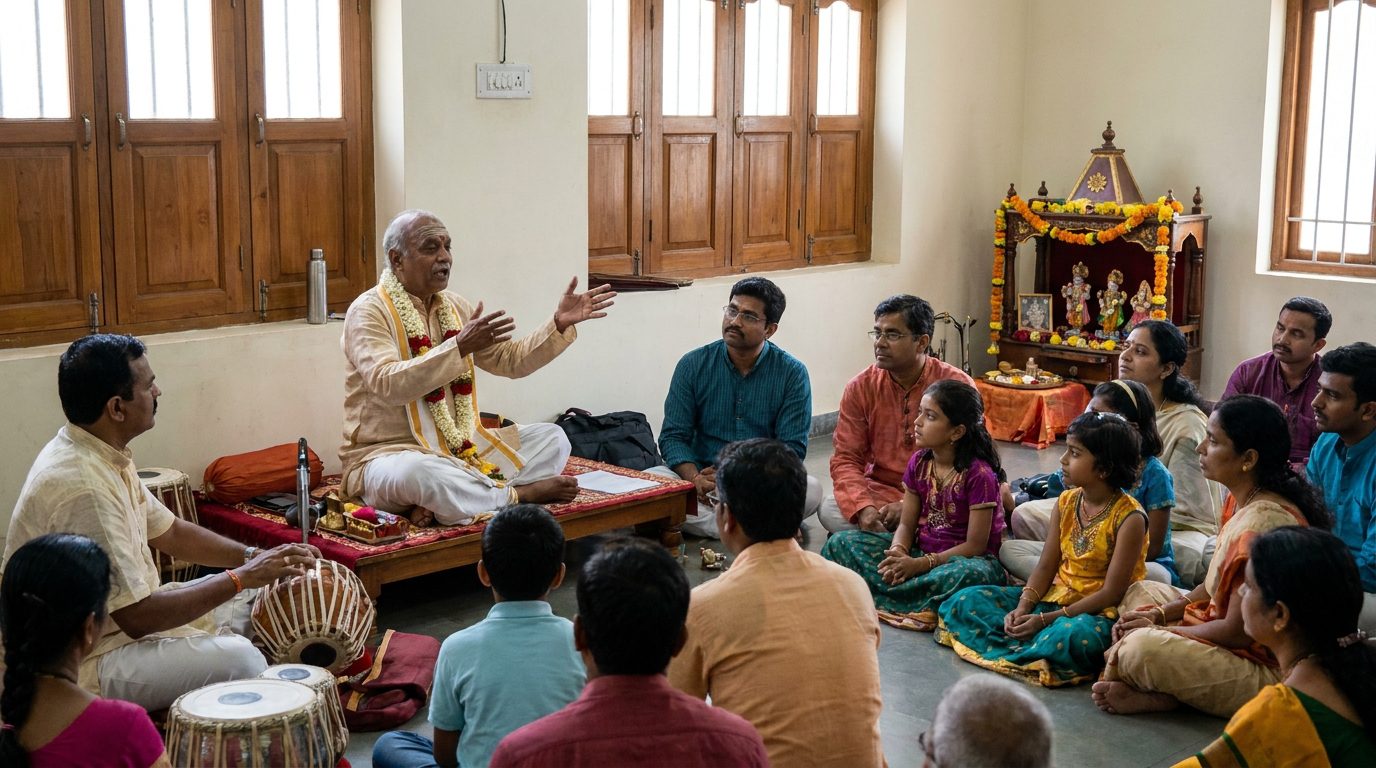
Hari-katha means “stories about Hari,” a beautiful name for God that means “the One who removes suffering and lovingly takes away the heart’s burdens.” In the Bhakti Yoga tradition, Hari often refers to Krishna, Vishnu, Rama, and the many loving forms of the Divine who protect, guide, and uplift the soul.
Katha means “discussion,” “narration,” or “sacred conversation.” So Hari-katha is not just storytelling. It is hearing, speaking, remembering, and sharing divine wisdom in a way that awakens love for God.
Hari-katha may include stories from the Bhagavad-gita, Srimad-Bhagavatam, Ramayana, Mahabharata, and the lives of saints and devotees. These stories are filled with spiritual truth, but they are also deeply human. They speak of courage, doubt, friendship, surrender, service, grief, hope, and the longing of the soul to reconnect with the Divine.
In Bhakti Yoga, the path of devotion, Hari-katha is considered one of the most powerful practices for spiritual growth. We may come from different cultures, faith backgrounds, or life experiences, but the heart understands love. Divine stories help us remember that we are not alone, that our lives have meaning, and that God is lovingly present.
Why Divine Stories Matter
Stories Speak to the Heart
Human beings learn through stories. Long before books, lectures, and digital media, wisdom was passed from heart to heart through sacred narration. A story can carry truth into places that plain instruction may not reach.
If someone says, “Be brave,” we may understand it intellectually. But when we hear the story of Prahlada, a young child who remembered God even while facing danger, courage becomes real. If someone says, “Serve with love,” we may agree. But when we hear about Hanuman crossing the ocean to serve Lord Rama, devotion becomes alive.
Hari-katha does not simply tell us what to do. It shows us how love moves, how faith acts, and how God responds to sincerity.
Stories Help Us Remember Our Spiritual Identity
Bhakti scriptures teach that we are not merely the body, mind, profession, history, or social identity. The Bhagavad-gita explains that the self is eternal, spiritual, and beloved by God. This can be difficult to remember in daily life, especially when we feel overwhelmed, distracted, or defined by external success and failure.
Hari-katha gently brings us back to this deeper truth. Through divine stories, we begin to see ourselves not as isolated beings trying to control everything, but as souls on a sacred journey. We are loved. We are guided. We are invited into relationship with the Divine.
Stories Bring God Close
Sometimes God can feel abstract or distant. Philosophical ideas may be profound, but the heart also longs for closeness. Hari-katha brings the Divine near.
When we hear of Krishna playing His flute in Vrindavan, protecting His friends, lifting Govardhan Hill, or speaking wisdom to Arjuna, we begin to feel God not only as the Supreme Being, but as a loving friend, guide, protector, and beloved.
When we hear of Lord Rama honoring truth, showing compassion, and embracing devotion, we begin to see divine character in action. These sacred stories help us approach God personally, with warmth and trust.
Hari-katha in the Scriptures
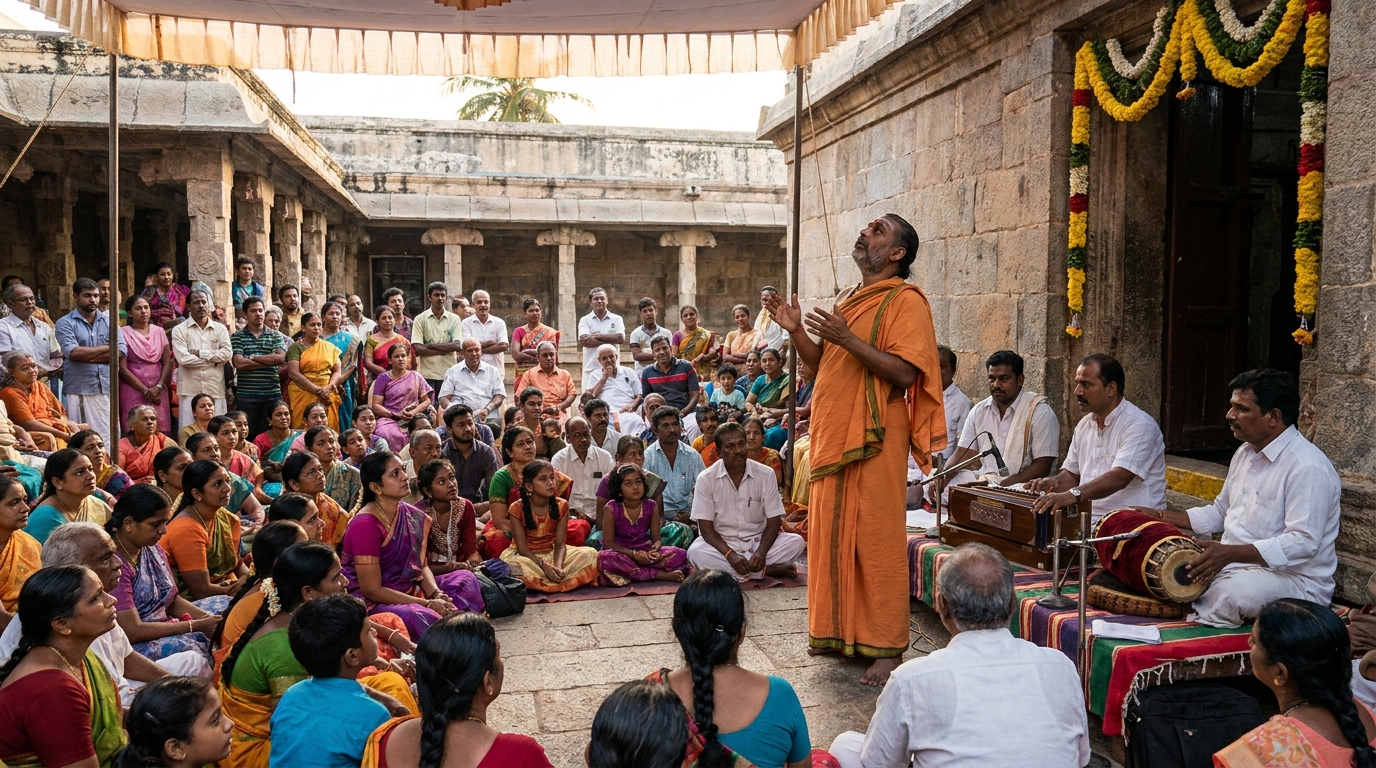
The Srimad-Bhagavatam: Hearing as a Sacred Practice
The Srimad-Bhagavatam, one of the central scriptures of Bhakti Yoga, repeatedly glorifies hearing about God. It teaches that when sincere souls hear Hari-katha, the heart becomes purified, devotion awakens, and spiritual wisdom naturally grows.
One famous verse describes that by regularly hearing sacred stories and serving those who live with devotion, the heart’s impurities are gradually cleansed. This does not mean we become perfect overnight. Rather, it means divine sound begins a gentle inner transformation.
The anxieties, envy, anger, and confusion that trouble the heart slowly lose their grip. In their place, qualities like humility, compassion, patience, and gratitude begin to grow.
Hari-katha is like spiritual rain. The soul may feel dry from worldly struggle, but when divine stories enter the heart, something softens and comes back to life.
The Bhagavad-gita: Sacred Conversation as Guidance
The Bhagavad-gita itself is a form of Hari-katha. It is a divine conversation between Krishna and Arjuna on a battlefield. Arjuna is confused, overwhelmed, and unsure of his duty. Krishna does not reject him. Krishna speaks with compassion, offering wisdom about the soul, action, devotion, surrender, and love.
This is deeply encouraging. Spiritual life does not begin when we have no doubts. It often begins when we honestly bring our doubts before God.
The Gita shows that divine wisdom can enter the most difficult moments of life. Our “battlefield” may be family conflict, grief, anxiety, work pressure, moral uncertainty, or inner struggle. Hari-katha reminds us that Krishna is willing to speak guidance into the heart that sincerely listens.
The Ramayana: Devotion in Action
The Ramayana tells the sacred story of Lord Rama, Sita Devi, Lakshmana, Hanuman, and many great souls. It is loved across generations because it teaches dharma, devotion, loyalty, sacrifice, and courage.
Hanuman’s devotion is especially cherished in Bhakti Yoga. He does not serve Rama for recognition. He serves because his heart belongs to the Lord. His strength comes from love.
When we hear Hanuman’s stories, we may ask ourselves: “How can I serve with more sincerity? How can I use my abilities for something sacred? How can I remember God in action, not only in words?”
Hari-katha makes devotion practical.
Check out our latest posts at https://thebhaktihouse.org/blog.
The Power of Hearing with an Open Heart
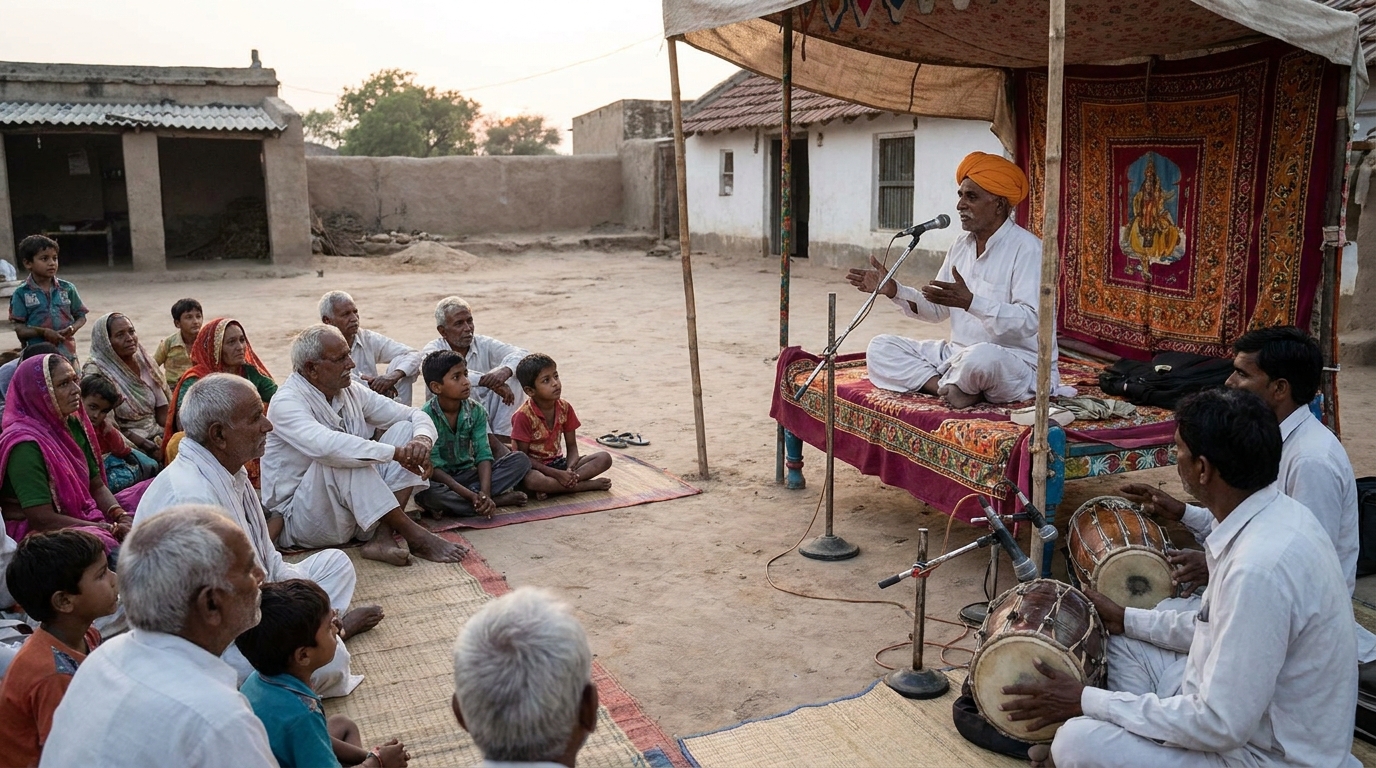
Hearing Is Not Passive
In modern life, we often consume information quickly. We listen while distracted, scroll while half-present, and move from one thing to the next. But sacred hearing is different.
In Bhakti Yoga, hearing is an active spiritual practice. It asks for presence. It invites humility. It encourages us to receive, reflect, and apply.
When we hear Hari-katha, we are not just collecting religious information. We are allowing divine sound to touch our consciousness. Even if we do not understand everything, the sincere act of hearing has power.
Just as sunlight benefits us even if we do not fully understand the science of light, Hari-katha nourishes the soul when received with sincerity.
Hearing Softens the Heart
Many of us carry invisible burdens. We may have regrets, fears, disappointments, or wounds we rarely speak about. Hari-katha enters those hidden places with gentleness.
A story of forgiveness may help us release resentment. A story of surrender may help us trust. A story of God protecting a devotee may help us feel less alone. A story of a saint struggling and growing may remind us that spiritual life is a journey, not a performance.
The goal is not to pretend we are beyond pain. The goal is to bring our pain into relationship with God.
Hearing Connects Us with a Living Tradition
When we listen to Hari-katha, we join a sacred stream that has flowed for thousands of years. Saints, sages, families, teachers, monks, poets, and everyday devotees have gathered to hear and speak divine stories.
This practice is not limited to a temple or monastery. Hari-katha can happen in a home, under a tree, in a community center, online, in a quiet morning reading, or in conversation with a friend. Wherever God is remembered with sincerity, that place becomes spiritually bright.
Speaking Hari-katha: Sharing from Love, Not Ego
We Share What Has Touched Us
Speaking Hari-katha does not require us to be scholars or perfect saints. Of course, we should approach sacred texts respectfully and learn from authentic teachers. But sharing divine stories can begin simply.
We can say, “This story helped me.”
We can say, “This verse gave me strength.”
We can say, “I am still learning, but this teaching touched my heart.”
In Bhakti, humility is more beautiful than performance. Hari-katha is not meant to display how much we know. It is meant to help us remember God together.
Speak in a Way People Can Receive
A devotional speaker tries to honor the listener. People come from different backgrounds and may not know Sanskrit words, temple customs, or scriptural references. A loving approach explains things simply.
For example, instead of assuming everyone knows what bhakti means, we can say: “Bhakti means devotion, the path of loving relationship with God.”
Instead of using complex philosophy to impress, we can offer clear, practical wisdom: “This story teaches us that even in fear, we can call upon God.”
Hari-katha should feel like an open door, not a closed circle.
Let the Story Lead to Practice
The purpose of Hari-katha is not entertainment alone. Divine stories are joyful, poetic, and sometimes dramatic, but their deeper purpose is transformation.
After hearing a story, we can ask:
What does this teach me about God?
What does this teach me about the soul?
What quality can I practice today?
How can I serve someone with more love?
How can I remember God in this situation?
When Hari-katha leads to chanting, prayer, service, gratitude, or kindness, the story becomes part of our life.
Hari-katha and the Practice of Chanting
Divine Names and Divine Stories Work Together
In Bhakti Yoga, chanting God’s names is a central practice. This may include the maha-mantra:
Hare Krishna Hare Krishna
Krishna Krishna Hare Hare
Hare Rama Hare Rama
Rama Rama Hare Hare
“Hare” calls to the divine energy of the Lord, often understood as the compassionate feminine aspect of God. “Krishna” means the all-attractive One. “Rama” means the source of spiritual joy.
Chanting is a prayer of the heart: “O Lord, O divine energy of the Lord, please engage me in loving service.”
Hari-katha and chanting naturally support one another. When we hear about Krishna’s compassion, chanting His name becomes more personal. When we chant sincerely, we become more eager to hear His stories.
Kirtan as Musical Hari-katha
Kirtan means devotional chanting, often with music and call-and-response singing. In kirtan, the divine names are sung together, and the heart is invited into prayer beyond intellectual effort.
Sometimes kirtan includes short explanations, stories, or reflections. These moments of Hari-katha help participants understand the meaning behind the sound. The combination of sacred story and sacred song can be deeply healing.
A person may walk into kirtan feeling heavy and leave feeling lighter. Not because all life problems disappear, but because the heart has been reconnected to something eternal.
Chanting After Hearing
One simple practice is to hear a short Hari-katha and then chant. For example, after hearing how Krishna protected His devotees by lifting Govardhan Hill, we might chant with the feeling: “God is my shelter.”
After hearing about Hanuman’s service to Rama, we might chant with the prayer: “Please let me serve with courage and humility.”
This brings the story from the mind into the heart.
Divine Stories as Medicine for Modern Life
For Anxiety and Uncertainty
Many people today live with constant pressure. We may feel worried about the future, overwhelmed by responsibilities, or exhausted by information. Hari-katha offers a sacred pause.
When Arjuna felt anxiety on the battlefield, Krishna did not simply tell him to ignore his feelings. Krishna gave him spiritual vision. The Gita teaches that we are eternal souls and that God is present as the inner guide.
This does not mean we avoid practical responsibilities. It means we face them with deeper grounding. Hari-katha helps us remember: “I am not the controller of everything. I can do my part and offer the results to God.”
This is very practical. Before a difficult meeting, a medical appointment, or a family conversation, we can pause, remember a divine story, chant God’s names, and pray for guidance.
For Loneliness
Hari-katha reminds us that spiritual life is relational. God is not distant from the sincere heart. The saints are not strangers. The community of seekers is real.
When we hear about Krishna’s friendships in Vrindavan, Rama’s loving relationships, or the compassion of great devotees, the heart remembers that love is the essence of existence.
If we feel lonely, we can begin by hearing. Even a few minutes of sacred narration can help us feel connected to the Divine and to a larger family of souls.
For Moral Confusion
Modern life often presents complicated choices. Hari-katha gives us examples of character, integrity, and devotion.
Yudhishthira teaches truthfulness. Sita Devi teaches purity, strength, and unwavering devotion. Prahlada teaches faith under pressure. Hanuman teaches service. Arjuna teaches honest surrender. The gopis of Vrindavan teach the highest selfless love for Krishna.
These personalities are not merely historical or symbolic figures to admire from a distance. They are teachers. Their lives ask us to become more sincere.
The Transforming Qualities of Hari-katha
Humility
True Hari-katha humbles us. We begin to see how vast God’s love is and how much we still have to learn. This humility is not self-hatred. It is freedom from pretending.
A humble heart can receive grace. A humble heart can say, “I need help. I want to grow. Please guide me.”
Gratitude
Divine stories awaken gratitude. We begin to notice how God has protected us, guided us, and placed opportunities for growth in our path. Even challenges may become part of our spiritual education.
Gratitude changes the atmosphere of the heart. It makes prayer natural.
Compassion
When we hear how God loves all beings, our own hearts become more compassionate. Bhakti is not meant to make us proud or sectarian. It should make us kinder.
If we hear Hari-katha but become judgmental, we may need to hear more deeply. The real fruit of divine hearing is love—love for God and kindness toward God’s children.
Surrender
Surrender in Bhakti does not mean giving up in despair. It means offering ourselves into divine care. It means trusting God’s wisdom more than our restless mind.
Hari-katha gives countless examples of surrender. Draupadi calling out to Krishna. Gajendra the elephant praying in helplessness. Arjuna accepting Krishna as his guide. Each story shows that when the soul turns sincerely toward God, divine help comes—sometimes in visible ways, sometimes inwardly as strength, clarity, and peace.
How to Practice Hari-katha in Daily Life
Begin with a Small Amount of Sacred Hearing
You do not need hours each day to begin. Start with ten minutes. Read a passage from the Bhagavad-gita, Srimad-Bhagavatam, or Ramayana. Listen to a class from a trusted Bhakti teacher. Reflect on one story before sleep.
Consistency matters more than quantity. A few drops of divine sound daily can gradually soften the heart.
Create a Sacred Space
If possible, choose a quiet place for hearing or reading. You may keep a picture of Krishna, Rama, or a sacred image that inspires devotion. You may light a candle or offer a simple flower. These small acts help the mind understand: “This time is for the soul.”
But do not worry if your home is busy or imperfect. God sees sincerity. A parent listening while caring for children, a student reading on a bus, or a worker chanting softly during a break can all practice Hari-katha with love.
Reflect with Simple Questions
After hearing, pause and ask:
What touched my heart?
What did I learn about God?
What quality can I practice today?
Is there someone I can serve?
What prayer naturally arises from this story?
This reflection turns hearing into transformation.
Share with Others
Hari-katha becomes especially powerful in community. Gather with friends or family and read a sacred story. Attend a satsang, a spiritual gathering centered on truth and devotion. Join kirtan. Ask questions. Listen with respect.
Even one sincere conversation about God can uplift the whole day.
Combine Hearing with Service
Seva means service offered with devotion. After hearing about God’s compassion, we can practice compassion. After hearing about Hanuman’s service, we can serve someone without seeking praise. After hearing about Krishna’s care for the cows and land of Vrindavan, we can treat the earth and animals with more respect.
Hari-katha is complete when it becomes a life of love.
Common Misunderstandings About Hari-katha
“Is It Just Mythology?”
Some people may wonder whether divine stories are only mythology. Bhakti tradition honors these scriptures as sacred reality, but the first invitation is not to argue. The invitation is to hear sincerely and notice the effect on the heart.
Do these stories awaken love?
Do they inspire courage?
Do they guide us toward truthfulness, compassion, and devotion?
Do they help us remember God?
Hari-katha works on many levels—historical, theological, symbolic, poetic, and deeply personal. A humble listener can receive wisdom even while continuing to ask honest questions.
“Do I Need to Be Hindu to Benefit?”
No. Hari-katha welcomes sincere seekers of all backgrounds. Bhakti Yoga is the path of love for God. Anyone can hear divine stories, chant holy names, pray, serve, and grow spiritually.
You do not need to adopt a new cultural identity to begin. Come as you are. Bring your faith, your questions, your wounds, your gratitude, and your longing. Divine love is not limited by external labels.
“What If I Do Not Understand the Sanskrit?”
That is completely okay. Sanskrit words can be beautiful and meaningful, but they should be explained with care.
Bhakti means devotion.
Yoga means connection, a spiritual path of union with God.
Hari-katha means sacred stories about God.
Kirtan means devotional chanting.
Seva means loving service.
Mantra means sacred sound that helps focus and purify the mind.
Understanding grows over time. The heart can begin before the intellect understands everything.
The Mood of Receiving Hari-katha
Listen with Respect
The Bhakti tradition encourages us to hear from sincere devotees and authentic sources. Not every retelling carries the same mood. Hari-katha is most nourishing when shared with reverence, humility, and fidelity to the scriptures and saints.
Respect does not mean blind acceptance. It means approaching sacred wisdom with openness rather than cynicism.
Listen with Patience
Some stories may be immediately inspiring. Others may challenge us. Some teachings may take years to understand. That is natural.
Spiritual growth is organic. A seed does not become a tree in one day. If we keep watering the heart with hearing, chanting, prayer, and service, realization gradually blossoms.
Listen with Prayer
Before hearing Hari-katha, we can offer a simple prayer:
“Dear Lord, please help me hear what I need to hear. Please soften my heart. Please guide me toward love and service.”
This prayer changes the experience. Hearing becomes relationship.
Hari-katha as a Community Practice
Gathering Around Divine Sound
There is something sacred about people gathering to hear about God. In a world where many gatherings are centered on entertainment, consumption, or debate, Hari-katha offers a different kind of togetherness.
We gather not to compete, but to remember.
Not to impress, but to be nourished.
Not to escape life, but to see life through spiritual vision.
When divine stories are spoken in a loving community, people often feel seen, supported, and uplifted.
Welcoming All Backgrounds
A Bhakti community should be a place where newcomers feel safe to learn. Some may know many verses. Some may be hearing Krishna’s name for the first time. Some may come from Hindu families. Others may come from Christian, Muslim, Jewish, Buddhist, secular, or spiritual-but-not-religious backgrounds.
Hari-katha belongs to the heart. Everyone can sit, listen, chant, ask, and receive at their own pace.
Children and Hari-katha
Children naturally love stories. When they hear about Krishna stealing butter, Rama walking through the forest, Hanuman leaping across the ocean, or Prahlada praying with courage, spiritual impressions enter their hearts.
But Hari-katha is not only for children. In truth, adults also need sacred stories. We need wonder again. We need simplicity again. We need to remember that divine love is real.
Bringing Hari-katha into Your Personal Journey
When You Feel Inspired
When the heart feels inspired, deepen the practice. Read more. Chant more. Serve more. Offer gratitude. Inspiration is a gift, and we can honor it by taking practical steps.
When You Feel Dry
Sometimes spiritual practice feels dry. We may not feel emotion or clarity. In those times, Hari-katha is especially important. Keep hearing gently. Do not force dramatic feelings. Let the stories sit in the heart.
Even when we feel nothing, the soul is being nourished.
When You Feel Broken
If you feel broken, Hari-katha is not asking you to hide it. Many divine stories begin in crisis. Arjuna trembles. Draupadi cries out. Gajendra struggles. The residents of Vrindavan face storms. Again and again, the scriptures show that calling upon God in helplessness is powerful.
Bring your real heart. God does not need our performance. God receives sincerity.
The Living Gift of Hari-katha
Hari-katha is a living gift. It carries the presence of God through sound, memory, and devotion. It teaches us that the Divine is not far away. God is present in the sacred name, in the scriptures, in the hearts of devotees, in the quiet moment of prayer, and in the sincere step we take toward love.
Through divine stories, we learn to chant with feeling, pray with honesty, serve with humility, and live with spiritual purpose. We discover that Bhakti Yoga is not separate from daily life. It can enter our homes, relationships, work, meals, struggles, and dreams.
A single story can change the direction of a life. A single verse can become a lamp in darkness. A single moment of hearing can awaken longing for God.
So wherever you are on the journey, you are welcome. You do not need to have everything figured out. You do not need to be perfect. You can begin by listening. You can chant one name of God. You can offer one prayer. You can serve one person with love.
May Hari-katha bless your heart with remembrance, courage, tenderness, and devotion. And may each of us take one sincere step toward God today, trusting that divine love is already reaching toward us.
FAQs
What is Hari-katha?
Hari-katha is a form of storytelling or discourse that focuses on the glories and pastimes of Lord Krishna. It is a traditional practice in the Bhakti yoga tradition and is considered a means of spiritual upliftment and inspiration.
What is the significance of Hari-katha?
Hari-katha is considered significant because it allows devotees to immerse themselves in the divine pastimes of Lord Krishna, which are believed to have a purifying and transformative effect on the consciousness. It is also seen as a way to deepen one’s devotion and understanding of the spiritual path.
How is Hari-katha practiced?
Hari-katha is typically practiced in a group setting, where a speaker or storyteller shares the pastimes and teachings of Lord Krishna from sacred texts such as the Bhagavata Purana or the Mahabharata. The audience listens attentively and may also participate by asking questions or sharing their own insights.
What are the benefits of listening to Hari-katha?
Listening to Hari-katha is believed to have numerous benefits, including spiritual inspiration, increased devotion, and a deeper understanding of the philosophy and teachings of Bhakti yoga. It is also seen as a way to purify the heart and mind and cultivate a loving relationship with the divine.
Where can one find Hari-katha events or gatherings?
Hari-katha events and gatherings can often be found in temples, ashrams, and spiritual centers that follow the Bhakti yoga tradition. They may also be held in private homes or community spaces. Additionally, many Hari-katha speakers and storytellers also share their discourses online through websites, social media, and other digital platforms.

