
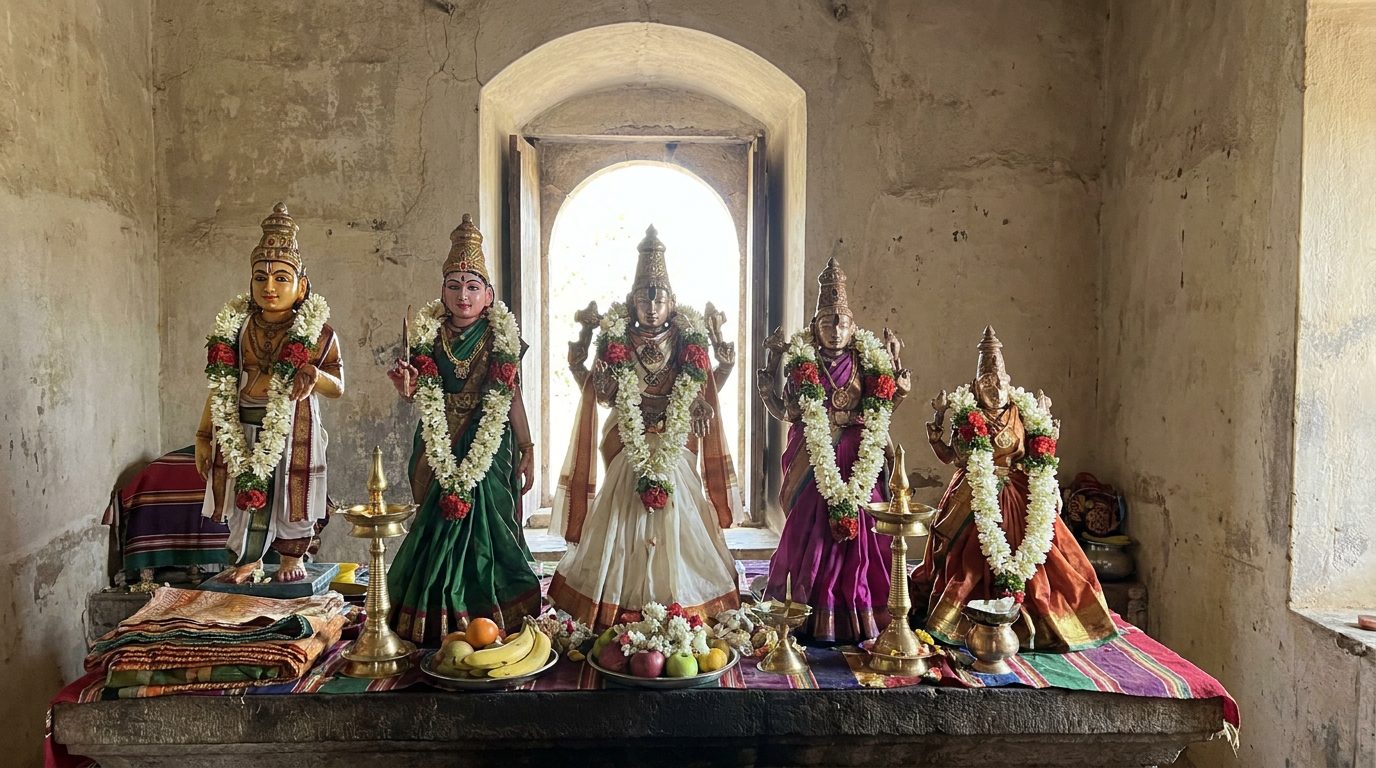
Have you ever felt a deep longing in your heart — a pull toward something greater than yourself, something you can’t quite name? That longing is not random. According to the beautiful tradition of Bhakti Yoga, that pull is the soul’s natural desire to reconnect with the Divine. And one of the most merciful, accessible, and joyful ways this connection has been made available to us is through the appearance of the Pañca-Tattva.
Whether you’re brand new to Bhakti or you’ve been chanting for years, understanding the Pañca-Tattva can deepen your spiritual life in ways that are truly transformative. So let’s explore this together — with open hearts and a spirit of curiosity.
The term Pañca-Tattva comes from Sanskrit. Pañca means “five,” and tattva means “truth” or “reality.” So Pañca-Tattva refers to five divine truths or five aspects of the Absolute who appeared together in Bengal, India, over 500 years ago to flood the world with the love of God.
These five personalities are not ordinary human beings. They are understood in Bhakti tradition as different manifestations of the Supreme Lord and His divine energies, appearing together for a single extraordinary purpose: to freely distribute pure love of God (prema) to every living being — without discrimination.
The Pañca-Tattva are:
- Śrī Caitanya Mahāprabhu — the Supreme Lord Himself in the mood of a devotee
- Śrī Nityānanda Prabhu — the first expansion of the Lord, the original spiritual master
- Śrī Advaita Ācārya — an incarnation of the Lord who called for His descent
- Śrī Gadādhara Paṇḍita — the internal potency (energy) of the Lord
- Śrī Śrīvāsa Ṭhākura — representing the pure devotees of the Lord
Together, they initiated the saṅkīrtana movement — the congregational chanting of the holy names of God — which is considered the most powerful spiritual practice for our current age.
The Pañca-Tattva Mantra
Before chanting the Hare Kṛṣṇa mahā-mantra, devotees in the Bhakti tradition lovingly recite the Pañca-Tattva mantra:
śrī-kṛṣṇa-caitanya prabhu-nityānanda śrī-advaita gadādhara śrīvāsādi-gaura-bhakta-vṛnda
This mantra is like a prayer asking for the mercy of these five divine personalities. By calling on them first, we open the doors of our hearts so that the holy names can enter without obstacle.
As Śrīla Prabhupāda, the founder-ācārya of ISKCON, beautifully explains in his purport to Śrī Caitanya-caritāmṛta, Ādi-līlā 7.4:
> “There are no hard and fast rules for chanting this mahā-mantra… One should take shelter of the Pañca-tattva in the beginning so that one may be saved from all difficulties.”
This is incredibly encouraging. It means that no matter where we are on the spiritual path, the Pañca-Tattva are ready to help us.
Śrī Caitanya Mahāprabhu — The Golden Avatar of Divine Love
At the heart of the Pañca-Tattva is Śrī Caitanya Mahāprabhu (1486–1534), whom Bhakti practitioners recognize as Kṛṣṇa Himself appearing in the golden complexion of Śrīmatī Rādhārāṇī, the supreme embodiment of devotion.
Why would God appear as His own devotee? The scriptures explain that Lord Caitanya came to experience the sweetness of loving God from the devotee’s perspective — and to teach us by His own example how to walk this path.
The Most Munificent Incarnation
Śrī Caitanya Mahāprabhu is celebrated as the most generous incarnation of God. While previous avatars (divine descents) gave liberation or material blessings, Lord Caitanya gave something far more rare: pure love of God, freely and unconditionally.
In Śrī Caitanya-caritāmṛta, Ādi-līlā 1.4, Kṛṣṇadāsa Kavirāja Gosvāmī writes:
> “anarpita-carīṁ cirāt karuṇayāvatīrṇaḥ kalau samarpayitum unnatojjvala-rasāṁ sva-bhakti-śriyam”
> “The most munificent incarnation… who has descended in the age of Kali by His causeless mercy to bestow what no incarnation has ever offered before: the most sublime and radiant mellow of devotional service, the mellow of conjugal love of God.”
In simpler words, Lord Caitanya brought a gift that had never been given before — the highest, most intimate love for the Divine — and He offered it to everyone.
His Practical Teaching: Chant and Be Happy
Lord Caitanya didn’t establish a complex philosophical system inaccessible to ordinary people. Instead, He taught a beautifully simple practice: chant the holy names of God. Sing them. Dance with them. Let them fill your life.
He taught the famous verse from Śikṣāṣṭaka (verse 1):
> “ceto-darpaṇa-mārjanaṁ bhava-mahā-dāvāgni-nirvāpaṇaṁ”
> “Let there be all victory for the chanting of the holy name of Lord Kṛṣṇa, which can cleanse the mirror of the heart and stop the miseries of the blazing fire of material existence.”
This is the essence of Bhakti in practice. Chanting purifies the heart, relieves suffering, and awakens our dormant love for God. And it is available to anyone — regardless of background, qualification, or belief system.
Śrī Nityānanda Prabhu — The Embodiment of Compassion
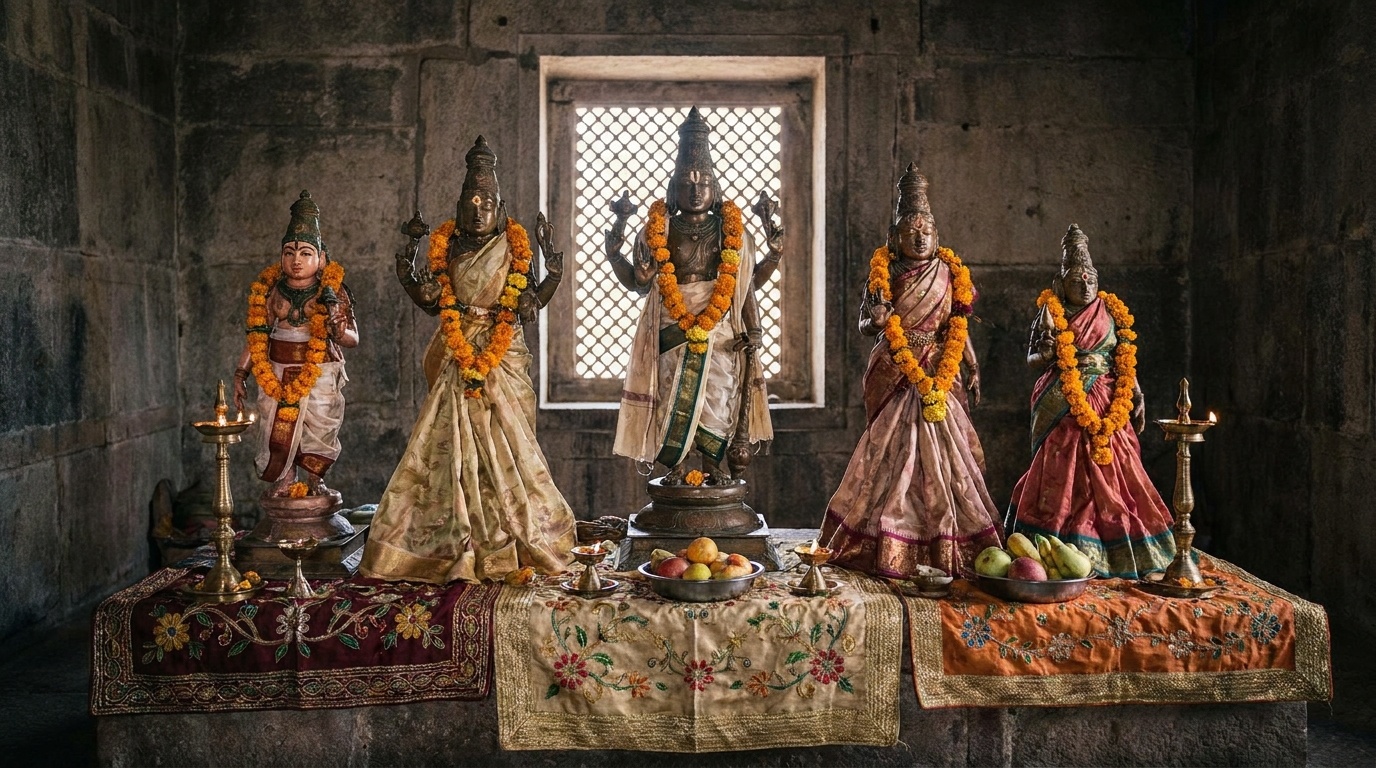
If Lord Caitanya is the sun of divine love, then Śrī Nityānanda Prabhu is the most powerful ray of that sun, reaching into the darkest corners of human experience.
Nityānanda Prabhu is understood to be Balarāma — the first expansion of the Supreme Lord and the original spiritual master. His nature is pure, unconditional compassion.
He Goes Where Others Won’t
There is a famous pastime where Nityānanda Prabhu was struck on the head by the sinful brothers Jagāi and Mādhāi — violent drunkards who attacked Him when He approached them with the holy name. Rather than retaliating, Nityānanda Prabhu continued to offer them mercy. Blood flowed from His forehead, yet His heart flowed with even greater compassion.
This is profoundly moving. It shows us that divine mercy is not reserved for the “qualified.” It reaches out to the fallen, the broken, the hopeless. Nityānanda Prabhu’s message is clear: no one is too far gone for God’s love.
The Practical Lesson
For us, Nityānanda Prabhu represents the guru-tattva — the principle of the spiritual teacher. Through the genuine spiritual master, God’s mercy flows into our lives. Nityānanda Prabhu reminds us to be humble, to seek guidance, and to trust that grace is always available — even when we feel undeserving.
Check out our website for more articles: more articles.
Śrī Advaita Ācārya, Śrī Gadādhara Paṇḍita, and Śrī Śrīvāsa Ṭhākura — Completing the Divine Circle
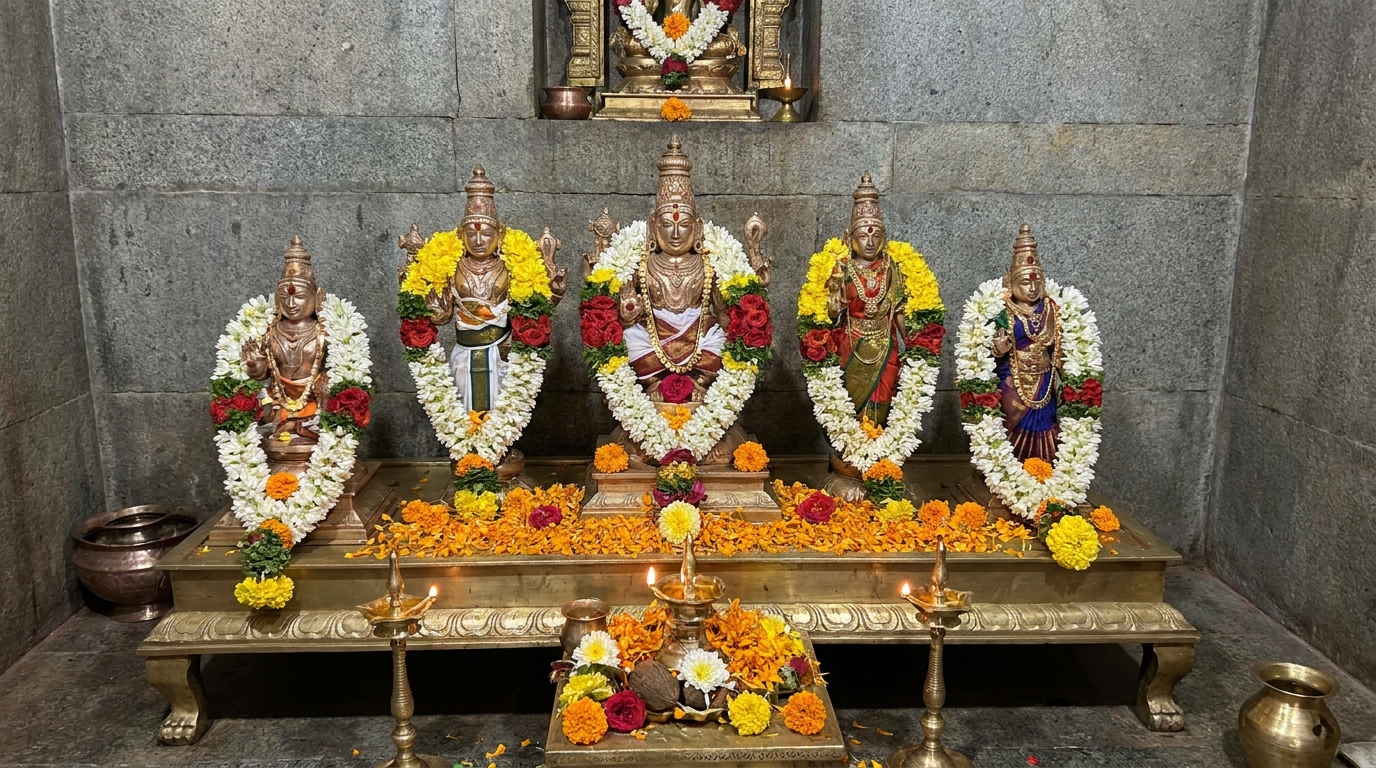
The remaining three members of the Pañca-Tattva are equally essential. Each one reveals a unique aspect of how God’s love operates in this world.
Śrī Advaita Ācārya — The One Who Called God Down
Śrī Advaita Ācārya is considered an incarnation of Mahā-Viṣṇu and Sadāśiva combined. Before Lord Caitanya’s appearance, Advaita Ācārya looked upon the suffering of the world and felt deep anguish. He performed intense worship, offering holy tulasī leaves and Ganges water to Lord Kṛṣṇa, crying out for the Lord to descend and deliver the fallen souls.
His prayers were answered. Lord Caitanya’s appearance in this world is directly connected to Advaita Ācārya’s call.
What does this teach us? It shows us the power of sincere prayer. When we cry out for God from the core of our being — not for material gain but out of genuine concern for ourselves and others — that prayer has immeasurable power. God responds to sincerity.
As stated in Śrī Caitanya-caritāmṛta, Ādi-līlā 3.110:
> “advaita-ācārya-gosāñi sākṣāt īśvara — This Advaita Ācārya is directly the Supreme Personality of Godhead. He appeared because of the compassion He felt for the fallen conditioned souls.”
Śrī Gadādhara Paṇḍita — The Heart’s Devotion
Śrī Gadādhara Paṇḍita represents the hlādinī-śakti — the internal pleasure potency of the Lord. In simpler language, he embodies the energy of pure devotional love itself.
Gadādhara Paṇḍita was Lord Caitanya’s most intimate companion, always nearby, always absorbed in loving service. His presence in the Pañca-Tattva reminds us that divine love is not something we manufacture — it is an energy that comes from God Himself. Our role is simply to open ourselves to receive it.
He teaches us about quiet, deep, unwavering devotion — the kind that doesn’t need to announce itself but simply loves and serves.
Śrī Śrīvāsa Ṭhākura — Representing All of Us
Śrī Śrīvāsa Ṭhākura holds a special place in the Pañca-Tattva because he represents the marginal living entity — the pure devotee, and by extension, all sincere seekers.
It was in Śrīvāsa Ṭhākura’s courtyard that the early saṅkīrtana movement began. Night after night, Lord Caitanya and His associates would gather there to chant and dance in ecstasy. Śrīvāsa opened his home, his heart, and his life to the mission of divine love.
His example speaks directly to us. We may not be God. We may not be great incarnations or powerful ācāryas. But like Śrīvāsa Ṭhākura, we can open the doors of our lives — our homes, our hearts, our daily routines — to the practice of chanting, prayer, and devotional service. That is enough. That is everything.
Why the Pañca-Tattva Matters in Your Daily Spiritual Life
Understanding the Pañca-Tattva is not merely an academic exercise. It has deeply practical implications for anyone walking the path of Bhakti.
They Remove Obstacles to Chanting
One of the greatest challenges in spiritual life is feeling unworthy. We might think, “I’m not good enough to chant God’s name. I have too many faults.” The Pañca-Tattva’s mercy dissolves these doubts. By calling upon them before chanting, we acknowledge that we are not relying on our own strength but on divine grace.
Śrīla Prabhupāda writes in his purport to Caitanya-caritāmṛta, Ādi-līlā 8.31:
> “If one takes shelter of the Pañca-tattva before chanting, he is saved from all the offenses he may commit while chanting.”
This is an extraordinary gift. It means we can begin exactly where we are, imperfections and all.
They Model a Complete Spiritual Community
The Pañca-Tattva also show us what a healthy spiritual community looks like. There is the Lord at the center, the spiritual teacher extending mercy, the one who calls out in prayer, the energy of pure devotion, and the sincere practitioner who opens their life to God. Together, they create a complete circle of love and service.
When we gather in community to chant, serve, and support one another, we are participating in that same divine dynamic. Every role matters. Every person is needed.
They Remind Us That Love Is the Goal
More than philosophy, more than ritual, more than theology — the Pañca-Tattva came to demonstrate that love is the ultimate purpose of existence. Not abstract love, but real, tangible, heart-transforming love for the Supreme Person and for all living beings.
This love is expressed through chanting, through service (sevā), through kindness, through sharing sacred food (prasādam), and through building authentic relationships grounded in spiritual sincerity.
How to Begin: One Sincere Step
If the Pañca-Tattva’s mission teaches us anything, it is this: you don’t have to be perfect to start. You just have to be sincere.
You can begin right now, wherever you are. Try chanting the Pañca-Tattva mantra softly, followed by the Hare Kṛṣṇa mahā-mantra:
Hare Kṛṣṇa, Hare Kṛṣṇa, Kṛṣṇa Kṛṣṇa, Hare Hare / Hare Rāma, Hare Rāma, Rāma Rāma, Hare Hare
You can chant in your car, on a walk, in the quiet of the morning, or with friends. There is no wrong place or wrong time. The holy name meets you where you are.
At The Bhakti House, we believe that every soul is a beloved child of God, and every sincere step toward the Divine — no matter how small it seems — is received with infinite love. The Pañca-Tattva came to make sure that no one is left behind.
So whether this is your very first encounter with these beautiful truths or a deepening of something you’ve carried in your heart for years, know this: you are welcome here, you are loved, and the door is wide open.
Take one step. Chant one round. Offer one prayer. The Pañca-Tattva are waiting with open arms.
FAQs
What is the Pañca-Tattva?
The Pañca-Tattva refers to the five elements or principles in Hindu and Vedic philosophy. These elements are earth (prithvi), water (jala), fire (agni), air (vayu), and ether (akash).
What is the significance of the Pañca-Tattva?
The Pañca-Tattva is significant in Hindu and Vedic philosophy as it represents the fundamental building blocks of the universe. These elements are believed to be present in all living beings and are essential for maintaining balance and harmony in the world.
How are the Pañca-Tattva used in spiritual practices?
In spiritual practices, the Pañca-Tattva are often invoked and worshipped to seek blessings and guidance. Each element is associated with specific qualities and deities, and their worship is believed to bring about spiritual growth and enlightenment.
What role do the Pañca-Tattva play in Ayurveda?
In Ayurveda, the traditional Indian system of medicine, the Pañca-Tattva are considered to be essential for maintaining health and well-being. Ayurvedic treatments and therapies often aim to balance these elements within the body to promote overall wellness.
Are there any rituals or ceremonies associated with the Pañca-Tattva?
Yes, there are various rituals and ceremonies in Hindu and Vedic traditions that involve the worship and invocation of the Pañca-Tattva. These rituals are often performed to seek blessings for specific purposes such as prosperity, health, and spiritual growth.

