
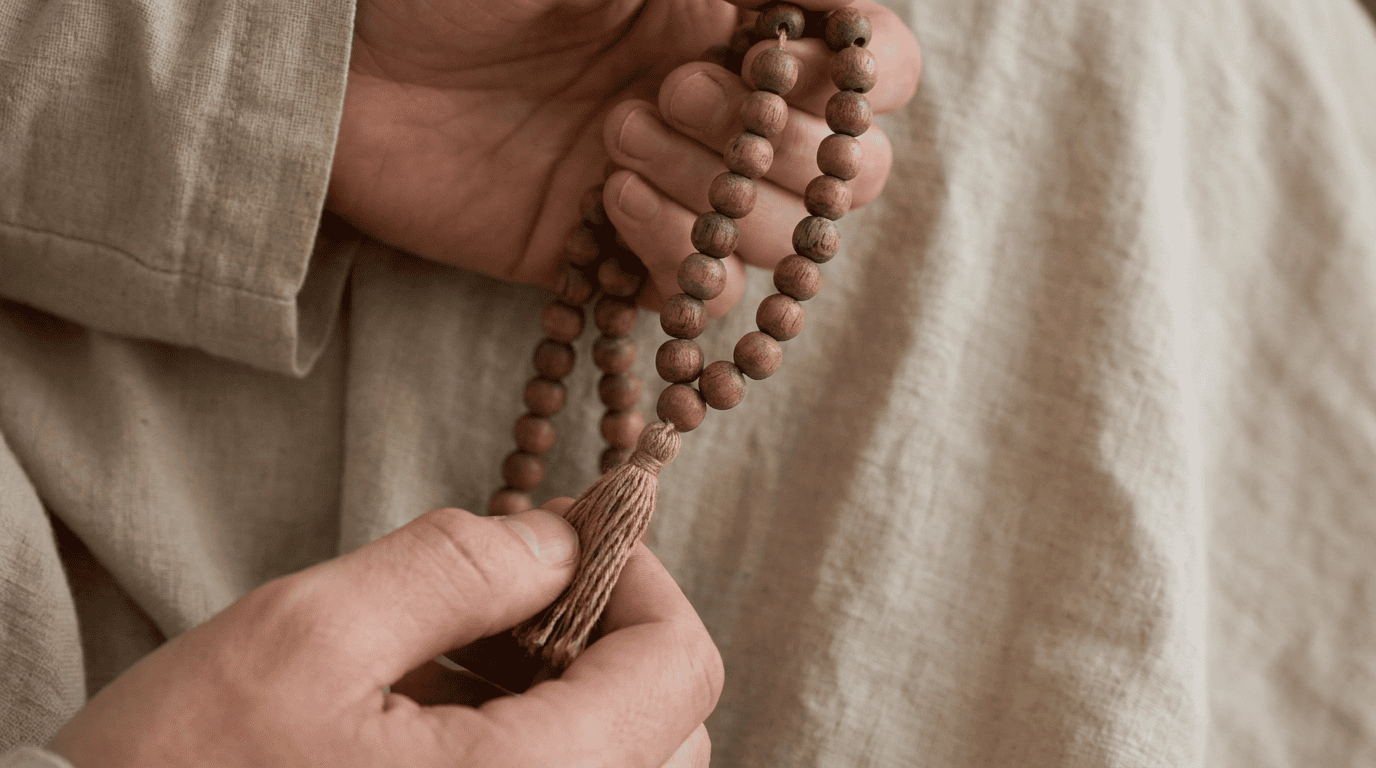
In a busy world, many of us long for a quiet place inside the heart. We may have full schedules, full inboxes, and full minds, yet still feel a gentle hunger for something deeper: peace, meaning, connection, and love.
In the Bhakti Yoga tradition, one of the most accessible and powerful ways to nourish the heart is through japa meditation using japa beads.
The word japa is Sanskrit, an ancient sacred language of India, and it means the soft, repeated chanting of a holy name or mantra. A mantra is a sacred sound or prayer that helps free the mind from anxiety and reconnects us with the Divine. Japa beads are a string of beads used to count these prayers, much like prayer beads or rosaries found in other spiritual traditions.
At The Bhakti House, we welcome everyone—whether you are new to meditation, returning to spiritual practice, from a faith tradition, unsure about faith, or simply seeking peace. Japa meditation is not about being perfect. It is about beginning sincerely.
One bead. One breath. One prayer. One step toward God.
What Are Japa Beads?
Japa beads are meditation beads used for prayerful repetition of a mantra. In the Bhakti Yoga tradition, a standard set of japa beads usually has 108 beads, plus one larger bead called the Krishna bead, Guru bead, or Meru bead.
The practitioner gently moves from bead to bead while chanting a sacred mantra, often the Hare Krishna Maha-mantra:
**Hare Krishna Hare Krishna
Krishna Krishna Hare Hare
Hare Rama Hare Rama
Rama Rama Hare Hare**
This mantra is sometimes called the Maha-mantra, which means “the great mantra.” It is a prayer asking to be lovingly engaged in divine service. The names Krishna and Rama refer to God as the all-attractive and the source of spiritual joy. Hare is a call to the divine energy of the Lord, often understood as a loving appeal to be connected with God’s grace.
Why 108 Beads?
The number 108 has sacred significance in many spiritual traditions from India. There are different explanations for its importance, but practically speaking, 108 beads provide a meaningful rhythm for meditation.
Chanting one full round of 108 mantras takes time, attention, and intention. It is long enough to settle the mind, but simple enough for a daily practice. For some, one round is a beautiful beginning. For others, many rounds become a steady part of their spiritual life.
The number itself is not magic in a mechanical sense. Rather, it offers a sacred structure—a container for devotion.
The Guru Bead
The larger bead marks the beginning and end of a round. In Bhakti, the word guru means spiritual teacher—one who helps bring light where there is darkness. When chanting on japa beads, practitioners do not cross over the Guru bead. Instead, when they complete a round, they turn the beads around and continue in the other direction if they wish to chant more.
This simple gesture reminds us that spiritual life is not a matter of ego. We receive wisdom through grace, guidance, and humility.
Common Materials for Japa Beads
Japa beads may be made from different materials. In many Bhakti Yoga traditions, especially those centered on Krishna devotion, beads are often made from Tulasi wood. Tulasi is a sacred plant loved in Vaishnava tradition, and she is honored as very dear to Krishna.
Other beads may be made from wood, seeds, gemstones, or simple natural materials. If you are just beginning, the most important thing is not the material—it is sincerity. A humble heart is more powerful than an expensive set of beads.
The Spiritual Meaning of Japa Meditation
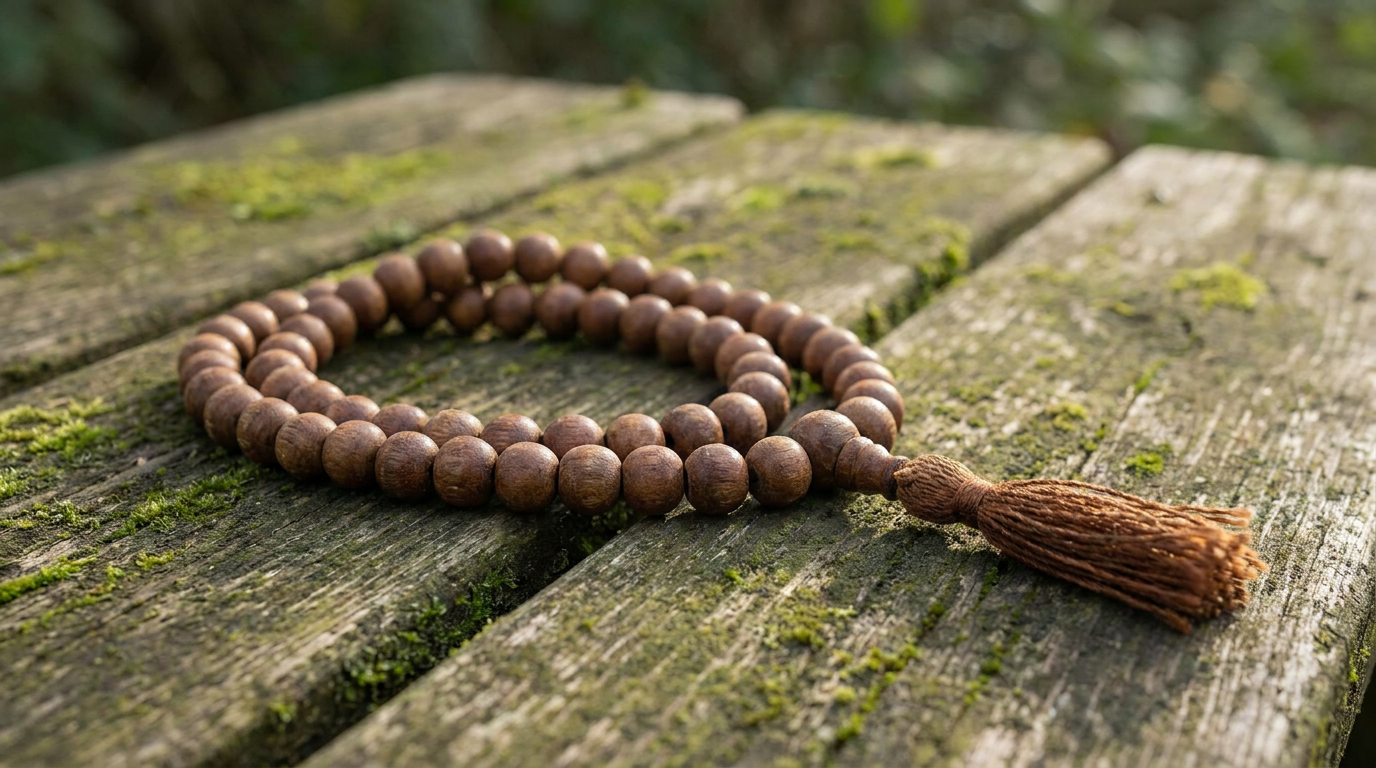
Japa meditation is more than a calming technique. It can certainly reduce stress, support focus, and help regulate the nervous system, but its deeper purpose is relationship.
In Bhakti Yoga, the soul is understood as eternal, conscious, and loving by nature. The Sanskrit word bhakti means devotion, love, or loving service. Yoga means connection. So Bhakti Yoga is the path of reconnecting with God through love.
Japa is one of the most practical ways to cultivate that connection every day.
Sound as a Sacred Bridge
Bhakti scriptures teach that divine sound is spiritually powerful. The Srimad Bhagavatam, a beloved Bhakti scripture, explains that hearing and chanting about the Lord purifies the heart. This means that when we sincerely hear and repeat sacred names, the heart gradually becomes clearer.
We may begin with distraction, doubt, or restlessness. That is normal. The practice does not demand that we already feel spiritually advanced. The mantra meets us where we are.
Like sunlight entering a room, sacred sound gradually reveals what has always been there: the soul’s longing to love and be loved by God.
The Mantra Is a Prayer
When we chant the Hare Krishna Maha-mantra, we are not simply repeating syllables. We are praying:
“Dear Lord, dear divine energy of the Lord, please engage me in Your loving service.”
This is a beautiful prayer because it gently shifts us from “What can I get?” to “How can I love?” It invites the heart into service, humility, and relationship.
In daily life, this may express itself through kindness, patience, honesty, gratitude, forgiveness, and care for others.
Chanting with the Heart
Sometimes people ask, “What if I don’t feel devotion yet?”
That is completely okay. In Bhakti, practice often comes before feeling. We show up, chant sincerely, and allow the heart to soften over time.
A child learning to walk may stumble many times, but every step matters. Similarly, every sincere mantra matters. Even if the mind wanders, even if the voice is quiet, even if the heart feels dry—God receives the effort.
Check out our latest posts at https://thebhaktihouse.org/blog.
How to Use Japa Beads for Meditation
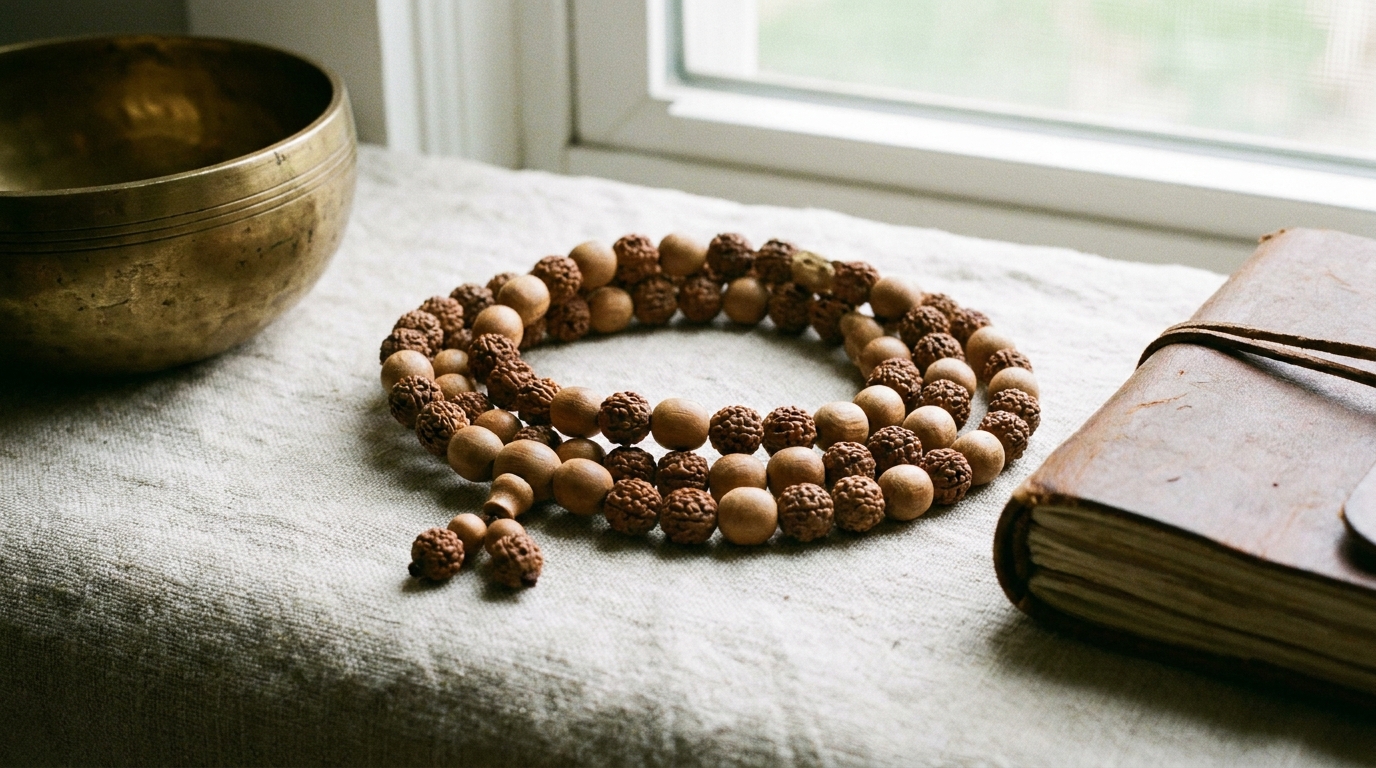
Learning how to use japa beads for meditation is simple. You do not need to be an expert. You do not need special clothing, a perfect meditation room, or a flawless mind. Begin with what you have.
Find a quiet place if possible. Sit comfortably. Hold your beads gently. Take a breath. Offer a simple prayer. Then begin.
Step 1: Hold the Beads Respectfully
Traditionally, japa beads are held in the right hand, using the thumb and middle finger to move each bead. The index finger is usually avoided because it symbolizes ego or pointing outward in judgment.
If this is difficult for you physically, do not be discouraged. Use the beads in a way that is comfortable and respectful. Bhakti is people-first. The purpose is loving remembrance, not bodily perfection.
Some practitioners keep their beads in a small cloth bag called a japa bag to keep them clean and sacred. The hand goes inside the bag, and the beads are moved one by one.
Step 2: Begin After the Guru Bead
Start with the bead next to the larger Guru bead. Do not chant on the Guru bead itself. Hold the first bead gently between your fingers.
Chant the full mantra once:
**Hare Krishna Hare Krishna
Krishna Krishna Hare Hare
Hare Rama Hare Rama
Rama Rama Hare Hare**
Then move to the next bead and repeat.
Step 3: Hear the Sound
The most important part of japa meditation is hearing. Chant clearly enough that you can hear the mantra. The mind may wander, but the ears can help bring it back.
When thoughts arise—plans, worries, memories—do not become upset. Gently return to the sound. The mantra is like a loving hand guiding the mind back home.
Step 4: Complete One Round
Continue bead by bead until you return to the Guru bead. That is one round of 108 mantras.
If you want to continue, do not cross over the Guru bead. Turn the beads around and chant back in the opposite direction.
If one round feels too long at first, you may begin with a few minutes of chanting. Over time, your practice can grow naturally.
Step 5: End with Gratitude
When you finish, pause. Offer gratitude. You might pray:
“Thank You for allowing me to chant. Please help me remember You and serve with love.”
This simple closing helps bring the meditation into the rest of your day.
The Benefits of Japa Beads for Meditation
The power of japa beads for meditation is both practical and spiritual. Many people first come to chanting because they want peace of mind. That is a beautiful beginning. Over time, they may discover that chanting also awakens devotion, purpose, and compassion.
Japa Helps Calm the Mind
The mind is often compared to a restless monkey—jumping from one thought to another. Japa gives the mind a sacred focus.
The beads engage the sense of touch. The voice engages speech. The ears engage hearing. The mantra engages the heart. This makes japa meditation especially helpful for people who struggle with silent meditation.
Instead of trying to empty the mind by force, we fill the mind with sacred sound.
Japa Creates a Daily Spiritual Rhythm
A daily japa practice becomes an anchor. Even ten minutes each morning can change the mood of the day.
Before emails, before responsibilities, before the noise of the world rushes in, we can begin by remembering God. This remembrance does not remove life’s challenges, but it gives us a deeper place from which to meet them.
Spiritual growth often comes through small, repeated acts of devotion. A little chanting every day is more powerful than occasional intensity followed by long neglect.
Japa Softens the Heart
Bhakti Yoga is not only about personal peace. It is about becoming more loving.
As the mantra enters the heart, we may begin to notice subtle changes. We may become more patient with family, more compassionate toward strangers, more honest with ourselves, and more willing to serve.
The Bhagavad-gita, one of the central texts of Yoga wisdom, teaches that a spiritually steady person is not disturbed by temporary ups and downs and sees all beings with equal vision. Japa helps cultivate that steadiness and vision in a practical way.
Japa Supports Prayerful Living
Chanting is not separate from life. It gradually teaches us to live prayerfully.
When we chant in the morning, we may remember the mantra during the day. In a stressful moment, we may silently repeat God’s names. Before a difficult conversation, we may pray for humility. While cooking, cleaning, working, or walking, we may remember that life itself can be offered in love.
This is the heart of Bhakti: not escaping the world, but learning to serve God and others within it.
Japa in the Bhakti Yoga Tradition
Japa has been practiced for thousands of years by saints, sages, and ordinary sincere people. In Bhakti Yoga, chanting the holy names of God is considered especially powerful for this age, when the mind is often distracted and life moves quickly.
The Kali-santarana Upanishad specifically praises the chanting of the Hare Krishna Maha-mantra as a spiritual remedy for the difficulties of the present age. The teaching is simple and merciful: sacred sound is available to everyone.
The Example of Sri Chaitanya
Sri Chaitanya Mahaprabhu, a great saint and teacher of Bhakti Yoga from 15th-century India, shared the chanting of God’s names widely. He taught that the holy name is not limited by birth, background, education, wealth, or social position.
His famous prayer from the Sikshashtakam says:
“One should chant the holy name of the Lord in a humble state of mind…”
This humility is central. We do not chant to become superior. We chant to become servants of love.
Hearing and Chanting
Bhakti scriptures often speak of two essential practices: sravanam and kirtanam.
Sravanam means hearing.
Kirtanam means chanting or glorifying.
Japa includes both. We chant the mantra, and we hear it. This hearing is not passive. It is an act of devotion. We listen with the hope that the heart will awaken.
Group chanting, often called kirtan, is also a joyful practice in Bhakti Yoga. Japa is usually more personal and quiet, while kirtan is often musical and communal. Both nourish the soul.
Service as the Fruit of Chanting
Authentic chanting should lead us toward service. The Sanskrit word seva means loving service. If our meditation is deepening, we may find ourselves asking, “How can I help? How can I be more kind? How can my life become an offering?”
This is why Bhakti Yoga is practical. It is not only something we do on a cushion. It touches our relationships, work, food, speech, choices, and values.
Japa beads help us remember. Service helps us express what we remember.
Beginning Your Own Japa Practice
If you are new to japa beads for meditation, please begin gently. There is no need to imitate someone else’s level of practice. Spiritual life grows best with sincerity, steadiness, and grace.
Start Small and Be Consistent
You might begin with five minutes a day. Or one round. Or even one mantra chanted with attention and sincerity.
Choose a time that feels realistic. Many people prefer early morning because the mind is quieter, but any time is better than no time. The best time to chant is the time you will actually do it.
Try linking japa to an existing habit. For example:
After waking up, chant one round.
Before breakfast, chant for five minutes.
After evening work, sit and chant to transition into rest.
Before sleep, chant softly with gratitude.
Consistency makes the practice a friend.
Create a Sacred Space
A sacred space does not have to be elaborate. It may be a corner of your room with a clean cloth, a candle, a sacred picture, a scripture, or your japa beads.
The purpose is to remind the mind: “This is a place for prayer.”
If your home is busy, do not worry. A sincere heart can chant anywhere. In Bhakti, God is not limited by location.
Chant Clearly and Kindly
Try to pronounce the mantra clearly, but do not become anxious. The holy name is merciful.
You may chant softly aloud, loud enough for your own ears to hear. If you are in a public place, you may chant quietly or mentally, though audible chanting is often recommended because it supports concentration.
Most importantly, chant kindly. Do not use japa as a way to judge yourself. If your mind wanders 100 times and you return 101 times, that is beautiful practice.
Keep Your Beads Sacred
Because japa beads are used for prayer, many practitioners treat them with respect. They may keep them in a clean bag, avoid placing them on the floor, and use them only for chanting.
This respect is not superstition. It is a way of training the heart to honor sacred things.
When we treat our beads with care, we are also teaching ourselves to treat our spiritual life with care.
Working with Common Challenges in Japa Meditation
Every sincere practitioner faces challenges. Restlessness, sleepiness, doubt, distraction, and inconsistency are all part of the journey. Please do not be discouraged. The path of Bhakti is patient and compassionate.
“My Mind Wanders Constantly”
This is one of the most common experiences in meditation. The mind may wander because it is used to wandering. Japa is a gentle retraining.
When you notice you are distracted, simply return to the mantra. No drama. No shame. Each return is an offering.
You can also try chanting a little louder, sitting with better posture, or focusing carefully on each word of the mantra.
“I Don’t Feel Anything”
Feelings come and go. Bhakti is deeper than temporary emotion.
Sometimes chanting feels sweet. Sometimes it feels dry. Both can be meaningful. Dry chanting done sincerely may be especially purifying because it is not dependent on immediate reward.
A farmer waters seeds before seeing fruit. In the same way, every mantra waters the seed of devotion in the heart.
“I Don’t Know If I Believe Enough”
You do not need perfect belief to begin. You can chant as an experiment, as a prayer, or as a humble offering:
“If You are there, please guide me. Please help me know You.”
Bhakti welcomes honest seekers. Doubt can become part of the conversation with God when held sincerely.
“I’m Too Busy”
If life is full, begin very small. Chant while walking. Chant in the car before starting the engine. Chant one mantra before checking your phone. Chant while preparing food.
The goal is not to add pressure. The goal is to invite sacred remembrance into real life.
Even a few sincere minutes can open the heart.
Choosing Japa Beads for Your Meditation Practice
If you are ready to use japa beads, choose a set that supports your practice. The beads do not need to be fancy. They should feel comfortable in your hand and inspire you to chant.
Tulasi Japa Beads
In Krishna Bhakti traditions, Tulasi japa beads are especially cherished. Tulasi Devi is honored as a sacred servant of Krishna, and chanting on Tulasi beads is considered very auspicious.
If you receive Tulasi beads, it is good to learn how to care for them respectfully. Many practitioners avoid exposing them to water or placing them in unclean places.
Beginner-Friendly Beads
If you are still exploring, you may start with simple wooden beads or a practice mala. A mala is a string of beads used for meditation. The word simply means “garland.”
You can also begin chanting without beads, using a timer or counting on your fingers. The beads are helpful, but the essence is the sincere chanting of the holy name.
Receiving Beads with Intention
When you begin using japa beads, you might hold them and offer a simple prayer:
“May these beads help me remember God. May my chanting become sincere. May my heart become more loving.”
This intention helps transform an object into a companion on your spiritual path.
Bringing Japa into Daily Life
The beauty of japa meditation is that it does not stay confined to your meditation time. Gradually, the mantra begins to accompany you.
Morning Meditation
Morning japa can set the tone for the day. Before the mind becomes crowded, you offer your first attention to God. This can create a foundation of peace, clarity, and devotion.
Even if the rest of the day becomes busy, you have already touched something eternal.
Japa During Difficult Emotions
When anxiety, anger, sadness, or loneliness arise, the mantra can become shelter. This does not mean we ignore emotions. Rather, we bring them into prayer.
You can chant with honesty:
“God, I am struggling. Please be with me. Please guide my heart.”
The beads give your hands something gentle to hold while your heart finds its way back to trust.
Chanting Before Service
Before serving others—cooking for family, going to work, volunteering, teaching, caring for children, or helping a friend—you can chant and offer your actions.
In the Bhagavad-gita, Krishna teaches that what we do can be offered to Him with devotion. This means ordinary life can become sacred when offered with love.
Japa helps us remember the offering.
Sharing the Practice Respectfully
If japa helps you, you may feel inspired to share it. Share gently. Bhakti is never forced. Invite, encourage, and live the practice through kindness.
Sometimes the most powerful way to share chanting is by becoming more peaceful, humble, and compassionate. People notice the fragrance of sincere practice.
The Deeper Power of Japa Beads
The true power of japa beads for meditation is not in the beads alone. It is in the sacred relationship they support.
Each bead becomes a small doorway. Each mantra becomes a step. Each round becomes a garland of prayer offered to God.
Over time, the beads may witness your whole spiritual life. They are there when you are hopeful and when you are tired. They are there in seasons of clarity and seasons of confusion. They are there when your heart sings and when your heart can only whisper.
In this way, japa beads become a quiet friend.
From Meditation to Transformation
At first, we may chant to calm down. Then we may chant to feel connected. Eventually, we may chant because we want to love God.
This is the natural growth of Bhakti Yoga.
The practice gently transforms our questions. Instead of only asking, “How can I feel better?” we begin asking, “How can I serve better? How can I love more? How can I remember God in this moment?”
That shift is deeply healing.
A Path for Everyone
Bhakti Yoga does not require wealth, status, intellectual mastery, or external perfection. The holy name can be chanted by anyone.
A child can chant. An elder can chant. A scholar can chant. A person who feels broken can chant. A person full of questions can chant. A person from any country, culture, or background can chant.
The doorway is sincerity.
One Bead at a Time
Spiritual life can feel overwhelming if we think we must become saintly overnight. Japa teaches us another way: one bead at a time.
We do not have to conquer the whole mind today. We simply return to the mantra on this bead.
Then the next bead.
Then the next.
In that humble repetition, grace enters.
A Gentle Practice You Can Try Today
If you would like to experience japa meditation, here is a simple practice:
Sit comfortably.
Take three slow breaths.
Hold your beads, or simply rest your hands in your lap.
Offer a prayer in your own words.
Chant the Hare Krishna Maha-mantra slowly and clearly.
Listen to each word.
When your mind wanders, gently return.
End with gratitude.
You might chant for five minutes, or one full round on japa beads. Let it be sincere rather than pressured.
Remember, this is not a performance. It is a meeting. It is a conversation of the heart.
Everyone Is Welcome to Begin
Wherever you are on your journey, you are welcome. Whether you feel full of faith or only a small spark of curiosity, you are welcome. Whether you have chanted for years or have never held japa beads before, you are welcome.
Bhakti Yoga is a practical path of love—chanting, prayer, service, community, and spiritual growth. Japa beads for meditation can help us slow down, listen deeply, and remember our eternal relationship with God.
You do not need to take a giant leap. Just take one sincere step.
One mantra.
One prayer.
One act of service.
One moment of remembrance.
May your heart be encouraged. May your practice be blessed. And may every soul feel invited to take one sincere step toward God.
FAQs
What are Japa beads?
Japa beads, also known as mala beads, are a string of beads used in meditation and prayer in Hinduism, Buddhism, and other spiritual practices. They are traditionally made from materials such as sandalwood, rudraksha seeds, or gemstones.
How are Japa beads used?
Practitioners use Japa beads to count the repetitions of a mantra or prayer. The beads are held in one hand while the practitioner recites the mantra, and each bead is passed through the fingers as the mantra is repeated, helping to keep track of the number of repetitions.
What is the significance of Japa beads in spiritual practice?
Japa beads are believed to help the practitioner focus and concentrate during meditation and prayer. The repetitive nature of using the beads can also aid in achieving a meditative state and deepening one’s spiritual connection.
Are there different types of Japa beads?
Yes, there are various types of Japa beads available, each with its own significance and properties. Some are made from specific materials believed to have spiritual benefits, while others may be designed for specific mantras or deities.
Where can I purchase Japa beads?
Japa beads can be purchased from spiritual or religious stores, as well as online retailers specializing in meditation and yoga accessories. It’s important to ensure that the beads are sourced ethically and made from high-quality materials.

