
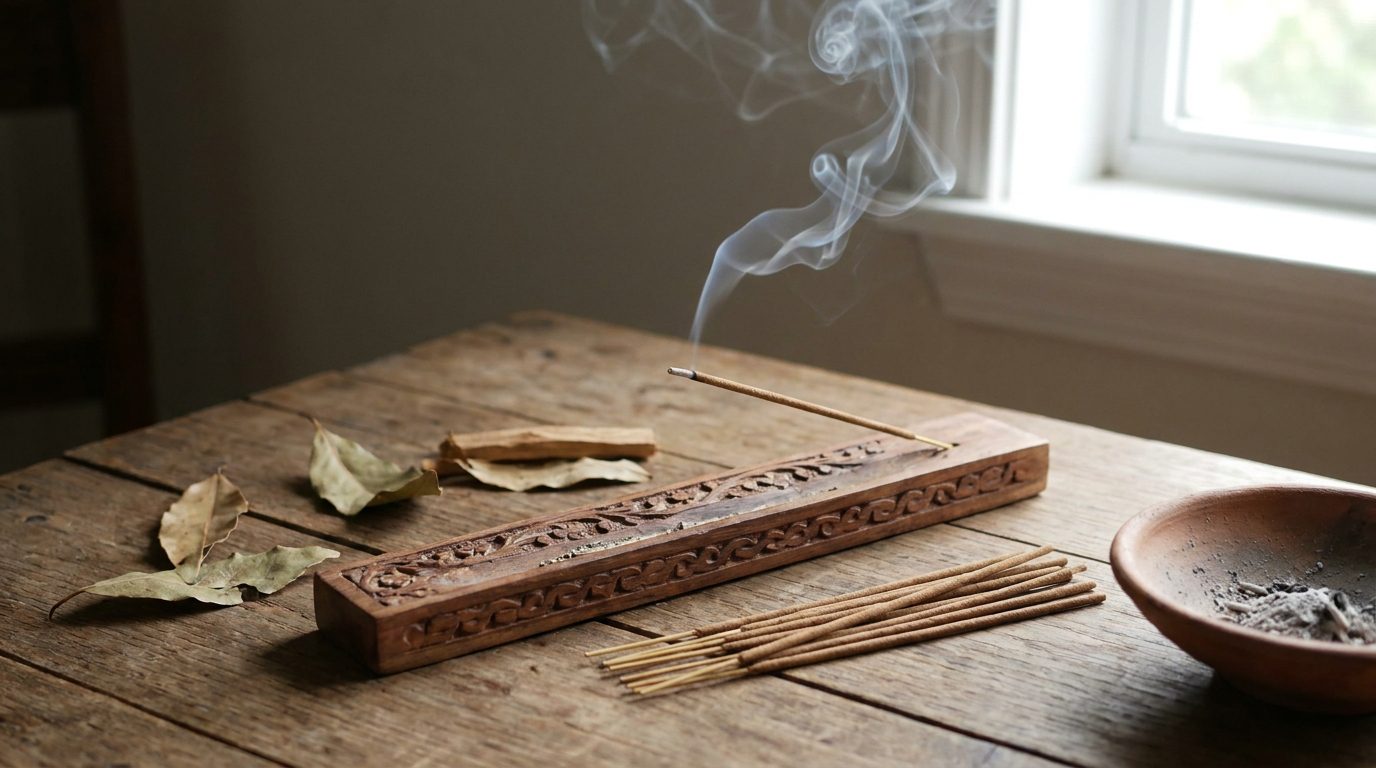
Incense has been part of human spiritual culture for thousands of years. Across temples, churches, monasteries, homes, meditation rooms, and sacred gatherings, fragrant smoke has helped people slow down, breathe deeply, and remember something higher than daily worries.
In Bhakti Yoga, the path of loving devotion to God, incense is more than a pleasant scent. It can become an offering of love. A single stick of incense, offered with sincerity, can transform an ordinary room into a place of prayer, chanting, gratitude, and spiritual reflection.
You do not need to be born into a particular tradition to appreciate incense. You do not need to know Sanskrit, have a perfect altar, or understand every ritual. The heart of Bhakti is simple: love, service, remembrance, and a sincere desire to grow closer to the Divine.
This complete guide will help you discover the art of incense—its history, meanings, types, uses, safety, and spiritual purpose—especially through the gentle and practical lens of Bhakti Yoga.
What Is Incense?
Incense is a natural aromatic substance that releases fragrance when burned. It may be made from plant resins, woods, herbs, flowers, spices, oils, or other fragrant materials.
The word “incense” often refers to sticks, cones, powders, or resins used in spiritual practice, meditation, prayer, worship, or simply to create a peaceful atmosphere.
Incense as Fragrance and Offering
On one level, incense is fragrance. It can make a room feel warm, clean, calming, or uplifting.
On a deeper level, incense can become an offering. In Sanskrit, the sacred language of many Bhakti scriptures, an offering is often called an “upachara,” meaning an item lovingly presented to God or the Divine. In temple worship, incense is traditionally offered as one of the simple ways to honor the Lord.
When we offer incense, we may think, “This beautiful fragrance is for You.” That small shift changes everything. The incense is no longer just for our own enjoyment. It becomes an act of devotion.
The Symbolism of Incense Smoke
The rising smoke of incense carries beautiful spiritual symbolism. It reminds us that our prayers can rise upward. It teaches us that our thoughts, words, and actions can become purified and offered.
Incense also burns itself to give fragrance. In this way, it quietly teaches the Bhakti principle of seva, or service. Seva means loving service offered without selfish expectation. Just as incense gives itself fully, we can learn to offer our time, talents, and hearts in service to God and others.
A Brief History of Incense in Sacred Traditions
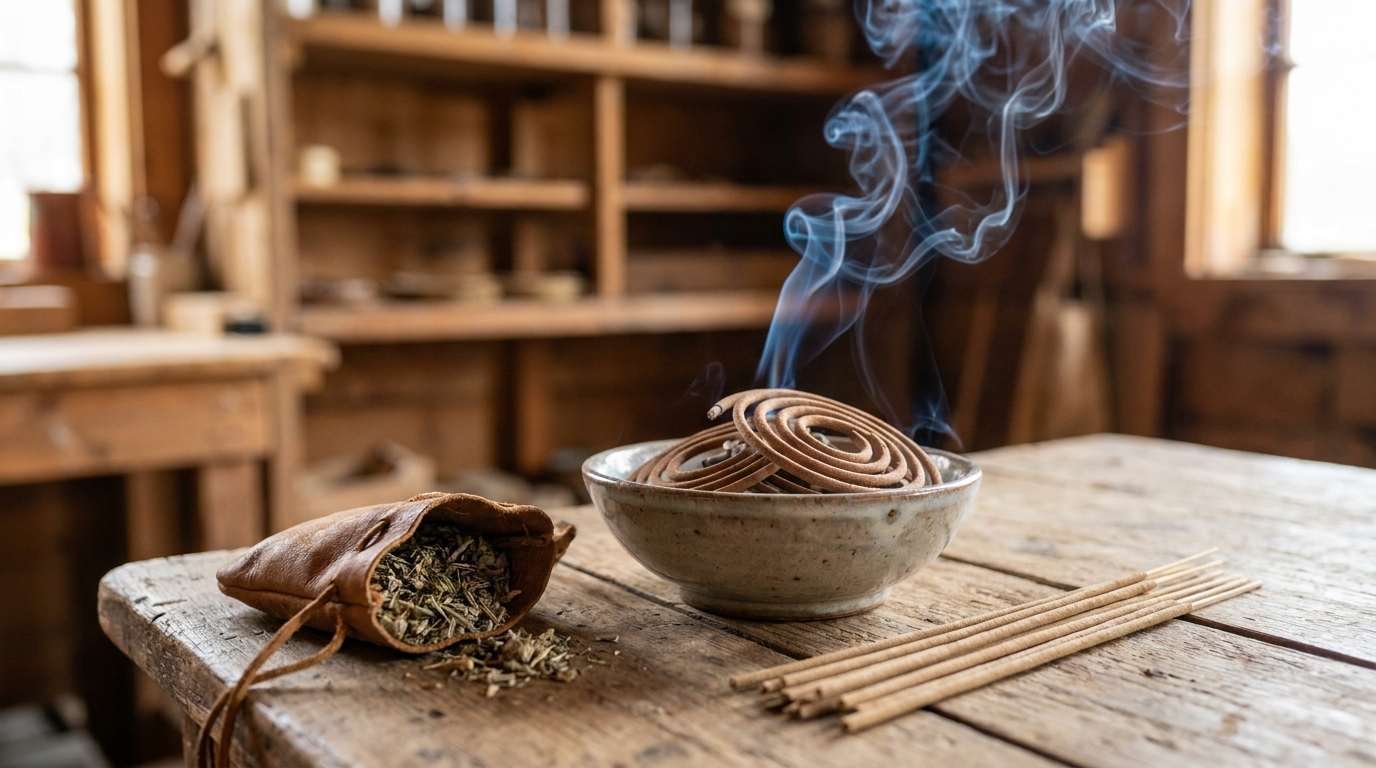
Incense has been used in spiritual traditions across the world. Ancient India, Egypt, China, Japan, Greece, the Middle East, and many Indigenous cultures have all used aromatic smoke in sacred ways.
Incense in Vedic and Bhakti Traditions
In the Vedic tradition of India, incense has long been used in worship, meditation, and sacred ceremonies. The Vedas are ancient spiritual texts, and later Bhakti scriptures such as the Bhagavad-gita and Srimad Bhagavatam emphasize the importance of offering everything to God with devotion.
In the Bhagavad-gita, Lord Krishna says:
“Whoever offers Me with devotion a leaf, a flower, a fruit, or water, I accept that loving offering from the pure-hearted soul.”
Bhagavad-gita 9.26
This verse is very important for anyone beginning spiritual life. Krishna does not say we must offer something expensive or complicated. He asks for devotion. The item may be simple, but the love behind it is precious.
Incense can be understood in this same spirit. A stick of incense offered with love can become spiritually meaningful.
Incense in Temples and Homes
In many Bhakti temples, incense is offered during arati. Arati is a devotional ceremony in which lamps, incense, water, flowers, and other items are offered to the Lord. The purpose is not merely ritual performance. It is a loving exchange.
At home, incense can be used in a simple way. You may light incense before chanting, prayer, reading sacred texts, or sitting in silence. You may offer it before a picture or form of Krishna, Rama, Vishnu, Radha, or any name and form of God you feel connected to.
If you come from another spiritual background, you can still use incense as a respectful way to create sacred space for prayer and remembrance.
Please visit our website for more information on our articles: articles.
Different Types of Incense
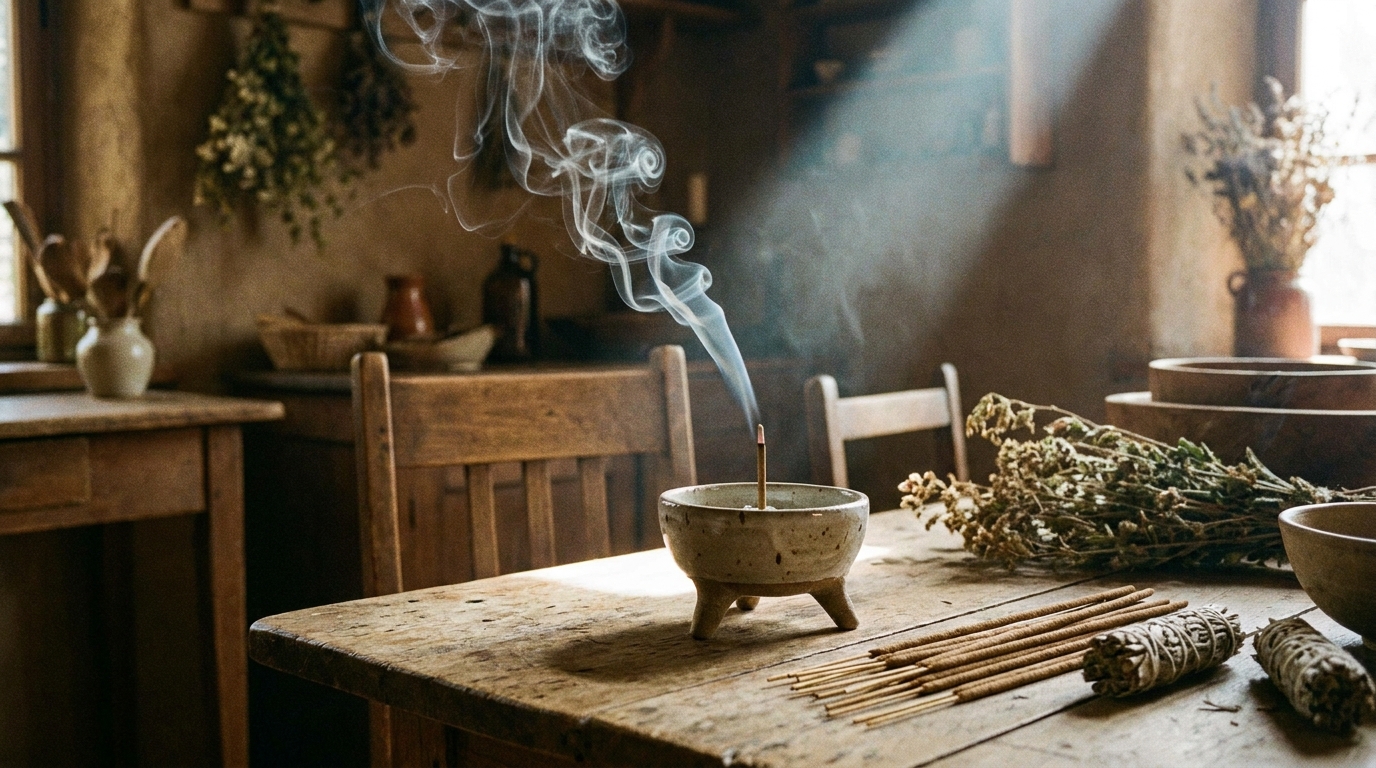
There are many types of incense available today. Understanding the differences can help you choose what is best for your home, health, and spiritual practice.
Incense Sticks
Incense sticks are the most common form. They are easy to use and widely available.
There are two main types:
Bamboo-core incense sticks have a thin bamboo stick inside, with fragrant material rolled around it. These are common in Indian incense.
Solid incense sticks have no bamboo core. They are often found in Japanese incense traditions and tend to produce less smoke.
For Bhakti worship at home, bamboo-core incense sticks are commonly used. They are simple, affordable, and easy to offer.
Incense Cones
Incense cones are small cone-shaped pieces of aromatic material. They burn from the top downward and often produce a stronger fragrance in a shorter time.
Cones can be helpful if you want fragrance quickly, but they may create more smoke than sticks. If you have a small room, sensitive lungs, children, pets, or allergies, use them with care.
Resin Incense
Resin incense comes from tree sap that has hardened into small golden, amber, or dark pieces. Frankincense, myrrh, benzoin, and copal are well-known examples.
Resins are usually burned on charcoal discs or special electric burners. They can have a deep, ancient, temple-like aroma. Resin incense is beautiful, but it requires more attention and proper ventilation.
Powdered Incense
Powdered incense is made from finely ground aromatic substances. It may be sprinkled on charcoal or shaped into trails and burned slowly.
This form is often used in more traditional or ceremonial settings. It can be very pure and natural, depending on the ingredients.
Masala Incense
Masala incense is common in India. “Masala” simply means a mixture or blend. In incense, it refers to a paste made from aromatic powders, herbs, resins, and oils, hand-rolled onto sticks.
High-quality masala incense can smell rich, earthy, floral, and devotional. Many people prefer it for daily worship, kirtan, and meditation.
Dipped Incense
Dipped incense is often made by taking unscented sticks and dipping them into fragrance oils. Some are pleasant, but quality varies greatly.
If possible, choose incense made with natural ingredients and avoid overly chemical or artificial scents. Your spiritual space should feel clean, gentle, and sattvic.
“Sattvic” comes from the Sanskrit word “sattva,” meaning clarity, goodness, harmony, and purity. A sattvic environment supports peaceful thoughts, prayer, and spiritual growth.
Popular Incense Ingredients and Their Meanings
Different incense ingredients carry different moods. While meanings may vary by culture, many fragrances have long been associated with devotion, purification, meditation, and sacred atmosphere.
Sandalwood
Sandalwood is one of the most beloved fragrances in Indian spiritual culture. It is soft, woody, cooling, and peaceful.
In Bhakti worship, sandalwood is considered very sacred. Sandalwood paste is sometimes offered to the Lord and applied to sacred forms or the forehead as tilaka.
Tilaka is a sacred marking made on the body, often with clay, sandalwood, or other substances. In Bhakti traditions, it reminds us that the body is a temple of God.
Sandalwood incense is excellent for meditation, chanting japa, reading scripture, or calming the mind after a busy day.
Frankincense
Frankincense has been used in many ancient traditions. Its fragrance is resinous, bright, and uplifting.
It is often associated with prayer, purification, and reverence. Frankincense can create a deep sacred feeling and may be especially helpful for evening prayer or contemplative worship.
Myrrh
Myrrh has a warm, earthy, slightly bitter fragrance. It has been used historically in sacred rites, healing traditions, and prayer.
Its grounding quality can help create a mood of humility and seriousness in spiritual practice.
Jasmine
Jasmine is sweet, floral, and uplifting. In Bhakti culture, flowers and floral fragrances are often connected with loving devotion.
Jasmine incense can support kirtan, joyful chanting, and heart-centered prayer.
Kirtan means congregational chanting of the holy names of God, often with music. It is one of the most accessible practices of Bhakti Yoga. You do not need to be an expert singer. You simply bring your heart and chant.
Rose
Rose has a gentle, devotional, and heart-opening fragrance. It is often associated with love, compassion, and tenderness.
Rose incense can be beautiful for prayer, offering gratitude, or meditating on divine love.
Tulasi
Tulasi, also called holy basil, is deeply sacred in Bhakti traditions, especially in worship of Krishna. Tulasi Devi is honored as a great devotee of the Lord.
Tulasi leaves are offered to Krishna with love, and many devotees chant on beads made from Tulasi wood.
Tulasi incense may help create a mood of devotion and simplicity. If you use Tulasi products, do so respectfully and with gratitude.
Agarwood
Agarwood, also known as oud, is a rare and precious aromatic wood. It has a deep, complex, rich fragrance.
Because it can be expensive and sometimes overharvested, it is wise to buy agarwood incense from ethical sources. Spiritual practice should include compassion for people, animals, and the earth.
How to Choose Good Incense
Choosing incense is not only about finding a scent you like. It is also about quality, purity, intention, and suitability for your space.
Look for Natural Ingredients
Whenever possible, choose incense made from natural woods, herbs, resins, spices, and essential oils. Avoid products that smell harsh, synthetic, or overly perfumed.
Natural incense tends to support a more peaceful environment. It may also be gentler for the body and mind.
Avoid Overpowering Scents
A good incense should invite prayer, not dominate the room. If the fragrance is too strong, it may distract you rather than help you focus.
For daily Bhakti practice, subtle and soothing scents like sandalwood, rose, jasmine, frankincense, or mild masala blends are often ideal.
Consider Smoke Sensitivity
Some people are sensitive to smoke. If you or someone in your home has asthma, allergies, migraines, or respiratory issues, be careful.
You may choose low-smoke incense, burn only a small portion of a stick, use natural essential oils instead, or simply offer a flower or candle. Bhakti is never about forcing the body. Krishna accepts sincere love.
Choose Ethically Made Incense
If possible, support incense companies that treat workers fairly, use sustainable ingredients, and avoid harmful chemicals.
Spiritual life grows beautifully when our purchases reflect compassion and responsibility.
Trust Your Heart
Fragrance is personal. A scent that helps one person feel peaceful may feel distracting to another. Take your time. Try small amounts. Notice how your mind and heart respond.
The best incense for you is one that supports remembrance of God, kindness, prayer, and inner clarity.
How to Use Incense in Bhakti Yoga Practice
Incense can become part of a simple and meaningful daily spiritual routine. You do not need a large altar or complicated ritual. Begin with sincerity.
Create a Clean and Peaceful Space
Before lighting incense, gently clean the area. This may be a small shelf, table, windowsill, meditation corner, or home altar.
You may place a picture or sacred form of Krishna, Radha-Krishna, Lord Rama, Vishnu, Narasimha, Chaitanya Mahaprabhu, your guru, or another divine form that inspires devotion.
If you are new, you can simply place a candle, a flower, or a scripture such as the Bhagavad-gita.
Cleaning the space is itself a spiritual act. In Bhakti, even sweeping, arranging flowers, or wiping an altar can become seva, loving service.
Light the Incense Mindfully
Take a moment to pause. Light the tip of the incense stick, allow it to flame briefly, then gently blow out the flame so the tip glows and releases smoke.
Place it safely in an incense holder.
As you light it, you may say a simple prayer:
“Dear Lord, please accept this incense. May my heart become pure, peaceful, and loving. Please guide me in Your service.”
You do not need fancy words. Speak honestly.
Offer the Incense
If you have an altar, you may gently circle the incense before the sacred image or form. Traditionally, incense is offered in graceful circles. But if you are not familiar with the practice, simply placing it near the altar with reverence is fine.
The essence is devotion.
You can think, “This fragrance is for You.” Then allow the scent to remind you of your relationship with God.
Chant the Holy Names
One of the most important practices in Bhakti Yoga is chanting the names of God. In Sanskrit, mantra means a sacred sound that helps free and uplift the mind.
A central mantra in the Bhakti tradition is the Hare Krishna maha-mantra:
Hare Krishna, Hare Krishna, Krishna Krishna, Hare Hare
Hare Rama, Hare Rama, Rama Rama, Hare Hare
“Maha-mantra” means the great mantra. “Hare” addresses the divine energy of the Lord, often understood as Srimati Radharani, the feminine aspect of divine love. “Krishna” means the all-attractive Lord. “Rama” means the source of spiritual joy.
You can chant softly while the incense burns. You can chant with beads, known as japa beads, or simply repeat the mantra with your voice and heart.
Japa means personal, meditative repetition of a mantra. Even five minutes daily can bring steadiness and peace.
Read a Little Scripture
After lighting incense and chanting, you may read a few lines from the Bhagavad-gita, Srimad Bhagavatam, or another sacred text.
Try not to rush. Read one verse and ask, “How can I live this today?”
Bhakti scriptures are not meant only for scholars. They are guidebooks for the heart. They teach us how to love, serve, forgive, surrender, and remember God in daily life.
Offer Your Day
You can use incense in the morning as a way to offer your day:
“May my words be kind. May my work be honest. May my mind remember You. May I serve others with love.”
This makes incense practical. It is not only about atmosphere. It becomes a reminder to live with devotion.
Incense for Meditation, Prayer, and Kirtan
Different spiritual activities may call for different moods. Incense can gently support each one.
Incense for Meditation
For quiet meditation, choose calming scents like sandalwood, frankincense, or mild agarwood.
Keep the fragrance subtle. The goal is not sensory excitement, but inner stillness and remembrance.
You may sit comfortably, breathe naturally, and bring your attention to a mantra or prayer.
Incense for Prayer
For heartfelt prayer, rose, jasmine, frankincense, or myrrh can be supportive. These scents may help soften the heart and create a mood of humility.
Prayer in Bhakti does not have to be formal. You can pray while sitting, walking, cooking, or driving. You can say:
“Please help me remember You.”
“Please guide me.”
“Please help me serve.”
“Please let me love more purely.”
Incense for Kirtan
For kirtan, joyful and uplifting scents like jasmine, rose, tulasi, or sweet masala incense can help create a warm devotional atmosphere.
Kirtan is not a performance. It is a shared offering. Whether you sing loudly, softly, or simply listen, you can participate with your heart.
Incense for Study
If you are studying sacred texts or journaling, choose a clear and grounding scent like sandalwood or frankincense.
Let the incense mark the beginning of sacred learning. Even fifteen minutes of focused study can nourish spiritual growth.
Incense Safety and Care
Because incense involves fire and smoke, safety is important. A devotional practice should be thoughtful and responsible.
Use a Proper Holder
Always place incense in a stable holder that catches ash. Make sure it cannot tip over.
Keep incense away from curtains, papers, clothing, bedding, dry flowers, and anything flammable.
Never Leave Incense Unattended
Do not leave burning incense unattended. If you need to leave the room, extinguish it first.
You can gently press the burning tip into sand, ash, or a fire-safe surface.
Ventilate the Room
Open a window slightly or allow airflow, especially in small spaces. Incense should not make the room smoky or uncomfortable.
A light fragrance is enough.
Be Mindful Around Children and Pets
Keep incense, matches, lighters, and hot ash away from children and animals.
Some pets, especially birds and cats, may be sensitive to smoke and essential oils. Use extra caution and consult a veterinarian if needed.
Burn Less When Needed
You do not have to burn a full stick. You can light incense for a few minutes and then extinguish it.
In Bhakti, quality matters more than quantity. A brief sincere offering is better than a long distracted one.
Making Your Home a Sacred Space
Incense can help create sacred atmosphere, but it is only one part of spiritual home life.
A sacred home is built through loving choices: kind speech, clean habits, prayer, chanting, gratitude, and service.
Begin With Cleanliness
In Bhakti culture, cleanliness is valued because it supports clarity of mind. A clean space can help us feel more peaceful and ready for spiritual practice.
This does not mean your home must be perfect. It means you make a humble effort.
Clear one small area. Wipe it. Place something sacred there. Light incense. Chant one mantra. This is a beautiful beginning.
Bring in Sound
Sacred sound is central in Bhakti Yoga. You may play soft kirtan, chant the maha-mantra, or listen to a reading from the Bhagavad-gita.
The combination of sacred sound and gentle incense can make the heart feel sheltered.
Offer Food With Love
Another beautiful Bhakti practice is offering food to God before eating. This offered food is called prasadam, which means mercy or grace.
You can prepare vegetarian food with care, place it before Krishna or your chosen form of God, and say a simple prayer asking the Lord to accept it.
Incense can be offered during this time as part of the sacred atmosphere.
Practice Kindness
A home filled with incense but lacking kindness will not feel truly sacred. The fragrance of devotion is expressed through how we treat others.
Speak gently. Forgive when possible. Listen deeply. Serve without needing recognition.
These are living forms of incense.
The Inner Meaning of Incense in Bhakti Yoga
The true art of incense is not only external. It points us toward inner transformation.
Letting the Heart Become Fragrant
Bhakti Yoga teaches that the soul is naturally loving, joyful, and connected to God. But the heart can become covered by selfishness, fear, pride, envy, and distraction.
Through chanting, prayer, service, and spiritual association, the heart gradually becomes purified.
Then our character becomes fragrant. Our presence brings peace to others. Our words become kinder. Our actions become more selfless.
This is the deeper incense that God desires: a heart softened by love.
Offering the Mind
When incense rises, we can imagine offering our thoughts to God.
“Here is my anxiety.”
“Here is my gratitude.”
“Here is my confusion.”
“Here is my hope.”
“Please accept me and guide me.”
Bhakti is personal. God is not far away. Krishna says in the Bhagavad-gita that He is seated in everyone’s heart. This means spiritual life can begin exactly where we are.
Transforming Daily Life Into Worship
Incense may burn for only a few minutes, but its lesson can stay with us all day.
Can our work become an offering?
Can our cooking become an offering?
Can our parenting, studying, caring, creating, and resting become offerings?
This is the practical beauty of Bhakti Yoga. It does not ask us to escape life. It teaches us to spiritualize life through remembrance and love.
Common Questions About Incense
Do I Need Incense to Practice Bhakti Yoga?
No. Incense is helpful, but not required.
The main practices of Bhakti Yoga are hearing about God, chanting His names, remembering Him, serving Him, worshiping, praying, becoming a friend of the Lord, and surrendering with love.
If incense supports your devotion, use it. If you cannot use incense because of health, housing rules, or personal preference, you can offer a flower, water, a candle, or simply your heartfelt prayer.
Can Beginners Offer Incense?
Yes. Beginners are very welcome.
Bhakti Yoga is not about spiritual perfection before beginning. It is about beginning sincerely and allowing love to grow.
You can start with one small offering:
“Dear God, I do not know much, but I want to come closer to You. Please accept this.”
That is a powerful prayer.
What Is the Best Time to Burn Incense?
Morning is a wonderful time, because it sets the mood for the day. Evening is also beautiful, especially before rest, reflection, or family prayer.
Many people light incense before chanting japa, during kirtan, while reading scripture, or when making a simple offering at the altar.
Choose a time you can be present.
Is Incense Only for Temples?
No. While incense is common in temples, it can also be used at home.
In Bhakti, the home can become a temple when we fill it with remembrance, service, sacred sound, and loving intention.
Even a tiny apartment, shared room, or quiet corner can become sacred.
What If I Make a Mistake?
Do not worry. God sees the heart.
Rituals can be learned over time. The most important thing is sincerity, humility, and respect.
As the Bhagavad-gita teaches, the Lord accepts offerings made with devotion. He is not looking for fault. He is looking for love.
A Simple Daily Incense Practice
If you would like to begin, here is a gentle practice you can try.
Step 1: Prepare Your Space
Choose a small clean area. Place a sacred image, scripture, flower, or candle there.
Step 2: Light the Incense
Light one stick of natural incense and place it safely in a holder.
Step 3: Offer a Prayer
Say in your own words:
“Dear Lord, please accept this offering. Please help me remember You and serve with love.”
Step 4: Chant
Chant the Hare Krishna maha-mantra or another name of God that is dear to you for five to ten minutes.
Hare Krishna, Hare Krishna, Krishna Krishna, Hare Hare
Hare Rama, Hare Rama, Rama Rama, Hare Hare
Step 5: Reflect
Read one verse from a sacred text or sit quietly. Ask, “What is one loving step I can take today?”
Step 6: Serve
Carry the mood into action. Send a kind message. Prepare food with love. Help someone. Speak gently. Offer your work to God.
This is the heart of Bhakti: love expressed through practice.
Bringing the Art of Incense Into the Heart
The art of incense is simple, beautiful, and deeply meaningful. It invites us to slow down. It reminds us that the senses can be engaged in spiritual life. It teaches us to offer beauty back to its divine source.
In Bhakti Yoga, we do not reject the world. We learn to see everything as connected to God. Fragrance, music, food, words, work, and relationships can all become part of a life of devotion.
Incense may begin as a scent in the room, but with time it can become a teacher. It teaches offering. It teaches presence. It teaches purification. It teaches that even a small act, done with love, can carry great spiritual value.
Wherever you are on your path—curious, new, returning, uncertain, or deeply committed—you are welcome. You do not need to have everything figured out. Take one sincere step. Light a stick of incense, say a prayer, chant one mantra, offer one act of kindness, or simply turn your heart toward God.
Everyone is welcome to take one sincere step toward God, and that one step can fill the whole heart with the fragrance of divine love.
FAQs
What is incense?
Incense is a substance that is burned to produce a fragrant aroma. It is typically made from aromatic plant materials, such as resin, wood, and essential oils, and is used for various purposes including religious ceremonies, meditation, and aromatherapy.
How is incense used?
Incense is typically burned on a small, heat-resistant dish or holder. The tip of the incense stick or cone is lit, and then blown out to produce a smoldering ember. The ember releases the fragrant smoke as the incense burns, filling the surrounding area with its aroma.
What are the different types of incense?
There are several types of incense, including incense sticks, cones, coils, and resins. Each type has its own unique characteristics and burning methods. Additionally, there are various scents and blends available, such as floral, woody, spicy, and herbal fragrances.
What are the benefits of using incense?
Incense has been used for centuries for its various benefits, including creating a calming and relaxing atmosphere, enhancing meditation and spiritual practices, masking unpleasant odors, and promoting mental and emotional well-being through aromatherapy.
Are there any safety precautions to consider when using incense?
When using incense, it is important to do so in a well-ventilated area to avoid inhaling too much smoke. It is also important to keep incense away from flammable materials and to never leave burning incense unattended. Additionally, some individuals may be sensitive to certain fragrances, so it is important to be mindful of others when using incense in shared spaces.

