

Meditation is often described as a way to calm the mind, reduce stress, and become more present. These are beautiful benefits, and many people come to meditation seeking peace, healing, or clarity.
In the Bhakti Yoga tradition, meditation includes all of that—and gently opens the heart toward something more personal and sacred.
Devotional meditation is meditation with love.
It is not only about becoming quiet. It is about becoming connected. It is not only about emptying the mind. It is about filling the heart with remembrance of God, the Divine, the Source of all love.
In Sanskrit, this loving remembrance is often called smaranam, which means “remembering.” In Bhakti Yoga, we remember God through mantra, prayer, sacred sound, service, gratitude, and heartfelt intention.
Whether you are new to spiritual practice, coming from another faith tradition, unsure what you believe, or already walking a devotional path, you are welcome here. Bhakti is not about outer labels. It is about sincerity.
A sincere heart is the beginning of devotional meditation.
What Is Devotional Meditation?
Devotional meditation is a spiritual practice that turns the mind and heart toward God with affection, humility, and trust.
In Bhakti Yoga, the word bhakti means devotion, loving service, or divine love. It comes from a Sanskrit root that suggests sharing, belonging, and loving participation. Bhakti is not passive belief. It is a living relationship.
Devotional meditation may include chanting mantras, silently repeating a sacred name, offering prayers, reading scripture, singing, breathing with awareness, or simply sitting before God with an open heart.
The goal is not to become perfect at meditation. The goal is to become more loving.
Meditation as Relationship
Many forms of meditation focus on observation: watching the breath, watching thoughts, watching sensations, and learning not to identify with them. This is valuable.
Devotional meditation adds another dimension: relationship.
Instead of sitting alone with the mind, we sit in the presence of the Divine. Instead of trying only to detach from thoughts, we offer our thoughts. Instead of struggling to control the heart, we allow the heart to soften.
A simple devotional meditation might sound like this:
“Dear Lord, please let me remember You. Please guide me. Please help me become kind, humble, and useful.”
This kind of meditation is not complicated. It is personal, honest, and deeply human.
The Heart of Bhakti Yoga
In the Bhagavad-gita, one of the most beloved scriptures of Bhakti Yoga, Krishna says:
“Always think of Me, become My devotee, worship Me, and offer your homage unto Me.”
— Bhagavad-gita 18.65
This is a practical teaching. “Always think of Me” does not mean we must sit in a temple all day. It means we can bring remembrance into daily life.
We can remember God while cooking, walking, working, caring for children, speaking with a friend, or facing difficulty. Devotional meditation trains the heart to return again and again to that sacred connection.
Mantra Meditation: Sacred Sound for the Heart
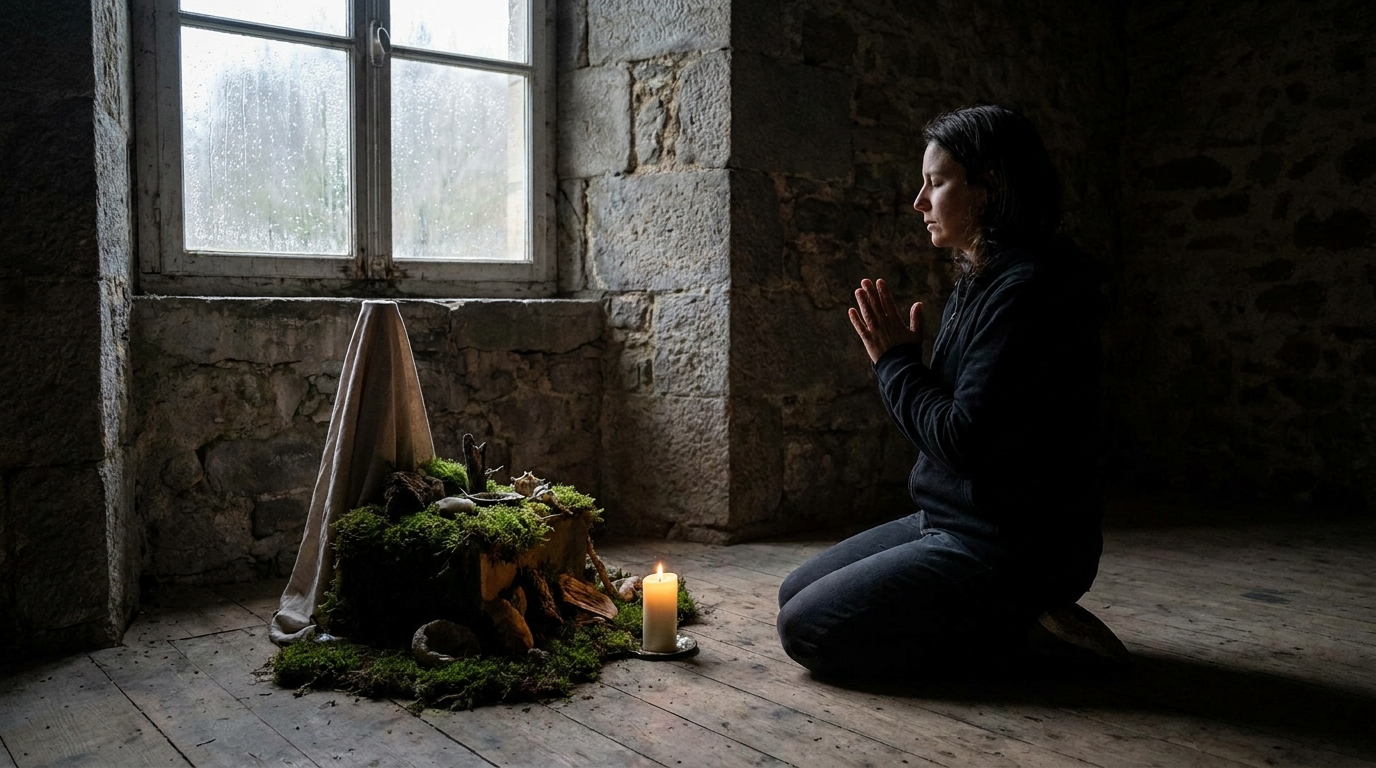
Mantra meditation is one of the most important practices in Bhakti Yoga.
The word mantra comes from two Sanskrit roots: man, meaning “mind,” and tra, meaning “to protect” or “to deliver.” A mantra is a sacred sound vibration that helps protect the mind from distraction, fear, and forgetfulness.
In Bhakti, mantras are not ordinary sounds. They are spiritual invitations. They call the heart back to God.
What Is a Mantra?
A mantra may be a name of God, a prayer, or a sacred phrase received through spiritual tradition. In Bhakti Yoga, the names of God are considered especially powerful because God and God’s names are understood to be spiritually connected.
One well-known mantra in the Bhakti tradition is the Hare Krishna maha-mantra:
Hare Krishna Hare Krishna
Krishna Krishna Hare Hare
Hare Rama Hare Rama
Rama Rama Hare Hare
The word maha means “great,” so maha-mantra means “the great mantra.”
“Hare” addresses the divine energy of the Lord, the compassionate spiritual energy that helps us come closer to God. “Krishna” means “the all-attractive one.” “Rama” means “the source of joy” or “the reservoir of pleasure.”
A simple way to understand this mantra is as a prayer:
“O Lord, O Divine Energy of the Lord, please engage me in loving service.”
It is not a demand. It is a humble call.
Chanting Aloud and Chanting Softly
Mantra meditation can be practiced in different ways.
One way is kirtan, which means devotional singing or call-and-response chanting. In kirtan, people chant together, often with instruments, clapping, and joyful participation. It can be lively or gentle, but the purpose is the same: to gather around sacred sound.
Another way is japa, which means softly repeating a mantra as a personal meditation. Traditionally, practitioners use a string of prayer beads, called japa mala, to help count each repetition and keep the mind focused.
You do not need to be an expert to begin. You can sit quietly, take a breath, and repeat the mantra with sincerity.
If the mind wanders, gently return to the sound. No shame. No harshness. Just return.
That returning is part of the meditation.
Why Sound Matters in Bhakti
In many spiritual traditions, sound is understood as sacred. In Bhakti Yoga, divine sound is especially central because sound enters the heart in a very direct way.
The Srimad-Bhagavatam, a treasured Bhakti scripture, teaches that hearing and chanting about God purifies the heart. This does not mean we become pure by force. It means that sacred sound gradually clears away what covers our natural love.
Just as sunlight enters a room when the curtains are opened, mantra invites divine light into the consciousness.
We may not feel something dramatic every time we chant. Some days the practice feels sweet. Some days it feels dry. Both are okay.
Devotional meditation is not measured only by emotion. It is measured by faithful turning.
Check out our latest posts at https://thebhaktihouse.org/blog.
Silent Meditation: Stillness, Awareness, and Inner Listening
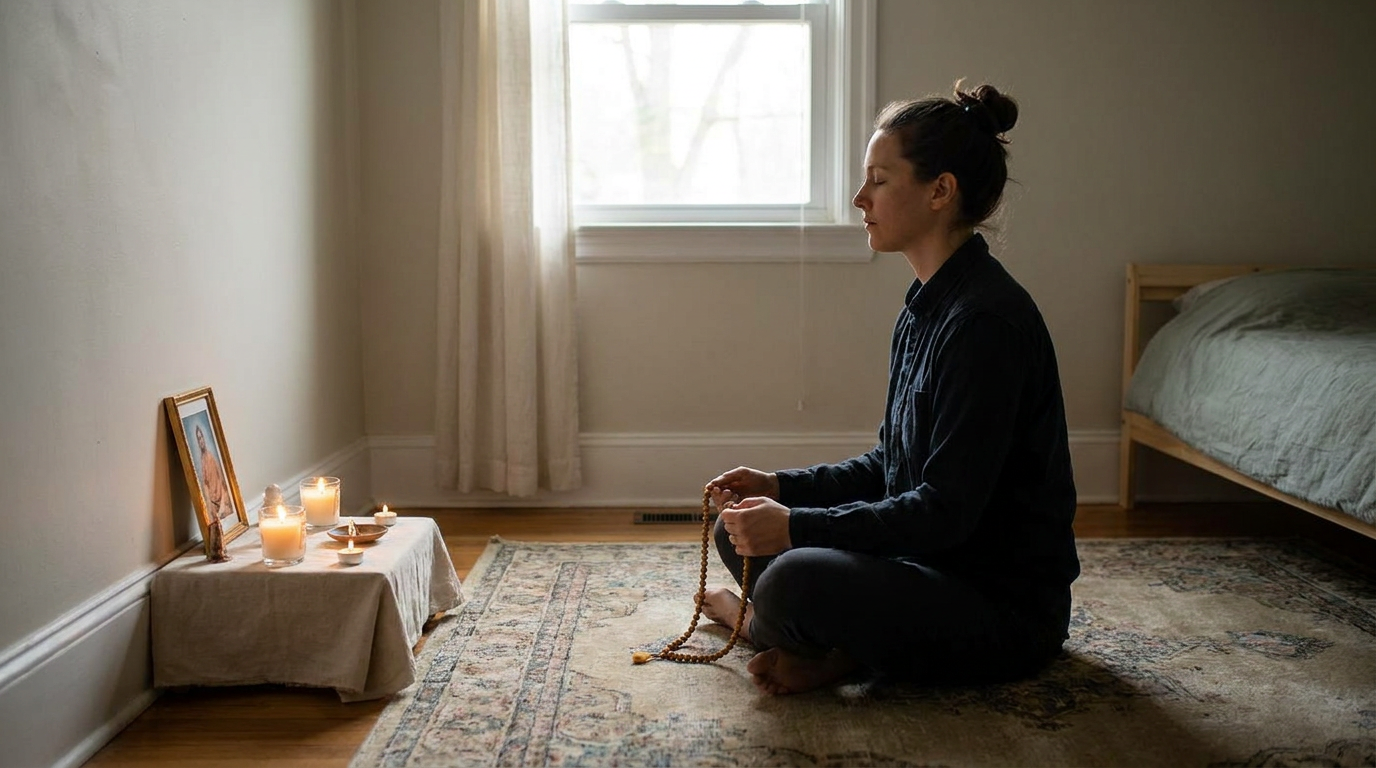
Silent meditation is also a meaningful spiritual practice. Many people practice silence by watching the breath, observing thoughts, resting in stillness, or sitting in prayerful awareness.
Silence can be healing. Our lives are often full of noise—external noise from devices and responsibilities, and internal noise from worries, plans, memories, and desires.
To sit quietly can feel like coming home.
What Is Silent Meditation?
Silent meditation usually means sitting without speaking or chanting aloud. The practitioner may focus on the breath, a spiritual idea, the presence of God, or simple awareness.
In devotional silent meditation, silence is not empty or cold. It is loving attentiveness.
We may sit silently before God as a child sits near a loving parent. There may be no need for many words. The heart simply rests.
A simple silent prayer might be:
“Lord, I am here. Please help me listen.”
This kind of silence is humble. It does not try to control God or force spiritual experience. It makes space.
The Gift of Inner Quiet
Silent meditation helps us notice how restless the mind can be. This noticing is not a failure. It is a gift.
When we sit quietly, we may see thoughts we usually avoid. We may notice fear, impatience, sadness, or longing. Devotional meditation allows us to bring all of this into God’s presence.
Instead of thinking, “I should not feel this,” we can pray, “Please help me offer this.”
In the Bhagavad-gita, Krishna explains that the mind can be both a friend and an enemy. When trained, it becomes our friend. When uncontrolled, it can disturb us.
Silent meditation gives us a chance to befriend the mind—not by indulging every thought, and not by violently rejecting thoughts, but by patiently guiding the mind toward what is sacred.
When Silence Becomes Prayer
For some people, silent meditation becomes a doorway to prayer. The outer voice becomes quiet, and the inner voice becomes honest.
We may not say much. We may simply feel gratitude. We may feel regret. We may feel a desire to change. We may feel longing for God.
In Bhakti, longing is not a weakness. Longing can be holy. The heart longs because it was made for love.
Silent meditation can help us discover that underneath all our distractions, there is a soul quietly seeking connection.
Mantra vs Silent Meditation: What Is the Difference?
Both mantra meditation and silent meditation can support spiritual growth. They are not enemies. They are like two helpful friends.
Still, they work in different ways.
Mantra meditation uses sacred sound as the focus. Silent meditation often uses stillness, breath, awareness, or inward prayer as the focus.
Both can calm the mind. Both can deepen devotion. Both can help us become more compassionate and spiritually awake.
Mantra Gives the Mind a Sacred Anchor
Many people find mantra meditation especially practical because the mind needs something to hold.
If we simply say, “Be quiet,” the mind may become louder. But when we offer the mind a mantra, we give it a holy place to rest.
The mantra becomes an anchor in the waves of thought.
For example, while chanting:
Hare Krishna Hare Krishna
Krishna Krishna Hare Hare
Hare Rama Hare Rama
Rama Rama Hare Hare
the mind may wander to work, family, worries, or plans. When we notice this, we return to the mantra. Again and again.
This gentle return helps purify attention.
Silence Reveals What Is Moving Within
Silent meditation, on the other hand, may reveal the movements of the mind more directly. Without spoken sound, we may become aware of subtle thoughts and emotions.
This can be peaceful, but it can also feel uncomfortable at first.
That discomfort is not a sign that silent meditation is wrong. It may simply mean we are beginning to see what has been inside us.
In devotional silence, we do not have to face the inner world alone. We bring it before God.
A silent meditation may become:
“Here is my fear.”
“Here is my pride.”
“Here is my grief.”
“Here is my hope.”
“Please guide me.”
Mantra Engages the Voice and Ears
Mantra meditation often engages the voice and ears. In Bhakti, hearing is very important. We chant and then listen.
This is simple but profound.
The mind may wander, but the ears can bring us back. We hear the sacred name, and the heart receives it.
This is why many Bhakti teachers encourage practitioners to chant clearly and listen carefully. The practice is not mechanical repetition. It is attentive offering.
Silence Invites Surrender
Silent meditation can teach surrender in a different way. We sit without needing to perform. We let go of constant doing. We stop trying to prove ourselves.
In silence, we may discover how much of our identity is built around activity and control. Devotional silence gently asks:
Can I be with God without achieving anything?
Can I be loved without producing anything?
Can I listen without rushing?
This is a deep spiritual lesson.
Which Practice Is Better for You?
The most helpful practice is the one that brings you closer to sincere remembrance, humility, and love.
For some people, mantra meditation feels natural and joyful. For others, silent meditation feels more accessible at first. Many practitioners benefit from both.
Bhakti Yoga is practical. It recognizes that people have different temperaments, histories, and needs.
If Your Mind Is Very Restless
If your mind feels busy, anxious, or scattered, mantra meditation may be especially helpful.
Sacred sound gives the mind something positive to do. Rather than fighting thoughts, you redirect attention to the mantra.
You might begin with five minutes of chanting each morning. Sit comfortably, breathe naturally, and repeat the mantra aloud or softly.
Do not worry if your mind wanders. The practice is to return.
Each return is an act of devotion.
If You Feel Spiritually Dry
Sometimes we do not feel inspired. Prayer feels distant. Chanting feels mechanical. Silent meditation feels empty.
This happens to sincere seekers too.
In those times, mantra can carry us when emotion is not present. We may not feel love strongly, but we can still offer our attention.
The Bhakti tradition teaches that sacred sound is powerful even when we do not fully understand or feel its depth. Like medicine, it works gradually.
At the same time, silent prayer can help us be honest:
“Lord, I feel dry. Please help me continue.”
That honesty itself is devotional.
If You Are Healing from Religious Hurt
Some readers may come with tenderness or pain around the word “God,” scripture, or spiritual authority. Please move gently.
Bhakti is not meant to pressure the heart. Devotional meditation can begin with simple sincerity, without forcing belief.
You might meditate on divine love, compassion, the sacred presence, or the Source of life. You might simply pray, “If You are there, please guide me toward truth and healing.”
God is not threatened by honest questions.
A humble path allows space for healing.
If You Long for a Personal Connection with God
If your heart longs not only for peace but for relationship, Bhakti meditation may feel like coming home.
Mantra, prayer, and service help develop a living connection with the Divine. Over time, God may feel less like an abstract idea and more like the beloved center of life.
In the Bhagavad-gita 9.22, Krishna says that for those who lovingly remember Him, He carries what they lack and preserves what they have. Practically, this means that the devotee is never alone. Divine care accompanies sincere effort.
This does not mean life becomes free from difficulty. It means difficulty can be held within a relationship of trust.
How to Practice Devotional Mantra Meditation
Beginning mantra meditation can be very simple. You do not need special clothing, a perfect room, or advanced knowledge.
What matters most is sincerity.
Step 1: Choose a Sacred Mantra
If you feel drawn to the Bhakti tradition, you may begin with the Hare Krishna maha-mantra:
Hare Krishna Hare Krishna
Krishna Krishna Hare Hare
Hare Rama Hare Rama
Rama Rama Hare Hare
You can also use a short prayerful name of God that is meaningful in your tradition.
The key is to choose sacred sound that turns your heart toward divine love.
Step 2: Create a Gentle Space
Find a quiet place if possible. You may light a candle, sit near a sacred image, open a scripture, or simply sit with a clean and respectful intention.
You can sit on a cushion, chair, or floor. Keep the body relaxed but attentive.
Before chanting, take a moment to pray:
“Please let this practice be an offering. Please help me hear with my heart.”
Step 3: Chant and Listen
Repeat the mantra slowly enough to hear each word. Let your voice be natural.
If chanting aloud is not possible, chant softly or internally. But when you can, hearing the sound with your ears can be very helpful.
The practice is not just saying the mantra. It is listening to the mantra.
Listening turns repetition into meditation.
Step 4: Return with Kindness
Your mind will wander. This is normal.
When you notice it, gently return to the mantra. Do not scold yourself. Do not quit. Just return.
In Bhakti, every return can be seen as a small offering of love.
How to Practice Devotional Silent Meditation
Silent meditation can also be woven into a Bhakti life. It may be practiced before or after chanting, after reading scripture, or during a quiet moment in the day.
Step 1: Begin with Prayer
Before entering silence, offer a simple prayer:
“Dear God, please help me be present. Please guide my heart. Please let this silence bring me closer to You.”
This prayer gives direction to the silence.
Step 2: Rest in Awareness
Sit quietly and breathe naturally. Notice the breath without forcing it.
When thoughts arise, observe them and let them pass. If a thought feels heavy, offer it inwardly:
“I give this to You.”
If you feel gratitude, offer that too.
Step 3: Listen Within
After a few minutes, you may ask:
“What is God inviting me to learn?”
“How can I serve today?”
“Where do I need to become more loving?”
Do not strain to hear a dramatic answer. Sometimes guidance comes as a quiet sense of clarity, a softened heart, or a simple next step.
Step 4: End with Gratitude
Before rising, offer thanks.
“Thank You for this time. Please help me carry remembrance into my day.”
Gratitude seals the practice.
Bringing Meditation into Daily Life
Devotional meditation is not meant to stay only on the cushion. It is meant to transform how we live.
A few minutes of sincere practice can influence how we speak, work, eat, forgive, and serve.
Chant While Walking or Driving
You can softly chant a mantra while walking, cooking, or driving. If you are in public, you can repeat it inwardly.
This turns ordinary moments into sacred opportunities.
The goal is not to escape life. The goal is to spiritualize life through remembrance.
Offer Your Work
In the Bhagavad-gita, Krishna teaches the practice of offering our actions. This is called karma-yoga, the yoga of selfless action.
In Bhakti, work becomes spiritual when it is offered with love.
Before beginning your work, you might pray:
“May this be useful. May this serve others. May this be pleasing to You.”
This simple intention can change the quality of the whole day.
Serve Someone with Love
Service is meditation in action.
In Sanskrit, devotional service is called seva. It means serving with a loving spirit, not for ego or recognition, but as an offering to God.
Seva can be cooking for someone, listening with compassion, helping at a temple or spiritual community, caring for family, supporting a neighbor, or offering your talents for a sacred purpose.
When service is connected to remembrance, the heart grows.
Read a Little Scripture
Sacred texts can nourish meditation. You do not need to read a lot. Even one verse can guide the day.
The Bhagavad-gita, Srimad-Bhagavatam, and writings of Bhakti saints are full of wisdom about love, humility, courage, surrender, and devotion.
Read slowly. Ask, “How can I live this today?”
Scripture becomes practical when it enters our choices.
Common Challenges in Devotional Meditation
Every sincere practitioner faces challenges. Please do not be discouraged. Difficulty does not mean you are unqualified.
It means you are practicing.
“My Mind Wanders Constantly”
This is one of the most common experiences in meditation.
The mind has been wandering for many years. Naturally, it takes time to train it.
When the mind wanders, return to the mantra, the breath, or the prayer. This returning is the exercise. Just as a muscle grows through repetition, attention grows through returning.
“I Don’t Feel Devotion”
Devotion can begin as a small seed.
In Sanskrit, faith is called shraddha. It does not always mean complete certainty. It can mean a willingness to take a sincere step.
You may begin with curiosity, hope, or even a little longing. That is enough.
Chant, pray, serve, and keep good company. Over time, the seed of devotion is watered.
“I Fall Asleep”
If you fall asleep during meditation, try practicing at a different time, sitting more upright, or chanting aloud before silent meditation.
Also, be kind to your body. Sometimes sleepiness means you need rest.
Bhakti is not harsh. Spiritual life includes caring for the body and mind as instruments of service.
“I Feel Emotional”
Meditation may bring up emotion. Tears, grief, gratitude, or tenderness may arise.
Let the heart be honest. Offer the emotion to God.
In Bhakti, the heart is not an obstacle. The heart is the place where devotion awakens.
Mantra and Silence Together: A Balanced Devotional Practice
You do not have to choose only mantra or only silence. Many people find that the two support each other beautifully.
Mantra helps gather the mind. Silence helps deepen listening.
Chanting softens the heart. Silence allows the heart to rest.
A Simple 15-Minute Practice
Here is one gentle way to combine both:
- Begin with one minute of prayer.
- Chant a mantra for seven minutes.
- Sit silently for five minutes.
- End with gratitude and an intention to serve.
This short practice can be done in the morning, evening, or whenever you can create a quiet space.
Consistency matters more than length. A small daily offering is powerful.
Let Love Be the Measure
It is easy to measure meditation by how calm we feel. Calmness is a gift, but in Bhakti, the deeper measure is love.
Am I becoming more patient?
Am I becoming more compassionate?
Am I remembering God more often?
Am I serving with a softer heart?
Am I becoming less controlled by ego and more guided by grace?
These questions help us understand whether meditation is entering our life.
Devotional Meditation as a Path of Spiritual Growth
Bhakti Yoga is a path for the whole person. It includes the mind, heart, body, voice, relationships, and daily responsibilities.
Mantra meditation, silent meditation, prayer, service, and scripture all work together to awaken our original loving nature.
The Bhakti tradition teaches that the soul is eternal and naturally connected to God. Our spiritual practices do not create love from nothing. They uncover the love that is already part of who we are.
Growth Happens Gradually
A flower does not bloom by force. It opens with sunlight, water, and time.
In the same way, the heart opens through sacred sound, sincere prayer, good association, humble service, and divine grace.
Some days will feel inspired. Other days will feel ordinary. Keep going gently.
Every sincere mantra matters. Every honest prayer matters. Every act of service matters.
God Meets Sincerity
One of the most comforting teachings of Bhakti is that God responds to sincerity.
We may feel unqualified, distracted, or imperfect. But Bhakti does not begin with perfection. It begins with offering what we have.
In the Bhagavad-gita 9.26, Krishna says:
“If one offers Me with love and devotion a leaf, a flower, fruit, or water, I will accept it.”
This verse is very dear because it shows the heart of devotional life. God is not asking for wealth, status, or complicated achievement. God is asking for love.
Even a small offering, given sincerely, is precious.
Everyone Is Welcome to Begin
Devotional meditation is a beautiful meeting place between stillness and love.
Mantra meditation gives us sacred sound to hold, hear, and return to. Silent meditation gives us space to listen, surrender, and rest in God’s presence. Together, they can help us live with more peace, purpose, humility, and compassion.
You do not need to know everything before you begin. You do not need to have perfect faith. You do not need to come from a particular background.
Come as you are.
Bring your questions, your hopes, your tired heart, your gratitude, your longing, and your willingness.
Take one sincere step: chant one mantra, say one prayer, read one sacred verse, offer one act of service, or sit quietly for one minute in remembrance.
God sees the heart. And every sincere step toward God is met with grace.
Everyone is welcome to begin today.
FAQs
What is devotional meditation?
Devotional meditation is a form of meditation that involves focusing on a specific deity, concept, or spiritual idea. It often involves the use of mantras, prayers, or visualizations to deepen one’s connection to the divine.
What is mantra meditation?
Mantra meditation is a type of devotional meditation that involves the repetition of a specific word, phrase, or sound. The repetition of the mantra helps to focus the mind and cultivate a sense of inner peace and spiritual connection.
What is silent meditation?
Silent meditation, also known as mindfulness meditation, involves sitting quietly and focusing on the breath or present moment without the use of mantras or specific focal points. It is a practice of being fully present and aware of one’s thoughts and sensations without judgment.
What are the benefits of devotional meditation with mantras?
Devotional meditation with mantras can help to cultivate a sense of devotion, inner peace, and spiritual connection. It can also aid in reducing stress, improving concentration, and promoting a sense of well-being.
How do I choose between mantra and silent meditation?
The choice between mantra and silent meditation depends on personal preference and spiritual goals. Mantra meditation may be more suitable for those seeking a deeper connection to a specific deity or spiritual concept, while silent meditation may be preferred for those seeking a more general sense of mindfulness and presence.

