
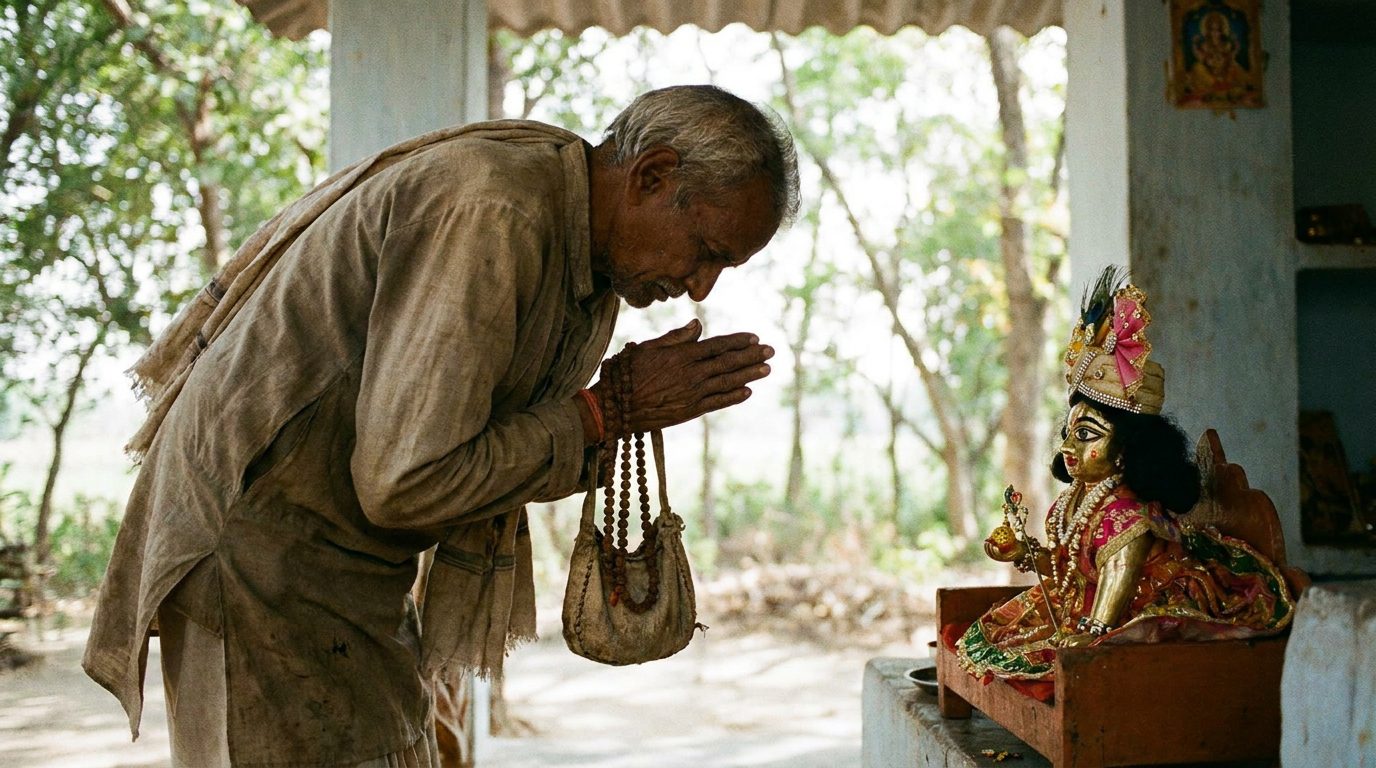
Dependence on Krishna is not a sign of weakness. It is the soul’s natural strength.
In Bhakti Yoga, the path of loving devotion, we learn that we are not alone, not separate, and not meant to carry life’s burdens by ourselves. Krishna, the all-attractive Supreme Person, is present in every heart as our dearest friend, guide, and well-wisher. To depend on Krishna means to gradually place our trust in His love, His wisdom, and His care while still living responsibly in the world.
This complete guide is offered with humility for seekers of all backgrounds. Whether you are new to Bhakti, returning to spiritual practice, or already walking the path of devotion, dependence on Krishna can become a living, practical, and deeply comforting part of your everyday life.
Dependence on Krishna means learning to trust that Krishna is the source, maintainer, and loving guide of our lives. It does not mean becoming passive, irresponsible, or disconnected from the world. Rather, it means acting with sincerity while remembering that the final result rests in God’s hands.
In the Bhagavad-gita, one of the foundational scriptures of Bhakti Yoga, Krishna lovingly says:
“Abandon all varieties of separate duty and simply surrender unto Me. I shall deliver you from all sinful reactions. Do not fear.”
— Bhagavad-gita 18.66
This verse is not a call to fear or blind belief. It is an invitation into divine relationship. Krishna is saying, “You can trust Me. You do not have to be ruled by anxiety. I am with you.”
Dependence Is Relationship, Not Escape
True dependence on Krishna grows from relationship. Just as a child naturally depends on a loving parent, or a friend trusts a faithful companion, the soul learns to rely on Krishna through love.
In Sanskrit, the word bhakti means loving devotional service. It is not merely belief. It is love expressed through action: chanting, prayer, offering food, serving others, studying wisdom, and remembering Krishna throughout the day.
Dependence on Krishna is not escaping our responsibilities. It is bringing Krishna into our responsibilities. We still work, care for family, make decisions, heal from pain, and serve the world. But we do these things with the understanding: “Krishna, please guide me. Let my life be an offering to You.”
Dependence Is Not Laziness
Sometimes people misunderstand surrender as doing nothing. But in the Bhagavad-gita, Krishna spoke to Arjuna, a warrior who was overwhelmed by confusion and grief. Krishna did not tell Arjuna to run away from life. He taught him how to act with devotion, wisdom, and courage.
Dependence on Krishna means we do our best, but we do not pretend to control everything.
We plant the seed, water the soil, and protect the garden. But the growth comes by grace.
Why We Struggle to Depend on Krishna
Many of us want to trust God, but our hearts are carrying wounds. We may have been disappointed, abandoned, judged, or taught to rely only on ourselves. In such a world, dependence can feel frightening.
Bhakti Yoga gently honors this struggle. Krishna does not demand instant perfection. He invites us step by step.
The Habit of Control
Modern life often teaches us that we must control everything: our image, career, relationships, health, future, and even spiritual progress. But control is exhausting. The more we try to control what is beyond us, the more anxiety grows.
Dependence on Krishna softens the illusion of control. It helps us accept a simple truth: we are responsible for our choices, but we are not the supreme controller.
In Sanskrit, Krishna is sometimes called Ishvara, meaning the Supreme Controller. This does not mean He is cold or distant. It means He lovingly holds what we cannot hold.
Fear of Being Disappointed
Some people hesitate to depend on Krishna because they fear, “What if I pray and nothing happens?” This is an honest and sacred question.
Bhakti does not promise that life will always go according to our plan. Rather, it teaches that Krishna is present in every season—joy and sorrow, clarity and confusion, gain and loss.
Sometimes Krishna changes our situation. Sometimes He changes our heart within the situation. Sometimes He gives what we ask for. Sometimes He gives what we deeply need, even if we cannot yet understand it.
Dependence on Krishna matures when we begin to pray, “Krishna, please arrange what is truly best for my soul.”
Forgetfulness of Our Spiritual Identity
The Bhakti scriptures explain that we are not merely the body or mind. We are atma, eternal spiritual souls, part and parcel of Krishna.
Because we identify so strongly with temporary roles—parent, worker, student, partner, success, failure—we forget our eternal relationship with God. This forgetfulness creates loneliness and fear.
Dependence on Krishna begins to awaken when we remember: “I belong to Krishna. I am loved by Krishna. My life has spiritual meaning.”
The Foundation of Dependence: Hearing and Chanting
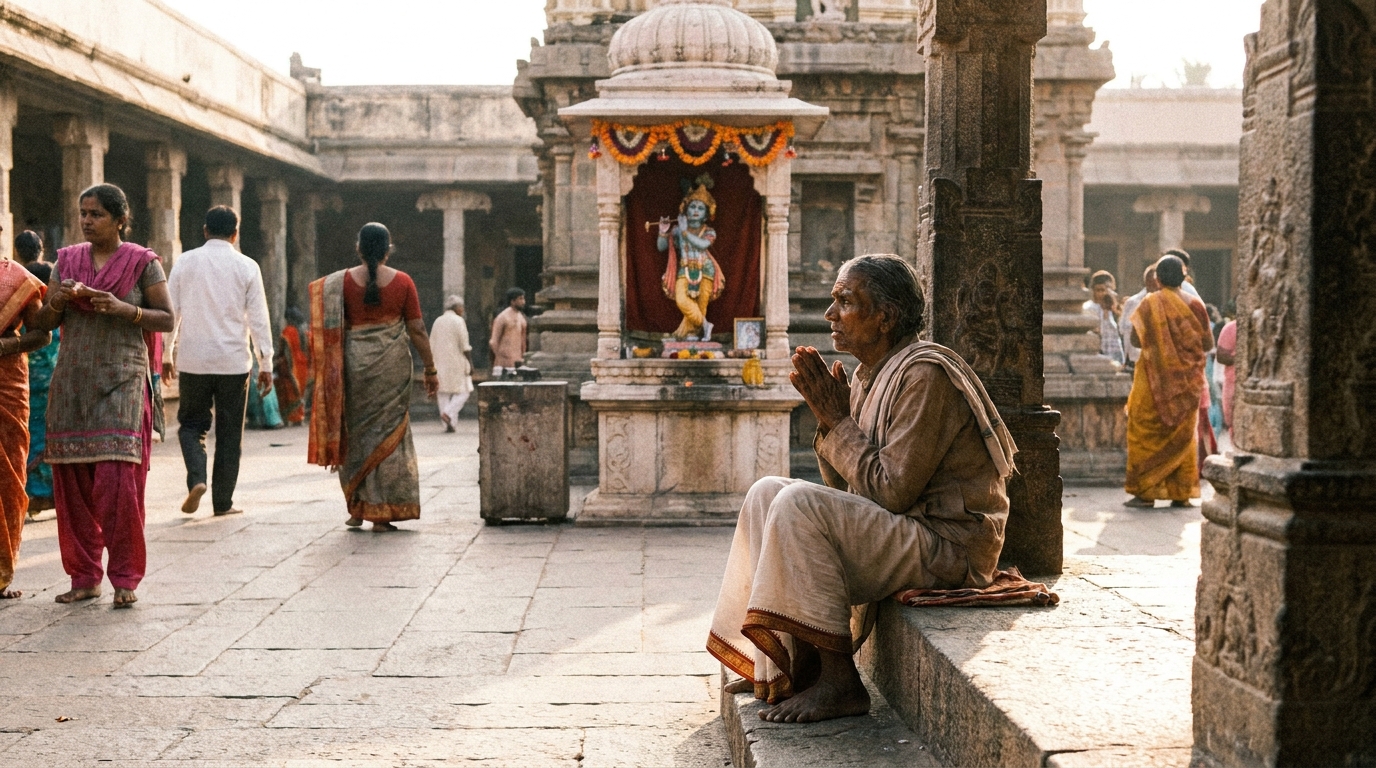
In Bhakti Yoga, dependence on Krishna grows through practice. It is not forced. It is nourished.
Two of the most important practices are hearing and chanting.
Hearing Spiritual Wisdom
Hearing about Krishna is powerful. The Srimad-Bhagavatam, a beloved Bhakti scripture, describes Krishna’s names, qualities, pastimes, devotees, and loving nature. When we hear these sacred teachings from sincere sources, the heart becomes cleansed.
This process is called shravanam, which means hearing. It may include reading scripture, listening to classes, joining spiritual discussions, or hearing kirtan, devotional music centered on Krishna’s names.
When we hear regularly, our inner world changes. We start to see life not only through fear, but through faith. Not only through scarcity, but through divine care.
Chanting the Holy Names
Chanting is one of the most accessible and transformative practices in Bhakti Yoga. The Sanskrit word kirtan means glorifying or singing the names of God, often with music and community. Japa means personal, meditative chanting, often on beads.
The most well-known mantra in the Bhakti tradition is the maha-mantra, the “great mantra”:
Hare Krishna Hare Krishna
Krishna Krishna Hare Hare
Hare Rama Hare Rama
Rama Rama Hare Hare
“Hare” calls upon Krishna’s divine energy, especially the compassionate feminine aspect of God. “Krishna” means the all-attractive one. “Rama” means the source of spiritual joy.
This mantra is a prayer: “O Lord, O divine energy of the Lord, please engage me in Your loving service.”
Chanting helps us depend on Krishna because it brings the mind back to Him. Even if the heart feels restless, the holy name is kind. We do not need to be pure to begin chanting. We chant to become purified.
Making Chanting Practical
You can begin very simply.
Chant for five minutes in the morning. Sing the maha-mantra while cooking. Listen to kirtan during a walk. Keep a small prayer bead bag nearby. Chant softly when anxious. Chant with others when possible.
Dependence on Krishna grows through repetition, sincerity, and patience.
A humble prayer before chanting may be: “Krishna, I do not know how to love You fully, but I want to remember You. Please help me.”
Please visit our website for more information on our articles: articles.
The Six Practices of Surrender in Bhakti Yoga

Bhakti teachers often describe surrender, or sharanagati, as having six natural expressions. Sharanagati means taking shelter. It is the heart’s movement toward Krishna for protection, guidance, and love.
These six practices help us understand dependence on Krishna in daily life.
Accept What Helps Devotion
The first practice is accepting what brings us closer to Krishna.
This may include chanting, reading scripture, associating with sincere devotees, eating sanctified food, serving others, practicing gratitude, and keeping a simple spiritual routine.
Ask yourself: “Does this habit help me remember Krishna? Does it make my heart softer, cleaner, and more loving?”
Dependence on Krishna grows when we choose spiritual nourishment.
Avoid What Harms Devotion
The second practice is avoiding what pulls us away from Krishna.
This does not mean judging others or becoming harsh. It means honestly noticing what weakens our spiritual life. Certain habits, conversations, media, environments, or relationships may increase envy, lust, anger, greed, or forgetfulness.
Bhakti is not about shame. It is about protection.
Just as we protect a small flame from strong wind, we protect our growing devotion.
Trust Krishna’s Protection
The third practice is believing that Krishna protects His devotee.
Protection does not always mean that nothing difficult will happen. Rather, Krishna protects the soul’s ultimate welfare. He guides, teaches, strengthens, and carries us through what we cannot cross alone.
In the Bhagavad-gita 9.22, Krishna says that for those who always think of Him with devotion, He carries what they lack and preserves what they have.
This is a deeply personal promise. Krishna sees every sincere effort.
Accept Krishna as Maintainer
The fourth practice is accepting Krishna as our maintainer.
We may receive support through work, family, community, nature, medicine, or many practical means. But behind all support is Krishna’s arrangement.
Food grows by His energy. Breath moves by His mercy. Intelligence comes from Him. Opportunities arise by His grace.
Recognizing Krishna as maintainer brings gratitude. It turns ordinary life into worship.
Offer Yourself Humbly
The fifth practice is humility. This means knowing we are not independent masters of everything. We are beloved servants of God.
The Sanskrit word dasa means servant. In Bhakti, servant does not mean inferior or oppressed. It means one who loves and serves willingly. The highest spiritual identity is not domination, but loving service.
A humble heart prays, “Krishna, I am Yours. Please guide me.”
Feel Deep Dependence
The sixth practice is complete dependence: knowing that without Krishna’s mercy, we cannot make spiritual progress.
This mood is not depressing. It is freeing.
We do not have to manufacture divine love by our own strength. We simply have to show up sincerely, again and again, and receive grace.
Dependence on Krishna in Everyday Life
Dependence on Krishna becomes real when it enters ordinary moments. Bhakti Yoga is not only for temples, retreats, or quiet meditation. It is for kitchens, offices, classrooms, hospitals, traffic, family life, and the hidden places of the heart.
In Work and Career
Depending on Krishna at work means offering your efforts to Him.
Before beginning your day, you can pray: “Krishna, please let my work be honest, helpful, and pleasing to You.”
This transforms work from ego-centered striving into service. You may still seek excellence, growth, and stability. But your identity is no longer trapped in success or failure.
Krishna teaches in the Bhagavad-gita 2.47 that we have a right to perform our duty, but not to control the results. This is one of the most practical teachings for modern life.
Do your best. Offer the results. Learn from what comes. Keep remembering Krishna.
In Family and Relationships
Dependence on Krishna does not make us detached in a cold way. It helps us love others more purely.
When we expect people to fulfill every emotional and spiritual need, relationships become heavy. But when we depend on Krishna as the deepest shelter, we can love others with more patience, forgiveness, and steadiness.
We can pray for our loved ones. We can serve them as parts of Krishna. We can ask for guidance before difficult conversations.
A simple relationship prayer is: “Krishna, please help me see this person as Your beloved child. Help me speak with kindness and act with wisdom.”
In Anxiety and Uncertainty
Anxiety often comes from living in the future. Dependence on Krishna brings us back to the present moment with God.
When the mind says, “What if everything goes wrong?” the heart can respond, “Whatever comes, Krishna will be with me.”
This does not mean ignoring practical planning. It means planning with prayer instead of panic.
Try pausing, breathing deeply, and chanting Krishna’s names. Place your hand on your heart and say, “Krishna, I am here. Please help me remember You.”
Even one sincere moment of remembrance can shift the atmosphere within.
In Grief and Loss
Dependence on Krishna is especially tender in times of grief. Bhakti does not ask us to pretend we are not hurting. Tears can be part of prayer.
The great devotees in Bhakti scriptures often cried for Krishna. Their tears were not signs of failure, but signs of deep feeling.
If you are grieving, you can bring your broken heart to Krishna. You do not need polished words. You can simply say, “Krishna, I am in pain. Please hold me.”
Krishna is not far from suffering hearts. He is seated within the heart as Paramatma, the indwelling Supersoul, witnessing, guiding, and loving us from within.
The Role of Service in Depending on Krishna
Service is central to Bhakti Yoga. The Sanskrit word seva means loving service offered for Krishna’s pleasure.
When we serve, we move from self-centered anxiety to God-centered love.
Serving Krishna Directly
You can serve Krishna in many simple ways.
Offer a flower. Light a candle or lamp. Prepare vegetarian food with love and offer it to Krishna before eating. Keep a small sacred space in your home. Sing kirtan. Read a verse from the Bhagavad-gita. Bow your head and say thank you.
In Bhakti, even a small offering is meaningful when given with love.
Krishna says in Bhagavad-gita 9.26:
“If one offers Me with love and devotion a leaf, a flower, a fruit, or water, I will accept it.”
This verse reveals Krishna’s heart. He is not hungry for our things. He is eager for our love.
Serving Others as Krishna’s Beloved
Dependence on Krishna also expresses itself through compassion.
Feed someone. Listen with care. Encourage a struggling friend. Volunteer. Support a spiritual community. Forgive where possible. Speak truth gently. Use your talents in service.
When we serve others, we remember that every living being is connected to Krishna.
This vision is deeply healing. It helps us move beyond isolation into sacred community.
Serving with No Demand for Recognition
Service purifies the heart when offered without pride. Sometimes we may serve and no one notices. Sometimes our efforts may be misunderstood. In those moments, dependence on Krishna becomes real.
We can pray: “Krishna, You see. Let this be for You.”
This prayer protects the heart from bitterness and helps love remain alive.
Obstacles to Dependence on Krishna
Every sincere seeker faces obstacles. This is natural. The path of Bhakti is gentle, but it is also honest. We bring our whole self to Krishna, including our doubts, distractions, and struggles.
Doubt
Doubt can feel uncomfortable, but it can also become a doorway to deeper faith when approached sincerely.
If you have doubts, do not hide them. Bring them to prayer. Discuss them with trustworthy practitioners. Study scripture. Ask Krishna for understanding.
Faith in Bhakti is not forced. It grows through experience, association, and grace.
Pride
Pride says, “I can do everything alone.” Dependence says, “Krishna, I need You.”
Pride isolates us. Humility connects us.
A humble person is not weak or self-hating. A humble person lives in truth. They recognize their gifts as Krishna’s mercy and use them in service.
Distraction
The mind is easily distracted. Phones, responsibilities, worries, and desires can scatter our attention.
Rather than becoming discouraged, create small anchors of remembrance.
Chant in the morning. Keep sacred music nearby. Place a verse where you can see it. Pause before meals. End the day with gratitude.
Dependence on Krishna grows through many small returns.
Impatience
We may want instant transformation. But devotion grows like a sacred tree.
In the Chaitanya tradition of Bhakti, the heart is compared to a field where the seed of devotion is planted. Through hearing and chanting, that seed is watered. Over time, it grows into love of God.
Be patient with your process. Krishna is patient with you.
How to Deepen Dependence on Krishna Step by Step
Dependence on Krishna can begin today. You do not need to wait until life is perfect or your mind is peaceful. You can start from where you are.
Begin the Day with Prayer
Before checking your phone or entering the rush of the day, offer one sincere prayer.
“Krishna, thank You for this day. Please guide my thoughts, words, and actions. Help me remember You.”
This simple practice sets the direction of the heart.
Chant Daily
Even a few minutes of chanting can make a difference.
If possible, chant the Hare Krishna maha-mantra daily. You may chant softly, sing, or repeat the mantra on beads. The key is sincerity.
Do not worry if the mind wanders. Gently bring it back. Each return is an act of devotion.
Read a Little Scripture
Read a verse from the Bhagavad-gita or Srimad-Bhagavatam. Reflect on one teaching and ask, “How can I live this today?”
Scripture is not only information. It is association with divine wisdom.
Offer Your Food
Preparing and offering food is a beautiful way to practice dependence.
Cook vegetarian food with care. Place it before Krishna with a simple prayer: “Krishna, please accept this offering.” After offering, the food becomes prasadam, which means mercy.
Eating prasadam reminds us that life is sustained by grace.
Keep Devotional Association
Spiritual life becomes stronger in good company. In Sanskrit, sadhu-sanga means association with sincere devotees or saintly people.
Find people who encourage your remembrance of Krishna. Attend kirtan. Join a Bhakti gathering. Listen to classes. Serve with others.
We are shaped by the company we keep.
Surrender One Worry at a Time
You do not have to surrender everything perfectly at once.
Choose one worry. Write it down. Pray over it. Chant Krishna’s names. Then say, “Krishna, I will do my part, and I place the result in Your hands.”
This is practical dependence on Krishna.
The Sweetness of Depending on Krishna
As dependence on Krishna deepens, the heart begins to taste sweetness. This sweetness is not always dramatic. Often it is quiet.
A little more peace. A little more trust. A little more gratitude. A little more desire to serve. A little more remembrance in difficulty.
These are signs of spiritual growth.
Krishna Is a Person, Not an Abstract Idea
In Bhakti Yoga, Krishna is understood as the Supreme Person, full of beauty, wisdom, playfulness, compassion, and love. He is not only the energy behind the universe. He is the beloved of the heart.
This personal understanding makes dependence intimate.
We are not surrendering to emptiness. We are surrendering to the One who knows us completely and loves us eternally.
Krishna Reciprocates with Our Love
Krishna says in Bhagavad-gita 4.11, “As all surrender unto Me, I reward them accordingly.”
This means Krishna responds personally. If we take one step toward Him, He helps us take another. If we offer even a little love, He receives it and nourishes it.
No sincere effort is lost.
Dependence Leads to Freedom
It may seem surprising, but surrender brings freedom.
When we stop trying to be the controller, we become free to be servants of love. When we stop demanding that life obey our plans, we become open to Krishna’s higher wisdom. When we stop identifying with every success and failure, we discover a deeper identity.
We are Krishna’s. We always have been.
Common Questions About Dependence on Krishna
Can I Depend on Krishna If I Am New to Bhakti?
Yes. Krishna is not limited by our experience level, background, culture, or past. Anyone can begin.
You can start with one prayer, one mantra, one offering, one act of service. Bhakti begins with sincerity.
What If I Do Not Feel Faith Yet?
Begin with honest openness.
You can pray, “Krishna, if You are there, please help me know You.” This is a beautiful prayer. Faith often begins as a small spark.
Protect that spark with chanting, good association, and patient practice.
Does Depending on Krishna Mean I Stop Making Plans?
No. Planning can be part of responsible service.
The difference is that we plan prayerfully and hold the results lightly. We use our intelligence, but we do not worship our intelligence. We make decisions, but we ask Krishna to guide us.
What If I Make Mistakes?
Everyone makes mistakes. Bhakti is a path of purification, not performance.
If you fall short, return to Krishna. Apologize if needed. Learn. Chant. Serve. Begin again.
Krishna looks at the sincerity of the heart.
A Simple Daily Practice for Dependence on Krishna
Here is a gentle daily rhythm you can try:
Morning: Offer a short prayer and chant the Hare Krishna maha-mantra for five to fifteen minutes.
Midday: Pause before eating. Offer your food to Krishna with gratitude.
Afternoon: Remember one verse or one spiritual teaching during your work or duties.
Evening: Reflect on the day. Thank Krishna for three things. Offer one worry into His care.
Weekly: Join kirtan, read with others, serve in community, or spend time with devotees.
This is not a rigid rule. It is a loving framework. Let it support you, not burden you.
Living a Life of Loving Dependence
Dependence on Krishna is the heart of Bhakti Yoga. It is learning to live with Krishna, not apart from Him.
It means chanting when the mind is restless. Praying when life feels uncertain. Serving when the heart feels small. Offering our work, food, relationships, gifts, grief, and hopes to Krishna.
It means trusting that Krishna is guiding us, even when the path is not clear.
And it means remembering that spiritual life is not about becoming someone else. It is about awakening who we truly are: eternal souls, beloved by Krishna, made for loving relationship with Him.
You are welcome on this path exactly as you are. With your questions, your longing, your wounds, your hopes, and your sincere heart. Take one step. Chant one name. Offer one prayer. Do one act of service. Krishna sees every effort, and He lovingly meets us there.
Everyone is welcome to take one sincere step toward God.
FAQs
What is the concept of dependence on Krishna?
Dependence on Krishna refers to the belief in the Hindu tradition that individuals should rely on the divine grace and guidance of the deity Krishna for all aspects of their lives, including material and spiritual well-being.
How do followers of Krishna practice dependence on him?
Followers of Krishna practice dependence on him through various devotional activities such as chanting his holy names (mantra meditation), reading sacred texts like the Bhagavad Gita, engaging in acts of service (seva), and surrendering their will to Krishna’s divine will.
What are the benefits of depending on Krishna?
The benefits of depending on Krishna include experiencing inner peace, developing a deeper spiritual connection, finding guidance in life’s challenges, and ultimately attaining liberation (moksha) from the cycle of birth and death (samsara).
Are there any challenges in depending on Krishna?
Challenges in depending on Krishna may include maintaining faith during difficult times, overcoming societal pressures, and navigating the complexities of integrating spiritual practices with everyday life.
How can one cultivate a stronger sense of dependence on Krishna?
One can cultivate a stronger sense of dependence on Krishna through regular spiritual practices, associating with like-minded individuals, seeking guidance from spiritual teachers, and deepening their understanding of Krishna’s teachings and pastimes.

