

Devotion deepens the way a seed becomes a tree: quietly, steadily, and with care. In Bhakti Yoga, the path of devotion, we do not try to force spiritual growth. We learn to turn our heart toward God with sincerity, again and again, through chanting, prayer, service, study, friendship, and daily remembrance.
Bhakti is a Sanskrit word that means loving devotion or loving service. Yoga means connection. So Bhakti Yoga is the practice of reconnecting with the Divine through love. It is not reserved for one type of person, one culture, or one stage of life. It is a living path for anyone who longs to love more deeply, live more meaningfully, and remember the sacred presence of God in everyday life.
Whether you are new to spiritual practice, returning after a long time, or already walking a devotional path, you are welcome here. Bhakti begins with one sincere step.
Bhakti practice is the art of offering the heart to God.
In the Bhakti tradition, God is understood as personal, loving, and deeply responsive to the devotion of the soul. Different traditions may call the Divine by different names—Krishna, Rama, Vishnu, Radha, Narayana, Shiva, Devi, Allah, Yahweh, Christ, or simply God. Bhakti honors the essence of loving relationship with the Supreme.
The ancient Bhakti scriptures teach that the soul is naturally spiritual and naturally loving. Our deepest longing is not just for success, comfort, or recognition. Beneath all of that is the longing to love and be loved eternally. Bhakti Yoga helps us awaken that original love.
Bhakti Is Both Simple and Deep
At its heart, Bhakti is simple: remember God, chant God’s names, offer your actions, serve others, and live with humility.
At the same time, Bhakti is very deep. It gradually transforms how we see ourselves, others, the world, and the Divine. It moves devotion from a practice we “do” into a love we live.
In the Bhagavad-gita, one of the most beloved texts of Bhakti Yoga, Krishna says:
“Whatever you do, whatever you eat, whatever you offer or give away, and whatever austerities you perform—do that as an offering to Me.”
Bhagavad-gita 9.27
This teaching is practical and beautiful. It means devotion is not separate from daily life. Cooking, working, parenting, studying, resting, creating, and caring can all become sacred when offered with love.
Bhakti Is a Relationship
Bhakti is not only a philosophy. It is a relationship.
Just as any meaningful relationship grows through attention, listening, honesty, and affection, our relationship with God deepens through daily remembrance and sincere offering. We bring our whole self—our joy, confusion, gratitude, longing, and even our struggles—into the presence of the Divine.
Bhakti does not ask us to pretend. It invites us to become real.
The Heart of Devotion: Love in Practice
Many people think devotion means feeling emotional all the time. But Bhakti is more than a passing feeling. It is love expressed through practice.
Some days the heart feels open and prayer comes naturally. Other days the mind is restless, tired, or distracted. Bhakti teaches us to keep showing up gently. The practice carries us when our feelings fluctuate.
Chanting the Holy Names
One of the central practices of Bhakti Yoga is chanting sacred names of God. In Sanskrit, this is called nama-sankirtana, the congregational chanting of Divine names, or japa, the personal repetition of mantra.
A mantra is a sacred sound vibration that helps focus the mind and awaken the heart. The word mantra can be understood as that which frees the mind. In Bhakti, mantras are not just sounds; they are considered living spiritual presence.
One of the most widely practiced Bhakti mantras is the Maha Mantra, meaning “great mantra”:
Hare Krishna Hare Krishna
Krishna Krishna Hare Hare
Hare Rama Hare Rama
Rama Rama Hare Hare
“Hare” calls upon the Divine energy of love. “Krishna” means the all-attractive Lord. “Rama” means the source of joy and spiritual pleasure. When we chant, we are calling out: “O Lord, O Divine Energy, please engage me in loving service.”
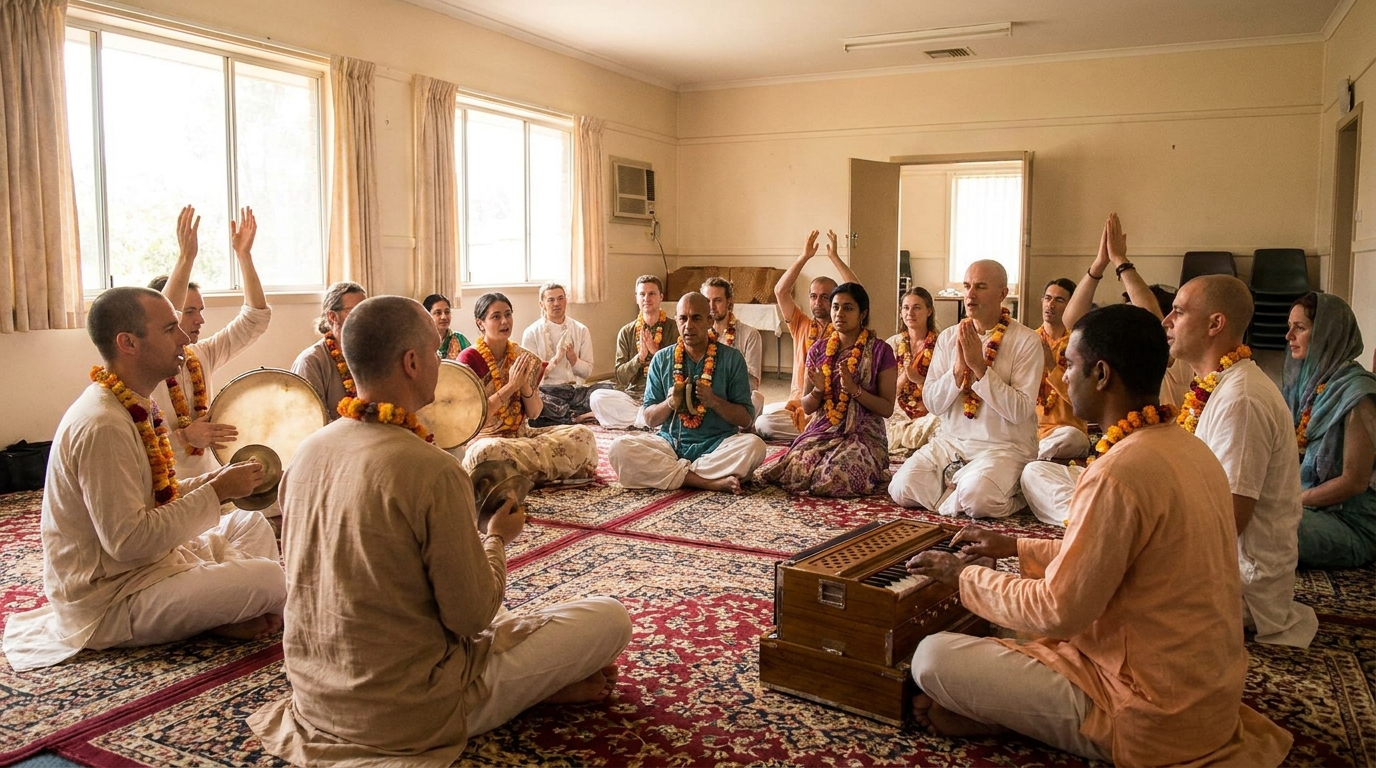
Chanting can be done softly, loudly, alone, or with others. It can be sung with instruments in kirtan, a joyful call-and-response form of sacred music. It can also be repeated quietly on prayer beads as a personal meditation.
Prayer as Honest Conversation
Prayer is another essential part of deepening devotion. In Bhakti, prayer does not need to be polished or formal. It can be simple and honest.
“God, please guide me.”
“Please help me remember You.”
“Thank You for this day.”
“Please let me serve with love.”
“I do not know what to do, but I am willing to be led.”
The great saints of Bhakti often prayed with deep humility. Their prayers were not about impressing God. They were about opening the heart. We can pray from wherever we are.
If our faith feels small, we can pray with small faith. If our heart feels dry, we can pray about that too. Sincerity is more important than performance.
Service as Love in Action
In Sanskrit, devotional service is called seva. Seva means serving with a sacred intention, not for ego, control, or praise, but as an offering of love.
Seva may look like helping at a temple or spiritual gathering, preparing food for others, cleaning a sacred space, supporting a community, caring for children, visiting someone lonely, protecting nature, or doing your daily work with compassion.
Bhakti does not divide spiritual life from practical life. Every act can become devotion when offered to God.
A mother feeding her child, a student studying with integrity, a worker serving honestly, a friend listening patiently, a volunteer washing dishes after kirtan—each can be practicing Bhakti.
Deepening Through Daily Sadhana
Sadhana is a Sanskrit word that means spiritual practice or a daily discipline that helps us grow. It is not meant to be harsh or rigid. A healthy sadhana is like watering the plant of devotion.
In Bhakti, regular practice creates a sacred rhythm. It gently turns the mind back toward God and protects the heart from forgetfulness.
Begin with What Is Realistic
A common mistake is trying to do too much too quickly. We may become inspired and create an intense routine, only to feel discouraged when we cannot sustain it.
Bhakti grows best with sincerity and steadiness.
You might begin with:
- Five minutes of chanting each morning
- One simple prayer before meals
- Reading one verse of scripture daily
- Offering gratitude before sleep
- Attending kirtan once a week
- Doing one act of service with devotion
Small practices, done regularly, become powerful over time.
In the Bhagavad-gita 6.17, Krishna teaches balance: spiritual practice is helped by moderation in eating, sleeping, working, and recreation. This reminds us that Bhakti is not about rejecting life, but harmonizing life with devotion.
Create a Sacred Space
A sacred space can help the heart settle. It does not need to be elaborate. It may be a small altar, a clean corner, a candle, a picture of Krishna or a beloved form of God, a scripture, flowers, or your prayer beads.
The purpose is not decoration. The purpose is remembrance.
When you sit in that space each day, even briefly, your heart begins to recognize: “This is where I turn toward God.”
Over time, the space becomes charged with prayer, chanting, and intention.
Practice at the Best Time You Can
Many Bhakti practitioners cherish the early morning, especially the time before sunrise, because the world is quieter and the mind is more peaceful. In Sanskrit, this time is sometimes called brahma-muhurta, the sacred period before dawn that supports spiritual practice.
But if early morning is not possible in your life right now, do not feel excluded. Choose a time you can honor. God receives sincerity at any hour.
The deeper principle is regularity. Set aside a daily moment that belongs to your soul.
Check out our latest posts at https://thebhaktihouse.org/blog.
Chanting as a Path of Inner Transformation
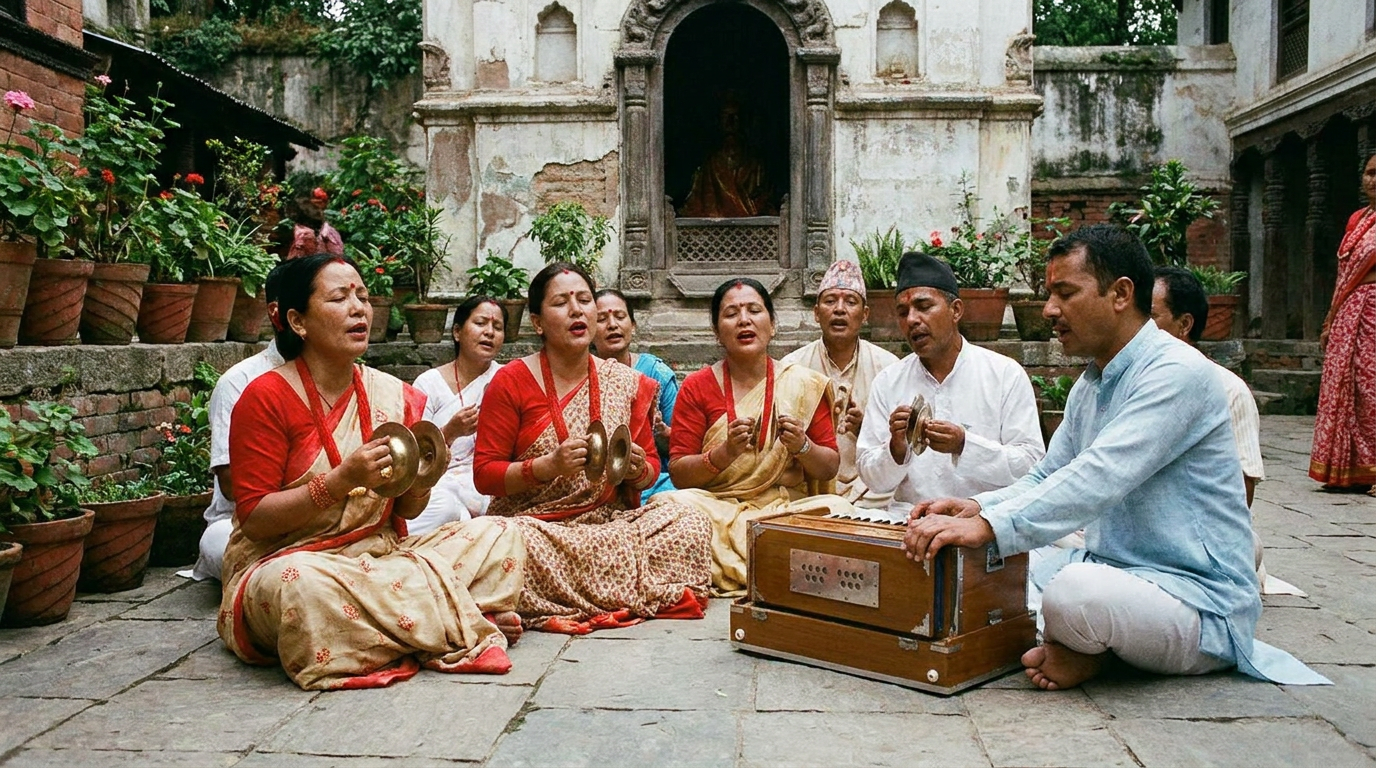
Chanting is one of the most accessible and powerful practices in Bhakti Yoga. You do not need to be a scholar, musician, or advanced meditator. You only need willingness.
The holy names meet us where we are and slowly cleanse the heart.
Why Sound Matters in Bhakti
In many spiritual traditions, sacred sound is seen as a bridge between the human and the Divine. In Bhakti, God’s names are understood to be non-different from God’s presence. This means that when we chant with attention and humility, we are not merely thinking about God—we are associating with God through sound.
The Srimad-Bhagavatam, a central Bhakti scripture, describes hearing and chanting about God as a powerful process for purifying the heart. It teaches that by regularly hearing sacred teachings and chanting the Divine names, devotion awakens naturally.
This purification does not mean we become cold or detached from life. It means the heart becomes clearer, softer, and more loving.
Chanting with Attention
Many of us discover quickly that the mind wanders during chanting. This is normal. The mind has been wandering for a long time. Bhakti practice patiently brings it home.
When chanting japa, you can gently listen to each syllable of the mantra. If the mind drifts, simply return to the sound without self-criticism.
Devotion is not helped by shame. It is helped by returning.
You might pray before chanting: “Please help me hear Your name. Please let me chant with sincerity.” This simple prayer can change the quality of practice.
Kirtan and the Power of Community
Kirtan is the singing of sacred names, often in a call-and-response style. One person leads, and the group responds. Instruments such as harmonium, mridanga drum, kartals, guitar, or hand clapping may support the chanting.
Kirtan reminds us that spiritual life is not only solitary. We need community. We need shared joy. We need voices around us when our own voice feels weak.
In kirtan, people from different backgrounds can sit together and call upon God. Some may understand the Sanskrit words, some may not. Some may have deep faith, others may simply be curious. Still, the sound works on the heart.
Bhakti is generous like that.
Prayer, Humility, and Surrender
Deepening devotion often means deepening humility. Humility does not mean thinking we are worthless. It means remembering we are dependent on grace.
In Bhakti, grace is the loving mercy of God. We practice sincerely, but we also understand that divine love is ultimately a gift. Our effort opens the door; grace carries us through it.
Surrender Is Trust, Not Defeat
The Sanskrit word sharanagati means surrender or taking shelter. Sometimes people misunderstand surrender as weakness or passivity. In Bhakti, surrender is active trust.
It means we place our life in God’s care and try to live according to divine guidance. We still make choices, work hard, care for others, and take responsibility. But we release the illusion that we are the ultimate controller.
This can be deeply healing.
Much of our anxiety comes from trying to control everything. Bhakti invites us to act with love and offer the results to God.
Krishna says in Bhagavad-gita 18.66:
“Abandon all varieties of separate duty and simply take refuge in Me. I will deliver you from all reactions. Do not fear.”
This is not a call to irresponsibility. It is a call to deep spiritual trust. God is saying: “You are not alone. Come to Me.”
Bringing Our Struggles into Devotion
Sometimes people think they must become pure before approaching God. Bhakti teaches the opposite: we approach God so that our hearts may be purified.
If we are angry, we can pray. If we are grieving, we can chant. If we feel unworthy, we can still offer one flower, one song, one tear, one breath.
The Bhagavad-gita 9.26 says:
“If one offers Me with love and devotion a leaf, a flower, fruit, or water, I accept it.”
This verse is cherished because it shows the kindness of God. The offering does not need to be expensive or grand. What matters is love.
God accepts the heart.
Forgiveness and Softening the Heart
As devotion deepens, we may become more aware of the places where our heart is hardened. We may notice envy, resentment, pride, or fear. This awareness is not failure. It is part of healing.
Bhakti gives us tools to soften:
- Chanting when resentment arises
- Praying for the ability to forgive
- Serving those who need care
- Remembering that every soul is beloved by God
- Asking forgiveness when we have caused harm
- Practicing gratitude daily
A softened heart is not a weak heart. It is a heart strong enough to love.
Sacred Study: Learning from Bhakti Scriptures
Bhakti is nourished by hearing sacred wisdom. Scripture gives language to the soul’s longing and guidance for daily life.
You do not need to become an academic to benefit from scripture. Even one verse, heard with humility, can illuminate the heart.
The Bhagavad-gita: Guidance for Devotional Living
The Bhagavad-gita is a conversation between Krishna and Arjuna on a battlefield. Arjuna is overwhelmed, confused, and unsure of his duty. Krishna guides him through teachings on the soul, action, meditation, knowledge, and devotion.
This setting is meaningful. Spiritual wisdom is not only for quiet caves or perfect circumstances. It is for the battlefield of life—our responsibilities, relationships, doubts, and decisions.
A key Bhakti teaching of the Gita is to remember God while doing one’s duty. Krishna does not tell Arjuna to run away from life. He teaches him to act with devotion, without selfish attachment to results.
For modern seekers, this is deeply practical. We can ask: “How can I do this task as an offering? How can I make this choice with integrity? How can I remember God here?”
The Srimad-Bhagavatam: Stories That Awaken Love
The Srimad-Bhagavatam, also called the Bhagavata Purana, is a treasured text filled with teachings, prayers, and stories of devotion. It describes the lives of saints, kings, sages, children, and ordinary people whose hearts turn toward God.
These stories are not merely historical or poetic. They reveal patterns of the devotional journey: longing, surrender, struggle, grace, and divine love.
For example, the story of Prahlada shows devotion in the midst of difficulty. Prahlada, though only a child, remains absorbed in God even when opposed by his powerful father. His life teaches courage, faith, and the protection of sincere devotion.
The story of Dhruva shows how mixed motives can become purified. Dhruva begins his spiritual practice seeking worldly recognition, but through devotion he receives a vision of God and realizes that divine love is far greater than anything he had desired.
These stories meet us honestly. We may also begin with mixed motives. Bhakti can purify them.
Reading with the Heart
When studying Bhakti scriptures, it helps to read slowly and prayerfully. Rather than rushing, we can ask:
- What does this teach me about God?
- What does this reveal about the soul?
- How can I apply this today?
- Where is my heart being invited to grow?
Sacred study becomes powerful when it leads to remembrance and service.
Devotional Service in Everyday Life
Bhakti becomes especially beautiful when it enters the ordinary moments of life. Devotion is not limited to temples, retreats, or festivals. It can be practiced in kitchens, offices, classrooms, hospitals, gardens, and city streets.
The question is not, “Is my life spiritual enough?” The question is, “Can I offer this moment with love?”
Offering Food with Love
One beloved Bhakti practice is offering food to God before eating. In Sanskrit, sanctified food is called prasadam, meaning mercy or grace.
The practice is simple. Prepare vegetarian food with care, place it before an image or remembrance of God, and offer a prayer: “Dear Lord, please accept this food prepared with love.” After a few moments, the food is honored as prasadam.
This transforms eating into communion. We remember that food is a gift—from the earth, from the labor of many beings, and ultimately from God.
Sharing prasadam is also an act of love. Many Bhakti communities welcome people through meals because spiritual hospitality touches the heart.
Work as Worship
Many people spend a large part of life working. Bhakti does not require us to abandon work in order to be spiritual. Instead, we can spiritualize work through intention.
Before beginning the day, we might pray: “May my work serve others. May I act honestly. May I remember You in what I do.”
When challenges arise, work becomes a place to practice patience, humility, courage, and compassion. When success comes, we offer gratitude. When results are not what we hoped, we offer that too.
This is practical Bhakti Yoga: not escaping life, but bringing God into life.
Serving People as Souls
Bhakti teaches that every living being is an eternal soul, part of God. This vision changes how we treat others.
We may not agree with everyone. We may need boundaries. But we can still practice respect. We can remember that beneath external differences—background, religion, race, gender, age, personality, opinion—there is a sacred soul.
Service begins with seeing.
When we listen deeply, speak kindly, feed someone, encourage someone, or protect someone vulnerable, we are honoring God’s presence in them.
Community, Guidance, and Spiritual Friendship
Deep devotion is supported by spiritual association. In Sanskrit, this is called sadhu-sanga, the company of spiritually minded people. A sadhu is a person who is sincerely trying to live in truth and devotion.
We become shaped by the company we keep. When we spend time with people who chant, pray, serve, and seek God, our own devotion becomes stronger.
The Gift of Sangha
Sangha means spiritual community. A loving sangha can help us feel encouraged and accountable. It gives us opportunities to serve, learn, celebrate, and grow.
In community, we discover that everyone is practicing. No one is perfect. We learn patience with others and with ourselves.
A healthy Bhakti community should be rooted in humility, compassion, scriptural wisdom, and service. It should welcome sincere seekers and create space for questions.
Learning from Teachers
Bhakti traditions place value on guidance from teachers, mentors, and elders. A genuine spiritual teacher does not exploit or dominate. They help us remember God, understand scripture, and live with integrity.
The role of a teacher is to point us toward divine love, not toward their own ego.
As seekers, we can pray for guidance and use discernment. Authentic guidance should increase humility, compassion, devotion, and responsibility.
Friendship on the Path
Spiritual friendship is a precious blessing. A friend who reminds us to chant, prays with us, listens without judgment, and encourages our service is a gift from God.
We do not need many such friends. Even one sincere spiritual friendship can nourish the heart.
We can also become that kind of friend for others.
Common Challenges in Bhakti Practice
Every sincere practitioner faces challenges. These challenges are not signs that we are unfit. They are invitations to deepen.
Bhakti is a path of grace, but it is also a path of honesty.
“I Don’t Feel Devotion”
Sometimes we chant, pray, or read and feel very little. This can be discouraging.
But feelings are not the only measure of devotion. Showing up when we do not feel inspired may be one of the deepest offerings.
A farmer waters the field before seeing crops. A musician practices scales before playing beautifully. A devotee chants even when the heart feels quiet, trusting that the holy name is working.
We can pray: “God, I do not feel much today, but I want to want You. Please accept this small effort.”
That prayer itself is devotion.
Distraction and Restlessness
Modern life trains the mind to jump constantly. Phones, noise, responsibilities, and worries can make stillness difficult.
Rather than becoming frustrated, we can simplify. Put the phone away during practice. Chant aloud. Read a short passage. Sit with others. Walk while chanting. Create a small routine.
The mind may wander a thousand times. We return a thousand times. Each return is an act of love.
Pride and Comparison
Spiritual pride can quietly enter the heart. We may compare our practice to others or feel superior because of what we know, how long we chant, or what lifestyle we follow.
Bhakti gently humbles us. The goal is not to become impressive. The goal is to become loving.
If we notice pride, we can offer it honestly: “God, please help me serve without ego. Please let me appreciate others.”
The more devotion deepens, the more we recognize our dependence on grace.
The Fruits of Deepening Devotion
The fruits of Bhakti may appear gradually. They are not always dramatic, but they are deeply real.
We may notice more peace, gratitude, compassion, patience, or clarity. We may become less controlled by anger or fear. We may feel drawn to chant, serve, and remember God more naturally.
Most importantly, the heart begins to awaken to love.
A Softer Heart
One sign of growing devotion is softness. We become more moved by the suffering of others. We become more willing to forgive. We become less interested in harming or exploiting.
This softness is not sentimental. It is spiritual maturity.
A heart connected to God becomes a shelter for others.
A Life of Meaning
Bhakti gives meaning to ordinary life. Every day becomes an opportunity to love and serve. Even difficulties can become part of our spiritual growth when offered to God.
We begin to see that our life is not random. It is a sacred journey back to loving relationship with the Divine.
Remembering God More Naturally
At first, remembrance may feel like effort. We set reminders, create routines, and bring the mind back again and again.
Over time, remembrance becomes more natural. A sunrise reminds us of God. A meal becomes prasadam. A challenge becomes a prayer. A song becomes kirtan. A person in need becomes an opportunity for seva.
This is the beauty of Bhakti: gradually, all of life becomes connected.
Taking One Sincere Step
Deepening devotion does not require perfection. It asks for sincerity.
You can begin where you are. Chant one mantra. Offer one prayer. Read one verse. serve one person. Cook one meal with love. Sit quietly for one minute and say, “God, I am here.”
Bhakti Yoga is a practical path of love. It welcomes the whole person—mind, body, heart, and soul. It welcomes the joyful and the grieving, the certain and the doubtful, the experienced and the brand new. It welcomes people of all backgrounds because divine love is not limited.
The saints of Bhakti remind us that God is attracted by the heart’s sincerity. Even a small offering, made with love, has eternal value.
So today, gently ask yourself: What is one sincere step I can take toward God?
Maybe it is chanting the holy names. Maybe it is praying before sleep. Maybe it is coming to kirtan. Maybe it is serving someone quietly. Maybe it is simply opening your heart and saying, “Please guide me.”
Whatever your step is, take it with humility and hope. You are welcome on this path. You are loved. And every sincere step toward God is met by grace.
FAQs
What is Bhakti practice?
Bhakti practice is a spiritual path in Hinduism that emphasizes devotion and love for a personal god. It involves cultivating a deep and loving relationship with the divine through prayer, worship, and service.
What are the key elements of Bhakti practice?
The key elements of Bhakti practice include chanting or singing the names of the divine, performing rituals and ceremonies, reading and studying sacred texts, and engaging in acts of selfless service to others.
Who can practice Bhakti?
Bhakti practice is open to anyone, regardless of their background or social status. It is a path that emphasizes the universal nature of love and devotion, and welcomes all individuals who seek a deeper connection with the divine.
What are the benefits of Bhakti practice?
Bhakti practice is believed to bring about inner peace, joy, and a sense of fulfillment. It is also thought to purify the heart and mind, leading to spiritual growth and ultimately liberation from the cycle of birth and death.
How is Bhakti practice expressed in daily life?
Bhakti practice can be expressed in daily life through acts of devotion, such as daily prayers, meditation, and offering food or flowers to the divine. It can also be expressed through selfless service to others and cultivating a loving and compassionate attitude towards all beings.

