

Spiritual discipline is often misunderstood. Many people hear the word “discipline” and think of harsh rules, guilt, or forcing themselves to become someone else. But in the path of Bhakti Yoga, spiritual discipline is something much softer and much deeper. It is the loving structure that helps us remember who we truly are and reconnect with God, the Supreme Person, whom many Bhakti traditions lovingly call Krishna.
Bhakti means devotion, or loving service to God. Yoga means connection. So Bhakti Yoga is the path of reconnecting with the Divine through love. It is not limited to one culture, background, or life story. Whether you are new to spirituality, returning after many years, or already walking a devotional path, Bhakti invites you to take one sincere step closer to God.
Spiritual discipline in Bhakti is not about becoming perfect overnight. It is about creating sacred habits that open the heart. It is about chanting, prayer, service, study, community, and choosing again and again to remember God in the middle of everyday life.
The Bhagavad-gita, one of the most beloved texts of Bhakti Yoga, teaches that even a small effort on the spiritual path can protect us from great fear. This is a comforting truth. Every prayer matters. Every mantra matters. Every act of kindness offered with love matters.
Spiritual discipline is how we make space for grace.
Understanding Spiritual Discipline in Bhakti Yoga
Discipline as Devotional Care
In Bhakti Yoga, discipline is not punishment. It is devotional care for the soul.
Just as we care for the body with food, rest, and movement, the soul also needs nourishment. The soul is nourished by loving remembrance of God. When we chant God’s names, hear sacred wisdom, offer service, and pray sincerely, the heart gradually becomes clear and joyful.
The Sanskrit word sadhana means “spiritual practice.” It refers to the regular practices that help awaken our natural love for God. Sadhana is not meant to be mechanical or dry. It is like watering a garden. The flowers may not bloom in one day, but with steady care, life begins to appear.
A simple daily sadhana might include:
- Chanting a mantra for a few minutes
- Reading a verse from scripture
- Offering gratitude before meals
- Praying honestly from the heart
- Serving someone with humility
- Taking a quiet moment to remember God
These practices may seem small, but when done with sincerity, they become powerful.
The Heart Needs Rhythm
Most of us already live by rhythms. We wake up, eat, work, care for family, check messages, and follow routines. Spiritual discipline brings a sacred rhythm into daily life.
Without rhythm, our spiritual life can become something we only remember when we are in crisis. But Bhakti invites us to build a relationship with God every day, in joy and difficulty, in clarity and confusion.
A relationship grows through regular connection. If we love someone, we make time for them. We speak with them, listen to them, think of them, and serve them. In the same way, spiritual discipline is how we make time for our relationship with the Divine.
This does not mean we must leave our responsibilities. Bhakti Yoga is practical. It can be lived in a home, workplace, school, temple, or quiet room. It can be practiced while cooking, walking, singing, parenting, studying, or serving others.
The essence is remembrance: “How can I bring God into this moment?”
Gentle Consistency Is More Powerful Than Intensity
Many people begin spiritual practice with enthusiasm and then feel discouraged when they cannot maintain a high standard. Bhakti teaches us to be steady and humble.
It is better to chant sincerely for five minutes every day than to chant for two hours once and then stop for weeks. It is better to read one sacred verse with attention than to rush through many pages without reflection.
The Bhagavad-gita describes yoga as a path of balance. Krishna teaches that spiritual life is not for one who eats too much or too little, sleeps too much or too little. Balance matters because devotion is meant to be sustainable.
A disciplined spiritual life is not built by shame. It is built by devotion, patience, and returning again.
Chanting: The Heart of Daily Spiritual Practice

What Is Mantra Meditation?
One of the most central practices in Bhakti Yoga is chanting the holy names of God. This is called mantra meditation.
The word mantra comes from two Sanskrit roots: man, meaning “mind,” and tra, meaning “to deliver” or “to free.” A mantra is sacred sound that helps free the mind from anxiety, distraction, and forgetfulness of God.
In the Bhakti tradition, many practitioners chant the maha-mantra, which means “great mantra”:
Hare Krishna Hare Krishna
Krishna Krishna Hare Hare
Hare Rama Hare Rama
Rama Rama Hare Hare
These are names of God. Krishna means “the all-attractive one.” Rama means “the source of joy.” Hare calls upon the divine energy of the Lord, the compassionate spiritual energy that helps us reconnect with God.
This mantra is not a material sound. Bhakti scriptures explain that God and God’s names are spiritually connected. When we chant with sincerity, we are not simply repeating syllables. We are calling out to the Divine.
Chanting as Prayer
Chanting is not about performance. It is prayer.
We may chant with a strong voice, a soft voice, or quietly within the heart. We may chant while sitting with prayer beads, walking in nature, or singing with others in kirtan, which means congregational chanting.
Kirtan is a joyful practice where people gather to sing sacred names together. Sometimes there are instruments like harmonium, drum, or cymbals. Sometimes there are only voices. The beauty of kirtan is that everyone can participate. You do not need to be a trained singer. You only need a willing heart.
Chanting can become a daily anchor. When the mind is restless, chant. When gratitude rises, chant. When sadness comes, chant. When you do not know what to pray, chant.
The names of God hold us.
Building a Simple Chanting Practice
If you are new to chanting, begin gently.
You might start with five minutes each morning. Sit comfortably. Take a few breaths. Then chant the maha-mantra slowly and listen to the sound. When your mind wanders, do not be discouraged. Simply return to the mantra.
A helpful approach is:
- Choose a regular time
- Create a quiet space if possible
- Chant clearly enough to hear yourself
- Listen with attention
- Offer the practice as a prayer
Over time, chanting becomes less like a task and more like coming home.
Please visit our website for more information on our articles: articles.
Prayer: Speaking Honestly With God
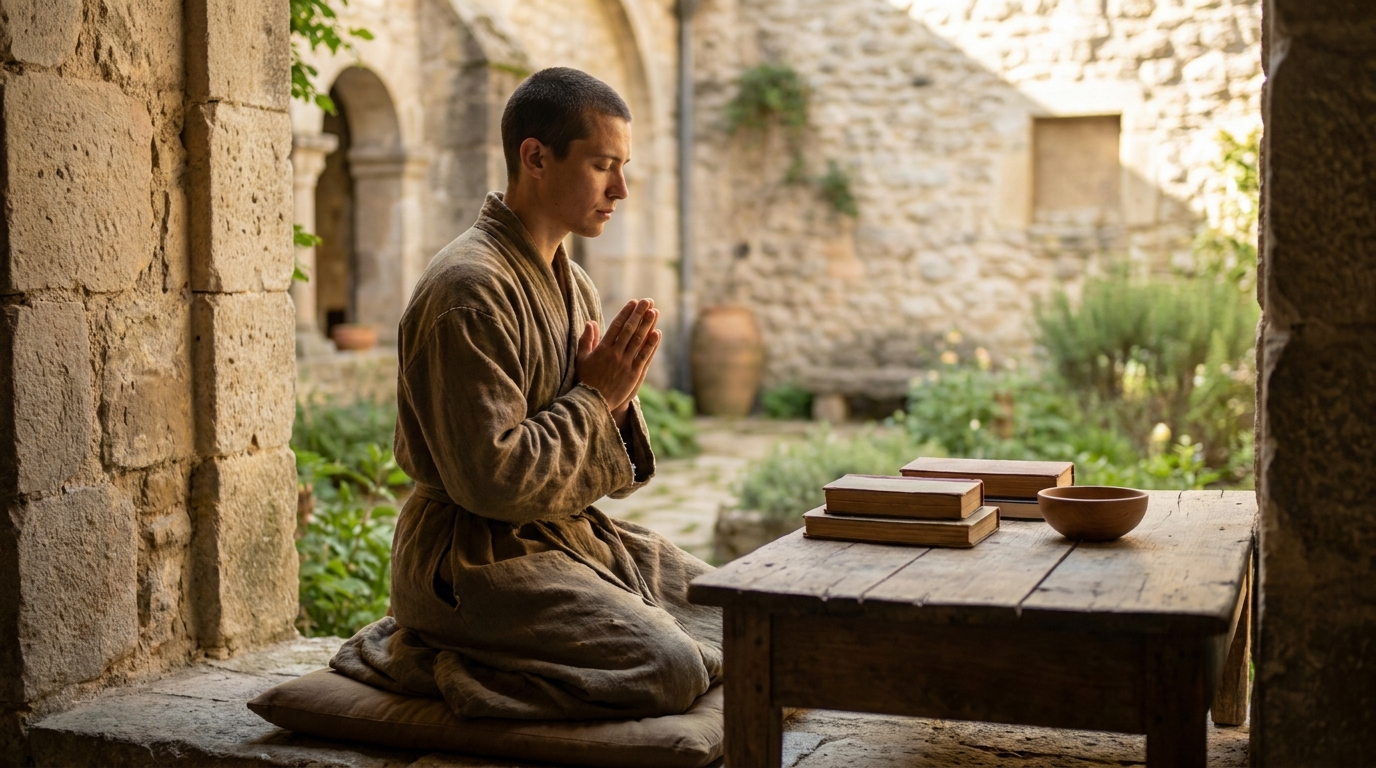
Prayer Is Relationship
In Bhakti Yoga, prayer is not only asking for things. Prayer is relationship. It is opening the heart before God with honesty, humility, and trust.
You can pray in your own words. You can pray through traditional prayers. You can pray silently. You can pray through tears. You can pray while cooking, driving, walking, or sitting before an altar.
God is not distant from the sincere heart.
In the Bhagavad-gita, Krishna says that He accepts even a leaf, a flower, fruit, or water when offered with devotion. This teaching is deeply encouraging. God is not impressed by wealth, status, or outer display. God is moved by love.
A simple prayer might be:
“Dear Lord, please help me remember You today. Please guide my thoughts, words, and actions. Please help me serve with humility and love.”
This kind of prayer brings spiritual discipline into daily life. It turns ordinary moments into offerings.
Praying Through Difficulty
Sometimes people feel they should only pray when they feel peaceful or pure. But Bhakti teaches us to come as we are.
If you feel confused, bring that confusion to God. If you feel angry, lonely, ashamed, or afraid, bring that honestly. Prayer is not pretending. Prayer is allowing God into the real places of the heart.
Many saints in the Bhakti tradition prayed with great longing. Their prayers were not always polished. They were sincere. They cried out for mercy, guidance, forgiveness, and love.
Spiritual discipline includes learning to turn toward God instead of away from God when life becomes hard.
Gratitude as Daily Prayer
Gratitude is one of the simplest and most powerful forms of prayer.
Before eating, pause and offer thanks. Before beginning work, ask to serve well. Before sleeping, remember one blessing from the day. This softens the heart and helps us see life as sacred.
In Bhakti, food can be offered to God before we eat. This offering is called prasadam, which means “mercy” or “grace.” When food is prepared and offered with love, it becomes spiritually nourishing. Sharing prasadam is also a beautiful form of service and community.
A small daily gratitude practice can transform how we see the world. Instead of living as owners, we begin living as caretakers. Instead of taking everything for granted, we begin receiving life as a gift.
Sacred Study: Feeding the Mind With Wisdom
Why Scripture Matters
Spiritual discipline is not only emotional. It also involves learning. The heart needs devotion, and the mind needs truth.
Bhakti scriptures such as the Bhagavad-gita, Srimad Bhagavatam, and the teachings of saints help us understand who we are, who God is, and how to live with purpose.
The Bhagavad-gita is a conversation between Krishna and Arjuna, a warrior facing a deep moral and spiritual crisis. Arjuna is overwhelmed, unsure of his duty, and full of grief. Krishna does not reject him. Krishna guides him with compassion, wisdom, and love.
This is why the Gita is so practical. It speaks to real human struggle. It teaches how to act in the world without losing spiritual connection.
Reading With the Heart
Sacred study is not about collecting information. It is about transformation.
When reading scripture, we can ask:
- What is God teaching me here?
- How does this apply to my life today?
- What quality can I practice from this teaching?
- How can this help me love and serve more deeply?
Even one verse can become a meditation for the whole day.
For example, Krishna teaches in the Bhagavad-gita: “Always think of Me, become My devotee, worship Me, and offer your homage unto Me.” This is a deeply personal invitation. Krishna is not asking for empty ritual. He is asking for the heart.
To “always think of Me” may seem impossible at first. But we can begin with small moments of remembrance. A morning prayer. A mantra while walking. A grateful offering before a meal. A kind action done for God’s pleasure.
Sacred study gives direction to our discipline.
Learning in Community
Bhakti Yoga has always been carried through community, known in Sanskrit as sadhu-sanga. Sadhu means a sincere spiritual person or saintly person, and sanga means association. Sadhu-sanga means keeping company with those who inspire our devotion.
Community helps us stay steady. When we hear from others, chant together, ask questions, and serve side by side, our faith becomes stronger.
A spiritual community does not have to be perfect to be meaningful. It should be a place where people are trying sincerely to grow, forgive, serve, and remember God.
We all need encouragement. We all need reminders. We all need people who help us return to what matters most.
Service: Turning Love Into Action
Seva as a Way of Life
In Bhakti Yoga, service is called seva. Seva means loving service offered for the pleasure of God and the well-being of others.
Service is one of the most practical forms of spiritual discipline because it takes devotion out of theory and places it into action. We may chant beautifully, study deeply, and pray sincerely, but service reveals whether love is becoming real in our lives.
Seva can be simple:
- Cooking for others
- Cleaning a sacred space
- Helping a neighbor
- Listening with compassion
- Supporting a spiritual gathering
- Sharing wisdom gently
- Offering your talents to uplift others
No act of service is too small when offered with love.
Krishna explains in the Bhagavad-gita that whatever we do, whatever we eat, whatever we offer or give away, and whatever austerity we perform can be offered to Him. This means our whole life can become devotional when we offer it with love.
Serving Without Ego
Service also purifies the heart because it challenges ego.
The ego wants recognition. The soul wants connection. The ego asks, “Who noticed me?” The soul asks, “Was God pleased? Was someone helped?”
This does not mean we should neglect healthy boundaries or allow ourselves to be used. Bhakti service is not burnout. It is loving, conscious offering. It is guided by humility, wisdom, and care.
True seva deepens compassion. It helps us see every living being as part of God. In Sanskrit, the living being is called atma, the eternal soul. Bhakti teaches that we are not merely bodies, labels, achievements, or struggles. We are souls, beloved by God.
When we serve others with this vision, ordinary interactions become sacred.
Making Your Work an Offering
Many people wonder how to practice spiritual discipline while living a busy life. Work, family, studies, and responsibilities can feel overwhelming.
Bhakti Yoga offers a beautiful answer: make your duties an offering.
Before beginning your work, pause and pray: “May this be in service to You.” Try to act with integrity, kindness, and steadiness. Offer the results to God. This is karma-yoga, the yoga of selfless action, when our work becomes spiritually connected through offering.
You do not have to abandon your life to become spiritual. You can spiritualize your life by bringing God into it.
Creating a Daily Devotional Routine
Begin With the Morning
The morning is a precious time for spiritual discipline. Before the world becomes loud, the heart can turn toward God.
A simple Bhakti morning routine might include:
- Waking with gratitude
- Washing and sitting in a clean space
- Chanting the maha-mantra
- Reading a verse from Bhagavad-gita
- Offering a short prayer
- Setting an intention to serve
Even 15 minutes can change the mood of the entire day.
If your mornings are full with children, work, or other responsibilities, do not feel discouraged. You might chant while preparing breakfast or listen to kirtan while commuting. The point is not perfection. The point is remembrance.
Create a Sacred Space
A sacred space helps the mind settle.
This may be a small altar, a shelf, a corner of a room, or a clean place where you keep sacred books, prayer beads, flowers, or pictures that inspire devotion. An altar is not meant to impress anyone. It is a place of meeting, a place to remember God.
You might offer a candle, incense, water, or flowers. In Bhakti, offerings are expressions of love. The external item may be simple, but the inner mood is what matters most.
When you return to the same sacred space each day, the heart begins to associate that place with peace, prayer, and connection.
End the Day With Reflection
Evening reflection is another helpful discipline.
Before sleeping, take a few moments to review the day with compassion. Ask:
- Where did I remember God today?
- Where did I forget?
- Did I speak with kindness?
- Did I serve someone?
- What can I offer back to God now?
This is not meant to create guilt. It is meant to create awareness. We learn, we pray, and we begin again.
You might end with a simple prayer: “Thank You for carrying me through this day. Please forgive my mistakes. Please help me remember You tomorrow.”
A humble ending prepares the heart for a sacred beginning.
Overcoming Common Obstacles in Spiritual Discipline
When the Mind Is Restless
A restless mind is normal. In the Bhagavad-gita, Arjuna says the mind is restless, turbulent, strong, and difficult to control. Krishna agrees that the mind is difficult, but He says it can be controlled by practice and detachment.
This is very encouraging. Even Arjuna, a great soul, struggled with the mind. So we should not feel hopeless when our thoughts wander during chanting or prayer.
The practice is to return. Again and again.
If the mind wanders during mantra meditation, gently bring it back to the sound. If you become distracted during scripture reading, pause and reread slowly. If you forget to pray, pray when you remember.
Returning is part of the path.
When You Feel Spiritually Dry
Sometimes spiritual practice feels joyful. Other times it feels dry. This does not mean you are failing.
Every relationship has seasons. There are times of sweetness and times of quiet growth. Spiritual dryness can teach patience, humility, and deeper sincerity. Instead of practicing only for a feeling, we learn to practice as an offering of love.
When devotion feels dry, simplify. Chant softly. Read a small passage. Sit before the altar. Speak honestly to God. Seek uplifting association. Serve someone.
Often the heart opens again through humble service and steady chanting.
When You Miss a Day
Many people give up because they miss a day of practice and feel like they have failed. But Bhakti is not all-or-nothing. Krishna sees the heart.
If you miss a day, begin again the next day. If you miss a week, begin again today. Spiritual discipline is not about proving your worth. It is about reconnecting with the One who already loves you.
A sincere restart is beautiful.
Growing Stronger Through Humility and Surrender
What Is Surrender?
Surrender can sound frightening if we think it means losing ourselves. But in Bhakti Yoga, surrender means giving the heart to God in trust. It means allowing divine love to guide us.
The Sanskrit word sharanagati means surrender or taking shelter. It is the mood of saying, “God, I cannot do this alone. Please guide me. Please protect me. Please help me love You.”
Surrender grows gradually. It may begin with one prayer, one choice, one act of trust.
Krishna’s final teaching in the Bhagavad-gita is an invitation to surrender to Him, promising protection from all reactions and fear. This is not a threat. It is divine compassion. God is inviting the soul back into loving relationship.
Humility Opens the Door
Humility is essential in spiritual discipline. It helps us receive grace.
Humility does not mean thinking we are worthless. It means understanding that everything sacred comes by God’s mercy. Our abilities, opportunities, intelligence, and even our desire to pray are gifts.
A humble practitioner thinks, “I am learning. I need help. I want to serve.”
This mood protects us from pride and discouragement. If we succeed, we thank God. If we struggle, we ask for help. In both cases, we remain connected.
Discipline Becomes Devotion
At first, spiritual discipline may feel like something we do. Over time, by grace, it becomes an expression of who we are.
Chanting becomes natural. Prayer becomes honest. Service becomes joyful. Scripture becomes nourishment. Community becomes family. The heart begins to look for God in everything.
This is the beauty of Bhakti Yoga. It does not simply ask us to control the mind or improve our behavior. It awakens love. And when love awakens, discipline is no longer heavy. It becomes the pathway of connection.
A Practical Weekly Plan for Building Spiritual Connection
Start Small and Stay Sincere
If you want to cultivate spiritual discipline, begin with a plan that is realistic. A simple practice done sincerely is better than an ambitious plan that creates stress.
Here is a gentle weekly rhythm:
Daily: Chant for five to fifteen minutes, offer one prayer, and practice gratitude before meals.
A few times a week: Read from Bhagavad-gita or another Bhakti text.
Once a week: Join kirtan, satsang, or a spiritual gathering if possible.
Regularly: Offer service in your home, community, or spiritual center.
At night: Reflect and offer the day to God.
Satsang means gathering in truth, or spiritual association. It is a space for hearing, chanting, reflection, and encouragement.
Use Reminders With Love
In modern life, reminders can help. You might set a phone alarm that says, “Pause and remember Krishna,” or “Offer this moment.” You might keep prayer beads near your bed. You might place a verse on your desk.
These are not rigid rules. They are loving supports.
Spiritual discipline becomes stronger when our environment helps us remember.
Celebrate Small Growth
Notice small signs of growth. Maybe you become a little more patient. Maybe you remember to pray before reacting. Maybe chanting brings peace where anxiety used to take over. Maybe you feel more compassion toward others.
These are signs that Bhakti is working within the heart.
Growth in spiritual life is often quiet. Like the sunrise, it may happen gradually, but the light is real.
Building a Stronger Connection in Everyday Life
Remember God in Ordinary Moments
A stronger connection with God is built not only in formal practice but also in ordinary moments.
When you cook, offer the food. When you speak, try to speak truthfully and kindly. When you walk outside, notice creation and give thanks. When you struggle, ask for strength. When you succeed, offer gratitude.
Bhakti Yoga teaches that everything can become spiritual when connected to God.
This is very hopeful. We do not need to wait for perfect circumstances. We can begin right where we are.
Let Love Guide Your Choices
Spiritual discipline should make us more loving, not more judgmental. If our practice makes us proud, harsh, or disconnected from others, we need to return to the essence.
The essence of Bhakti is love for God and compassion for all beings.
Ask throughout the day:
- Is this helping me remember God?
- Is this helping me become more humble?
- Is this helping me serve with love?
- Is this bringing me closer to my true self?
These questions help discipline become devotion rather than routine.
Walk With Others
The path becomes lighter when walked with others. Find people who inspire your faith and support your growth. Chant together. Share prasadam. Study together. Serve together. Ask questions. Be honest about struggles.
The Bhakti path is deeply personal, but it is not meant to be lonely.
At The Bhakti House, the spirit is welcome, warmth, humility, and shared devotion. Everyone comes with a story. Everyone is growing. Everyone is invited to taste the sweetness of spiritual life.
The Fruit of Spiritual Discipline
Spiritual discipline is not the goal. Love is the goal.
The practices of Bhakti Yoga are like a bridge. They carry us from forgetfulness to remembrance, from isolation to relationship, from anxiety to shelter, from self-centeredness to service.
As we chant, pray, study, serve, and seek good association, the heart gradually becomes softer. We begin to feel that God is not far away. We begin to trust that divine love is present even in difficulty. We begin to live with deeper purpose.
This is a lifelong journey. There will be inspired days and difficult days. There will be clarity and questions. But every sincere step counts.
Krishna sees the effort. God hears the prayer. The holy names carry the heart.
You do not need to be perfect to begin. You do not need to know everything. You do not need to come from a particular background. Bhakti Yoga is a practical path of love, open to every sincere soul.
Today, you can take one step. Chant one mantra. Offer one prayer. Read one verse. Serve one person. Give one moment of your heart to God.
Everyone is welcome, and every sincere step toward God is blessed.
FAQs
What is spiritual discipline?
Spiritual discipline refers to the practices and activities that individuals engage in to deepen their connection with their spirituality or religious beliefs. These practices often include prayer, meditation, fasting, and study of religious texts.
Why is spiritual discipline important?
Spiritual discipline is important as it helps individuals to develop a deeper understanding of their faith, cultivate a sense of inner peace, and strengthen their relationship with their spiritual beliefs. It also provides a framework for personal growth and moral development.
What are some common spiritual disciplines?
Common spiritual disciplines include prayer, meditation, fasting, study of religious texts, worship, service to others, and silence or solitude. These practices vary across different religious traditions and individual beliefs.
How can one build spiritual discipline?
Building spiritual discipline involves setting aside time for regular spiritual practices, seeking guidance from spiritual leaders or mentors, participating in religious or spiritual communities, and being open to personal reflection and growth. It also requires commitment and consistency in engaging with spiritual disciplines.
What are the benefits of practicing spiritual discipline?
Practicing spiritual discipline can lead to a greater sense of inner peace, increased self-awareness, a deeper connection with one’s spirituality, and a stronger sense of purpose and meaning in life. It can also provide guidance for ethical decision-making and help individuals navigate life’s challenges with resilience and faith.

