

A sacred space at home is a simple, loving place where your heart can rest with God.
It does not need to be large, expensive, or perfect. It may be a corner of your bedroom, a small shelf in the living room, a clean table near a window, or even a quiet spot where you sit with a candle and a prayer. What makes it sacred is not the size of the space, but the sincerity you bring to it.
In Bhakti Yoga, the yoga of love and devotion, we learn that spiritual life is not separate from daily life. God can be remembered while cooking, cleaning, working, parenting, studying, resting, and serving others. A sacred space helps us return again and again to that remembrance.
The Sanskrit word bhakti means loving devotion. It is the natural affection of the soul for the Divine. Bhakti Yoga is the practical path of awakening that love through chanting, prayer, service, sacred study, and conscious living.
A sacred space at home supports this journey. It gently says, “Come back. Sit down. Breathe. Remember who you are. Remember who loves you.”
A Place to Pause and Reconnect
Modern life can feel very fast. Many of us carry worry, distraction, grief, pressure, or loneliness. A home altar or prayer corner gives us a place to pause and reconnect with what is eternal.
In the Bhagavad-gita, one of the most beloved texts of Bhakti Yoga, Krishna says:
“Always think of Me, become My devotee, worship Me, and offer your homage unto Me.”
— Bhagavad-gita 18.65
This is a very personal invitation. Krishna is not asking for a complicated performance. He is asking for the heart.
A sacred space helps us practice this instruction in a simple way. We sit, we offer our attention, we chant, we pray, we remember. Little by little, the heart becomes softer and more open.
Sacred Does Not Mean Separate From Life
Sometimes people imagine that spiritual life belongs only in temples, churches, mosques, synagogues, retreat centers, or monasteries. These holy places are beautiful and powerful, but Bhakti teaches that our own home can also become a place of worship.
When we create a sacred space at home, we are inviting divine presence into our daily rhythm. We are saying, “May this home be centered in love. May this family be guided by compassion. May my thoughts, words, and actions become offerings.”
This is practical spirituality. This is devotion made visible.
Choosing the Right Place in Your Home
Creating a sacred space begins with choosing a location. You do not need a perfect room or a silent house. Begin with what you have.
The best sacred space is one you will actually use.
Look for a Clean and Peaceful Corner
If possible, choose a space that is clean, quiet, and not overly busy. It may be:
- A small table in your bedroom
- A shelf in your living room
- A corner near a window
- A place beside your bed
- A clean area in your home office
- A small cloth or mat you can roll out when needed
If you live with others or have limited space, do not be discouraged. Even a small box with sacred items that you open during prayer can become a portable altar.
The Lord is not limited by square footage.
Consider Light, Air, and Simplicity
Natural light can be very uplifting in a sacred space. If you have a window nearby, morning sunlight can make the space feel fresh and alive. A plant, flowers, or a simple lamp can also bring warmth.
Try to avoid clutter. A sacred space does not need many objects. In fact, simplicity often helps the mind settle.
A clean cloth, an image of God, a candle, incense, sacred texts, prayer beads, or fresh flowers may be enough. The goal is not decoration alone. The goal is devotion.
Make It Easy to Visit Daily
Place your sacred space somewhere you can visit regularly. If it is too hidden or inconvenient, you may forget it. If it is visible, it becomes a loving reminder.
Even seeing your altar as you walk by can inspire a short prayer:
“Thank You.”
“Please guide me.”
“Let me serve today.”
“May I remember You.”
These small moments matter. In Bhakti, every sincere offering has value.
What to Include in a Bhakti Sacred Space
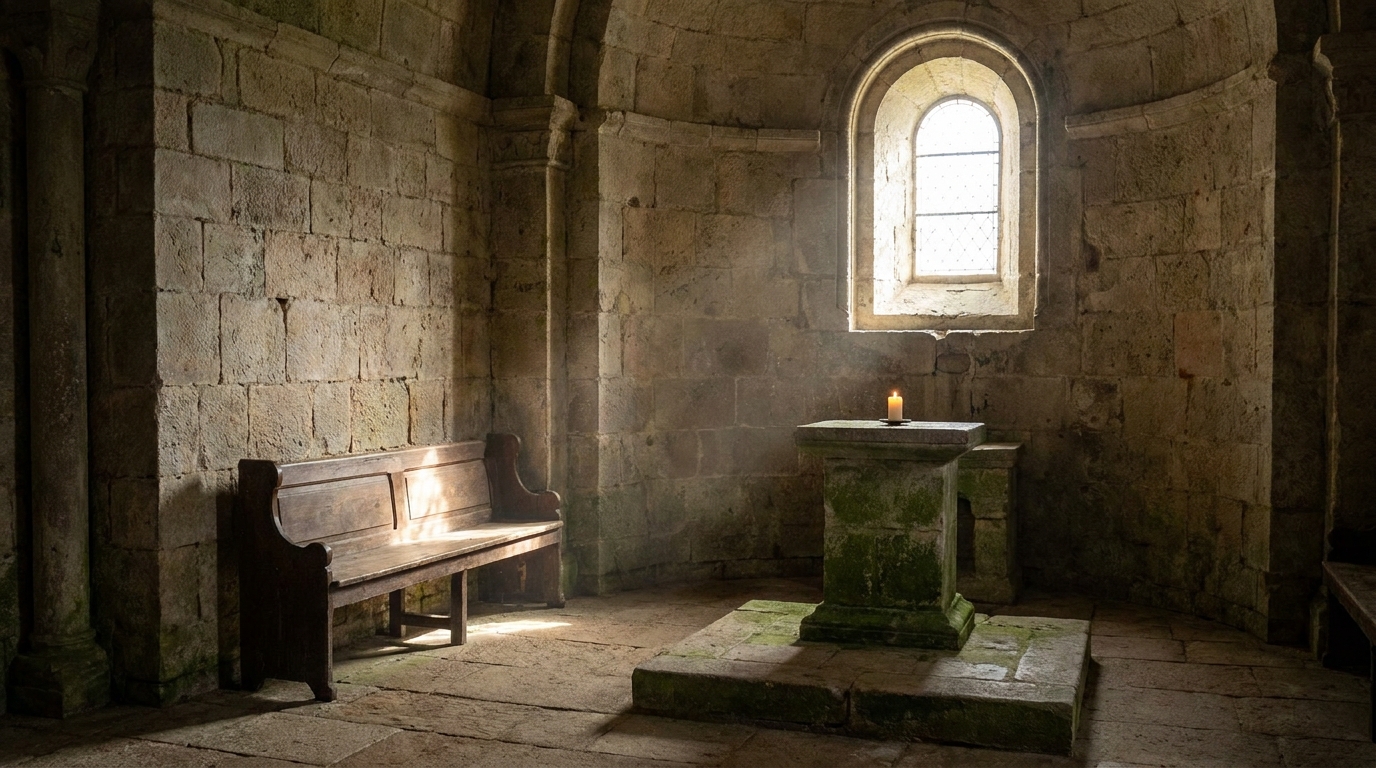
A Bhakti sacred space often includes items that help us remember and serve the Divine. These items are not meant to be treated as decorations only. They are supports for relationship.
In Bhakti Yoga, God is personal and loving. We may call the Divine by many names: Krishna, Rama, Govinda, Radha, Vishnu, Narayana, the Supreme Lord, the Divine Mother, or simply God. People from different traditions may use different names and forms. The heart of the practice is loving remembrance.
Images or Deities
Many devotees keep a picture or deity form of Krishna, Radha-Krishna, Rama, Lord Chaitanya, or another beloved form of God.
A deity is a sacred form through which we offer worship and receive divine presence. In Sanskrit, this is often called murti, meaning a form or embodiment. In Bhakti, the murti is not seen as an ordinary object. It is approached with love, respect, and service.
If you are new to this, you can begin with a simple picture. Place it respectfully on a clean surface. When you sit before it, offer your attention and love.
You may also include images of saints, teachers, or spiritual guides who inspire your devotion. In Bhakti traditions, great souls are honored because they help us remember God.
Sacred Texts
Keeping a sacred book in your prayer space can bring wisdom into your home. Some important Bhakti scriptures include:
- The Bhagavad-gita
- The Srimad Bhagavatam
- The Sri Isopanishad
- The Chaitanya Charitamrita
- The Ramayana
You do not need to read many pages every day. Even one verse, read with sincerity, can nourish the heart.
The Srimad Bhagavatam describes hearing and chanting about God as a powerful way to purify consciousness. This is called sravanam and kirtanam. Sravanam means hearing sacred wisdom. Kirtanam means chanting or glorifying God’s names and qualities.
These practices are simple, but deeply transformative.
Prayer Beads and Japa
Many Bhakti practitioners chant on beads called japa mala. Japa means personal, meditative repetition of a sacred mantra. A mantra is a sacred sound vibration that helps focus the mind and awaken the heart.
One well-known Bhakti mantra is the maha-mantra, which means “great mantra”:
Hare Krishna Hare Krishna
Krishna Krishna Hare Hare
Hare Rama Hare Rama
Rama Rama Hare Hare
The names Krishna and Rama refer to the all-attractive and all-joyful Lord. Hare is an address to the Divine energy, the loving energy of God. This mantra is a prayer: “Please engage me in loving service.”
You can keep your beads in a clean bag or on your altar. If you do not have beads, you can still chant softly, sing, or repeat a prayer with your breath.
Offerings From the Heart
Bhakti is about offering. You may place fresh flowers, fruit, water, incense, or a small candle in your sacred space.
In the Bhagavad-gita, Krishna says:
“If one offers Me with love and devotion a leaf, a flower, fruit, or water, I will accept it.”
— Bhagavad-gita 9.26
This verse is so tender. God does not ask for wealth, status, or perfection. He asks for love.
A single flower offered with sincerity is spiritually meaningful. A cup of water offered with devotion becomes sacred. A simple meal cooked with gratitude can become prasadam.
Prasadam means mercy, or food that has been offered to God with love. In Bhakti homes, preparing and sharing prasadam is one of the most beautiful ways to spiritualize daily life.
Please visit our website for more information on our articles: articles.
Setting the Mood for Prayer and Devotion

Once you choose your place and gather a few sacred items, you can begin to shape the atmosphere. The mood is more important than the arrangement.
A sacred space should feel welcoming, peaceful, and alive with devotion.
Keep the Space Clean
Cleanliness supports clarity. Try to keep your sacred space free from dust, old flowers, and clutter. This cleaning can become a devotional practice.
As you wipe the altar, you might pray:
“May my heart also become clean.”
“May my mind become peaceful.”
“May this home be filled with Your presence.”
In Bhakti, service is called seva. Seva means loving service offered for the pleasure of God and the benefit of others. Cleaning your altar is seva. Lighting a candle is seva. Preparing a flower is seva. Sitting to chant is seva.
Even small acts, done with devotion, become spiritual.
Use Sound to Create Sacred Atmosphere
Sound is central in Bhakti Yoga. Sacred sound has the power to change the consciousness of a home.
You may play soft kirtan, which means devotional singing, in the morning or evening. You may chant the maha-mantra. You may recite a prayer. You may read aloud from scripture.
If you are from another faith background, you may also include prayers or hymns that help you remember God with love. Bhakti honors sincere devotion. The essence is remembrance, humility, and loving service.
The home becomes sacred when divine sound enters it.
Light a Candle or Incense With Intention
A candle or incense can help signal that you are entering prayer time. Before lighting it, pause for a moment. Let your hands become still. Let your breathing soften.
You might say:
“May this light remind me of divine guidance.”
“May this fragrance carry my prayers.”
“May my heart become an offering.”
Always be safe and mindful with fire, especially around children, pets, curtains, or small spaces. If you cannot use candles or incense, a small lamp, fresh flowers, or even a clean cloth can serve beautifully.
Creating a Daily Practice in Your Sacred Space
A sacred space becomes powerful through regular use. You do not need to begin with a long practice. In fact, it is often better to begin small and steady.
Five sincere minutes each day can open the door to a lifetime of devotion.
Morning Remembrance
Morning is a wonderful time to visit your sacred space. Before the phone, before the news, before the rush of responsibilities, offer a moment to God.
You might begin with:
- Bowing your head
- Offering gratitude
- Chanting one round of japa
- Reading one verse
- Sitting silently in prayer
- Asking for guidance for the day
A simple morning prayer could be:
“Dear Lord, thank You for this new day. Please guide my thoughts, words, and actions. Help me serve with kindness. Help me remember You.”
This kind of prayer sets the direction of the day. It reminds us that we are not alone.
Evening Reflection
Evening is a natural time to return and reflect. You can sit before your sacred space and review the day gently.
Ask yourself:
- Where did I feel close to God today?
- Where did I forget?
- Did I speak with kindness?
- Did I serve someone?
- What can I offer back to the Lord now?
This is not meant for shame. It is meant for growth.
Bhakti Yoga is a path of relationship. In any relationship, we return, we speak honestly, we ask forgiveness, we express gratitude, and we try again.
Chanting as a Daily Anchor
Chanting is one of the most accessible practices for spiritual growth at home. You do not need to be a musician. You do not need a perfect voice. You simply need sincerity.
You can chant softly in your sacred space:
Hare Krishna Hare Krishna
Krishna Krishna Hare Hare
Hare Rama Hare Rama
Rama Rama Hare Hare
Or you can chant another name of God that is meaningful to you.
The practice of chanting helps gather the scattered mind. It gives the heart a place to rest. Over time, chanting can become a companion through joy, sorrow, confusion, and change.
The great teacher Sri Chaitanya Mahaprabhu especially emphasized the chanting of God’s names as the most merciful practice for this age. He taught that the holy names are full of spiritual power and are available to everyone.
No qualification is required except sincerity.
Bringing Family and Daily Life Into the Sacred Space
A sacred space is not only for private meditation. It can also become a loving center for family, friends, guests, and community.
Whether you live alone, with a partner, with children, with roommates, or in a busy household, your sacred space can quietly bless the environment.
Practicing With Children
Children often respond naturally to sacred spaces. They may enjoy offering flowers, ringing a small bell, singing, folding hands, or placing fruit before God.
Keep it simple and joyful. Avoid making devotion feel forced. Let children see that prayer is a loving relationship, not a punishment or pressure.
You might invite them to say:
“Thank You, Krishna.”
“Please bless everyone.”
“May all beings be happy.”
“I offer this flower with love.”
These small practices plant deep seeds.
Sharing Prasadam
One of the most beautiful ways to extend your sacred space into the home is by offering food.
Before eating, place a portion of vegetarian food before God, or simply pause with your plate and pray:
“Dear Lord, thank You for this food. Please accept this offering. May it nourish my body and help me serve with love.”
In many Bhakti traditions, food offered to Krishna is vegetarian and prepared with care, cleanliness, and gratitude. The mood is important: we cook not just for our own enjoyment, but as an offering.
When we eat prasadam, we receive nourishment as grace. Sharing prasadam with others is a gentle, joyful form of service.
Welcoming Guests With Devotion
Your sacred space can also create a peaceful environment for guests. They may not share your tradition, and that is okay. Bhakti is not about pressure. It is about love.
You can allow the atmosphere to speak softly through cleanliness, kindness, music, food, and warmth.
If someone asks about your altar, you can explain simply:
“This is where I pray and chant. It helps me remember God and live with more love.”
That humble explanation may touch someone’s heart more than any long speech.
Overcoming Common Obstacles
Many people want a spiritual practice at home but feel blocked by time, inconsistency, doubt, or feelings of unworthiness. These obstacles are normal. Please do not be discouraged.
Bhakti is a compassionate path. You are welcome to begin exactly where you are.
“I Don’t Have Enough Space”
You do not need a separate room. You can create a sacred space on a shelf, windowsill, nightstand, or small tray.
If your home is very small, you can keep a prayer box with a picture, beads, candle, and small book. When it is time to practice, open it and create your sacred space for that moment.
God sees the heart, not the architecture.
“I Am Not Consistent”
Consistency grows through affection, not guilt.
Start with a promise so small you can keep it. For example:
- One minute of prayer each morning
- One mantra before bed
- One verse per day
- One flower offered weekly
- One meal offered with gratitude
When you miss a day, simply return. No drama. No self-criticism. Just return.
In Bhakti, returning is part of the path.
“I Don’t Feel Pure Enough”
This is one of the most common feelings on the spiritual path. We may think, “How can I approach God with all my flaws, distractions, and mistakes?”
But Bhakti scriptures repeatedly remind us that God is compassionate. The Lord is not waiting for us to become perfect before we come near. Rather, by coming near, we become purified.
The Bhagavad-gita teaches that even if someone has made mistakes, if they sincerely turn toward God with devotion, they are to be seen as saintly because their intention is rightly directed. This is a message of great hope.
Come as you are. Bring your honest heart.
Deepening Your Sacred Space Over Time
Your sacred space will grow with you. At first it may be very simple. Over months and years, it may become a place of deep comfort, tears, gratitude, and transformation.
Let it develop naturally.
Add Meaningful Practices Gradually
You may begin with prayer and later add chanting. You may begin with chanting and later add scripture reading. You may begin with a picture and later learn more about altar worship.
Some practices you may gradually include are:
- Daily japa meditation
- Singing kirtan at home
- Reading from the Bhagavad-gita
- Offering vegetarian meals
- Keeping a gratitude journal
- Writing prayers
- Observing sacred days
- Inviting friends for chanting and prasadam
Do not rush. Let devotion mature like a garden.
Learn From Authentic Teachers and Community
Bhakti grows beautifully in association. In Sanskrit, sadhu-sanga means the company of spiritually sincere people. Sadhu means a saintly or devoted person, and sanga means association.
When we spend time with people who are trying to live with love, humility, and devotion, our own practice becomes stronger.
You may visit a Bhakti center, attend kirtan, join a scripture discussion, listen to classes, or connect with a devotional community. The sacred space at home is nourished by the sacred company we keep.
Let Your Home Become an Offering
Over time, your sacred space may begin to influence the whole home. The kitchen becomes a place of offering. The living room becomes a place of kindness. The bedroom becomes a place of gratitude and rest. The doorway becomes a reminder to bless those who enter and leave.
This is the deeper purpose of creating a sacred space at home: not to keep God in one corner, but to invite divine remembrance everywhere.
Bhakti Yoga helps us see all of life as connected to God. Our work can become service. Our words can become prayer. Our relationships can become opportunities for compassion. Our challenges can become invitations to surrender.
Surrender, in Bhakti, does not mean giving up in despair. It means lovingly trusting God and offering our life in a spirit of devotion.
Simple Step-by-Step Guide to Creating Your Sacred Space
If you are ready to begin, here is a gentle and practical guide.
Step 1: Choose a Location
Find a clean, peaceful place in your home. It can be small. It can be simple. Choose a spot that feels accessible and respectful.
Step 2: Clean the Area
Wipe the surface, remove clutter, and place a clean cloth if you have one. As you clean, pray that your heart may also become clean and receptive.
Step 3: Add a Sacred Image or Symbol
Place a picture of Krishna, Radha-Krishna, Rama, Lord Chaitanya, or another form of God that inspires devotion in you. If you come from another spiritual background, you may include a sacred image that helps you remember the Divine with love.
Step 4: Include a Scripture or Prayer Book
Keep a sacred text nearby. The Bhagavad-gita is a wonderful place to begin for those interested in Bhakti Yoga. Read a little each day, not as a task, but as nourishment.
Step 5: Offer Something Simple
Offer water, flowers, fruit, a candle, or incense. Remember Krishna’s words in the Bhagavad-gita: a leaf, a flower, fruit, or water offered with love is accepted.
Step 6: Begin a Daily Practice
Sit for a few minutes each day. Chant, pray, read, or simply be present. Try to make your practice regular, but do not become harsh with yourself.
A humble daily practice is more powerful than an occasional display.
Step 7: Let Love Guide You
Ask yourself often: “How can I serve? How can I remember God? How can this space help me become more loving?”
This question keeps the sacred space alive.
A Home Altar as a Place of Love
A sacred space at home is not a spiritual decoration. It is a meeting place.
It is where we bring our gratitude and our confusion. It is where we bring our hopes, our grief, our prayers for loved ones, and our longing for truth. It is where we learn to listen. It is where we remember that God is near.
In Bhakti Yoga, the heart of spiritual life is relationship. We are not trying to become empty or distant. We are trying to awaken love. Chanting, prayer, service, scripture, and sacred space all support this awakening.
Your home altar may be simple, but if it is filled with sincerity, it is beautiful.
You may sit there on a joyful morning with flowers in your hand. You may sit there on a difficult night with tears in your eyes. You may sit there when you feel inspired, and you may sit there when you feel dry. Every visit is part of the relationship.
God receives the sincere step.
So wherever you are coming from, whatever your background, whatever your level of experience, please know that you are welcome. You can begin today with one small act of devotion: a prayer, a chant, a flower, a moment of gratitude, a kind service offered in God’s name.
May your home become a place of peace. May your heart become a sacred space. And may each of us take one sincere step toward God, trusting that divine love is already reaching toward us.
FAQs
What is a sacred space at home?
A sacred space at home is a designated area within the home that is intentionally set aside for spiritual practice, meditation, prayer, or simply for quiet reflection and relaxation. It is a place where individuals can connect with their inner selves and find peace and tranquility.
How can I create a sacred space at home?
To create a sacred space at home, you can start by choosing a quiet and peaceful area in your home, such as a corner of a room or a small nook. Then, you can personalize the space with meaningful items such as candles, incense, religious or spiritual symbols, inspirational quotes, or artwork. It’s important to keep the space clean and clutter-free to maintain a sense of tranquility.
What are the benefits of having a sacred space at home?
Having a sacred space at home can provide a variety of benefits, including a sense of calm and relaxation, a place for self-reflection and meditation, and a feeling of connection to something greater than oneself. It can also serve as a reminder to prioritize self-care and spiritual well-being in the midst of a busy and hectic lifestyle.
Do I need to follow a specific religious or spiritual tradition to create a sacred space at home?
No, creating a sacred space at home does not require following a specific religious or spiritual tradition. It is a personal and individual practice, and the space can be tailored to reflect your own beliefs, values, and preferences. Whether you follow a specific religion or simply seek a space for quiet contemplation, a sacred space can be customized to suit your needs.
How can I maintain and use my sacred space at home?
To maintain your sacred space at home, it’s important to keep it clean, organized, and free from distractions. Regularly spending time in the space for meditation, prayer, or quiet reflection can help you to connect with your inner self and find peace. You can also use the space for activities such as journaling, reading, or practicing mindfulness exercises.

