

A sacred space at home is a simple, loving place where your heart can remember God.
It does not need to be large, expensive, or perfect. It may be a small table in the corner of a room, a clean shelf, a windowsill, or a quiet place beside your bed. What makes it sacred is not the size of the space, but the sincerity you bring to it.
In Bhakti Yoga, the path of devotion, we understand that spiritual life is not separate from daily life. God can be remembered while cooking, working, caring for family, walking, singing, cleaning, or resting. Still, having a dedicated space for prayer, chanting, meditation, and reflection helps the heart become steady.
A sacred space becomes a gentle reminder: “I am more than my responsibilities. I am a soul. I am loved by God. I can offer love back.”
For people of all backgrounds, this kind of space can support peace, gratitude, healing, and spiritual growth. Whether you are new to Bhakti Yoga, returning to prayer after many years, or simply longing for more meaning in your home, creating a sacred space can be a beautiful first step.
A Place to Remember What Is Eternal
Life moves quickly. Our phones ring, our minds race, and our days can become full of tasks. A sacred space helps us pause.
In the Bhagavad-gita, one of the central scriptures of Bhakti Yoga, Krishna says:
“Always think of Me, become My devotee, worship Me, and offer your homage unto Me.”
— Bhagavad-gita 18.65
This instruction is not meant to feel heavy or unreachable. It is an invitation into relationship. To “always think of Me” begins with small, sincere moments. A sacred space gives us a physical place to begin those moments each day.
Home as a Place of Worship
In Bhakti, the home can become an ashram. The Sanskrit word ashram can mean a place of spiritual practice, shelter, or growth. You do not need to live in a monastery to create a spiritually nourishing home. When we bring prayer, chanting, service, and love into our living space, our home becomes sanctified.
Even one candle lit with devotion can change the atmosphere of a room.
Even one sincere prayer can soften the heart.
Even one sacred name chanted with humility can bring us closer to God.
Understanding Bhakti Yoga in the Home
Bhakti Yoga is the yoga of love and devotion. The word bhakti comes from a Sanskrit root meaning loving service, devotion, or heartfelt connection. Yoga means union or connection. So Bhakti Yoga is the path of reconnecting with God through love.
This path is practical. It is not only about philosophy, although sacred wisdom is important. It is not only about meditation, although meditation is helpful. Bhakti is expressed through the whole person—our voice, hands, mind, heart, food, home, relationships, and daily choices.
The Heart of Bhakti: Loving Service
In Bhakti, we practice seva, which means service. Seva is not forced duty. It is service offered with love.
When you create a sacred space at home, you are already practicing seva. You are preparing a place for God in your life. You are saying, “Please be present here. Please guide me. Please accept whatever little love I can offer.”
This mood is central. Bhakti is not about decorating a perfect altar to impress others. It is about softening the heart and making room for divine remembrance.
Chanting as a Daily Anchor
One of the most accessible practices in Bhakti Yoga is chanting sacred names of God. In Sanskrit, this is called nama-japa when chanting softly or personally, often on beads. Nama means name, and japa means repeated prayer or meditative chanting.
Many Bhakti practitioners chant the maha-mantra:
Hare Krishna Hare Krishna
Krishna Krishna Hare Hare
Hare Rama Hare Rama
Rama Rama Hare Hare
Maha means great, and mantra means a sacred sound that helps free the mind. This mantra is a prayer asking to be engaged in loving service. You do not need to fully understand Sanskrit to begin. Like the sun, sacred sound brings benefit even before we understand everything about it.
A sacred space at home gives you a place to sit, chant, breathe, and listen.
Prayer, Song, and Silence
Your home altar or sacred corner may also become a place for prayer, kirtan, and quiet meditation. Kirtan means devotional singing, often call-and-response chanting of God’s names.
Some days your practice may be full of song. Other days, you may sit quietly with tears, questions, or exhaustion. All of it can be offered.
Bhakti welcomes the real person. You do not have to pretend to be peaceful before coming to God. You can bring your restless mind, your gratitude, your grief, your hope, and your longing.
Choosing the Right Place in Your Home
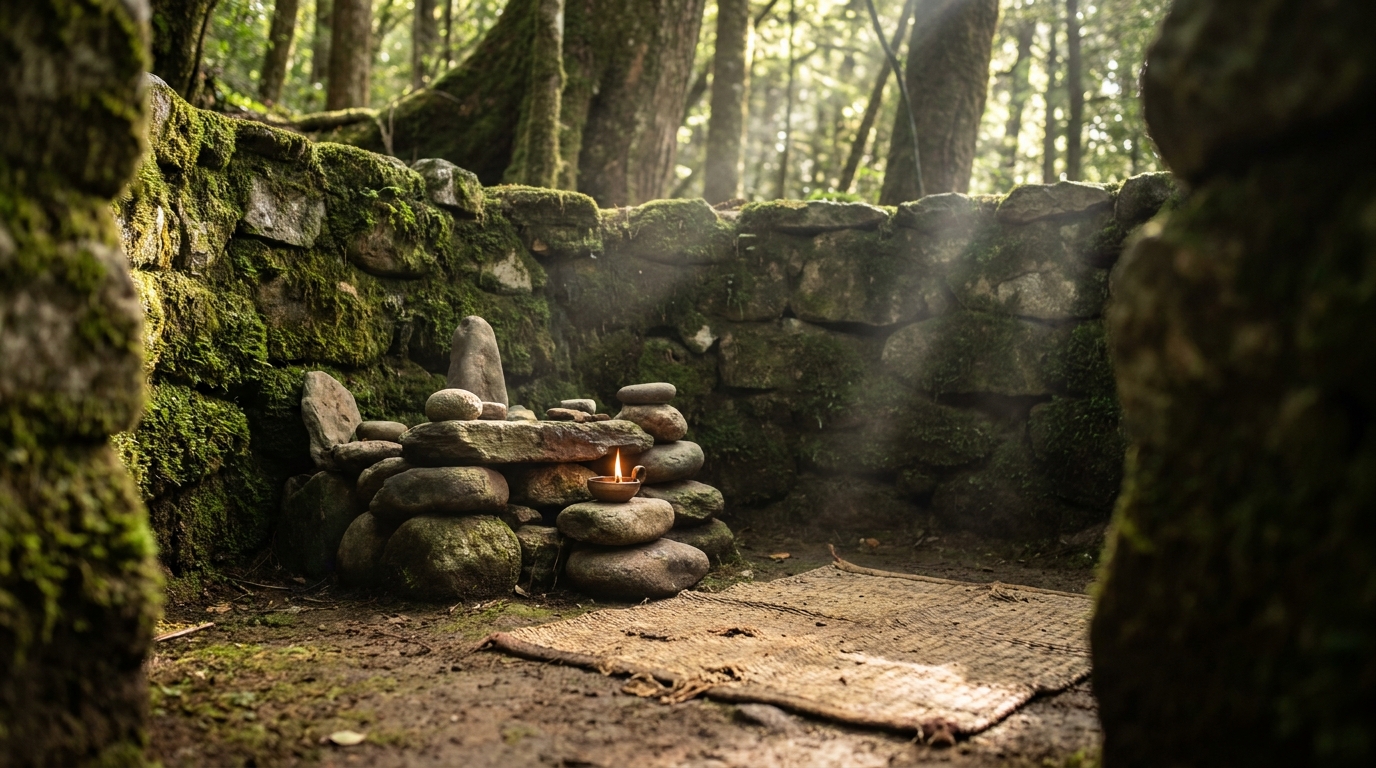
Creating a sacred space begins with choosing a location. The best place is one that feels peaceful, clean, and accessible.
It does not need to be hidden away, though privacy can help. It does not need to be in a separate room, though that is wonderful if available. The most important thing is that you can return to it regularly.
Look for a Quiet and Clean Area
If possible, choose a part of your home that is not too busy. A corner of a bedroom, living room, study, or even kitchen can work well.
Cleanliness supports clarity. In Bhakti traditions, cleanliness is considered an important part of spiritual life. This does not mean your whole home must always be spotless. Life is real, especially with children, roommates, pets, and full schedules. But the sacred space itself can be kept tidy as an act of love.
Wiping the altar, changing flowers, removing dust, and organizing prayer items can become devotional meditation.
Consider Light, Air, and Atmosphere
Natural light can be helpful. A space near a window may bring freshness and calm. If that is not possible, a soft lamp or candle can create warmth.
You may want to choose a place where incense can be safely offered, if that is part of your tradition and health allows. Some people are sensitive to scents, so a scent-free sacred space is also completely fine.
The goal is not to create a certain aesthetic. The goal is to create an atmosphere that helps you remember God with sincerity.
Make It Easy to Use Daily
A sacred space should invite you, not intimidate you.
If your altar is difficult to access, or if your prayer beads are always tucked away in a drawer, it may become harder to practice. Keep what you need nearby: beads, scripture, a notebook, a cushion, or a small cloth.
Spiritual practice grows through consistency. Even five minutes a day can become powerful when offered with devotion.
Sacred Space in a Small Home
If you live in a small apartment, shared room, dorm, or temporary housing, please do not feel discouraged. Bhakti is not limited by square footage.
You can create a portable sacred space using a small box or tray. Place a picture, prayer beads, a small scripture, or a candle on it. When you are ready to practice, open it. When you are finished, gently put it away.
God sees the heart, not the floor plan.
Please visit our website for more information on our articles: articles.
What to Include in Your Sacred Space
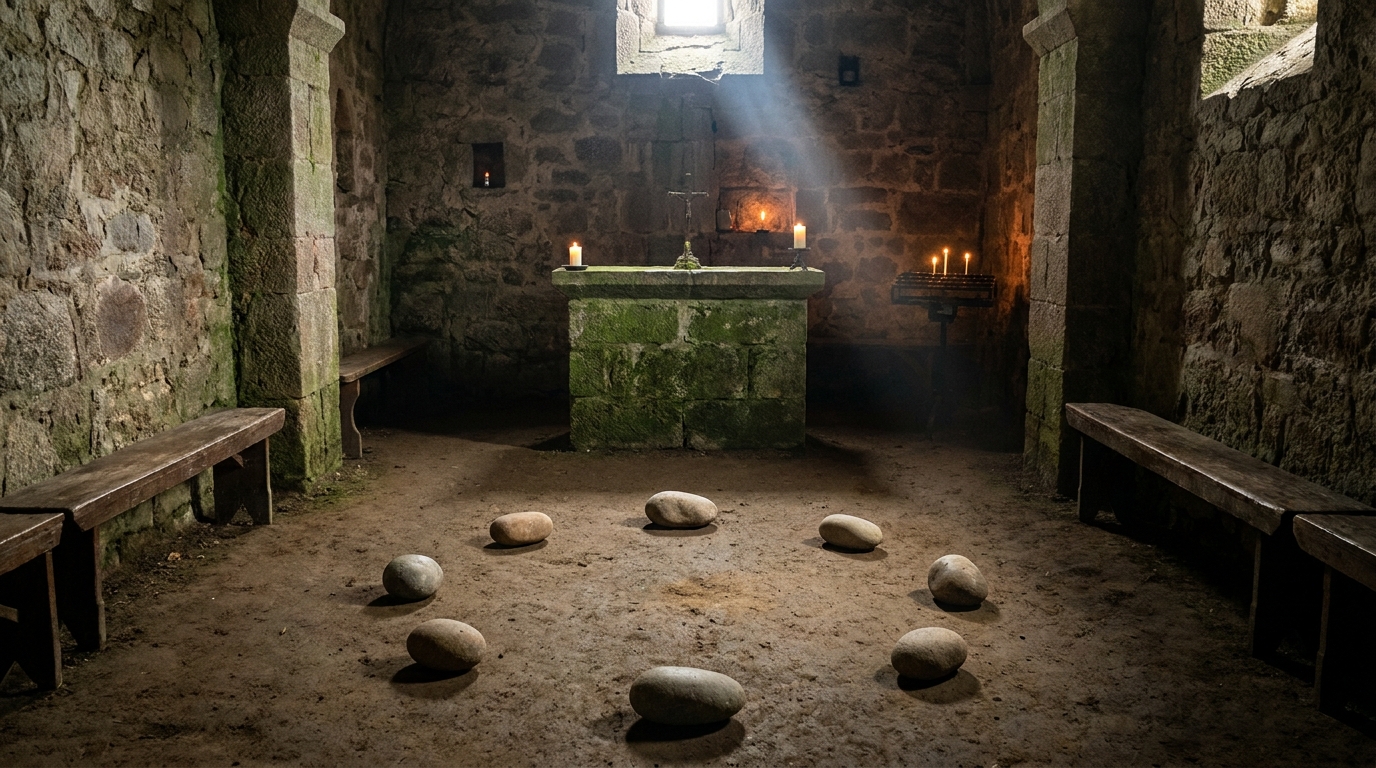
Every sacred space will look different. In Bhakti Yoga, many people include images of Krishna, Radha, Rama, Vishnu, Chaitanya Mahaprabhu, or revered saints and teachers. Others may include symbols from their own faith tradition, such as a cross, prayer book, icon, or candle.
The Bhakti mood is inclusive and respectful. If your heart is drawn toward God, your sacred space can reflect that sincere longing.
A Picture or Sacred Image
A sacred image helps focus the mind and heart. In Sanskrit, a divine form or sacred representation may be connected to the word murti, meaning form. In Bhakti, God is not considered impersonal or distant only. God is understood as a loving person who can receive our prayers and offerings.
A picture of Krishna playing the flute, Radha and Krishna, Lord Rama, or Sri Chaitanya can remind us of divine love, compassion, and beauty.
If you are new, choose an image that inspires reverence and tenderness in your heart.
A Clean Cloth or Altar Covering
A simple cloth can define the space. It may be white, saffron, blue, or any clean color that feels peaceful. The cloth does not need to be fancy. Its purpose is to show care.
When we set aside a cloth or table for sacred use, we train the mind to recognize, “This is a place for prayer. This is a place for remembrance.”
Scripture for Daily Wisdom
Including scripture in your sacred space can nourish your practice.
Some foundational Bhakti scriptures include:
- Bhagavad-gita: A conversation between Krishna and Arjuna about duty, devotion, the soul, and surrender.
- Srimad Bhagavatam: A beautiful Purana, or sacred text, full of stories and teachings about devotion to God.
- Chaitanya Charitamrita: A devotional biography and theological text about Sri Chaitanya Mahaprabhu, who widely shared the chanting of God’s names.
You may also include the Bible, Quran, Torah, Buddhist texts, poetry of saints, or any scripture that helps you turn toward God with humility and love.
Reading even one verse a day can transform the heart over time.
Prayer Beads or Japa Mala
A japa mala is a string of prayer beads used for chanting. Mala means garland. The beads help the hands, mind, and voice work together in prayer.
In many Bhakti traditions, a mala has 108 beads. A practitioner chants one mantra on each bead. This steady rhythm helps calm the mind and deepen attention.
If you do not have beads, you can still chant. You can use your breath, your fingers, or simply repeat a sacred name with love.
Flowers, Water, and Simple Offerings
Offerings are a beautiful part of Bhakti practice. Krishna says in the Bhagavad-gita:
“If one offers Me with love and devotion a leaf, a flower, fruit, or water, I will accept it.”
— Bhagavad-gita 9.26
This verse is very dear because it shows that God is not asking for wealth or show. A leaf, a flower, fruit, or water—offered with love—is enough.
You might place a small cup of fresh water, a flower, or fruit on your altar. After offering food to God, many Bhakti practitioners honor it as prasadam. Prasadam means mercy or grace. It is food that has been offered with devotion and then received as a blessing.
A Journal for Reflection
A journal can help you notice your spiritual growth. You may write prayers, questions, gratitude lists, realizations from scripture, or reflections after chanting.
Some simple prompts include:
- What am I grateful for today?
- What do I want to offer to God?
- Where do I need guidance?
- How did I experience grace today?
- What is one way I can serve someone?
Writing can become a form of prayer when offered sincerely.
Preparing the Space with Devotion
Once you choose your location and gather simple items, the next step is to prepare the space. This can be done gently and prayerfully.
Remember, creating a sacred space at home is not a performance. It is a personal offering. Let it be simple. Let it be honest. Let it be yours.
Clean with a Prayerful Mood
Begin by cleaning the area. Dust the surface. Sweep or vacuum nearby. Remove clutter. As you clean, you might silently pray:
“Dear Lord, as I clean this space, please help me clean my heart. May this home become a place of peace, service, and remembrance.”
In Bhakti, ordinary actions become sacred when offered with devotion. Cleaning is not just cleaning. It becomes seva, loving service.
Arrange Items with Care
Place your cloth, sacred image, scripture, beads, candle, or offerings in a way that feels respectful and uncluttered.
You may want the sacred image at the center or slightly elevated. Keep scripture off the floor if possible, as a sign of reverence. If using candles or incense, place them safely away from curtains, paper, or anything flammable.
Let the space be beautiful, but not overly complicated. A simple altar is often easier to maintain and more inviting for daily use.
Offer a Simple Dedication
When the space is ready, take a moment to dedicate it. You do not need formal words. You may say something like:
“Dear God, please accept this small space in my home. May it help me remember You. May it bring peace to everyone who enters this home. Please guide me in love, humility, and service.”
If you know a mantra or prayer, you can chant it. If you are unsure what to say, silence is also a prayer.
Invite the Whole Household Respectfully
If you live with family or roommates, explain the meaning of the space kindly. Let them know it is a place of prayer and quiet. Avoid pressuring anyone to participate.
A sacred space should create peace, not conflict. Bhakti grows through invitation, example, and love—not force.
Children may naturally become curious. You can invite them to offer a flower, ring a small bell, sing, or say thank you to God. Keep it joyful and age-appropriate.
Daily Practices for Your Home Sacred Space
A sacred space becomes alive through regular practice. Even a few minutes each day can build a deep spiritual rhythm.
The key is consistency with compassion. Some days you may spend an hour in prayer. Other days, you may only bow your head for one minute. Offer what you can.
Morning Prayer
Morning is a powerful time for spiritual practice. The mind is often clearer before the day becomes busy.
You might begin with:
- Lighting a candle or lamp
- Offering a short prayer
- Chanting one round on japa beads
- Reading one verse from scripture
- Sitting quietly for a few breaths
- Offering your day to God
A simple morning prayer could be:
“Dear Lord, please guide my thoughts, words, and actions today. May I serve with kindness. May I remember You in all I do.”
This sets a devotional intention for the day.
Chanting the Holy Names
Chanting is central to Bhakti Yoga because sacred sound carries divine presence. The names of God are not considered ordinary sound. They are a way to connect directly with God’s mercy.
You may chant the Hare Krishna maha-mantra, or another name of God that is meaningful in your tradition.
If the mind wanders, do not be discouraged. The mind wanders for everyone. Gently return to the sound. Bhakti is not about harsh self-judgment. It is about returning again and again with love.
Try chanting aloud softly, so your ears can hear the mantra. Listening is an important part of chanting.
Reading Sacred Wisdom
Keep a small scripture or devotional book in your sacred space. Read slowly. You do not need to rush through many pages.
A single verse can be enough for the day.
For example, Bhagavad-gita 6.30 says:
“For one who sees Me everywhere and sees everything in Me, I am never lost, nor is he ever lost to Me.”
Practically, this means we can learn to see God’s presence in our work, our relationships, nature, challenges, and blessings. Sacred reading helps train our vision.
After reading, ask: “How can I live this today?”
Offering Food with Gratitude
In Bhakti, cooking and eating can become spiritual acts. Before eating, you can offer your food to God with gratitude.
A simple offering prayer might be:
“Dear Lord, thank You for this food. Please accept it with my love. May it nourish me so I can serve You and others.”
If you follow a traditional Bhakti practice, you may prepare vegetarian food without tasting it first, offer it to Krishna, and then honor it as prasadam. But even if you are just beginning, gratitude before meals is a beautiful step.
Food offered with love changes the consciousness of the home.
Evening Reflection
Before sleeping, return to your sacred space for a few moments.
You may ask:
- Where did I remember God today?
- Where did I forget?
- Who did I serve?
- Whom do I need to forgive?
- What mercy did I receive?
Then offer the day back to God. Spiritual growth happens not through perfection, but through honest reflection and renewed intention.
Creating Sacred Atmosphere Throughout the Home
Your altar or prayer corner is the center, but sacred energy can gradually spread into the whole home.
Bhakti Yoga teaches that everything can be connected to God. Your kitchen, work desk, car, garden, and family table can all become places of remembrance.
Sound: Filling the Home with Mantra and Kirtan
Sound deeply affects consciousness. Playing kirtan, devotional music, or soft chanting can uplift the home environment.
You might play the Hare Krishna mantra while cooking, cleaning, or resting. You might sing together with family once a week. You might simply let sacred sound play quietly in the background.
In the Srimad Bhagavatam, hearing and chanting about God are described as powerful practices for purifying the heart. This is not purification in a harsh or shame-based sense. It means the heart becomes clearer, lighter, and more able to love.
Scent: Incense, Flowers, and Freshness
Many people use incense in sacred practice, but it is optional. Fresh flowers, clean air, or natural scents can also support a prayerful mood.
If you use incense, offer it consciously. Watch the smoke rise and think, “May my prayers rise like this. May my heart become fragrant with devotion.”
Again, safety and health matter. If incense is not suitable for your home, please do not feel less spiritual.
Food: Making the Kitchen a Place of Service
The kitchen can be one of the most sacred places in the home. When food is prepared with love and offered to God, cooking becomes worship.
Try bringing a prayerful mood into the kitchen:
- Wash your hands and pause before cooking.
- Play devotional music.
- Cook with gratitude.
- Avoid angry or harsh speech while preparing food, as much as possible.
- Offer the meal before eating.
Even a simple bowl of rice, fruit, or tea can become sacred when offered with love.
Relationships: The Real Test of Sacred Space
A beautiful altar is meaningful, but Bhakti must also enter our relationships.
If we chant but speak cruelly, we should humbly reflect. If we pray but ignore the suffering of others, we should ask for a softer heart. The sacred space helps us remember how to live.
Bhakti Yoga calls us to kindness, forgiveness, humility, and service. The home becomes sacred when people feel safe, respected, and loved.
A sincere spiritual home is not one without problems. It is one where people keep turning toward God and toward each other with honesty and compassion.
Honoring Different Backgrounds and Traditions
At The Bhakti House, all sincere seekers are welcome. You may come from a Hindu background, Christian background, Muslim background, Jewish background, Buddhist background, no religious background, or a journey that does not fit into labels.
Bhakti Yoga does not ask you to erase your story. It invites you to deepen your relationship with the Divine.
If You Are New to Sanskrit Terms
Sanskrit can feel unfamiliar at first, but the heart of the practice is simple.
Here are a few helpful terms:
- Bhakti: devotion, loving connection with God
- Yoga: union, connection, spiritual discipline
- Mantra: sacred sound or prayer
- Japa: personal repetition of mantra, often on beads
- Kirtan: devotional singing or chanting
- Seva: loving service
- Prasadam: food offered to God and received as grace
- Murti: sacred form or divine image
- Ashram: a place of spiritual practice or shelter
You do not need to know many Sanskrit words to begin. Love is the language God understands.
If You Share a Home with Different Beliefs
If others in your home do not share your practice, keep your sacred space respectful and peaceful. Avoid making it a point of tension.
You might choose a private area. You might explain that it is your place for prayer and meditation. You can reassure others that they are not required to participate.
The best way to share Bhakti is through your character. When people see you becoming more patient, grateful, and kind, they may naturally become curious.
If You Already Have a Faith Tradition
A sacred space can support your existing faith. You may chant Krishna’s names, pray to Jesus, recite Psalms, read the Quran, meditate on the Divine Mother, or sit quietly in love for God.
Bhakti Yoga offers tools: chanting, devotion, service, sacred food, scripture, and community. These tools can deepen reverence for God in many hearts.
The essence is sincere loving remembrance.
Common Challenges and Gentle Solutions
Many people begin with enthusiasm and then face obstacles. This is natural. Spiritual practice matures slowly, like a plant.
Do not give up because your practice is not perfect. Bhakti is a path of grace.
“I Don’t Have Enough Time”
Start very small.
Light a candle and say one prayer. Chant one mantra. Read one verse. Offer one flower. Sit for three breaths.
It is better to practice for five minutes daily than to wait for a perfect hour that never comes.
You can also connect ordinary actions to God. Chant while walking. Pray while washing dishes. Offer your work before opening your laptop.
“My Mind Is Too Restless”
A restless mind does not disqualify you. It simply means you are human.
In the Bhagavad-gita, Arjuna tells Krishna that the mind is restless and difficult to control. Krishna does not reject him. He teaches that the mind can be trained through practice and detachment.
When your mind wanders during chanting or prayer, gently return. Each return is a devotional victory.
“My Space Does Not Look Beautiful Enough”
God is not waiting for luxury. Krishna accepts a leaf, a flower, fruit, or water when offered with love.
Beauty can help the heart, but sincerity is the real ornament. A humble altar with one picture and one flower may be spiritually radiant.
Do what you can with what you have.
“I Feel Unworthy”
Many people feel this way. But Bhakti begins with the truth that God’s mercy is greater than our limitations.
You do not have to become pure before approaching God. Approaching God is how purification begins.
Come as you are. Bring your doubts, mistakes, wounds, and hopes. Offer them honestly. The path of devotion is held by compassion.
Deepening Your Practice Over Time
After your sacred space is established, you may feel inspired to deepen your practice. Let this happen gradually and joyfully.
Spiritual growth is not a race. It is a relationship.
Establish a Simple Daily Rhythm
You might choose a morning and evening practice:
Morning:
- Offer a prayer
- Chant for five to fifteen minutes
- Read one verse
- Offer your day
Evening:
- Give thanks
- Reflect honestly
- Chant or sing softly
- Offer the day back to God
This rhythm creates spiritual grounding.
Celebrate Holy Days at Home
Bhakti traditions include many sacred festivals, such as Janmashtami, the appearance day of Krishna; Gaura Purnima, honoring Sri Chaitanya Mahaprabhu; Rama Navami, celebrating Lord Rama; and Kartik, a special month of devotion.
You can honor these days at home by decorating your sacred space, cooking a special offering, chanting, reading scripture, or inviting friends for kirtan.
Festivals remind us that spiritual life is not only discipline. It is also joy.
Invite Community
While a home sacred space is personal, Bhakti grows beautifully in community. Sangha means spiritual association or community.
You may invite a friend to chant with you. You may attend a local kirtan, temple gathering, satsang, or Bhakti House event. Satsang means gathering in truth, or being in the company of those seeking spiritual wisdom.
Community helps us stay inspired and humble. We learn from others, serve together, and remember that we are not walking alone.
Serve Beyond the Altar
Your sacred space should inspire action.
Ask God: “How can I serve today?”
Service may look like feeding someone, listening deeply, volunteering, giving generously, forgiving, encouraging, protecting nature, or caring for your family with devotion.
In Bhakti, love becomes real through service.
A Simple Step-by-Step Guide to Begin Today
If you feel ready to create a sacred space at home, here is a gentle way to begin.
Step 1: Choose One Small Area
Find a clean, peaceful spot. It may be a shelf, table, corner, tray, or windowsill.
Do not wait for the perfect place. Begin with what is available.
Step 2: Clean and Clear It
Remove clutter. Wipe the surface. Make the area feel fresh.
As you clean, pray for your heart and home to be filled with peace.
Step 3: Add One Sacred Image or Symbol
Choose something that helps you remember God. This may be a picture of Krishna, Radha-Krishna, Rama, Chaitanya Mahaprabhu, a beloved saint, or a sacred symbol from your tradition.
Place it with care.
Step 4: Add Scripture or Prayer
Keep a sacred book, prayer card, or written mantra nearby. This gives your mind a place to receive wisdom.
Even one verse can guide a whole day.
Step 5: Offer Something Simple
Offer water, a flower, fruit, or a candle. Remember Krishna’s promise in the Bhagavad-gita that He accepts simple offerings made with love.
The offering is not about the object. It is about the heart.
Step 6: Begin a Daily Practice
Choose one practice you can do every day:
- Chant for five minutes
- Say a morning prayer
- Read one verse
- Offer your food
- Write gratitude
- Sit quietly and remember God
Let it be simple enough that you can continue.
Making Your Sacred Space a Living Relationship
A sacred space is not only decoration. It is a doorway into relationship.
When you sit there, you are not just “doing a spiritual activity.” You are turning toward the Divine Person who loves you, knows you, and patiently waits for your heart.
Come with Honesty
Some days you may feel inspired. Some days you may feel dry. Some days you may feel distracted. Still, come.
Say, “Dear Lord, I am here.”
That sincerity matters.
Come with Gratitude
Gratitude opens the heart. Before asking for anything, try thanking God for one blessing.
Thank You for breath.
Thank You for food.
Thank You for another chance.
Thank You for guidance.
Thank You for the holy names.
Thank You for love.
Gratitude turns an ordinary moment into worship.
Come with a Desire to Serve
Bhakti matures when we ask not only, “What can I receive?” but also, “How can I serve?”
This does not mean neglecting your needs. It means allowing love to flow outward.
After prayer, look for one practical act of kindness. Your sacred space then becomes connected to the world.
Let Your Home Become a Place of Peace
Creating a sacred space at home is a beautiful act of faith. It says, “In the middle of my daily life, I want to remember what is holy. I want my home to hold prayer. I want my heart to grow in love.”
You may begin very simply. A small cloth. A picture. A candle. A verse. A flower. A whispered mantra.
Over time, that small corner may become the most important place in your home—not because of how it looks, but because of what happens there. Tears may be offered there. Gratitude may be born there. Confusion may become clarity. Restlessness may become prayer. Loneliness may become companionship with God.
Bhakti Yoga reminds us that God is not far away. Through chanting, prayer, service, sacred food, scripture, and sincere remembrance, we can welcome divine presence into our homes and hearts.
Everyone is welcome on this path. You do not need to be perfect, learned, or advanced. You only need a sincere beginning.
May your home become a place of peace. May your sacred space become a shelter for your heart. And may you feel encouraged today to take one sincere step toward God—through one prayer, one chant, one offering, one act of service, or one quiet moment of love.
FAQs
What is a sacred space at home?
A sacred space at home is a designated area within the home that is intentionally set aside for spiritual practice, meditation, prayer, or simply for quiet reflection and relaxation. It is a place where individuals can connect with their inner selves and find peace and tranquility.
How can I create a sacred space at home?
To create a sacred space at home, you can start by choosing a quiet and peaceful area in your home, such as a corner of a room or a small nook. Then, you can personalize the space with meaningful items such as candles, incense, religious or spiritual symbols, inspirational quotes, or artwork. It’s important to keep the space clean and clutter-free to maintain a sense of tranquility.
What are the benefits of having a sacred space at home?
Having a sacred space at home can provide a variety of benefits, including a sense of calm and relaxation, a place for self-reflection and meditation, and a feeling of connection to something greater than oneself. It can also serve as a reminder to prioritize self-care and spiritual well-being in the midst of a busy and hectic lifestyle.
Do I need to follow a specific religious or spiritual tradition to create a sacred space at home?
No, creating a sacred space at home does not require following a specific religious or spiritual tradition. It is a personal and individual practice, and the space can be tailored to reflect your own beliefs, values, and preferences. Whether you follow a specific religion or simply seek a space for quiet contemplation, a sacred space can be customized to suit your needs.
How can I maintain and use my sacred space at home?
To maintain your sacred space at home, it’s important to keep it clean, organized, and free from distractions. Regularly spending time in the space for meditation, prayer, or quiet reflection can help you to connect with your inner self and find peace. You can also use the space for activities such as journaling, reading, or practicing mindfulness exercises.

