

A home altar is a sacred place in your home where you can remember God, offer prayers, chant, read scripture, and reconnect with your spiritual purpose.
In Bhakti Yoga, the path of loving devotion, we understand that spiritual life does not belong only in temples, monasteries, or holy places. It can live beautifully in our kitchens, bedrooms, living rooms, and daily routines. A home altar helps us bring that loving awareness into ordinary life.
The Sanskrit word bhakti means devotion, love, or loving service to God. Bhakti Yoga is the practice of awakening that love through chanting, prayer, worship, service, sacred study, and conscious living. A home altar supports all of these practices.
Whether you are new to spiritual life, returning after many years, or already practicing daily, creating a home altar can be a deeply meaningful step. It does not need to be elaborate, expensive, or perfect. What matters most is sincerity.
In the Bhagavad-gita, Lord Krishna says:
“Whoever offers Me with love and devotion a leaf, a flower, fruit, or water, I will accept it.”
This verse reminds us that God is not looking for wealth or show. God receives the love behind the offering. A simple altar with a small flower and a sincere prayer can become a doorway to grace.
Understanding the Purpose of a Home Altar
A home altar is more than decoration. It is a spiritual anchor.
Life moves quickly. We wake up, check messages, go to work, care for family, face responsibilities, and carry invisible emotional burdens. A home altar gently calls us back to what is eternal. It says, “Pause. Breathe. Remember. You are loved by God.”
A Place for Daily Connection
The heart needs spiritual nourishment, just as the body needs food. A home altar gives you a place to sit, chant, pray, and offer your day to the Divine.
Even five minutes each morning can change the mood of the entire day. Lighting a candle, offering a simple prayer, or chanting the holy names can bring steadiness and peace.
In Bhakti Yoga, we often practice japa, which means softly chanting a sacred mantra, usually on beads. The most well-known mantra in the Bhakti tradition is the Maha Mantra:
Hare Krishna Hare Krishna
Krishna Krishna Hare Hare
Hare Rama Hare Rama
Rama Rama Hare Hare
The word mantra means a sacred sound that helps free the mind. “Hare” is a call to the divine energy of God, “Krishna” means the all-attractive Lord, and “Rama” means the source of spiritual joy. Chanting is not limited by background, language, or qualification. Anyone can chant with sincerity.
A Place to Offer Love
In Bhakti, worship is relational. We are not simply trying to feel calm or become better versions of ourselves, although those things may happen. We are learning to love and serve God.
At your altar, you may offer flowers, fruit, water, incense, a candle, or heartfelt words. The offering itself may be small, but the inner mood is everything.
A child may pick a flower for a parent with full love. The flower may be simple, but the parent treasures it. In the same way, God receives our sincere offerings.
A Place to Remember Your True Self
Bhakti scriptures teach that we are not merely the body, mind, career, name, or social identity. We are eternal souls, beloved parts of God.
A home altar helps us remember this truth. When we bow our head, chant, or sit quietly before the Divine, we slowly loosen the grip of ego and anxiety. We begin to see ourselves and others with more compassion.
Choosing the Right Place for Your Home Altar
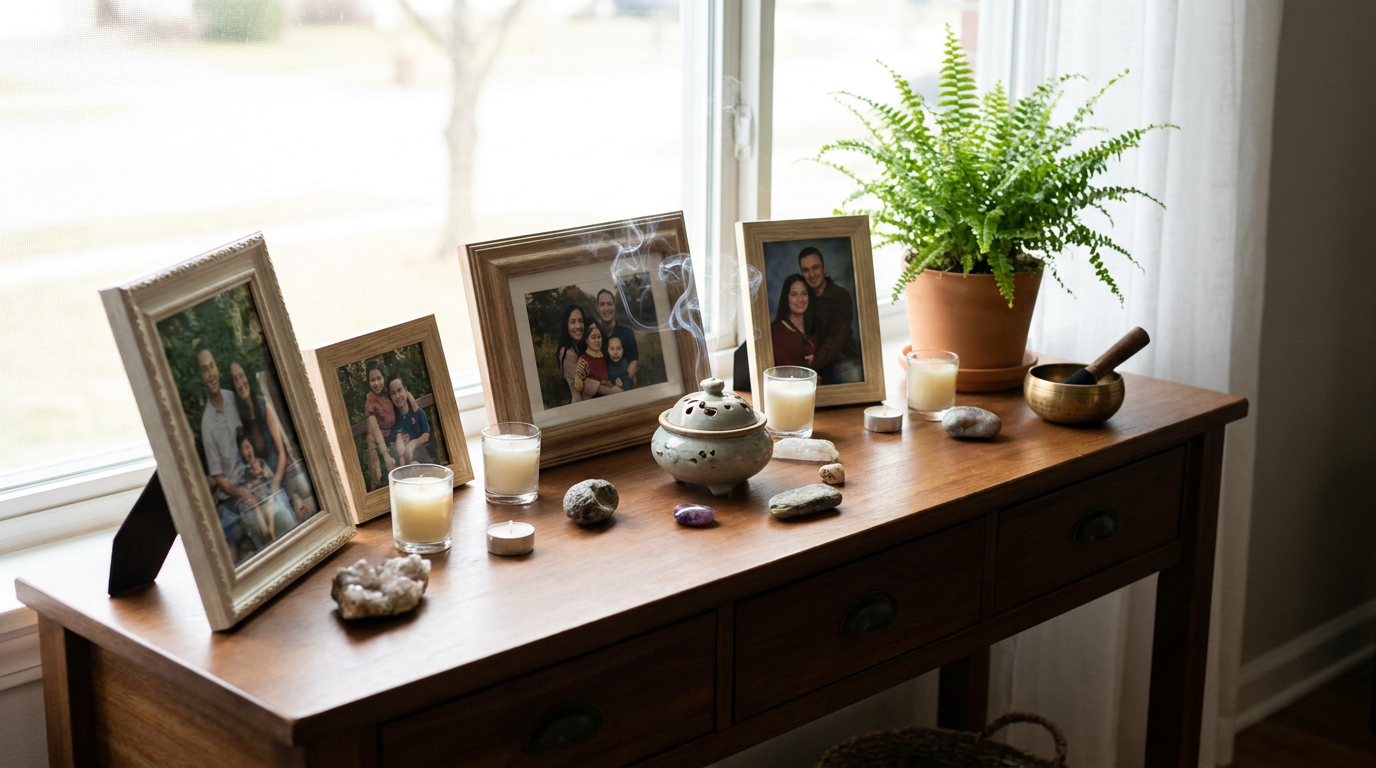
Creating a home altar begins with choosing a space. The space does not need to be large. It simply needs to be clean, respectful, and accessible.
Some people have a dedicated prayer room. Others use a shelf, a small table, a windowsill, or the top of a dresser. If you live in a shared home, a studio apartment, or a busy family environment, do not feel discouraged. God happily accepts a small corner offered with love.
Find a Clean and Peaceful Spot
Choose a place where you can sit comfortably and pray without too many distractions. Ideally, the altar should not be in a place that feels cluttered or chaotic.
If possible, avoid placing the altar directly on the floor. A raised surface such as a small table or shelf gives a sense of honor. Keep the area clean and fresh. In Bhakti Yoga, cleanliness is considered supportive of spiritual consciousness.
This does not mean your home must be perfect. A lived-in home can still be sacred. Simply care for the altar space with attention and respect.
Consider the Flow of Daily Life
Ask yourself: Where will I actually pause and pray?
Sometimes we imagine an ideal altar in a quiet room, but if we never go there, the altar becomes forgotten. It may be more helpful to place it somewhere visible, where it gently reminds you throughout the day.
A small altar in the kitchen may inspire you to offer food before eating. An altar near your bed may encourage morning and evening prayer. An altar in the living room may bring spiritual presence into family life.
Respect Shared Spaces
If you live with others who do not share your practice, create your altar with humility and sensitivity. Bhakti is not forceful. It is loving.
You may choose a private area in your room or a simple shelf that feels personal. Let your practice become an example of kindness, patience, and joy rather than something that creates tension.
A home altar should increase love in the home, not conflict.
Please visit our website for more information on our articles: articles.
What to Place on a Bhakti Home Altar
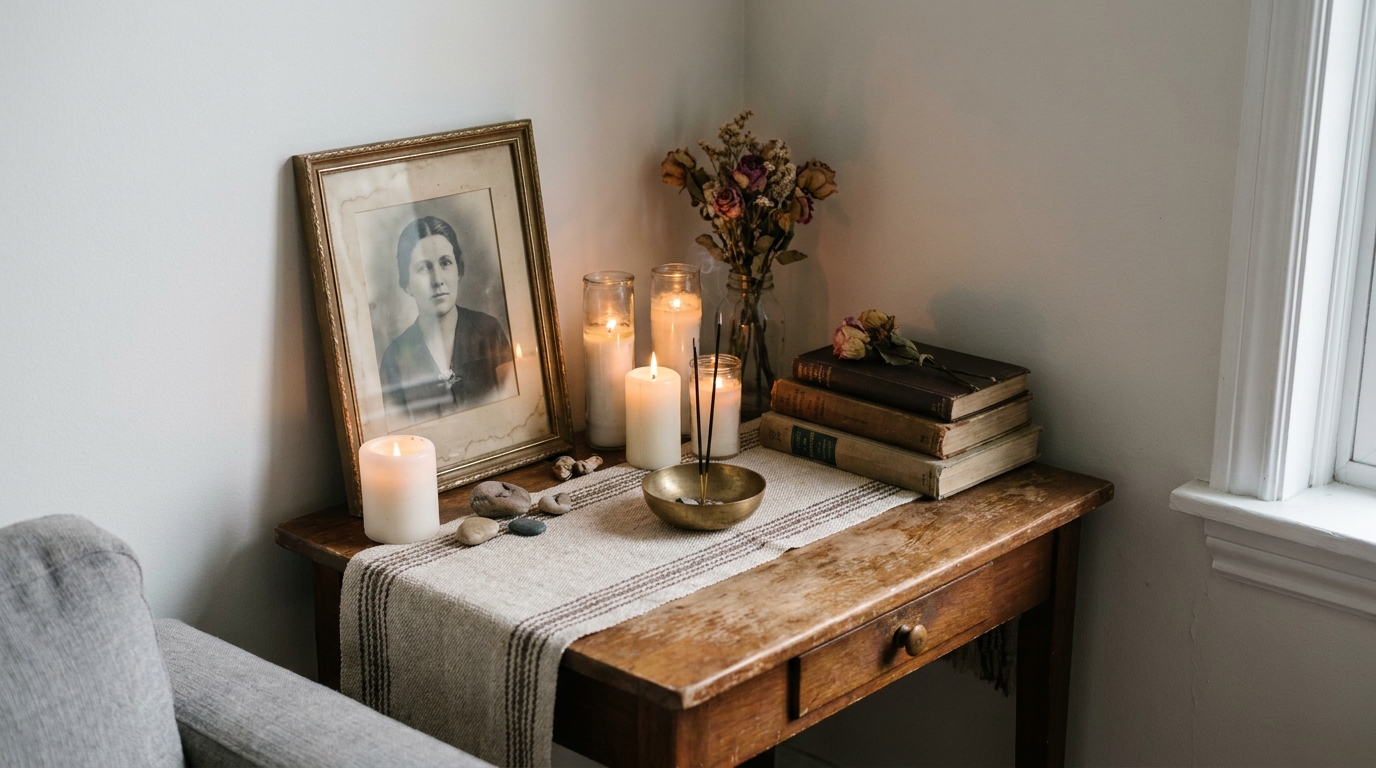
There is no single required design for every home altar. Still, in the Bhakti tradition, certain elements are commonly included because they help focus the heart on God and devotional service.
Sacred Images or Deities
Many Bhakti practitioners place sacred images of Krishna, Radha, Rama, Sita, Vishnu, Narasimha, Chaitanya Mahaprabhu, or other forms of the Lord on their altar.
In Sanskrit, the word murti refers to a sacred form of the Divine. In Bhakti, we understand that God is unlimited and can kindly appear in a form we can see and serve. This is not idol worship in the ordinary sense. It is a loving relationship with God through a consecrated or honored form.
If you are new, you may begin with a picture. A simple image of Krishna, Radha and Krishna, or Lord Chaitanya and His associates can become a beautiful focus for prayer and chanting.
You may also include images of saints, spiritual teachers, or great devotees who inspire your practice. They remind us that the path of devotion has been walked by countless sincere souls before us.
A Clean Cloth
Many people place a clean cloth on the altar table or shelf. This helps make the altar feel intentional and set apart.
You might choose a simple cotton cloth, a silk cloth, or any clean fabric that feels respectful. Colors such as white, yellow, red, blue, or saffron are often used, but there is no need to become overly concerned. Simplicity is welcome.
Flowers, Leaves, and Natural Offerings
Fresh flowers bring beauty and life to the altar. In the Bhakti tradition, flowers are often offered to God as an expression of love.
If fresh flowers are not available, even a single leaf or a small plant nearby can be meaningful. Remember Krishna’s words in the Bhagavad-gita: a leaf, a flower, fruit, or water offered with love is accepted.
Tulasi, also spelled Tulsi, is a sacred plant especially dear to Krishna. Tulasi leaves are often offered in Krishna worship. If you have a Tulasi plant, care for her respectfully. If not, do not worry. Begin with what is available.
Water
A small cup of clean water can be placed on the altar as an offering. Water is simple, pure, and available to most people.
Offering water can become a daily practice. You may place it on the altar in the morning with a short prayer, then later respectfully pour it at the base of a plant or in a clean place.
Incense, Candle, or Ghee Lamp
Light is a powerful symbol of divine presence. Many practitioners light a candle or a small ghee lamp during prayer. Ghee is clarified butter, often used in traditional worship.
Incense can help create a peaceful atmosphere, but it is not required. If you have allergies, asthma, pets, or household concerns, you can avoid incense and simply offer a candle or even a quiet prayer.
Safety is important. Never leave flames unattended.
Scriptures and Prayer Books
Keeping sacred texts near your altar encourages daily study. In the Bhakti tradition, important scriptures include the Bhagavad-gita, Srimad-Bhagavatam, Chaitanya Charitamrita, and devotional songbooks.
The Bhagavad-gita is a conversation between Lord Krishna and Arjuna about duty, devotion, the soul, and surrender to God. It is one of the most loved spiritual texts in the world.
Even reading one verse a day can nourish the heart. You do not need to understand everything immediately. Approach scripture as a living guide, with humility and patience.
Japa Beads
Japa beads are used for mantra meditation. A traditional set often has 108 beads, but beginners may use any number or simply chant without beads.
Place your beads in a clean bead bag or pouch, and keep them respectfully near the altar. When you sit to chant, hold each bead and repeat the mantra with attention.
The purpose is not mechanical counting. The purpose is calling out to God with sincerity.
How to Set Up Your Home Altar Step by Step
Setting up a home altar can be a beautiful devotional project. You may do it alone, with family, or with friends. Take your time. Let it be joyful.
Step 1: Clean the Space
Begin by cleaning the area where the altar will be placed. Wipe the surface, remove clutter, and make the space feel fresh.
As you clean, you can pray: “May this place become a space of remembrance, love, and service.”
Cleaning itself can be devotional. In Bhakti Yoga, service is not limited to formal worship. Sweeping, arranging, washing, and preparing can all be offerings when done with love.
Step 2: Place the Cloth and Sacred Images
Lay down a clean cloth. Then place the sacred image or images in a central position.
If you have several pictures, arrange them neatly. Avoid overcrowding the altar. A clear and simple altar often helps the mind focus more easily.
You may place Krishna or your chosen form of the Lord in the center. Teachers, saints, or guides can be placed respectfully nearby.
Step 3: Add Offerings
Place a small cup of water, fresh flowers, fruit, or other offerings on the altar. If offering fruit or food, make sure it is fresh and vegetarian.
In many Bhakti traditions, food offered to Krishna is vegetarian and prepared with care. After food is offered, it becomes prasadam. The word prasadam means mercy or grace. It is food that has been lovingly offered to God and then received as a blessing.
Offering food is one of the most practical and transformative home altar practices. Cooking becomes prayer. Eating becomes gratitude.
Step 4: Create a Place to Sit
Place a small cushion, mat, or chair near your altar. Make it easy to sit comfortably.
You do not need a special posture. Sit in a way that allows you to be present. If sitting on the floor is difficult, use a chair. Bhakti is not about bodily performance. It is about the heart.
Step 5: Offer a Simple Prayer
Once your altar is arranged, take a moment to pray.
You might say:
“Dear Lord, please accept this simple place in my home. May it help me remember You, serve You, and grow in love. Please bless all who live here and all who come here.”
There is no need for complicated words. Speak honestly. God knows your heart already.
Daily Practices at Your Home Altar
A home altar becomes truly alive through daily practice. It is better to do something small every day than something elaborate only once in a while.
Spiritual growth is often gentle and gradual. Like watering a plant, regular care brings life.
Morning Prayer
Morning is a powerful time for spiritual practice. Before the demands of the day take over, visit your altar.
You can bow your head, offer gratitude, and ask for guidance. A simple morning prayer might be:
“Dear Krishna, please help me remember You today. Please guide my thoughts, words, and actions. May I serve others with kindness.”
This prayer can change the direction of your day.
Chanting the Holy Names
Chanting is central to Bhakti Yoga. The Sanskrit word kirtan means congregational chanting, often with music. Japa means personal mantra meditation, often chanted softly on beads.
At home, you can practice either. You may chant the Maha Mantra quietly for five minutes or sing with instruments and family members.
The Srimad-Bhagavatam teaches that hearing and chanting about God purifies the heart. This means that sacred sound gradually clears away selfishness, fear, anger, and forgetfulness. It awakens our natural love.
Start where you are. Chant one round on beads, ten minutes, or even three sincere repetitions. The holy name is merciful.
Offering Food
Before eating, you can offer your food at the altar. This is a beautiful way to make daily life sacred.
Prepare vegetarian food with care. Place a portion on a small plate reserved for offerings, set it on the altar, and pray:
“Dear Lord, please accept this offering made with love.”
You may chant the Maha Mantra or sit quietly for a few moments. Then remove the plate and honor the food as prasadam.
This practice teaches gratitude. We begin to see food not as something we possess, but as a gift.
Reading Scripture
Spend a few minutes reading from the Bhagavad-gita or another Bhakti text. Read slowly. Let the meaning enter your life.
You might ask:
- What is this verse teaching me?
- How can I practice this today?
- Where do I need more humility, faith, or love?
Scripture is not meant only for intellectual study. It is meant to guide transformation.
Evening Reflection
At the end of the day, return to your altar. Offer thanks. Reflect honestly.
You might say:
“Thank You for carrying me through this day. Please forgive my mistakes. Please help me grow in love.”
This simple practice softens the heart. It helps us release guilt, pride, and worry into God’s care.
Keeping Your Altar Clean and Sacred
Caring for your altar is part of the devotional relationship. Just as we would keep a guest’s room clean for someone dear to us, we care for the altar as a place where God is honored.
Refresh Offerings Regularly
Change water daily if possible. Remove flowers when they begin to fade. Do not leave old food on the altar.
These small acts cultivate attentiveness. They remind us that devotion is living, not static.
If you forget sometimes, do not be discouraged. Simply begin again.
Keep the Area Free from Clutter
Try not to use the altar as a storage space for keys, mail, phones, or random objects. The altar has a special purpose.
When the altar becomes cluttered, the mind may also feel cluttered. A clean altar invites a clear heart.
Approach with Respect
You may wish to wash your hands before worship, chanting, or making offerings. This is a simple way to prepare yourself.
Respect does not mean fear. It means loving awareness. We approach the altar as we would approach someone deeply beloved.
Involve Children and Family
If you have children, invite them gently. They may offer a flower, ring a bell, sing, or say a prayer.
Do not force. Let the altar be associated with warmth, joy, and love. Children often understand devotion naturally when it is presented with kindness.
Family altar time can be very simple: one song, one prayer, one offering. These small moments can leave lifelong impressions.
Common Questions About Home Altars
Many people feel unsure when beginning. That is natural. Here are some common questions asked by people creating a home altar for the first time.
Do I Need to Be Hindu to Have a Bhakti Altar?
No. Bhakti Yoga is a path of love for God, and sincere seekers from all backgrounds are welcome.
Some people come from Hindu families. Others come from Christian, Jewish, Muslim, Buddhist, interfaith, secular, or no religious background. Bhakti does not ask us to pretend or perform. It invites us to sincerely turn toward God through love, chanting, prayer, and service.
If you are drawn to Krishna or the practices of Bhakti, you can begin respectfully and humbly.
What If I Do Not Know Any Sanskrit Prayers?
That is completely okay.
Sanskrit prayers are beautiful and powerful, but God understands every language. You can pray in English or in your mother tongue. You can speak formally or simply.
A sincere “Please guide me” may be more powerful than a memorized prayer spoken without attention.
Over time, you may learn Sanskrit mantras and songs. Learn gradually, with joy.
Can My Altar Be Very Small?
Yes. A small home altar can be deeply sacred.
You may have one picture, one candle, and one small cup of water. You may keep your altar inside a cabinet and open it for prayer. You may create a travel altar with a small image and beads.
The size of the altar does not measure the depth of devotion.
What Direction Should the Altar Face?
Some traditions recommend certain directions, such as facing east. If that is possible, you may consider it.
However, the most important thing is that the altar is clean, respectful, and used regularly. Do not let technical details stop you from beginning.
Bhakti is practical. Start with what you can do sincerely.
What If I Miss Days?
Everyone misses days sometimes. Spiritual life is not about shame. It is about returning.
If you miss your practice, simply come back to the altar and pray, “I am here again. Please help me.”
God is not waiting to reject us. God is inviting us back, again and again.
Deepening Your Home Altar Practice
Once your altar becomes part of your daily life, you may feel inspired to go deeper. Let this deepening be natural. Devotion grows best when nourished with humility, consistency, and good association.
Add Kirtan to Your Home
Kirtan is the joyful chanting of God’s names, often with call-and-response singing. You can play recorded kirtan, sing alone, or gather with friends.
Music opens the heart. Even if you do not consider yourself a singer, you can chant softly. The purpose is not performance. The purpose is offering.
In the tradition of Sri Chaitanya Mahaprabhu, the chanting of the holy names is especially emphasized as the spiritual practice for this age. Chaitanya Mahaprabhu taught that the holy name can awaken love of God in every heart.
Offer Your Work and Responsibilities
Your altar is not separate from your life. It is meant to transform your life.
Before leaving for work, school, or service, pause at the altar and offer your responsibilities to God. You can pray:
“May my work today be honest, helpful, and pleasing to You.”
This is Bhakti Yoga in action. We learn to serve God not only during prayer but through our words, decisions, relationships, and duties.
Practice Seva
The Sanskrit word seva means service. In Bhakti, service is an expression of love.
Your altar practice can inspire you to serve others: feeding people, caring for family, helping your community, supporting spiritual gatherings, listening with compassion, or offering your talents for a higher purpose.
Devotion that stays only on the altar is incomplete. Devotion naturally flows outward as kindness.
Celebrate Holy Days
You may gradually learn about sacred days in the Bhakti calendar, such as Janmashtami, the appearance day of Lord Krishna; Gaura Purnima, the appearance day of Sri Chaitanya Mahaprabhu; Rama Navami, the appearance day of Lord Rama; and Ekadashi, a day often observed with increased prayer and simplicity.
Your home altar can become the heart of these celebrations. You may offer special flowers, sing, read scripture, prepare prasadam, or invite friends.
Celebrate according to your capacity. Joy and sincerity matter most.
A Simple Home Altar Routine for Beginners
If you are wondering how to begin, here is a gentle daily routine. You can adjust it to your life.
Morning: Five to Fifteen Minutes
Sit at your altar.
Take a few deep breaths.
Offer a prayer of gratitude.
Chant the Maha Mantra for a few minutes.
Read one verse from the Bhagavad-gita.
Offer your day to God.
This small morning practice can help you carry remembrance into everything you do.
Mealtime: Offer Your Food
Before eating, place your food before the altar or mentally offer it if you are away from home.
Say a simple prayer.
Receive the food as prasadam, a gift of grace.
This turns eating into a sacred exchange.
Evening: Return and Reflect
Before sleep, come back to the altar.
Offer thanks for the day.
Ask forgiveness for mistakes.
Pray for guidance and protection.
Chant softly if you can.
Even two minutes at night can bring peace to the heart.
The Inner Mood of Worship
The external altar is important, but the inner altar of the heart is even more important.
We may have beautiful cloths, lamps, flowers, and pictures, but the real offering is our sincerity. Bhakti Yoga invites us to gradually offer our pride, fears, hopes, talents, relationships, and entire life to God.
Humility
Humility does not mean thinking we are worthless. It means recognizing that we are dependent on divine grace.
At the altar, we practice humility by bowing, listening, and asking for help. We admit that we do not have to control everything. We allow God to guide us.
Gratitude
Gratitude is one of the simplest doors into devotion.
Thank God for breath, food, shelter, friendship, lessons, protection, and even challenges that help us grow. Gratitude softens the heart and makes us more aware of grace.
Sincerity
Sincerity means bringing our real self before God.
Some days we feel peaceful. Some days we feel distracted, tired, or doubtful. Bring all of it. God does not require a polished version of us.
A sincere prayer from a struggling heart is precious.
Patience
Spiritual growth takes time. We may not feel deep devotion immediately. The mind may wander during chanting. We may forget to offer food or skip practice.
Be patient. Every sincere effort matters. Bhakti grows through steady practice and mercy.
Creating a Home Altar as a Sacred Beginning
Creating a home altar is not just a design project. It is an invitation.
It is an invitation to begin again each day. To chant when the mind is restless. To pray when life feels uncertain. To offer food with gratitude. To serve others with kindness. To remember that God is near.
Your altar may be simple or elaborate. It may be in a quiet room or a small corner. It may have fresh flowers every day or only a single picture and a heartfelt prayer. What makes it sacred is love.
The path of Bhakti Yoga is open, practical, and deeply personal. Through chanting, prayer, service, scripture, and offerings, the heart gradually awakens. We begin to feel that spiritual life is not far away. It is here, in this home, in this breath, in this moment of turning toward God.
Everyone is welcome on this path. Whatever your background, whatever your past, whatever your level of knowledge, you can begin with one sincere step. Offer one prayer. Chant one mantra. Light one candle. Give one flower. Serve one person with love.
God sees the heart, and no sincere step toward Him is ever lost.
FAQs
What is a home altar?
A home altar is a designated space within a home where individuals can engage in spiritual or religious practices, such as prayer, meditation, and reflection. It typically includes items such as candles, incense, religious symbols, and personal mementos.
How to set up a home altar?
To set up a home altar, choose a quiet and peaceful location in your home. Place a small table or shelf in this space and decorate it with items that hold personal or religious significance, such as statues, pictures, candles, and incense. Keep the area clean and free from clutter to maintain a sacred atmosphere.
What are the benefits of having a home altar?
Having a home altar can provide a dedicated space for spiritual practice and reflection, allowing individuals to connect with their faith or inner selves. It can also serve as a reminder to prioritize spiritual well-being and provide a sense of comfort and peace in the home.
How to maintain a home altar?
To maintain a home altar, regularly clean and dust the area to keep it tidy and inviting. Replace candles and incense as needed, and periodically rearrange or update the items on the altar to reflect changes in your spiritual journey or personal growth.
Is a home altar specific to a certain religion?
No, a home altar can be tailored to any religious or spiritual tradition, or even be personalized to reflect an individual’s unique beliefs and practices. It is a versatile and customizable space that can accommodate a wide range of spiritual expressions.

