
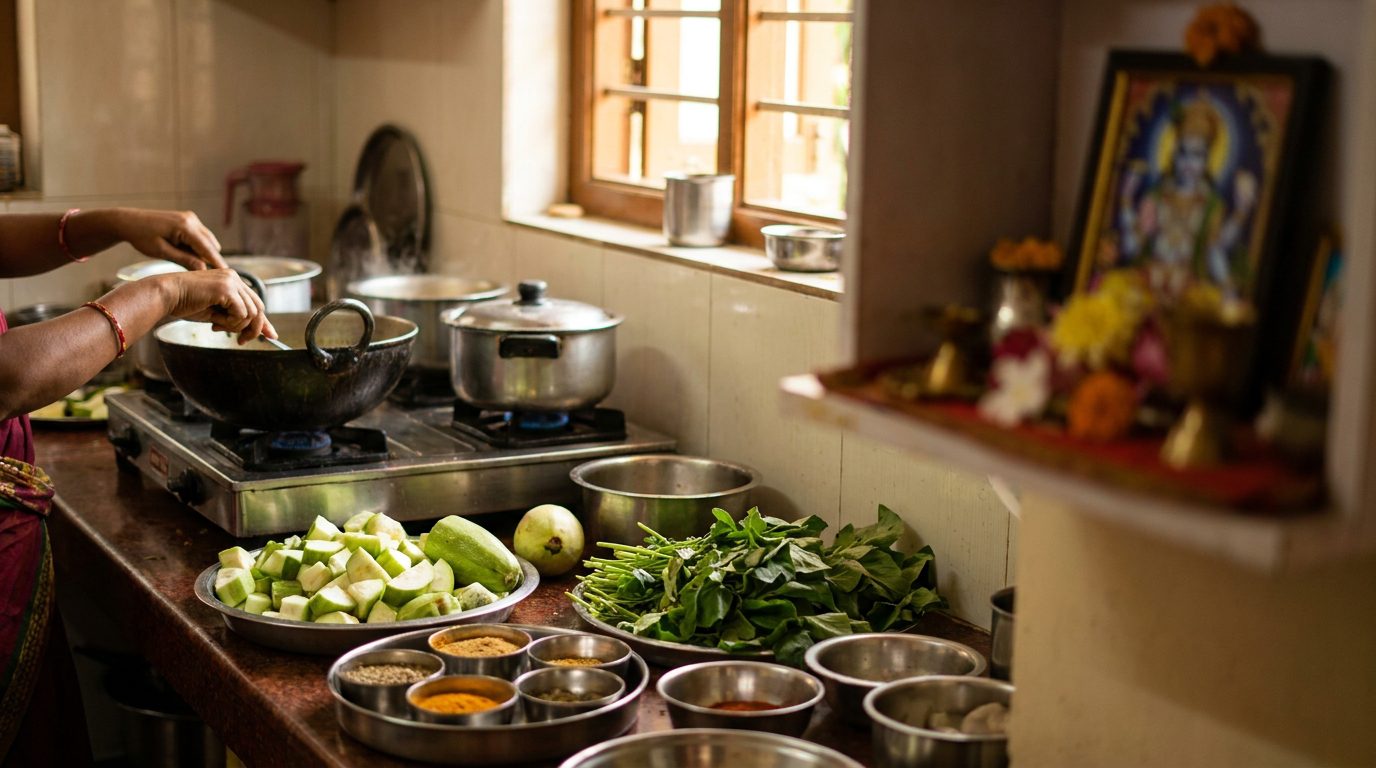
Cooking for Krishna is one of the sweetest and most practical ways to bring devotion into daily life. Whether you are new to Bhakti Yoga or have been walking this path for many years, the kitchen can become a sacred place. A simple meal can become an offering of love. A pot of rice, a bowl of soup, a plate of fruit, or a homemade sweet can become spiritualized when prepared and offered with sincerity.
In Bhakti Yoga, the path of loving devotion to God, we learn that everything we have is already a gift from the Divine. Cooking for Krishna is a way of saying, “Thank You. Please accept this small offering from my heart.”
Krishna is a beautiful Sanskrit name for God meaning “the all-attractive one.” In the Bhagavad-gita, one of the foundational scriptures of Bhakti Yoga, Krishna says:
“If one offers Me with love and devotion a leaf, a flower, a fruit, or water, I will accept it.”
— Bhagavad-gita 9.26
This verse is very important. Krishna does not ask for something expensive, complicated, or impressive. He asks for love and devotion. This means that anyone, in any home, from any background, can begin cooking for Krishna.
Cooking for Krishna means preparing food with the intention of offering it to God before eating. In Bhakti Yoga, food that has been lovingly offered to Krishna is called prasadam.
Understanding Prasadam
The Sanskrit word prasadam means “mercy” or “grace.” When food is prepared with devotion and offered to Krishna, it becomes spiritually blessed. It is no longer just ordinary food. It becomes Krishna’s mercy.
This does not mean the food changes in a way our eyes can easily see. Rather, the consciousness behind the food changes. The heart of the cook becomes involved. The meal becomes connected to prayer, gratitude, and service.
When we eat prasadam, we are not simply feeding the body. We are nourishing the soul.
The Kitchen as a Sacred Space
In many Bhakti homes and temples, the kitchen is treated like an extension of the altar. It is a place of service, cleanliness, prayer, and care. But this does not mean your kitchen has to look perfect.
A sacred kitchen is not defined by marble counters, special equipment, or professional cooking skills. It is defined by intention.
Before cooking, you might pause for a moment and pray:
“Dear Krishna, please help me cook this meal with love. May this food be pleasing to You. May everyone who eats it feel nourished and uplifted.”
That simple prayer can change the whole atmosphere.
Cooking as Seva
Another important Sanskrit word is seva, which means “service.” In Bhakti Yoga, service is not forced or dry. It is loving action. Cooking for Krishna is seva because it is done for the pleasure of God and for the benefit of others.
When we cook in this mood, even ordinary tasks become devotional. Washing vegetables, stirring soup, grinding spices, setting the table, cleaning the dishes—all of it can become an offering.
Why Offer Food to Krishna?
Many people wonder, “If God already has everything, why would He need my food?”
This is a thoughtful question. In Bhakti, we understand that God does not need anything from us. Krishna is complete. He is not hungry in the way we are hungry. Yet, out of love, He accepts the devotion behind the offering.
Just as a loving parent treasures a simple drawing from a child, Krishna treasures even a humble offering when it is made with sincerity.
Offering Food Cultivates Gratitude
Modern life can make eating feel rushed and disconnected. We may eat while scrolling on our phones, driving, working, or worrying. Offering food to Krishna helps us slow down.
Before eating, we remember:
“This food did not come from me alone. The sun, rain, earth, farmers, cooks, and countless living beings contributed to this meal. Everything is ultimately sustained by God.”
This awareness awakens gratitude. Gratitude softens the heart.
Offering Food Purifies Consciousness
Bhakti Yoga teaches that consciousness matters. The mindset of the cook can affect the food. Most of us have experienced this in some way. A meal cooked with love feels different from food prepared carelessly or angrily.
When we cook for Krishna, we try to avoid cooking in a mood of irritation, greed, or pride. Of course, we are human. We may not always feel peaceful. But the practice itself gently trains us.
We begin to ask:
“Can I cook with more patience?”
“Can I chant while I prepare this?”
“Can I make this meal an act of love?”
Over time, the kitchen becomes a place where the heart is purified.
Offering Food Helps Us Remember God
The essence of Bhakti Yoga is remembrance. We want to remember Krishna not only in a temple or during formal meditation, but throughout the day.
Cooking, offering, and honoring prasadam are daily practices that help us remember God in a very natural way. Everyone eats. So every meal becomes an opportunity for connection.
What Foods Can Be Offered to Krishna?
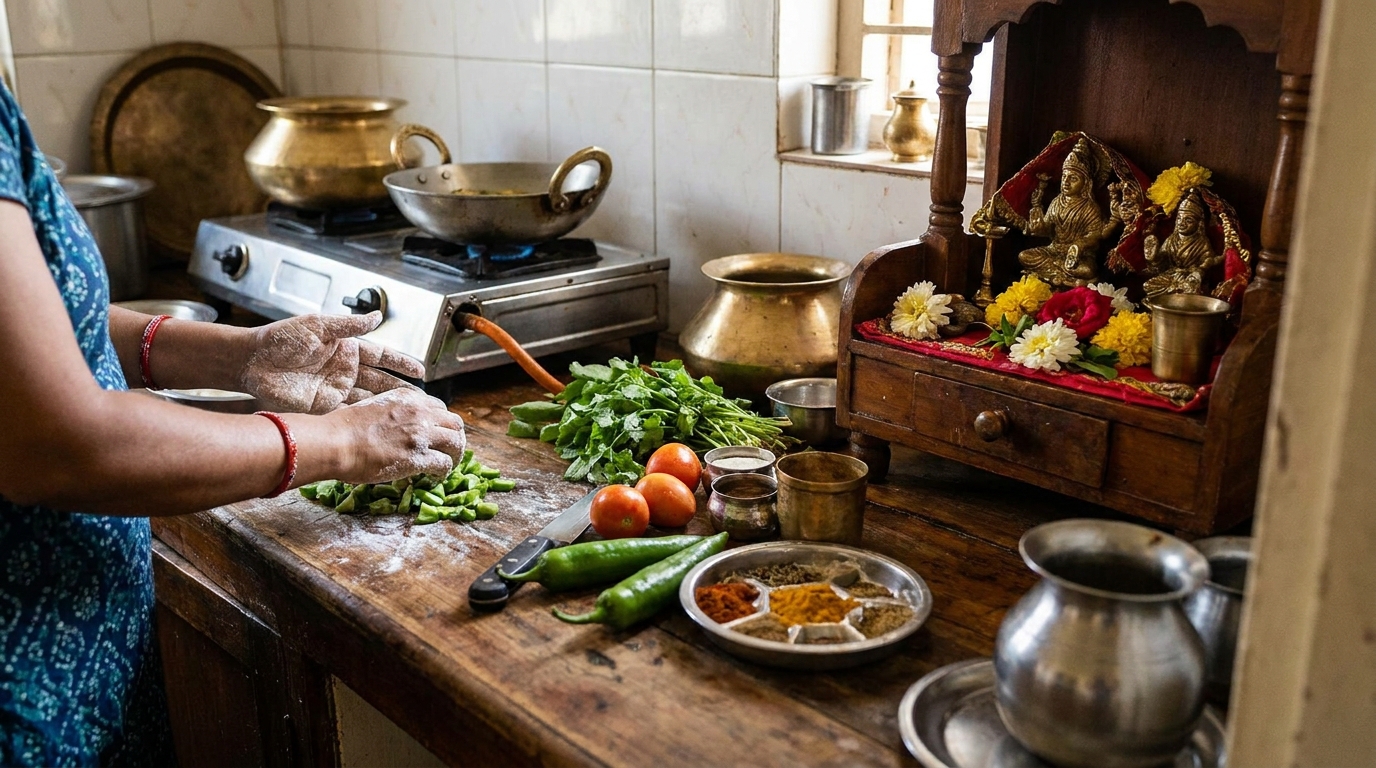
In the Bhakti tradition, Krishna is offered vegetarian foods prepared without meat, fish, or eggs. Many practitioners also avoid onion, garlic, and certain other ingredients when cooking offerings, especially in temple worship or traditional home practice.
This may be new for some readers, so let us approach it gently and practically.
A Vegetarian Offering
The Bhagavad-gita verse mentioned earlier says Krishna accepts “a leaf, a flower, a fruit, or water” when offered with love. This points to a sattvic, or pure, vegetarian offering.
Sattva is a Sanskrit word meaning goodness, clarity, and harmony. Foods in the mode of goodness are fresh, nourishing, peaceful, and supportive of spiritual practice.
Common foods offered to Krishna include:
- Fresh fruits
- Vegetables
- Grains like rice, wheat, oats, and quinoa
- Beans and lentils
- Milk, yogurt, butter, ghee, and cheese, when sourced responsibly
- Nuts and seeds
- Herbs and spices
- Natural sweeteners
- Fresh water
A simple plate of fruit can be a beautiful offering. So can homemade dal, rice, vegetables, chapatis, salad, or sweets.
Why No Meat, Fish, or Eggs?
Bhakti Yoga is rooted in compassion. Because all living beings are souls, we try to live in a way that reduces harm. A vegetarian offering supports kindness, simplicity, and spiritual clarity.
For those coming from different food traditions, this may feel like a big step. Please do not feel discouraged. Bhakti is a path of growth. Begin where you are. You might start by offering one vegetarian meal a week, or even one piece of fruit each morning.
Krishna is looking for sincerity.
What About Onion and Garlic?
In many traditional Bhakti kitchens, onion and garlic are not used in offerings to Krishna. They are considered rajasic and tamasic, meaning they can increase restlessness or dullness in the mind.
Instead, devotees use ingredients like ginger, cumin, coriander, turmeric, black pepper, fresh herbs, hing, and other spices to create flavorful meals. Hing, also called asafoetida, is a strong spice often used in small amounts as a substitute for onion and garlic.
If this is new to you, take it step by step. You do not need to master everything in one day.
Freshness and Care
Krishna is traditionally offered fresh, clean, lovingly prepared foods. Try to use ingredients that are wholesome and prepared with care. Avoid tasting the food while cooking, because the meal is meant to be offered to Krishna first.
This can be challenging at first. Many cooks taste automatically. But this small discipline helps us remember: “This is for Krishna before it is for me.”
You can learn to adjust seasoning through experience, aroma, and recipe measurements. After the food is offered, you may taste and serve it as prasadam.
Please visit our website for more information on our articles: articles.
How to Cook for Krishna at Home
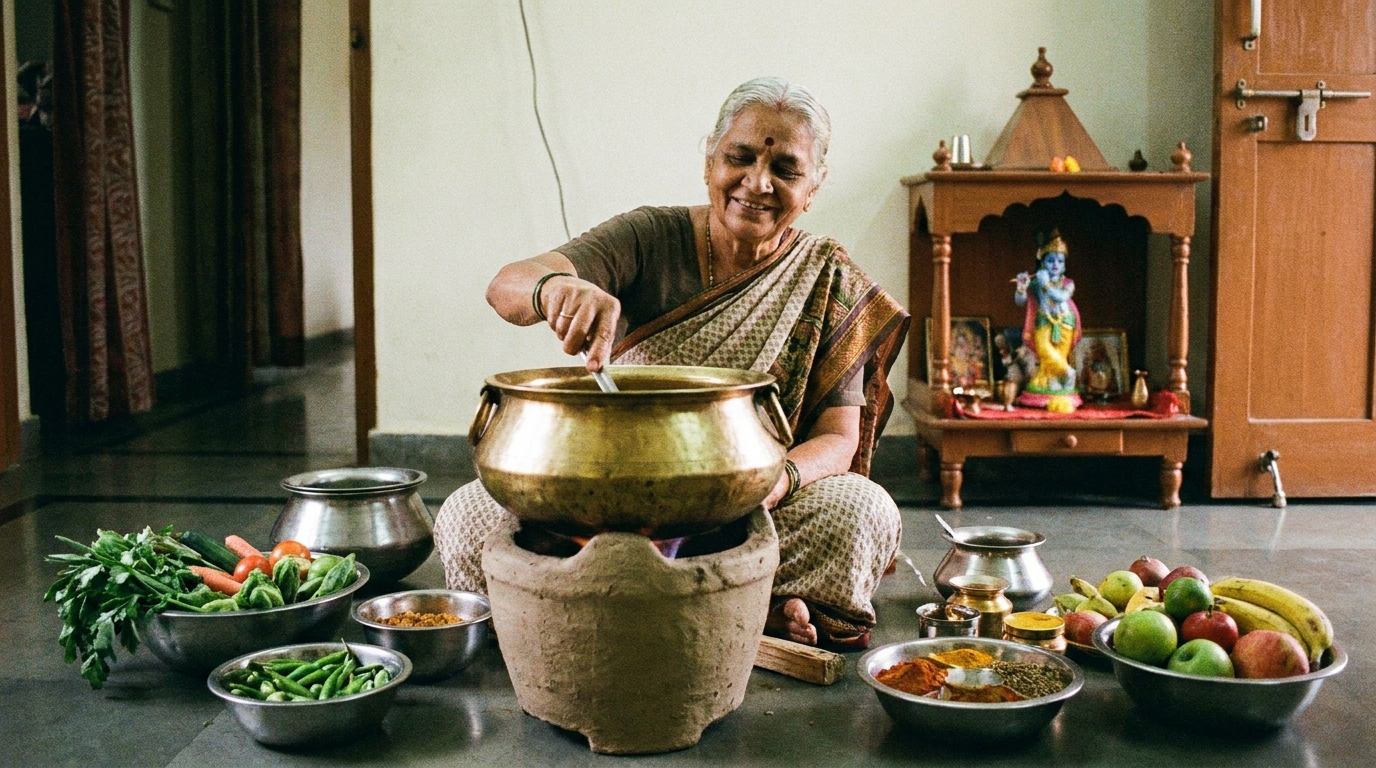
You do not need a temple kitchen to cook for Krishna. You can begin in your own home with whatever space and resources you have.
Begin with Cleanliness
Cleanliness supports sacred consciousness. Before cooking, wash your hands, clean the cooking area, and use clean utensils.
If possible, keep certain plates, bowls, or cups for offering Krishna’s food. They do not have to be expensive. A simple small plate and cup can be used only for the Lord’s offering.
This helps create a sense of reverence.
Set Your Intention
Before you begin, pause. Take a breath. Offer a simple prayer.
You might say:
“Krishna, this meal is for You. Please guide me. Please accept my effort.”
If you know a mantra, you may chant softly. One of the most beloved mantras in Bhakti Yoga is the maha-mantra, or “great mantra”:
Hare Krishna, Hare Krishna, Krishna Krishna, Hare Hare
Hare Rama, Hare Rama, Rama Rama, Hare Hare
“Hare” calls to the divine energy of God. “Krishna” means the all-attractive Lord. “Rama” means the source of spiritual joy. This mantra is a prayer asking to be engaged in loving service.
Chanting while cooking can make the kitchen peaceful and joyful.
Cook Without Tasting
As mentioned earlier, devotees traditionally do not taste food before offering it. This is part of the loving mood: Krishna is the first enjoyer.
If you are nervous about seasoning, follow a trusted recipe. Over time, you will become more confident. You may smell the preparation, observe the texture, and use your cooking experience.
If something is not perfect, do not worry. Krishna accepts love.
Keep the Mood Gentle
Cooking for Krishna should not make us harsh or proud. Sometimes people become anxious about rules and forget the heart of the practice.
Yes, standards are important. Cleanliness, vegetarian ingredients, and offering before eating are meaningful. But the mood should remain humble.
We are not cooking to prove we are spiritual. We are cooking to love and serve.
How to Offer Food to Krishna
Once the food is prepared, place a portion on Krishna’s offering plate. Add a cup of water. If you have a home altar with a picture or deity of Krishna, place the plate there.
If you do not yet have an altar, that is okay. You can place the offering in a clean, quiet space and sincerely pray to Krishna.
A Simple Offering Prayer
You can offer food with your own words:
“Dear Krishna, please accept this food. I have prepared it with love as best I can. Please bless it and bless everyone who will honor this prasadam.”
This is enough to begin.
Traditional Offering Mantras
Some practitioners chant traditional Sanskrit prayers while offering food. If you are new, do not feel pressured. Sanskrit mantras are sacred sound vibrations passed down through spiritual lineages, but Krishna also hears the language of the heart.
If you would like to learn traditional mantras, you can ask a trusted Bhakti teacher or community. The most important thing is sincerity and the desire to please Krishna.
Waiting During the Offering
After placing the plate before Krishna, let it sit for a few minutes. You might chant, pray, or simply sit quietly. Many devotees wait about 5 to 10 minutes.
This waiting period is beautiful. It reminds us that we are not the center. We are guests at Krishna’s table.
Honoring Prasadam
After the offering, the food is considered prasadam. Remove Krishna’s plate, transfer the prasadam respectfully, and then serve the meal.
In Bhakti Yoga, we often say “honor prasadam” rather than “eat prasadam.” This helps us remember that we are receiving grace, not consuming ordinary food.
Before eating, you might say:
“Thank You, Krishna.”
Then eat with gratitude.
Essential Ingredients in a Bhakti Kitchen
A Bhakti kitchen can be simple or elaborate. You do not need every spice or special tool to begin. Still, certain ingredients are commonly used in Krishna conscious cooking and can help you prepare delicious offerings.
Grains and Staples
Rice is one of the most common staples in offerings. Basmati rice is fragrant and often used in Indian devotional cooking, but any clean, vegetarian grain can be offered.
Other helpful staples include:
- Whole wheat flour for chapatis or puris
- Oats for breakfast offerings
- Quinoa or millet
- Pasta without eggs
- Potatoes and sweet potatoes
- Lentils and beans
These ingredients can become comforting, nourishing meals.
Spices for Flavor and Warmth
Spices are gifts of nature. They bring color, fragrance, and healing qualities to food.
Common Bhakti kitchen spices include:
- Turmeric
- Cumin
- Coriander
- Mustard seeds
- Fennel
- Cardamom
- Cinnamon
- Cloves
- Black pepper
- Fresh ginger
- Hing, used sparingly
Spices can be gently toasted in ghee or oil to release their aroma. This process is sometimes called making a chaunk or tempering. It brings deep flavor to simple dishes.
Ghee and Dairy
Ghee is clarified butter and is treasured in traditional Vedic cooking. It has a rich flavor and is often used in offerings to Krishna.
Dairy has a special place in Krishna’s pastimes. In the sacred texts, Krishna is known as a cowherd boy of Vrindavan, a holy village where cows are loved and protected. Butter, yogurt, and milk appear often in stories of Krishna’s childhood.
At the same time, many sincere practitioners today are thoughtful about sourcing dairy ethically. Some choose ahimsa dairy, which means dairy obtained without violence. Others may offer plant-based preparations according to their conscience and guidance.
Ahimsa means nonviolence. It is an important spiritual principle.
Fresh Fruits and Simple Sweets
Fruit is one of the easiest offerings. If you are busy or new to the practice, begin with fruit and water.
Krishna can also be offered sweets such as:
- Halava
- Kheer, a sweet rice pudding
- Laddus
- Sandesh
- Sweet breads
- Fruit salads
- Date and nut treats
Sweets remind us that devotion is joyful. Bhakti is not only discipline; it is love.
Simple Krishna Conscious Meal Ideas
Cooking for Krishna can be very simple. Here are some practical meal ideas for different times of day.
Breakfast Offerings
A devotional breakfast might include:
- Oatmeal with fruit, nuts, cinnamon, and honey
- Fresh fruit with yogurt
- Toast with homemade jam
- Semolina halava
- Smoothies made with fruit and milk or plant-based milk
- Simple pancakes made without eggs
Before eating, place a small portion before Krishna and offer it with prayer.
Lunch and Dinner Offerings
A balanced lunch or dinner offering may include a grain, a protein, vegetables, and a small sweet.
For example:
- Rice, dal, sautéed vegetables, and cucumber salad
- Chapatis, chickpea curry, and roasted potatoes
- Vegetable soup with bread and fruit
- Pasta with fresh tomato basil sauce and salad
- Quinoa with steamed vegetables and tahini dressing
- Kitchari, a comforting dish of rice and mung dal
Dal means lentils or split beans, often cooked into a soup or stew. Kitchari is a soft, nourishing dish made with rice and dal, often used for healing and simplicity.
Festival Offerings
Bhakti traditions include many beautiful festivals, such as Janmashtami, the appearance day of Lord Krishna, and Gaura Purnima, the appearance day of Sri Chaitanya Mahaprabhu, who spread the chanting of Krishna’s names.
Festival offerings may be more elaborate, with many dishes prepared as an expression of celebration. But even on a festival day, the heart matters most.
If you can cook fifty preparations, wonderful. If you can offer one banana with love, that is also wonderful.
Cooking with Family, Children, and Community
Cooking for Krishna is not only a personal practice. It can bring people together.
Inviting Children into Devotional Cooking
Children often love helping in the kitchen. They can wash vegetables, stir batter, roll small chapatis, arrange fruit, or decorate Krishna’s plate.
This teaches them that spirituality is not separate from daily life. It is something we do with our hands, hearts, and voices.
You might tell them, “We are making this for Krishna first.” Children naturally understand love and offering.
Cooking as a Couple or Family Practice
Families can turn meal preparation into a shared devotional rhythm. One person chops, another cooks, another sets the altar, and another leads a simple prayer.
Even if family members come from different spiritual backgrounds, offering food can be approached with respect and openness. At its heart, it is gratitude to God.
Sharing Prasadam with Others
One of the most beautiful parts of Bhakti Yoga is sharing prasadam. Food offered to Krishna carries a mood of compassion. It is meant to be shared.
You can share prasadam with:
- Family and friends
- Neighbors
- Coworkers
- Guests
- People in need
- Community gatherings
- Spiritual programs
In the Bhakti tradition, sharing prasadam is a powerful form of outreach because it gives people a direct experience of devotion through taste, kindness, and hospitality.
Common Questions About Cooking for Krishna
Many sincere seekers have questions when they first begin. Let us answer a few with gentleness.
Do I Have to Be Initiated to Offer Food?
No. Anyone can begin offering food to Krishna. Initiation, or formal commitment to a spiritual teacher, is a sacred step in Bhakti Yoga, but Krishna welcomes every sincere offering.
Start now with what you can do. Let your practice grow naturally.
What If I Make a Mistake?
Mistakes happen. You may accidentally taste the food, forget an ingredient, burn the rice, or feel distracted. Do not give up.
Bhakti is not about perfectionism. It is about returning to love again and again.
If you make a mistake, pray, learn, and continue.
Can I Offer Store-Bought Food?
Freshly prepared food is ideal, but you can offer simple store-bought vegetarian items if they are appropriate and made without meat, fish, or eggs. Fruits, nuts, bread, or simple packaged items may be offered when needed.
Read ingredients carefully. When possible, choose foods that are clean, wholesome, and prepared in a mood you feel comfortable offering.
Can I Offer Food at Work or While Traveling?
Yes. Bhakti Yoga is practical. If you are at work, traveling, or in a hotel, you can still pause and offer your food with prayer.
You might silently say:
“Krishna, please accept this.”
Even a moment of sincere remembrance has spiritual value.
What If My Family Does Not Follow This Practice?
Be patient and kind. Do not force devotion on others. Cook with love, offer what you can, and share prasadam respectfully.
The example of humility often speaks louder than words.
The Inner Mood of Cooking for Krishna
The outer practice is important, but the inner mood is the soul of the offering.
Humility
When we cook for Krishna, we remember that we are servants, not controllers. This humility is freeing. We do not need to carry the burden of being the center of everything.
We can simply offer our best and trust Krishna.
Love
Bhakti means devotion, or loving service to God. The purpose of cooking for Krishna is to awaken love.
Love may begin as a small spark. Maybe today you offer one cup of tea, one apple, or one bowl of rice. That spark can grow.
Prayer
Prayer turns cooking into meditation. It does not need to be formal or poetic. Speak honestly.
“Krishna, I am tired today, but I want to serve You.”
“Please help me be more patient.”
“Please bless my family.”
“Please let this food bring peace.”
These prayers are part of the offering.
Chanting
Chanting Krishna’s names while cooking is especially powerful. In the Bhakti scriptures, the holy name of God is described as non-different from God Himself. This means that when we chant sincerely, we are in Krishna’s presence.
The maha-mantra can be chanted softly, sung joyfully, or played in the kitchen while you cook.
Hare Krishna, Hare Krishna, Krishna Krishna, Hare Hare
Hare Rama, Hare Rama, Rama Rama, Hare Hare
Let the sound enter the food, the room, and the heart.
Scriptural Foundations for Offering Food
Cooking for Krishna is not a modern invention. It is rooted in ancient Bhakti wisdom.
Bhagavad-gita 9.26: Love Is the Main Ingredient
Krishna’s statement that He accepts a leaf, flower, fruit, or water when offered with devotion teaches us that love is more important than luxury.
This verse makes Bhakti accessible. No one is disqualified by poverty, lack of education, social background, or cooking ability. The door is open to all.
Bhagavad-gita 3.13: Eating as Sacred Exchange
The Bhagavad-gita also explains that spiritually offered food frees us from selfish action. When we receive prasadam, we recognize that life is not meant for isolated enjoyment, but for sacred relationship.
This transforms eating from consumption into communion.
Srimad-Bhagavatam: Krishna’s Loving Nature
The Srimad-Bhagavatam, another beloved Bhakti scripture, shares many stories of Krishna’s relationships with His devotees. In Vrindavan, Krishna accepts offerings from simple cowherd families. He is pleased not by grandeur alone, but by affection.
These stories teach us that Krishna is personal. He receives love. He responds to love.
A Simple Step-by-Step Guide to Your First Offering
If you are ready to begin, here is a very simple way.
Step 1: Choose a Simple Vegetarian Food
Start with fruit, rice, oatmeal, soup, or a basic vegetable dish. Keep it manageable.
Step 2: Clean Your Space
Wash your hands. Use clean utensils. Prepare a small plate or bowl for Krishna.
Step 3: Cook with Prayer
As you cook, try to remember Krishna. Chant if you like. Avoid tasting before offering.
Step 4: Place the Food Before Krishna
Put a portion on Krishna’s plate with a cup of water. Place it before a picture of Krishna or in a clean space.
Step 5: Offer with Love
Say a simple prayer asking Krishna to accept the offering.
Step 6: Wait and Reflect
Allow a few minutes. Chant, pray, or sit quietly.
Step 7: Honor the Prasadam
After the offering, serve and eat with gratitude.
This is a complete practice. Simple, beautiful, and powerful.
Bringing Devotion into Everyday Meals
Cooking for Krishna does not have to be reserved for special days. It can become part of the rhythm of your life.
Morning fruit can be offered. Lunch can be offered. Dinner can be offered. A glass of water can be offered. When we live like this, the day becomes filled with small moments of remembrance.
Over time, you may notice changes. You may become more peaceful in the kitchen. More grateful while eating. More generous in sharing. More aware of Krishna’s presence in ordinary life.
This is the beauty of Bhakti Yoga. It does not ask us to abandon the world, but to spiritualize our daily actions through love.
Everyone Is Welcome at Krishna’s Table
You do not need to be Indian. You do not need to know Sanskrit. You do not need to be an expert cook. You do not need to have a perfect home, perfect mind, or perfect life.
Bhakti Yoga welcomes the sincere heart.
Cooking for Krishna is a doorway. Through this simple practice, we learn gratitude, compassion, prayer, chanting, service, and love. We learn that God is not far away. Krishna can be invited into our kitchen, our meals, our families, and our hearts.
Begin gently. Offer one fruit. Cook one meal. Chant one mantra. Say one prayer. Share one plate of prasadam.
Everyone is welcome to take one sincere step toward God, and Krishna lovingly receives every offering made with devotion.
FAQs
What is the significance of cooking for Krishna in the Hindu tradition?
In the Hindu tradition, cooking for Krishna is considered an act of devotion and service. It is believed that offering food to Krishna with love and devotion can purify the mind and soul, and bring spiritual benefits to the person preparing the food.
What are some common ingredients used in cooking for Krishna?
Common ingredients used in cooking for Krishna include grains such as rice and wheat, vegetables, fruits, dairy products like milk and yogurt, and a variety of spices and herbs. It is important to use fresh and pure ingredients, and to avoid using meat, fish, and eggs in the preparation.
Are there any specific cooking techniques or methods recommended for preparing food for Krishna?
In the tradition of cooking for Krishna, it is recommended to cook food with love and devotion, and to avoid using onion and garlic in the preparation. It is also common to offer the prepared food to Krishna before consuming it, as a way of seeking blessings and spiritual nourishment.
What are some popular dishes that are prepared for Krishna?
Some popular dishes prepared for Krishna include khichdi (a one-pot dish made with rice and lentils), puris (deep-fried bread), sabjis (vegetable dishes), kheer (rice pudding), and various milk-based sweets like rasgulla and sandesh. These dishes are often prepared with a focus on simplicity and purity.
Are there any specific guidelines or rituals to follow when cooking for Krishna?
When cooking for Krishna, it is important to maintain cleanliness and purity in the kitchen and during the cooking process. It is also customary to offer the prepared food to Krishna on a special plate or altar, and to chant prayers or mantras while doing so. Additionally, it is recommended to share the prepared food with others as a way of spreading love and goodwill.

