

Many of us long for a life that feels spiritually connected—not only in the temple, church, mosque, meditation room, or sacred gathering, but also in the kitchen, the workplace, the car, the classroom, the grocery line, and the quiet moments before sleep.
In Bhakti Yoga, the path of devotion, this longing is honored as something beautiful and natural. Bhakti means loving devotion, and Yoga means connection. So Bhakti Yoga is the practice of reconnecting the heart with the Divine through love.
For devotees of Krishna, constant remembrance means gently learning to bring Krishna—God, the all-attractive Supreme Person—into every part of daily life. Not as a burden. Not as a performance. Not as something reserved only for saints. But as a living relationship, one sincere step at a time.
Krishna says in the Bhagavad-gita, “Always think of Me, become My devotee, worship Me, and offer your homage unto Me” (Bhagavad-gita 18.65). This is not a harsh command. It is an invitation of love. Krishna is inviting us to remember that we are never alone, that our heart has a spiritual home, and that every moment can become sacred when offered with sincerity.
Constant remembrance may sound like something far beyond ordinary life. We may wonder, “How can I remember Krishna all the time when I have work, family, bills, emotions, responsibilities, and so many distractions?”
This is a very human question.
In Bhakti Yoga, constant remembrance does not mean we artificially stop living our lives. It means we gradually learn to live our lives in relationship with Krishna. We still cook, work, study, care for loved ones, rest, and serve the world—but we begin to do these things with a devotional heart.
Remembering Krishna as a Relationship
Krishna is not an abstract idea or distant force. In the Bhakti tradition, Krishna is understood as the Supreme Personality of Godhead—the source of all love, beauty, wisdom, and joy. He is personal, approachable, and deeply loving.
To remember Krishna is to remember our relationship with Him.
Just as we may think of someone we love throughout the day—not because we are forced, but because love naturally draws the mind—Bhakti Yoga helps us awaken that natural love for God. At first, remembrance may feel like a practice. Over time, by grace, it becomes more like breathing.
Smaranam: The Practice of Sacred Remembrance
One important Sanskrit word in Bhakti Yoga is smaranam, which means remembrance. In the Srimad-Bhagavatam, a beloved Bhakti scripture, smaranam is listed as one of the nine main practices of devotion.
These nine practices include hearing about God, chanting God’s names, remembering Him, serving Him, offering prayers, worshiping, becoming a servant, developing friendship, and surrendering with love.
Smaranam teaches us that the mind, which often wanders toward worry or desire, can be lovingly redirected toward Krishna. This is not repression. It is redirection. It is giving the mind a beautiful place to rest.
Not Perfection, But Sincere Practice
Many people become discouraged because they think spiritual life requires perfection. But Krishna looks at the heart.
In the Bhagavad-gita, Krishna says, “If one offers Me with love and devotion a leaf, a flower, fruit, or water, I will accept it” (Bhagavad-gita 9.26). This verse reveals something tender and profound: Krishna accepts love.
He does not ask for wealth, status, flawless concentration, or polished spirituality. He asks for sincerity. Even a small offering made with love becomes spiritually powerful.
Beginning the Day with Krishna
The way we begin the morning often shapes the rest of the day. If we wake up and immediately enter messages, news, stress, and noise, the mind can become scattered before the day has even begun.
Bhakti Yoga offers simple morning practices that help us remember Krishna and enter the day with spiritual intention.
A Simple Morning Prayer
Before getting out of bed, we can pause for a moment and offer a simple prayer:
“Dear Krishna, thank You for this day. Please guide my thoughts, words, and actions. Help me remember You and serve with love.”
This prayer does not need to be long. It only needs to be sincere.
Prayer is the language of the heart. It can be spoken aloud, whispered, written, sung, or silently offered. Through prayer, we acknowledge that we are not the ultimate controller and that we desire divine guidance.
Chanting the Holy Names
Chanting is central to Bhakti Yoga. The Sanskrit word mantra means a sacred sound that helps free the mind. The most beloved mantra in the Krishna Bhakti tradition is the maha-mantra, meaning “the great mantra”:
Hare Krishna, Hare Krishna, Krishna Krishna, Hare Hare
Hare Rama, Hare Rama, Rama Rama, Hare Hare
“Hare” calls upon the divine energy of the Lord. “Krishna” means the all-attractive one. “Rama” means the source of spiritual joy.
Chanting this mantra is a way of calling out to God with love. It can be sung in kirtan, which is devotional call-and-response singing, or repeated quietly on japa beads, a string of prayer beads used to count the mantra.
Even a few minutes of chanting in the morning can change the atmosphere of the heart. The sound vibration gently cleanses the mind and awakens remembrance.
Reading a Sacred Verse
Another beautiful morning practice is to read one verse from the Bhagavad-gita, Srimad-Bhagavatam, or another authentic Bhakti scripture. We do not need to read many pages. One verse, deeply received, can nourish us throughout the day.
For example, Krishna says, “For one who sees Me everywhere and sees everything in Me, I am never lost, nor is he ever lost to Me” (Bhagavad-gita 6.30).
We can carry this verse into daily life and ask, “How can I see Krishna’s presence today? How can I remember that I am not lost to Him?”
Bringing Krishna into Work and Responsibilities
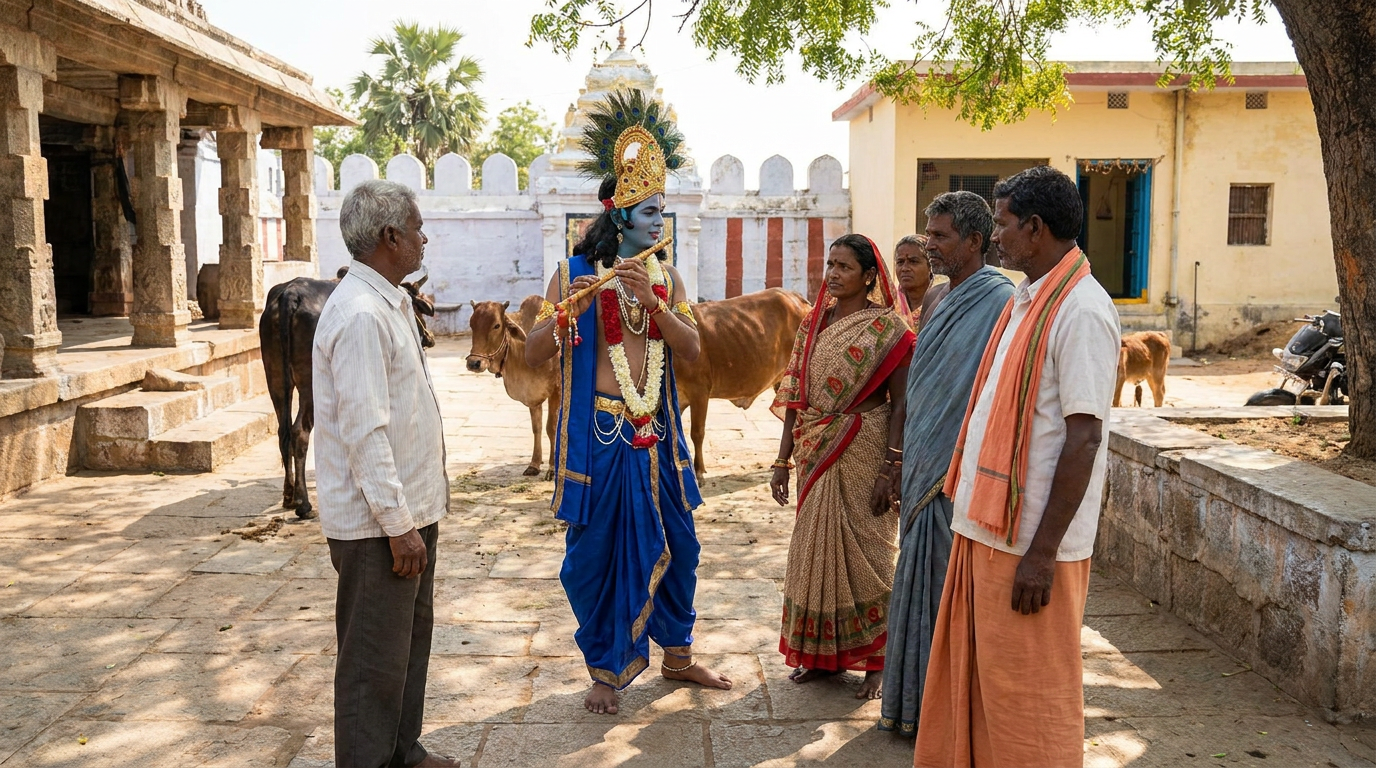
Many people imagine spiritual life and practical life as separate. We may think, “My spiritual life happens when I chant or pray, but my work is just work.”
Bhakti Yoga gently dissolves this separation. It teaches that our duties can become offerings when performed with devotion.
Karma Yoga and Offering Our Work
Karma means action. Karma Yoga means spiritualizing our actions by offering the results to God. In Bhakti, this offering becomes personal and loving: “Krishna, please accept this work as my service.”
Krishna says in the Bhagavad-gita, “Whatever you do, whatever you eat, whatever you offer or give away, and whatever austerities you perform—do that as an offering to Me” (Bhagavad-gita 9.27).
This verse is deeply practical. It means that daily life itself can become worship.
If you are a parent, caring for your child can become service. If you are a student, studying with integrity can become service. If you are working a job, doing your duties honestly and kindly can become service. If you are healing, resting, rebuilding, or simply surviving a hard season, even that can be offered with humility.
Remembering Krishna in Small Pauses
We may not be able to chant for hours during the workday, but we can create small pauses of remembrance.
Before opening your computer, you might silently say, “Krishna, please guide me.”
Before a difficult meeting, you might take one breath and remember, “I am Your servant. Help me speak with kindness.”
Before eating lunch, you might offer gratitude: “Thank You, Krishna, for this food.”
These small pauses become spiritual bridges. They help us return to Krishna again and again.
Working Without Losing the Heart
The world often trains us to measure our value by productivity, achievement, approval, or income. Bhakti Yoga reminds us that our deepest identity is not our job title, success, failure, body, or social role.
The Sanskrit phrase aham brahmasmi means “I am spirit.” In Bhakti, we go even deeper: we are eternal souls, beloved parts of Krishna, meant for loving service.
This understanding can bring peace. We can work sincerely without being consumed by work. We can strive for excellence without worshiping outcomes. We can engage fully while remembering that Krishna is the ultimate shelter.
Check out our latest posts at https://thebhaktihouse.org/blog.
Making the Home a Place of Devotion

A home does not need to be large, perfect, or traditionally religious to become spiritually beautiful. Wherever Krishna is remembered, that place becomes sacred.
Creating a Simple Sacred Space
If possible, create a small altar or devotional corner in your home. It may include a picture of Krishna, a candle, flowers, sacred books, japa beads, or anything that helps you remember God with love.
This space is not for display. It is a place to return the heart to devotion.
You might sit there in the morning to chant, offer prayers in the evening, or simply pause for a moment during the day. Over time, this sacred space can become a gentle anchor.
Offering Food with Love
In Bhakti Yoga, food can become prasadam, which means “mercy” or “grace.” When vegetarian food is prepared and offered to Krishna with love, it becomes spiritually blessed.
The offering can be simple. Before eating, place the food before Krishna or hold it in your heart and pray:
“Dear Krishna, this food is Yours. Please accept it with love.”
Then, after a moment, receive it as prasadam.
This practice transforms eating from consumption into communion. It reminds us that everything comes from God, and we are receiving His kindness.
Devotional Sound in the Home
Sound shapes consciousness. Playing kirtan, bhajans, or soft mantra music in the home can create a peaceful and devotional atmosphere.
Bhajans are devotional songs that express longing, surrender, gratitude, and love for God. Even if we do not understand every word, the mood can touch the heart.
A home filled with sacred sound becomes a place where remembrance feels more natural.
Chanting as the Heart of Daily Remembrance
Among the many practices of Bhakti Yoga, chanting the holy names of Krishna is especially powerful for this age. Our minds are often restless, distracted, anxious, and overstimulated. Chanting gives the mind and heart a sacred focus.
Why the Holy Name Matters
In the Bhakti tradition, Krishna’s name is not considered different from Krishna Himself. This means that when we chant Krishna’s names, we are directly associating with Him.
This may be difficult to understand at first, but we can experience it through practice. Just as hearing the name of someone we love can awaken emotion, memory, and connection, chanting Krishna’s name awakens spiritual connection.
The holy name is accessible to everyone. We do not need to be scholars. We do not need to have a certain background. We do not need to be perfect. We only need to begin.
Japa: Personal Meditation with Mantra
Japa is the quiet, personal repetition of a mantra, often using beads. Many practitioners chant one or more rounds of the maha-mantra daily. A “round” means chanting the mantra once on each of the 108 beads.
If this is new, begin gently. You might chant for five minutes each morning. Or chant one round. Or simply repeat the mantra while walking.
The goal is not mechanical counting. The goal is attentive calling. We are practicing turning the heart toward Krishna.
Kirtan: Singing Together in Devotion
Kirtan is congregational chanting, usually with music. One person leads, and others respond. It is joyful, prayerful, and deeply healing.
In kirtan, people of all ages and backgrounds can gather and chant together. There is no need to be a trained singer. The beauty of kirtan is not performance—it is participation.
When we chant together, the heart often softens. Worries loosen. Community forms. The holy name carries us beyond isolation and into shared devotion.
Seeing Krishna in Relationships
Daily life is filled with relationships—with family, friends, coworkers, neighbors, strangers, and even those who challenge us. Bhakti Yoga invites us to see relationships as opportunities for spiritual growth.
Every Soul Is Dear to Krishna
In the Bhagavad-gita, Krishna explains that He is the seed-giving father of all living beings (Bhagavad-gita 14.4). This means every person, every creature, every soul is connected to Krishna.
When we remember this, our relationships can become more compassionate. We may not agree with everyone. We may need boundaries. But we can still try to see others with dignity, as souls on a journey.
This vision is not sentimental. It is deeply practical. It can transform how we speak, listen, forgive, and serve.
Practicing Humility in Daily Life
Humility is central to Bhakti. It does not mean thinking we are worthless. It means recognizing our dependence on God and honoring the sacredness of others.
Sri Chaitanya Mahaprabhu, a great teacher of Krishna Bhakti, offered a famous instruction: one should be humbler than a blade of grass, more tolerant than a tree, ready to offer respect to others, and not expect respect for oneself. In such a state, one can constantly chant the holy names.
This teaching is not easy, but it is powerful. It shows us that constant remembrance is not only about what we do in private meditation. It is also about how we treat people.
Turning Conflict into Prayer
When conflict arises, remembrance can become a lifeline.
Instead of reacting immediately, we can pause and pray: “Krishna, please help me respond, not just react. Help me see what is true. Help me be kind and clear.”
Sometimes the most devotional act is to speak honestly. Sometimes it is to remain silent. Sometimes it is to apologize. Sometimes it is to step away. Bhakti does not remove the complexity of relationships, but it gives the heart a higher shelter.
Remembering Krishna During Difficulty
It is often easy to speak about remembrance when life is peaceful. But what about grief, illness, anxiety, loneliness, disappointment, or loss?
Bhakti Yoga does not ask us to pretend that pain is not real. Rather, it teaches us to bring our pain to Krishna.
Honest Prayer in Hard Times
We can pray honestly:
“Krishna, I am struggling.”
“Krishna, I feel far from You.”
“Krishna, please hold me.”
“Krishna, I do not understand, but I want to trust You.”
This kind of prayer is not a failure of faith. It is faith becoming real.
Many saints in the Bhakti tradition cried out to Krishna with longing. Their prayers were not always polished. They were heartfelt. Krishna receives the honest heart.
The Bhagavad-gita’s Comfort
The Bhagavad-gita was spoken on a battlefield, at a moment of confusion, fear, and moral crisis. Arjuna, Krishna’s dear friend and disciple, was overwhelmed. He did not hide his pain. He brought it to Krishna.
This is meaningful for us. Spiritual wisdom was not given in a perfect, peaceful setting. It was given in the middle of crisis.
Krishna guided Arjuna step by step. In the same way, when we turn toward Krishna in our own battles, guidance can come—through scripture, prayer, conscience, community, and grace.
Remembrance Is Shelter
Krishna promises, “Declare it boldly, My devotee never perishes” (Bhagavad-gita 9.31). This does not mean devotees never face hardship. It means Krishna does not abandon the sincere soul.
Constant remembrance becomes shelter not because it makes life instantly easy, but because it reminds us we are held by divine love.
Serving Krishna Through Serving Others
Love becomes complete when it expresses itself in service. In Bhakti Yoga, seva means service offered with devotion. Seva can be done in a temple, a home, a community, or anywhere there is a chance to offer kindness.
Service as an Expression of Love
When we serve, we move from “What can I get?” to “How can I offer?” This shift purifies the heart.
Service may be simple: cooking for others, cleaning a sacred space, helping with kirtan, encouraging someone, sharing prasadam, listening deeply, supporting a spiritual community, or caring for the earth as Krishna’s energy.
No service is small when offered with love.
Serving Without Pride
Service can also reveal our ego. We may want recognition, control, or appreciation. This is normal human conditioning. Bhakti does not shame us for this; it helps us grow beyond it.
We can pray, “Krishna, please help me serve for Your pleasure, not for my own pride.”
This prayer gradually transforms service into devotion.
Community Helps Us Remember
Spiritual community is very important. The Sanskrit word sadhu-sanga means association with spiritually minded people. A sadhu is a person striving to live in truth and devotion, and sanga means association.
When we spend time with people who are trying to remember Krishna, it becomes easier for us to remember too. We encourage one another. We chant together. We learn together. We keep going together.
No one needs to walk the path alone.
A Practical Daily Rhythm of Krishna Remembrance
Constant remembrance grows through steady, realistic practice. It is better to do something small every day than to attempt too much and become discouraged.
Morning: Begin with Intention
Start the day with prayer, chanting, or reading a verse. Even ten minutes can make a difference.
You might say:
“Krishna, let this day be an offering.”
This sets the direction of the heart.
Midday: Pause and Reconnect
During the day, take one or two short pauses. Chant the maha-mantra softly. Offer your food. Read a verse. Take a breath and remember Krishna’s presence.
These small moments protect the heart from becoming completely absorbed in worldly stress.
Evening: Reflect and Offer
At night, reflect gently:
“Where did I remember Krishna today?”
“Where did I forget?”
“What can I offer from this day?”
“What mercy did I receive?”
Then pray:
“Krishna, thank You for staying with me. Please help me remember You tomorrow.”
This kind of reflection is not self-criticism. It is loving awareness.
Overcoming Common Obstacles in Remembrance
Every sincere practitioner faces obstacles. The path of Bhakti is joyful, but it is also honest. We bring our whole self to Krishna—including distraction, doubt, and weakness.
“My Mind Wanders When I Chant”
This is very common. The mind has been wandering for many years, so we should not be surprised when it wanders during prayer or chanting.
When you notice the mind has wandered, gently bring it back to the sound of the mantra. This returning is part of the practice.
Do not give up because the mind wanders. Every time you return to Krishna’s name, you are strengthening your devotional life.
“I Don’t Feel Devotion”
Feelings may come and go. Sometimes chanting feels sweet. Sometimes it feels dry. Bhakti is deeper than temporary emotion.
Continue with sincerity. Offer even the dryness to Krishna. Say, “I do not feel much today, but I am here.”
That simple honesty is beautiful.
“I Feel Unqualified”
Many people feel unqualified for spiritual life. But Bhakti begins exactly where we are.
Krishna is not waiting for us to become perfect before we approach Him. He is inviting us now. The holy name is available now. Prayer is available now. Service is available now.
Qualification grows through practice and grace.
The Deep Promise of Constant Remembrance
As we practice remembering Krishna in daily life, something begins to change. The outer life may look the same, but the inner life becomes softer, steadier, and more connected.
We begin to notice Krishna’s kindness in small things: sunlight, sacred sound, a shared meal, a moment of forgiveness, the strength to keep going, the comfort of prayer.
We begin to see that devotion is not separate from life. Devotion is the soul of life.
From Obligation to Love
At first, spiritual practices may feel like discipline. We make time to chant. We remind ourselves to pray. We try to offer our work.
But gradually, by Krishna’s grace, practice becomes relationship. We no longer remember Krishna only because we “should.” We remember because the heart wants Him.
This is the beauty of Bhakti Yoga. It begins with simple acts and awakens eternal love.
Krishna Remembers Us First
One comforting truth is that our remembrance of Krishna is possible because Krishna remembers us first. He is already in the heart as Paramatma, the Supersoul, guiding and witnessing our journey.
Krishna says in the Bhagavad-gita, “I am seated in everyone’s heart” (Bhagavad-gita 15.15).
We are not trying to bring Krishna from far away. We are awakening to the One who has always been near.
One Sincere Step Is Powerful
The path of constant remembrance does not require us to change everything overnight. Begin with one sincere step.
Chant one mantra. Offer one meal. Read one verse. Say one prayer. Do one act of service. Pause once in the day and remember, “Krishna, I am Yours.”
These small steps are not small to Krishna. When offered with love, they carry eternal meaning.
Everyone Is Welcome on the Path of Bhakti
Bhakti Yoga is a path of love, and love is not limited by birth, background, culture, education, language, or past mistakes. Krishna welcomes every sincere heart.
Whether you are new to spiritual life or have practiced for many years, whether you feel full of faith or full of questions, whether your life feels peaceful or messy—you are welcome.
Come as you are. Begin where you are. Let the holy name enter your day. Let prayer become your companion. Let service soften your heart. Let scripture guide your steps. Let community support your journey.
Constant remembrance is not about escaping daily life. It is about embracing Krishna within daily life. In every breath, every duty, every relationship, and every offering, we can learn to live in loving connection with God.
May we each take one sincere step today toward Krishna, trusting that He sees, He hears, and He lovingly walks with us.
FAQs
What is constant remembrance of Krishna?
Constant remembrance of Krishna, also known as “smaranam,” is the practice of continuously keeping the mind focused on Lord Krishna through various means such as chanting, meditation, and contemplation.
Why is constant remembrance of Krishna important in Hinduism?
Constant remembrance of Krishna is important in Hinduism as it is believed to help individuals develop a deep and personal relationship with God, leading to spiritual growth, inner peace, and ultimately liberation from the cycle of birth and death.
How can one practice constant remembrance of Krishna?
One can practice constant remembrance of Krishna through various methods such as chanting the Hare Krishna mantra, reading and studying scriptures related to Krishna, engaging in devotional service, and participating in kirtan (congregational chanting).
What are the benefits of constant remembrance of Krishna?
The benefits of constant remembrance of Krishna include purification of the mind and heart, spiritual enlightenment, inner peace, and a deep sense of connection with the divine. It is also believed to help individuals overcome material desires and attachments.
Is constant remembrance of Krishna practiced by all Hindus?
Constant remembrance of Krishna is a central practice in the Bhakti tradition of Hinduism, and while it may not be practiced by all Hindus, it is widely embraced by those who follow the path of devotion to God.

