
Why Misunderstandings About Bhakti Arise
Bhakti Yoga is often described as the path of devotion, the path of love, or the path of the heart. The Sanskrit word bhakti comes from a root meaning “to share,” “to serve,” or “to love with devotion.” In simple terms, Bhakti is the practice of lovingly connecting with God through chanting, prayer, remembrance, worship, service, and offering our life with sincerity.
Yet because Bhakti is so heart-centered, it is sometimes misunderstood. Some people think devotion is only emotion. Others imagine it belongs to one religion, one culture, or one kind of person. Some assume that chanting holy names is a ritual without depth, or that surrender means becoming passive. These misunderstandings can keep sincere seekers from receiving the sweetness and practicality of Bhakti Yoga.
At The Bhakti House, we understand that everyone comes with a unique background. Some have grown up with faith. Some are healing from religious wounds. Some are curious but cautious. Some simply feel a quiet longing for meaning, peace, and spiritual connection.
Bhakti welcomes all of this. It does not demand that we pretend to be someone else. It invites us to begin where we are, with whatever sincerity we have, and turn gently toward God.
In the Bhagavad-gītā, one of the foundational scriptures of Bhakti Yoga, Krishna says, “As all surrender unto Me, I reward them accordingly” (Bhagavad-gītā 4.11). This means the Divine meets us personally, according to our approach. Bhakti is not about forcing the heart. It is about awakening the heart.
Let us explore some common misunderstandings about Bhakti and devotional paths, with humility, clarity, and practical guidance for everyday spiritual life.
Misunderstanding One: Bhakti Is Only for Emotional People
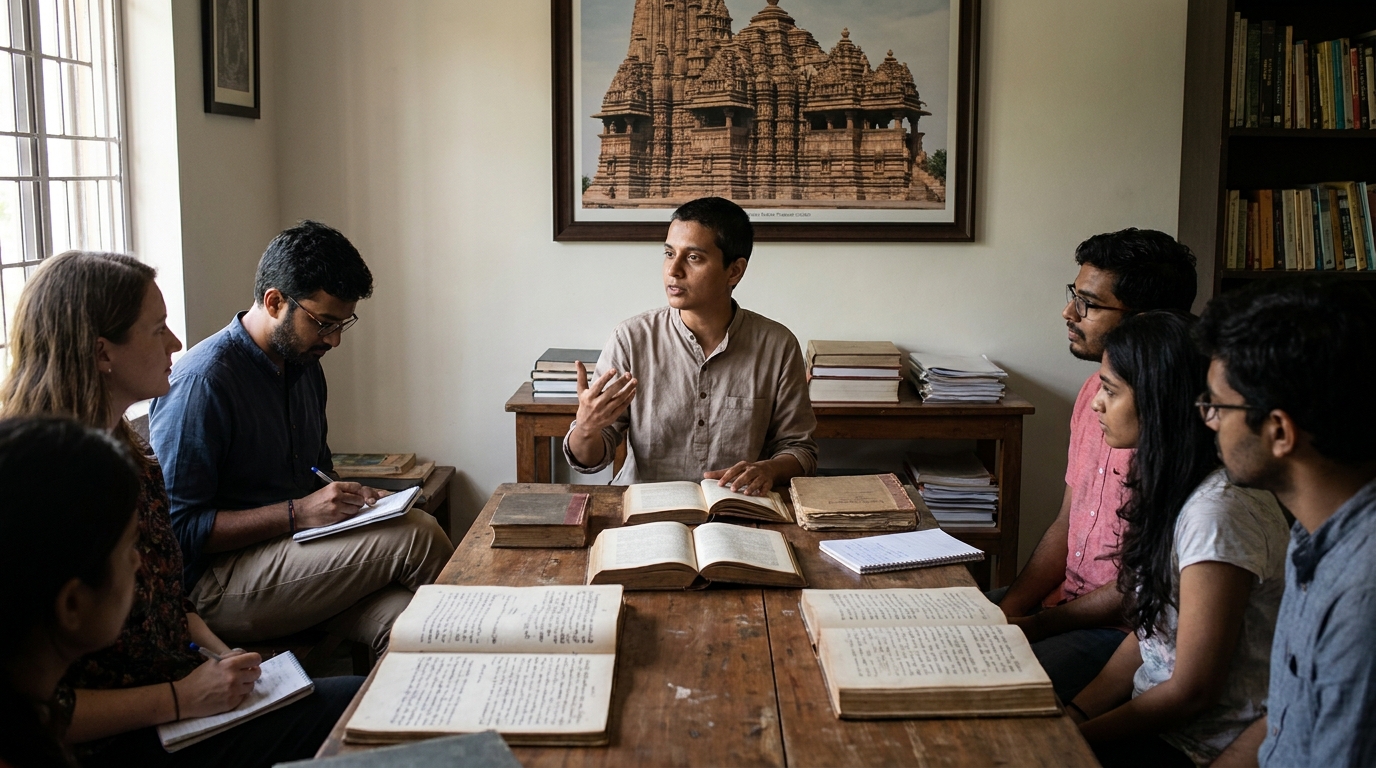
One common misunderstanding is that Bhakti is only for people who are naturally emotional, sentimental, or expressive. Because Bhakti includes singing, prayer, tears, dancing, and heartfelt worship, some assume it is not for thoughtful, intellectual, or reserved people.
But Bhakti is not merely emotion. It is love guided by wisdom.
In the Bhakti tradition, the heart and the mind are both honored. Devotion is not blind feeling. It is a spiritual science of relationship. Just as a loving relationship in this world requires understanding, commitment, communication, and action, our relationship with God also matures through knowledge, practice, and service.
The Bhagavad-gītā does not present devotion as irrational. It offers deep teachings on the self, the nature of the material world, karma, meditation, discipline, and divine love. Krishna speaks to Arjuna not by dismissing his questions, but by answering them with compassion and reason.
Devotion Includes the Whole Person
Bhakti engages every part of us:
- The voice through chanting and prayer
- The mind through meditation and remembrance
- The intellect through study and reflection
- The hands through service
- The body through worship and sacred living
- The heart through love and surrender
A person may express Bhakti quietly or joyfully, inwardly or outwardly. Some devotees sing loudly in kīrtan, a call-and-response form of sacred chanting. Others sit quietly with a prayer bead bag, repeating the holy names in personal meditation, known as japa. Some cook offerings for God. Some serve guests. Some read scripture. Some care for children, elders, animals, gardens, or communities as an offering.
All of these can be Bhakti when done with loving intention.
Feelings May Come, But Sincerity Comes First
In Bhakti Yoga, feelings are welcomed but not forced. Sometimes chanting feels sweet. Sometimes prayer feels dry. Sometimes the heart feels open. Sometimes it feels covered. This is natural.
The practice is not dependent on a dramatic emotional experience. The deeper foundation is sincerity. Even a small offering made with love is spiritually powerful.
Krishna says in the Bhagavad-gītā (9.26), “If one offers Me with love and devotion a leaf, a flower, fruit, or water, I will accept it.” The value is not in the material size of the offering. The value is in the love.
This is one of Bhakti’s most beautiful truths: God is accessible through the heart.
Misunderstanding Two: Bhakti Belongs Only to One Culture or Religion
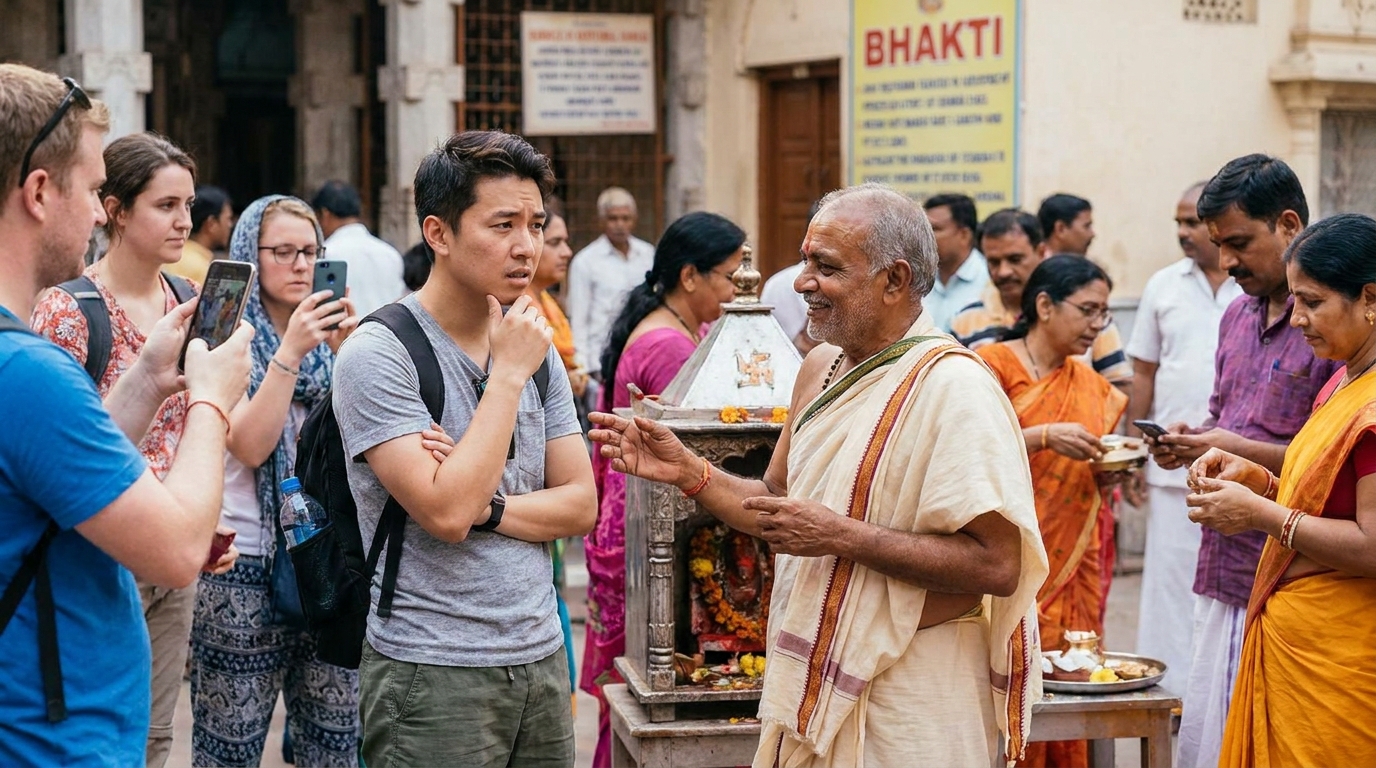
Another common misunderstanding is that Bhakti Yoga is only for people born in India, raised in Hindu families, or connected to a particular cultural background. Because Bhakti often uses Sanskrit words, Indian music, temple traditions, and sacred images, newcomers may wonder, “Is this really for me?”
The answer is yes. Bhakti is for every soul.
Sanskrit may be an ancient sacred language, but the longing to love and be loved by God is universal. Chanting may take forms rooted in India’s devotional traditions, but calling out to the Divine exists in every spiritual culture. Service, prayer, gratitude, humility, and remembrance are not limited by nationality, ethnicity, or upbringing.
The Soul Is Beyond Labels
Bhakti scriptures teach that our deepest identity is not the temporary body, social role, or external label. The Sanskrit word ātman means the self or soul—the conscious spiritual being within the body.
The Bhagavad-gītā explains that the soul is eternal, not destroyed when the body changes. This teaching invites us to see ourselves and others with spiritual vision. Before we are American, Indian, European, African, Asian, male, female, young, old, rich, poor, religious, or uncertain—we are souls.
Bhakti begins there.
This does not mean our cultures and histories do not matter. They do. They are meaningful parts of our lives. But Bhakti gently reminds us that our spiritual identity is deeper than all external designations.
Respecting Tradition Without Feeling Excluded
Authentic Bhakti Yoga comes through living traditions, teachers, scriptures, and communities. Respecting these roots is important. We should not reduce Bhakti to a trend, aesthetic, or performance. At the same time, genuine tradition is generous. It offers sacred practices for the upliftment of all.
If you are new to Sanskrit terms, you do not need to feel intimidated. Here are a few simple explanations:
- Bhakti: devotion, loving service to God
- Yoga: connection, a path of spiritual union
- Mantra: sacred sound that helps focus and purify the mind
- Kīrtan: group chanting, often with music
- Japa: personal mantra meditation, usually repeated on beads
- Sevā: service offered with devotion
- Prasāda: food offered to God with love, then shared as mercy
You do not need to master everything at once. Bhakti grows naturally through practice, association, and grace.
Discover a wide range of insightful articles that delve into various spiritual topics. These articles provide guidance and inspiration for your personal growth journey. Stay updated with the latest articles to enhance your understanding of spiritual practices.
Misunderstanding Three: Chanting Is Just Repetition
To someone unfamiliar with mantra meditation, chanting may seem like repeating words over and over. The most well-known mantra in many Bhakti communities is the Hare Krishna mahā-mantra:
Hare Krishna, Hare Krishna, Krishna Krishna, Hare Hare
Hare Rama, Hare Rama, Rama Rama, Hare Hare
The word mahā means “great,” and mantra means a sacred sound vibration that can help free the mind. So mahā-mantra means “the great mantra for liberation.”
Some may wonder, “How can repeating names change anything?” This is a sincere question.
In Bhakti understanding, the names of God are not ordinary sounds. They are considered spiritually potent because God is present in His holy names. When we chant, we are not merely reciting syllables. We are calling out to the Divine with the heart.
Sacred Sound Cleanses the Heart
The Śrīmad-Bhāgavatam, a beloved Bhakti scripture, teaches that hearing and chanting about God purifies the heart and awakens devotion. This purification may be gradual. We may not notice everything immediately. But over time, chanting can soften anger, steady the mind, deepen compassion, and bring spiritual clarity.
Many people come to chanting feeling distracted, anxious, skeptical, or burdened. Bhakti does not reject them. The practice itself helps transform the inner landscape.
Just as water cleanses the body, sacred sound cleanses consciousness.
Repetition Can Become Relationship
In daily life, repetition is not always empty. We say “I love you” more than once. We greet loved ones again and again. We breathe repeatedly. We eat regularly. We return to what nourishes us.
Similarly, chanting is a repeated turning of the heart toward God. At first, it may feel mechanical. With time, it becomes prayer. Later, it becomes shelter.
A simple way to begin is to chant for a few minutes each day. You may sit quietly, breathe gently, and repeat the mantra aloud or softly. If the mind wanders, bring it back kindly. No harshness is needed. Bhakti grows in an atmosphere of patience.
Misunderstanding Four: Surrender Means Losing Yourself
The word “surrender” can be difficult for many people. It may sound like defeat, weakness, or giving up personal responsibility. Some may associate surrender with unhealthy control or spiritual abuse. These concerns deserve tenderness and respect.
In Bhakti Yoga, surrender does not mean erasing your personality or becoming passive. True spiritual surrender means offering the heart to God in trust. It means aligning our will with divine wisdom. It means releasing the illusion that we are completely independent controllers and remembering that we are lovingly held by the Supreme.
Surrender Is a Loving Relationship
In the Bhagavad-gītā (18.66), Krishna invites Arjuna: “Abandon all varieties of separate duty and simply surrender unto Me. I shall deliver you from all sinful reactions. Do not fear.”
This is not a threat. It is an invitation. Krishna says, “Do not fear.” The mood is protective and loving.
Arjuna does not become less himself after hearing the Gītā. He becomes more clear, courageous, and spiritually grounded. His surrender leads to responsible action, not avoidance.
This is very important. Bhakti is not escapism. Devotion helps us show up more honestly in life—with compassion, integrity, and purpose.
Healthy Surrender Is Never Coercion
Authentic Bhakti honors free will. Love cannot be forced. Devotion cannot be manufactured through fear. A true spiritual teacher or community should guide, encourage, and serve—not manipulate or dominate.
Healthy surrender includes:
- Asking sincere questions
- Using intelligence and discernment
- Taking time to grow
- Maintaining personal responsibility
- Serving from love, not pressure
- Remembering that God is compassionate
If the word surrender feels heavy, you might begin with a gentler phrase: “I offer this.” Offer one worry. Offer one meal. Offer one song. Offer one decision. Offer one moment of gratitude.
Bhakti grows step by step.
Misunderstanding Five: Bhakti Is Separate From Daily Life
Some people think devotional life belongs only in temples, monasteries, retreats, or special ceremonies. They may imagine that Bhakti requires leaving ordinary responsibilities behind. But Bhakti Yoga is deeply practical. It can be lived in the middle of family life, work, study, caregiving, creativity, and community service.
The heart of Bhakti is not where we are externally, but how we offer ourselves internally.
Turning Ordinary Actions Into Offerings
Krishna teaches in the Bhagavad-gītā (9.27), “Whatever you do, whatever you eat, whatever you offer or give away, and whatever austerities you perform—do that as an offering unto Me.”
This verse is wonderfully practical. It means our daily life can become sacred.
Cooking can become an offering. Working honestly can become an offering. Caring for children can become an offering. Cleaning a space can become an offering. Listening compassionately to someone in pain can become an offering. Even resting can become sacred when done with gratitude and the intention to serve better.
Bhakti does not ask us to despise the world. It teaches us to see the world in relationship with God.
Small Practices for a Devotional Day
Here are simple ways to bring Bhakti into daily life:
- Begin the morning with one prayer of gratitude
- Chant a mantra for five or ten minutes
- Offer your food before eating
- Read one verse from the Bhagavad-gītā or another Bhakti scripture
- Pause before work and say, “May this be of service”
- Practice kindness as an offering to God in the heart of others
- Listen to kīrtan while cooking, walking, or commuting
- End the day by reflecting on where you felt grace
These small practices matter. A devotional life is not built only by grand gestures. It is built by repeated sincere offerings.
Misunderstanding Six: Bhakti Rejects Knowledge, Meditation, or Discipline
Because Bhakti emphasizes love, some assume it rejects study, meditation, or self-discipline. But authentic Bhakti includes all of these, purified by devotion.
In the Vedic tradition, different forms of yoga are described: karma-yoga is the path of selfless action, jñāna-yoga is the path of spiritual knowledge, aṣṭāṅga-yoga includes meditation and disciplined practice, and bhakti-yoga is the path of loving devotion. These are not always completely separate boxes. Bhakti can include action, knowledge, and meditation, but directs them toward loving relationship with God.
Knowledge Helps Devotion Mature
Without knowledge, devotion can become sentimental or confused. Without devotion, knowledge can become dry or prideful. Together, they nourish the soul.
Studying scriptures like the Bhagavad-gītā, Śrīmad-Bhāgavatam, and the writings of great Bhakti teachers helps us understand who we are, who God is, and how to live in loving connection.
But study in Bhakti is not meant for winning arguments or feeling superior. It is meant to soften the heart and guide our life.
A helpful question after reading scripture is: “How can I live this today?”
Discipline Protects Love
Discipline in Bhakti is not punishment. It is care. Just as a musician practices scales to express beauty more freely, a devotee practices chanting, prayer, and service to become more available to divine love.
Regular practice helps us when inspiration rises and falls. It gives the heart a steady rhythm. Even on difficult days, a small practice can keep us connected.
This is why many Bhakti practitioners chant daily, attend gatherings, honor sacred food, serve community, and observe spiritual principles. These practices are not meant to make anyone proud. They are meant to help us remember.
Misunderstanding Seven: Bhakti Is About Escaping Suffering
It is natural to come to spiritual life seeking relief. Many of us begin praying more deeply when life becomes painful. Bhakti welcomes us in our suffering. God is not offended by our need.
Still, Bhakti is more than a method for escaping discomfort. It is a path of transformation. It helps us understand suffering, respond to it with wisdom, and discover a deeper shelter beyond changing circumstances.
Devotion Gives Meaning in Difficulty
In the Bhagavad-gītā, Arjuna begins in crisis. He is overwhelmed, confused, and grieving. Krishna does not shame him. Instead, Krishna teaches him patiently. This reminds us that spiritual awakening often begins when our usual supports no longer feel sufficient.
Bhakti does not promise that life will become free from all challenges. Rather, it offers a relationship with God that can carry us through challenges. It teaches us to ask not only, “How can I get out of this?” but also, “How can I remember God here? How can I grow in compassion? How can I serve with integrity?”
The Heart Becomes More Compassionate
True devotion does not make us indifferent to the suffering of others. It makes us more sensitive. When we understand that every living being is a soul, beloved by God, compassion becomes natural.
Bhakti service may include feeding others, offering spiritual friendship, caring for the earth, protecting animals, visiting the lonely, supporting families, sharing sacred music, and creating welcoming spaces for prayer and healing.
To love God is to learn to love God’s children.
Misunderstanding Eight: Devotional Paths Are All the Same—or Completely Opposed
Some people say all devotional paths are exactly the same. Others say different traditions have nothing in common. Bhakti invites a more thoughtful and respectful approach.
There are many devotional traditions in the world, each with unique theology, practices, scriptures, and sacred moods. Differences matter, and they should be honored honestly. At the same time, sincere devotion wherever found deserves respect.
Within Bhakti Yoga itself, there are also different lineages, moods, and forms of worship. Some devotees worship Krishna, some Rama, some Vishnu, some Narasimha, some Radha and Krishna together. These names and forms reveal personal aspects of the Divine. The Sanskrit word rasa can mean spiritual relationship or devotional flavor—the unique way the soul relates to God.
Unity Does Not Mean Flattening Differences
Respect does not require pretending everything is identical. A mature spiritual culture can appreciate shared values while honoring distinct teachings.
For example, many devotional paths value:
- Prayer
- Humility
- Sacred sound
- Service
- Moral living
- Compassion
- Gratitude
- Dependence on divine grace
Bhakti Yoga offers its own rich understanding of personal relationship with God, especially through hearing, chanting, remembering, serving, worshiping, praying, becoming a servant, friendship, and full self-offering. These are described in Bhakti texts as nine processes of devotion.
A person does not need to practice all nine perfectly at once. Even one sincere practice can open the heart.
Humility Helps Us Learn
Spiritual pride can arise in any path. We may think our way makes us better than others. Bhakti gently challenges this. The great devotional teachers often emphasize humility as essential for chanting and spiritual growth.
Śrī Chaitanya Mahāprabhu, a beloved saint in the Bhakti tradition, taught that one should chant the holy names with humility, tolerance, and respect for others. This teaching is not abstract. It is a daily practice.
Can I listen more deeply? Can I serve without needing recognition? Can I honor another person’s journey? Can I speak truth with kindness?
These questions bring Bhakti from philosophy into life.
Misunderstanding Nine: You Must Be Pure Before You Begin
Perhaps one of the most painful misunderstandings is the belief that we must be pure, knowledgeable, disciplined, or morally perfect before approaching God. Many people think, “I am too broken,” “I have made too many mistakes,” or “I do not belong in a spiritual community.”
Bhakti says: come as you are, and let devotion purify you.
We do not clean ourselves before entering the shower. We enter the shower to become clean. In the same way, we do not have to perfect the heart before chanting. We chant so the heart can be healed.
God Accepts Sincere Effort
The Bhagavad-gītā assures us that even a little progress on the spiritual path can protect one from great fear (2.40). This is a compassionate teaching. No sincere effort is wasted.
If you chant one name of God with sincerity, it matters. If you offer one meal, it matters. If you bow your head once and say, “Please guide me,” it matters. If you serve someone quietly, it matters.
Bhakti is not a performance for public approval. It is a relationship with the Divine Person, who sees the heart.
Spiritual Growth Is Gradual
Growth usually happens gradually. We may still struggle with old habits, doubts, distractions, or wounds. This does not disqualify us. It simply means we are human beings in process.
A supportive Bhakti community should help people grow with encouragement, not shame. Devotional life is strengthened by good association—spending time with those who remind us of God, live with sincerity, and help us keep going.
The Sanskrit word sādhu-saṅga means association with saintly or spiritually minded people. This association is a gift. It helps us remember what we truly value.
Living Bhakti With Clarity, Warmth, and Courage
When misunderstandings are gently clarified, Bhakti Yoga becomes more approachable. We begin to see that it is not narrow, sentimental, passive, or separate from life. It is a practical and profound path of love.
Bhakti invites us to chant, pray, serve, study, remember, and offer. It welcomes our questions and our tears. It welcomes our joy and our uncertainty. It welcomes the scholar, the artist, the parent, the worker, the student, the skeptic, the wounded, the hopeful, and the one who does not yet know what they believe.
At its heart, Bhakti is relationship. We are not alone in the universe. We are souls, loved by God, invited into loving exchange.
A Simple Beginning
If you are wondering how to begin, start simply.
You might say a prayer: “Dear God, please help me remember You.”
You might chant the Hare Krishna mantra for five minutes.
You might offer your food with gratitude before eating.
You might read one verse from the Bhagavad-gītā and reflect on how it applies to your day.
You might serve someone without expecting anything in return.
You might attend a kīrtan or visit a welcoming devotional gathering.
Do not worry about doing everything perfectly. Sincerity is more important than appearance. The path opens through honest steps.
Everyone Is Welcome
The beauty of Bhakti is that no one is too far away. The holy names can be chanted by anyone. Prayer can be offered anywhere. Service can begin today. Love can awaken even in a tired heart.
Whether you are new to spiritual life or have walked a devotional path for many years, you are welcome to take one sincere step toward God. That step may be small, but in Bhakti, small offerings made with love can become the beginning of a deeply beautiful journey.
May your heart feel encouraged. May your questions be honored. May your life become touched by sacred sound, loving service, and divine remembrance. And may each of us, in our own humble way, take one sincere step closer to God today.
FAQs
What is Bhakti?
Bhakti is a spiritual practice in Hinduism that involves devotion and love towards a personal god. It is considered one of the paths to spiritual realization and liberation.
Is Bhakti limited to a specific deity?
No, Bhakti is not limited to a specific deity. Practitioners of Bhakti can choose to focus their devotion on any deity or form of the divine that resonates with them.
Is Bhakti only for Hindus?
No, Bhakti is not limited to Hindus. People from various religious backgrounds can practice Bhakti by cultivating love and devotion towards their chosen deity or form of the divine.
Does Bhakti involve rituals and ceremonies?
While rituals and ceremonies can be a part of Bhakti practice for some individuals, the essence of Bhakti lies in the devotee’s love, devotion, and emotional connection with the divine.
Can Bhakti be practiced alongside other spiritual paths?
Yes, Bhakti can be practiced alongside other spiritual paths. Many individuals integrate Bhakti practices such as chanting, singing devotional songs, and prayer into their overall spiritual journey.

