
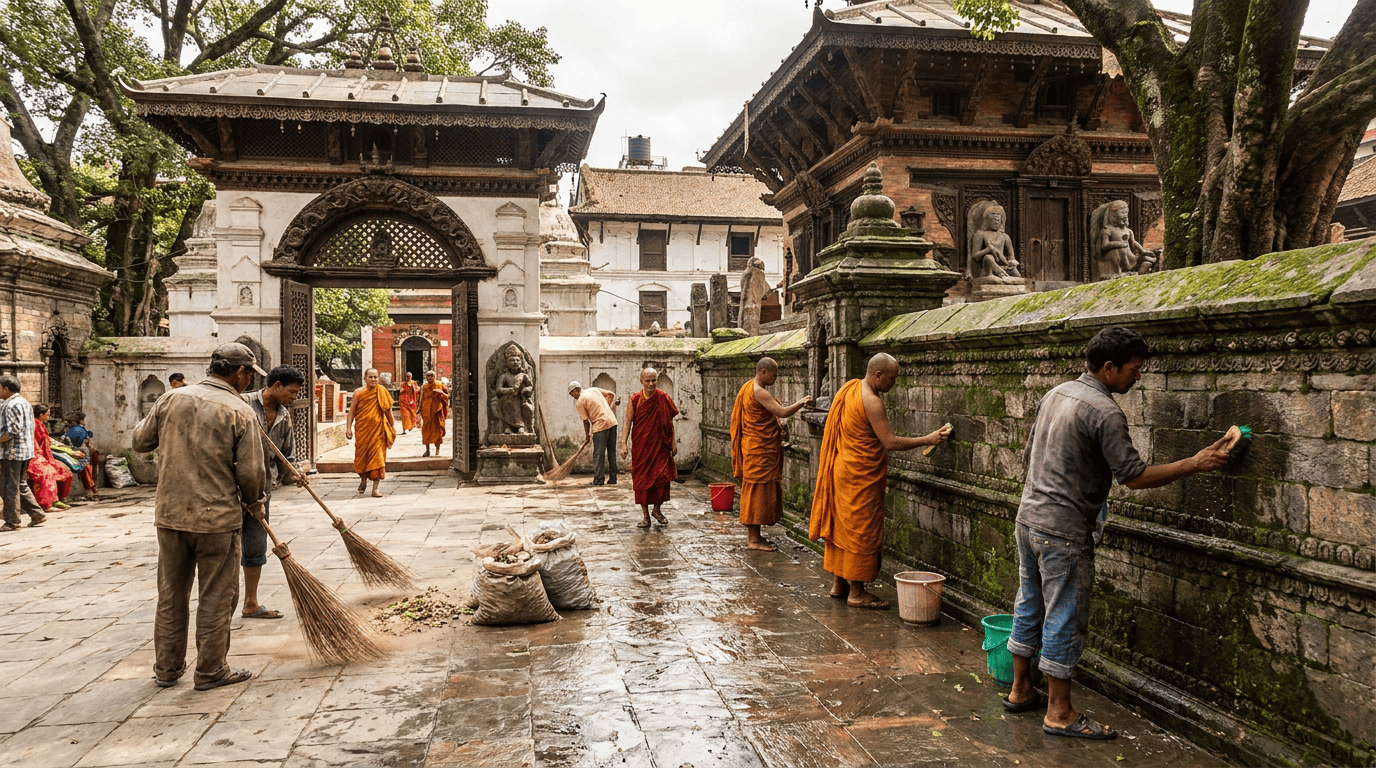
Cleaning the temple is much more than a practical duty. In Bhakti Yoga, it is a loving offering to God. Whether we are sweeping the floor, washing dishes, polishing the altar, arranging flowers, or taking out the trash, we are invited to do everything with devotion.
Bhakti Yoga means “the yoga of love and devotion.” The Sanskrit word bhakti means loving service, heartfelt devotion, and the natural affection of the soul for the Divine. When we clean the temple, we are not simply maintaining a building. We are preparing a sacred space where people can pray, chant, hear wisdom, honor sacred food, and feel spiritually nourished.
A temple is a place where the heart can soften. It is a place where God is welcomed, remembered, and served. So cleaning the temple becomes a beautiful meditation: “May this place be pure, peaceful, and welcoming for everyone who comes here.”
In the Bhagavad Gita, Krishna teaches:
“Whatever you do, whatever you eat, whatever you offer or give away, and whatever austerities you perform—do that as an offering to Me.”
—Bhagavad Gita 9.27
This verse shows us that every action can become sacred when offered with love. Cleaning is one of the most accessible ways to practice this teaching.
You do not need to be a scholar, priest, monk, or advanced yogi to clean the temple. You simply need a sincere heart.
The Inner Mood of Temple Cleaning
Cleaning as Seva: Loving Service
In Bhakti Yoga, service is called seva. Seva means serving with love, without selfish expectation. It is not forced labor or a way to prove our worth. It is a gift of the heart.
When we clean the temple as seva, we may quietly pray:
“Dear Lord, please let this service help others feel Your presence. Please clean my heart as I clean this space.”
This simple prayer can transform the whole experience. Even a broom becomes a devotional instrument. Even a mop bucket becomes part of worship.
The temple is often called the house of God. If someone we deeply loved were coming to our home, we would naturally want to prepare the space beautifully. In the same way, devotees clean the temple to honor the Divine Guest, who is always present.
Humility in Simple Service
There is a sweet humility in cleaning. It reminds us that spiritual life is not about becoming important. It is about becoming sincere.
Sometimes people may notice the person giving a lecture, leading music, or cooking a feast. But many essential services happen quietly. Someone arrives early to unlock the doors. Someone wipes the counters. Someone cleans the bathrooms. Someone folds the cloths, sweeps the entrance, and removes old flowers.
In Bhakti, no sincere service is small.
The Srimad Bhagavatam, a central scripture in the Bhakti tradition, explains that devotion offered with sincerity pleases the Lord. The external size of the service is not the main thing. The love behind it is what gives it value.
A person may offer a golden crown with pride, while another offers a clean floor with tears of gratitude. God sees the heart.
Cleaning the Temple, Cleaning the Heart
There is a famous teaching in the Bhakti tradition: as we cleanse the temple of the Lord, we also cleanse the temple of the heart.
The heart can gather dust over time: resentment, envy, fear, anxiety, ego, distraction, and forgetfulness of God. Through chanting, prayer, service, and spiritual friendship, that dust begins to lift.
The Sanskrit phrase ceto-darpana-marjanam means “cleansing the mirror of the heart.” It comes from Sri Chaitanya Mahaprabhu’s first verse of the Shikshashtakam, a beloved eight-verse prayer in the Gaudiya Vaishnava tradition. Sri Chaitanya taught that the chanting of God’s holy names cleanses the heart, just as a mirror is cleaned of dust.
Temple cleaning can become an embodied form of that same prayer. As we wipe the altar, we ask to wipe away our pride. As we sweep the floor, we ask to sweep away our selfishness. As we arrange the space, we ask that our life may also be arranged around love.
Preparing to Clean the Temple
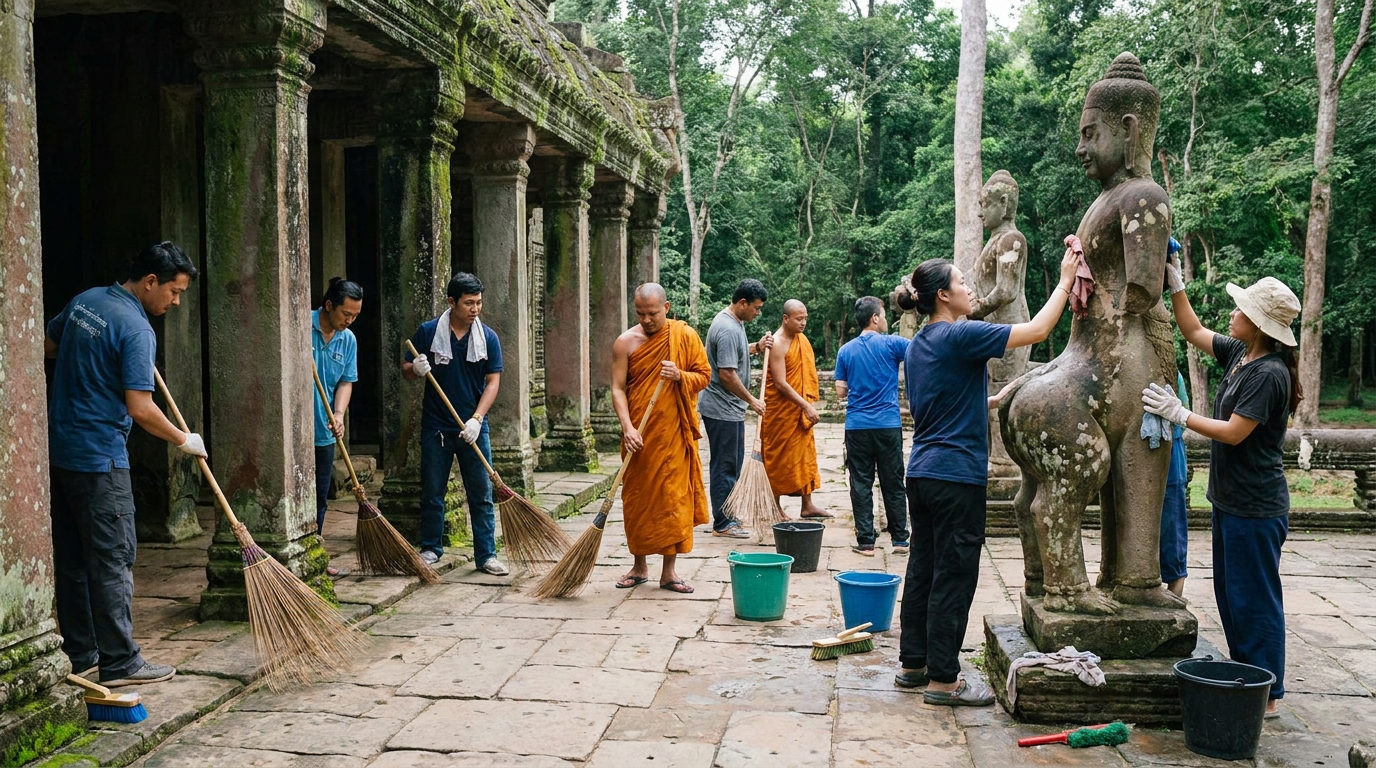
Begin with Prayer
Before starting any temple cleaning, take a quiet moment. This does not have to be long or complicated. Even one sincere breath can make the work devotional.
You may pray:
“Dear God, please guide my hands. May this cleaning be pleasing to You. May all who enter this temple feel peace, welcome, and spiritual encouragement.”
If you practice chanting, you can softly chant the Hare Krishna maha-mantra or another sacred name of God from your own tradition. The Sanskrit word mantra means a sacred sound or prayer that helps free and focus the mind.
The Hare Krishna maha-mantra is:
Hare Krishna, Hare Krishna, Krishna Krishna, Hare Hare
Hare Rama, Hare Rama, Rama Rama, Hare Hare
In Bhakti Yoga, Krishna means “the all-attractive Supreme Person,” Rama means “the source of spiritual joy,” and Hare refers to the Divine energy of love. Chanting this mantra is a simple way to call out to God with affection.
Gather the Right Supplies
Good temple cleaning requires care and organization. A sacred space should be cleaned thoroughly, safely, and respectfully.
Common cleaning supplies may include:
- Brooms and dustpans
- Mops and buckets
- Natural floor cleaner
- Microfiber cloths
- Glass cleaner
- Separate cloths for altar areas
- Trash bags
- Gloves
- Sponges and scrub brushes
- Disinfectant for bathrooms and high-touch areas
- Laundry baskets for cloths and towels
- Flower waste containers or compost bins
- Labelled storage containers
Whenever possible, use gentle, non-toxic cleaning products. Many temples welcome children, elders, and people with chemical sensitivities. Natural cleaning products also reflect the Bhakti principle of kindness toward all living beings and respect for the earth.
Keep Supplies Separate
It is wise and respectful to keep different cleaning supplies for different areas.
For example:
- Altar cloths should be separate from general cleaning cloths.
- Bathroom supplies should never be used in the kitchen or temple room.
- Kitchen cleaning tools should be marked and stored separately.
- Shoes-off areas may need dedicated brooms and mops.
Clear labels help everyone serve properly, especially new volunteers. Good organization is not separate from devotion. It helps prevent confusion and supports a peaceful mood of service.
Dress Respectfully and Practically
Temple cleaning can be physical service. Wear clothing that is modest, comfortable, and suitable for movement. In many Bhakti temples, devotees remove shoes before entering sacred areas. Some may wear clean devotional clothes, while others may wear simple work clothes reserved for service.
The main principle is cleanliness and respect.
If you are cleaning an altar or deity area, ask the temple leaders what standards are expected. Different temples may have specific guidelines. It is always humble and wise to ask before assuming.
Please visit our website for more information on our articles: articles.
Cleaning the Temple Room
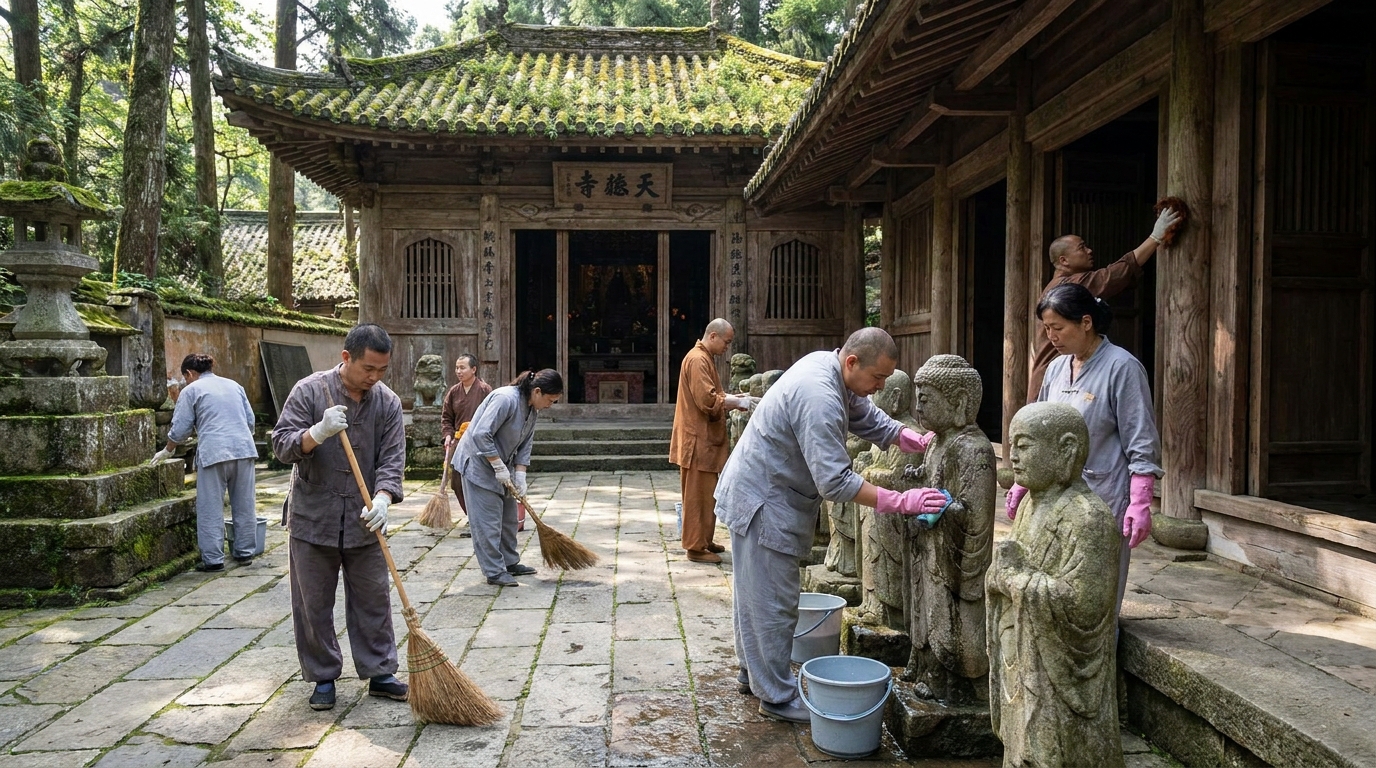
The Temple Room as a Sacred Gathering Space
The temple room is the heart of the temple. It is where people gather to chant, hear spiritual teachings, offer prayers, bow down, meditate, and receive blessings.
In Sanskrit, worship is often called puja, meaning an offering of love and reverence. The temple room supports that worship. When it is clean, peaceful, and orderly, visitors can more easily focus their minds and hearts on God.
A clean temple room says, “You are welcome here. This is a place of care.”
Sweeping and Mopping the Floors
Begin by removing clutter. Put away books, instruments, cushions, blankets, and other items in their proper places.
Then sweep carefully, especially along walls, corners, and under furniture. Dust and flower petals can collect quickly in temple rooms. If the temple uses carpets or rugs, vacuum slowly and thoroughly.
When mopping, use clean water and appropriate floor cleaner. Do not use overly strong fragrances. Many people come to the temple for prayer and may be sensitive to harsh smells.
As you sweep or mop, you can quietly chant or pray. Let the rhythm of the movement become meditation. Instead of rushing, clean steadily and attentively.
Dusting and Wiping Surfaces
Dust windowsills, shelves, picture frames, instruments, book tables, donation boxes, and seating areas. Use soft cloths for sacred pictures and delicate items.
If there are framed images of saints, gurus, or sacred scenes, handle them respectfully. In Bhakti traditions, images are not seen as ordinary decorations. They remind us of divine personalities, holy places, and spiritual teachings.
Clean glass surfaces gently so that images can be seen clearly. As you wipe them, you may reflect: “May my vision also become clear.”
Caring for Cushions, Mats, and Seating
Many temple rooms have cushions, asanas, or sitting mats. The word asana simply means a seat. In yoga, it often refers to a posture, but in temple life it may also mean the place where one sits for prayer or meditation.
Shake out or vacuum cushions regularly. Wash covers when needed. Arrange seating neatly after programs. If blankets are used, fold them with care.
Small details matter. A neatly arranged temple room can help people feel calm as soon as they enter.
Cleaning the Altar Area
Understanding the Altar
The altar is one of the most sacred areas of the temple. It may hold images or forms of God, sacred scriptures, lamps, flowers, water, incense, and offerings.
In some Bhakti temples, the altar includes deities. A deity is a sacred form of God worshiped with love and care. In Bhakti understanding, the deity is not an idol in the sense of something imaginary. Rather, the deity is a merciful form through which God accepts our service and allows us to relate personally.
Because the altar is so sacred, cleaning it should be done with special attentiveness, purity, and guidance.
Ask Before Serving on the Altar
Not everyone may be authorized to clean the altar directly. This is not meant to exclude anyone. It is simply because altar service often follows particular standards of cleanliness, training, and tradition.
If you are new, ask:
- Who may clean the altar?
- What should I wear?
- Which cloths and supplies should I use?
- What items may be moved?
- Are there specific prayers or procedures?
Receiving guidance is itself an act of humility.
Removing Old Flowers and Offerings
Flowers are beautiful offerings, but they should be refreshed regularly. Old flowers, wilted leaves, and dried garlands should be removed respectfully.
Many temples place flower remnants in a sacred area, compost, garden, or natural place rather than throwing them casually into the trash. Ask your temple’s standard.
Food offerings should also be handled respectfully. In Bhakti Yoga, food offered to God becomes prasadam. The word prasadam means mercy or grace. It refers to sanctified food that has been lovingly offered and then shared.
Do not discard prasadam carelessly. If something must be disposed of, do so respectfully and according to the temple’s guidelines.
Cleaning Altar Surfaces
Use clean, designated cloths for altar surfaces. Avoid harsh chemicals unless approved. Dust gently. Polish only what should be polished. Some sacred items are delicate and should not be touched without permission.
Move slowly and consciously. The mood is not “I am cleaning objects.” The mood is “I am serving the Lord and all those who come to worship.”
If you feel nervous, that can be good. A little reverence helps us stay attentive. But do not be afraid. God is kind. Service is learned over time.
Cleaning the Kitchen and Prasadam Areas
The Kitchen as a Sacred Place
In Bhakti Yoga, the kitchen is also a sacred space. Food is prepared not merely for eating but for offering to God and nourishing the community.
The Bhagavad Gita teaches:
“If one offers Me with love and devotion a leaf, a flower, a fruit, or water, I will accept it.”
—Bhagavad Gita 9.26
This verse reveals that God accepts even simple offerings when they are made with love. The kitchen is where that loving offering often begins.
A clean kitchen supports purity, safety, and devotion.
Food Safety and Spiritual Care
Wash hands thoroughly before handling food or cleaning kitchen items. Keep cooking areas clean. Sanitize cutting boards, counters, sinks, and high-touch surfaces.
Separate cleaning tools for the kitchen from those used elsewhere. Never bring bathroom cloths, buckets, or sponges into the kitchen.
Check refrigerators regularly. Remove spoiled food. Label and date stored items. Keep grains, spices, and dry goods sealed.
Cleanliness in the kitchen is both practical and devotional. It protects the health of the community and honors the sacred nature of prasadam.
Washing Dishes with Devotion
Dishwashing is one of the most common temple services, and one of the most powerful.
After a festival or Sunday gathering, there may be mountains of pots, plates, cups, and serving spoons. It can feel endless. But each plate washed may have served someone prasadam. Each pot may have carried an offering to God.
Try to wash with gratitude:
“Thank You for letting me serve. May everyone who ate today feel spiritually nourished.”
If several people are washing together, keep the atmosphere kind. Chanting softly, sharing encouraging words, or serving in silence can all be beautiful.
Cleaning Dining Areas
Wipe tables thoroughly. Sweep and mop floors. Clean chairs, benches, and serving stations. Empty trash before it overflows.
Food areas should feel welcoming to guests. For many people, receiving prasadam is their first deep experience of Bhakti community. A clean, peaceful dining area helps them receive that mercy with comfort and joy.
Cleaning Bathrooms and Entryways
The Humble Glory of Bathroom Service
Bathroom cleaning is one of the most humble services in the temple. It may not seem glamorous, but it is deeply needed.
A clean bathroom protects health, honors guests, and shows care. When someone visits a temple for the first time, the bathroom can shape their impression. If it is clean, stocked, and fresh, they feel respected.
In Bhakti, humility is not low self-worth. Humility means understanding that we are servants of love. Cleaning a bathroom can be as sacred as decorating an altar when done for God.
Bathroom Cleaning Checklist
A complete bathroom cleaning may include:
- Emptying trash bins
- Replacing liners
- Cleaning toilets and urinals
- Scrubbing sinks
- Wiping counters
- Cleaning mirrors
- Refilling soap
- Restocking toilet paper and paper towels
- Disinfecting handles, faucets, and switches
- Sweeping and mopping floors
- Checking for odors
- Removing clutter
Use gloves and designated bathroom supplies only. Store them separately and clearly.
Welcoming Entryways
The entrance is the first physical welcome of the temple. Keep it clean, bright, and uncluttered.
Sweep steps and walkways. Wipe doors and handles. Clean shoe areas. Organize signs, flyers, and welcome tables. Remove old posters or outdated announcements.
If the temple has a shoe rack, arrange shoes neatly when appropriate. Many visitors may not know temple customs, so clear and gentle signage can help.
A clean entryway quietly communicates: “Come in. You belong here.”
Cleaning with Community
Serving Together
Temple cleaning is a wonderful way to build spiritual community. People from all backgrounds can participate. Children, elders, newcomers, longtime practitioners, students, families, and friends can all offer something.
Some may do heavy lifting. Some may fold cloths. Some may water plants. Some may organize books. Some may simply wipe tables.
Everyone has a place.
The Bhakti House spirit is warm and welcoming: we serve together not to judge each other, but to encourage each other toward God.
Creating a Cleaning Schedule
A cleaning schedule helps service become steady and sustainable. Without a schedule, the same few people may quietly carry too much responsibility.
Consider creating daily, weekly, and monthly cleaning lists.
Daily tasks may include:
- Sweeping main areas
- Cleaning bathrooms
- Emptying trash
- Washing dishes
- Wiping kitchen counters
- Refreshing the altar area as authorized
Weekly tasks may include:
- Mopping all floors
- Dusting shelves and windowsills
- Washing cloths and towels
- Deep cleaning bathrooms
- Organizing storage areas
- Cleaning refrigerators
Monthly tasks may include:
- Washing windows
- Cleaning behind furniture
- Checking supplies
- Deep cleaning carpets or rugs
- Sorting old flyers and materials
- Inspecting outdoor spaces
A visible checklist can help volunteers know what to do without feeling lost.
Training New Volunteers
When someone offers to help, receive them kindly. New volunteers may not know the standards yet. Explain things gently.
Instead of saying, “No, not like that,” try:
“Thank you so much. For this area, we use this cloth because it is reserved for the altar.”
Or:
“We keep these supplies separate for cleanliness. Let me show you.”
Training is part of care. If we correct people harshly, they may feel discouraged. If we guide them with gratitude, they may feel inspired to continue serving.
Avoiding Burnout
Even devotional service should be balanced with rest, support, and honest communication. If a few people are doing all the cleaning, they may become tired or resentful.
Bhakti is love, and love includes caring for the servants.
Rotate duties when possible. Appreciate volunteers often. Keep expectations realistic. Encourage people to serve according to their capacity.
God is pleased by sincere effort, not exhausted performance.
The Spiritual Benefits of Temple Cleaning
It Deepens Mindfulness
Cleaning the temple brings us into the present moment. We notice details. We become aware of our movements, thoughts, and intentions.
Instead of cleaning in a distracted mood, we can practice mindful devotion:
- “I am wiping this table for God’s guests.”
- “I am sweeping this floor so people can chant peacefully.”
- “I am washing this pot that held prasadam.”
- “I am cleaning this space so my heart may become clean.”
This awareness transforms ordinary work into spiritual practice.
It Softens the Ego
The ego often wants recognition. It wants to be seen, praised, and honored. Cleaning challenges that tendency in a healthy way.
Much cleaning happens when no one is watching. The results may be noticed only when something is not clean. This can teach us to serve for God’s pleasure rather than applause.
In the Bhagavad Gita, Krishna encourages action without attachment to the fruits of work. This is called karma-yoga, the yoga of offering one’s actions. When karma-yoga is infused with love for God, it becomes part of Bhakti Yoga.
Cleaning the temple helps us practice this directly.
It Builds Gratitude
When we clean, we begin to appreciate all the unseen service that makes temple life possible. We notice the person who buys soap, the person who washes towels, the person who repairs the sink, the person who vacuums after everyone leaves.
Gratitude grows when we serve.
A grateful heart is fertile ground for devotion.
It Welcomes Others to Spiritual Life
A clean temple helps visitors feel safe and respected. This is especially important for those who are new to Bhakti Yoga or unsure whether they belong.
People may come from different religions, cultures, identities, or life experiences. Some may be curious. Some may be hurting. Some may be seeking God after a long time away from spiritual community.
When they enter a clean, peaceful, loving environment, they may feel the message before anyone speaks:
“You are welcome. God’s love is for you too.”
Practical Temple Cleaning Checklist
Daily Temple Cleaning
A daily rhythm keeps the temple fresh and inviting.
Daily tasks may include:
- Offer a short prayer before beginning
- Open windows if appropriate for fresh air
- Sweep or vacuum the temple room
- Spot mop as needed
- Empty trash and recycling
- Clean bathrooms
- Wipe sinks, counters, and high-touch surfaces
- Wash dishes and clean kitchen surfaces
- Arrange shoes, cushions, books, and chairs
- Remove clutter from entryways
- Check flowers and offerings
- Restock soap, paper towels, and toilet paper
- Close with gratitude
A simple closing prayer may be:
“Thank You for allowing me to serve today. Please bless everyone who enters this temple.”
Weekly Deep Cleaning
Weekly deep cleaning prevents buildup and keeps the temple healthy.
Weekly tasks may include:
- Mop all floors thoroughly
- Dust all shelves, frames, ledges, and corners
- Clean windows and glass doors
- Wash used cloths, towels, and aprons
- Deep clean bathrooms
- Clean under cushions and furniture
- Organize storage areas
- Clean refrigerator shelves
- Sanitize trash bins
- Check cleaning supply inventory
- Remove old flowers or decorations as guided
- Tidy outdoor areas
If your temple has many visitors, some weekly tasks may need to happen more often.
Monthly and Seasonal Cleaning
Monthly or seasonal cleaning is a chance to reset the whole space.
Tasks may include:
- Deep cleaning carpets or rugs
- Washing curtains or altar cloths as authorized
- Polishing approved metal items
- Cleaning behind large furniture
- Decluttering closets
- Sorting books and pamphlets
- Checking for repairs
- Cleaning ceiling fans and vents
- Refreshing garden areas
- Reviewing volunteer schedules
- Updating signs and welcome materials
Some temples hold community cleaning days before major festivals. These can be joyful events with chanting, prasadam, and teamwork.
Festival Cleaning
Festivals bring special blessings and extra responsibility. More guests means more cleaning before, during, and after the event.
Before a festival:
- Deep clean the temple room
- Prepare bathrooms and supplies
- Organize prasadam serving areas
- Clear clutter from entryways
- Arrange extra trash and recycling bins
- Prepare shoe areas
- Set up volunteer teams
During a festival:
- Check bathrooms regularly
- Keep floors dry and safe
- Empty trash before it overflows
- Wipe spills quickly
- Keep serving areas clean
- Support cooks and servers
After a festival:
- Wash all dishes
- Clean kitchen thoroughly
- Sweep and mop floors
- Remove decorations respectfully
- Take out trash and recycling
- Return items to storage
- Offer thanks to all volunteers
Festival cleaning is a beautiful opportunity to serve many souls at once.
Common Mistakes to Avoid
Rushing Through the Service
It is natural to want to finish quickly, especially when there is a lot to do. But rushing can make the mind restless and the cleaning incomplete.
Try to move efficiently but prayerfully. Bhakti is not laziness, but it is also not frantic energy. It is loving attention.
Using the Wrong Supplies
Using the wrong cloth, cleaner, or tool can create problems, especially around the altar, kitchen, or bathroom.
When in doubt, ask. Asking is not weakness. It is wisdom.
Forgetting the Mood
Sometimes we can become so focused on the task that we forget the purpose. The temple may become clean, but our heart may become irritated.
If frustration arises, pause. Take a breath. Chant softly. Remember:
“I am not just cleaning. I am serving.”
Criticizing Other Volunteers
Cleaning standards matter, but kindness matters too. If someone makes a mistake, correct with respect. If someone serves differently than you, try to understand before judging.
A clean temple should not come at the cost of a wounded community.
The true temple is also the heart of each person serving.
Making Temple Cleaning Part of Your Bhakti Yoga Practice
Chant While You Clean
Chanting is central to Bhakti Yoga. The Sanskrit word kirtan means singing or glorifying God, often together with music. The word japa means personal, meditative repetition of God’s names, often on beads.
While cleaning, you can play soft kirtan, chant quietly, or repeat a simple prayer. This helps the mind stay connected to God.
Even if you come from another faith background, you can pray in the language of your own heart. Bhakti welcomes sincere remembrance of God.
Offer the Results
At the end of cleaning, pause and mentally offer the result.
“Dear Lord, whatever I have done, please accept it. Please forgive any mistakes. May this service benefit others.”
This offering mood is essential. It reminds us that the service belongs to God.
Serve Regularly, Even in Small Ways
You do not have to do everything. A steady small service can be deeply transformative.
You might choose one simple commitment:
- Clean the temple room once a week
- Help wash dishes after programs
- Bring fresh flowers
- Restock bathroom supplies
- Sweep the entrance
- Fold cloths
- Join a monthly cleaning day
- Stay ten minutes after kirtan to help tidy
Small, sincere steps build spiritual strength.
Bring the Temple Mood Home
Temple cleaning can teach us how to care for our own homes as sacred spaces. You can make a small altar or prayer corner. You can clean your home while chanting. You can cook with devotion and offer your food to God.
Bhakti Yoga is practical. It is meant to enter daily life.
Your kitchen, bedroom, office, car, and heart can all become places of remembrance.
A Simple Meditation for Cleaning the Temple
Before you begin, stand quietly for a moment.
Take a gentle breath.
Remember that you are in a sacred place.
You may pray:
“Dear God, please let me serve with humility and love. As I clean this temple, please clean my heart. May this space welcome every soul. May all who come here feel peace, hope, and Your loving presence.”
Then begin.
Sweep with care.
Wipe with gratitude.
Wash with patience.
Arrange with love.
If the mind wanders, bring it back through chanting or prayer. If tiredness comes, offer that too. If joy comes, offer that. If no special feeling comes, simply continue. Bhakti grows through steady sincerity.
The great beauty of temple cleaning is that it does not require perfection. It requires willingness.
Everyone Is Welcome to Serve
Cleaning the temple is a complete spiritual practice. It includes humility, mindfulness, discipline, love, community, prayer, and remembrance of God. It cares for the physical space and the spiritual atmosphere. It welcomes guests, supports worship, and helps soften the heart.
Whether you are new to Bhakti Yoga or have practiced for many years, there is a place for you in this service.
You may come with questions. You may come from another tradition. You may not know the Sanskrit words or temple customs. That is okay. Bhakti begins with sincerity, not expertise.
God receives the love in every offering.
A broom offered with devotion can become worship. A clean bathroom can become compassion. A washed plate can become gratitude. A quiet hour of service can become a prayer.
If you feel inspired, take one sincere step. Ask how you can help. Sweep one floor. Wash one dish. Chant one round. Offer one prayer. Come as you are.
Everyone is welcome to take one sincere step toward God.
FAQs
What is the significance of cleaning the temple?
Cleaning the temple is an important practice in many religious traditions as it is believed to purify the sacred space and create a welcoming environment for worshippers and deities.
What are the common cleaning practices for temples?
Common cleaning practices for temples include sweeping and mopping the floors, dusting and wiping down surfaces, cleaning and polishing religious artifacts, and maintaining the outdoor grounds.
How often should a temple be cleaned?
The frequency of temple cleaning varies depending on the specific religious tradition and the size of the temple. Some temples are cleaned daily, while others may be cleaned weekly or monthly.
Are there any specific rituals or ceremonies associated with temple cleaning?
In some religious traditions, there are specific rituals or ceremonies associated with temple cleaning, such as chanting of sacred verses, offering of prayers, and the use of holy water or incense to purify the space.
Who is responsible for cleaning the temple?
The responsibility for cleaning the temple may fall on designated volunteers, temple staff, or hired cleaning professionals. In some cases, the entire community may come together for a collective cleaning effort.

