
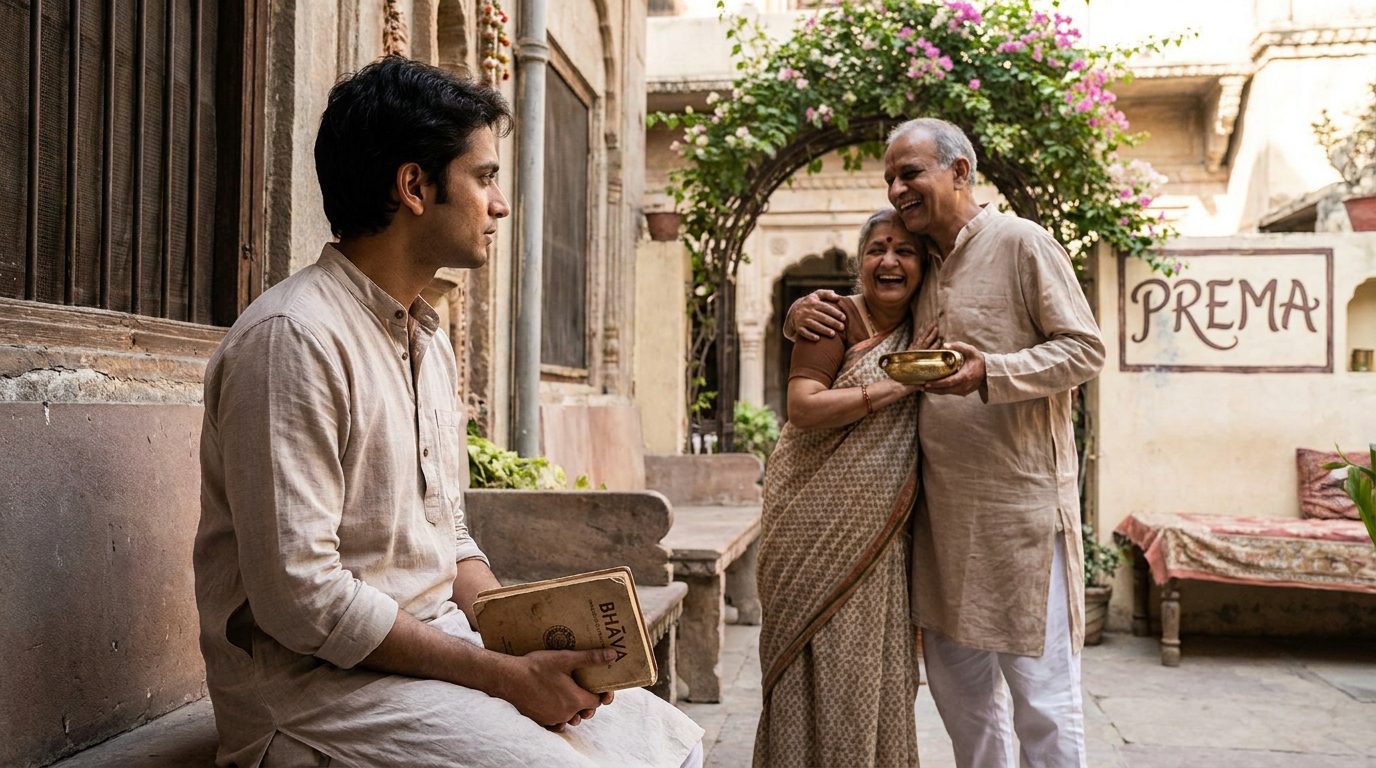
The Journey from Emotion to Divine Love
In the language of Bhakti Yoga, love is not only a feeling. It is a sacred path, a way of living, a way of seeing, and a way of returning the heart to God.
Two beautiful Sanskrit words often arise when we speak about the inner life of devotion: bhāva and prema. Both point toward love, but they describe different depths of spiritual experience.
Bhāva means a spiritual emotion, mood, or feeling of devotion. It is the awakening of the heart toward God.
Prema means pure divine love. It is love fully blossomed—selfless, steady, and completely centered on pleasing the Divine.
For many of us, this distinction may feel subtle at first. We may ask: “Isn’t all devotion love? If I feel moved during kīrtan, is that bhāva or prema? If I cry during prayer, does that mean I have reached divine love?”
These are tender questions. And Bhakti Yoga meets them not with judgment, but with compassion.
The path of bhakti is not about pretending to be spiritually advanced. It is about becoming sincere. It is not about displaying emotion. It is about offering the heart. Whether we are new to spiritual life or have practiced for many years, understanding bhāva and prema can help us honor our emotions while also growing toward deeper, purer love.
What Is Bhāva in Bhakti Yoga?
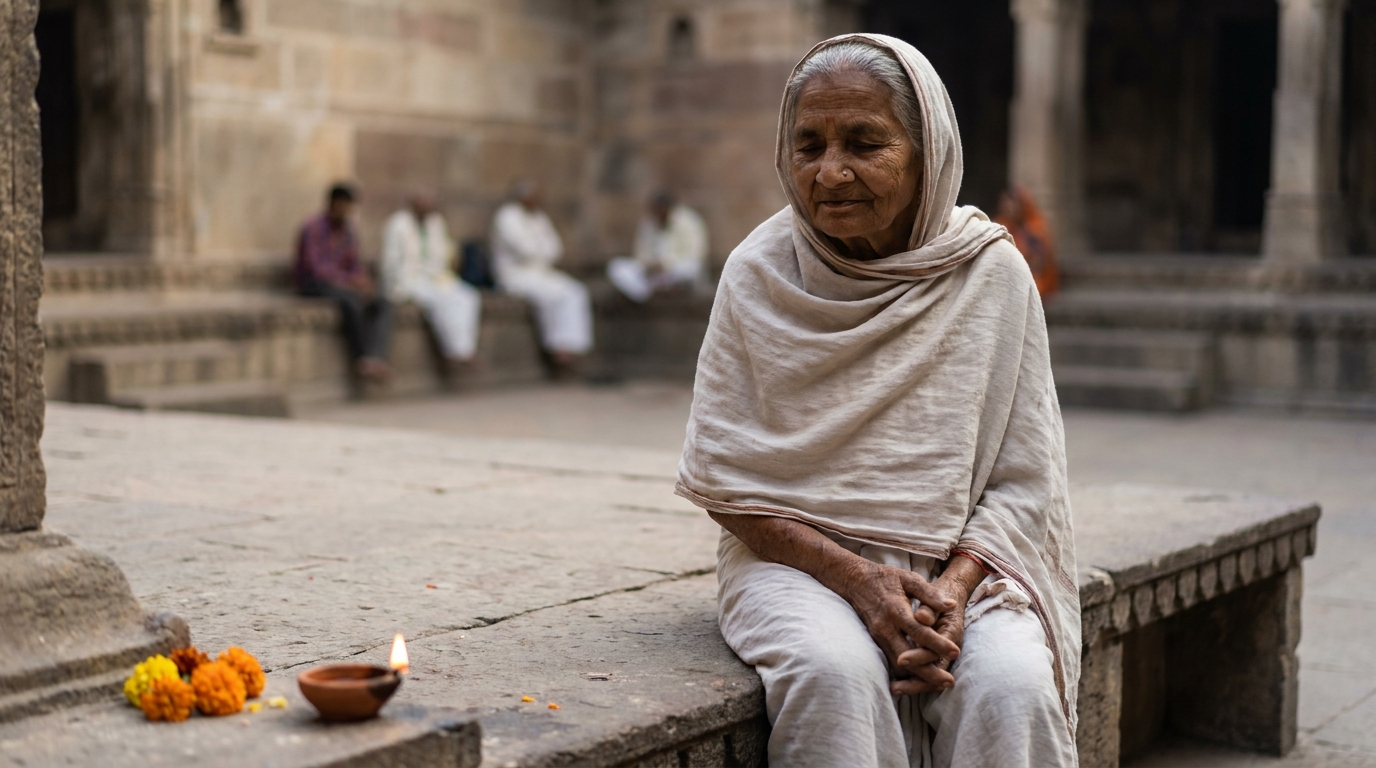
Bhāva is often translated as “emotion,” “mood,” “feeling,” or “spiritual sentiment.” In Bhakti Yoga, bhāva refers to the heart’s awakened feeling toward God.
This may arise as longing, gratitude, tenderness, humility, joy, reverence, or a deep desire to serve. Bhāva is not ordinary emotion alone. It is emotion touched by devotion.
When someone chants the holy names and feels the heart soften, that may be a glimpse of bhāva. When a person bows before the Divine with tears of gratitude, that may be bhāva. When we feel a sincere desire to serve others because they are beloved children of God, that too may be a reflection of bhāva.
Bhāva is the beginning of spiritual love becoming alive in the heart.
Bhāva as a Sacred Feeling
In daily life, emotions often come and go quickly. We may feel happy in the morning, anxious in the afternoon, peaceful in the evening, and restless by night. These human emotions are natural. Bhakti does not reject them. Instead, Bhakti Yoga teaches us how to spiritualize them.
Bhāva is different from passing mood because it is connected to the Divine. It is the heart turning toward God with feeling.
For example:
- We may feel sorrow, but in bhakti that sorrow becomes longing for God.
- We may feel joy, but in bhakti that joy becomes gratitude to God.
- We may feel love, but in bhakti that love becomes service to God and all beings.
- We may feel helpless, but in bhakti that helplessness becomes prayerful surrender.
Bhāva teaches us that emotions are not enemies of spiritual life. When purified and offered, they become part of our path.
Bhāva in Scripture and Practice
The Bhakti-rasāmṛta-sindhu, a foundational devotional text by Śrīla Rūpa Gosvāmī, describes progressive stages of devotion. One important stage is bhāva-bhakti, the stage where devotion becomes deeply awakened and spiritually emotional.
This does not mean that anyone who feels emotional has reached bhāva-bhakti in the highest sense. The tradition lovingly reminds us to be humble. Tears, trembling, or strong feelings can come from many causes—music, memory, stress, relief, or genuine spiritual inspiration.
Still, even small devotional feelings are precious. If chanting softens our heart, if prayer makes us more compassionate, if service makes us more humble, we should honor that as grace and continue practicing sincerely.
Bhāva is nurtured through steady devotion: chanting, hearing sacred wisdom, remembering God, serving others, worship, prayer, friendship with devotees, and offering our daily life to the Divine.
What Is Prema, Pure Love of God?
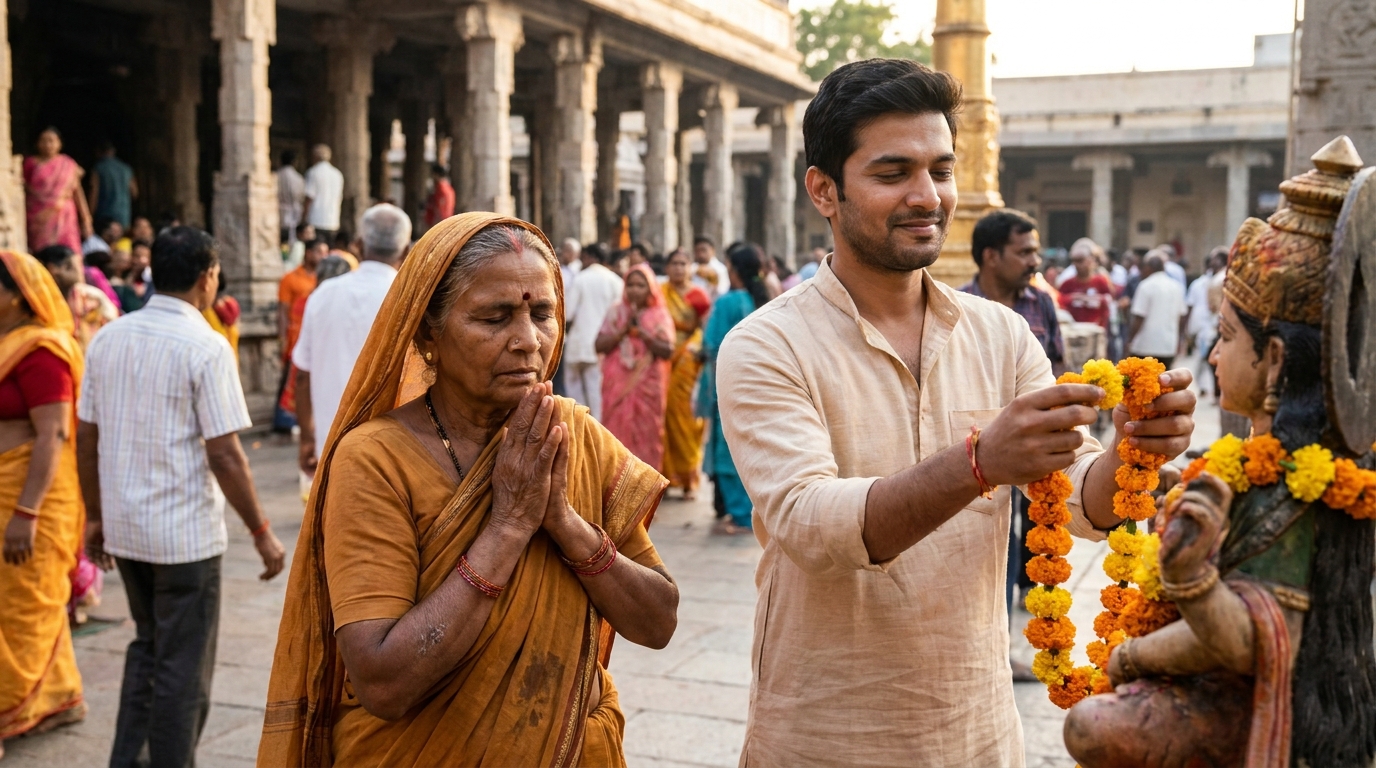
Prema means pure love. In Bhakti Yoga, prema is the highest perfection of devotion. It is love free from selfish motive. It is love that wants only to please God.
Prema is not merely intense emotion. It is not spiritual excitement. It is not attachment to a religious identity or community image. Prema is the soul’s natural love for the Supreme fully awakened.
In prema, love becomes unconditional. It does not depend on comfort, recognition, success, or even mystical experience. The heart loves God because God is lovable. The soul serves because service itself is joy.
Prema Is Beyond Self-Centered Desire
Much of what we call love in ordinary life is mixed with need. We love someone, but we may also want attention, security, appreciation, or control. This is very human. Bhakti does not shame us for this. It simply invites us to grow.
Prema is love without bargaining.
It does not say, “God, I will love You if You give me what I want.”
It does not say, “I will chant if I feel bliss every time.”
It does not say, “I will serve as long as people notice me.”
Prema says, “My Lord, I am Yours. Please let me love You. Please let me serve You. Please let my heart become pleasing to You.”
This love is beautifully expressed in the mood of great saints who pray not for wealth, followers, beauty, or even liberation, but only for loving service to God.
Prema in the Bhakti Scriptures
In the Śrīmad-Bhāgavatam, one of the most beloved scriptures of the Bhakti tradition, we find many examples of prema. The residents of Vṛndāvana love Krishna not because He is powerful, but because He is their very life. Mother Yaśodā loves Him as her child. The cowherd boys love Him as their friend. The gopīs, the devoted cowherd maidens, love Him with complete self-giving devotion.
Their love is not theoretical. It is personal, intimate, and total.
The Bhagavad-gītā also points toward the heart of prema. In Bhagavad-gītā 9.26, Krishna says:
“If one offers Me with love and devotion a leaf, a flower, a fruit, or water, I accept it.”
The offering itself may be simple. A leaf. A flower. A little water. But the essence is love. God accepts the devotion in the heart.
This verse is deeply practical. It means that divine love is not limited to the wealthy, the scholarly, the priestly, or the socially powerful. Everyone can offer love. Everyone can pray. Everyone can chant. Everyone can serve.
Discover a wealth of knowledge by exploring our insightful articles. Our articles cover a wide range of topics to inspire and educate. Stay informed and engaged by reading our latest articles.
Bhāva vs Prema: The Gentle Difference
The difference between bhāva and prema is not meant to create pride or comparison. It is meant to help us understand the deepening of love.
Bhāva is like the first fragrance of a flower beginning to bloom. Prema is the flower fully opened.
Bhāva is the dawn light appearing on the horizon. Prema is the sun shining in fullness.
Bhāva is the heart awakening. Prema is the heart completely given.
Both are sacred. Both are gifts. And both are approached through grace and sincere practice.
Bhāva Is the Beginning of Spiritual Emotion
Bhāva brings softness. It may bring tears, humility, longing, joy, or a desire to chant more deeply. It is a sign that devotion is becoming real in the heart.
But bhāva can still be tender and developing. It may come and go. We may feel deeply inspired one day and distracted the next. We may feel devotional emotion during a festival or kīrtan, then struggle with irritation in ordinary life.
This does not mean we are failures. It means we are practicing.
Bhāva invites us to protect the heart’s awakening. We protect it through humility, association with sincere devotees, regular chanting, honest prayer, and a life of service.
Prema Is Fully Ripened Divine Love
Prema is steady and selfless. It is not dependent on external conditions. A person with prema may feel intense emotion, or they may appear simple and quiet. The proof of prema is not performance. The proof is purity of love.
Prema transforms everything:
- The ego becomes softened.
- Service becomes natural.
- Compassion expands.
- God becomes the center of life.
- The heart no longer seeks separate enjoyment.
- Love flows without selfish demand.
In prema, the devotee does not merely think about God occasionally. God becomes the beloved center of every breath.
Why the Distinction Matters
Understanding bhāva vs prema helps us avoid two common mistakes.
The first mistake is dismissing emotion. Some people think spirituality should be dry, intellectual, or emotionally controlled. Bhakti says no—love includes the heart. Emotion offered to God can be sacred.
The second mistake is mistaking every emotion for pure love. Strong feelings are not always prema. We can feel moved by music, community, beauty, or personal relief. These feelings may be meaningful, but prema is something deeper: selfless devotion that continues even when the emotional high fades.
This distinction keeps us both open-hearted and humble.
The Role of Chanting in Awakening Bhāva and Prema
One of the central practices of Bhakti Yoga is chanting the holy names of God. In Sanskrit, this is called nāma-saṅkīrtana—the collective chanting of divine names—and japa, the personal repetition of sacred mantra.
At The Bhakti House, chanting is understood as a simple and powerful way to reconnect the heart with God. You do not need to be perfect to chant. You do not need to understand everything. You can begin with sincerity.
The holy name is not considered separate from God. When we chant, we are calling out to the Divine with our voice, mind, and heart.
Chanting as a Practice of Relationship
A mantra is not magic in a mechanical sense. It is a prayer. It is a call. It is a relationship.
The Hare Krishna mahā-mantra is one of the most well-known mantras in the Bhakti tradition:
Hare Krishna Hare Krishna
Krishna Krishna Hare Hare
Hare Rama Hare Rama
Rama Rama Hare Hare
A simple meaning is: “O Lord, O Divine Energy of the Lord, please engage me in loving service.”
When chanted sincerely, this mantra cleanses the heart. It helps us move from distraction to remembrance, from anxiety to trust, from self-centeredness to service.
At first, chanting may feel external. We may be distracted. We may repeat the words while the mind wanders. This is normal. Over time, by grace and practice, chanting can awaken bhāva—real feeling for God. And as devotion matures, chanting can lead the soul toward prema.
The Humble Mood of Chanting
Śrī Caitanya Mahāprabhu, the great teacher of divine love and congregational chanting, gave a famous instruction:
“One should chant the holy name of the Lord in a humble state of mind, thinking oneself lower than a blade of grass, more tolerant than a tree, ready to offer respect to all, and not expecting respect in return.”
This teaching is very practical. It reminds us that chanting is not only sound. It is also character. The holy name enters a humble heart more deeply.
If we want bhāva to grow and prema to awaken, we can ask:
- Am I becoming more humble?
- Am I becoming more forgiving?
- Am I becoming more eager to serve?
- Am I offering respect to others?
- Am I chanting as a prayer, not a performance?
These questions help us bring chanting into daily life.
Emotion, Ego, and the Purification of the Heart
Bhakti Yoga honors emotion, but it also teaches purification. This is important because our emotions can be mixed.
We may feel devotion, and also want to be admired.
We may serve, and also want control.
We may chant, and also compare ourselves to others.
We may cry in prayer, and also become impatient with those around us.
This does not make us bad. It makes us human. Bhakti is the path by which the human heart becomes gradually purified by divine grace.
Not All Spiritual Emotion Is the Same
Sometimes people experience intense feelings in spiritual settings. Kīrtan may stir the heart. A sacred story may bring tears. A moment of prayer may feel overwhelming. These can be beautiful gifts.
But the Bhakti tradition gently advises us not to become proud of such experiences. Tears are not the goal. Visions are not the goal. Emotional intensity is not the goal.
The goal is love of God.
If emotion makes us more humble, kind, steady, and devoted, it is helping us. If emotion makes us proud, performative, or judgmental, then we can bring that honestly into prayer and ask for purification.
A simple prayer may be:
“My Lord, whatever is sincere in me, please nourish it. Whatever is selfish in me, please purify it. Let my feelings become an offering to You.”
The Ego Can Imitate Devotion
The ego is subtle. It can even use spiritual life to feel special. We may begin to think, “I am more advanced,” “I feel more deeply,” or “Others do not understand devotion like I do.”
This is why humility is essential.
True bhāva makes us feel grateful, not superior. True prema makes us see everyone as worthy of compassion. The closer one comes to God, the less one wants to dominate others.
The saints of Bhakti often saw themselves as beginners, even when others honored them as great souls. This humility is not low self-esteem. It is spiritual clarity. The devotee understands, “Everything I have is grace.”
Bhāva and Prema in Daily Life
Bhāva and prema are not only for temples, monasteries, or ancient saints. They are meant to transform daily living. Bhakti Yoga is practical. It enters the kitchen, the workplace, the family, the commute, the difficult conversation, and the quiet moment before sleep.
Every part of life can become an offering.
Turning Daily Feelings Toward God
We all experience many emotions each day. Instead of suppressing them or being ruled by them, we can offer them.
If you feel joyful, you can say, “Thank You, Lord, for this moment.”
If you feel anxious, you can pray, “Please guide me and help me remember You.”
If you feel hurt, you can ask, “Please help me forgive and learn.”
If you feel love for someone, you can think, “This soul belongs to You. Let me serve them with care.”
In this way, ordinary emotions become connected to devotion. This is the beginning of spiritualizing life.
Bhāva grows when the heart repeatedly turns toward God.
Serving Others as an Expression of Love
In Bhakti Yoga, service is called seva. Seva means loving service offered for the pleasure of God.
Service may be simple:
- Preparing food with gratitude
- Listening compassionately to someone
- Helping clean a sacred space
- Supporting a community gathering
- Sharing wisdom without pride
- Offering time, skills, or resources
- Caring for family as service to God
- Feeding others with kindness
Seva helps transform emotion into action. It teaches us that love is not only what we feel; love is what we offer.
Bhāva may inspire service, and service deepens bhāva. Over time, selfless service prepares the heart for prema.
Prayer as Honest Relationship
Prayer does not need to be formal or complicated. Prayer is speaking to God honestly.
You can pray in Sanskrit, English, or your own first language. You can pray with traditional verses or simple words. The Lord hears sincerity.
A humble daily prayer might be:
“Dear Lord, please help me love You more. Please help me serve others with kindness. Please cleanse my heart of selfishness. Please guide me one step closer to You.”
Such prayer is powerful because it opens the heart. It acknowledges that we cannot manufacture prema by our own strength. Divine love is a gift, and we can prepare ourselves to receive it.
Common Misunderstandings About Bhāva and Prema
Because bhāva and prema are profound spiritual realities, they can easily be misunderstood. A gentle clarification can help us walk the path with balance.
Misunderstanding One: Bhāva Means Being Emotional All the Time
Bhāva is not emotional instability. It is not being swept away by every mood. Spiritual emotion is deep, meaningful, and connected to God.
A person with genuine bhāva may be very peaceful, grounded, and practical. Their devotion may show through kindness, steadiness, and humility more than outward display.
In Bhakti Yoga, external emotion is not the only sign of inner devotion. Sometimes the deepest love is quiet.
Misunderstanding Two: Prema Is Only for Rare Saints
It is true that prema is the highest perfection and is very rare. Yet the path toward prema is open to everyone.
Bhakti scriptures repeatedly teach that divine love is available by grace. No one is disqualified by birth, background, education, culture, past mistakes, or current struggles. The holy name can be chanted by anyone. Service can be offered by anyone. Prayer can be spoken by anyone.
We may not claim prema cheaply, but we can sincerely walk toward it.
Misunderstanding Three: Spiritual Love Rejects Human Love
Bhakti does not teach us to become cold or detached in an uncaring way. Rather, divine love purifies and expands human love.
When we love God, we learn to love others more truly—not as objects for our enjoyment, but as souls, as children of the Divine. Our relationships become less possessive and more compassionate. We learn to serve without controlling, to care without clinging, and to forgive with prayerful strength.
Prema does not diminish love. It perfects love.
Misunderstanding Four: Feelings Are Enough
Feelings can inspire us, but Bhakti Yoga asks for steady practice. Love matures through commitment.
If we only practice when we feel inspired, our devotion may remain shallow. But when we chant, pray, serve, and study even in ordinary or difficult moments, the heart becomes strong.
Just as a garden needs daily care, the heart needs regular spiritual nourishment.
Scriptural Guidance for Growing from Bhāva Toward Prema
The Bhakti tradition gives a compassionate map for spiritual growth. We are not asked to force advanced love. We are invited to practice sincerely and receive grace.
The Bhagavad-gītā: Offer Everything with Devotion
In the Bhagavad-gītā 9.27, Krishna says:
“Whatever you do, whatever you eat, whatever you offer or give away, and whatever austerities you perform—do that as an offering to Me.”
This verse brings Bhakti Yoga into everyday life. It teaches us that devotion is not limited to one hour of worship. We can offer our work, meals, relationships, challenges, and choices.
This daily offering purifies the heart. It helps move us from self-centered living toward God-centered living.
The Śrīmad-Bhāgavatam: Hearing and Remembering
The Śrīmad-Bhāgavatam emphasizes hearing about God, chanting His names, remembering Him, serving Him, worshiping Him, praying to Him, becoming His servant, becoming His friend, and surrendering everything to Him. These are known as the nine processes of bhakti.
Each of these practices can awaken bhāva and guide us toward prema.
For example, hearing sacred stories of Krishna is not merely religious education. It nourishes relationship. When we hear how the Lord protects, loves, plays, forgives, and calls the soul home, the heart begins to trust Him.
The Teachings of the Saints: Humility and Grace
The saints of Bhakti remind us that prema cannot be purchased, forced, or performed. It descends by grace. Yet grace is not random. We make ourselves available through sincere practice.
We chant.
We serve.
We pray.
We seek good association.
We avoid harming others.
We remember God.
We keep beginning again.
This is our offering. The flowering of love is God’s gift.
Practical Ways to Cultivate Devotional Emotion and Pure Love
Understanding bhāva vs prema becomes most meaningful when we apply it. The path of Bhakti Yoga is practical, personal, and compassionate.
You can begin wherever you are.
Chant Daily, Even for a Few Minutes
Set aside a small amount of time each day to chant the holy names. If you are new, begin with five or ten minutes. Chant softly, attentively, and prayerfully.
Do not worry if the mind wanders. Gently bring it back. Each return is an offering.
Create a Simple Sacred Space
A sacred space can be as simple as a clean corner with a picture of Krishna, Rama, Vishnu, Radha, or any form of God you feel drawn to worship. You may place flowers, a candle, or a scripture there.
Let this space remind you: “My life is meant for love.”
Offer Your Food with Gratitude
Before eating, pause and offer your meal to God. You can say:
“Dear Lord, thank You for this food. Please accept it with love and bless me to use this energy in Your service.”
This simple practice transforms eating into devotion.
Read a Little Sacred Wisdom
Read a verse from the Bhagavad-gītā or Śrīmad-Bhāgavatam regularly. Do not rush. Ask, “How can I live this today?”
Sacred study is not only for knowledge. It is for transformation.
Serve Someone Without Expecting Praise
Choose one act of service and do it quietly. Help someone. Encourage someone. Clean something. Feed someone. Listen to someone.
Offer the service to God. This purifies the heart and teaches love beyond ego.
Pray Honestly Every Day
Speak to God as you are. Bring your gratitude, confusion, longing, and struggles.
A sincere prayer from an imperfect heart is more valuable than polished words without feeling.
Walking the Path with Humility and Hope
Bhāva and prema show us that love has depths. There is the first stirring of spiritual emotion, and there is the full blossoming of pure divine love. Both are sacred, and both belong to the beautiful journey of Bhakti Yoga.
We do not need to imitate advanced devotion. We do not need to compare ourselves with others. We do not need to pretend our hearts are free from selfishness. We can come honestly.
God does not ask us to bring a perfect heart. He asks us to bring a sincere one.
If you feel even a small desire to chant, pray, serve, or know God more deeply, that desire is precious. Protect it. Feed it. Let it grow.
Bhāva begins when the heart turns toward the Divine with feeling. Prema blossoms when the heart belongs fully to God in pure love. The journey from bhāva to prema may be long, but every sincere step is meaningful.
At The Bhakti House, all are welcome—wherever you come from, whatever your background, whatever your level of experience. You are invited to chant, to pray, to serve, to learn, and to grow in love.
May we each take one humble step today. One sincere name. One honest prayer. One act of service. One moment of remembrance.
Everyone is welcome to take one sincere step toward God.
FAQs
What is the difference between Bhāva and Prema?
Bhāva is the stage of intense emotion and devotion that precedes Prema, which is the highest form of love and devotion in Hindu philosophy. Bhāva is characterized by deep feelings of love and attachment towards the divine, while Prema is described as pure, selfless love that is unconditional and all-encompassing.
How is Bhāva achieved in spiritual practice?
Bhāva is achieved through dedicated spiritual practice, such as meditation, chanting, and devotional service. By cultivating a deep sense of love and devotion towards the divine, practitioners can gradually progress from a state of material attachment to a state of spiritual attachment, ultimately reaching the stage of Bhāva.
What are the characteristics of Prema?
Prema is characterized by selfless love, complete surrender, and unwavering devotion to the divine. It is said to be the highest form of love that transcends all boundaries and is free from any selfish desires or expectations. Those who experience Prema are believed to have a deep and intimate connection with the divine.
Can Bhāva lead to the attainment of Prema?
Yes, Bhāva is considered a stepping stone towards the attainment of Prema. By cultivating intense emotions and feelings of love towards the divine in the stage of Bhāva, practitioners can gradually purify their hearts and minds, ultimately leading to the experience of Prema, which is the ultimate goal of spiritual practice.
How does one differentiate between Bhāva and Prema in their spiritual journey?
One can differentiate between Bhāva and Prema in their spiritual journey by examining the quality and depth of their love and devotion towards the divine. Bhāva is characterized by intense emotions and attachment, while Prema is marked by selfless love, complete surrender, and a deep sense of oneness with the divine. As practitioners progress in their spiritual practice, they may gradually transition from Bhāva to Prema, experiencing a profound transformation in their relationship with the divine.

