
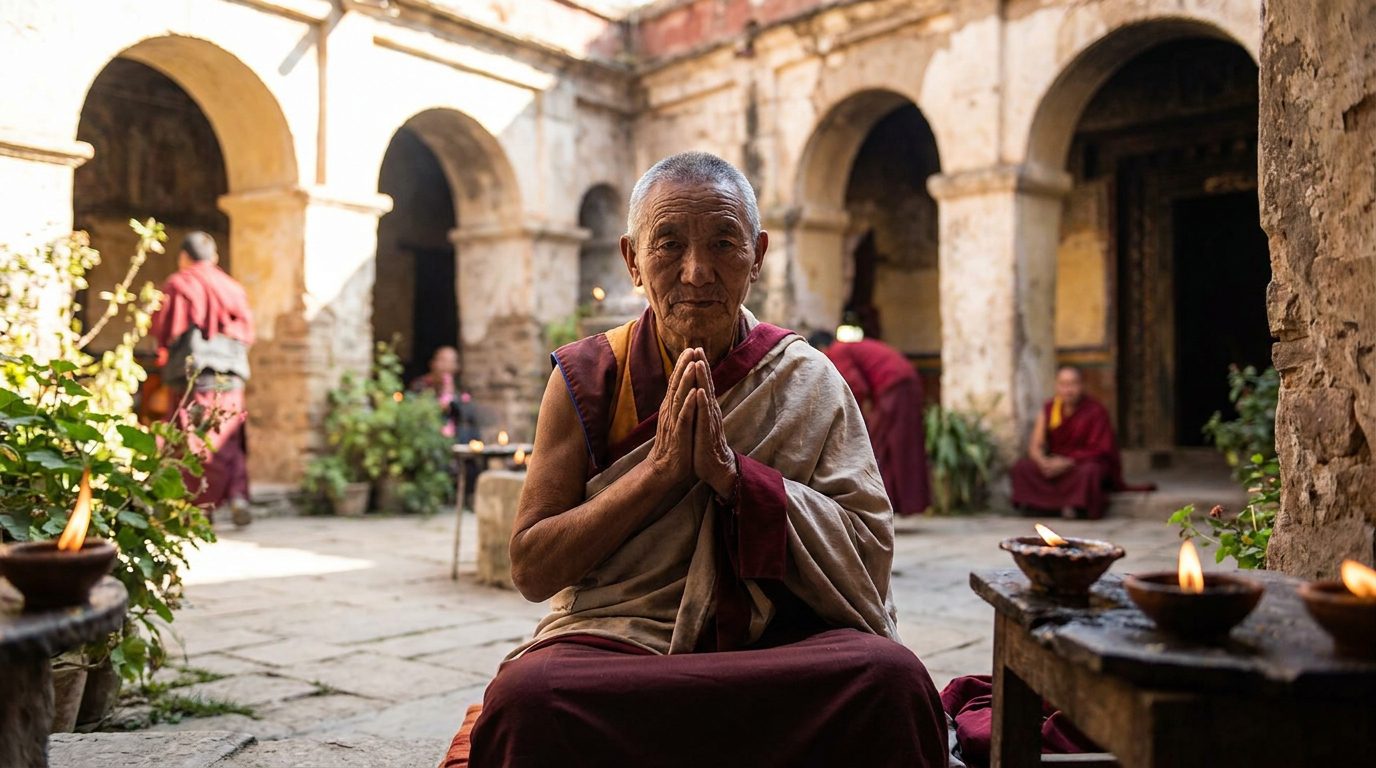
Understanding Bhāva: The Sacred Emotion of the Heart
In the path of Bhakti Yoga, the heart is not seen as a distraction from spiritual life. The heart is the doorway.
Bhāva is a beautiful Sanskrit word that can be translated as “spiritual emotion,” “sacred feeling,” or “devotional mood.” It is not ordinary sentiment, passing excitement, or emotional drama. Bhāva is the softening of the heart in relationship with God. It is love becoming awake.
In Bhakti Yoga, God is not approached only as a distant power or abstract truth. God is approached as the Beloved, the Friend, the Lord, the Child, the Inner Guide, the source of all love. As this relationship deepens through chanting, prayer, service, remembrance, and sincere living, spiritual emotions naturally begin to arise.
These emotions may appear as gratitude, humility, longing, joy, awe, tenderness, repentance, surrender, or deep peace. Sometimes they are quiet and hidden. Sometimes they overflow as tears, singing, dancing, or a feeling of being held by divine grace.
The saints of the Bhakti tradition show us that bhāva is not something artificial to imitate. It is something to receive. It grows in a sincere heart that turns again and again toward God.
The Bhakti scriptures describe bhāva as an advanced stage of devotion, a sacred awakening that comes by grace and practice. Yet even from the beginning of our spiritual journey, we can honor the small seeds of bhāva within us: a moment of peace while chanting, a prayer spoken honestly, a desire to serve, or a tear that comes when we remember that we are loved by God.
Bhāva reminds us that spiritual growth is not only about knowing more. It is about loving more.
Bhāva in Bhakti Yoga: More Than Ordinary Emotion

Many people wonder: “How do I know if what I am feeling is spiritual?” This is a tender and important question.
In daily life, emotions can rise and fall quickly. We may feel inspired one day and discouraged the next. We may cry during music, feel moved by beauty, or become emotional in difficult times. These human emotions are real and valid, but bhāva is something deeper. It is emotion purified by devotion.
Bhāva is connected to relationship with the Divine. It brings us closer to God, closer to compassion, closer to humility, and closer to service.
The Difference Between Sentiment and Sacred Feeling
Sentiment often depends on outer conditions. If the music is beautiful, if people appreciate us, if we feel comfortable, we may feel devotional for a short time. But when discomfort comes, the feeling may disappear.
Bhāva has a different quality. It may be gentle, but it is strong. It draws the soul toward God even when life is difficult. It makes the heart honest. It inspires us to chant when we are tired, pray when we are uncertain, and serve even when no one notices.
In the Bhagavad-gītā, Krishna says, “Whatever you do, whatever you eat, whatever you offer or give away, and whatever austerities you perform, do that as an offering to Me” (Bhagavad-gītā 9.27). This teaching brings devotion into ordinary life. Bhāva is not limited to a temple, kīrtan gathering, or special spiritual event. It can enter cooking, parenting, working, cleaning, caregiving, studying, and resting.
When an action is offered with love, the heart becomes sacred ground.
Bhāva Is Practical, Not Escapist
Sometimes people think spiritual emotion means becoming impractical or detached from the needs of the world. But real bhāva makes us more present, not less. It helps us see others as souls. It softens harshness. It increases patience. It gives courage to forgive and strength to serve.
The saints were often deeply emotional in their love for God, but they were also powerful servants. They fed people, sang for people, taught people, protected people, and lifted people’s hearts.
Bhāva is not running away from life. It is learning to live with a heart connected to God.
The Saints as Living Windows Into Bhāva

The lives of the saints are treasured in Bhakti traditions because they show us what scripture looks like when it becomes embodied. A saint is not simply someone who knows spiritual teachings. A saint is someone whose life has become shaped by love.
When we hear about the saints, we are not meant to compare ourselves harshly or feel unworthy. We are invited to feel hope. If the human heart can be transformed so deeply in them, perhaps our hearts can also be touched.
Śrī Chaitanya Mahāprabhu and the Ocean of Divine Love
Śrī Chaitanya Mahāprabhu, a great 15th-century saint and teacher, is especially known for sharing the chanting of the holy names of God as a simple and powerful path for this age. In the Bhakti tradition, he is honored as the embodiment of divine love.
He taught that the chanting of God’s names cleanses the mirror of the heart. This famous teaching appears in his Śikṣāṣṭakam, eight devotional verses that describe the inner journey of chanting. The image is simple and practical: our heart is like a mirror covered with dust. Through sincere chanting, prayer, and remembrance, the dust is gradually removed, and we begin to see ourselves and God more clearly.
Chaitanya Mahāprabhu’s life was filled with profound bhāva. He sang and danced in kīrtan, often weeping in longing for Krishna. But his emotions were not self-centered. They awakened devotion in thousands of others. His love was contagious because it was pure.
His example teaches us that chanting is not only a religious ritual. It is a way of calling out to the Divine with the whole heart.
Mīrābāī and the Courage of Devotional Longing
Mīrābāī, the beloved poet-saint of Rajasthan, lived with intense love for Krishna. Her songs express longing, surrender, courage, and unwavering devotion. She saw Krishna as her true beloved and refused to let social pressure extinguish her spiritual life.
Her bhāva was marked by longing, known in Sanskrit as viraha, the feeling of separation from God. In ordinary life, separation can feel painful and empty. But in Bhakti, longing for God can deepen love. It keeps the heart awake. It makes prayer honest.
Mīrā’s songs are still sung today because they speak to something universal. Many of us know what it feels like to long for a love that is pure, a home that is eternal, a presence that never abandons us. Her life reminds us that bhāva gives courage. When the heart belongs to God, worldly approval loses some of its power over us.
Tulsīdās and Devotion Through Sacred Story
Tulsīdās, the great saint-poet devoted to Lord Rāma, brought the sacred story of the Rāmāyaṇa close to the hearts of everyday people. His Rāmcharitmānas presents the life and virtues of Rāma in a language accessible to many, not only scholars.
His bhāva was filled with reverence, tenderness, and service. Through sacred storytelling, he helped people remember God’s qualities: compassion, truthfulness, courage, loyalty, and mercy.
This is an important lesson for us. Bhāva grows when we regularly hear about God’s names, forms, qualities, and activities. In Bhakti Yoga, hearing is a spiritual practice. When we listen with openness, sacred stories begin to reshape our imagination. We begin to ask, “How can I live with more truth? How can I serve with more love? How can I remember God in this moment?”
The Āḻvārs and the Poetry of Surrender
The Āḻvārs were Tamil poet-saints of South India whose hymns overflow with devotion to Vishnu and Krishna. Their songs are full of intimacy, surrender, awe, and love. They show that bhāva is not limited to one language, culture, or social class.
Some Āḻvārs approached God as a servant approaches the Lord. Others expressed love as a friend, parent, or beloved. Their poetry reveals a central truth of Bhakti: the soul can relate to God personally.
This personal relationship is called rasa, a Sanskrit word meaning “taste,” “flavor,” or “relationship mood.” Just as different relationships in life carry different flavors—friendship, parental affection, loving service—devotion also has many sacred flavors. Bhāva is the emotional awakening of these loving relationships with God.
Discover a wealth of knowledge by exploring our insightful articles. Our articles cover a wide range of topics to enhance your understanding. Stay informed and inspired by reading our latest articles.
The Sacred Spectrum of Spiritual Emotions
Bhāva is not one single feeling. It is a whole spiritual landscape. The saints help us understand that devotion can include many emotions, each purified and offered to God.
Gratitude: The Heart Recognizing Grace
Gratitude is often one of the first forms of spiritual emotion. We begin to notice that life is not only controlled by our effort. We have received so much: breath, food, friendship, sunlight, shelter, forgiveness, wisdom, and countless unseen blessings.
In the Bhagavad-gītā, Krishna says, “I am the source of all spiritual and material worlds; everything emanates from Me” (Bhagavad-gītā 10.8). When this truth becomes personal, gratitude begins to awaken. We may look at a simple meal and feel, “This is God’s kindness.” We may look at a difficult lesson and feel, “Even here, grace is guiding me.”
Gratitude turns ordinary moments into offerings.
Humility: The Beauty of Becoming Teachable
Humility in Bhakti is not self-hatred. It is not thinking we are worthless. True humility means seeing clearly: “I am loved by God, dependent on grace, and still learning.”
The saints often felt themselves small before the greatness of God. This smallness was not depressing; it was liberating. It freed them from the burden of pretending to be perfect.
Chaitanya Mahāprabhu taught that one should chant the holy name with a humble heart, more tolerant than a tree, ready to offer respect to others without demanding honor for oneself. This instruction is deeply practical. If we want our chanting and prayer to become steady, humility protects the heart from pride, resentment, and constant comparison.
Longing: The Soul Remembering Its Home
Longing is a central emotion in Bhakti. It may appear as a quiet ache, a sense that worldly pleasures are not enough, or a deep desire to know and love God more fully.
This longing is not a failure. It may be a sign of awakening.
The Śrīmad Bhāgavatam, one of the most cherished scriptures of Bhakti, often describes the longing of devotees for Krishna. Their love becomes so deep that remembrance of God fills their minds and hearts. For most of us, this may feel far away. But we can begin simply: “Dear God, please help me want to love You. Please help me remember You.”
Even the longing for longing is precious.
Joy: The Natural Light of Devotion
Bhakti is not only tears and yearning. It is also joy. Kīrtan, the shared chanting of God’s names, often awakens a happiness that is different from ordinary pleasure. It does not depend on buying something, winning something, or proving something. It arises from connection.
The holy names of God are understood in Bhakti traditions to be spiritually powerful and non-different from the Divine presence. When we chant sincerely, even imperfectly, we place ourselves in contact with sacred sound.
This is why chanting can be so healing. The mind may be restless, the heart may be heavy, but the sound carries us. Over time, chanting can become a home we return to again and again.
How Bhāva Grows Through Daily Practice
Bhāva cannot be forced. We cannot manufacture pure spiritual emotion by willpower. But we can create a life that welcomes it.
Just as a gardener cannot force a seed to sprout, but can water the soil, provide sunlight, and remove weeds, we can nourish the heart through steady devotional practice.
Chanting the Holy Names
Chanting is one of the most accessible practices of Bhakti Yoga. It can be done alone or with others, loudly or softly, with music or in stillness. The Sanskrit word mantra means a sacred sound that helps free and focus the mind.
A widely practiced mantra in the Bhakti tradition is the mahā-mantra, or “great mantra”:
Hare Krishna Hare Krishna
Krishna Krishna Hare Hare
Hare Rama Hare Rama
Rama Rama Hare Hare
“Hare” calls upon the divine energy of the Lord. “Krishna” means the all-attractive one. “Rama” means the source of spiritual joy. In simple terms, this mantra is a prayer: “O Divine Lord, O Divine Energy, please engage me in loving service.”
Chanting does not require perfection. It asks for sincerity. Even a few minutes a day can begin to soften the heart.
Prayer With Honesty
Prayer in Bhakti does not need to be polished. The saints teach us to speak to God honestly.
We can pray when we are grateful. We can pray when we are confused. We can pray when we feel distant. We can say, “I do not know how to love You, but I want to learn.” This kind of prayer is powerful because it is real.
Bhāva grows in honesty. When we stop performing spiritually and begin relating sincerely, the heart opens.
Service as Love in Action
Sevā means service. In Bhakti Yoga, service is not merely duty. It is love expressed through action.
We can serve God directly through worship, chanting, cooking offerings, caring for sacred spaces, or supporting spiritual communities. We can also serve God by caring for others, feeding people, listening deeply, encouraging someone, protecting the vulnerable, and using our gifts for a higher purpose.
The Bhagavad-gītā teaches that when work is offered to God, it becomes spiritualized. This means that our daily life can become part of our devotional path. We do not need to abandon our responsibilities to practice Bhakti. We learn to transform them through intention.
Hearing and Remembering Sacred Wisdom
The heart absorbs what it hears repeatedly. If we constantly hear messages of fear, competition, and material desire, the heart becomes shaped by those messages. If we regularly hear sacred wisdom, the heart becomes nourished.
Hearing scripture, listening to kīrtan, reading the lives of saints, and spending time with sincere practitioners all help awaken bhāva.
The Śrīmad Bhāgavatam describes hearing and chanting about God as deeply purifying. This is not only a theological idea; it is practical psychology of the soul. What we remember, we become connected to. What we glorify, we begin to value. What we love, we move toward.
Learning From the Saints Without Imitating Them
The saints are inspirations, not costumes. Their bhāva may be very deep, and sometimes their expressions of devotion may appear extraordinary. They may cry for hours, sing through the night, renounce comfort, or live in constant remembrance of God.
We should honor these examples with reverence, but we should not imitate them artificially. Imitation can make spiritual life performative. Genuine Bhakti is not about appearing advanced. It is about becoming sincere.
Start Where You Are
If your heart feels dry, begin there. If you have doubts, bring them into prayer. If you feel joyful, offer that joy. If you feel grief, offer that grief too.
Bhakti welcomes the whole person.
Sometimes people think they must become pure before approaching God. But Bhakti teaches the opposite: we approach God to become purified. The holy name, prayer, and service are medicine for the heart. We do not need to be fully healed before receiving them.
Let Emotions Become Offerings
Every emotion can become part of the path when offered to God. Anxiety can become a prayer for shelter. Sadness can become longing for divine comfort. Joy can become gratitude. Guilt can become repentance and renewed commitment. Love for family and friends can become a doorway to understanding divine love.
This does not mean we spiritualize emotions in a way that avoids responsibility or healing. Sometimes we need therapy, rest, honest conversations, or practical support. Bhakti does not deny human needs. Rather, it brings God into the center of our healing.
Spiritual emotion becomes healthy when it leads to greater love, steadiness, humility, and service.
Bhāva and Community: The Heart Awakens With Others
Although Bhakti includes personal prayer and private remembrance, it is also deeply communal. The heart often opens in the company of other sincere seekers.
In satsanga, or spiritual company, we are reminded of what matters. We hear others chant. We see others serve. We learn from their questions, their struggles, and their devotion. We begin to feel, “I am not walking alone.”
Kīrtan as Shared Devotional Emotion
Kīrtan is the practice of singing or chanting God’s names together. It is one of the most joyful and welcoming expressions of Bhakti Yoga. In kīrtan, people of different backgrounds can sit together, sing together, and enter a shared space of prayer.
You do not need to know Sanskrit perfectly. You do not need a trained voice. You do not need to understand everything intellectually. You can simply listen, chant, breathe, and allow the sound to touch the heart.
Many people first experience bhāva in kīrtan—not necessarily as something dramatic, but as a feeling of peace, belonging, or gentle opening.
Serving Together Softens the Heart
Community service also awakens devotion. Cooking together, cleaning together, welcoming guests, distributing food, organizing gatherings, or supporting someone in need can become sacred when done with loving intention.
In The Bhakti House spirit, spiritual life is not meant to be cold or exclusive. It is meant to feel like a home for the soul. A place where people can come as they are, learn at their own pace, and take sincere steps toward God.
When community is rooted in humility and service, bhāva becomes protected. The heart grows best in an atmosphere of kindness.
The Fruits of Bhāva: How Spiritual Emotion Transforms Daily Life
Real bhāva changes how we live. It is not measured only by tears, visions, or intense experiences. Its deeper signs are seen in character.
Does our devotion make us more compassionate? More truthful? More forgiving? More patient? More eager to serve? More dependent on God and less controlled by ego?
These are the fruits to look for.
Compassion for All Beings
When the heart awakens spiritually, we begin to see others differently. People are no longer merely strangers, competitors, or obstacles. They are souls, beloved parts of God.
The Bhagavad-gītā describes the wise person as one who sees with equal vision: a learned person, a cow, an elephant, a dog, and a person considered outcast are all seen spiritually (Bhagavad-gītā 5.18). This does not erase practical differences, but it reveals a deeper unity.
Bhāva makes compassion natural because love for God expands into love for God’s creation.
Strength in Difficulty
Spiritual emotion does not mean we never suffer. Saints also faced rejection, illness, loss, and hardship. But bhāva gave them shelter. Their relationship with God became an inner refuge.
For us, this may mean remembering a mantra during a stressful day, praying before a difficult conversation, or offering our pain to God instead of carrying it alone.
Bhakti does not always remove the storm, but it gives the heart a place to rest within the storm.
A Life Filled With Meaning
Bhāva transforms the ordinary into the sacred. A meal can become an offering. A song can become prayer. Work can become service. Relationships can become opportunities to practice kindness, forgiveness, and humility.
This is one of the great gifts of Bhakti Yoga: it does not ask us to wait for a perfect life before we begin. It invites us to begin now, in this life, with this heart, in this moment.
Welcoming Bhāva With a Simple Daily Practice
If you feel inspired to explore bhāva in your own life, begin gently. Do not pressure yourself to feel something extraordinary. Instead, create a small rhythm of devotion.
You might begin with five minutes of chanting each morning. You might light a candle and offer a prayer. You might read one verse from the Bhagavad-gītā or a poem by a saint. You might cook one meal with gratitude and offer it to God before eating. You might serve someone without expecting recognition.
The key is sincerity.
A simple daily prayer could be:
“Dear God, please guide my heart. Help me remember You. Help me serve with love. Please awaken whatever devotion is sleeping within me.”
This prayer is enough to begin.
Over time, you may notice subtle changes. A little more patience. A little more gratitude. A little more desire to chant. A little more awareness of grace. These are precious signs. Honor them.
Bhāva is not a performance. It is a relationship. And every relationship grows through attention, honesty, time, and love.
Walking the Path of Love With the Saints
The saints show us what is possible when the heart becomes fully offered to God. Their lives are like lamps on the path. They do not demand that we become exactly like them overnight. They lovingly invite us to turn toward the same source of grace that transformed them.
Bhāva in the lives of the saints teaches us that spiritual emotions are not weakness. They are the soul becoming alive. Tears of devotion, songs of longing, acts of service, quiet prayers, and humble surrender all reveal the same truth: the heart was made for divine love.
Whether you are new to Bhakti Yoga or have been practicing for many years, you are welcome. Whatever your background, culture, faith history, questions, or current state of heart, you can take one sincere step.
Chant one name of God. Offer one honest prayer. Serve one person with kindness. Read one sacred verse. Sit quietly and say, “I am here.”
God sees the sincerity of the heart.
May the examples of the saints encourage us, not to imitate their greatness, but to follow their direction. May our emotions become purified through love. May our daily lives become offerings. And may each of us, in our own simple and sincere way, take one step closer to God today.
FAQs
What is Bhāva in the context of the lives of the saints?
Bhāva refers to the deep spiritual emotion or sentiment experienced by saints in their devotion to God. It is a state of intense love and connection with the divine.
How does Bhāva manifest in the lives of the saints?
Bhāva manifests in the lives of the saints through their selfless service, unwavering faith, and profound spiritual experiences. It is often expressed through acts of compassion, charity, and devotion.
Can Bhāva be cultivated by individuals aspiring to lead a saintly life?
Yes, individuals aspiring to lead a saintly life can cultivate Bhāva through practices such as meditation, prayer, selfless service, and devotion to God. By nurturing a deep connection with the divine, one can develop the spiritual emotion of Bhāva.
How does Bhāva influence the actions and decisions of the saints?
Bhāva influences the actions and decisions of the saints by guiding them towards selfless service, compassion, and devotion. Saints driven by Bhāva often prioritize spiritual growth and the well-being of others over personal desires.
Is Bhāva considered essential in the spiritual journey of a saint?
Yes, Bhāva is considered essential in the spiritual journey of a saint as it deepens their connection with the divine, fuels their devotion, and inspires them to lead a life of selfless service and compassion. It is seen as a powerful force that propels saints towards spiritual realization and union with God.

