
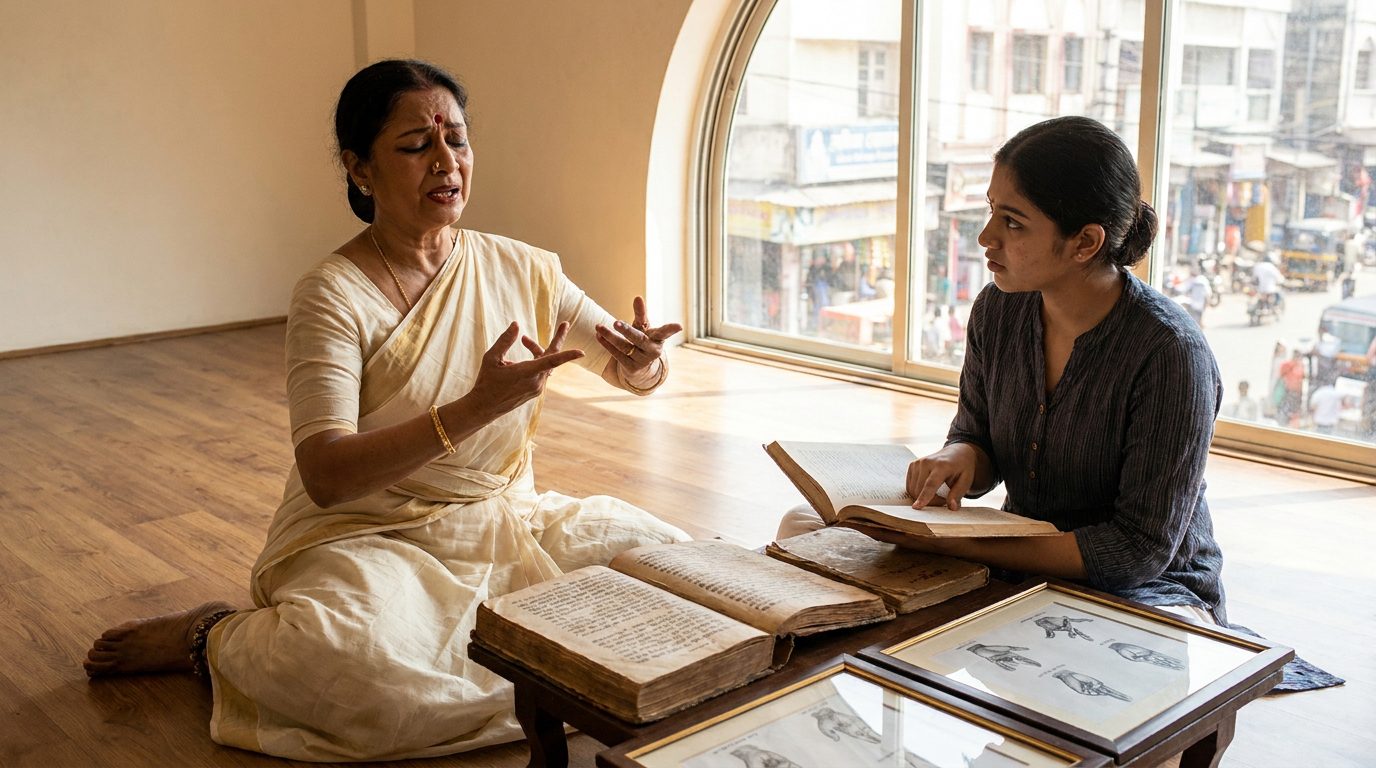
Understanding Bhava in Bhakti Yoga
In the path of Bhakti Yoga, the word bhava carries a beautiful and sacred meaning. In simple terms, bhava means an inner feeling, mood, emotion, or heartfelt spiritual attitude. It is not merely an ordinary emotion that comes and goes. In devotional life, bhava refers to the loving feeling of the heart as it turns toward God.
The Sanskrit word bhava comes from the root bhu, which means “to be” or “to become.” So bhava is connected with our state of being. It is the atmosphere of the heart. It is what we are becoming inwardly as we chant, pray, serve, and remember the Divine.
In Bhakti Yoga, spiritual growth is not measured only by what we know, how much scripture we can quote, or how many rituals we perform. These can be helpful, but the deeper question is: Is the heart becoming softer? Is love awakening? Is our life becoming an offering?
This is where bhava becomes so important.
At The Bhakti House, we understand Bhakti Yoga as a practical path of love. It welcomes people from every background—whether you were raised in a spiritual tradition, are returning to faith after many years, or are simply curious about chanting, meditation, and a more meaningful life. Bhava invites all of us to approach God with sincerity, humility, and affection.
Bhava is the living pulse of devotion. It turns spiritual practice from something mechanical into something heartfelt. It helps chanting become prayer, service become love, and daily life become a sacred journey.
The Simple Meaning of Bhava

Bhava can be understood in several simple ways, depending on the context. It may mean:
- A feeling or emotion
- A mood or inner attitude
- A devotional relationship with God
- A stage of spiritual awakening
- The loving state of the heart in Bhakti
In everyday life, we all experience different bhavas, or moods. We may feel gratitude, sadness, hope, affection, or longing. These feelings shape the way we see the world and relate to others.
In Bhakti Yoga, bhava means bringing the heart into relationship with the Supreme. It is not about suppressing emotions or pretending to be “spiritual.” Rather, Bhakti teaches us to offer our emotions to God. Joy can become gratitude. Sadness can become prayer. Longing can become devotion. Even confusion can become a humble cry for guidance.
Bhava as Devotional Feeling
When we chant the holy names of God, such as the Hare Krishna maha-mantra, we are not simply repeating sounds. We are calling out with the heart:
*Hare Krishna, Hare Krishna, Krishna Krishna, Hare Hare
Hare Rama, Hare Rama, Rama Rama, Hare Hare*
This mantra is a prayer for divine connection. “Krishna” means the all-attractive Lord. “Rama” means the source of spiritual joy. “Hare” refers to the divine energy of God, especially the compassionate energy that helps the soul reconnect with the Divine.
When chanting is touched by bhava, it becomes more than meditation. It becomes a relationship. We are calling, listening, remembering, and opening ourselves to grace.
Bhava as Spiritual Attitude
Bhava also means the attitude we bring to spiritual life. Two people may perform the same action outwardly, but the inner mood may be very different.
One person may offer a flower to God with pride, hoping others notice. Another may offer the same flower with humility, thinking, “Please accept this small gift from me.” The outer act is similar, but the bhava is different.
In Bhakti, the feeling behind the offering matters deeply.
The Bhagavad-gita offers a tender example. Krishna says:
“If one offers Me with love and devotion a leaf, a flower, fruit, or water, I will accept it.”
— Bhagavad-gita 9.26
This verse is one of the clearest teachings on bhava. God is not asking for wealth, status, or perfection. He is asking for love. Even a simple offering becomes spiritually powerful when given with devotion.
Bhava in the Scriptures of Bhakti

Bhava is deeply rooted in the sacred writings of the Bhakti tradition. These scriptures do not present God as distant or impersonal only, but as a loving person with whom the soul can have a real relationship.
The scriptures teach that the soul’s deepest nature is to love and serve God. Bhava is the awakening of that original loving nature.
Bhava in the Bhagavad-gita
The Bhagavad-gita is a sacred dialogue between Lord Krishna and Arjuna. It offers wisdom on action, meditation, knowledge, surrender, and devotion.
In the Gita, Krishna repeatedly emphasizes inner devotion. He asks Arjuna not only to act, but to act with a heart connected to Him:
“Always think of Me, become My devotee, worship Me, and offer your homage to Me.”
— Bhagavad-gita 18.65
This is a verse of relationship. Krishna is not only giving philosophy; He is inviting love. “Think of Me” means remembrance. “Become My devotee” means cultivate loving connection. “Worship Me” means offer your life with reverence. “Offer your homage” means bow the heart in humility.
Bhava makes these instructions practical. It is the inner warmth that brings spiritual practice to life.
Bhava in the Srimad-Bhagavatam
The Srimad-Bhagavatam, also called the Bhagavata Purana, is one of the most beloved scriptures of Bhakti Yoga. It describes the nature of God, the lives of great devotees, and the sweetness of loving devotion.
The Bhagavatam teaches that hearing and chanting about God purifies the heart. This is not merely intellectual study. It is a loving practice that gradually awakens bhava.
A well-known verse says:
“By regularly hearing the Bhagavatam and serving pure devotees, all that is troublesome to the heart is almost completely destroyed, and loving service to the Lord becomes established.”
— Srimad-Bhagavatam 1.2.18
This verse shows a practical progression. We hear spiritual wisdom. We associate with sincere devotees. The heart becomes cleansed. Devotion becomes steady. Over time, bhava begins to awaken.
Bhava in the Teachings of Sri Chaitanya
Sri Chaitanya Mahaprabhu, a great saint and divine teacher in the Bhakti tradition, emphasized the chanting of God’s holy names as the most accessible path for this age. He taught that through sincere chanting, anyone can awaken love of God.
Sri Chaitanya did not limit devotion to scholars, monks, or ritual experts. He welcomed everyone into the practice of kirtan—joyful group chanting of the Divine Names.
His life showed that bhava is not dry religion. It is living, singing, weeping, dancing, serving, and loving. It is the heart’s natural response when it touches the presence of God.
For modern seekers, this is deeply hopeful. We may not be perfect. We may carry doubts, wounds, and distractions. Still, through sincere chanting and humble prayer, the heart can be transformed.
Discover a wide range of insightful articles that delve into various spiritual topics. These articles provide guidance and inspiration for your personal growth journey. Stay updated with the latest articles to enhance your understanding of spiritual practices.
The Difference Between Emotion and Spiritual Bhava
Because bhava is often translated as “emotion” or “feeling,” it is helpful to understand the difference between ordinary emotion and spiritual bhava.
Ordinary emotions are part of human life. They are natural, and they should not be rejected. But they can be unstable. One day we feel inspired; the next day we feel discouraged. One moment we are peaceful; the next we are anxious.
Spiritual bhava is deeper than passing emotion. It is an awakened devotional orientation of the heart. It may express itself through emotion, but it is not dependent on emotional excitement.
A person with genuine bhava may sometimes cry while chanting, but tears alone are not proof of devotion. Another person may quietly chant with deep sincerity and no outward display. Bhava is not performance. It is not about appearing spiritual. It is about the heart’s connection with God.
Bhava Is Not Sentimentality
Sentimentality is emotion without depth or commitment. It may feel spiritual for a moment, but it does not necessarily transform character.
Bhava, on the other hand, leads to humility, service, compassion, steadiness, and surrender. If our devotion is real, it should gradually make us kinder, more truthful, more patient, and more willing to serve.
This is important in practical spiritual life. We may enjoy beautiful kirtan, inspiring talks, or sacred festivals—and these are wonderful gifts. But bhava deepens when we carry that inspiration into daily choices: how we speak, how we forgive, how we serve, how we remember God in difficulty.
Bhava Can Be Quiet and Steady
Sometimes we imagine spiritual experience must always be dramatic. But bhava can be very gentle.
It may appear as a quiet desire to chant in the morning. It may be a moment of gratitude before eating. It may be a prayer whispered during a difficult day. It may be the choice to serve without being noticed. It may be the softening of the heart toward someone we once judged.
These simple moments are sacred. Bhakti grows through sincerity, not show.
The Stages of Bhakti and the Place of Bhava
Bhakti Yoga describes a gradual path of spiritual awakening. While every person’s journey is unique, the tradition gives a helpful map of how devotion develops.
One famous outline is found in the writings of Srila Rupa Goswami, a great teacher in the Bhakti tradition. He describes the growth of devotion from initial faith to pure love of God.
From Faith to Practice
The journey often begins with shraddha, which means faith. This may be a small spark: “Maybe there is something sacred here. Maybe chanting can help me. Maybe God is calling me.”
From faith, one seeks sadhu-sanga, the company of sincere spiritual people. This association gives encouragement and direction. We learn not only from teachings, but from living examples.
Then comes bhajana-kriya, or regular spiritual practice. This includes chanting, prayer, worship, study, and service.
At first, practice may feel uneven. Some days are inspired, some days are distracted. This is normal. Bhakti is a relationship, and relationships grow with time and care.
Cleansing the Heart
As practice continues, the heart goes through anartha-nivritti, the clearing of unwanted habits and obstacles. Anartha means things that do not truly serve our soul—such as pride, envy, greed, resentment, or harmful attachments. Nivritti means removal or reduction.
This stage can be humbling. We may become more aware of our weaknesses. But this awareness is not meant to discourage us. It is a sign that the light is entering the heart.
Just as sunlight reveals dust in a room, spiritual practice reveals what needs healing. Through chanting, prayer, honest reflection, and service, the heart gradually becomes cleaner.
Steadiness, Taste, Attachment, and Bhava
After cleansing comes nishtha, or steadiness. We become more consistent. We practice not only when we feel like it, but because we value our relationship with God.
Then comes ruchi, or taste. Spiritual practice becomes sweeter. Chanting is no longer only discipline; it becomes nourishment.
Then comes asakti, or spiritual attachment. The heart becomes naturally drawn to God. Devotional life feels less like an obligation and more like home.
After this comes bhava, the first blossoming of pure love of God. Bhava is sometimes described as the dawn before the sunrise of prema, pure divine love. It is a mature stage of devotion, yet even beginners can honor and cultivate the mood that leads toward it.
This map is not meant to make us compare ourselves with others. It is meant to give hope. Every sincere step matters.
The Different Devotional Moods of Bhava
Bhakti scriptures describe different ways the soul may relate to God. These are sometimes called rasas, or spiritual relationships filled with loving flavor. The word rasa means taste, essence, or relationship of love.
These devotional moods show that love of God is personal and rich. Just as human relationships include reverence, friendship, parental affection, and intimate love, spiritual relationship also has variety.
Shanta Bhava: Peaceful Reverence
Shanta bhava is a peaceful mood of reverence. The devotee appreciates God’s greatness, beauty, and presence. There is calm devotion, respect, and contemplation.
This mood may be familiar to those who feel awe when seeing nature, sitting in silence, or meditating on the vastness of creation. It is a sacred beginning: “God is great, and I am held within divine reality.”
Dasya Bhava: Loving Service
Dasya bhava means the mood of being a servant of God. In Bhakti, service is not seen as low or forced. It is an expression of love.
To serve God means to use our body, words, mind, talents, and time in a sacred way. Cooking a meal, cleaning a temple, helping a neighbor, caring for family, singing in kirtan, or offering one’s work can all become devotional service when done with love.
Dasya bhava teaches humility: “My life is not only for me. Let me be an instrument of divine compassion.”
Sakhya Bhava: Friendship with God
Sakhya bhava means friendship. In this mood, the devotee relates to God as a dear friend. There is trust, openness, and affection.
Arjuna’s relationship with Krishna in the Bhagavad-gita includes this mood. Arjuna speaks honestly to Krishna, asks questions, admits confusion, and receives guidance.
This can be very comforting. We do not have to hide from God. We can speak honestly in prayer: “I am struggling. I do not understand. Please guide me.” Friendship with God invites sincerity.
Vatsalya Bhava: Parental Affection
Vatsalya bhava is the mood of parental love toward God. This may sound surprising at first. How can the soul feel like a parent to the Supreme?
In the stories of Krishna’s childhood, Mother Yashoda loves Krishna as her child. She feeds Him, protects Him, worries about Him, and even corrects Him. Her love is so deep that God allows Himself to be bound by her affection.
This reveals a profound Bhakti teaching: God is conquered not by power, but by love.
Madhurya Bhava: Divine Loving Intimacy
Madhurya bhava is the mood of intimate divine love, often described through the love of the gopis, the cowherd maidens of Vrindavan, for Krishna. This is considered the highest and most confidential mood in many Bhakti traditions.
It should be approached with humility and guidance, not superficially. The love of the gopis is not ordinary romance. It is complete self-giving devotion, free from selfish desire.
For most practitioners, the practical lesson is simple: the soul longs for complete union in love with God. Bhakti is the path by which that longing is purified and fulfilled.
How to Cultivate Bhava in Daily Life
Although mature bhava is a high stage of devotion, we can cultivate a devotional mood every day. Bhakti Yoga is practical. It meets us in our kitchen, workplace, family life, car rides, quiet mornings, and difficult nights.
You do not need to wait until life is perfect to begin. You can begin with one sincere step.
Chant with Attention and Prayer
Chanting is one of the most powerful ways to awaken bhava. The holy names of God are considered non-different from God’s presence. When we chant, we are inviting divine grace into the heart.
A simple daily practice may be to chant the Hare Krishna mantra softly for a few minutes each morning. If you have beads, you can chant one round. If not, you can chant while walking, driving, cooking, or sitting quietly.
Try to chant not as a task, but as a prayer:
“Please let me remember You. Please cleanse my heart. Please help me love.”
Even when the mind wanders, gently return. This gentle returning is part of the offering.
Offer Simple Acts with Love
Bhava grows when ordinary life becomes an offering. Before eating, pause and offer gratitude. Before beginning work, ask to serve through your efforts. Before speaking, pray to use words kindly.
You can offer food to God with simple sincerity. In Bhakti, this is called prasadam, which means mercy. Food prepared and offered with love becomes spiritually nourishing.
You might say:
“Dear Lord, thank You for this food. Please accept it with love, and may it nourish me for service.”
This small practice can transform daily life.
Study Scripture with the Heart
Reading sacred texts helps guide the mind and nourish the soul. But in Bhakti, scripture is not only for information. It is for transformation.
You might read a few verses from the Bhagavad-gita or Srimad-Bhagavatam each day and ask:
- What is God teaching me here?
- How can I live this today?
- What quality is this inviting me to develop?
- How can this help me love and serve more deeply?
Even one verse, reflected upon sincerely, can change the direction of the heart.
Serve Others as Service to God
Service is essential in Bhakti Yoga. It protects us from becoming self-centered in spiritual life.
Service may be formal, such as helping in a temple, cooking for a gathering, supporting kirtan, or sharing spiritual books. It may also be very simple: listening to someone with compassion, caring for a child, helping an elder, feeding someone, encouraging a friend, or doing honest work.
When service is offered to God, it becomes sacred.
The mood is: “May this be pleasing to You. May this help someone feel loved.”
Keep Devotional Association
Our hearts are shaped by the company we keep. Spending time with sincere seekers and devotees helps strengthen bhava.
This may include attending kirtan, joining a satsang, visiting a temple, taking part in a study group, or simply having honest spiritual friendship. Satsang means association with truth or with those seeking truth.
In good association, we remember what matters. We are encouraged when we feel weak. We learn by example. We are reminded that we are not walking alone.
Common Misunderstandings About Bhava
Because bhava is subtle and sacred, it can be misunderstood. Clarifying these misunderstandings helps us walk the path with humility and balance.
Bhava Is Not Imitation
Sometimes people may try to imitate advanced devotional emotions. They may think that appearing ecstatic, crying publicly, or speaking in a dramatic way proves spiritual advancement.
But Bhakti does not ask us to pretend. Genuine bhava cannot be forced. It arises naturally through purification, grace, and sincere practice.
The safest path is humility. Rather than trying to appear advanced, we can pray to become sincere.
Bhava Is Not Limited to One Culture
Bhava is a Sanskrit word from the Bhakti tradition, but the essence of bhava is universal. Every sincere heart can turn toward God with love.
People from many cultures and faith backgrounds understand prayer, gratitude, surrender, sacred music, and service. Bhakti Yoga offers a rich language and practice for deepening that relationship, but it does not require us to reject our humanity or background.
At its heart, bhava is about love for the Divine. That love is the birthright of every soul.
Bhava Does Not Mean Avoiding Life’s Responsibilities
True devotion does not make us careless. It makes us more responsible, compassionate, and grounded.
If someone says they are spiritual but neglects their duties, harms others, or avoids honesty, that is not mature bhava. Real devotion should improve our character.
Krishna teaches Arjuna to act in the world with spiritual consciousness. Bhakti is not escapism. It is learning to live in the world with love, remembrance, and service.
The Significance of Bhava for Spiritual Growth
Bhava is significant because it brings the heart into the center of spiritual life. Without bhava, religion can become dry, external, or prideful. With bhava, even simple acts become filled with meaning.
A person may have little knowledge, few resources, and no social position, yet if they offer something with love, God accepts it. This is the generosity of Bhakti.
Bhava also heals the heart. Many of us carry feelings of loneliness, guilt, fear, or unworthiness. Bhakti teaches that we are not merely our mistakes or struggles. We are eternal souls, beloved by God. The heart can be restored through divine relationship.
When bhava grows, spiritual life becomes less about proving ourselves and more about offering ourselves. We begin to ask different questions:
- How can I love more sincerely?
- How can I remember God in this moment?
- How can I serve with humility?
- How can my words bring kindness?
- How can my home, work, and relationships become offerings?
This is practical transformation.
Bhava makes the path personal. God is not only a concept to understand, but a beloved to remember. Prayer is not only a duty, but a conversation. Chanting is not only a technique, but a call of love. Service is not only work, but worship.
Living with Bhava in the Modern World
Modern life can feel fast, distracted, and emotionally exhausting. Many people are searching for peace, meaning, and connection. Bhava offers a sacred way to live with depth, even in the middle of ordinary responsibilities.
You do not need to move to a monastery to cultivate bhava. You can begin where you are.
Chant while driving to work. Offer your meals. Keep a small sacred space in your home. Read one verse before bed. Attend kirtan once a week. Serve someone without expecting praise. Pray honestly when you feel overwhelmed.
Bhava grows through repeated, sincere turning toward God.
There may be days when your heart feels dry. Continue gently. There may be days when chanting feels distracted. Continue gently. There may be days when you feel unworthy. Continue gently.
Bhakti is a path of grace. We make effort, but we are also carried.
Sri Chaitanya’s tradition especially emphasizes that the holy name is merciful. Even if our chanting is imperfect, the sincere attempt has spiritual power. The name of God enters the heart and gradually awakens love.
This is why no one is disqualified. Not by background. Not by past mistakes. Not by lack of knowledge. Not by emotional struggle. The door of Bhakti is open.
A Gentle Practice for Awakening Bhava
If you would like to begin cultivating bhava today, here is a simple practice:
- Sit quietly for a few moments.
- Take a few deep breaths and soften the heart.
- Say a simple prayer: “Dear God, please help me remember You and serve with love.”
- Chant the Hare Krishna mantra slowly for five minutes.
- Offer one action of your day as service.
- End with gratitude.
This does not need to be perfect. It only needs to be sincere.
You may also choose one quality to practice during the day: patience, humility, kindness, forgiveness, gratitude, or courage. Offer that effort to God.
Over time, these small offerings shape the heart. The mood of devotion becomes more natural. We begin to see life differently—not as a random series of tasks, but as a sacred opportunity to love.
The Heart of Bhava
Bhava is the sacred feeling of the soul awakening to God. It is the devotional mood that turns spiritual practice into relationship. It is the warmth behind chanting, the humility behind service, the sincerity behind prayer, and the love behind every offering.
In Bhakti Yoga, bhava is both a gift and a cultivation. We practice with sincerity, and we pray for grace. We chant, serve, hear, remember, and associate with devotees. Slowly, the heart becomes softened and spiritually alive.
The beauty of this path is that everyone can begin. You do not need to be advanced to chant. You do not need to be perfect to pray. You do not need to know everything to offer love.
Bring what you have. Bring your questions, your hopes, your wounds, your gratitude, your longing. God is not looking for a polished performance. He is looking at the heart.
May we all take one sincere step toward divine love. Whether that step is chanting one mantra, offering one prayer, reading one verse, serving one person, or simply saying, “God, please guide me,” it matters.
Everyone is welcome on the path of Bhakti. Everyone is welcome to take one sincere step toward God.
FAQs
What is Bhava in the context of Indian classical arts?
Bhava refers to the emotional expression or sentiment conveyed through performance in Indian classical arts, particularly in dance and music. It encompasses the feelings and moods that artists portray to connect with the audience, enhancing the overall experience of the performance.
How many types of Bhava are there?
There are nine primary types of Bhava, known as ‘Navarasa,’ which include Shringara (love), Hasya (laughter), Karuna (compassion), Raudra (anger), Veera (heroism), Bhayanaka (fear), Bibhatsa (disgust), Adbhuta (wonder), and Shanta (peace). Each rasa represents a different emotional state that can be expressed through various art forms.
How is Bhava different from Raga and Tala?
While Bhava focuses on the emotional expression in performance, Raga refers to the melodic framework used in Indian music, and Tala pertains to the rhythmic cycle. Together, these elements create a holistic experience in Indian classical arts, but they serve distinct purposes in conveying music and dance.
Can Bhava be learned and developed?
Yes, Bhava can be learned and developed through practice and training in performing arts. Artists often engage in exercises that enhance their emotional expression, such as improvisation, character study, and understanding the nuances of different emotions to effectively convey Bhava during performances.
What role does Bhava play in storytelling through dance?
In storytelling through dance, Bhava plays a crucial role as it helps to convey the narrative and emotions of the characters. Dancers use facial expressions, body language, and gestures to express Bhava, allowing the audience to connect with the story on a deeper emotional level and enhancing the overall impact of the performance.

