
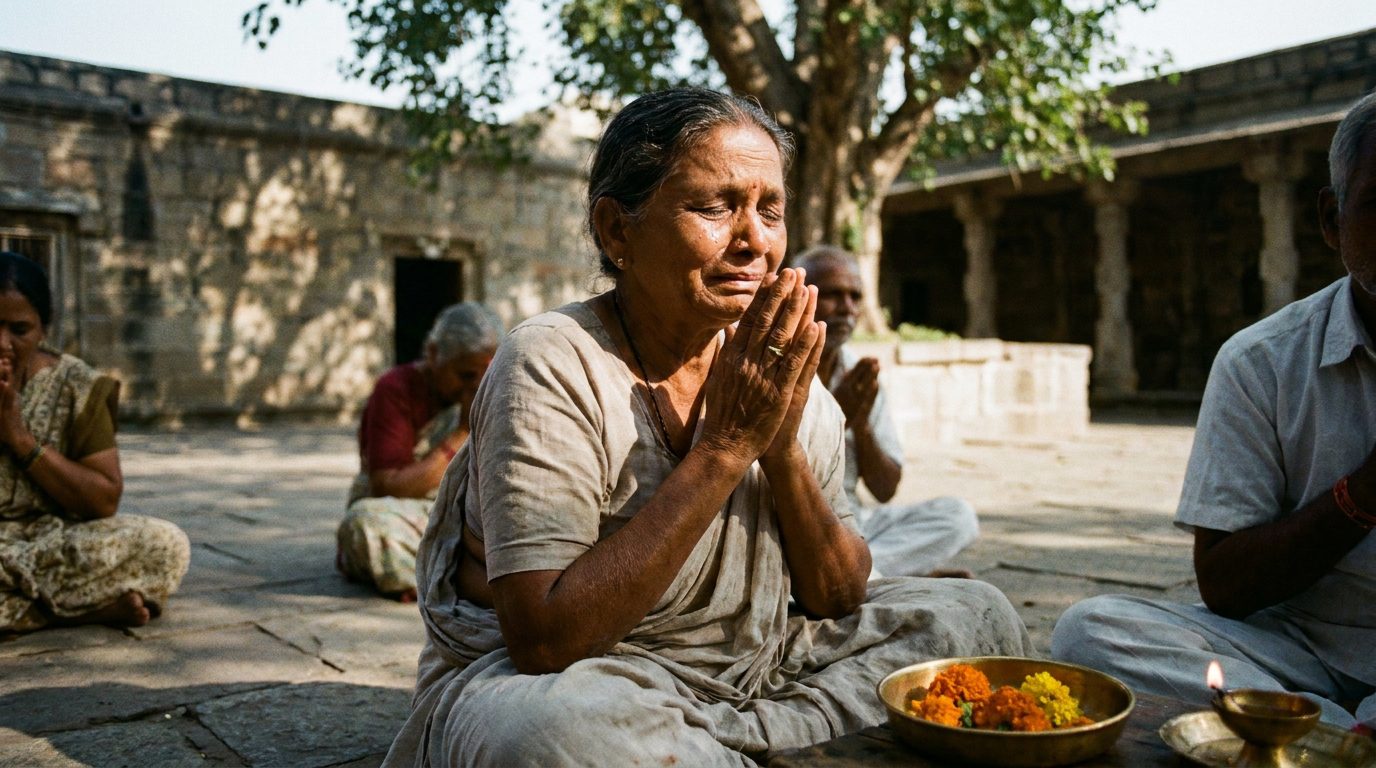
The Heart of Bhakti: Love That Awakens the Soul
Bhakti Yoga is the path of devotion—the simple, profound journey of awakening our love for God and allowing that love to transform every part of our lives. The Sanskrit word bhakti means loving devotion, heartfelt service, or sacred affection. It is not merely a belief system or a religious identity. Bhakti is a living relationship with the Divine.
In Bhakti Yoga, we understand that the soul is naturally loving, joyful, and connected. Yet through the pressures of life, old wounds, distractions, and forgetfulness, that natural spiritual awareness can become covered. Personal transformation begins when we gently turn the heart back toward its source.
This path welcomes everyone. Whether you are deeply rooted in a faith tradition, spiritually curious, recovering from religious hurt, or simply longing for more peace and meaning, Bhakti offers a practical way to reconnect. It does not ask us to become someone artificial. It invites us to become more fully ourselves—more compassionate, more honest, more humble, more awake.
The Bhagavad-gita, one of the most cherished scriptures of the Bhakti tradition, describes this path beautifully. Krishna, the Divine speaker of the Gita, says, “Always think of Me, become My devotee, worship Me, and offer your homage unto Me.” This is not a demand for fear-based religion. It is an invitation into relationship. The heart becomes transformed by what it remembers, loves, and serves.
Bhakti and personal transformation are deeply connected because love changes us from within. When we chant, pray, serve, study sacred wisdom, and offer our daily lives to God, the heart gradually becomes clearer. We begin to see ourselves differently. We begin to see others differently. And slowly, the ordinary moments of life become doorways to inner awakening.
Inner Awakening Begins With the Turn of the Heart
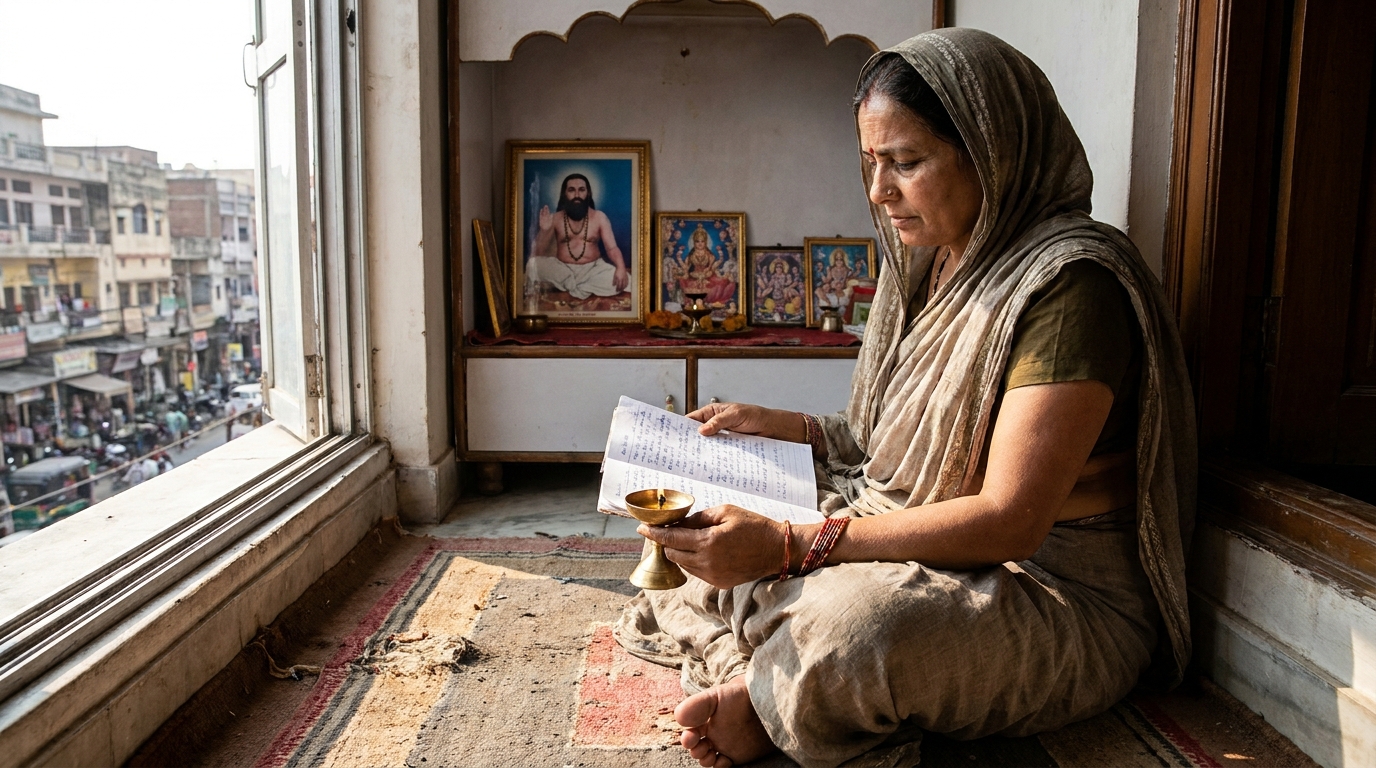
Personal transformation in Bhakti does not begin with perfection. It begins with a turn—a sincere movement of the heart toward God. Even a small step has spiritual power.
Many people come to Bhakti Yoga during a time of searching. Perhaps life has become too heavy. Perhaps success has not brought the fulfillment we hoped for. Perhaps the heart senses that there must be something deeper than constant striving, comparison, and distraction.
Bhakti meets us there with kindness. It says: you are not broken beyond repair. You are not alone. Beneath the layers of fear, conditioning, and restlessness, there is a sacred self—the soul, known in Sanskrit as atma. The atma is eternal, conscious, and meant for loving connection with the Supreme.
Awakening Is Not Escaping Life
Inner awakening does not mean running away from responsibilities, relationships, or the world. In Bhakti Yoga, transformation happens in the middle of real life.
A parent can practice Bhakti while caring for children. A student can practice while studying. A worker can practice while serving honestly in their profession. A person healing from grief can practice by whispering a prayer through tears.
Bhakti teaches us that everyday life can become sacred when it is offered with love. Cooking can become an offering. Speaking kindly can become worship. Listening deeply can become service. Resting with gratitude can become prayer.
This is one of the most beautiful gifts of Bhakti Yoga: it does not divide life into “spiritual” and “ordinary.” It helps us bring devotion into everything.
The Gentle Power of Sincerity
In the Bhagavad-gita, Krishna says that even if a person offers “a leaf, a flower, a fruit, or water” with devotion, He accepts it. The offering may be simple, but the love makes it sacred.
This teaching is deeply encouraging. God is not impressed by our outer display. God is touched by sincerity.
We may not know many prayers. We may not understand Sanskrit. We may feel distracted or unqualified. Still, if we offer one honest moment—one breath, one tear, one chant, one act of kindness—the heart begins to open.
Bhakti transformation is not forced. It unfolds through sincerity, repetition, and grace.
Chanting as a Path of Healing and Remembrance
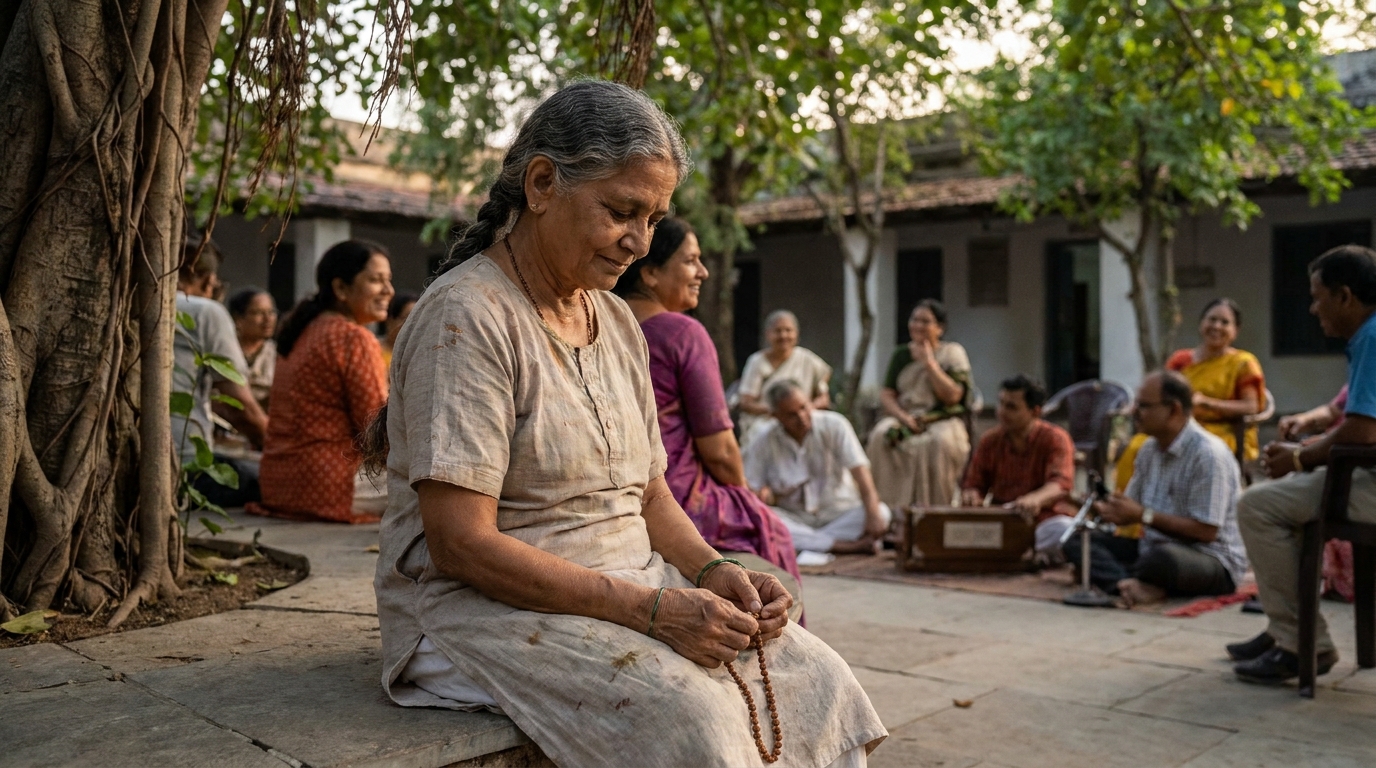
One of the central practices of Bhakti Yoga is chanting sacred names of God, known as kirtan when sung together and japa when repeated personally, often on prayer beads. The Sanskrit word mantra means a sacred sound that helps free the mind. “Man” refers to the mind, and “tra” suggests deliverance or protection.
In the Bhakti tradition, the names of God are understood to be spiritually powerful because God is present in the Divine Name. Chanting is not only a meditation technique. It is a loving call from the soul to the Supreme.
A well-known mantra in the Bhakti tradition is the Hare Krishna maha-mantra:
Hare Krishna, Hare Krishna, Krishna Krishna, Hare Hare
Hare Rama, Hare Rama, Rama Rama, Hare Hare
Maha-mantra means “great mantra.” “Krishna” means the all-attractive Lord. “Rama” refers to the reservoir of spiritual joy. “Hare” addresses the Divine energy, often understood as the loving energy of God that helps us reconnect with Him.
At its heart, this mantra is a prayer: “O Lord, O Divine energy of the Lord, please engage me in Your loving service.”
Chanting Softens the Inner World
Many of us carry so much noise inside—worries, regrets, old conversations, fears about the future. Chanting gives the mind a sacred place to rest.
At first, the mind may wander. That is normal. Bhakti is not about harsh self-judgment. When the mind wanders, we gently bring it back to the sound. Again and again, the heart learns to return.
Over time, chanting can soften anger, steady anxiety, and awaken gratitude. The transformation may be subtle, but it is real. We may notice that we pause before reacting. We may become more patient with loved ones. We may feel a quiet comfort during difficult times.
The sound enters the heart like water entering dry earth.
Kirtan and the Joy of Shared Devotion
Kirtan is devotional singing, usually call-and-response, where sacred names are sung together. In a kirtan gathering, people from many backgrounds can sit side by side and participate. No one needs to be a trained singer. The point is not performance. The point is offering.
There is something deeply healing about chanting in community. We remember that spiritual life is not meant to be lonely. We are held by the sound, by the presence of others, and by the mercy of God.
At The Bhakti House, this spirit of welcome is essential. Everyone can come as they are. You may sing loudly, softly, or simply listen. Even listening with an open heart is a form of participation.
Kirtan reminds us that transformation can be joyful. Inner awakening is not only serious discipline; it is also song, connection, and celebration.
Discover a wide range of insightful articles that delve into various spiritual topics. These articles provide guidance and inspiration for personal growth. Stay updated with the latest articles to enhance your spiritual journey.
Prayer, Humility, and the Courage to Be Honest
Prayer is one of the most intimate forms of Bhakti. It is the soul speaking to God. It can be formal or spontaneous, spoken aloud or held silently within. Prayer may sound like gratitude, confession, longing, surrender, or simple presence.
Sometimes people wonder, “Am I praying correctly?” In Bhakti, the deeper question is not whether our words are perfect, but whether our heart is sincere.
We can pray: “Please guide me.”
We can pray: “I do not know what to do.”
We can pray: “Thank You.”
We can pray: “Help me love You.”
We can pray: “Please help me forgive.”
We can pray with no words at all.
God hears the heart.
Humility Opens the Door to Growth
Humility is central to Bhakti and personal transformation. But humility does not mean self-hatred or thinking we have no value. True humility means seeing clearly: I am a beloved soul, dependent on God, and connected with all living beings.
This kind of humility frees us from the exhausting need to pretend. We do not have to be spiritually advanced to begin. We do not have to hide our struggles. We can bring our real selves before God.
The great Bhakti teacher Sri Chaitanya Mahaprabhu offered a famous prayer that encourages humility in chanting: one should be humbler than a blade of grass, more tolerant than a tree, ready to offer respect to others, and not demand respect for oneself. In this state of heart, one can chant the names of God constantly.
This teaching is not meant to make us passive or self-neglecting. Rather, it invites us into a heart that is less controlled by ego. When we are not always defending our image, we can become more available for love.
Honest Prayer Transforms Pain
Bhakti does not require us to deny suffering. The scriptures are filled with prayers of longing, separation, surrender, and deep emotion. The Srimad Bhagavatam, another central Bhakti scripture, shares many stories of devotees who turned to God in times of danger, confusion, and heartbreak.
This is comforting because it shows us that spiritual life is not about pretending everything is fine. Pain can become part of the path when it leads us to deeper dependence on God.
We can bring our grief into prayer. We can bring our anger, fear, shame, and hope. When offered sincerely, even our wounds can become places where grace enters.
Service as Love in Action
In Bhakti Yoga, devotion is not only something we feel inwardly. It becomes visible through service. The Sanskrit word seva means selfless service offered with love. Seva can be done in a temple, a home, a workplace, a garden, a kitchen, or anywhere there is an opportunity to care.
Service transforms us because it shifts the center of life from “What can I get?” to “How can I love?” This shift is deeply healing. Much of our suffering comes from the lonely burden of self-centeredness. Bhakti gently invites us into a wider life.
Offering Our Gifts to God
Everyone has something to offer. Some cook. Some clean. Some teach. Some organize. Some listen. Some encourage. Some sing. Some care for children. Some welcome newcomers. Some pray quietly for others.
In Bhakti, no sincere service is small.
The Bhagavad-gita teaches the principle of offering our work to God. Krishna advises Arjuna, a warrior facing a moral and emotional crisis, to act with devotion and offer the results to the Divine. This teaching is practical for all of us.
We may not be on a battlefield like Arjuna, but we face daily choices. Will we act from ego or love? Will we seek only personal gain, or will we offer our talents in a spirit of service? Will we work anxiously for control, or faithfully as an offering?
When we offer our work to God, ordinary duties become spiritually meaningful.
Service Purifies the Heart
Seva often reveals both our love and our limitations. We may notice impatience, pride, resentment, or the desire to be recognized. This is not failure. It is part of transformation.
Bhakti practice brings hidden things to the surface so they can be healed. Service teaches us to become steady, generous, and cooperative. It helps us learn that love is not merely a feeling; it is a choice made again and again.
When service is rooted in devotion, it does not deplete the soul in the same way ego-driven activity does. Of course, healthy boundaries and rest are important. But loving service, offered wisely, nourishes the heart because it reconnects us with our true nature.
We are made to love. We are made to serve. We are made to belong to God.
Sacred Wisdom and the Transformation of Vision
Bhakti Yoga includes the study of sacred wisdom, not as dry philosophy but as nourishment for the heart. Scriptures like the Bhagavad-gita, Srimad Bhagavatam, and Narada Bhakti Sutra help us understand who we are, who God is, and how to live with devotion in the world.
The Sanskrit word shastra means scripture or sacred teaching. In Bhakti, shastra acts like a lamp. It helps us see what the material mind often hides: that we are spiritual beings, that love of God is the soul’s deepest need, and that life has divine purpose.
Seeing the Self Beyond the Body and Mind
One of the foundational teachings of the Bhagavad-gita is that we are not merely the body or the changing mind. We are the soul, the conscious self within.
This does not mean the body and mind are unimportant. They are sacred instruments and should be cared for with respect. But when we identify only with them, we become trapped in constant change. Youth changes. Health changes. Emotions change. Social roles change. Achievements come and go.
The soul is deeper than all of this.
When we begin to live from the awareness “I am a soul, a servant and beloved of God,” our priorities shift. We still participate in the world, but we are less defined by its praise and blame. We become more grounded, more forgiving, and more capable of love.
Seeing Others With Compassion
Bhakti transformation is not complete if it remains self-focused. As our vision awakens, we begin to see others as souls too.
This changes how we relate. The person who irritates us is also a soul. The stranger is a soul. The person from a different religion, culture, or political view is a soul. Animals are living beings deserving compassion. The earth itself becomes part of God’s sacred creation.
This vision does not make us naive. We still need discernment, justice, and boundaries. But we practice seeing beyond labels. We learn to honor the sacred presence of life.
The Srimad Bhagavatam describes advanced spiritual vision as seeing the Divine present in the hearts of all beings. For most of us, this vision develops gradually. It begins with small acts: speaking respectfully, listening with care, avoiding unnecessary harm, and praying for the wellbeing of others.
Daily Bhakti Practices for Personal Transformation
Bhakti becomes powerful when it enters our daily rhythm. We do not need to change everything overnight. A sustainable spiritual life often begins with small, sincere practices repeated regularly.
The goal is not to create pressure. The goal is to create connection.
Begin the Day With Remembrance
Morning is a beautiful time for Bhakti practice because the mind is often more peaceful before the demands of the day begin. Even five or ten minutes can make a difference.
You might begin by lighting a candle, offering a simple prayer, reading a verse from the Bhagavad-gita, or chanting a few rounds of mantra meditation. You might place your hand on your heart and say, “Dear Lord, please guide my thoughts, words, and actions today.”
This simple act of remembrance sets the direction of the heart. Instead of beginning the day in anxiety or distraction, we begin in relationship.
Create a Sacred Space at Home
A home altar or prayer space can support your practice. It does not need to be elaborate. It may include a picture of Krishna or a form of God meaningful to you, a candle, flowers, scripture, prayer beads, or anything that helps you remember the Divine.
The purpose of a sacred space is not decoration. It is invitation. It says to the heart, “Come back. Pause. Offer. Remember.”
You can visit this space throughout the day for a moment of prayer or gratitude.
Practice Offering Food With Love
In Bhakti Yoga, food can become sacred when prepared and offered to God with devotion. This sanctified food is called prasadam, meaning mercy or grace.
The practice is simple. Cook with care, avoiding anger and distraction as much as possible. Before eating, place the food before God and offer a prayer: “Please accept this offering made with love.” Then receive the food as a gift.
This practice transforms eating from consumption into communion. It teaches gratitude and reminds us that life is sustained by grace.
End the Day With Reflection
Before sleep, take a few moments to reflect gently. Where did I remember God today? Where did I forget? Whom did I help? Whom did I hurt? What can I offer now?
This reflection is not meant for shame. It is meant for growth. We can ask forgiveness, express gratitude, and rest in God’s care.
A simple evening prayer might be: “Thank You for carrying me through this day. Please help me learn, heal, and love more deeply tomorrow.”
Obstacles on the Path and How Bhakti Helps Us Continue
Every spiritual path includes challenges. Bhakti is simple, but that does not mean it is always easy. The mind may resist. Old habits may return. Doubt may arise. Life may become busy. Sometimes we may feel spiritually dry.
These moments do not mean we have failed. They are part of the journey.
When the Mind Is Distracted
Distraction is common, especially in a world filled with constant stimulation. During chanting or prayer, the mind may run in many directions.
The Bhakti approach is gentle perseverance. Each time we return to the mantra, we are strengthening devotion. The return is the practice.
Instead of thinking, “I am bad at meditation,” we can think, “I am learning to return.” This attitude keeps the heart soft.
When Doubt Appears
Doubt can feel uncomfortable, but it can also lead to deeper understanding when approached sincerely. Bhakti does not ask us to suppress honest questions. Sacred dialogue is part of the tradition. The Bhagavad-gita itself unfolds because Arjuna asks questions in a time of crisis.
If doubts arise, bring them into prayer. Discuss them with trusted practitioners. Study scripture carefully. Let questions become bridges rather than walls.
Faith in Bhakti is not blind sentiment. It grows through practice, reflection, association, and experience.
When We Feel Unworthy
Many people quietly carry the feeling, “I am not spiritual enough,” or “God could not love me.” Bhakti speaks directly to this wound.
God’s mercy is greater than our mistakes. The Divine Name is available to everyone. Devotional service is available to everyone. Prayer is available to everyone.
The Narada Bhakti Sutra, a beautiful text on devotion, teaches that bhakti is both the means and the goal. In other words, we do not have to become pure before practicing devotion. Devotion itself purifies the heart.
Come as you are. Begin where you are. Let grace do its work.
Community, Association, and the Warmth of the Spiritual Journey
In Bhakti Yoga, spiritual community is called sanga, or association. The people we spend time with influence our consciousness, values, and habits. Loving spiritual association helps us remember what matters.
A Bhakti community is not meant to be a place of judgment or spiritual competition. At its best, it is a family of seekers helping one another grow in love for God.
Learning Through Shared Practice
When we chant together, study together, serve together, and honor prasadam together, spiritual life becomes tangible. We learn not only from teachings but from the examples of others.
Someone’s humility may inspire us. Someone’s steady chanting may encourage us. Someone’s kindness to a newcomer may teach us more than a lecture. In community, devotion becomes visible.
At The Bhakti House, the mood is one of welcome. You do not need to know everything. You do not need to dress a certain way or have a certain background. You can come with questions, with faith, with uncertainty, with joy, or with pain.
The doorway is sincerity.
Growing Without Comparison
One challenge in spiritual community is comparison. We may think, “They know more than I do,” or “They chant better than I do,” or “I am behind.”
Bhakti invites us to release comparison and honor each person’s unique journey. Spiritual growth is not a race. God is personal, and our relationship with Him unfolds personally.
We can appreciate others without diminishing ourselves. We can learn from others without imitating artificially. We can celebrate every sincere step.
The Fruits of Bhakti: Signs of Inner Transformation
Bhakti and personal transformation develop gradually, like the rising of the sun. At first, there may be only a little light. Then, slowly, the landscape of the heart becomes visible.
We may not always notice our own growth, but the fruits begin to appear.
More Peace in the Midst of Change
Life will still bring uncertainty, but Bhakti gives the heart an anchor. Through chanting, prayer, and remembrance, we learn to return to God again and again.
Peace does not mean the absence of difficulty. It means we are not alone within difficulty. We begin to trust that divine guidance is present, even when the path is unclear.
More Compassion and Patience
As devotion grows, the heart becomes less harsh. We become more aware of others’ struggles. We may still feel anger or frustration, but we are less eager to harm. We pause more. We listen more. We forgive more.
This is a powerful sign of inner awakening: love begins to guide our responses.
More Joy in Simple Offerings
Bhakti awakens joy in simplicity. A mantra sung with sincerity, a meal offered with love, a kind word, a quiet prayer—these become meaningful.
We begin to understand that spiritual richness is not measured by outer achievement. It is measured by connection with God and loving service to others.
A Growing Desire to Love God
The deepest fruit of Bhakti is the awakening of love for God. This love may begin as curiosity, appreciation, dependence, or longing. Over time, it becomes the center of life.
This love is not separate from loving others. As we love God, we learn to love God’s children. As we serve God, we learn to serve the world with humility and care.
Taking One Sincere Step Today
Bhakti Yoga is a path of love, chanting, prayer, service, and spiritual growth. It is ancient, yet deeply practical. It speaks to the modern heart because it addresses our deepest need: to love and be loved in relationship with the Divine.
Personal transformation through Bhakti does not require dramatic beginnings. You can start with one mantra, one prayer, one act of service, one verse of sacred wisdom, one moment of gratitude.
If you feel drawn, try chanting for a few minutes today. Offer your food with love. Speak to God honestly. Serve someone without seeking recognition. Read a passage from the Bhagavad-gita and ask, “How can I live this today?”
The path opens through practice. The heart awakens through grace.
Wherever you come from, whatever your background, whatever your story, you are welcome. God is already near, waiting within the heart. Take one sincere step toward Him, and trust that He lovingly takes many steps toward you.
FAQs
What is Bhakti?
Bhakti is a spiritual practice rooted in devotion and love for a personal god or divine entity. It is a significant aspect of various Indian religions, particularly Hinduism, where practitioners express their devotion through prayer, chanting, and rituals. Bhakti emphasizes a personal relationship with the divine, often leading to emotional and spiritual fulfillment.
How does Bhakti contribute to personal transformation?
Bhakti can lead to personal transformation by fostering qualities such as compassion, humility, and selflessness. Through the practice of devotion, individuals often experience a shift in their mindset, moving away from ego-driven desires towards a more altruistic and loving approach to life. This transformation can enhance emotional well-being and promote a sense of inner peace.
What are some common practices associated with Bhakti?
Common practices associated with Bhakti include singing devotional songs (bhajans), chanting mantras, participating in communal worship (satsang), and engaging in rituals such as puja. These practices help deepen the connection with the divine and cultivate a sense of community among practitioners.
Can Bhakti be practiced by anyone?
Yes, Bhakti can be practiced by anyone, regardless of their background or religious affiliation. The essence of Bhakti lies in the sincere expression of love and devotion, making it accessible to all individuals seeking spiritual growth and personal transformation.
What role does community play in Bhakti practice?
Community plays a vital role in Bhakti practice, as it fosters a supportive environment for individuals to share their experiences and deepen their devotion. Participating in group worship and communal activities enhances the sense of belonging and collective spiritual energy, which can amplify personal transformation and growth.

