
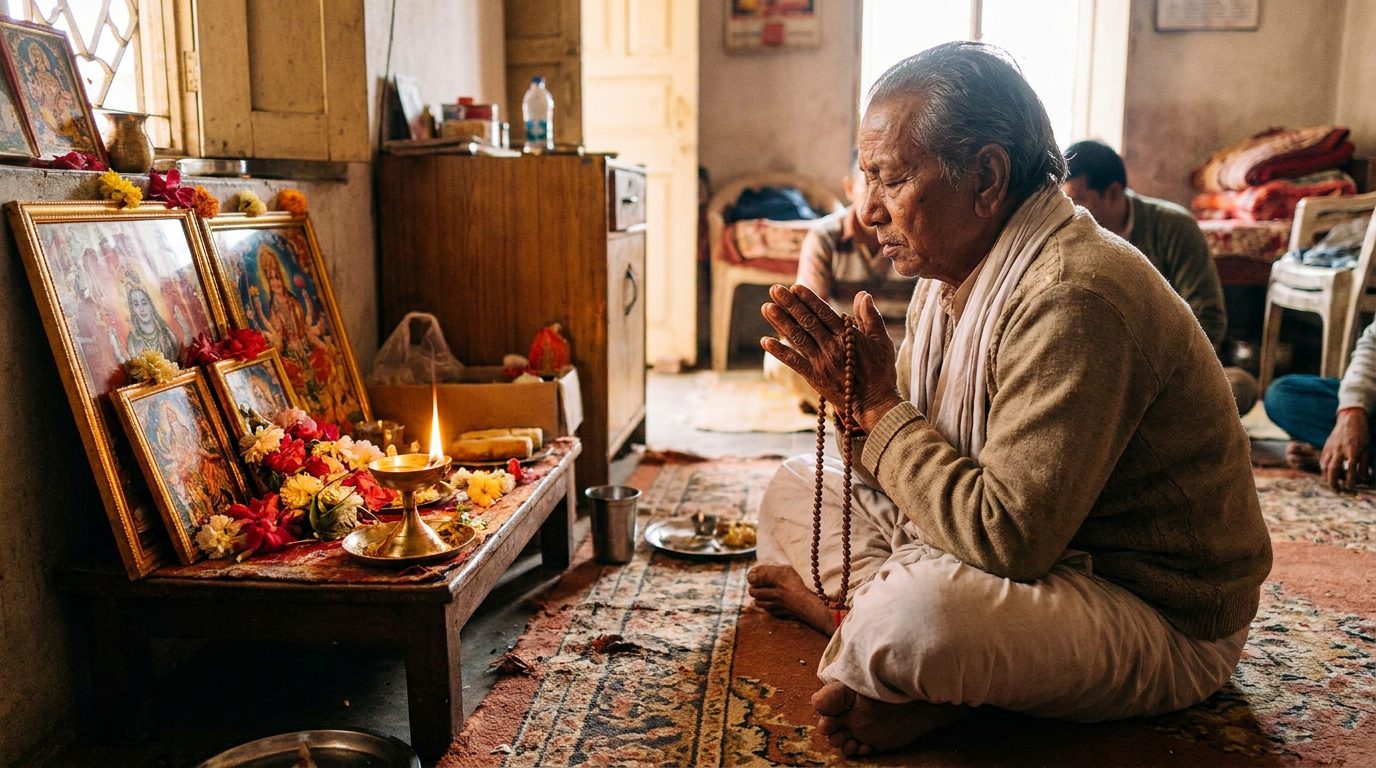
There is a beautiful stage on the path of Bhakti Yoga called bhajana-kriyā. This Sanskrit phrase can be translated simply as “the practice of devotional service” or “engaging in spiritual activities that awaken love for God.” It is not meant to sound distant or complicated. In the most practical sense, bhajana-kriyā means beginning to shape our daily life around remembrance, prayer, chanting, service, and sincere spiritual growth.
For many people, the spiritual journey begins with a quiet longing. We may feel that life has more meaning than what we can see on the surface. We may feel drawn to sacred sound, to prayer, to community, or to the wisdom of the saints. In the Bhakti tradition, this initial attraction is honored as a gift. It is the soul beginning to remember its eternal relationship with the Divine.
At The Bhakti House, we welcome seekers from all backgrounds, cultures, and faith journeys. Whether you are new to Bhakti Yoga or have been practicing for years, bhajana-kriyā invites us into a gentle, steady, heartfelt rhythm of devotion. It is not about perfection. It is about sincerity. It is not about becoming someone else. It is about uncovering who we truly are: loving souls connected to God.
Bhakti Yoga is the path of love and devotion. The word bhakti means loving service or devotion, and yoga means connection. So Bhakti Yoga is the practice of reconnecting with God through love.
The great Bhakti teacher Śrīla Rūpa Gosvāmī describes a natural progression of spiritual development in his devotional writings. This journey begins with śraddhā, or faith, then moves into sādhu-saṅga, association with saintly people, and then into bhajana-kriyā, the active practice of devotion.
From Faith to Practice
Faith in Bhakti does not mean blind belief. Śraddhā is a soft trust in the heart. It may begin as curiosity, appreciation, or a feeling that chanting, prayer, or sacred wisdom brings peace and meaning.
When faith grows, we naturally seek the company of people who nourish it. This is called sādhu-saṅga. A sādhu is a sincere spiritual person, someone trying to live in remembrance of God. Saṅga means association or company. In the presence of sincere practitioners, we begin to learn not only philosophy, but also how devotion can be lived.
From there, bhajana-kriyā begins. We start practicing. We chant. We pray. We read sacred texts. We offer our food. We serve others. We create time for God in our daily life.
A Practice Rooted in Relationship
Bhajana-kriyā is not a mechanical checklist. It is relationship-building.
Just as any loving relationship grows through time, attention, listening, speaking, service, and care, our relationship with Krishna, or God, grows through regular devotional practice. In Bhakti, Krishna is understood as the all-attractive Supreme Person, the source of love, beauty, wisdom, and compassion. Different traditions may use different names for the Divine, but the heart of Bhakti is the same: to lovingly turn toward God with sincerity.
In the Bhagavad-gītā, Krishna says:
“Whatever you do, whatever you eat, whatever you offer or give away, and whatever austerities you perform—do that as an offering to Me.”
—Bhagavad-gītā 9.27
This verse gives us the essence of bhajana-kriyā: bringing God into the center of ordinary life.
Why a Daily Bhakti Practice Matters
Daily practice gives shape to our longing. Many of us have spiritual intentions, but without a rhythm, those intentions can become distant. Bhajana-kriyā helps us turn inspiration into lived devotion.
A daily Bhakti practice does not need to be long or elaborate at first. What matters most is consistency and heart.
The Heart Needs Nourishment
Just as the body needs food each day, the heart needs spiritual nourishment. We absorb so much from the world: worries, responsibilities, news, social media, comparison, stress, and fear. If we do not intentionally turn toward sacred sound and divine remembrance, our consciousness can become crowded and heavy.
Chanting, prayer, and scripture act like spiritual nourishment. They remind us that we are more than our temporary roles, struggles, and thoughts. We are eternal souls, beloved by God.
Small Practices Create Deep Change
One of the most encouraging truths of Bhakti Yoga is that small sincere efforts matter. A few minutes of chanting each morning can soften the heart. Offering one meal with gratitude can change how we eat. Reading one verse of the Bhagavad-gītā can guide our decisions. Serving one person with humility can bring God into our relationships.
Spiritual growth often happens quietly. Like watering a seed, daily practice gradually awakens devotion.
In the Bhakti scriptures, devotion is compared to a seed planted in the heart. Through hearing and chanting about God, that seed is watered and begins to grow. This image is found in the teachings of Śrī Caitanya Mahāprabhu, who shared the path of chanting the holy names as the most accessible spiritual practice for this age.
Practice Protects the Mind
The mind can be restless, doubtful, and easily distracted. Bhajana-kriyā gives the mind a sacred place to rest.
The Bhagavad-gītā teaches that the mind can be both friend and enemy. When trained through spiritual practice, the mind becomes our friend. When left uncontrolled, it can pull us away from peace. Daily Bhakti practice gently trains the mind to return to remembrance, gratitude, and love.
The Main Practices of Bhajana-kriyā
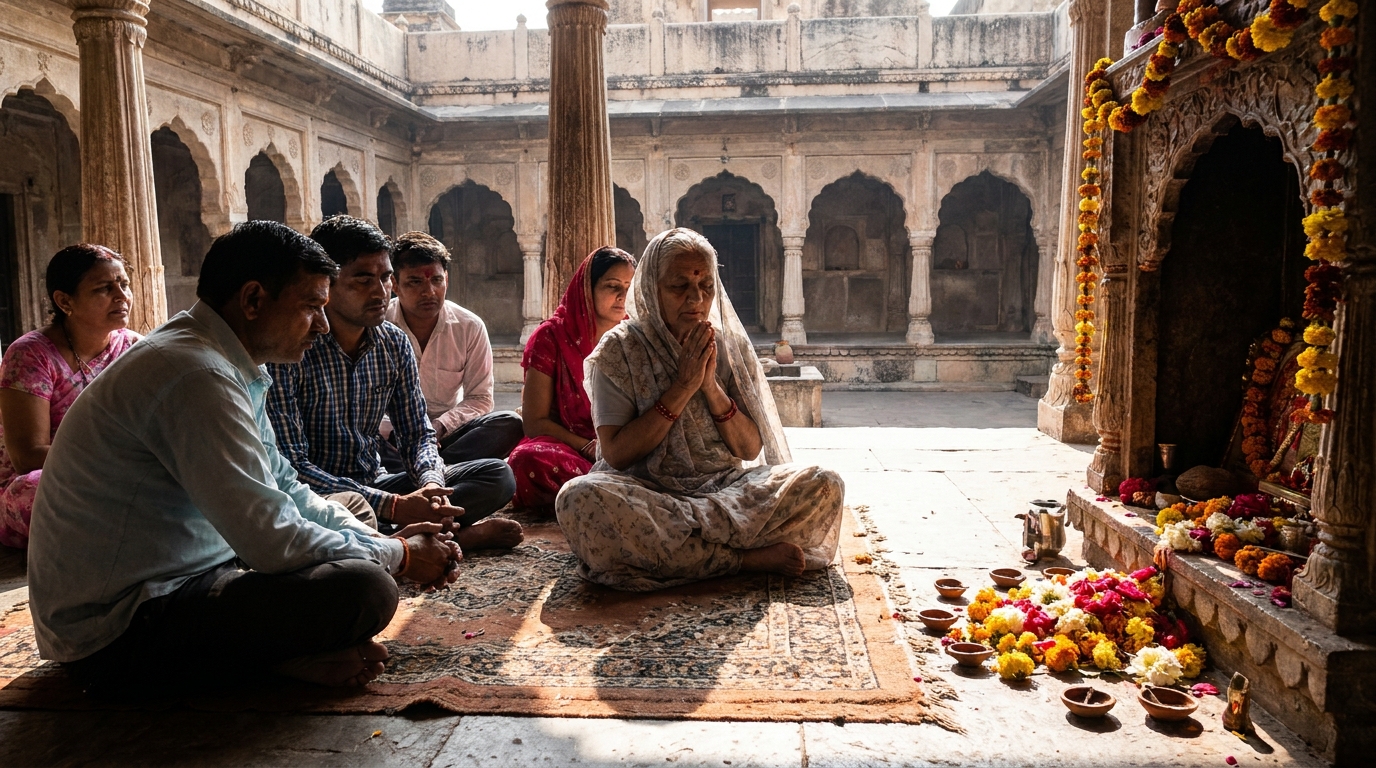
Bhajana-kriyā can include many forms of devotion. The goal is not to do everything at once, but to gradually build a life that supports loving remembrance of God.
Chanting the Holy Names
Chanting is at the heart of Bhakti Yoga. In Sanskrit, chanting sacred names is called nāma-saṅkīrtana when done together in community, and japa when done softly or personally, often on prayer beads.
The most well-known mantra in the Bhakti tradition is the Hare Krishna maha-mantra:
Hare Krishna Hare Krishna
Krishna Krishna Hare Hare
Hare Rama Hare Rama
Rama Rama Hare Hare
A mantra is a sacred sound vibration that helps free the mind and awaken the heart. The word maha means “great,” so the maha-mantra is known as the great mantra for awakening love of God.
The names “Krishna” and “Rama” refer to God as the all-attractive and the source of spiritual joy. “Hare” addresses the divine energy of the Lord, the compassionate spiritual energy that helps us reconnect with God.
Chanting does not require prior qualification. We can chant with faith, with doubt, with tears, with distraction, or with hope. The holy name meets us where we are.
Prayer as Honest Conversation
Prayer in Bhakti is not only formal recitation. It is honest conversation with God.
We can pray in simple words:
“Dear Lord, please guide me.”
“Please help me serve today.”
“Please soften my heart.”
“Please let me remember You.”
“Thank You for staying with me.”
Prayer opens the heart. It teaches dependence, humility, gratitude, and trust. Even when we do not know what to say, simply turning toward God is prayer.
Hearing and Reading Sacred Wisdom
Another essential practice is śravaṇam, or hearing. In Bhakti Yoga, hearing about God from sacred texts and sincere teachers nourishes devotion.
The Bhagavad-gītā is a foundational scripture where Krishna speaks spiritual wisdom to Arjuna, a warrior facing confusion and grief. Its message is deeply practical: act with devotion, remember God, offer your work, and live with wisdom.
The Śrīmad-Bhāgavatam is another beloved Bhakti scripture. It shares stories, prayers, and teachings that reveal the loving nature of Krishna and the lives of great devotees.
Reading even a small passage each day can help us see our life through a spiritual lens.
Offering Food with Love
In Bhakti, food can become sacred through offering. This practice is called prasāda-sevā. Prasāda means mercy or grace. When we prepare food with love and offer it to God before eating, it becomes spiritually blessed.
A simple offering can be made at home. Place the food before a picture or sacred space and say a prayer such as:
“Dear Krishna, dear Lord, please accept this offering made with love. May this food nourish me for service and remembrance.”
Then, with gratitude, we honor the food as mercy.
This practice transforms eating from consumption into communion. It reminds us that everything comes from God and can be offered back in love.
Service in Daily Life
Service is called sevā. It is one of the most beautiful expressions of Bhakti. Sevā can be done in a temple, spiritual community, home, workplace, or anywhere there are living beings.
We can serve by cooking, cleaning, teaching, listening, encouraging, giving, organizing, gardening, caring for children, helping elders, or simply offering kindness.
The spirit of sevā is this: “How can I be of service to God and to God’s children?”
When service is done without pride or expectation, it purifies the heart. It helps us move from self-centeredness to love-centeredness.
Check out our latest articles at https://thebhaktihouse.org/blog.
Creating a Simple Daily Bhakti Routine
A daily Bhakti practice should be realistic, nourishing, and sustainable. If we make it too complicated too quickly, we may feel discouraged. If we begin gently and consistently, devotion becomes a natural part of life.
Begin with the Morning
Morning is a powerful time for spiritual practice. The mind is often clearer, the world is quieter, and the heart can be set in the right direction before the demands of the day begin.
A simple morning Bhakti routine may include:
- Offering a short prayer upon waking
- Chanting the Hare Krishna mantra for 5–20 minutes
- Reading one verse from the Bhagavad-gītā
- Offering gratitude for the day
- Setting an intention to serve
Even ten sincere minutes can change the tone of the day.
Create a Sacred Space
A sacred space does not need to be large or elaborate. It may be a small table, shelf, or corner with a candle, flowers, sacred images, prayer beads, or scripture.
This space becomes a gentle reminder: “I am a soul. My life is meant for love. God is present.”
When we return to the same space each day, the mind begins to associate it with peace and devotion.
Practice at the Same Time
Consistency helps. Try choosing a regular time for chanting or prayer. For some, morning is best. For others, evening works better. Parents, students, workers, caregivers, and busy householders may need flexibility.
The key is to choose a rhythm that you can actually keep. Bhakti is not meant to create guilt. It is meant to create connection.
Keep It Personal
Your Bhakti practice should feel like a loving offering, not a burden. Some days may be filled with deep feeling. Other days may feel dry. Both are part of the path.
Showing up even when the heart feels quiet is also devotion. Love matures through steadiness.
Working Through Common Challenges
As soon as we begin bhajana-kriyā, we may notice obstacles. This is natural. Spiritual practice brings light into the heart, and that light reveals both our sincerity and our distractions.
In Bhakti teachings, this stage often includes purification. We begin to see habits, attachments, doubts, and patterns that keep us from deeper love. This is not failure. It is grace.
“I Feel Too Distracted to Chant”
Distraction is common. The mind has been wandering for many years, so we should not expect instant stillness.
When chanting, gently bring the mind back to the sound of the mantra. Hear each word:
Hare Krishna Hare Krishna
Krishna Krishna Hare Hare
Hare Rama Hare Rama
Rama Rama Hare Hare
If the mind wanders one hundred times, bring it back one hundred times. Each return is an act of devotion.
“I Don’t Feel Qualified”
Many people feel unworthy when approaching spiritual life. But Bhakti does not begin with qualification. It begins with sincerity.
The Bhakti scriptures are filled with stories of people from all walks of life who received divine grace because they turned toward God with honest hearts. Krishna is not impressed by our external status. He is touched by love.
In the Bhagavad-gītā, Krishna says:
“If one offers Me with love and devotion a leaf, a flower, fruit, or water, I will accept it.”
—Bhagavad-gītā 9.26
This verse is deeply comforting. God accepts simple offerings when they are given with love.
“I Start Strong, Then Lose Consistency”
This happens to almost everyone. The path is not always a straight line. If you miss a day, begin again. If you feel distant, chant again. If you lose your rhythm, rebuild gently.
Spiritual life is not about never falling. It is about always returning.
“My Family or Friends Don’t Understand”
Not everyone around us will immediately understand our spiritual interests. We can practice with humility, kindness, and patience. Rather than forcing others, we can let our practice make us more compassionate, grounded, and loving.
When Bhakti makes us better listeners, kinder family members, more honest workers, and more peaceful friends, others may naturally become curious.
The Role of Community in Bhajana-kriyā
While personal practice is important, Bhakti grows beautifully in community. We are nourished by others who are also trying to remember God.
Sangha: Spiritual Friendship
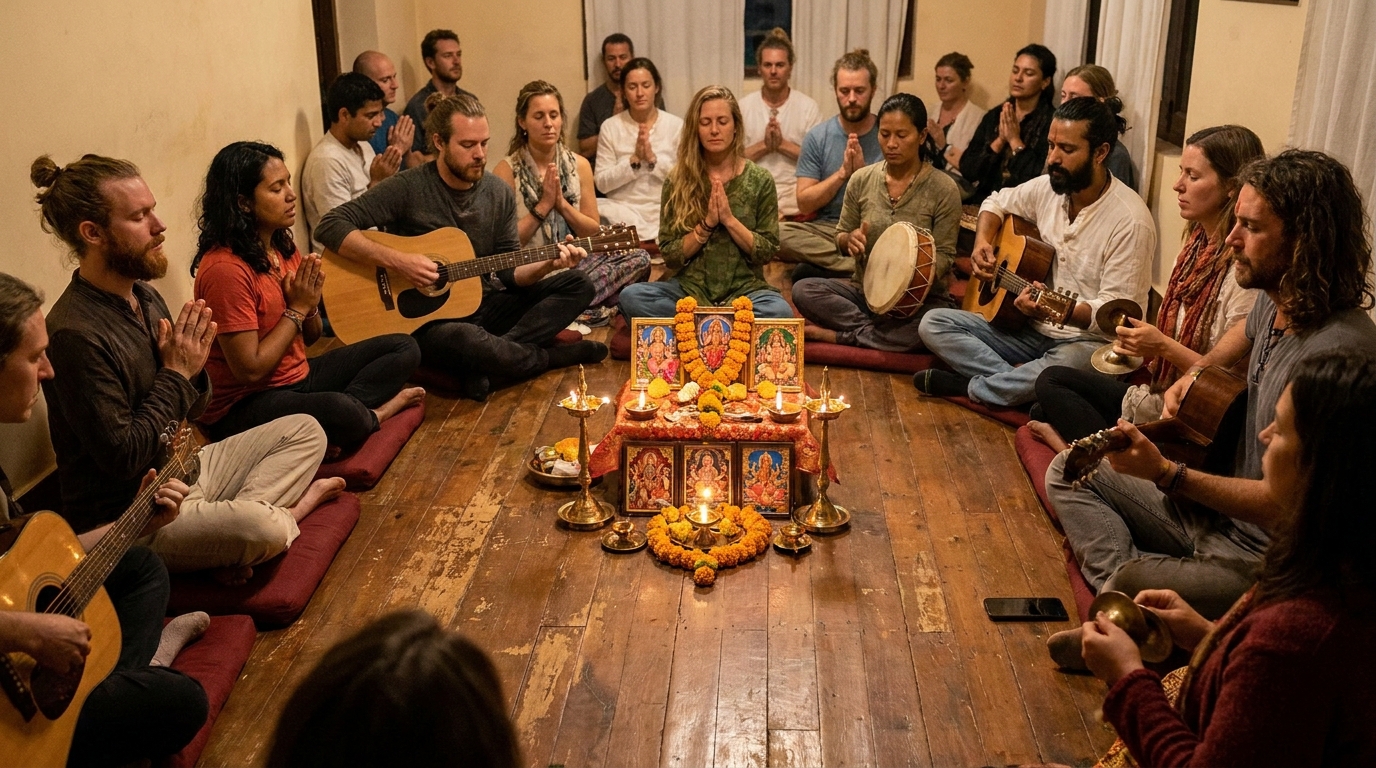
Sangha means community or association. Spiritual friendship helps us stay inspired. When we chant together, hear wisdom together, honor prasāda together, and serve together, the heart becomes strengthened.
A good spiritual community does not demand perfection. It encourages sincerity. It gives us a place to ask questions, share struggles, celebrate growth, and keep going.
Kirtan: Chanting Together
Kīrtana means glorifying God, especially through singing or chanting. In kirtan, sacred mantras are sung with music, call-and-response, and devotion.
Kirtan is one of the most accessible forms of Bhakti Yoga. You do not need to be a trained singer. You do not need to know Sanskrit perfectly. You can simply listen, respond, clap, close your eyes, or let the sound enter your heart.
Śrī Caitanya Mahāprabhu especially emphasized congregational chanting of the holy names as a powerful and merciful practice. Through kirtan, many people experience joy, release, healing, and connection.
Learning from Guides
A sincere guide, teacher, or mentor can help us understand scripture, develop practice, and avoid confusion. In Bhakti, spiritual knowledge is received through a living tradition, passed down with care.
A true guide helps us become more humble, more loving, and more connected to God—not more proud or sectarian. Healthy guidance supports our growth and respects our humanity.
The Inner Transformation of Daily Devotion
Bhajana-kriyā gradually changes the way we see ourselves and the world. At first, we may practice because we want peace, healing, clarity, or belonging. These are beautiful beginnings. Over time, devotion deepens into love.
From Self-Centered to God-Centered
Much of modern life trains us to ask, “What can I get?” Bhakti gently teaches us to ask, “How can I love? How can I serve? How can I remember God in this moment?”
This shift is revolutionary. It changes our relationships, choices, priorities, and inner life.
Purifying the Heart
Daily practice brings purification. In Sanskrit, unwanted habits and inner obstacles are called anarthas. These may include pride, envy, anger, greed, selfishness, or deep forgetfulness of God.
When anarthas arise, we do not need to despair. Seeing them is part of healing. Through chanting, prayer, service, and association, the heart is gradually cleansed.
The Śrīmad-Bhāgavatam teaches that hearing about Krishna cleanses the heart of impurities and awakens devotion. This is not just poetry; it is a practical spiritual psychology. What we hear, repeat, and remember shapes who we become.
Growing in Humility and Compassion
True Bhakti makes us softer. It helps us see others as souls, not objects. It teaches us that every living being is connected to God and worthy of respect.
Humility in Bhakti is not self-hatred. It is clarity. We recognize that everything we have—our body, talents, time, intelligence, relationships, and opportunities—is a gift. Then we naturally want to use those gifts in service.
Bringing Bhakti Into Everyday Life
Bhajana-kriyā is not limited to a meditation cushion, temple room, or Sunday gathering. It can enter every part of our day.
At Home
Home can become a place of devotion through small acts:
- Keep a sacred space
- Play kirtan or mantra music
- Offer meals before eating
- Read scripture with family or friends
- Speak kindly and forgive often
- Make cleaning and cooking acts of service
When the home becomes centered on gratitude and remembrance, daily life becomes sacred.
At Work or School
We can bring Bhakti into work or study by offering our efforts to God. Before beginning a task, we can pray:
“May this work be an offering. Please help me act with honesty, focus, and compassion.”
This transforms work from ego-driven performance into service. We may still have deadlines, responsibilities, and challenges, but our inner intention changes.
In Relationships
Relationships are one of the greatest fields of spiritual practice. Bhakti teaches us to see others as beloved parts of God. This does not mean we ignore boundaries or accept harm. It means we practice respect, patience, truthfulness, and care.
Listening can be service. Forgiveness can be service. Encouragement can be service. Protecting someone’s dignity can be service.
In Times of Difficulty
Bhajana-kriyā is especially important during hard times. When grief, anxiety, illness, or uncertainty comes, our practice becomes a lifeline.
Chanting may not remove every external problem, but it connects us to the One who walks with us through all circumstances. Prayer may not always change the situation immediately, but it changes our heart within the situation.
Bhakti gives us a way to suffer honestly without becoming hopeless.
A Gentle Plan for Beginning Bhajana-kriyā
If you are wondering how to begin, start simply. Let your practice be sincere and steady rather than ambitious and overwhelming.
A 15-Minute Daily Practice
Here is one gentle example:
- Sit in a quiet place and take a few deep breaths.
- Offer a short prayer for guidance.
- Chant the Hare Krishna maha-mantra for 5–10 minutes.
- Read one verse from the Bhagavad-gītā or another Bhakti text.
- End with gratitude and an intention to serve.
This is enough to begin watering the seed of devotion.
A Weekly Practice
In addition to daily personal practice, try adding one weekly devotional activity:
- Attend a kirtan
- Join a Bhakti discussion group
- Visit a temple or spiritual gathering
- Cook and share prasāda
- Volunteer in service
- Read with a friend
- Spend time with devotees or sincere seekers
Spiritual life becomes joyful when shared.
Growing Gradually
As your heart becomes more nourished, you may naturally want to increase your practice. You might chant more rounds on beads, study scripture more deeply, serve more regularly, or follow additional devotional principles.
Let growth come with guidance and sincerity. Bhakti is a lifelong path. There is no need to rush. The Lord sees every step.
Bhajana-kriyā as a Path of Love
At its deepest level, bhajana-kriyā is the art of saying yes to God every day.
Yes, I will remember You.
Yes, I will chant Your names.
Yes, I will offer what I can.
Yes, I will try again.
Yes, I will serve.
Yes, I will let my heart be changed.
This stage of Bhakti is both practical and sacred. It gives us something to do with our longing. It teaches us how to live devotion in our mornings, meals, work, family, friendships, struggles, and joys.
The beauty of Bhakti Yoga is that God is not far away. Krishna is present in His names, in scripture, in the heart, in prasāda, in service, and in the loving company of devotees. Every sincere practice becomes a meeting place.
You do not have to be perfect to begin. You do not have to know everything. You do not have to come from a particular background. You are welcome as you are.
Take one sincere step. Chant one mantra. Offer one prayer. Read one verse. Serve one person. Come sit with others who are also learning to love. In Bhakti, every genuine step toward God is seen, cherished, and answered with grace.
Everyone is welcome to take one sincere step toward God today.
FAQs
What is Bhajana-kriyā?
Bhajana-kriyā refers to the process of engaging in devotional practices as a means of cultivating a daily bhakti (devotion) practice. It involves activities such as chanting, singing, reading scriptures, and meditation with the aim of deepening one’s connection to the divine.
What are the benefits of practicing Bhajana-kriyā?
Practicing Bhajana-kriyā can lead to a deeper sense of spiritual connection, inner peace, and a greater understanding of one’s relationship with the divine. It can also help in developing qualities such as humility, compassion, and gratitude.
How can one start a daily Bhakti practice using Bhajana-kriyā?
To start a daily Bhakti practice using Bhajana-kriyā, one can begin by setting aside a specific time each day for devotional activities. This can include chanting or singing bhajans, reading sacred texts, and engaging in meditation. It’s important to approach these practices with sincerity and devotion.
What are some common practices involved in Bhajana-kriyā?
Common practices involved in Bhajana-kriyā include kirtan (devotional singing), japa (repetition of a mantra), reading and studying sacred texts such as the Bhagavad Gita or the Ramayana, and meditation on the divine form or qualities.
How can Bhajana-kriyā contribute to spiritual growth?
Bhajana-kriyā can contribute to spiritual growth by helping individuals develop a deeper connection to the divine, cultivate qualities such as love and devotion, and gain a better understanding of their spiritual path. It can also provide a sense of inner fulfillment and peace.

