
Understanding Bhajana-Kriya: The Beginning of Devotional Practice
Bhajana-kriya is a beautiful Sanskrit term from the path of Bhakti Yoga. “Bhajana” means devotional practice, worship, or loving service to God. “Kriya” means action or activity. Together, bhajana-kriya means the active practice of devotion—the sincere steps we take to awaken love for the Divine.
In the Bhakti tradition, spiritual life is not only a philosophy to understand, but a relationship to live. Bhajana-kriya is where that relationship begins to take shape through chanting, prayer, meditation, scripture, service, and heartfelt remembrance of God.
You do not need to be born into a particular culture, religion, or background to begin bhajana-kriya. Bhakti Yoga welcomes every soul. Whether you are curious, returning to faith after a long time, seeking healing, or longing for a deeper connection with God, this practice offers a gentle and practical way forward.
Srila Rupa Goswami, a great teacher in the Bhakti tradition, describes the journey of devotion as unfolding in stages. It begins with a little faith, called shraddha. Then comes sadhu-sanga, the association of spiritually minded people. From there, one naturally begins bhajana-kriya: the practice of devotional life.
This is very hopeful. It means we do not have to be perfect before we begin. We begin where we are. Through sincere practice, the heart becomes clearer, softer, and more open to divine love.
Bhajana-Kriya Is Practice, Not Performance
One of the most comforting truths about bhajana-kriya is that it is not a performance. It is not about impressing others, appearing spiritual, or achieving a religious image.
It is about showing up sincerely.
Some days our chanting may feel focused and joyful. Other days the mind may wander. Some days prayer may come naturally. Other days we may simply sit before God and say, “Please help me.” All of this can be part of bhajana-kriya when offered with humility.
In the Bhagavad-gita, Krishna says, “Whatever you do, whatever you eat, whatever you offer or give away, and whatever austerities you perform—do that as an offering to Me” (Bhagavad-gita 9.27). This verse reveals the heart of devotional practice. Bhajana-kriya is learning to offer our life to God, step by step.
The Place of Bhajana-Kriya in the Journey of Bhakti Yoga
Bhakti Yoga is the yoga of love and devotion. While some spiritual paths emphasize physical discipline, philosophical inquiry, or meditation on the self, Bhakti Yoga centers on loving relationship with the Supreme Person, known in Sanskrit as Krishna, meaning “the all-attractive one.”
Bhajana-kriya is one stage in a larger journey of spiritual awakening. The great teachers of Bhakti explain that devotion often develops in a natural sequence:
- Shraddha — initial faith or spiritual interest
- Sadhu-sanga — association with devotees and spiritual seekers
- Bhajana-kriya — beginning regular devotional practice
- Anartha-nivritti — cleansing of unwanted habits and inner obstacles
- Nishtha — steadiness
- Ruchi — taste for spiritual life
- Asakti — deep attachment to God
- Bhava — spiritual emotion
- Prema — pure love of God
This progression is not mechanical. God is not a formula. But these stages help us understand what may happen in the heart as devotion matures.
Bhajana-kriya is the stage where faith becomes embodied. Instead of only appreciating spiritual ideas, we begin to live them. We chant. We pray. We read sacred wisdom. We serve. We make time for God.
From Inspiration to Daily Devotion
Many people feel moments of inspiration. Perhaps during a kirtan, a sacred gathering, a quiet walk in nature, or a difficult season of life, the heart opens and senses something higher.
That inspiration is precious. But if it is not nourished, it may fade.
Bhajana-kriya gives structure to inspiration. It helps us turn a moment of spiritual longing into a living relationship. Just as a friendship deepens through regular communication, our relationship with God deepens through regular devotional practice.
This does not mean we must suddenly change everything about our lives. The Bhakti path is kind and practical. We can begin with a few minutes a day. We can chant one mantra. We can offer one prayer. We can read one verse. What matters most is sincerity.
The Role of Guidance and Community
Bhajana-kriya grows beautifully in the company of others. In Sanskrit, spiritual association is called sadhu-sanga. A sadhu is someone sincerely trying to live a God-centered life.
Community helps us stay encouraged. When we see others chanting, serving, praying, and growing, we remember that we are not alone. Spiritual life can be tender, and the world can be distracting. Loving association protects and nourishes our intention.
In the Srimad-Bhagavatam, a foundational Bhakti scripture, it is said that by hearing about God in the association of devotees, the heart becomes purified and devotion awakens. This is not merely religious theory. Many people experience that when they sit with sincere practitioners, chant together, and hear sacred wisdom, something within them becomes peaceful and alive.
Core Practices of Bhajana-Kriya
Bhajana-kriya includes many devotional practices. Some are simple and quiet. Others are musical, communal, and joyful. All of them are meant to help the heart remember God and live in love.
The Sanskrit word seva means service. Bhakti is not only meditation in private; it is also love in action. When we serve others, care for sacred spaces, cook with devotion, support community, or offer our talents for a higher purpose, we are practicing bhajana-kriya.
Chanting the Holy Names
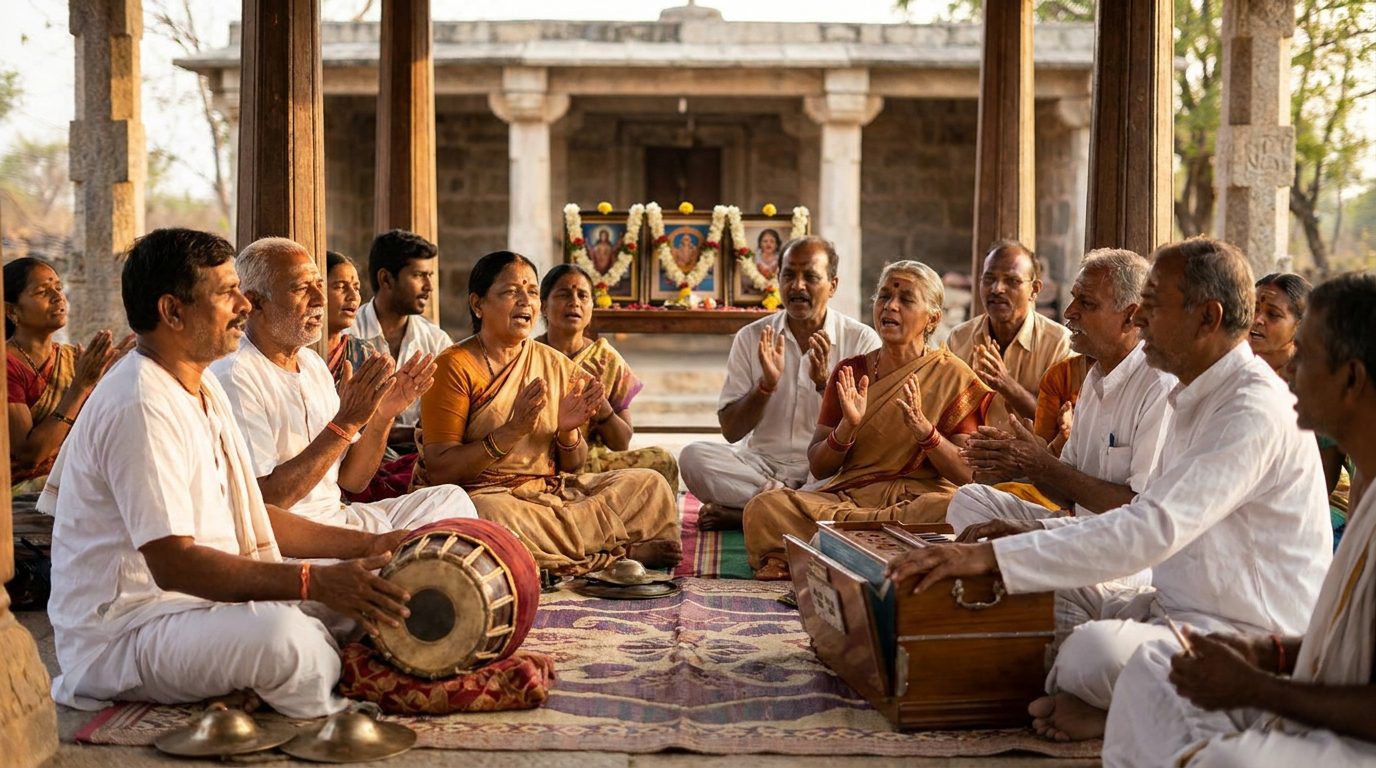
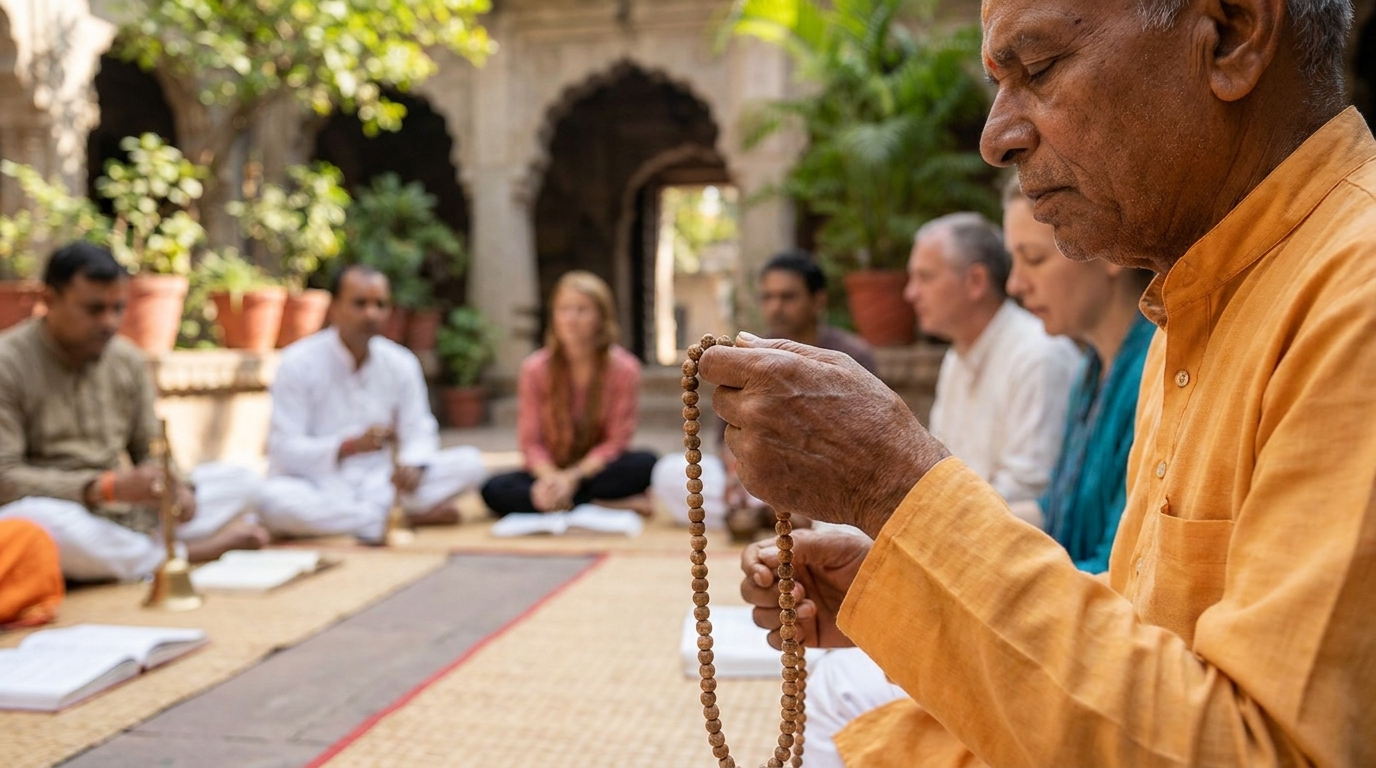
The most central practice in many Bhakti traditions is chanting the holy names of God. This may be done softly in personal meditation, often called japa, or together in musical call-and-response chanting, known as kirtan.
A widely practiced mantra in the Bhakti tradition is the maha-mantra, meaning “great mantra”:
Hare Krishna Hare Krishna
Krishna Krishna Hare Hare
Hare Rama Hare Rama
Rama Rama Hare Hare
“Hare” calls upon the divine energy of God. “Krishna” means the all-attractive Lord. “Rama” means the source of joy and spiritual pleasure. This mantra is a prayer: “O Lord, O divine energy of the Lord, please engage me in Your loving service.”
Chanting is powerful because it engages the voice, ears, mind, and heart. Even when the mind is restless, the sound of the holy name can gently bring us back.
In the Brihan-naradiya Purana, it is said that in this age, chanting the holy names is the most recommended spiritual practice. This is deeply compassionate. We may not have the time, strength, or purity for difficult austerities, but almost anyone can chant.
You can begin simply. Sit comfortably. Take a breath. Chant one round on beads, or chant for five minutes. Listen to the sound. When the mind wanders, return gently. There is no need to be harsh with yourself. The holy name is a shelter, not a burden.
Prayer as Honest Conversation
Prayer is the soul speaking to God.
In bhajana-kriya, prayer does not have to be complicated. It can be formal or spontaneous, spoken aloud or held silently in the heart. We can thank God, ask for guidance, confess our struggles, pray for others, or simply sit in longing.
A humble prayer might be:
“Dear Lord, please help me remember You. Please guide my heart. Please let my life become an offering of love.”
Bhakti prayer is relational. We are not trying to manipulate the Divine. We are opening ourselves to grace. Sometimes prayer changes our circumstances. Often, it changes us. It softens pride, releases fear, and reminds us that we are held by a love greater than our own strength.
Hearing and Studying Sacred Wisdom
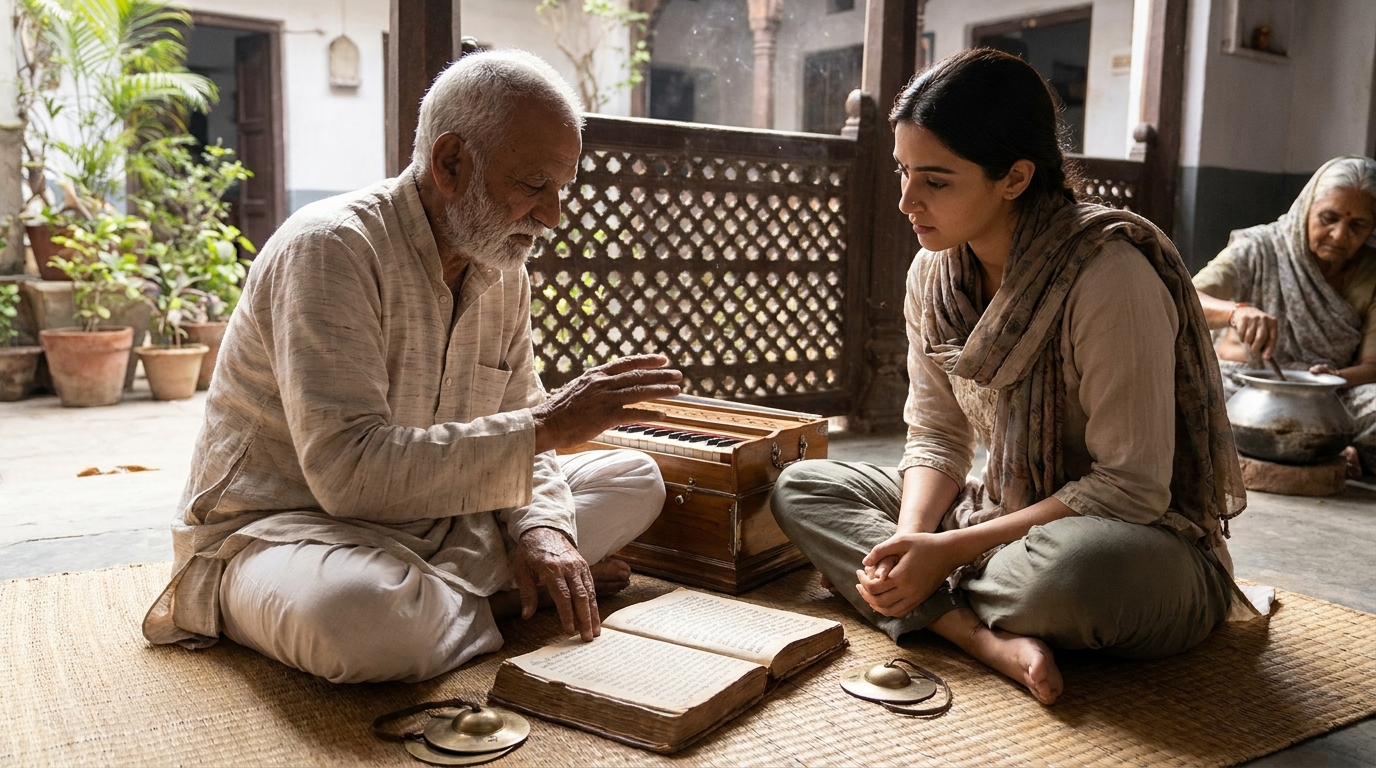
Another essential part of bhajana-kriya is hearing spiritual teachings. In Sanskrit, this is called shravanam, or hearing. The Bhakti tradition emphasizes hearing about God’s names, qualities, activities, and teachings.
Sacred texts such as the Bhagavad-gita and Srimad-Bhagavatam are not meant only for scholars. They are meant to nourish the heart. Even reading a few verses daily can shape our consciousness.
The Bhagavad-gita offers practical guidance for living in the world with devotion. Krishna teaches Arjuna not to run away from life, but to act with wisdom, surrender, and love. This is very relevant for modern seekers. Bhajana-kriya does not require us to abandon our responsibilities. It teaches us to spiritualize them.
The Srimad-Bhagavatam shares stories of devotees whose lives reveal courage, surrender, longing, and divine love. These stories give us spiritual imagination. They help us see what a God-centered life can look like.
Worship and Sacred Offering
In Bhakti Yoga, worship can be practiced through simple offerings. One may keep a small altar with a picture of Krishna, Rama, Vishnu, Radha, or another form of the Divine according to one’s tradition and faith.
Offerings may include flowers, water, incense, a candle, or food prepared with love. In the Bhagavad-gita, Krishna says, “If one offers Me with love and devotion a leaf, a flower, fruit, or water, I will accept it” (Bhagavad-gita 9.26).
This verse is wonderfully inclusive. God does not ask for luxury. God asks for love.
When we prepare food and offer it before eating, our meal becomes sanctified. In Bhakti, this blessed food is called prasadam, meaning mercy or grace. Eating prasadam reminds us that life is a gift and that even ordinary acts can become sacred.
Discover a wide range of insightful articles that delve into various spiritual topics. These articles provide guidance and inspiration for your personal growth journey. Stay informed and enlightened by exploring the latest articles available on our website.
Meditation in Bhajana-Kriya: Training the Heart to Remember God
Meditation in Bhakti Yoga is not empty or impersonal. It is meditation filled with relationship, sound, remembrance, and love.
The mind is often restless. It runs toward worries, plans, regrets, and desires. Bhajana-kriya gives the mind a sacred focus. Instead of trying to force the mind into silence, we gently invite it to rest in God.
Mantra Meditation for Daily Life
Mantra meditation is one of the most accessible forms of Bhakti meditation. A mantra is a sacred sound that carries spiritual meaning and presence. The word “mantra” can be understood as that which frees the mind.
To practice mantra meditation, choose a quiet time if possible. Morning is especially helpful, because the mind is usually clearer. Sit in a comfortable position. If you have japa beads, hold them gently. Chant the maha-mantra or another sacred name of God from your tradition. Listen carefully.
The listening is very important. We are not just repeating words. We are receiving sacred sound.
If thoughts come, do not feel discouraged. The practice is to return. Each return is an act of devotion. Each sincere repetition is a small offering.
Over time, mantra meditation can bring steadiness, clarity, and sweetness. It may reveal emotions we have buried. It may show us habits we need to release. It may also bring deep peace. All of this is part of spiritual growth.
Remembering God Throughout the Day
Meditation does not end when we leave our cushion, altar, or prayer space. Bhajana-kriya gradually teaches us to remember God throughout the day.
We can pause before beginning work and say, “May this be offered to You.” We can chant softly while walking. We can listen to kirtan while cooking. We can offer gratitude before meals. We can pray before difficult conversations.
These small moments matter. They create a devotional atmosphere in daily life.
In the Bhagavad-gita, Krishna says, “Always think of Me, become My devotee, worship Me, and offer your homage unto Me” (Bhagavad-gita 18.65). This instruction is not meant to create pressure. It is an invitation into relationship. Like remembering someone we love, remembering God becomes natural through affection and practice.
The Inner Work of Bhajana-Kriya
When we begin devotional practice, we may expect only peace and joy. And yes, bhajana-kriya brings deep nourishment. But it also brings purification.
As we chant and pray, we may start seeing parts of ourselves more clearly—our impatience, ego, attachments, distractions, or old wounds. This is not a sign of failure. It is a sign that light is entering the room.
In Bhakti, unwanted habits and inner obstacles are called anarthas. “Anartha” means something that does not truly benefit the soul. Anartha-nivritti, the clearing away of these obstacles, often follows bhajana-kriya.
Cleansing the Mirror of the Heart
Sri Chaitanya Mahaprabhu, a great saint and teacher of divine love, described chanting as cleansing the mirror of the heart. This means that our original spiritual nature is already pure, but it is covered by dust—forgetfulness, fear, selfishness, and misunderstanding.
Devotional practice removes this dust gradually.
This cleansing is not always dramatic. Sometimes it looks like becoming a little more patient. Apologizing more quickly. Feeling less attracted to harmful habits. Becoming more grateful. Wanting to serve rather than be seen.
These are sacred changes.
Bhajana-kriya is not only about having mystical experiences. It is about becoming more loving. If our practice helps us become kinder, humbler, more honest, and more compassionate, then it is bearing fruit.
Facing Distraction with Compassion
Almost everyone who begins bhajana-kriya faces distraction. The mind resists discipline. The phone calls. The schedule fills. Old patterns return.
Please do not lose heart.
The path of devotion is patient. If you miss a day, begin again. If your chanting feels dry, keep going gently. If your prayer feels weak, offer that weakness. God sees sincerity more than external perfection.
Srila Bhaktivinoda Thakura, a beloved Bhakti teacher, often emphasized humility in spiritual practice. We approach God not as masters of devotion, but as beggars for grace. This mood protects us from discouragement and pride.
A simple way to continue is to make your practice realistic. It is better to chant five minutes daily with sincerity than to promise two hours and give up after three days. Let your devotion grow like a plant—with water, sunlight, and patience.
Creating a Personal Bhajana-Kriya Routine
A devotional routine helps spiritual life become steady. This does not mean rigid or lifeless. A good routine is like a riverbank: it gives direction to the flow of love.
Your bhajana-kriya routine can be adapted to your life situation. A parent, student, working professional, retiree, or monastic may each have a different rhythm. Bhakti is personal.
A Simple Morning Practice
Morning is a precious time for devotion. Even a short morning practice can influence the whole day.
You might begin with:
- Lighting a candle or incense
- Offering a short prayer
- Chanting the holy names for 5–20 minutes
- Reading one verse from the Bhagavad-gita or another sacred text
- Setting an intention to serve with love
This simple routine can be deeply transformative when practiced regularly.
Try not to rush. Even if your time is short, bring your heart. One sincere mantra can be powerful. One honest prayer can open a doorway.
A Devotional Evening Reflection
Evening is a good time to return to God and review the day.
You may ask yourself:
- Where did I remember God today?
- Where did I forget?
- Did I speak with kindness?
- Did I serve someone?
- What can I offer with gratitude?
- What do I need help with tomorrow?
This reflection should not become self-criticism. It is a loving check-in. We are learning to see our life as a sacred journey.
You can end the day with chanting, reading, or a simple prayer: “Thank You for carrying me today. Please help me remember You tomorrow.”
Bringing Bhakti into Work, Family, and Relationships
Bhajana-kriya is not separate from ordinary life. In fact, ordinary life becomes the field of devotion.
At work, we can practice honesty, patience, and service. In family life, we can practice forgiveness and gratitude. In friendships, we can practice listening and compassion. In challenges, we can practice surrender.
Surrender in Sanskrit is called sharanagati. It does not mean passivity or helplessness. It means trusting God while doing our sincere part. We act responsibly, but we remember that we are not the ultimate controller.
This mood brings relief. We do not have to carry the universe. We can serve, pray, and trust.
Common Challenges in Bhajana-Kriya and How to Continue
Every sincere practitioner meets challenges. These challenges do not disqualify us. They are part of the path.
The important thing is to keep turning toward God.
When Practice Feels Dry
Sometimes chanting or prayer may feel dry. We may wonder, “Is anything happening?”
In these times, remember that spiritual growth is often subtle. A seed grows underground before we see a sprout. The holy name is working even when we do not feel immediate sweetness.
You can support your practice by chanting with others, listening to kirtan, reading about the lives of saints, or praying honestly: “Lord, I do not feel much today, but I want to want You.”
That prayer itself is devotional.
When Doubt Appears
Doubt can be painful, but it can also become part of mature faith if approached sincerely. Bhakti does not require blind belief. Questions are welcome when asked with humility and a desire for truth.
If you have doubts, bring them into prayer. Discuss them with trustworthy practitioners. Study scripture carefully. Give yourself time.
Faith in Bhakti is not forced. It grows through experience—through chanting, service, reflection, and the gradual softening of the heart.
When Life Becomes Busy
Modern life can be very demanding. Many people feel they do not have enough time for spiritual practice.
But bhajana-kriya can begin in small ways. Chant while commuting. Offer your food before eating. Keep a verse on your desk. Listen to a sacred talk while doing chores. Pause for three breaths and remember God before opening your email.
Small offerings are not small to God when they are made with love.
Krishna’s promise in the Bhagavad-gita is compassionate: even a little practice on this path can protect one from great fear (Bhagavad-gita 2.40). No sincere effort is lost.
The Fruits of Bhajana-Kriya
The goal of bhajana-kriya is not merely stress reduction, though it may bring peace. It is not merely self-improvement, though it may refine our character. The deeper fruit is awakening our eternal relationship with God.
As devotion matures, the heart begins to taste spiritual joy. We become less dependent on temporary praise, possessions, or control. We begin to find meaning in service. We feel drawn to sacred sound. We become more compassionate toward others.
Growing in Love and Humility
True bhajana-kriya makes us humble. Not insecure, but grounded. We begin to understand that everything is grace—our breath, our abilities, our relationships, our opportunity to practice.
Humility allows love to flow. Pride separates, but humility connects. When we recognize our dependence on God, we become gentler with others.
Sri Chaitanya Mahaprabhu taught that one should chant the holy name in a humble state of mind, feeling lower than a blade of grass, more tolerant than a tree, and ready to offer respect to others. This teaching is not about self-hatred. It is about becoming free from ego so that love can shine.
Serving the World with a Devotional Heart
Bhajana-kriya naturally leads to service. As the heart becomes nourished by God’s love, it wants to share kindness.
Service may look different for each person. Some cook prasadam. Some sing kirtan. Some teach. Some care for children. Some clean the temple. Some support others quietly. Some serve through their profession with integrity and compassion.
No sincere service is insignificant.
Bhakti teaches us to see every living being as a beloved part of God. This vision transforms how we move through the world. We become less interested in using others and more interested in honoring them.
Beginning Today: One Sincere Step Toward God
Bhajana-kriya is the sacred beginning of devotional practice. It is where faith becomes action, longing becomes prayer, and daily life becomes an offering.
You do not need to have everything figured out. You do not need to be perfect, pure, or advanced. You only need a sincere willingness to turn toward God.
Begin with one step.
Chant one mantra. Offer one prayer. Read one verse. Serve one person. Give thanks before one meal. Sit quietly and say, “Lord, I am here.”
The path of Bhakti Yoga is practical, loving, and deeply personal. It invites us to bring our whole life—our joy, confusion, wounds, hopes, and gifts—into relationship with the Divine. Through bhajana-kriya, the heart gradually awakens to its natural purpose: to love and be loved by God.
At The Bhakti House, all are welcome. Whatever your background, wherever you are on the journey, there is room for you in the circle of devotion. Take one sincere step today, and trust that God lovingly receives it.
FAQs
What is Bhajana-kriya?
Bhajana-kriya is a spiritual practice that involves devotional singing and chanting, aimed at cultivating a deep connection with the divine. It is often associated with the practice of Bhakti Yoga, which emphasizes love and devotion towards God as a means of spiritual growth and self-realization.
How does Bhajana-kriya benefit practitioners?
Practitioners of Bhajana-kriya often experience various benefits, including enhanced emotional well-being, increased focus and concentration, and a greater sense of inner peace. The practice can also foster a sense of community and belonging among participants, as it is often performed in group settings.
What are the key components of Bhajana-kriya?
The key components of Bhajana-kriya include the chanting of mantras, singing devotional songs (bhajans), and engaging in meditation. These elements work together to create a holistic experience that nurtures both the mind and spirit, allowing practitioners to immerse themselves in devotion.
Can anyone practice Bhajana-kriya?
Yes, Bhajana-kriya is accessible to individuals of all backgrounds and spiritual beliefs. It does not require any prior experience or specific religious affiliation, making it an inclusive practice that can be adapted to suit personal preferences and needs.
How can one get started with Bhajana-kriya?
To get started with Bhajana-kriya, individuals can join local spiritual groups or communities that focus on devotional singing. Additionally, there are numerous online resources, including videos and guided sessions, that can help beginners learn the techniques and principles of Bhajana-kriya.

