
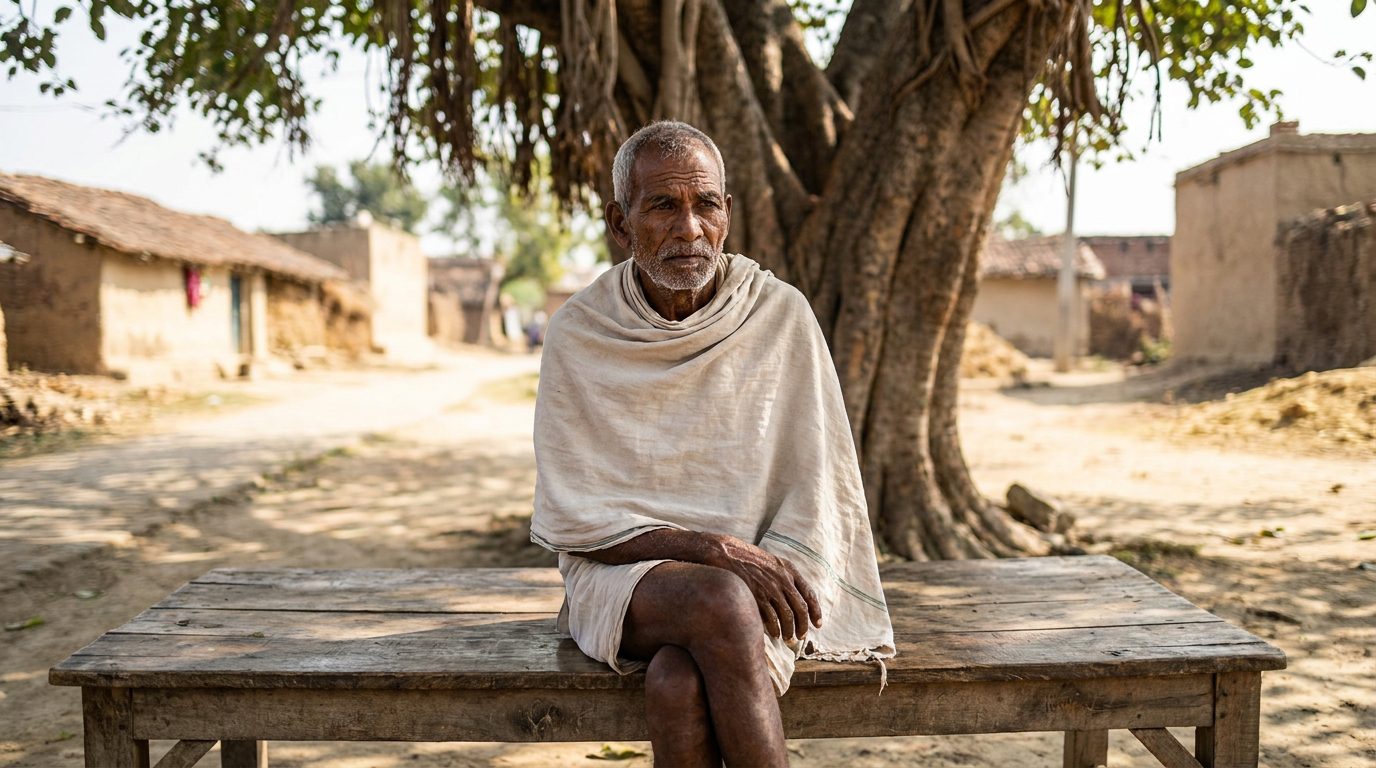
Imagine being chosen for the most important errand in history — not because you were the most powerful or the most famous, but because your heart was sincere. That is the story of Akrūra, a devoted soul whose very name means “not cruel” — one who is gentle, kind, and overflowing with love for the Divine.
In the ancient Bhakti tradition, Akrūra is celebrated as a trusted messenger, a pure devotee, and a shining example of what happens when an ordinary person carries an extraordinary love for God in their heart. His story, found in the Śrīmad-Bhāgavatam (also known as the Bhāgavata Purāṇa), offers timeless lessons for all of us — no matter where we come from or where we are on our spiritual journey.
Let’s walk through his story together and discover what this beautiful soul can teach us about devotion, courage, and the transformative power of divine love.
Akrūra was a member of the Yadu dynasty, the same noble family in which Lord Kṛṣṇa appeared. He was the son of Śvaphalka and Gāndinī, and he was known throughout the land as a righteous, gentle, and deeply devotional person.
A Name That Tells a Story
In Sanskrit, the prefix “a” negates the word that follows it. “Krūra” means “cruel.” So “Akrūra” literally means “one who is not cruel” — one who is gentle, compassionate, and kind. This wasn’t just a name; it was a description of his character. Akrūra lived his life with softness of heart, and that softness made him the perfect vessel for God’s mission.
His Place in Kṛṣṇa’s Story
Akrūra wasn’t a warrior on the battlefield like Arjuna, nor was he a cowherd playing with Kṛṣṇa in the fields of Vṛndāvana. He was something quieter — a trusted uncle, a devoted family member, and a man whose faith never wavered. In many ways, his role reminds us that devotion doesn’t require a dramatic stage. Sometimes the most sacred service happens in the humble, faithful carrying of a message.
The Mission: Bringing Kṛṣṇa to Mathurā
The most famous chapter in Akrūra’s life begins when the tyrannical King Kaṁsa sends him on a mission. Kaṁsa, Kṛṣṇa’s uncle, was terrified of a prophecy that said Kṛṣṇa would be his end. So Kaṁsa devised a plan — he would invite Kṛṣṇa and His brother Balarāma to Mathurā under the pretense of a grand wrestling festival, and there he would have them killed.
Kaṁsa chose Akrūra to deliver this invitation because he knew Akrūra was respected and trusted by everyone, including the residents of Vṛndāvana. What Kaṁsa didn’t fully understand was that Akrūra’s true allegiance was not to a king, but to God.
A Heart Torn and Overjoyed
When Akrūra received this mission, something remarkable happened. While he understood the dark intentions behind Kaṁsa’s order, his heart leaped with joy — because this mission meant he would finally get to see Kṛṣṇa face to face.
The Śrīmad-Bhāgavatam beautifully captures his anticipation. As he set out on his chariot toward Vṛndāvana, his mind was completely absorbed in thoughts of the Lord. In Śrīmad-Bhāgavatam 10.38.1, we read:
“Śrī Śuka said: The supremely charitable Akrūra, being thus sent by Kaṁsa, mounted his chariot and set off for Nanda Mahārāja’s cowherd village.”
But it was his inner meditation that truly shines. As he traveled, he wondered what Kṛṣṇa would look like, how it would feel to be in His presence, and whether the Lord would embrace him. His thoughts were not about politics or fear — they were the thoughts of a lover longing to meet the Beloved.
The Ecstasy of Anticipation
In Śrīmad-Bhāgavatam 10.38.6, Akrūra’s beautiful inner state is described:
“Ah, when will I see that lotus face — with its beautiful cheeks, its fine nose and gentle smile, and its reddish lotus eyes?”
This verse shows us something deeply instructive about Bhakti Yoga. Akrūra hadn’t yet arrived in Vṛndāvana, and already his heart was melting. He was practicing what the tradition calls “smaraṇam” — the devotional practice of remembering God. Simply by meditating on Kṛṣṇa with love, his entire being was transformed.
This is a practice available to every one of us. You don’t need to be on a chariot heading to Vṛndāvana. You can be on your morning commute, in your kitchen, or sitting quietly before bed. When you turn your thoughts toward the Divine with sincerity and love, something shifts inside. That is the magic of remembrance.
Akrūra’s Vision: Grace Revealed in the Yamunā
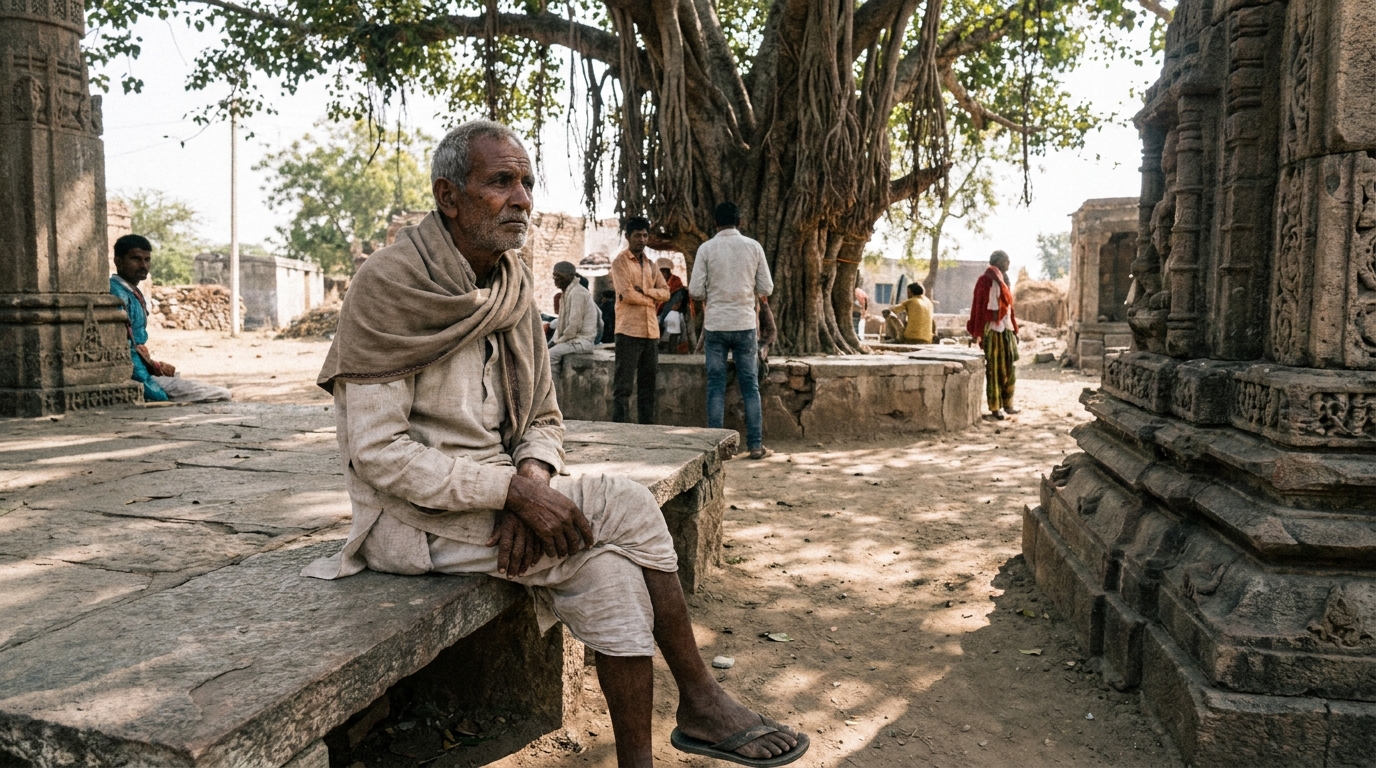
One of the most breathtaking moments in Akrūra’s story takes place after he has met Kṛṣṇa and Balarāma and is driving them toward Mathurā. Along the way, Akrūra stops at the Yamunā River to perform his daily rituals and bathe.
The Divine Revelation Beneath the Waters
While submerged in the sacred waters, Akrūra receives an extraordinary vision. He sees Lord Kṛṣṇa and Balarāma in their divine, cosmic forms. He beholds the Supreme Lord reclining on the serpent Ananta Śeṣa, surrounded by divine attendants, radiating an effulgence that illuminates everything.
The Śrīmad-Bhāgavatam 10.39.40 describes part of this vision:
“He saw the Supreme Personality of Godhead lying on the lap of the serpent Ananta Śeṣa, attended by His personal expansions and surrounded by His loving devotees.”
Akrūra was overwhelmed. He emerged from the water, looked at the chariot, and saw Kṛṣṇa and Balarāma sitting there just as before — two seemingly ordinary young men. He went back into the water, and the cosmic vision appeared again. This back-and-forth experience astonished him and deepened his realization that the boy sitting in his chariot was none other than the Supreme Personality of Godhead.
What This Means for Us
This moment teaches us something profound: God is always present. Sometimes we see Him, sometimes we don’t — but that has more to do with the state of our hearts than with the reality of His presence. Akrūra’s sincerity and devotion opened his inner eyes. Bhakti Yoga — the yoga of love and devotion — is the process by which our own inner eyes can gradually open too.
We may not see a cosmic vision in our morning shower, but we can begin to perceive the sacred in the ordinary. A kind word from a stranger, the beauty of a sunrise, the stirring of the heart during chanting — these are all quiet revelations of divine love.
Sure, here is the sentence with the clickable link:
Check out our website for more articles: more articles.
Akrūra’s Prayers: A Model of Devotion
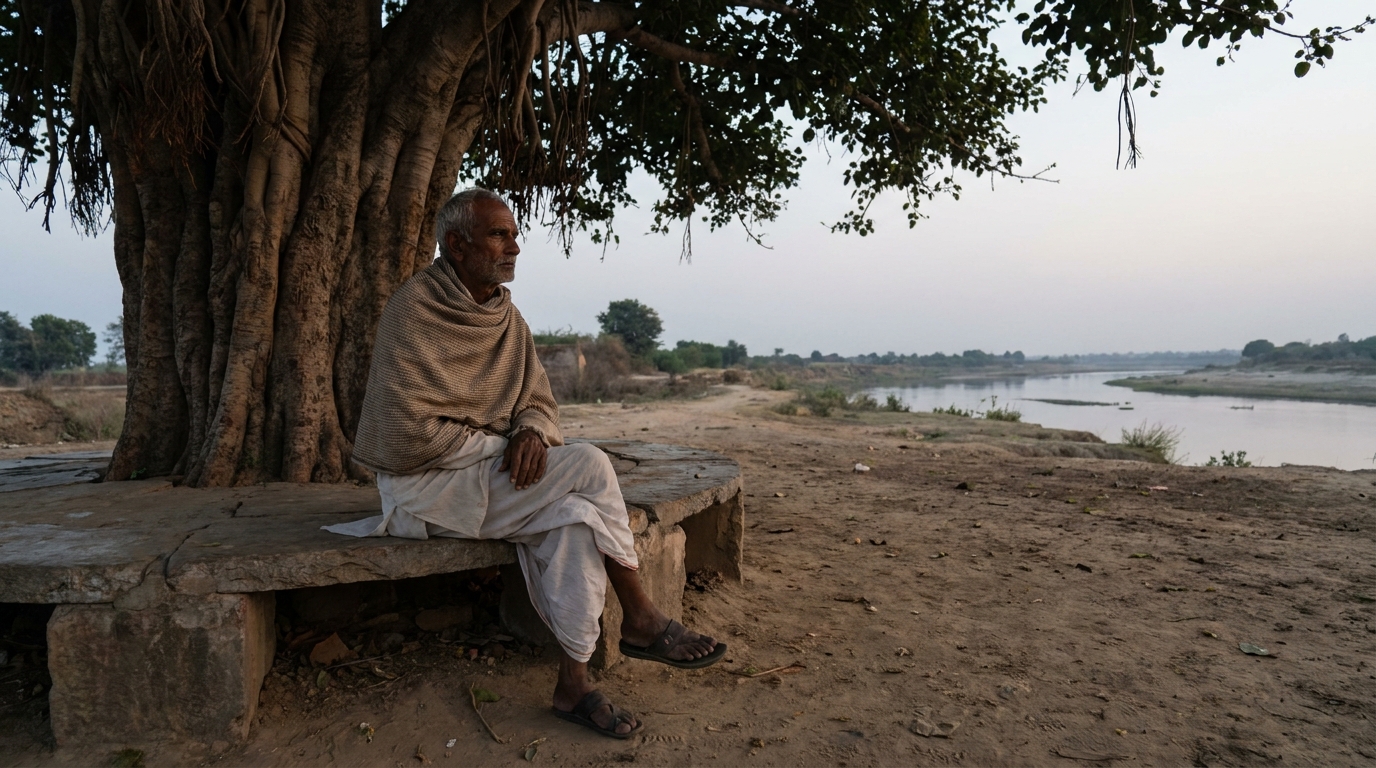
After his vision in the Yamunā, Akrūra offers some of the most heartfelt prayers found anywhere in the Bhakti scriptures. These prayers, spanning several verses in the tenth canto of the Śrīmad-Bhāgavatam, express deep humility, awe, gratitude, and surrender.
Humility Before the Infinite
In Śrīmad-Bhāgavatam 10.40.1, Akrūra begins his prayers:
“Akrūra said: I bow down to You, the cause of all causes, the original and supreme creator who is beyond the material universe yet the basis of everything.”
These are not the words of someone trying to impress God. They are the words of someone who has been broken open by love. Akrūra doesn’t approach God with a shopping list of requests. He approaches with wonder.
Surrender as the Highest Offering
Throughout his prayers, Akrūra acknowledges that he is small and God is infinite, and yet — and this is the beauty of Bhakti — that infinite God cares deeply for the small. Akrūra’s prayers remind us that we don’t need to be scholars or saints to approach the Divine. We just need to be sincere.
In Śrīmad-Bhāgavatam 10.40.27, he prays:
“O Lord, O supreme creator, I offer my obeisances unto You. O Supreme Soul, the master of all mystic power, I offer my obeisances unto You again and again.”
The repetition here — “again and again” — is the very heartbeat of devotion. In Bhakti, we don’t say God’s name once and move on. We return, again and again, like a river flowing always toward the ocean.
Akrūra as a Messenger of Love, Not Fear
Here is what makes Akrūra truly extraordinary: he was sent on a mission rooted in Kaṁsa’s fear and hatred, yet he transformed that mission into one of love and reunion. Kaṁsa wanted destruction; Akrūra carried devotion. The same journey, two completely different intentions.
Turning Dark Errands into Sacred Service
This is a powerful metaphor for our own lives. We are often placed in circumstances we didn’t choose — difficult jobs, challenging relationships, unexpected responsibilities. But Bhakti teaches us that any situation can become sacred service when approached with love and offered to God. Akrūra didn’t refuse Kaṁsa’s order. He didn’t rebel openly. He simply carried God in his heart and let that inner devotion transform everything.
The Quiet Power of the Devotee
Akrūra wasn’t flashy. He didn’t perform miracles or give grand speeches. He drove a chariot. He bathed in a river. He prayed. And through these simple, sincere acts, he played an essential role in one of the most important events in sacred history — the arrival of Kṛṣṇa in Mathurā.
This is deeply encouraging for all of us. You don’t need to be extraordinary to be part of God’s plan. You just need to be willing.
Lessons from Akrūra for Our Daily Bhakti Practice
Akrūra’s story is not just ancient history. It is a living invitation to practice devotion in our own lives, starting right where we are.
Chant with Longing
Just as Akrūra meditated on Kṛṣṇa during his journey, we can fill our days with the holy names. Whether through the mahā-mantra — Hare Kṛṣṇa, Hare Kṛṣṇa, Kṛṣṇa Kṛṣṇa, Hare Hare / Hare Rāma, Hare Rāma, Rāma Rāma, Hare Hare — or through quiet prayer, the practice of remembering God transforms our inner landscape.
Serve with Sincerity
Akrūra’s greatest service was simply showing up and being trustworthy. Service in Bhakti doesn’t have to be grand. Cooking a meal with love, listening to someone in need, offering a kind word — these are all forms of sacred service.
Trust the Journey
Akrūra didn’t know exactly how everything would unfold. He trusted that God had a plan. When we feel uncertain — about our spiritual progress, about life’s direction — we can take comfort in Akrūra’s example. Keep going. Keep loving. Keep showing up.
Stay Humble
Even after receiving an incredible cosmic vision, Akrūra didn’t boast or claim special status. He simply offered prayers of gratitude. Humility is the soil in which devotion grows.
You Are Welcome Here
If Akrūra’s story stirs something in your heart — a longing, a curiosity, a quiet hope — please know that you are welcome here, exactly as you are. Bhakti Yoga is not about perfection. It is about love. It is about taking one sincere step toward God and trusting that God takes ten steps toward you.
You don’t need to know Sanskrit. You don’t need to have all the answers. You just need the willingness to open your heart, even a little.
Like Akrūra climbing onto that chariot with nothing but his love for Kṛṣṇa, you too can begin your journey today. Chant one holy name. Offer one prayer. Read one verse. Serve one person with kindness. That one sincere step is enough.
God is waiting for you — not with judgment, but with open arms.
Welcome to the path of love. Welcome home.
FAQs
What is Akrūra?
Akrūra is a character from Hindu mythology, specifically from the epic Mahabharata. He is known for being a charioteer and a close friend of the Pandavas.
What is Akrūra’s role in the Mahabharata?
Akrūra plays a significant role in the Mahabharata as he is the one who informs Kamsa, the tyrannical king of Mathura, about the existence of Krishna and Balarama, leading to various events in the epic.
What are Akrūra’s characteristics?
Akrūra is described as a wise and loyal friend, as well as a skilled charioteer. He is known for his devotion to Lord Krishna and his role in various important events in the Mahabharata.
What is Akrūra’s significance in Hindu mythology?
Akrūra is significant in Hindu mythology as he is considered a devotee of Lord Krishna and plays a crucial role in the narrative of the Mahabharata, particularly in the events leading up to the Kurukshetra war.
Are there any temples or shrines dedicated to Akrūra?
There are temples and shrines dedicated to Akrūra in India, particularly in the regions associated with the events of the Mahabharata. These places often hold significance for devotees of Lord Krishna and those interested in Hindu mythology.

